
Regency Mall debuts in South Augusta
In late July, traffic built along Gordon Highway toward Deans Bridge Road. Regency Mall opened July 27, 1978, with ground-level entry on two levels. Shoppers entered from both sides, and parking areas filled.
Regency Mall opened as Augusta's first enclosed shopping mall and, with about 800,000 square feet of space, was one of Georgia's larger enclosed malls at the time. The mall was planned with 139 stores.
About 70 were open on the first day. More than 40,000 visitors came on opening day, and the early crowd established the mall as a major regional draw from the start.
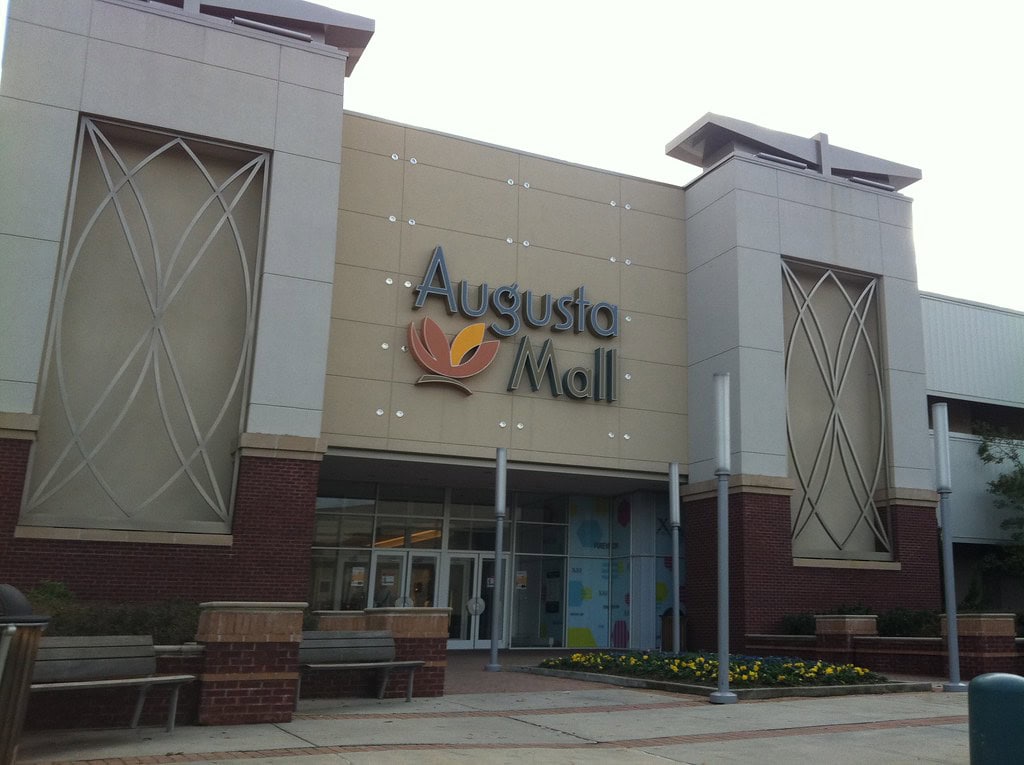
Regency Mall held that first-mall distinction briefly. On August 3, 1978, Augusta Mall opened in west Augusta.
It was smaller at opening, but it immediately created a two-mall market in the city and introduced a direct competitor within a week of Regency's debut.
Regency Square dreams, then the grading
In the early 1970s, the project was conceived as a larger mixed-use development called "Regency Square." The plan included condominiums, a hotel, and a shopping plaza, with the mall as one part of a broader complex.
Over time, those bigger ideas were reduced, and the project ended up becoming an indoor shopping mall.
Developer Edward J. DeBartolo Sr. selected a site in South Augusta at Gordon Highway near its intersection with Deans Bridge Road (U.S. 1).
The location was chosen because it was considered the population center of the Augusta area at the time. Land clearing began as early as 1971, but the project did not proceed quickly to opening.
Economic hurdles delayed the timeline and extended the period between the initial site work and the start of building construction.
Construction began in 1976. The design of the site worked with the land as it was, instead of flattening it completely, and the way the ground was shaped affected how the finished property worked.
The mall was built as a two-level enclosed center on a terraced plot, with circulation and entrances planned around the changes in elevation.
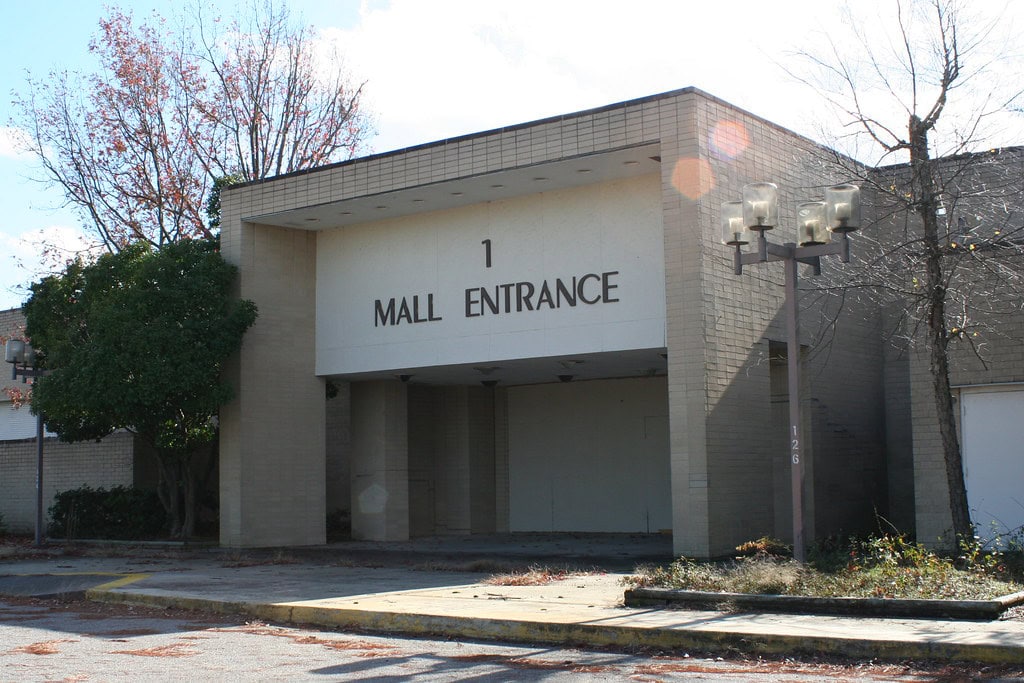
A Y-shaped mall with trees and that clock
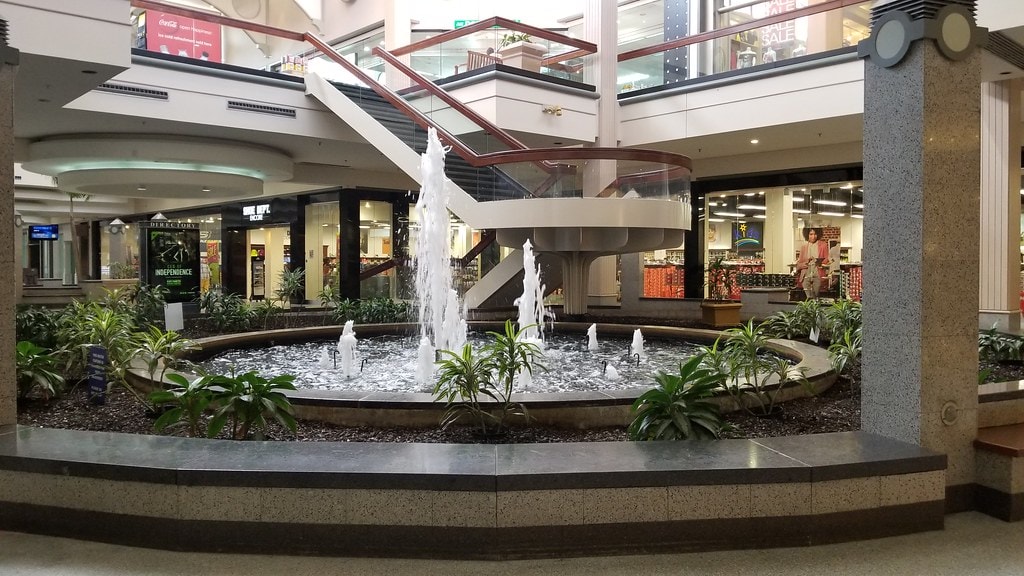
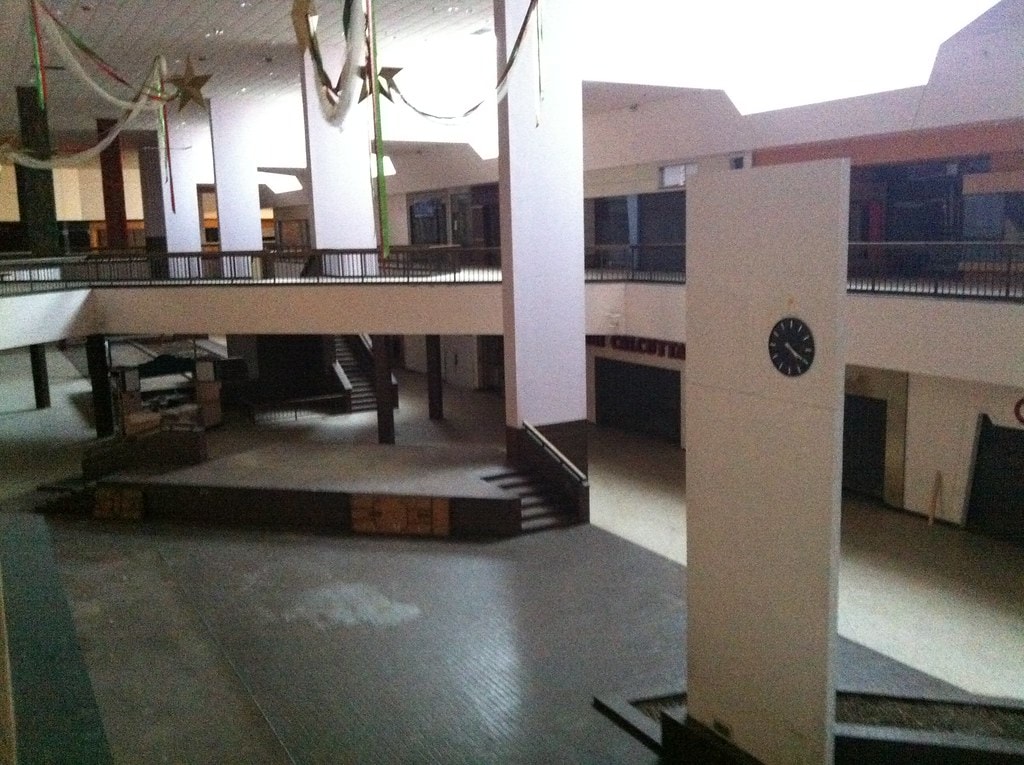
Regency Mall had a distinctive Y-shaped layout. Inside, the mall was organized around a central court of about 28,000 square feet. The court featured 45-foot-tall pillars, a fountain, and a 28-foot clock tower.
Live trees were placed along the lower-level concourses, reinforcing the indoor landscaping approach that was common in new malls of that period.
Regency opened with three anchor department stores: Montgomery Ward, Belk-Howard, and J.B. White.
It also included a three-screen General Cinema movie theater, which supported evening traffic in addition to daytime shopping.
Not all of the anchor construction was complete at the start. Cullum's was still under construction on opening day and opened later in 1978. Belk's new store was completed in 1979.
Despite those remaining projects, the mall opened as a full two-level regional center and was presented as a finished destination for the Augusta market.
At opening, Regency Mall benefited from its size and its newness. Its interior design elements and landscaping set it apart locally and helped establish it as a major shopping destination in its early years.
Two malls, one city, and the westward pull
After Regency Mall opened on July 27, 1978, and Augusta Mall opened on August 3, 1978, Augusta had two regional malls operating at the same time.
DeBartolo's team predicted "good, friendly competition," and for a period, both properties drew steady traffic.
Through the late 1970s and into the 1980s, Regency Mall prospered as a major shopping destination for South Augusta.
By the mid-1980s, Augusta Mall's west-side location began to give it an advantage. West Augusta was closer to higher-income neighborhoods and areas growing more quickly.
Augusta Mall also sat nearer Interstate 520, while Regency was several miles from the interstate in a more blue-collar district.
Augusta Mall continued to invest in expansions and updates. In 1987, it added a large JCPenney.
In March 1990, it opened a $32 million expansion that included a new Sears, a modern food court, and dozens of new inline stores, pushing the mall past 1 million square feet and about 150 stores.
Regency did not complete a comparable renovation or expansion and remained largely as it had opened, which made its original 1978 interiors look dated.
When safety fears stuck to the parking lot
In 1986, a 16-year-old girl was abducted from the Regency Mall parking lot and was later found dead.
The case drew intense attention to security at the property and changed how the mall was viewed in the community. The incident occurred while the mall was still drawing steady traffic.
Regency Mall had been promoted as a controlled, comfortable indoor destination, but concerns shifted to the parking areas and entry points.
Through the late 1980s, reports of other incidents continued, and the mall developed a reputation for weak security.
Shoppers became more watchful in the lot and more attentive to entrances and exits, and parents were less willing to let teenagers move around the property without supervision.
Regency remained busy through much of the 1980s, with its anchors operating and national tenants drawing regular customers.
The mood around the mall changed as safety worries became a regular topic when people talked about or visited the property.
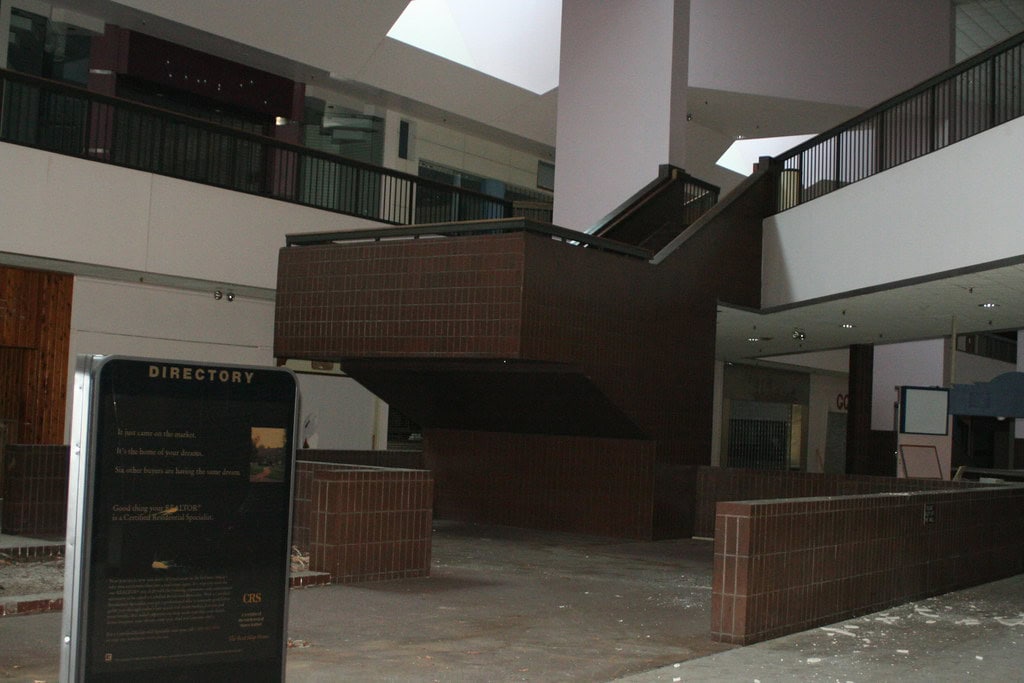
1993 to 1996: vacancies and county office talk
By the early 1990s, vacancy was visible inside Regency Mall.
The anchor space originally built for Cullum's later housed Meyers-Arnold and, by the early 1990s, operated as Upton's. In 1993, Upton's closed its store at the mall, leaving a large anchor space dark.
Around the same period, seven other stores left the mall, and a January 1994 headline noted the departures in a single wave.
In 1995, Edward DeBartolo's company stepped away from the property. Ownership was transferred to Equitable Real Estate, and the remaining $12.5 million debt tied to the mall was forgiven.
In 1996, after the consolidation of Augusta and Richmond County governments, local officials briefly considered buying or leasing space inside Regency Mall for government offices.
The idea was discussed as a way to use empty space and increase daily activity at the property.
The proposal drew opposition, including concern that moving offices to the mall would weaken downtown. The plan did not move forward, and the mall continued operating with growing vacancy.
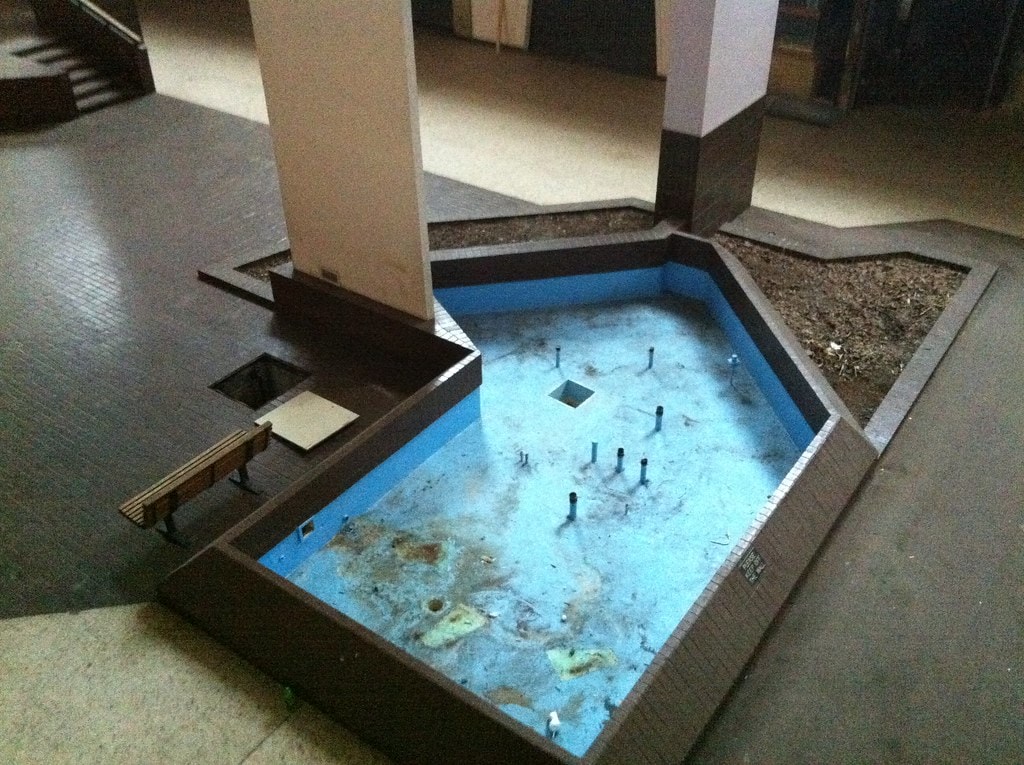
A bargain sale and cost-cutting at Regency Mall
The Richmond County tax assessor had valued the property at $33.5 million in 1991. In March 1997, Regency Mall was sold for $4.15 million to two investors from Raleigh, Haywood Whichard and Paul Woo.
The sale excluded the separately owned Montgomery Ward and Belk anchor buildings.
The new owners said they had "no idea" how to turn around a failing mall and reduced rents to attract tenants, with rates dropping as low as $3.50 per square foot.
A marine supply shop opened in the mall. A teen health clinic took space. A Richmond County Marshal's satellite office moved in. The tenant mix shifted toward small local users filling vacant storefronts.
Anchor departures continued during this period. Belk closed its Regency Mall store in 1996 and consolidated at Augusta Mall.
In 1998, J.B. White opened a new 160,000-square-foot store at Augusta Mall and closed its Regency location.
By the end of 1998, Montgomery Ward was the last remaining anchor at Regency Mall.
Ward boarded up its interior entrance to the mall, requiring customers to enter from exterior doors, and the mall shut down escalators to reduce electricity costs.
In 1999, AMC Development announced a plan to purchase Regency and convert it into a family entertainment complex, but the proposal did not materialize.
Whichard and Woo put the mall up for auction, but the highest bids were too low to accept. In April 1999, Whichard bought out Woo's share and became the sole owner.

After closure: vacancy, vandalism, and interior gutting
Montgomery Ward announced its nationwide shutdown on December 28, 2000. The Regency store liquidated in early 2001 and closed by June when the chain went out of business.
The mall limped along with a handful of tenants, including a Foot Locker and the Marshal's office, but the departures continued through 2001.
The last inline tenant, International Formal Wear, closed in early 2002. By March 2002, entrances were padlocked and the property began its long second life as Augusta's largest abandoned building.
In 2002, Haywood Whichard sold his stake in Regency Mall for $3.5 million to Cardinal Entities of Mattituck, New York. The sale included everything except the Montgomery Ward building.
That same year, ownership of the Montgomery Ward building changed separately, transferring to Commercial Property Holdings of Charleston, South Carolina.
Cardinal pursued a revival plan that centered on attracting tenants and offering Augusta-Richmond County a lease-purchase package for office space, and it also discussed updating the mall's food court.
The effort stalled after local government decided against moving offices to the mall, and in early 2003 Cardinal stopped actively marketing the property and kept the shopping center closed indefinitely.
After closure, trespassers and vandals treated the site like an invitation. Homeless people broke in for shelter. Graffiti spread. Fires were set inside.
Redevelopment ideas came in waves, including renewed government office proposals, big-box retail, an outlet concept, education uses, and an arena.
In the years that followed, Cardinal and the county's licensing and inspection department disputed the condition of the property.
County officials said the site was not being properly maintained. Cardinal's property manager said the mall had a full-time maintenance worker and that a crew repaired a leaking roof and cleaned mold from the interior.
By 2012 and 2013, city code and fire officials demanded that the building be secured or demolished.
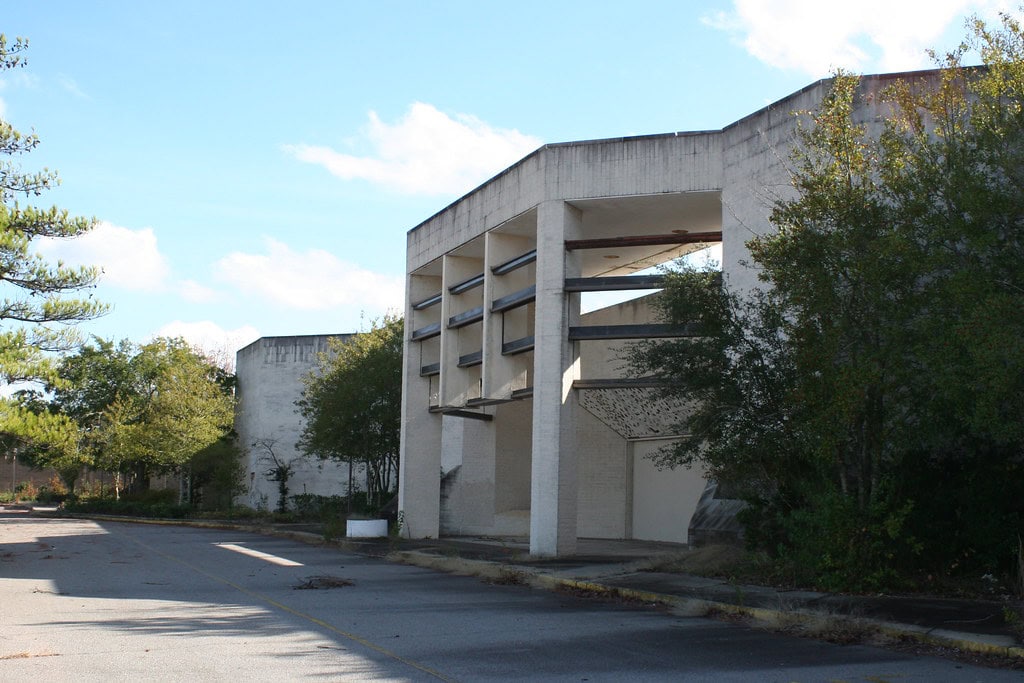
In late 2013, the owners gutted the interior down to bare concrete and steel to remove combustible materials. The remaining structure lost its interior build-out and was left as a secured shell.
Demolition starts, then a campus opens nearby
In October 2020, workers began tearing down part of the site, starting with the old Montgomery Ward building. It was the first major building removed after sitting empty for years.
However, demolition stopped once the Ward building was gone.
By early 2021, most of the other empty buildings were still standing, including the old J.B. White, Belk, and Upton's spaces, along with the indoor mall hallways next to the empty parking lots.
In 2022, state lawmakers advanced legislation aimed at giving counties more leverage over long-abandoned 'superstructure' properties like Regency Mall.
In May 2022, Cardinal Management Group announced "Cardinal Town Square," a plan for the property that included up to 1,000 homes, restaurants and shops, a grocery store, a large fitness center, a 32-classroom charter school, and a 300-seat performing arts center, with costs estimated at up to $175 million.
The new zoning was approved by August 2022, but by May 2024, reports still said there was no visible progress on the larger project.
The first building work for the plan started with the charter school in the old Sears call center area.
Rocky Creek Charter Academy started construction in September 2024 and opened on October 14, 2025, at 2417 Jennings Road with a "Ring the Bell" ceremony.
As of early 2026, Regency Mall's story is still going on. The mall building itself, or what remains of it, is largely an empty shell. The new Cardinal Town Square development has faced delays, but hasn't been abandoned.
The next few years will show if the Regency Mall site finally comes back to life, closing a long period of decline and giving South Augusta a new center on the same spot where retail history was made and almost lost.
There not going reopen that Mall because it would bring money as well life back to south Augusta. And that’s not what want to do.
There have been cases where old malls came back in a different form - mixed-use, community spaces, even schools or health centers. That kind of thinking could make a difference in a place like south Augusta.