Nampa in 1965 was a modest Idaho city with storefronts scattered across its streets and farmland stretching in every direction.
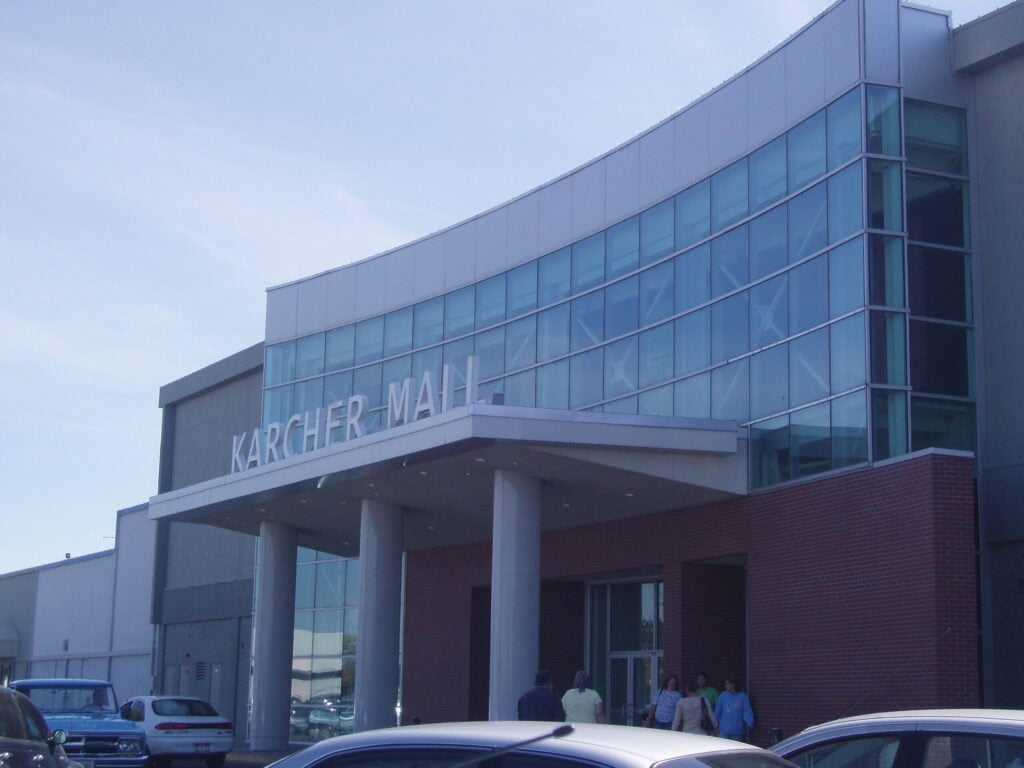
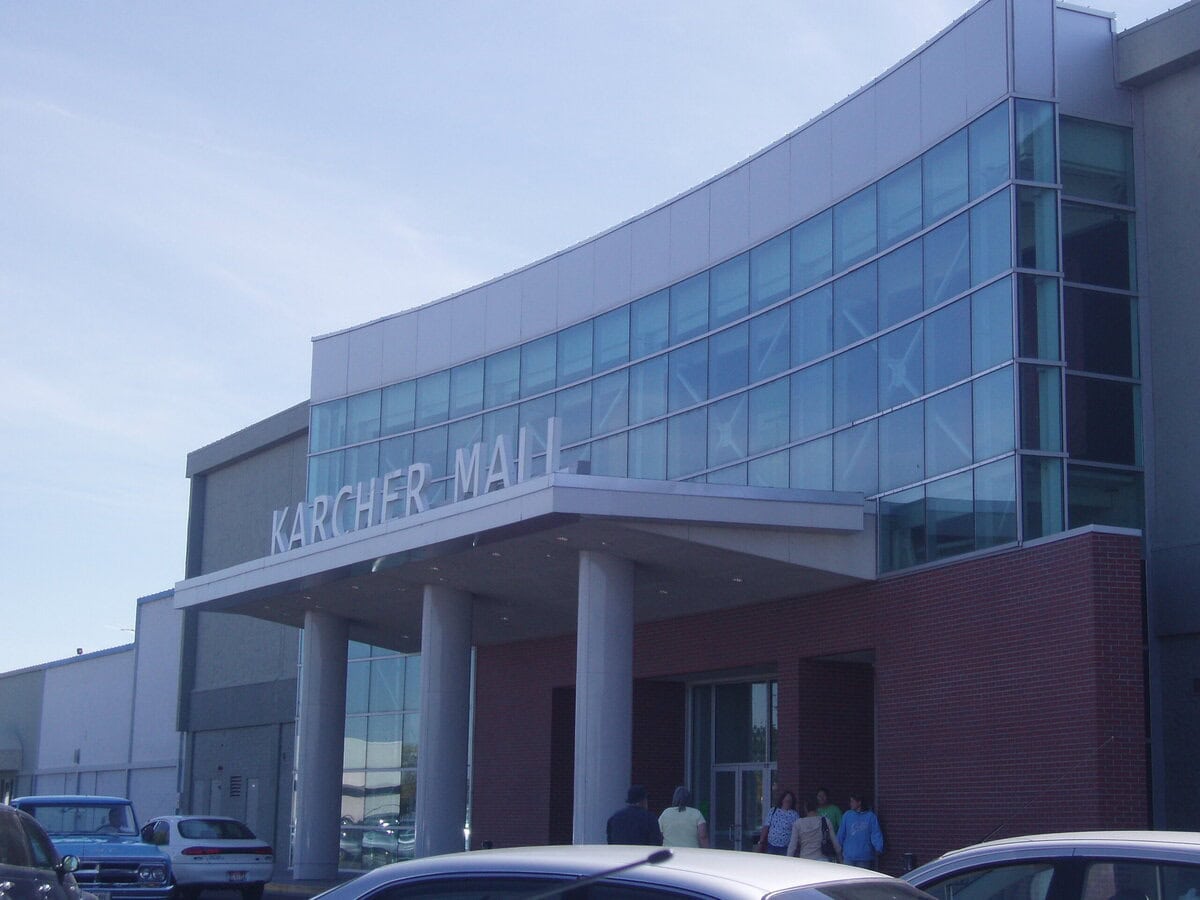
That changed on August 26, 1965, when Karcher Mall opened at 1509 Caldwell Boulevard - a single enclosed building where you could walk from store to store without ever stepping outside.
Plans for the project went back to August 1964, when a shopping center was announced for 20 acres of a 35-acre tract west of downtown.
Architect Robert B. Liles of San Francisco designed the building, and Daum Development brought it to life. The city annexed the land on August 2, 1965, and the mall opened less than a month later.
The original building offered about 103,000 square feet of leasable space. Buttrey Food Store anchored the center at 34,000 square feet.
Tempo took about 30,000 square feet of general merchandise space, Sprouse-Reitz came in at about 9,000 square feet, and Kinney Shoes and a barber shop filled out the early tenant mix.
For many Nampa residents, walking from a grocery store to a shoe store to a variety shop without going back to their car was a genuinely new experience.
Karcher was the first enclosed mall in the entire Boise metropolitan area, and in 1965, that made it something the Treasure Valley had not seen before.
Karcher Mall Grows Into the Valley's Hub
The first version was only the beginning. On March 8, 1967, construction began on a major expansion.
J.C. Penney moved in as a new anchor, filling 140,000 square feet of the new space. Skaggs Drug and a larger mix of inline stores joined as well.
The expanded center was dedicated on October 23, 1968, and the gross leasable area grew to roughly 418,000 square feet.
A second growth phase followed just a few years later. Plans for another expansion were announced in July 1972, with construction starting in January 1973.
Bon Marche came in as a 60,000-square-foot department store anchor.
The Red and Blue Twin Cinemas opened to bring movie-going to the property. Nineteen more inline stores joined in the new southeast wing, which opened on August 3, 1973.
After that second expansion, Karcher Mall covered about 600,000 square feet and held around 50 stores and services. It was the largest mall in the Boise area, and it would hold that position for the next 15 years.
Families came from Nampa, Caldwell, and communities across the Treasure Valley for back-to-school runs, holiday shopping, and Saturday afternoons at the movies.
What had started as a small neighborhood shopping center had grown, in under ten years, into a full regional destination.
Boise Towne Square Becomes Karcher Mall's Turning Point
Karcher Mall held its place as the region's biggest indoor mall through the 1970s and most of the 1980s. Tempo had closed in the fall of 1981, and Woolworth opened in that space on March 31, 1982.
Ownership changed in October 1986 when Standard Management Corp. acquired the property. Owners finished a roughly $1 million facelift in November 1987.
The turning point came in late 1988, when Boise Towne Square opened in Boise. The new mall drew regional shoppers away from Nampa and, more damaging, pulled the anchor tenant with it.
J.C. Penney left Karcher for Boise Towne Square, leaving a 140,000-square-foot gap in the building. Management acted quickly: Emporium opened in the former J.C. Penney space on November 21, 1988.
Karcher Mall did not close. It still had Bon Marche, the cinema, and a solid base of local shoppers.
But the 20 years of unchallenged regional dominance were over. Before 1988, Karcher was the obvious destination for Treasure Valley shoppers.
After 1988, it was one option among several, and it was no longer the newest or the largest.
Going Into Foreclosure and Trying to Recover
The 1990s were a period of steady decline, not a sudden collapse. Competition from Boise kept increasing, and empty space at Karcher Mall kept growing.
The property eventually went into foreclosure. Karcher Partners took ownership of the mall on May 6, 1998.
The new owners came in with plans to improve the property.
They proposed a $10 million renovation to update storefronts, lighting, flooring, and entrances - the parts of the mall that shoppers saw right away and that had begun to look old compared with newer shopping centers.
They also talked about adding a food court and creating an upper-level anchor space.
Those ideas show that they still saw Karcher as a traditional enclosed mall that could be updated, not a property that needed to be completely rebuilt.
The Red and Blue Twin Cinemas opened in 1973, but the space was reworked several times over the decades that followed.
By 2009, it had become Northern Lights Cinema Grill. This dine-in movie theater kept an entertainment use in the building even as regular mall traffic declined.
The larger problem was Emporium, the anchor store that had replaced J.C. Penney in 1988. Emporium was struggling, and when it failed, vacancy rose to a level the property could not easily handle.
Empty Boxes, Multiple Owners, and Milan's Turnaround Attempt
Emporium collapsed in 2003 and left a 77,000-square-foot hole near the mall's main entrance.
By March 2004, 173,000 square feet sat empty in a property covering roughly 466,000 square feet. On May 7, 2004, LB Nampa Mall Holdings bought the mall.
Even the mall's total size was disputed at this point. Mall management counted 599,000 square feet. A separate market report used 466,000 square feet.
The difference came down to whether Ross and Big 5 - which occupied buildings closer to a strip center than an enclosed mall - were included.
Vacancy landed at either 29 percent or 37 percent, depending on which total you used. Either way, the situation was serious.
In September 2005, Milan Properties bought the mall from Baum Bros., which had owned it for only about two months. Vacancy was near 50 percent at that point.
By January 2008, Milan had cut that number to 19 percent after leasing more than 100,000 square feet, while a broader 2008 renovation effort eventually totaled about $14 million in upgrades.
New tenants included Burlington at 80,000 square feet, Steve & Barry's at 30,000 square feet, Starbucks, Moose Creek Cafe, and several smaller additions.
It was the closest Karcher Mall came to a real recovery during its final indoor-mall years. The improvement did not hold.
Major Tenants Leave as Vacancy Rises
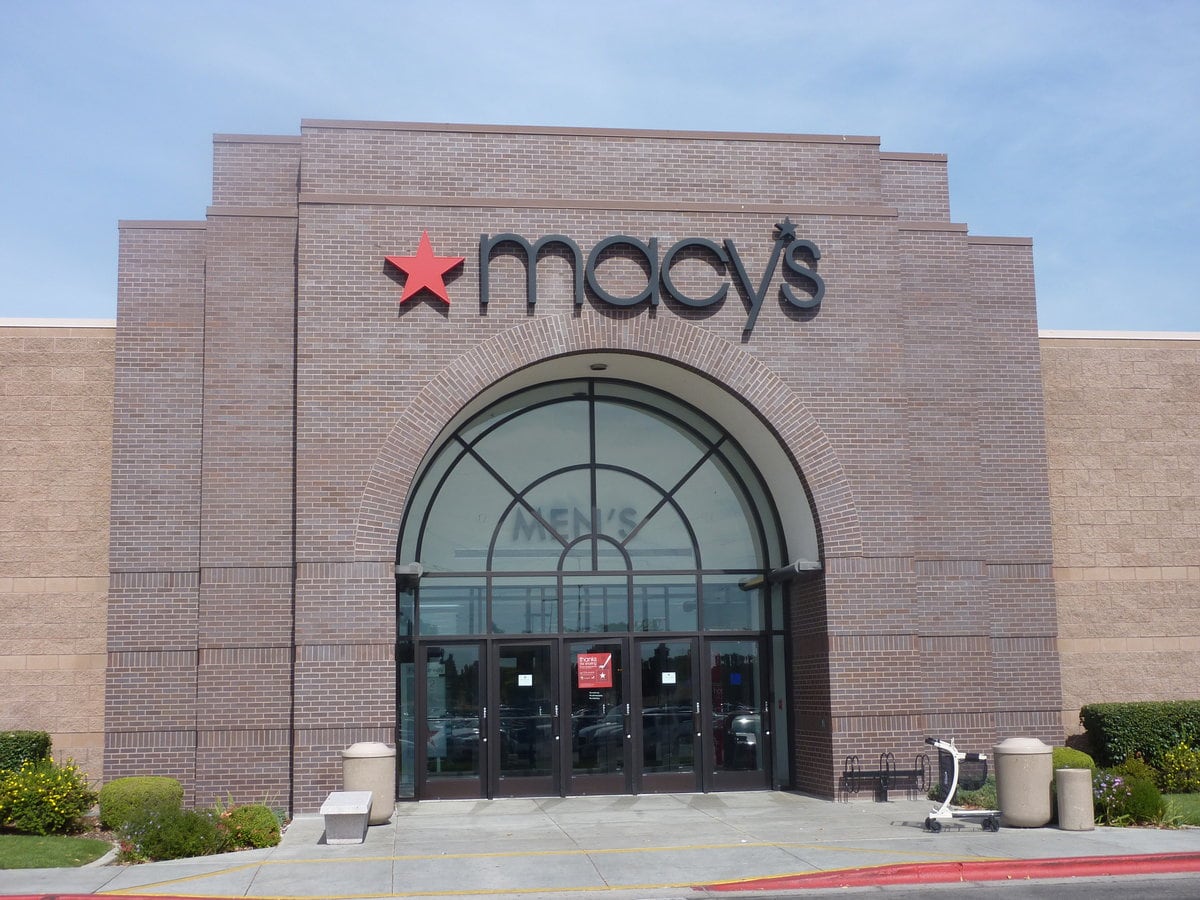
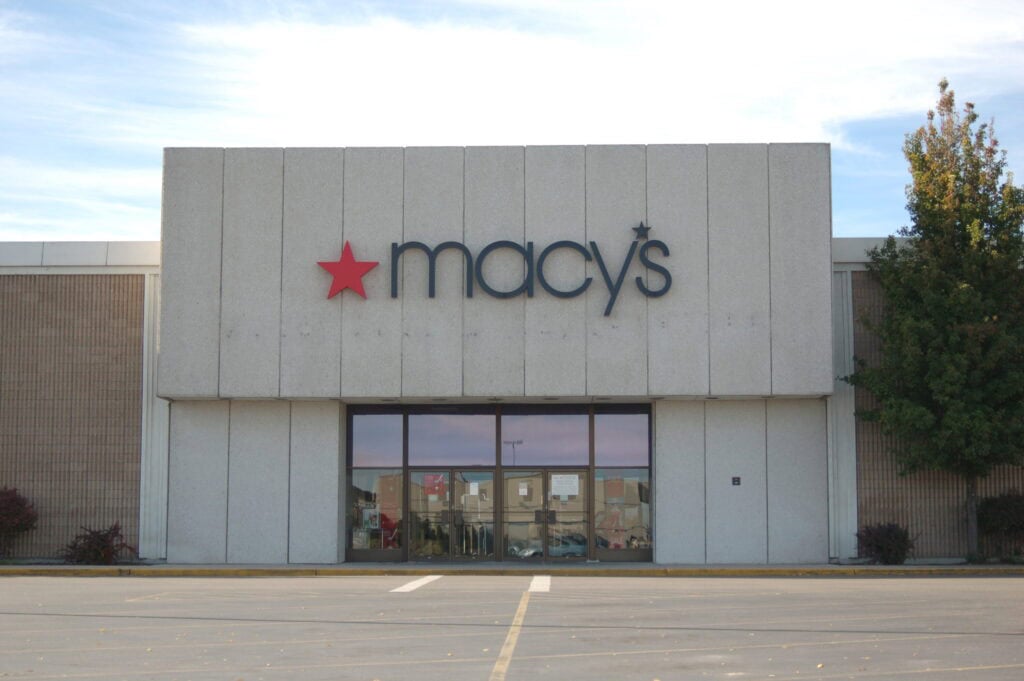
The Bon Marche department store, which opened in 1973, had become Macy's through years of corporate ownership changes. In 2009, the Macy's store closed at Karcher Mall and moved to the newer Nampa Gateway center.
The departure came with a financial wrinkle. Macy's kept paying its lease at Karcher through at least 2012, which made the official vacancy look smaller than the real situation.
In 2012, the mall held 407,000 square feet, and Macy's occupied 60,000 of them on paper.
The remaining substantial tenants were Ross, Big 5, Burlington, Macy's Clearance Center, Discount Furniture and Mattress, and Northern Lights Cinema Grill.
The Macy's Clearance Center also closed by July 2014.
Through the mid-2010s, a 2016 directory still listed Applebee's, Bath and Body Works, Burlington, Jo-Ann, Mor Furniture - which had opened in June 2016 - Ross, Starbucks, Taco Bell, and U.S. Bank.
Burlington left in September 2018, and vacancy climbed above 30 percent. The building was surviving, but it had no stable path forward.
Demolition, Apartments, and District 208 Today
In May 2019, Rhino Investments Group purchased the property with a third of it empty. Rhino's plan was not to revive the enclosed mall format but to remove it.
The central section of the building would be demolished and replaced with surface parking, while remaining tenants stayed in place in a new open retail layout.
By January 2020, the project had a new name - Karcher Marketplace - with Mor Furniture, Ross, Big 5, and JoAnn expected to stay, and DD's Discounts announced as a future addition.
Estimates put the redevelopment cost at $30 million to $50 million.
Work stalled through most of 2020 because of the pandemic. When construction resumed, the project was renamed District 208.
By September 2023, about 81,000 square feet of the original mall had been demolished, and the first phase of District 208 Apartments - 96 units - was completed.
The apartment complex at 1275 Caldwell Boulevard holds 252 units in 12 buildings on about 10 acres.
Boot Barn was among the first new tenants to open at the District 208 retail center. A Starbucks received city approval in 2024.
By September 2025, however, more than 150,000 square feet in the main retail building still sat vacant.
Hyperion Realty Capital bought the retail portion from Rhino in late 2024 or early 2025, with Rhino keeping the apartments.
In February 2026, AutoZone signed a lease for 36,000 square feet.
The retail center at 1509 Caldwell Boulevard now operates under the District 208 name, with Mor Furniture, Ross, Boot Barn, Discount Furniture & Mattress, and Big 5 Sporting Goods as its main tenants.
This is a very different kind of shopping center from the one that opened on that same land 60 years ago.