
Belvidere Discount Mall, Before It Had Walls
On September 7, 1963, Waukegan's City Council agreed to change the rules for land use on Belvidere Street so a shopping center could be built. At first, the plan was for an outdoor mall.
The idea was simple: spend $3 million, build about 125,000 square feet, and have around twenty-five stores with Montgomery Ward as the main one.
Landau and Heyman Inc. built the shopping center, starting construction on the Ward building on June 29, 1964.
By November 1965, the new Ward store opened, and the old downtown Waukegan store closed, moving a familiar shopping spot to a new place.
Between the time the city changed the land rules and the first sales, the plan got bigger. It would not be outdoors anymore, and it would not be small.
Waukegan was trying a new design, with parking lots in the center and the stores protected from the weather.
A 1965 Debut, Big Enough to Surprise
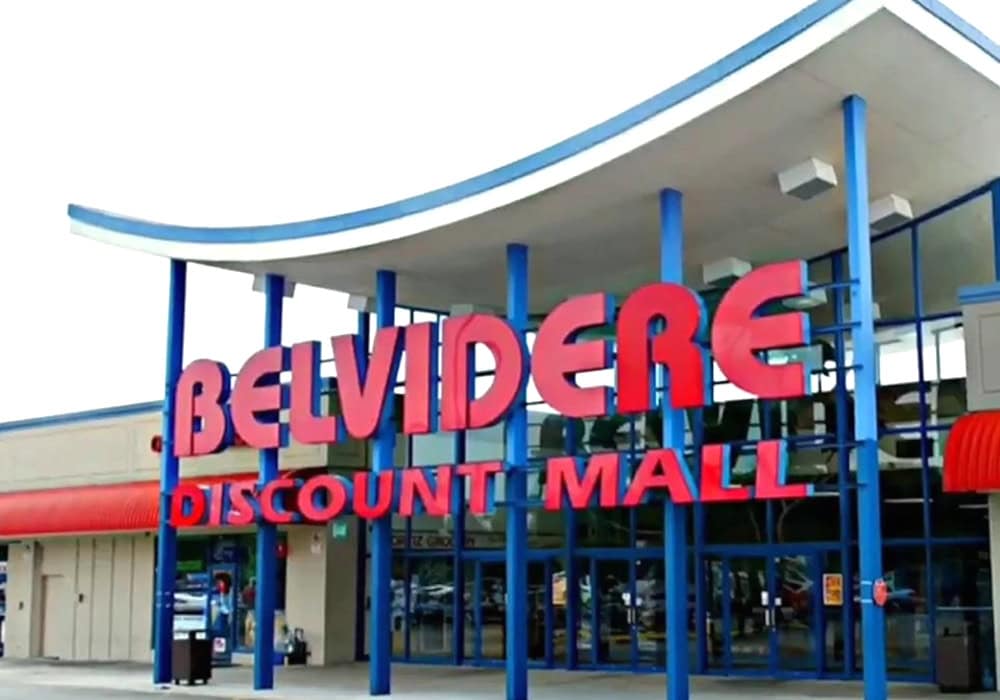
Belvidere Discount Mall opened on November 18, 1965, and it arrived larger than its own early sketches. Instead of 125,000 square feet, it stood at roughly 300,000, with thirty-five stores arranged in enclosed corridors.
It was Lake County's first enclosed shopping mall, a small local first that also placed it among the earlier malls in the Chicago metropolitan area.
Montgomery Ward anchored the layout, the dependable destination that made the rest feel safe.
The design encouraged slow circulation: you could run errands without crossing a street or checking the sky, and in northern Illinois, that counts as comfort.
The opening also marked a civic shift. Downtown shopping had competition it could not imitate: parking lots, climate control, and a building that manufactured its own crowd.
Walgreens Grill, Candy Counters, Corridors
A 1966 tenant list catches the mall in its bright, practical mood. Fanny May Candies and Hickory Farms supplied the edible souvenirs.
Kinney Shoes and Regal Shoes made sure a trip ended with a bag. K. Campbell Sportswear, Stewart's Women's Apparel, and Mary Luster Fabrics promised improvement in the everyday way.
CoverGirl shared the roster with Vision and Hearing Aid Service. National Tea Company operated the supermarket.
Printers Inc. Books and Cards sold greetings, stationery, and small gifts that traveled from the mall to the mail.
Walgreens Drugs, a founding tenant, included a Walgreens Grill. Its glass panels opened onto the concourse, letting food aromas drift into the shopping air, as if lunch were part of the merchandising.
In those years, Belvidere was not only a retail address. It was an indoor mood.
Belvidere Cinema's Thousand Seats of Hope
Belvidere Cinema opened on January 21, 1966, and made the mall lively at night. General Cinema Corporation ran it as a one-screen, 1,000-seat theater, where the people around you were almost as important as the movie.
The first movie shown was "Do Not Disturb" with Doris Day and Rod Taylor, a light comedy from a time when a night out was simple: park, walk in, find your seat, and enjoy the movie for an hour and a half.
The building reflected the 1960s style. It had seats that folded back, an art gallery in the lobby, and a 22-by-46-foot screen, which was said to be the biggest around.
Most people accepted that claim, which was the point. You didn't need to go anywhere else for a great movie experience.
Close by, Aladdin's Castle arcade attracted kids and teens. Quarters disappeared, scores climbed, and kids built their reputations in the noisy bursts between button presses and machine sounds.
With shopping, movies, and games all in one place, families could stay entertained for hours. It all felt fun, but it was planned that way.
Rivals Arrive, and the Math Turns Cold
Lakehurst Mall opened on August 19, 1971, just five minutes west of Belvidere. It was bigger and newer, with about 1.1 million square feet and three main anchor stores: JCPenney, Carson Pirie Scott, and Wieboldt's.
After Lakehurst opened, Belvidere was no longer the main shopping spot, and people started going elsewhere.
In 1973, Hawthorn Center opened thirteen miles away, making competition even harder. General Cinema focused on where the crowds were.
At Lakehurst, the theater expanded from five screens to eight in 1984, and then to twelve by 1987.
This helped Lakehurst keep first-run movies and attract even more visitors.
Belvidere tried to make the best of its situation. In early 1980, its cinema was divided into two screens, which reduced seating by over a hundred and led to showing more second-run movies.
The mall still grew on paper, reaching a peak of forty-five stores in the early 1980s. But as more people shopped at bigger, newer malls, Belvidere struggled to keep up.
Ward Departs, and the Swap N' Shop Era Begins
In 1988, Montgomery Ward left Belvidere for Lakehurst, and the mall's original plan stopped working. Stores that depended on Ward's customers started to leave, and empty spaces appeared in the hallways made for shopping.
The cinema left next. In September 1988, General Cinema gave up its Belvidere theater. The theater stayed open on its own until early 1989, then closed because of financial problems by the summer.
A place made for a thousand people at once became an empty, closed-off space that still looked nice but cost too much.
Belvidere tried something simpler and more straightforward: weekend flea markets and swap meets.
Instead of trying to attract big national stores, it offered space, tables, and a chance for people to walk by. The building stopped trying to be a mall the way it used to be.
It started acting like an indoor market.

Imperial Realty's Renovations and Renaming
Imperial Realty bought the mall in the fall of 1985, before the Ward exit made things go from bad to worse.
Led by Al Klairmont, the company fixed up the mall in 1985 and quickly filled empty stores; Klairmont later remembered renting out eleven stores in just ninety days.
City officials turned down a plan to turn the property into a regular flea market, so Imperial had to try something else.
When one flea market seller asked to rent a permanent spot, others did the same, and the idea grew into a Hispanic market that matched the people living in Waukegan.
In 1998, Imperial started a second big renovation, putting up small stands throughout the main walkway for smaller sellers and people starting new businesses.
The name changed too: Belvidere Mall became Belvidere Discount Mall, a name that showed it was about good deals, not memories.
Anchors Turn Over, From Square to Home Depot
By 1995, parts of the original mall were coming apart. Walgreens, which had been there since the mall opened, left in August.
That same year, Builders Square, a store that sold home improvement products and was owned by Kmart, opened in the old Montgomery Ward building.
The main store changed from a department store to one that sold useful supplies, which matched the mall's new focus on low prices.
Builders Square stayed open through the late 1990s, but the company had problems all over the country. By the end of 1999, the last stores were closed.
Home Depot took its place, becoming the mall's only big national store and, in a way, its main support.
The old order in the area did not last. Lakehurst Mall closed in 2001 and was torn down in 2004. The big mall that once took customers away turned out to be less strong than the smaller mall that learned to change.
The Miniplex Years, Then a Long Pause
The cinema tried to keep up with the times of lower prices. In late 1991, Imperial Realty fixed up and reopened Belvidere Cinema with four small theaters, each with about two hundred seats.
Tickets for movies that had already been out for a while cost $1.50, so everyone could afford to go.
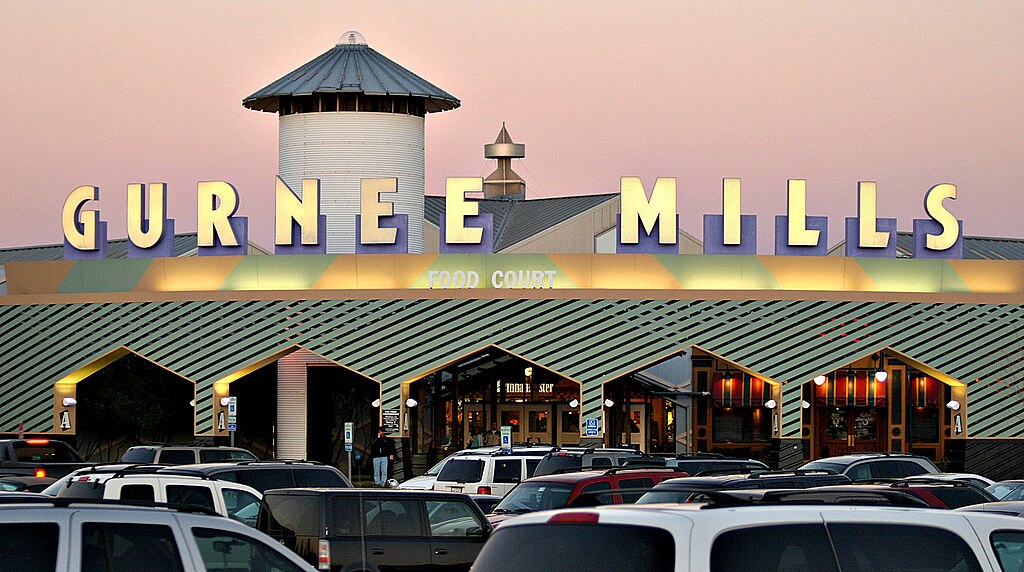
There was still competition nearby. Gurnee Mills opened in 1991, just seven miles away, and gave people a newer mall to visit.
Belvidere Discount Mall stayed open because it was cheaper, smaller, and felt familiar to people who lived nearby.
In 2002, Village Theatres took over the cinema. They tried showing new movies for a short time, but it did not make enough money.
By the end of 2003, the theater closed for good. Plans for a $100,000 update to improve seats, sound, and other parts were never finished.
The building stayed closed for sixteen years, which helped keep much of its original General Cinema look.
ArtWauk Nights and a Gallery Reawakens
Starting in 2019, Belvidere Discount Mall began letting artists, pop-up sellers, and community groups use empty stores and open areas.
Sometimes, the mall even held public tours and early shows in 2019 and 2020. The mall saw empty space as something useful.
In 2019, the mall began allowing the artist/photographer who goes by ‘jonrev’ to use the closed cinema for pop-up exhibits.
By 2021, that evolved into an ongoing stewardship project, and the space began operating as the Belvidere Cinema Gallery by late 2021.
It kept the old General Cinema look with only small updates.
Screen I, now with about seventy seats and space to stand, hosts art shows and music.
Screen II, with about one hundred twenty seats, shows independent, foreign, and classic films. Screens III and IV are not used but are kept in good shape.
The mall pays for the rights to show movies; the people running the gallery choose what to show, often matching Waukegan's monthly ArtWauk festival.
Belvidere Discount Mall at 60
In 2025, Belvidere Discount Mall was a neighborhood place. Other than Home Depot, the shops were run by families, and most were owned by Hispanic families or focused on Hispanic customers.
Lawrence Harris's Optical Extraganza, which started around 1988, still helps people find glasses and gives a one-year guarantee. Tornado Bus sells tickets for trips to Mexico.
November 22, 2025 marked the sixtieth anniversary celebration date, with a ribbon cutting to thank long-time shop owners, classic cars, fashion shows, live music, and free showings of "E.T. the Extra-Terrestrial" at 1:00 and 4:30. Popcorn was sold at 1980s prices to help repair the movie theater.
Belvidere Discount Mall is not pretty, and it does not pretend to be. The hallways look old, some areas are quiet, and sometimes the place looks half-empty. Some shops seem to open and close whenever they want, so it can feel a bit unpredictable.
But it is not empty. People still go there, and when something is happening, it feels busy and normal.
Overall, it works, is a bit worn, and is still a good place to visit if you want good deals or to go to an event, not a fancy mall experience.
I Went to the Belvedere Mall All of the time, years ago..lots of memories too!
I hear you. Those kinds of centers were more than shopping - they were local culture. One person remembers a specific booth, someone else remembers the smell of the food, and someone else remembers going with grandparents. It all stacks up into a shared time capsule.