
Lighthouse Place near the lakefront
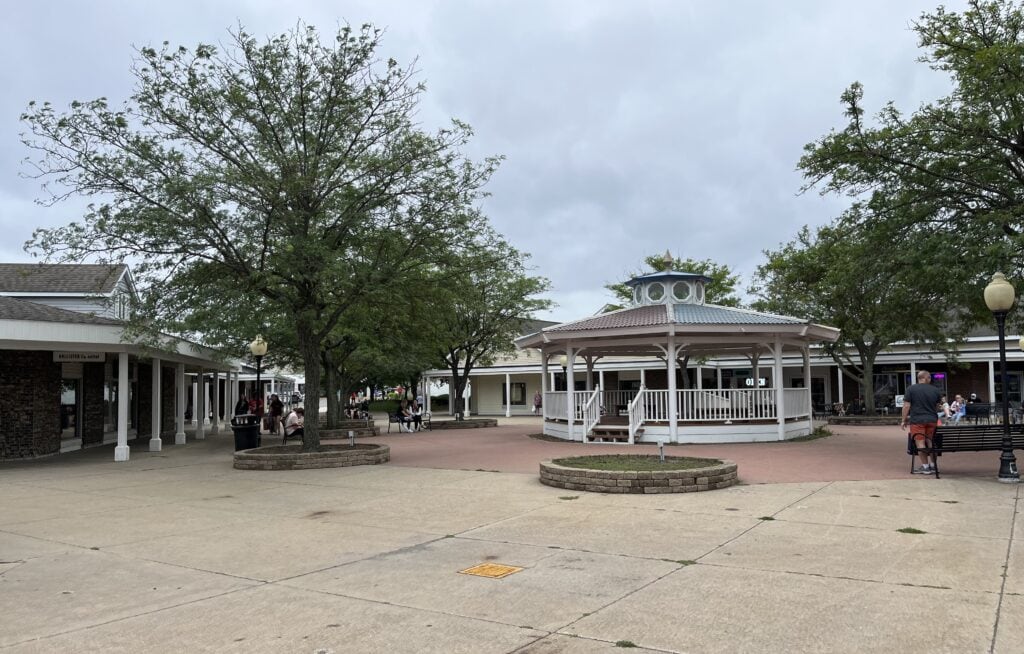
On a good day, when the wind off Lake Michigan behaves itself, Lighthouse Place Premium Outlets feels less like a mall and more like a set built for a Midwestern seaside town.
Low buildings with pitched roofs are arranged along open-air walkways, a modest lighthouse tower presiding over the scene as if to certify its authenticity.
The address is workaday enough - 601 Wabash Street, downtown Michigan City, Indiana - but the promise is more aspirational: a village of bargains, one mile from the water.
The geography is deliberate. Instead of a cloverleaf and access road, the center sits in the city's North End, within reach of the South Shore Line's 11th Street station and the local bus routes.
It is a forty-five-minute drive from South Bend, about an hour from downtown Chicago, and roughly two hours from Grand Rapids.
Tour buses roll in, empty out, and then idle while their passengers go hunting for discounts of 25 to 65 percent on goods that once lived at full price somewhere else.
Most visitors give the place two or three hours.
They park - often easily, occasionally with complaints about traffic flow and security - then make a loop through Nike and The North Face, Columbia and adidas, Coach and Michael Kors, Banana Republic and Brooks Brothers, Bath & Body Works and Yankee Candle.
Children are absorbed into Carter's, OshKosh B'gosh, and The Children's Place.
At some point, there is South Bend chocolate or a Pepperidge Farm run, a glance at new arrivals in H&M or American Eagle, maybe a quick pass through Crocs or Skechers for something comfortable enough to survive the rest of the day.
A few of them pause to consider that the ground under the pavers once shook with a different rhythm entirely.
Haskell & Barker, Pullman-Standard, and the 1970 goodbye
Before the outlet stores, there were factories. The land now filled with cheap jeans and neatly arranged tote bags used to belong to the Haskell & Barker Car Company, which later became part of Pullman-Standard.
This railcar plant was one of the biggest employers in Michigan City. It was heavy industry in the simplest way: steel arrived, railcars left, and workers lived by the sound of whistles and changing shifts.
For decades, the plant was such a basic part of life that people hardly talked about it. It stood near the lake, on land that 19th-century planners gave to industry and 20th-century residents came to expect.
The jobs were tough but real; at the end of a shift, you could see exactly what you had made.
In 1970, the spell surrounding the plant finally broke. The company's decision to close it, once announced, felt like an obituary for an entire era.
Left behind was the familiar late-20th-century American problem: a sprawling industrial site that had suddenly turned question mark.
What was left on the ground were the physical structures, stubborn on their bed of contaminated dirt, together with ragged, incomplete notions of a future use.
In people's minds, the "Pullman era" became less a corporate saga than a story of loss, the closure of a means of making a living that had molded families, clustered neighborhoods, and defined political arguments.
Outlet village on a reclaimed industrial shore
By the mid-1980s, the old Pullman site was a problem no one could fix: a closed railcar factory, polluted ground, and a big empty space in Michigan City's North End.
The answer fit the times, an outlet mall, but Lighthouse Place was not the usual mall by the highway.
The outlet's developers chose to build right on the damaged land, inside the city streets, instead of looking for a site out by the highway.
Construction started in the fall of 1986. Workers cleared away much of the old plant and built a small cluster of low, village-style buildings connected by open-air walkways.
A lighthouse-shaped building with a small dome made the lakefront theme clear. Leaving everything open to the sky helped with both the look and saving money: open air instead of indoor halls.
City hall made the project part of a bigger plan to turn the North End and waterfront into a main area connected to the beach, the old lighthouse, and a future casino.
When the central court opened in May 1987, the local timeline listed "Lighthouse Place outlet shopping" as an event by itself, a change from railcars traveling the country to bus tours coming in for a day of shopping.
Bus tours, brand names, and a regional draw
The gamble paid off quickly and soon became routine. Through the late 1980s, 1990s, and into the 2000s, Lighthouse Place found its place as a medium-sized outlet mall that attracted people from the region.
It grew to about 454,000 square feet of space for stores and had between one hundred and one hundred twenty shops, depending on the year and how you counted.
Simon added it to its Premium Outlets group and advertised it as a shopping spot for the greater Chicago area, just across the lake in Indiana.
The list of stores showed what many middle-class shoppers hoped for.
Polo Ralph Lauren, Coach, Michael Kors, Tommy Hilfiger, Ann Taylor, Loft, J. Crew, Chico's, and Brooks Brothers offered a sense of style that felt easier to get with prices 40 percent off.
Nike, adidas, PUMA, The North Face, Columbia, Under Armour, Skechers, Clarks, Crocs, and other sports brands dressed weekend athletes and teenagers in logos that made them feel like they belonged, even outside Michigan City.
Vera Bradley patterns, Bath & Body Works lotions, Yankee Candle jars, and Bare + Beauty shelves make quick purchases feel like a way to decorate your home.
Children's stores, meanwhile, made their own small row in the middle: Carter's, OshKosh B'gosh, The Children's Place, Gymboree, Hanna Andersson.
The idea here was not just to save money but to shop quickly; you could buy everything needed for a whole school year in one trip, then treat everyone to a visit to South Bend Chocolate Company or the Pepperidge Farm outlet.
By the 2010s, tourism bureaus routinely listed Lighthouse Place alongside the Indiana Dunes and Blue Chip Casino when describing Michigan City to outsiders.
Estimates around 2017 put annual visitation at roughly one million people. Tour buses were welcomed.
Shopping excursions from Chicago or South Bend regularly bundled the outlet into their itineraries, banking on the fact that a climate-controlled bus could compensate for whatever the open-air design left to the weather.
The Works comes down, ending Pullman's last footprint
For a while, the site's industrial past was not just a small detail; it was actually inside the mall.
A big building from the Pullman days called The Works survived the first changes and was added to the complex to keep some of the old look.
Its brick walls held shops and restaurants, including a Pullman Cafe whose name was a reminder that this carefully designed village had once been a factory.
The setup didn't satisfy either side for long. Locals who cared about saving history saw a chance to use the building again and worried that the city was erasing its own past.
Store planners looked at the building and saw wasted space on land that could be used better.
As Lighthouse Place grew and tried to bring in new stores, The Works started to seem less like a special feature and more like a problem.
The showdown came in 2007. After many talks, the city council chose not to save the building, clearing the way for it to be torn down.
The stated reason was blunt: the land was needed to make room for more stores at Lighthouse Place Premium Outlets.
With the fall of The Works, the last big Pullman building on the site disappeared, and whatever industrial ghosts remained were left to haunt old photographs and the memories of former employees.
In its place, a new set of modern storefronts went up, looking just like the others except for whatever brand name would be put above the doors.
The change from a busy railcar factory, to an odd in-between stage, to a space just for shopping was finished.
Vacancies, pandemic, and the open-air advantage
The 2010s and early 2020s brought a quieter challenge. Lighthouse Place was still seen as one of Northwest Indiana's better shopping spots, but shopping at physical stores was becoming less popular everywhere.
Online shopping started to take away some business, then took even more. Reviews began to mention not just favorite stores but also how many empty shops there were.
Then, in 2020, the pandemic made the question of how many people visited almost unimportant.
Because of state and local rules, Lighthouse Place closed for over a month. Plans to reopen were shared, but then pushed back by city rules.
When the gates finally opened again in May, some stores came back right away; others waited for instructions from their main offices and enough workers.
The outdoor setup, which used to be mostly about looks and saving money, has now become a real advantage, letting shoppers walk between stores outside instead of being inside one big building.
By 2021, local business news said the outlet was dealing with empty stores because of the effects of the pandemic and other problems facing stores everywhere, but things were not as bad as they sounded.
Compared to some indoor malls in the area, Lighthouse Place was still doing pretty well: it still brought in tourists and was still a part of weekend trips that included the dunes, the lake, and some shopping.
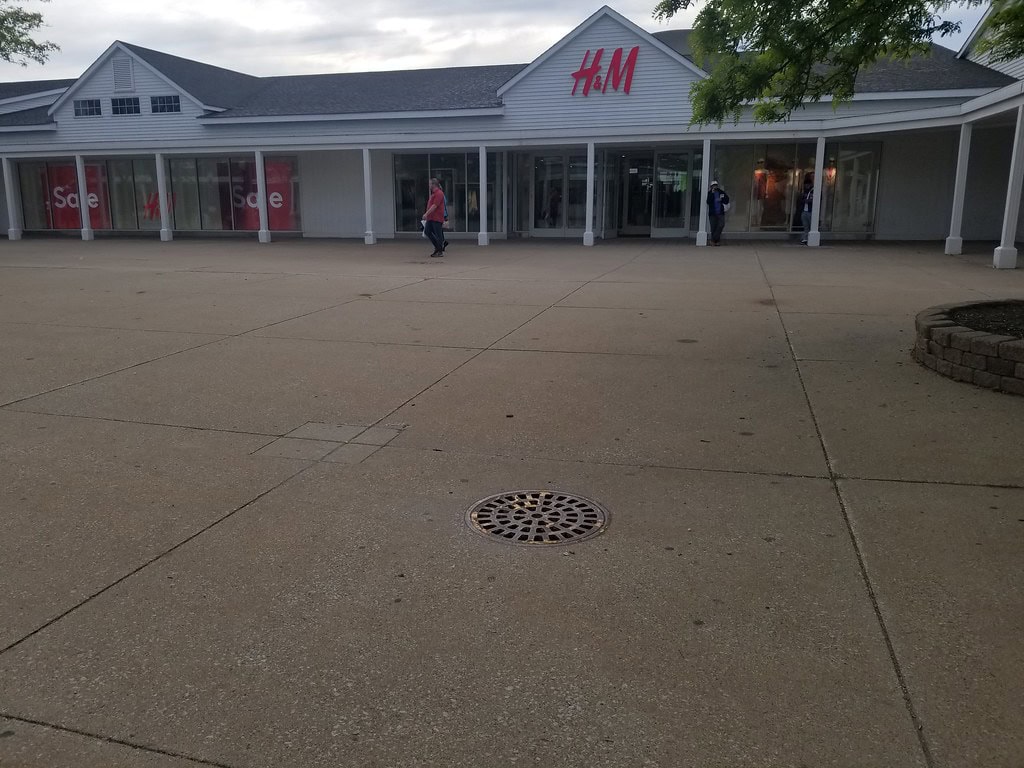
Circus tents, superheroes, and Lighthouse Place's new act
In recent years, Lighthouse Place has started padding its outlet spine with attractions that have nothing to do with denim sizes.
The familiar roster is still there - Nike, Columbia, Coach, Michael Kors, Old Navy Outlet, Under Armour, Aerie, American Eagle, Samsonite, Le Creuset, and the rest - but they now share the property with things you show up for even if you are not in the market for a new jacket.
In July 2023, Paranormal Cirque III rolled in, raised a black and white Big Top in the parking lot, and turned the asphalt into a four-day mix of acrobatics, illusion, and theatrical gloom.
The next year, two Nina's shops, one aimed at adults and one at kids, joined the lineup.
Food stopped being an afterthought: Antojito MX brought a full Mexican menu, and Theatre on Skates laid down synthetic ice so visitors could skate without waiting for January.
The biggest swing came in May 2025, when the Heroes Gallery - Arcade - Museum opened on site.
Inside, visitors move from rows of pinball machines and vintage arcade cabinets to a toy museum and cases of Silver and Bronze Age comic books and superhero memorabilia.
Comic book personalities, including Marvel names, are booked in for signings and appearances.
The message is blunt: Lighthouse Place is still an outlet mall, but now it also sells a day out - circus, skating, arcade, and all - wrapped around the discounts.
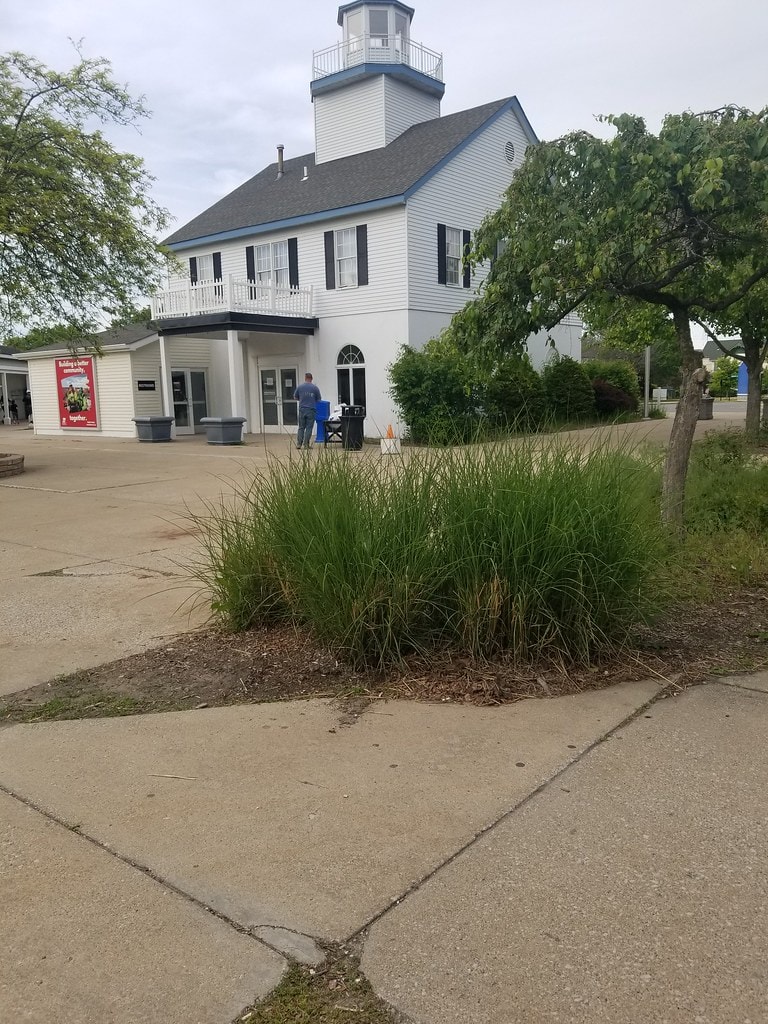
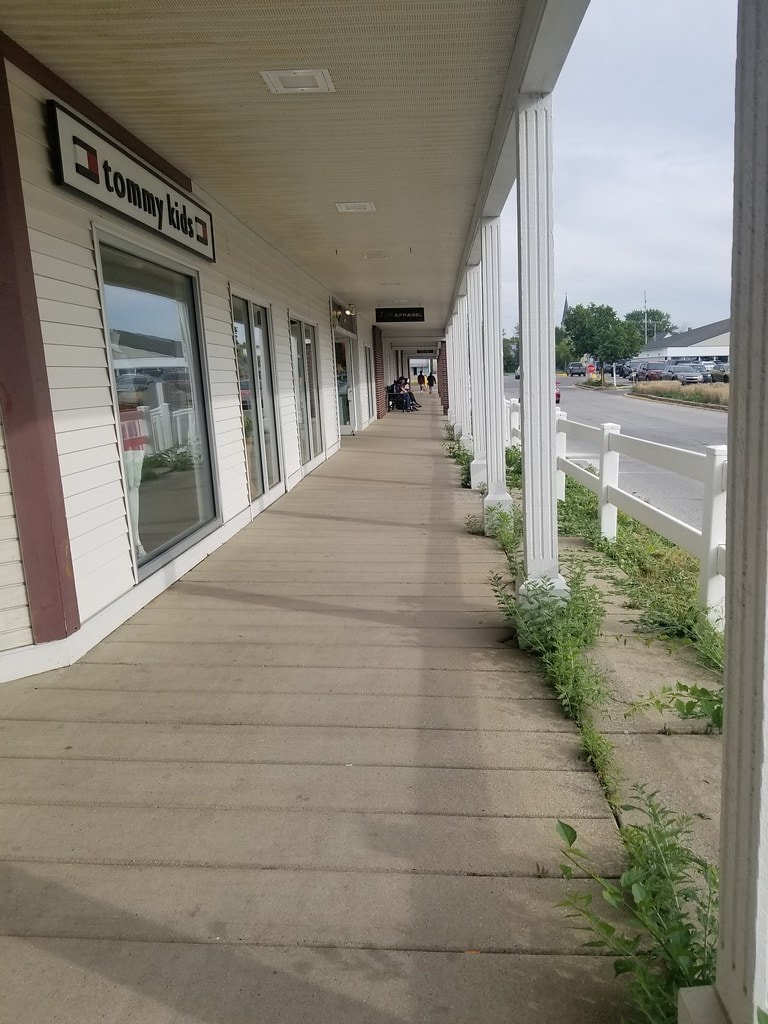
My husbands uncle was one of the original investors in Lighthouse. It had so many great stores. Then the pandemic hit and the damage was done. The outside is no longer kept up. Weeds grow where flowers grew. The pillars are rotting and need to be replaced. The building need paint. Many stores have pulled out because the rent is so high. That happened because of greed. If the Lighthouse is not corrected it will follow Haskell & Barker and Pullman Standard. We will once again be left with an empty field. Sad, so very sad.
Thank you for writing this. It reads like someone watching a preventable collapse, and that "sad, so very sad" line is exactly the right tone for it.