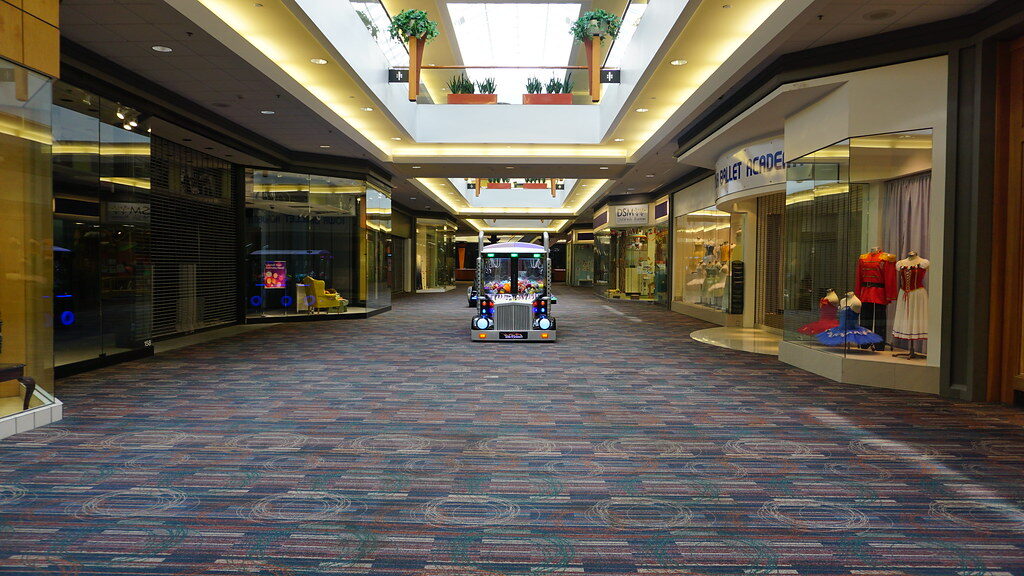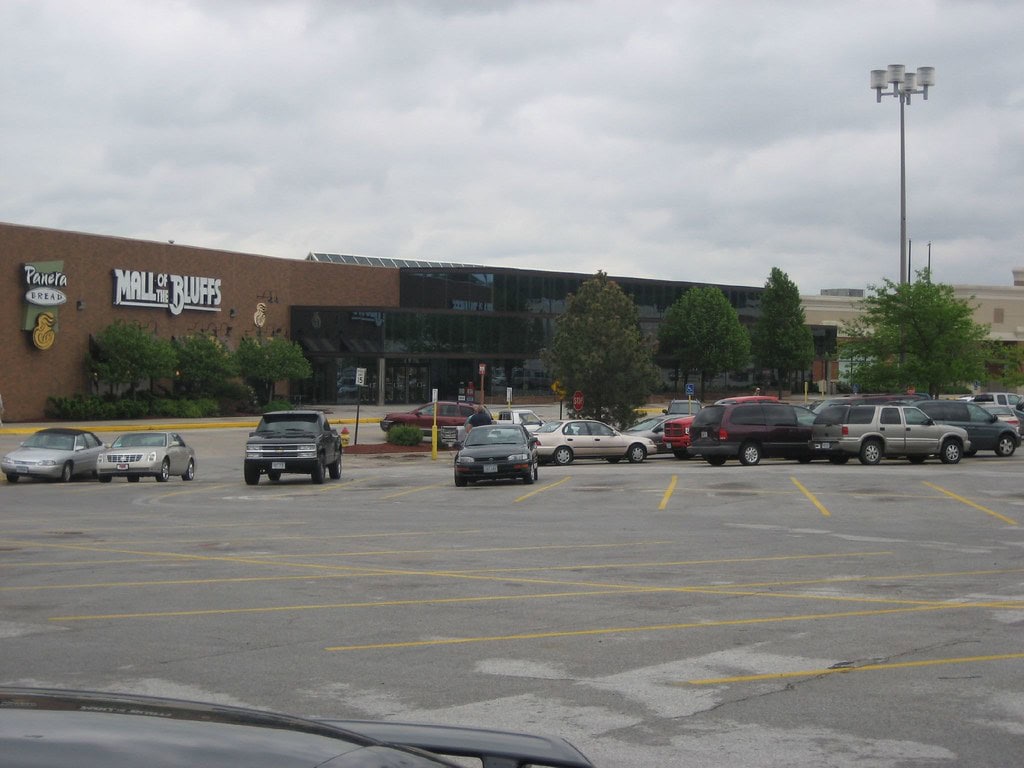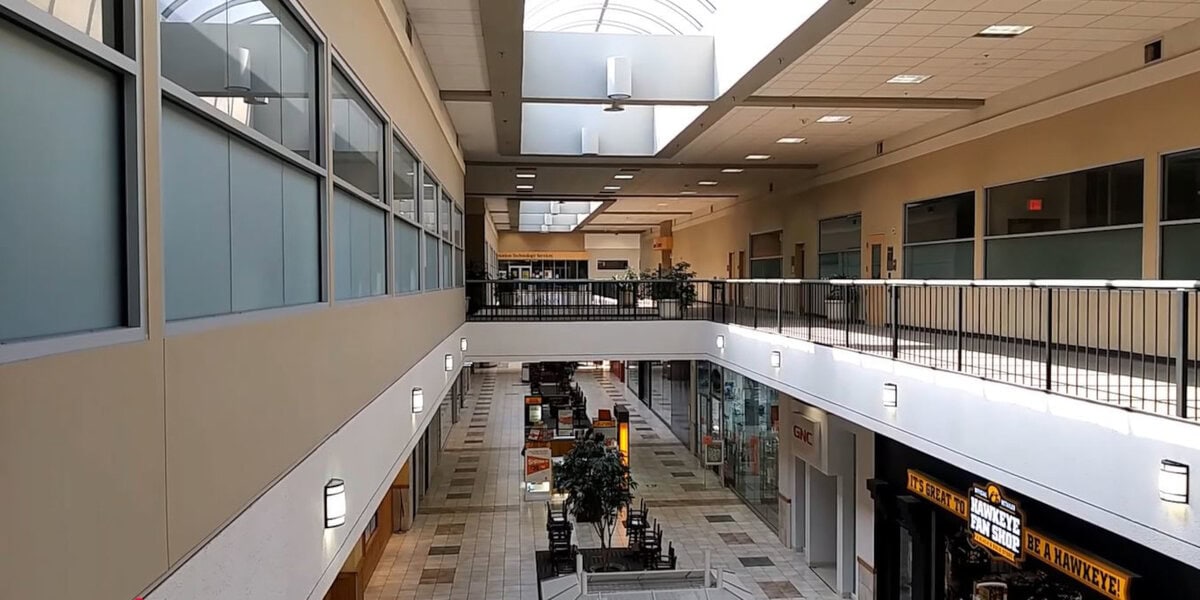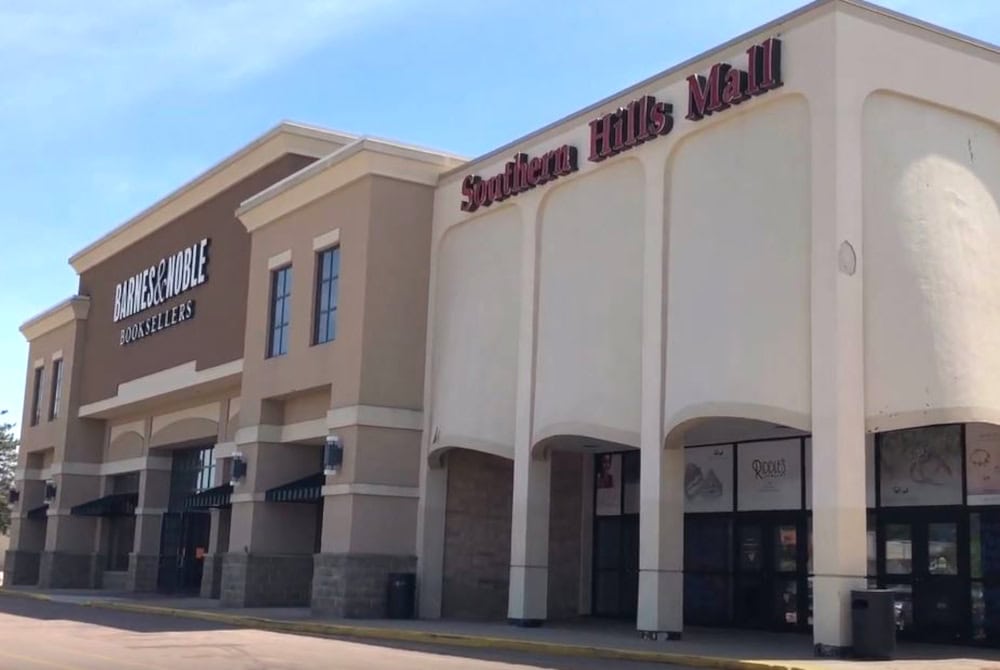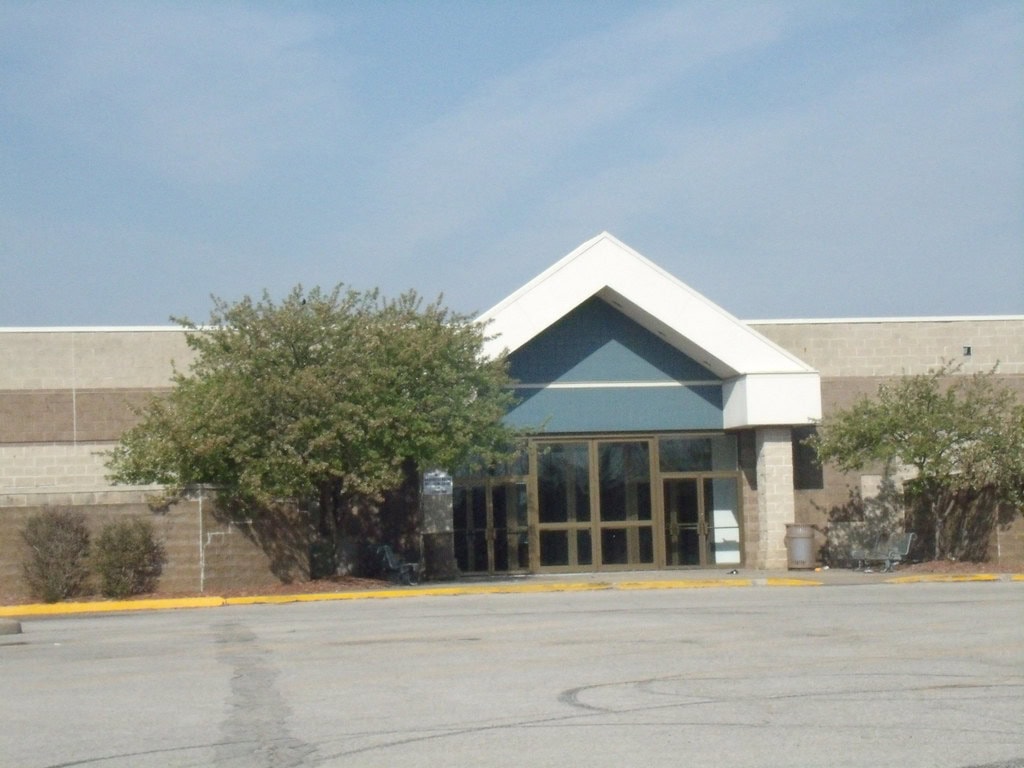
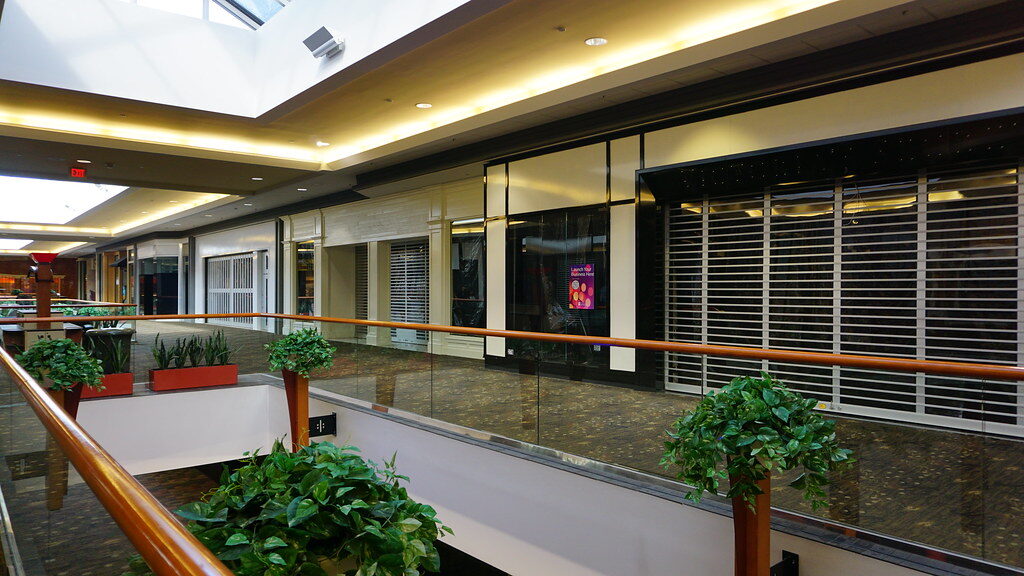
In February 2025, Valley West Mall in West Des Moines had 22 occupied storefronts out of 138. Most of the others were covered with paper or closed off with metal gates.
At one end, JCPenney was still open, with discounted merchandise visible from the entrance. The rest of the corridors were mostly dark, with empty display cases and hand-lettered "For Lease" signs.
A court had placed the 57.72-acre property under a receiver, and CBRE was marketing it for redevelopment.
The sales materials pointed to PUD zoning, possible high-density residential use, and the size of the building. The property was being sold for redevelopment and could include demolition of the existing structure.
Fifty years earlier, the same property had taken years of lawsuits and competing claims to develop.
Frederick Watson, a developer from Minneapolis, kept pushing the mall project forward despite resistance from a corporate neighbor that abandoned its own building plans rather than build nearby.
A department store sued over a promise to become an anchor tenant, and a third tenant would not sign until that lawsuit was settled.
When the mall finally opened, it drew more shoppers than any other shopping center in the Des Moines area. At its peak, about 40,000 people came each day.
Between that high point and the locked gates came two failed anchor deals, an 80 percent drop in assessed value, roof damage from a derecho and a hailstorm, and interior damage from a burst pipe.
Valley West Mall Opened After Years of Disputes
Frederick Watson first put the Valley West proposal in front of local officials in 1971. The community reaction was not welcoming.
Meredith Corporation, the Des Moines-based media and publishing company, had already picked a site near Watson's proposed mall for a new corporate headquarters.
Meredith withdrew its headquarters plan in June 1971 rather than build alongside a shopping center.
That was only the first obstacle. Dayton Hudson Corporation believed it had been promised an anchor spot at the mall.
When Watson signed Petersen Harned Von Maur, a department store group based in Davenport, as an anchor in mid-1974, Dayton Hudson sued.
JCPenney then refused to sign its own lease until that lawsuit was settled.
Valley West first opened on August 4, 1975, with about 20 stores and its first anchor, Brandeis. A grand opening followed on July 28, 1976, when Petersen Harned Von Maur opened alongside roughly 40 specialty stores.
Helzberg Diamonds had leased space at Valley West before that first opening, and the mall was still adding jewelry tenants by late 1976.
JCPenney completed the original three-anchor lineup when it opened in March 1977, nearly two years after the first shoppers walked in.
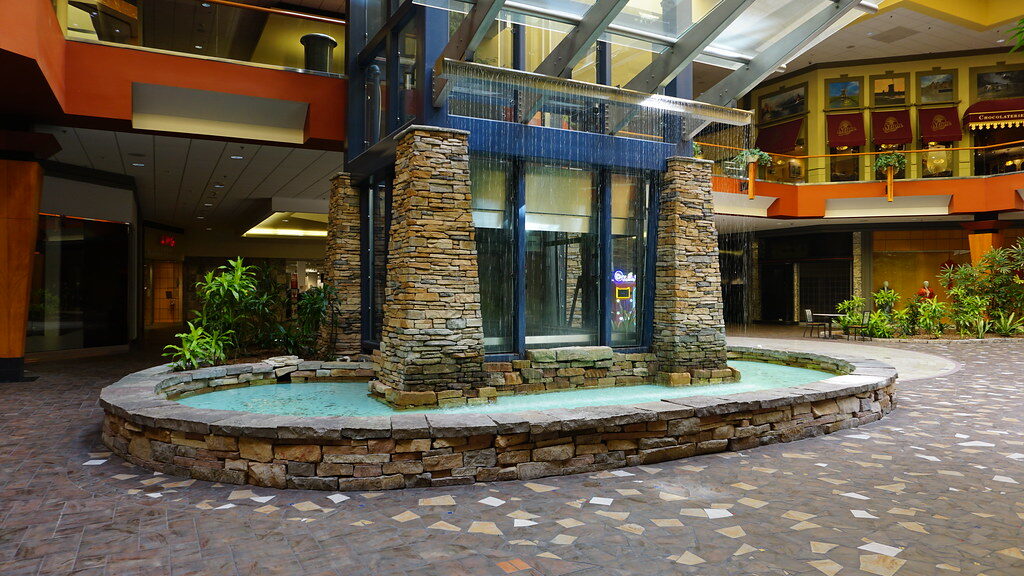
Forty Thousand Shoppers a Day
By 2000, Valley West Mall was drawing about 40,000 shoppers a day - the most-visited mall in the Des Moines area.
That number had built up over the decades. Brandeis, one of the original anchors, became Younkers in 1987 after Younkers bought the chain.
Petersen Harned Von Maur shortened its name to Von Maur in 1989. Both department stores stayed in place, and the mall kept pulling traffic.
A food court opened in 1998 in the space Dunham's Sports had vacated. An interior renovation was finished in August 2003.
During those same years, management worked to bring in a fourth anchor. Dillard's signed a letter of intent in March 1999 to build a $30 million store and parking ramp at Valley West.
That letter expired in August 2000, and Dillard's signed instead with Jordan Creek Town Center, which was being developed a few miles away.
Galyan's announced an 84,000-square-foot store at Valley West in May 2001, then pulled out of the Des Moines market entirely by January 2003.
Two anchor opportunities came and went while a well-funded competitor was being built nearby.
Two Lawsuits and the Rival They Could Not Stop
On Christmas Eve 1998, a group of labor activists handed out flyers outside the Valley West JCPenney, accusing clothing brand Phillips-Van Heusen of using sweatshop labor.
Police arrested them for trespassing. The case moved through Iowa's courts for years.
On April 3, 2002, the Iowa Supreme Court sided with West Des Moines, ruling that Valley West Mall was private property and not a public space where people could freely hand out literature.
Valley West and Merle Hay Mall also sued West Des Moines during this period, challenging the city's use of tax increment financing to pay for infrastructure tied to Jordan Creek Town Center.
The Iowa Supreme Court ruled against them on February 27, 2002. The two malls had spent money and time trying to slow a publicly assisted competitor - and lost.
In the years after Jordan Creek Town Center opened, Valley West's business fell steadily.
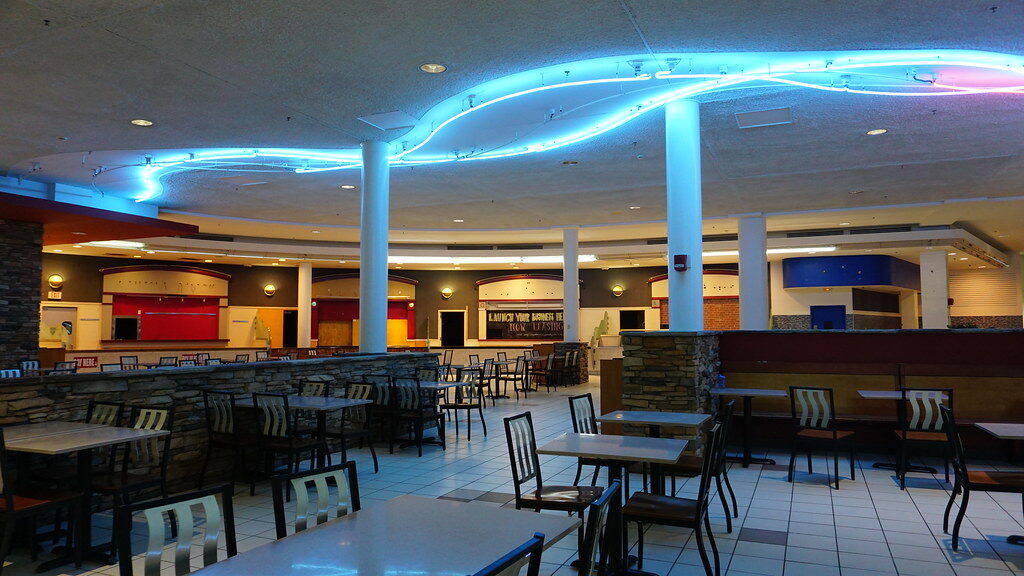
One by One, Two Anchors Went Dark
Younkers shut down in 2018 when its parent company, Bon-Ton Stores, went out of business. On August 24, 2021, Von Maur announced that it would close its Valley West store in 2022 and move to Jordan Creek Town Center.
After that, JCPenney was the only department store left in the building - the same company that had refused to sign its first lease there in the 1970s until a lawsuit was resolved.
The mall had been losing tenants since around 2004, years before those anchor stores left. By 2025, just 22 of 138 storefronts were occupied, or 16 percent.
Its assessed value dropped from $100,910,000 in 2004 to $19,900,000 in 2025, down more than 80 percent.
From 2017 to 2025, properties within half a mile of the mall rose in value by only 11.88 percent. The average West Des Moines property rose by 46.9 percent.
The roof was hit by a derecho in 2020. A hailstorm with high winds caused more damage in 2022. In early 2025, a burst pipe flooded part of the interior.
The mall kept going with temporary repairs, but a building more than 50 years old and bringing in less and less money was not getting the investment it needed.
A $278 Million Plan That Never Won State Backing
In February 2021, West Des Moines announced a plan to overhaul Valley West Mall. The total project cost came to $278 million.
Watson Properties, the mall's owner, was expected to put in $262 million. The city planned to seek $30 million in state aid as part of the financing.
It called for tearing down the former Younkers building and the JCPenney section, adding 18,000 square feet of restaurant space near the Younkers site, building apartments and retail around a pond, and placing a 65,000-square-foot entertainment complex on the south end, a 130,000-square-foot event space and hotel on the north end, and a three-story office building in the northwest corner.
The city had submitted a pre-application to the Iowa Economic Development Authority in February 2021, and the authority did not fund it.
That rejection left the mall without that rescue plan. By May 2022, U.S. Bank was moving toward foreclosure.
Valley West Mall had not made a payment on its $50 million loan since May 2021, the bank had issued a default notice in April 2022, and more than $41 million was still owed.
A Receiver, a Buyer, and a Redevelopment Plan
The building did not have one agreed-upon size. CBRE put it at 856,000 square feet. City records in West Des Moines put it at 1,164,000.
The difference likely came from different measurement methods. A court-appointed receiver had stepped in, and the plan was to demolish the structure completely.
The site was listed for sale in February 2025 as a redevelopment opportunity. CBRE highlighted the zoning, the location, and the site's potential for mixed-use development.
The full 57-acre property was offered as a single piece, with no option to split it.
A contract followed in July 2025. Eight months later, the buyer was still unnamed, and the sale was still unfinished.
By March 2026, the timeline had grown longer. Tenant negotiations were taking more time than expected, and the buyer needed additional time to inspect and review the property.
The City Council approved an urban renewal plan in October 2025 and granted special tax status in March 2026, but the project was still moving slowly.
The plan was to begin again from the ground up. The current building would be removed, and a new development with housing, shops, and entertainment would replace it.
The plans included a large water feature that would be used for paddle boating in warm weather and ice skating in winter. The expected cost was $120 million.
West Des Moines and nearby Clive had been studying the University Avenue corridor since 2019. The full buildout was expected to take 10 to 20 years.