
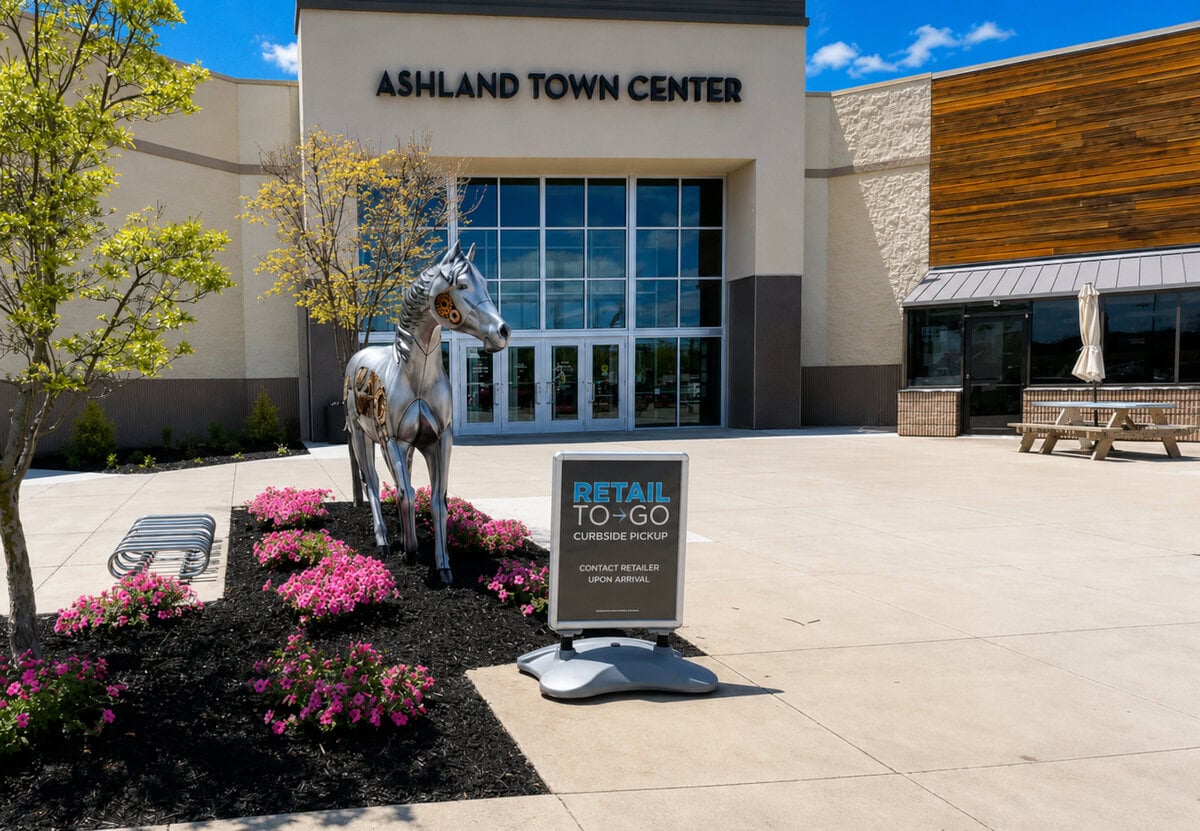
Ashland Town Center opened on Winchester Avenue in Ashland, Kentucky, in 1989, an enclosed regional mall for three states' worth of shoppers.
Most of the anchor lineup that it opened with is gone or transformed now. Walmart relocated. Hess's changed names twice before disappearing entirely into a Belk. Goody's, a later anchor, went bankrupt. The company that owned the mall went through Chapter 11.
The food court at Ashland Town Center shrank in 2008. Not closed, not renovated into something nicer - shrank, to make room for retail square footage. If you used that food court in the 1990s, you would notice the difference.
None of it closed the place. As of last year, the mall was 94% occupied. The parking lot keeps filling.
Ashland Town Center Opens on Route 23 in 1989
Before Ashland Town Center opened, northeastern Kentucky still did not have a modern enclosed regional mall. Huntington, West Virginia, just across the state line, had one. Lexington had several.
Ashland, the older steel city on the Ohio River, had shops downtown and a business strip along Route 23.
But it did not have a regional shopping center that could keep more local shoppers from driving elsewhere.
Ashland Town Center opened on October 24, 1989, at 500 Winchester Avenue. It had three anchor stores: Walmart, JCPenney, and Hess's.
The mall had one level, parking lots on every side, and a food court inside. The project cost about $32 million.
Glimcher Realty Trust, the Edward J. DeBartolo Corporation, and Crown American shared the development.
Those three companies had spent the previous twenty years building this type of mall in cities like Ashland.
Hess's meant something different to local shoppers than JCPenney or Walmart. It was a regional department store that many people in northeastern Kentucky already knew.
Families could buy school clothes there after the mall opened. Having Hess's in the mall made Ashland Town Center feel less like another discount shopping strip and more like a full regional mall.
More than 38,000 vehicles passed the property on Route 23 each day.
The mall drew shoppers from Russell, Flatwoods, Catlettsburg, Ironton across the river in Ohio, and West Virginia communities in the Huntington metro area.
The trade area had roughly 192,900 people. Some shoppers drove more than thirty miles.
The Decade When Winchester Avenue Was Where You Went
Cinemark Movies 10 opened at 400 Winchester Avenue on April 13, 1990. The theater had ten screens and was located near the entrance to Ashland Town Center.
The mall, its food court, and the nearby theater created a combined shopping, eating, and entertainment area on the same road.
For many people in northeastern Kentucky during much of the 1990s, that area served as a regular weekend destination.
The food court was the central social space inside the mall. Teenagers gathered there when they did not have a specific activity planned. Families ate meals there before going to the movies.
The food court was noisy, low-cost, and accessible, which made it useful as both a dining area and a meeting place.
Ashland is a small city. In that setting, a regional mall can function as more than a group of stores.
It can operate as a public meeting place where residents see former neighbors, school classmates, and local workers they know from everyday life.
It can be a place for children's birthday visits and a regular stop during errands.
By the mid-1990s, the mall concourse contained the specialty tenants common in American malls during that period.
Three Signs on the Same Storefront: Hess's, Proffitt's, Belk
In 1993, Proffitt's acquired a group of Hess's department stores that included locations in Kentucky.
At Ashland Town Center, the Hess's sign was removed from the anchor storefront and replaced with Proffitt's.
Proffitt's later became part of the Saks-affiliated department-store group.
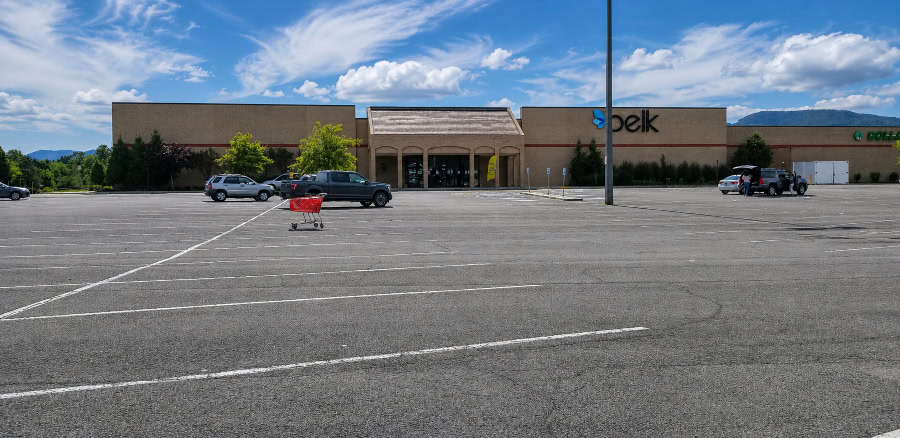
That group then sold its Proffitt's and McRae's locations to Belk, a Charlotte-based department-store company expanding across the South and mid-Atlantic. In 2006, the Ashland location became a Belk.
Hess's, Proffitt's, and Belk occupied the same storefront for over thirteen years. The store operation changed less than the sign. The merchandise remained similar.
The main loss was the regional name that tied the store to its market: a name familiar from decades of newspaper advertisements, and a name that identified the department store as part of the region. Belk is based elsewhere.
This pattern of acquisition occurred in many malls during the 1990s and early 2000s. Regional chains were absorbed by larger companies.
Local identity was reduced through corporate consolidation. Ashland Town Center lost Hess's but kept the anchor space occupied, which was a better outcome than some malls experienced.
Walmart Moves Out and the Mall Tears Itself Apart to Rebuild
Walmart started leaving enclosed malls in the early 2000s. The company wanted freestanding Supercenters with larger stores, larger lots, a full grocery section, and no neighbors on either side.
The Ashland Town Center Walmart left in the mid-2000s, taking the largest single box in the building with it.
A lot of malls in that situation let the space sit dark. Ashland Town Center did not.
The former Walmart box was cleared and rebuilt as a new JCPenney prototype store, which opened in August 2008 at about 104,000 square feet, considerably larger than the JCPenney that had been inside the concourse.
The food court shrank to make room for retail. The restrooms were rebuilt, including a family restroom. Tenants relocated. The whole interior was reorganized around the new anchor.
The half of the old JCPenney space, now vacant, became Belk Men and Home in 2009.
The freed-up portion of the previous Belk men's area went to Hibbett Sports and eventually Five Below. A pad near the new JCPenney entrance became a Cheddar's Scratch Kitchen outparcel.
Space that had been about cheap, easy eating was now retail square footage. The 2008 project made the mall more efficient and less comfortable in the old way.
Goody's Closes, TJ Maxx Opens, and the Anchor Mix Shifts for Good
Goody's closed. The value clothing chain had stores in malls across the South and mid-Atlantic before bankruptcy brought that run to an end. In 2010, TJ Maxx moved into the space.
TJ Maxx works differently from a traditional full-price mall store. Its discounted inventory changes all the time. Shoppers do not know exactly what they will find, so there is a reason to come back often.
That model held up better against online shopping than full-price mall retail did, though that outcome was not yet clear in 2010.
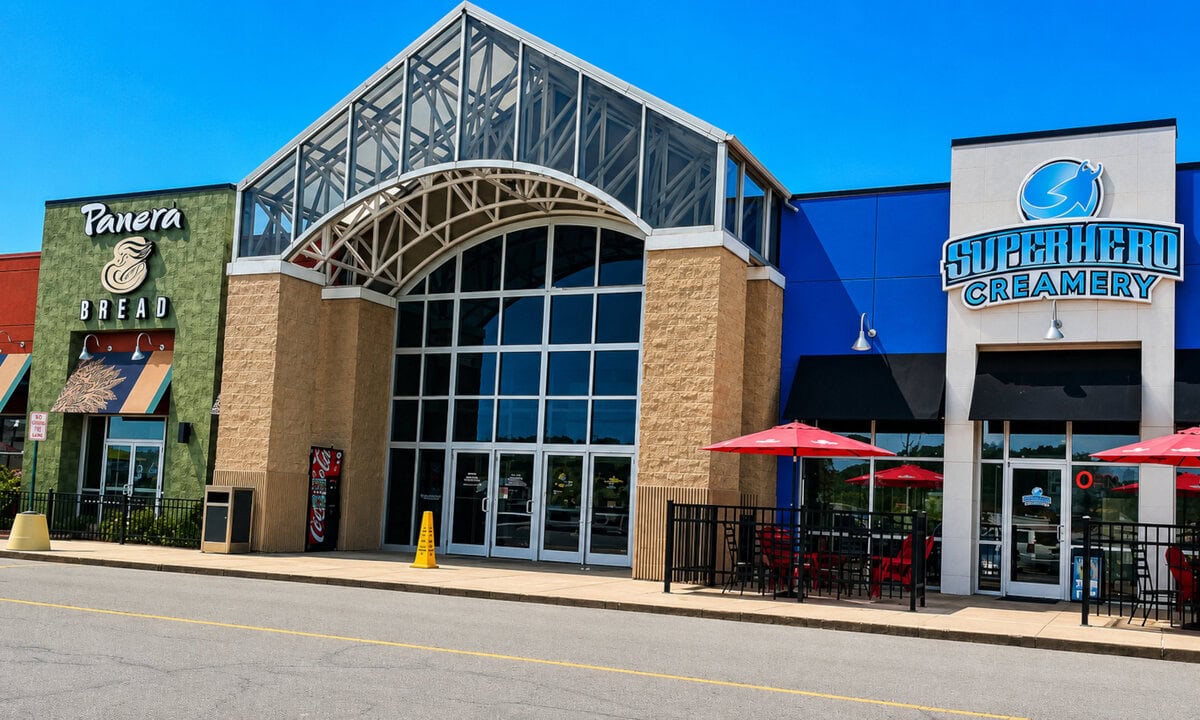
Panera Bread joined the restaurant mix around the same time. It settled near Cheddar's on the commercial ring around the enclosed mall. Cinemark was already there.
By 2010, Winchester Avenue had mostly settled into the shape it would keep: a mall, sit-down restaurants, a bakery-cafe, an off-price anchor, and a ten-screen theater that had already been open for twenty years.
TJ Maxx is still there. Other anchors that looked just as permanent in 2010 have since gone dark in hundreds of malls.
The store category that lasted was not the one people in 1989 would have expected to anchor a regional mall in 2025.
Washington Prime Buys the Mall, Goes Bankrupt, and the Mall Stays Open
Washington Prime Group acquired Glimcher Realty Trust in 2015.
Ashland Town Center moved into Washington Prime's portfolio of enclosed malls in mid-sized markets. Ownership changed. The mall stayed open.
Washington Prime filed for Chapter 11 bankruptcy protection in June 2021. Department-store closures, e-commerce growth, and the pandemic had damaged the company's financial model.
Ashland Town Center continued to operate through the bankruptcy. The case dealt with corporate debt, not a closed mall in Ashland.
Washington Prime eliminated nearly $1 billion in debt and emerged from Chapter 11 in October 2021 as a private company under SVPGlobal.
During that stretch, the mall replaced its family play area. The new space used a STEM-themed design.
It took the place of an amenity that had been in the building for more than fifteen years.
Family play areas had become a practical tool for enclosed malls. Foot traffic no longer came for free.
The Cinemark at 400 Winchester Avenue received renovations as well. The work covered the concessions, the entrance, the roof, the carpet, and the parking.
The theater had opened six months after the mall. Thirty years later, it still brought evening traffic.
Slim Chickens, Olive Garden, and the New Shape of Winchester Avenue
Slim Chickens opened at 702 Carter Avenue near the mall entrance in July 2018, employing about fifty people.
Olive Garden opened on May 1, 2023, in the former Kentucky Hall of Fame Cafe space, as a full-service, national chain, sit-down restaurant. Olive Garden chooses its locations carefully.
Its opening next to the mall in 2023, thirty-four years after the mall first opened, showed that Winchester Avenue still has strong visitor numbers and buying power.
EarthWise Pet was announced in August 2021 and later joined the tenant mix, adding pet nutrition, grooming, and wellness retail. Ulta Beauty had established itself as a dependable contemporary anchor.
Five Below held a value retail position in the former anchor space. American Eagle Outfitters, Buckle, Windsor, Torrid, and aerie carried the apparel load.
The tenant list in 2023 would be unrecognizable to someone who shopped the mall in 1993.
No Hess's, no Walmart, no Goody's, none of the specialty chains that stocked the original concourse.
In their place: beauty, off-price, fast fashion, fast-casual, sit-down dining. The anchors changed, and the mall stayed busy.
What the CBL Acquisition in 2025 Says About the Mall's Standing
On July 29, 2025, CBL Properties acquired Ashland Town Center from Washington Prime Group.
The mall came as part of a $178.9 million deal with three other properties: Mesa Mall in Grand Junction, Colorado; Paddock Mall in Ocala, Florida; and Southgate Mall in Missoula, Montana.
Beal Bank USA announced $443 million in financing on August 5, 2025.
Ashland Town Center measured about 436,000 square feet of gross leasable area. It carried 94% occupancy and $442 in annual sales per square foot.
Joann had completed a full chain liquidation in early 2025.
Its former box was identified by CBL as a value-creation opportunity, along with anchor recapture rights and possible outparcel development on adjacent land.
No replacement tenant had been confirmed at the time of writing.
Four retailers were announced in February 2025: Palmetto Moon, Pandora, Auntie Anne's, and Lids.
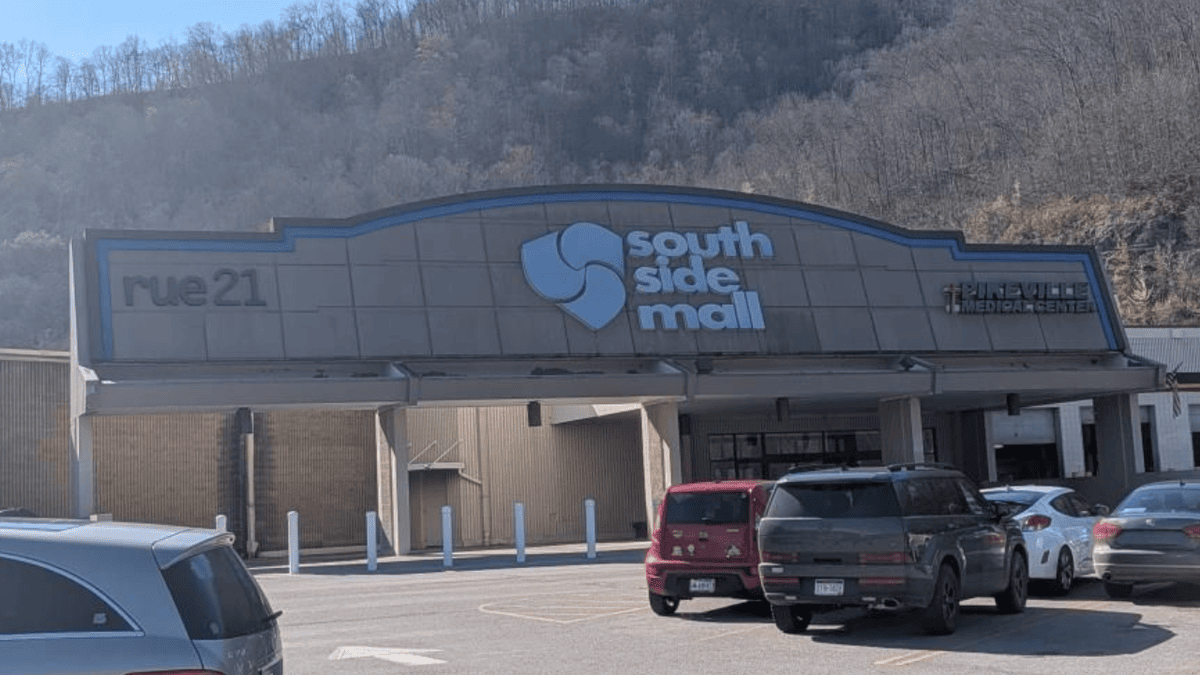
Palmetto Moon opened June 7, 2025, in Suite 186. It took the former Rue 21 space near TJ Maxx.
Walmart left. Hess's changed names through Proffitt's and Belk. Goody's left. Joann left. The mall still stood at 94% occupancy.
Olive Garden had opened two years earlier. Winchester Avenue remained the retail address for northeastern Kentucky.
Independent Publisher Notice
BestAttractions is an independent editorial publisher. We are not affiliated with, endorsed by, or acting on behalf of any location, business, property owner, manager, government agency, or organization described in this article. Comments posted on this page are not forwarded to, reviewed by, or acted upon by any entity mentioned in the article. For official inquiries, complaints, applications, bookings, or other requests, please contact the relevant entity directly through its official website or other verified channels.
Why can’t Charleston Town Center do this?
Charleston Town Center is starting from a much weaker position. Ashland retained active anchors and added retailers such as Palmetto Moon, Pandora, Auntie Anne's, and Lids, while Charleston lost Sears, Macy's, and JCPenney. Charleston now needs a larger redevelopment rather than another round of ordinary store replacements.