Forest Haven operated as a District-run residential institution in Laurel, Maryland, within Anne Arundel County, along River Road between Washington, D.C., and the Baltimore-Washington region.
The site sat along River Road and covered about 300 acres of land owned by the District of Columbia at 8400 River Road. The facility opened in 1925 as the District Training School and ran for 66 years.
It functioned as the main institutional placement for residents of Washington, D.C., with intellectual and developmental disabilities, drawing its population from all eight wards.
In April 1990, a federal court ordered it to close following decades of documented abuse, neglect, and violations of constitutional rights, and it became one of the most litigated public institutions in the United States.
Once Inside Forest Haven, Leaving Was Hard
Bath time, as Vincent Gray later described it before becoming mayor of Washington, D.C., involved staff leading women out of a dormitory and spraying them with a hose.
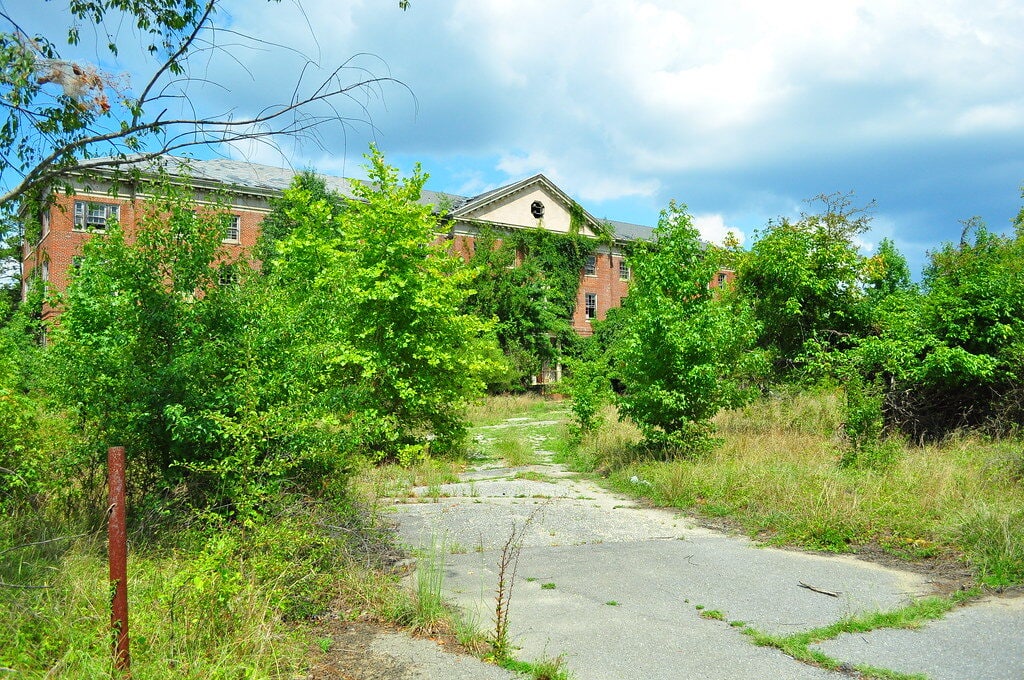
That was the level of care at Forest Haven, a campus in Laurel, Maryland, with nearly two dozen buildings. The District of Columbia placed more than a thousand people there after deciding they could not live anywhere else.
The institution was not officially labeled an asylum. Its legal name was the District Training School. The federal government purchased the land in 1923 at 8400 River Road, and it opened two years later.
The original goal was to teach farm work and everyday skills so people with intellectual disabilities could return to city life.
By the 1960s, that purpose had fallen apart. What remained functioned more like a warehouse.
Men were assigned to buildings named for trees, while women were housed in buildings named for flowers. Being admitted meant losing much more than an address.
Families had to give up guardianship to the District of Columbia to place a relative there. That shift in legal control shaped everything that followed.
Residents stayed because they often could not leave on their own, and release could require legal action.
Over time, it became clear that some should never have been admitted in the first place.
Forest Haven's founding vision and why it failed
Forest Haven started operating in 1925 on 200 acres. The campus later expanded to include nearly two dozen separate buildings.
The original vision was agricultural. Residents were expected to work the land, gain practical skills, and eventually go back to Washington.
Boys did the farm labor. Girls learned household work. That model was widely accepted at the time.
In the Progressive Era, many people thought a structured environment and regular work could help people return to society after being excluded from it.
But that vision did not last. By the 1970s, Forest Haven had about 1,300 residents.
The population had grown to include people with epilepsy and others whose conditions were unrelated to intellectual disability.
Most were Black and poor, and many were cut off from life in the city for years.
A federal law passed in 1970 renamed the institution Forest Haven and introduced procedures for voluntary admission. Before that, residents were typically admitted by court commitment.
Two people who should never have been sent there
Mattie Hoge arrived at Forest Haven in 1930. She was 17 years old. The institution classified her as intellectually disabled.
She was not. She was deaf. Hoge remained at Forest Haven for 57 years. A D.C. Superior Court judge ordered her release in 1987.
Lonnie Jackson spent 13 years at Forest Haven despite also having no intellectual disability. He was released in 1971.
The only path into Forest Haven required family members to relinquish guardianship to the District. Once that happened, the institution held near-total legal authority over a person's life.
A 1976 census found 1,050 residents; of those, 400 had the capacity to be placed in the community immediately.
They were not. The institution had only limited mechanisms for releasing people it no longer needed to keep.
Ricardo Thornton arrived in 1966 and did not know for years that his brother and sister were also residents. Staff made all of his decisions.
He later testified to the Senate that he witnessed abuse, especially against people with severe disabilities, and said plainly: people do not grow in places like Forest Haven.
What Harold Evans and other parents set in motion in 1971
In 1971, Harold Evans joined with other parents who were dissatisfied with conditions and formed an advocacy organization.
They argued that Forest Haven was not delivering care but instead keeping people confined. A complaint filed in 1976 on behalf of residents stated that most spent their days inactive and received almost no treatment.
The residents, through parents and other next friends, filed their lawsuit in February 1976.
Congress held hearings in April and May. By June, the U.S. Department of Justice had joined the case on the residents' side.
Two years later, a federal court ruled that residents had a constitutional right to habilitative care and treatment and a right to be free from harm.
Later court orders required the District to move residents into community settings and ensure they lived in the least restrictive, most integrated environments available.
The District of Columbia did not comply with these orders.
A federal opinion reviewing the litigation history noted that the District had been found in civil contempt for ongoing and repeated violations of orders issued in 1978, 1981, and 1983.
Improper feeding, aspiration, and deaths by neglect
The most damaging evidence against Forest Haven in its final years concerned how residents were fed.
Residents were dying of aspiration pneumonia - a condition caused when food or liquid enters the lungs, which can happen when someone is fed while lying down.
The Justice Department presented this evidence repeatedly over 18 months. A consent decree eventually required that residents be fed in an upright position.
A 1986 proposal for feeding-risk assessment and staff training was rejected for lack of funds. One worker might be responsible for feeding eight to ten residents at a single meal.
One physician gave substandard care to five residents who died of aspiration-pneumonia-related complications.
A second physician continued practicing at Forest Haven after Maryland suspended his license and declared that his practice posed a grave risk and imminent danger.
The deaths were documented by name. Sheila Dabney died on May 2, 1989.
Arthur "Arkie" Harris died on August 8, 1989; more than six hours passed between the moment his life was clearly in danger and the arrival of an ambulance.
Joseph Hardy Jr., Willie Marie Gil - who weighed 28 pounds at death - and Walter Tolson were among five more residents who died of aspiration-pneumonia-related complications before the next court hearing.

Money stolen, residents still waiting for repayment in 1982
In 1981, Lemuel L. Taylor, a former D.C. accounting officer, faced charges for taking money from the personal bank accounts of Forest Haven residents.
A two-week trial ended with a conviction. He received a five-year prison sentence for stealing more than $40,000.
By August 1982, the victims still had not been repaid. Investigators found that $70,000 was missing from the accounts of at least 52 residents, including three who had already died.
Eleven months after the conviction, the city had returned none of it. The residents had no independent legal standing, while families were still complaining that the District had not repaid the stolen money.
Recovery depended on the city, and repayment was still being delayed.
The burial ground at the edge of the property
Over Forest Haven's 66-year history, approximately 3,200 people lived there. More than 300 died during the institution's operation.
Many were buried in a mass grave at the edge of the property, unmarked for decades. In 1987, families placed a large headstone at the site bearing 389 names.
Some of the graves have been uncovered by erosion.
Forest Haven did not close because the District decided to do better. The court ordered the remaining 233 plaintiffs to move out by September 30, 1991.
By October of that year, all of them had been placed, and the buildings were empty.
The community system built to replace the institution - 160 city-funded, privately operated group homes - inherited many of the same problems.
A Washington Post investigation in 1999 found that at least 116 people with disabilities had died in D.C.-overseen group homes starting in 1993, and that 34 of those deaths involved delayed treatment or neglect.
In 1995, the court again found the District in contempt and appointed a special master. In 2010, 600 class members were still alive and still under court supervision.
D.C. announced in late 2016 that the court expected to vacate the Evans case in January 2017 - ending what the District called the longest-running class action of its kind in the United States.
What stands at 8400 River Road today
A 2015 D.C. preservation document covering youth services facilities at 8400 River Road identifies a "Forest Haven Eligible Historic District" and notes that some buildings on the property may be part of it.
The New Beginnings Youth Development Center now operates at that address on the same land that once made up Forest Haven.
A 1994 report stated that parts of the complex were already being used for juvenile detention about three years after Forest Haven closed.
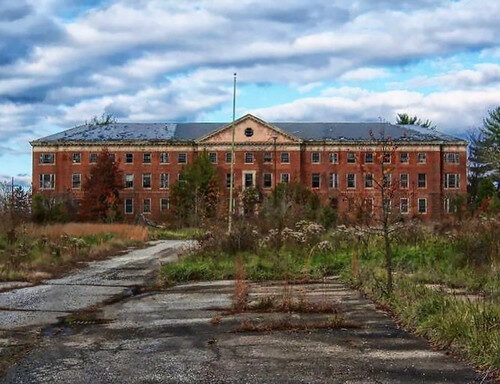
Public records identify many buildings still standing at the site, though they do not appear to provide a definitive accounting of every original structure.
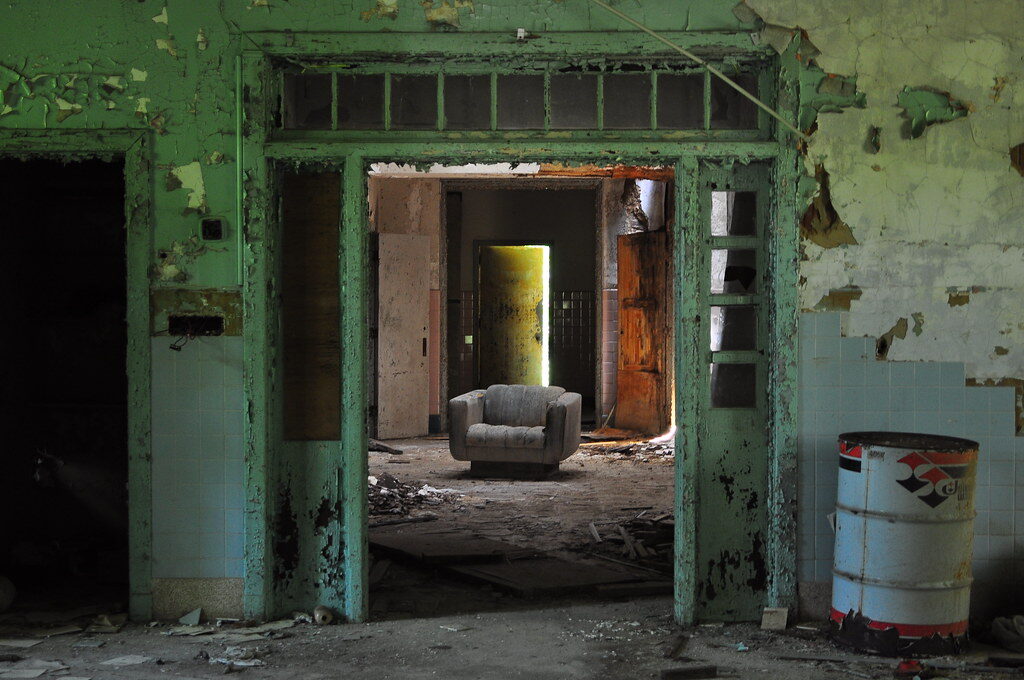
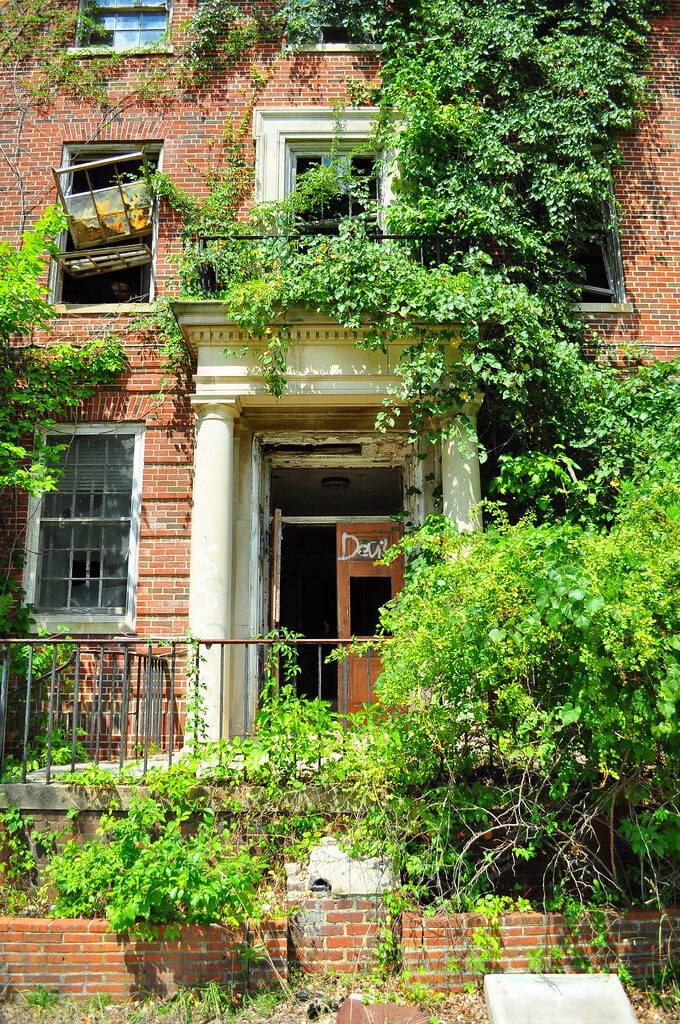
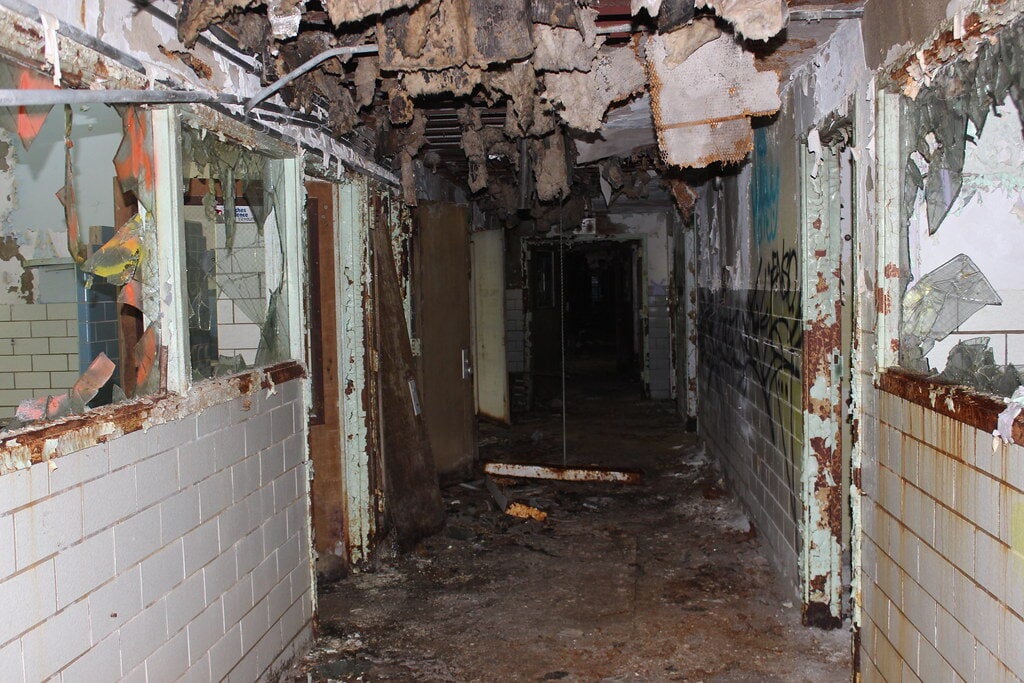
Urban explorers have recorded what remains inside some of them, including desks, beds, toys, and medical records left behind when staff and residents left in October 1991.
Asbestos has been removed, but much of the physical evidence of daily life at Forest Haven has remained untouched for more than 30 years.