New Harbour Mall opens on Canning Blvd
Harbour Mall was put up where people were already used to driving by, at the corner of Route 24 and Route 81 in Fall River, Massachusetts.
The mall aimed to attract people from Fall River and nearby towns like Tiverton, Rhode Island, and Somerset, Massachusetts. All of these places were close enough for a short visit that could last an entire afternoon.
The main stores were set up in a typical way for that time. Bradlees, a discount store from Stop & Shop, was on the east end. Grant City, another discount store from W.T. Grant Company, was on the west end.
Smaller shops lined the main hallway between them, set up to attract people walking between the two big stores.
Bradlees opened on March 17, 1971. The opening caused traffic jams and special deals, including hot pants.
In the early 1970s, the mall quickly became the main spot in the area to shop for electronics, clothes, jewelry, and furniture.
It offered people a comfortable indoor alternative to the crowded, older shopping streets downtown.
Grant City folds, and Kmart takes the end
The first major change did not start in Fall River. It followed a national collapse. In the mid-1970s, the W.T. Grant Company fell into severe financial trouble and entered liquidation.
When the Grant City chain closed in 1976, Harbour Mall lost one of its two original anchors, and the west-end box became an empty anchor space.
Kmart moved into the old Grant City space after it closed in 1976, keeping two main stores in the mall but changing which stores they were.
The store brought a sales idea that people remembered for years: the "Blue Light Special." A blue light on a cart showed there was a big sale for a short time, drawing shoppers to the area and keeping people moving through the store.
With Bradlees on one end and Kmart on the other, the mall entered a long period focused on shoppers looking for deals and regular visits.
Fountain years, pizza booths, and Lucky 13
By the 1980s, Harbour Mall attracted people even when they were not there to shop. It was a place to hang out indoors. Teenagers wandered the halls, and families met up there.
A quick stop for one thing often turned into a longer visit. Inside, a few well-known spots helped people find their way, much like the landmarks downtown.
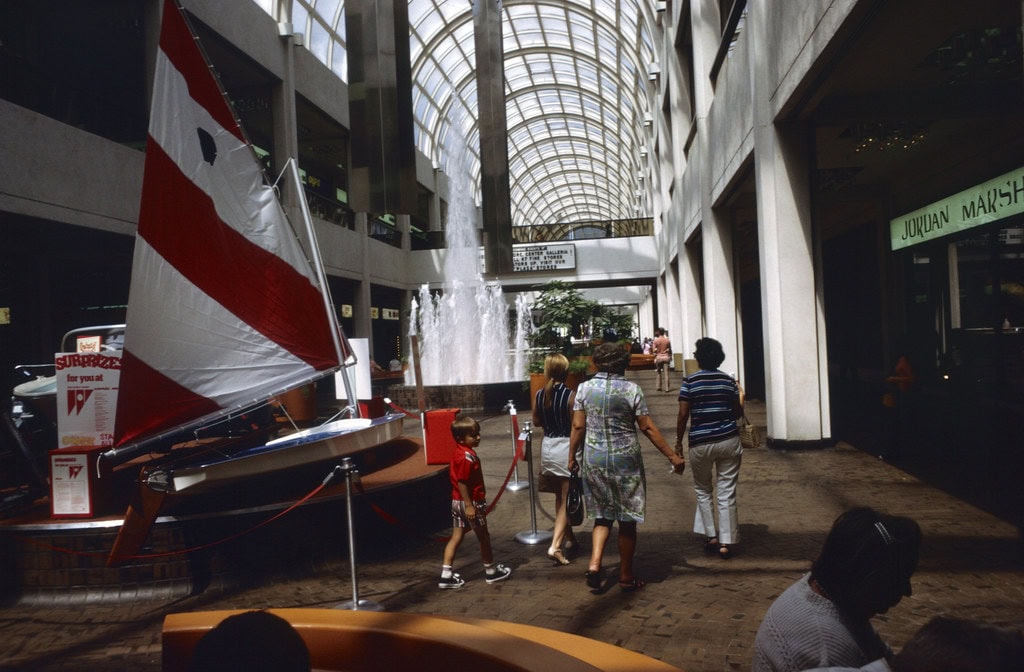
The most obvious one was the fountain in the middle of the open area. People tossed pennies into the water to make wishes, or just for fun. The sound and movement of the water kept the middle of the mall lively.
Papa Gino's was always busy, with old-style booths and little jukeboxes on the tables that played music for a quarter while people ate pizza.
Brigham's Ice Cream and Burger Chef offered ice cream, sweets, and fries.
Kids had their own way of spending time. The arcade, known as Lucky 13, filled the hallway with sounds and games. Kay Bee Toys sold favorites like Atari game systems and Star Wars action figures.
Record Town, Midland Records, and Paperback Booksmith sold music, movies, and books. Hallmark and Radio Shack sold cards and electronics.
A sports memorabilia store offered special items for those not shopping for regular things.
The 1984 cinema arrives and rewires nights
In 1984, the owners added a movie theater, and the mall's hours changed. The mall had focused on daytime shopping, but the theater kept the place busy after dinner, on weekends, and when business was slow.
The theatre later operated as an eight-screen complex. It became Fall River's main local movie venue and gave the mall a reason to keep later hours.
The screens ran major 1980s titles, including Red Dawn, Footloose, Rocky 3, and A Nightmare on Elm Street. They also ran lighter popular fare, including Muppet movies and Breakin'.
The theater was also linked to local media. WALE radio held sports trivia contests that gave out movie tickets, and these giveaways made the theater part of the city's daily life instead of just another chain.
The run ended in September 2007, when the mall cinema closed. Fall River went without a dedicated movie theatre for a long stretch afterward.
1993 skylights, pastels, and a new name
By the early 1990s, the mall's 1971 design was starting to look old compared to other places like Swansea Mall. In 1993, Harbour Mall got a major makeover and was officially renamed "New Harbour Mall."
The project aimed for a brighter, more modern inside. Big skylights were added to the main areas to let in sunlight and make the space feel less dark and closed off.
The outside doors got new coverings, which changed how the building looked from the street.
Floors, lights, and seating were changed to match 1990s styles, and the inside got green and pink pastel colors.
One useful change also got some complaints. The central fountain, which people had used as a meeting spot and for tossing in pennies, was eventually taken out.
The center area got more room for temporary stands and made it easier to walk through the middle.
Taking out the fountain also got rid of a well-known landmark.
After the renovation, the new name did not fully replace the old one in local speech. Many long-term residents still called it Harbour Mall, even with the rebrand in place.
Walmart joins Kmart at New Harbour Mall
The early 2000s started with a big change that affected the whole mall. In 2001, Bradlees closed after going out of business. The big store space on the east end was left empty.
Walmart moved into the space in 2002 and created a setup that was not common.
For more than ten years, New Harbour Mall had both Walmart and Kmart as its main stores in the same building. Both tried to attract the same shoppers looking for low prices.
Both shared the same parking lot and led into the same hallways. The competition was head-to-head and always there, the kind of situation most malls tried to avoid.
For a while, this setup worked. Walmart's way of bringing in lots of shoppers every day helped bring more people into the mall for a short time.
The mall got busier again, and from the outside it looked like it had come back to life.
But the constraints were built in. Walmart's corporate strategy was shifting toward standalone Supercenters with full grocery departments, and the mall space was not set up to become that kind of store easily.
2013-2016: decline and closure
In 2013, Walmart left New Harbour Mall and moved to a standalone Supercenter on Quequechan Street. The departure removed the site's biggest traffic engine, and the enclosed-mall model began to come apart.
With Walmart gone, smaller inline stores closed one after another, and the interior took on the dead-mall look.
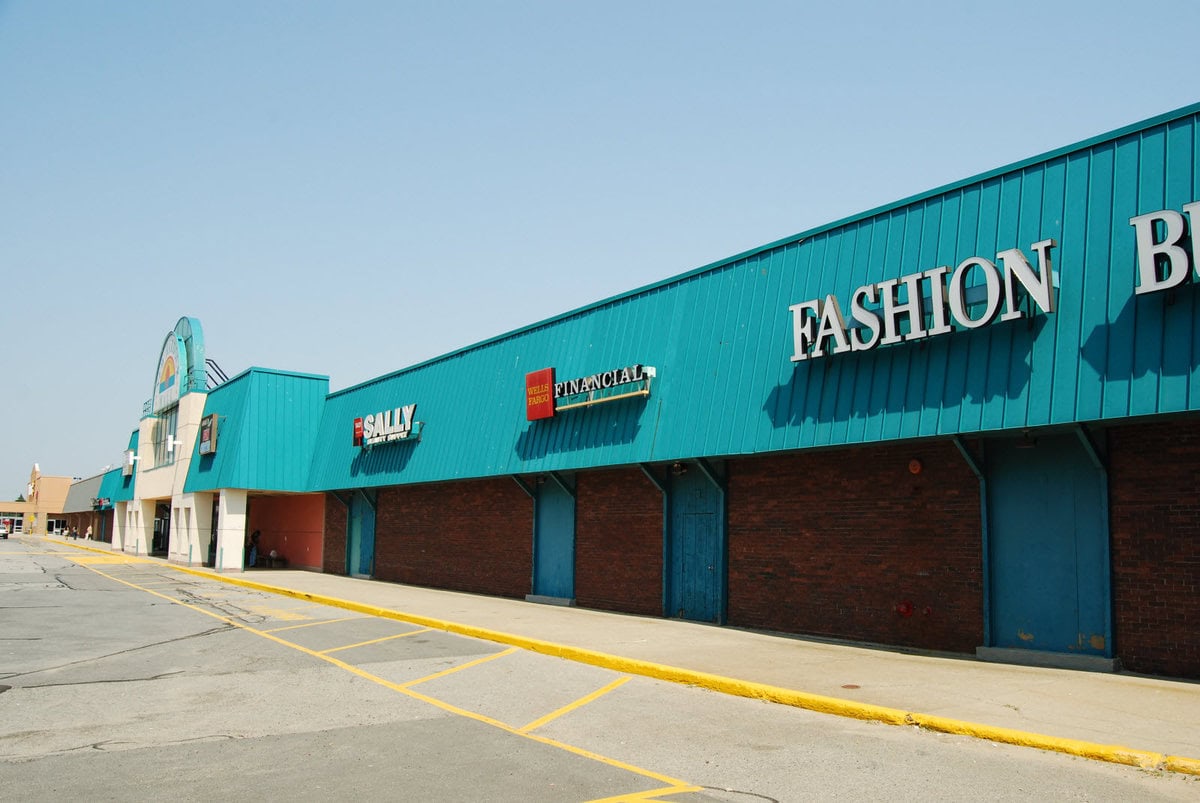
By 2015, the hallways were often dark. Many stores were closed off with metal gates or plywood. The food court was almost empty. The parking lot was in bad shape, too, with potholes and surface damage.
A small group of tenants stayed to the end and kept limited pockets of activity.
Kmart remained open, stocked, and well-lit, and continued to draw a steady if reduced flow of shoppers. Rainbow and Payless ShoeSource kept operating.
Shear Genius, a barber shop, kept its customers. Boston Nails stayed open. Sally Beauty Supply was among the last specialty retailers still in business inside.
The interior closed to the public on January 2, 2016. Kmart closed in May 2016. After that, the question shifted from fixing the mall to replacing it.
2015-2017: New Harbour Mall redeveloped into SouthCoast Marketplace
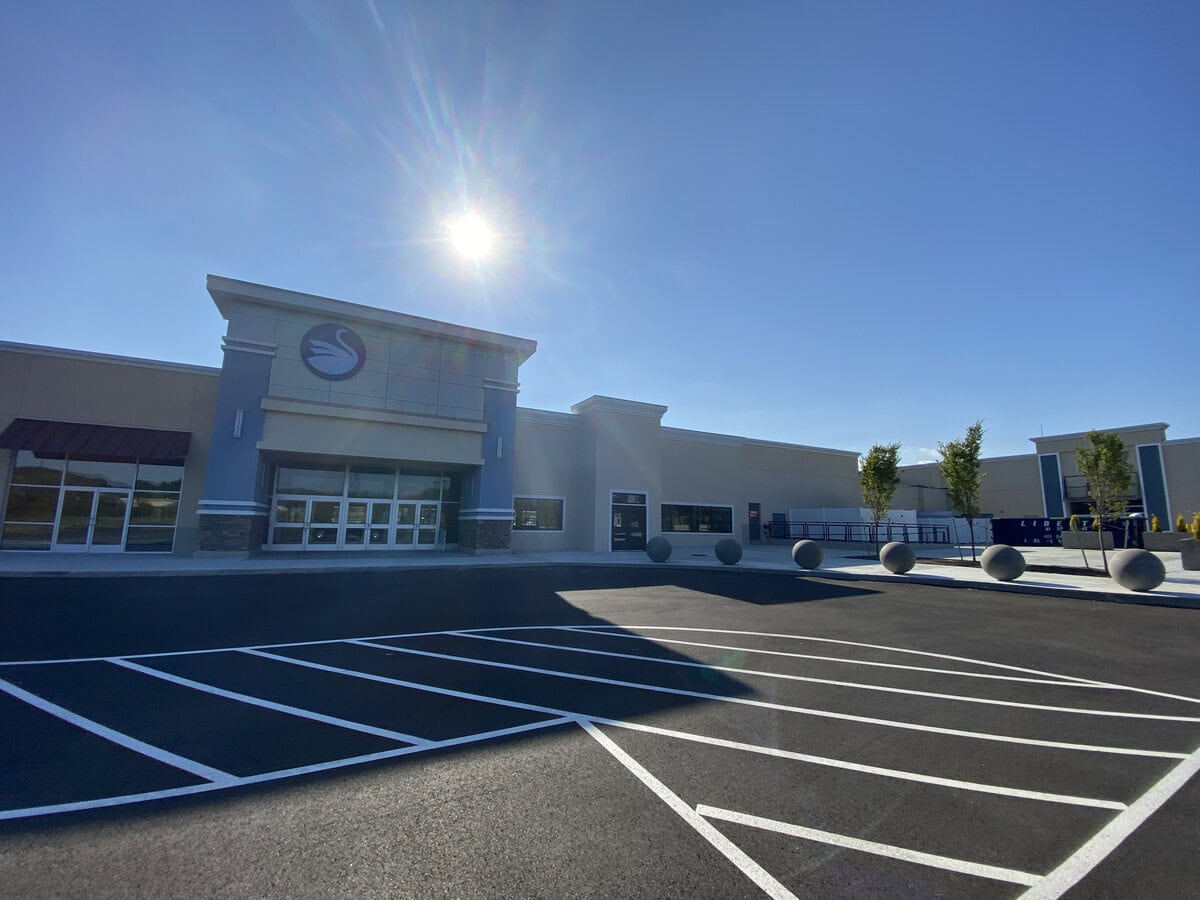
In October 2015, CEA Group of Cambridge purchased the New Harbour Mall with plans for a total redevelopment.
The project was described as a $50 million makeover that would get rid of indoor hallways and instead have stores facing outside in an open shopping area.
A Market Basket grocery store was targeted as the daily-traffic anchor. An 11-screen cinema was planned as a modern entertainment replacement.
A central plaza for dining and public gathering was meant to take the place of the old food court.
The project was expected to create 700 construction jobs and over 1,000 permanent jobs once it opened.
To help pay for the redevelopment, the developers used New Markets Tax Credits, a federal program that encourages investment in struggling communities.
A portion of the site was sold to Market Basket, providing major capital for the rest of the construction.
Demolition started in the middle to late 2016, with large machines tearing down the main mall building and the old Kmart.
Callahan Construction Managers oversaw the building work, and Allen & Major Associates took care of the site design and landscaping.
The work included about 350,000 square feet of updates for new stores, a new 85,000-square-foot Market Basket, about 250,000 square feet of basic building renovations, better drainage, changed driveways, new sidewalks, and about 1,600 parking spaces with LED lights and landscaped areas.
Building the theater was one of the first things done, and parts of the old building were reused for new stores. But the site no longer looked like an indoor mall.
From 2017 openings to 2026: the power center era
SouthCoast Marketplace opened in fall 2017, and new stores followed soon after. Market Basket held its grand opening on October 7, 2017, drawing large crowds from across the SouthCoast.
T.J. Maxx opened on October 12, 2017, running a "Grand Opening Celebration". People liked the new store because it was easy to shop in and had bright, roomy dressing rooms.
Picture Show, the new 11-screen cinema with more than 1,100 seats, opened on October 27, 2017, restoring a dedicated movie theater to Fall River after the 2007 closure of the original mall cinema.
Ulta Beauty opened on November 17, 2017. PetSmart and 110 Grill opened on December 6, 2017.
The tenant mix kept expanding, with Market Basket anchoring daily traffic and a roster that includes Old Navy, Snipes, Staples, Five Below, Verizon, Jackson Hewitt, Supercuts, Venus Nails & Spa, Bay State Physical Therapy, Qdoba, Five Guys, Starbucks, and Chick-fil-A.
Chick-fil-A opened on July 6, 2022, as the city's first, and so many people came on opening day that traffic spilled onto nearby streets. Across from the marketplace, Raising Cane's opened in 2025.
As of 2026, SouthCoast Marketplace is still a busy spot for shopping and dining.