
When Lansing Mall opened in 1969, it was the future arriving on time: enclosed, with air conditioning, supported by three big department stores, and built for a shopping area that was still growing. The ideas behind it all were right at first. Then, one by one, they were not.
The mall is still at 5330 West Saginaw Highway in Delta Charter Township, the only enclosed regional center on the west side of Greater Lansing. The corridor around it has filled in with strip retail, big boxes, and pad sites that did not exist when the mall opened.
Every main store that opened with it in 1969 has closed or moved away. The central department store changed in three different phases. A furniture store and an axe-throwing place now fill spaces that used to have well-known retail brands.
What keeps the building open now is not what anyone expected. Whether that will be enough is a question the space has not yet answered.
Opening Day at Lansing Mall: A First for Mid-Michigan
On July 31, 1969, Lansing Mall opened on West Saginaw Highway in Delta Township. The place smelled of fresh concrete and new carpet. Cars filled the parking fields before the doors opened.
The mall brought about 600,000 square feet of climate-controlled retail to 5330 West Saginaw Highway. It cost $18 million.
Montgomery Ward anchored the east end. Federal's anchored the west. Wurzburg's, a Grand Rapids department store with a loyal following, sat in the middle.
A covered concourse linked them and passed smaller stores: Cunningham Drug, Schensul's Cafeteria, McCrory.
In August, the air conditioning mattered.
Detroit-based Forbes-Cohen developed the property just outside Lansing's city limits along M-43. Lansing, East Lansing, Grand Ledge, and growing suburbs all fed into the corridor.
Frandor Shopping Center had served the east side since the 1950s. It was open-air and strip-oriented. Lansing Mall closed off the weather, used its anchor stores, and kept people moving inside. The difference was clear.
Ward's brought the catalog-and-hardware crowd. Federal's, a Detroit-area discount chain, offered lower prices.
Wurzburg's served shoppers looking for fashion and housewares with more presentation. Greater Lansing had not had three department stores under one roof before.
The Anchors That Built Lansing Mall and the Ones That Left
Federal's was the first anchor to crack. The chain filed for bankruptcy in the early 1970s, and the west end of Lansing Mall went with it.
The empty box became Robert Hall Village, a large apparel store that lasted only a few years before Robert Hall's own liquidation in the late 1970s.
Two anchor failures in under a decade, and the mall had barely celebrated its tenth birthday.
Wurzburg's sold its Lansing location to J.W. Knapp Company in 1972.
Knapp's was a Lansing institution, Lansing-based and locally familiar, but it was never going to be the regional anchor that the mall needed long-term.
J.C. Penney replaced Knapp's by the early 1980s.
Montgomery Ward outlasted Federal's and Wurzburg's by years, but it too eventually came off the board.
The Lansing Mall Ward's, an original anchor that had been on the east end since opening day, closed in May 1999.
Younkers moved into that space in 2002, giving the mall another full-line department store. The churn was constant: one name failed, another filled the box, the mall kept running.
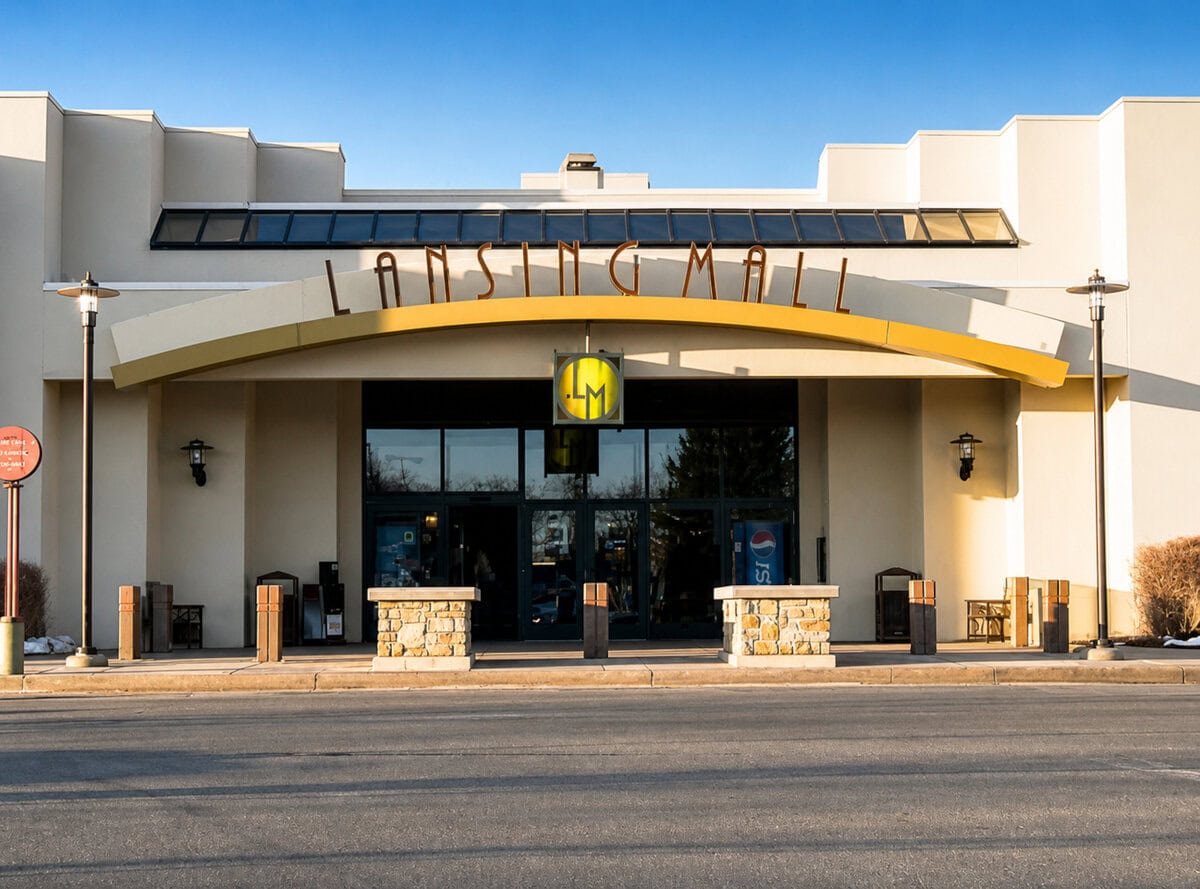
The 1979 Expansion That Transformed the West End
Federal's and Robert Hall left a large dead zone on the west side of the mall. In 1979, Forbes-Cohen rebuilt it as a new wing. The old anchor space was stripped out.
Skylights went in overhead. Planters with ficus trees lined the concourse, and soft seating clusters replaced the former department-store floor plan.
The stores in the new wing matched late-1970s retail: The Limited, Casual Corner, Lane Bryant, The Gap, and Herman's World of Sporting Goods.
Food tenants followed. Elias Brothers Big Boy, York Steak House, Hot Sam Pretzels, Great Hot Dog Experience, Morrow's Nuts, Mrs. Fields, and Olga's Kitchen all opened in the expansion.
The west end changed fast. It went from a vacancy problem to the liveliest part of the mall.
Hudson's opened as the new western anchor. The Detroit-based department store was one of the best-known names in Midwestern retail, and it gave the mall a stronger regional draw.
After the expansion, the mall had more than 105 tenants. Hudson's remained at the west end, under three different names, for nearly four more decades.
The 1980s Additions That Pushed Lansing Mall to Its Peak
In August 1984, York Steak House closed, and the space became Picnic, nine restaurants with seating for 300.
The food court concept had been spreading through American malls in the early 1980s, replacing scattered restaurant pads with a dense cluster of quick-service options.
Lansing Mall's version arrived with a cluster of specialty food stalls, and enough tables to anchor a social gathering space on its own.
The Mervyn's expansion followed in 1987.
Mervyn's was entering Michigan for the first time, and Lansing Mall landed the chain as anchor for a new north wing that added about 15 storefronts: Lerner New York, LeRoy's Jewelers, Waldenbooks, and others.
The expansion cost the mall its original single-screen theater. The Lansing Mall Theater, an outparcel cinema, was demolished to make room for the north wing.
Single-screen theaters were disappearing across the country in the 1980s, outcompeted by multiplexes, and the Lansing location went the same way.
By the late 1980s, the mall had four department store anchors, a food court, the new north wing, and more than 100 tenants spread across a footprint that had grown substantially since opening day.
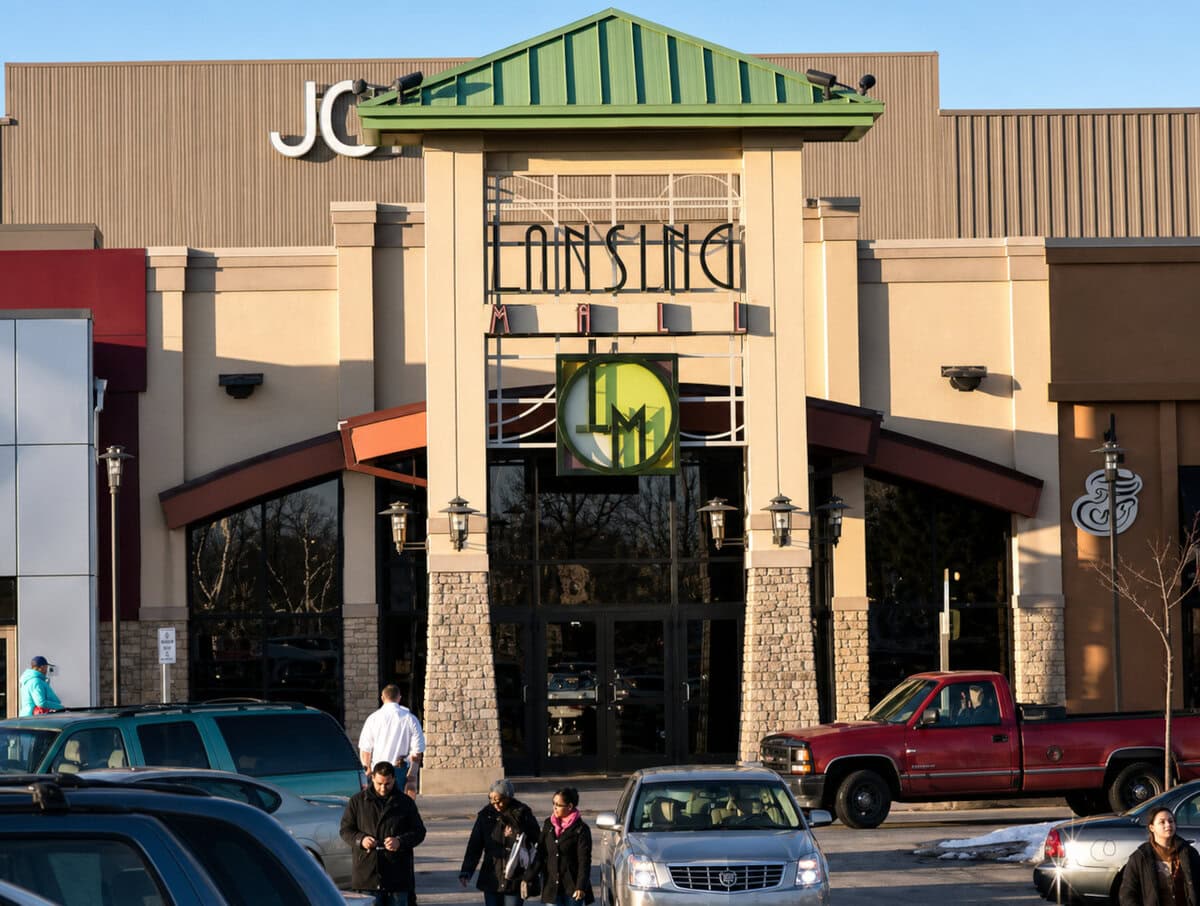
General Growth's $30 Million Renovation and the Mall's National Era
General Growth Properties took over Lansing Mall in 1996, placing it inside one of the largest mall portfolios in the United States.
By 2002, a $30 million renovation had worked through the building: new flooring, updated ceilings and bulkheads, renovated restrooms, refreshed seating areas, and improved food court finishes.
The exterior got new signage, updated entrances, and a streetscape treatment for exterior-facing restaurants and large-format retail.
Barnes & Noble opened during this period. Best Buy occupied a large-format space. Younkers filled the old Ward's anchor in 2002. TJ Maxx moved in during 2006, relocating from an older building across the street.
Mervyn's closed in 2006 after pulling out of Michigan. Steve & Barry's took over the space but failed in turn, and the north wing's anchor had turned over twice within a few years.
Rouse Properties took control after General Growth's portfolio restructuring and spin-off in 2012, listing the mall at roughly 835,000 square feet with J.C. Penney, Macy's, TJ Maxx, and Younkers as its remaining anchors.
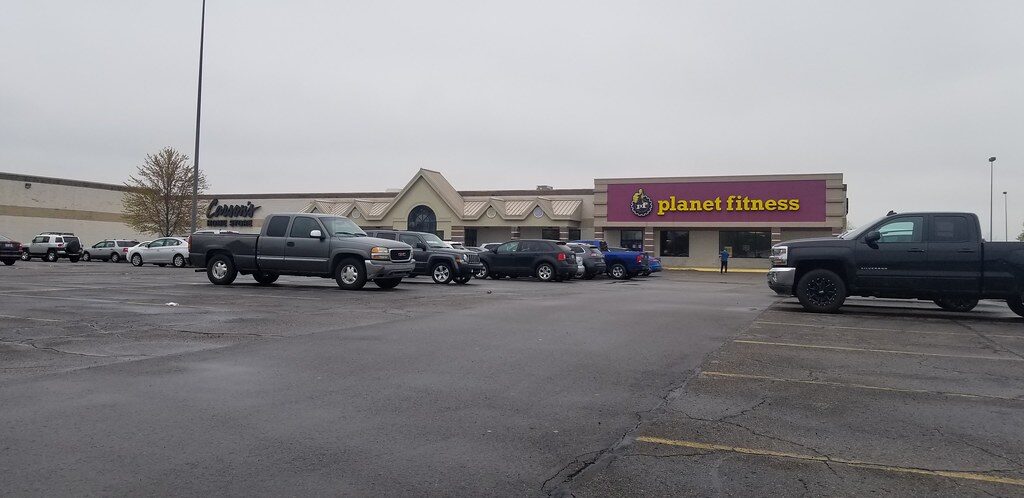
Regal Cinemas and the Push to Become an Entertainment Destination
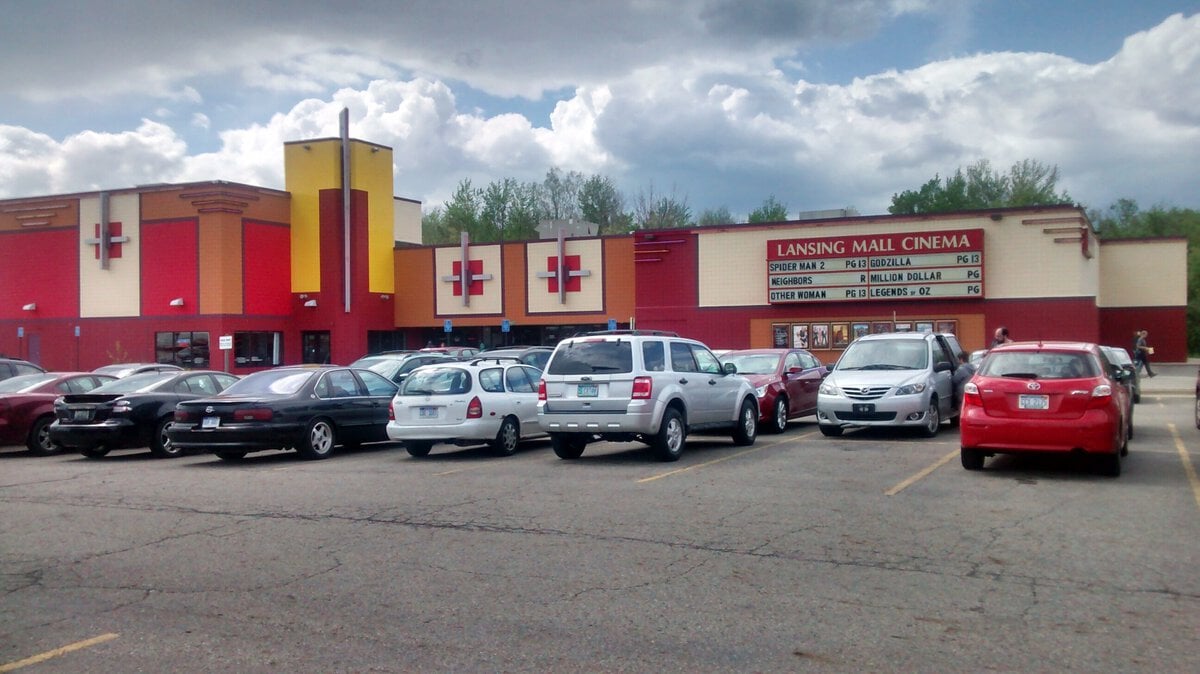
Rouse Properties signed a lease with Regal Entertainment Group in January 2013 for a 12-screen stadium-seating cinema complex at Lansing Mall.
The theater took 50,000 square feet and changed the mall's evening identity. An Olive Garden lease was announced the same year.
Tequila Cowboy opened in 2015 in a large entertainment and restaurant space. An earlier plan for a Toby Keith-branded restaurant had been floated for the same location, but it never materialized.
Tequila Cowboy filled the gap until 2019, when it closed, and the space eventually went to Overdrive, taking about 18,200 square feet.
Macy's closed its Lansing location in 2017, one of 68 stores cut nationally that year, alongside locations in Westland, Harper Woods, and Battle Creek.
Younkers followed in 2018, when Bon-Ton's liquidation ended every Younkers location in the country.
Houlihan's, which had operated near the mall property for nearly 40 years, closed on November 11, 2019, citing high rent and operating costs.
Three major closures in three years, and the department-store spine that had organized the mall since 1969 was breaking apart.
Kohan's $9.2 Million Purchase and the Vacancy It Inherited
By early March 2021, Brookfield Properties Group sold Lansing Mall to Kohan Retail Investment Group for $9.2 million.
The property changed hands at 707,000 square feet, a figure lower than earlier measurements of roughly 835,000 square feet; the two counts include different portions of the property.
More than 240,000 square feet was vacant at closing. That was nearly half the building. Kohan bought a mall with a large vacancy problem already in place.
TJ Maxx left for Delta Crossings the same year. The $200 million, 200-plus-acre development sat along the same West Saginaw corridor, and retail investment along the strip was visibly shifting west.
Hobby Lobby, Sierra, Bob's Discount Furniture, and Texas Roadhouse followed the same pull. They went toward Delta Crossings, not toward the enclosed mall.
Delta Township created the Saginaw Highway Corridor Improvement Authority in 2021. It covered the commercial strip from Broadbent Road to Waverly Road.
The authority set up tax increment financing for public improvements along the corridor: sidewalks, streetlights, utilities, streetscape, and facade work.
Eaton County approved a tax-sharing agreement with the township the same year.
Best Furniture Outlet, Zap Zone, and What the Empty Boxes Became
Best Furniture Outlet moved into the old Macy's in 2023. The family-owned business needed room, and the former department store wing had been sitting empty for six years. It gave them 60,000 square feet.
Zap Zone XL took space down the road at 5220 West Saginaw Highway and filled it with laser tag, axe-throwing, arcade games, adventure attractions, and a food area. No clothing chain was going to take that building.
Regal Cinemas has run 12 screens since 2014. With Zap Zone in, two entertainment tenants shared the building with JCPenney, Barnes & Noble, Dunham's Sports, and Shoe Carnival.
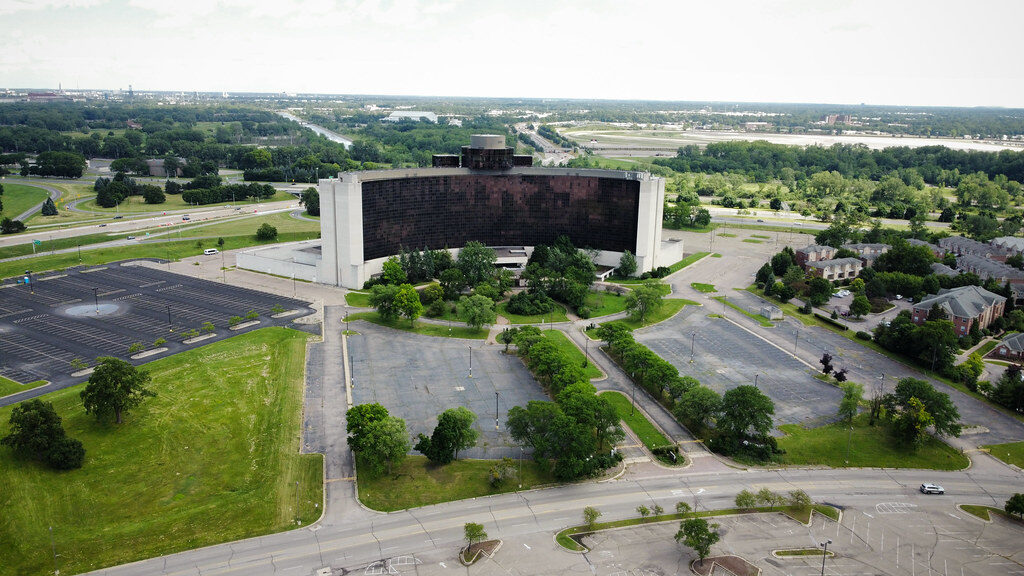
A walk-through in mid-July 2025 found one-third of the storefronts dark. The mall was operating under Summit Properties USA.
Delta Township officials had discussed a future with housing, retail, and office space on the site. By 2025, no plan had been approved, no developer named, no construction scheduled.
The Fretail Store closed in March 2025 after a rent dispute with mall management.
The free shop had given pantry goods, clothing, toys, and diapers to low-income families, running out of an empty retail space that most shoppers walked past without stopping.
The Capital Area Diaper Bank partnered with the store and had put out more than 350,000 diapers the previous year to families in Ingham, Eaton, Clinton, and Shiawassee counties.
The closure left both organizations without a location in the building.
On October 30, 2025, Summit Properties listed available suites at 5330 West Saginaw Highway on LoopNet, ranging from 2,700 to 42,000 square feet, with JCPenney, Dunham's Sports, and Regal Cinemas as the anchors.
Independent Publisher Notice
BestAttractions is an independent editorial publisher. We are not affiliated with, endorsed by, or acting on behalf of any location, business, property owner, manager, government agency, or organization described in this article. Comments posted on this page are not forwarded to, reviewed by, or acted upon by any entity mentioned in the article. For official inquiries, complaints, applications, bookings, or other requests, please contact the relevant entity directly through its official website or other verified channels.
I miss the Lansing Mall terribly I don't have small children so there's no need to go there anymore if somebody could bring it back it would give people a place to shop at Christmas time and through the winter and the summer it's always nice to be there. wish it could come back
I completely agree with you. The mall used to be such a great spot, and it’s sad that it’s changed. I also hope it can be brought back to its former glory. Thanks for sharing!
I am extremely disappointed in your article about the Lansing Mall. Hudson's isn't mentioned until 2017; and then only in passing when you note the closing of Macy's. Shame on you.
I can see why you’d feel that way—Hudson’s was such a big part of the Lansing Mall’s history. It definitely deserved more attention. Thank you for pointing that out.
let's not forget that many mall stores went to outside shopping centers down the road saying it wasn't just e-commerce it was high rent and mandatory long hours that made them move. The mall can't even attract a decent restaurant why? plenty of parking and a much traffic on Saginsw street? I d think some of it is mgt decisions...
The location still has so much going for it, and it feels like a missed opportunity. Let’s hope there are better decisions ahead to bring more variety to the mall. Thanks for sharing!
I have shopped at the mall in Lansing since it had opened. Best place ever. So sad of all the changes. please bring back......
I totally agree, the mall used to be a hub for everything. It’s tough to see it change, but maybe with some new ideas and support from the community, it can bounce back. Thanks for your comment.
The Lansing Mall was doomed when GM's factories Oldsmobile and Fischer Body left. They were the main ones keeping that Mall open because people had jobs that paid better wages and the Mall had better stores.I doubt if the Lansing Mall will ever regain the glory it once had. Most people get what they want online. Sad!
You make an excellent point about how economic changes affected the mall. It’s tough to see such a significant part of the community struggle. Thanks for sharing your perspective!
I noticed your article only mentions the anchors and closed stores; it doesn't mention the other stores in the mall that are open. You primarily focused on the closed stores. Articles like these would help boost the others if they were mentioned, since some people are not aware of those that are still open. Lillian's Free Boutique, Lansing Athletics, Kay Jewelers, Claire's, Walk Worthy Clothing, Shoe Carnival, Rainbow, just to name a few.
Being that I own the Free Boutique Lillian's, which has been in the Mall since May 2021, and provides free essentials to the underserved community of homeless and low-income families. We provide clothing, shoes, coats, boots, personal care, and household essentials; all for FREE!
The article is centered on Lansing Mall's anchor history and the changes in its former department-store spaces rather than serving as a complete tenant directory. Your comment adds current context about a mix of retail and community-focused tenants.