Before the summer of 1970, Springfield had never seen anything quite like it. On a warm Thursday morning, July 23, thousands of people lined up outside the new building at the corner of Glenstone Avenue and Battlefield Road.
Inside, 54 stores opened with their lights on and their shelves stocked.
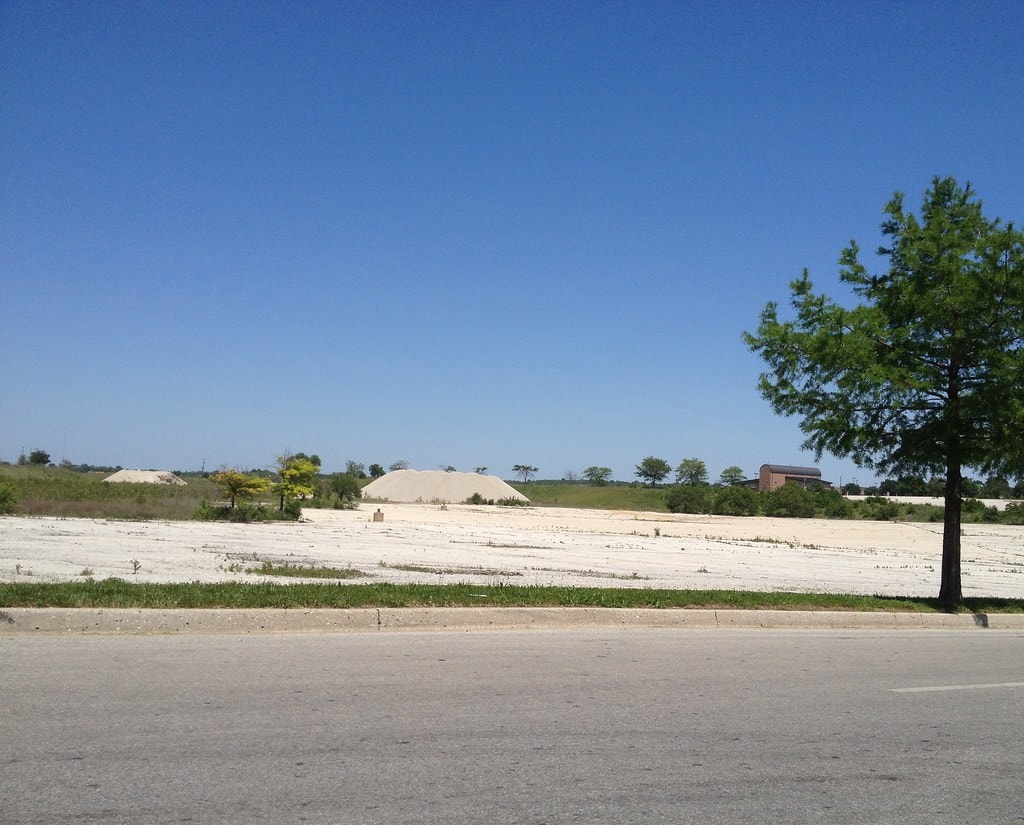
The large parking lot sat on land that had been a quiet 65-acre farm just two years earlier, with scrub brush, Osage orange trees, and a few roadside billboards.
Battlefield Mall was Springfield's first major enclosed shopping center. By the end of its first day, it was 93 percent occupied.
Montgomery Ward, J.C. Penney, and Dillard's were the three anchor stores in a mall with 685,000 square feet of retail space.
Shoppers could move from store to store without going outside, which was new for Springfield.
More than 55 years later, Battlefield Mall is still standing at 2825 South Glenstone Avenue. It draws shoppers from within a 90-mile radius.
Over time, it has expanded, replaced anchor stores, and remained open through the years when many malls across the country closed.
The farm is gone, but the mall built there is still one of the longest-lasting parts of Springfield's retail history.
Planning Battlefield Mall on the McClernon Farm, 1966–1969
Long before the first store opened, someone had to convince a farmer to lease his land. As early as 1963, there were talks about building a shopping center at the corner of Glenstone Avenue and Battlefield Road.
By early 1966, those talks were serious enough to go public.
Dr. Francis McClernon, who owned the 65-acre farm at that intersection, was preparing to sign a 75-year lease with Hermel Inc. of Indianapolis.
The site looked nothing like a future mall. It was mostly scrub land, brush, and Osage orange trees along Glenstone, and Battlefield Road hadn't even been extended far enough to reach the intersection yet.
Initial plans called for developing 35 of the 65 acres, with an option on the rest.
Montgomery Ward signed on as the first anchor, agreeing to lease nearly 119,000 square feet.
J.C. Penney was confirmed as a second anchor by mid-1967, planning about 144,000 square feet, which promptly led Montgomery Ward to increase its own planned space to match.
Rumors of project cancellation spread in early 1967, but the developers confirmed that lease payments were still being made.
Hermel, Inc. remained the project owner through construction, and Battlefield Mall later became part of the Simon organization (Melvin Simon & Associates/Simon Property Group).
Preliminary construction started in September 1968, delayed in part by the need to complete the Battlefield Road extension first.
In January 1969, the City of Springfield issued a building permit for the project, valued at $6.5 million - the largest in the city's history at that point.
Construction moved forward, though not without occasional labor disputes.
The Grand Opening and Springfield's New Beginning
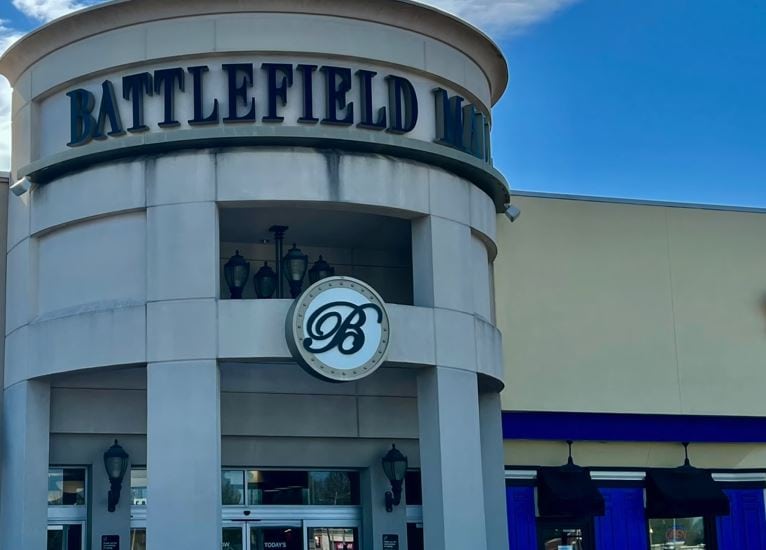
Battlefield Mall opened on July 23, 1970, after almost two years of construction. A ribbon-cutting ceremony was held that morning, and the mall opened soon after.
At least 54 of the 62 planned stores were open on the first day. They included a McCrory dime store, a Piccadilly Restaurants location, and an Osco Drug.
Montgomery Ward, J.C. Penney, and Dillard's were the main anchor stores at the ends of the building.
Together, they gave Springfield shoppers more stores in one place than the city had ever had before.
The mall quickly became a regular shopping destination for families across the region.
Its opening also pushed business growth farther out from Springfield's older center. More retail development followed soon after.
Construction on a Venture store just south of the mall started even before Battlefield Mall opened, showing early signs that the project was already bringing in new businesses.
The intersection of Glenstone and Battlefield Road had been at the edge of town only a few years earlier. It quickly became one of Springfield's busiest commercial areas.
More stores continued to fill the mall in the years that followed.
In 1975, the McCrory store closed. The space became a branch of the local Heer's Department Store chain, giving shoppers another well-known local store inside the mall.
Doubling in Size: The 1982 Expansion
In 1979, the owners announced a major expansion - more than 400,000 square feet of new mall space along with two additional anchor stores.
It was one of the biggest retail projects Springfield had seen, and a clear signal that the mall's first decade had been a genuine success.
The expansion opened in 1982 and changed the mall in nearly every meaningful way. Roughly 85 new stores joined the lineup.
Sears - which had been running a downtown Springfield store on St. Louis Street for years - relocated into a new space at the mall.
A larger, updated Dillard's location also opened as part of the project, while the original Dillard's space was sold to Famous-Barr, a department store chain based in St. Louis.
The expansion brought a food court as well, along with a single-screen cinema called Century 21, though the theater would eventually close.
With the expansion finished, the mall's total size reached approximately 1.2 million square feet - essentially the same footprint it occupies today.
The project was a turning point for both the mall and Springfield.
The surrounding area kept growing outward, and Glenstone and Battlefield Road became one of the most heavily traveled commercial intersections in the region.
What had started as a 685,000-square-foot center on a farm had nearly doubled in size in just over a decade.
A 1993 renovation later freshened up the building's entrances and flooring and gave Sears room to expand its space.
Store Openings and Closings Across Three Decades
The decades following the 1982 expansion brought a steady stream of tenant changes, brand arrivals, and anchor shifts that reshaped how the mall looked and felt.
Heer's Department Store, the local chain that had taken over the old McCrory space in 1976, continued operating at the mall alongside its longtime downtown Springfield flagship.
But Heer's ran into financial difficulty, and the chain declared bankruptcy in 1995, closing all of its locations and ending more than 125 years in business.
The Battlefield Mall location shut down with the rest of the chain.
In 1998, Old Navy opened, adding one of the decade's most recognizable clothing brands to the lineup.
Then, in 2001, Montgomery Ward - one of the three original anchors from opening day in 1970 - closed every one of its stores across the country.
Dillard's took over part of the old Ward space and opened a second store, called Dillard's South, in 2002.
They moved some departments to the new store and kept others in the original mall location, so there were now two Dillard's stores in the mall with a wider variety of products.
In 2005, the Federated Department Stores company bought May Department Stores - the parent company of Famous-Barr - and converted all Famous-Barr locations to Macy's.
The Battlefield Mall store was no exception.
Also in 2006, the mall added a row of exterior-facing lifestyle stores on its east side along Glenstone Avenue, including Coldwater Creek, Ann Taylor Loft, and Jos. A. Bank, paired with interior upgrades including new ceiling treatments and earth-tone flooring throughout.
Sears Closes, and Dillard's Moves Into Its Space
On February 6, 2020, Sears announced that it would close its Battlefield Mall store as part of a nationwide plan to shut down 39 locations.
The store closed in mid-April 2020. That left one of the mall's largest spaces empty. The space had been added during the 1982 expansion.
It stayed vacant for several years, and no replacement was announced during that time.
That changed on February 6, 2025, when Dillard's and Simon Property Group shared a new idea for how to use the space.
Dillard's would combine its two existing Battlefield Mall stores into one 180,000-square-foot store inside the former Sears space on the west side of the building.
One of the older Dillard's stores had men's and home goods. The other focused on women's merchandise.
The company took out everything inside and rebuilt the store from scratch. The new setup included improved lingerie, shoes, and cosmetics sections, along with a more modern store look and new technology.
The new Dillard's hosted a preview event on July 25, 2025, raising money for the Ronald McDonald House of the Ozarks.
Soft openings ran from July 26 to July 30, and the grand opening with a ribbon-cutting was held on July 31, 2025.
After the move, the two former Dillard's locations became vacant. That opened a large amount of space inside the mall for the first time in years.
A Big New Store Planned for 2027 and Beyond
With two former Dillard's spaces now sitting empty, the mall moved to fill at least one of them.
In February 2026, Simon Property Group said that Dick's Sporting Goods' new 'House of Sport' store would open in the old Dillard's South spot, which used to be the women's section of the store.
A request for a permit was sent to the City of Springfield in late 2025, and building work was planned to start in spring 2026.
The planned store is over 100,000 square feet and is designed for people to try things out instead of just looking at items on shelves.
It will include a climbing wall, golf bays equipped with TrackMan simulator technology, and HitTrax multi-sport cages for baseball and softball.
The Battlefield Mall location will be the 12th Dick's House of Sport in Simon Property Group's portfolio and is scheduled to open sometime in 2027.
As of early 2026, the mall lists approximately 120 stores and services.
JCPenney, Macy's, and the newly consolidated Dillard's anchor the building, with a steady wave of national brands filling the rest - Lululemon, Kendra Scott, Warby Parker, Pandora, and LoveSac among the newer arrivals.
Dining runs from Chick-fil-A and McDonald's to sit-down options. The mall draws visitors from roughly 90 miles out in every direction.
For a building that started as a corn-and-scrub-brush farm, that is not a bad run.