
Asheville Mall Rises From a Field of Red Clay
If you stand on South Tunnel Road today, it's hard to picture what that land looked like before asphalt and neon. In the late 1960s, it was mostly grass and clay, the kind of red dirt that stains shoes for days.
R.L. Coleman & Company wanted to build something no one in Asheville had ever seen before: a fully enclosed regional mall, the city's first major shopping complex. The idea stirred instant trouble.
Neighbors complained about traffic and noise, city boards hesitated, and one angry resident supposedly threatened a bulldozer driver with a shotgun.
Coleman didn't back down. By 1970, steel beams were going up under the supervision of two architectural firms, one from Columbia, one from Charlotte.
The plan called for nearly six hundred thousand square feet of stores, anchored by Sears and Belk.
When Sears opened on February 3, 1972, it was the biggest store in town and a quiet symbol of what was coming. Belk followed in 1973, and by that fall, fifteen smaller shops had opened.
On November 23, Asheville Mall held its official dedication. People drove from across the region just to walk inside.
This was the new world of shopping. Cool air, piped music, and skylights. It felt futuristic compared to downtown's creaky storefronts.
Inside those walls, Asheville suddenly belonged to the same century as Atlanta or Charlotte.
The Years of Bright Lights
In the 1970s and 80s, Asheville Mall turned into the city's second home. The S&W Cafeteria, which left downtown for the mall in 1974, became its unofficial dining room.
Its carousel buffet spun under fluorescent light, a slow parade of pudding, pie, and sheet cake that locals still talk about.
Teenagers wandered the long hallways, stopping at Brooks Fashions for jeans or Dunham Music for records. Out in the parking lot, the ABC Twin Theatres lit up the night with double features that played to full crowds.
Stores came and went, though their purpose never really changed. Bon Marche, once the pride of Asheville's downtown, turned into Meyers-Arnold in 1980 and later Uptons.
Ivey's added a second floor. Woolworth's and Belk stayed the course.
Chick-fil-A opened in the mid-80s and, by a quirk of its lease, sold chicken sandwiches on Sundays, the only one in the country that did. That loophole lasted until 1997.
The place seemed endless then. The floors gleamed, the skylights poured in clean light, and the smell of popcorn from the movie house mixed with new leather from the shoe stores. Almost everyone in Asheville had a connection to it.
Bigger, Shinier, and More of Everything
In 1989, JCPenney quit downtown and set up shop in a new wing at Asheville Mall. The extra space made the place feel alive again.
Biltmore Square had just opened on the other side of town, and this was Asheville Mall's way of saying it wasn't done yet.
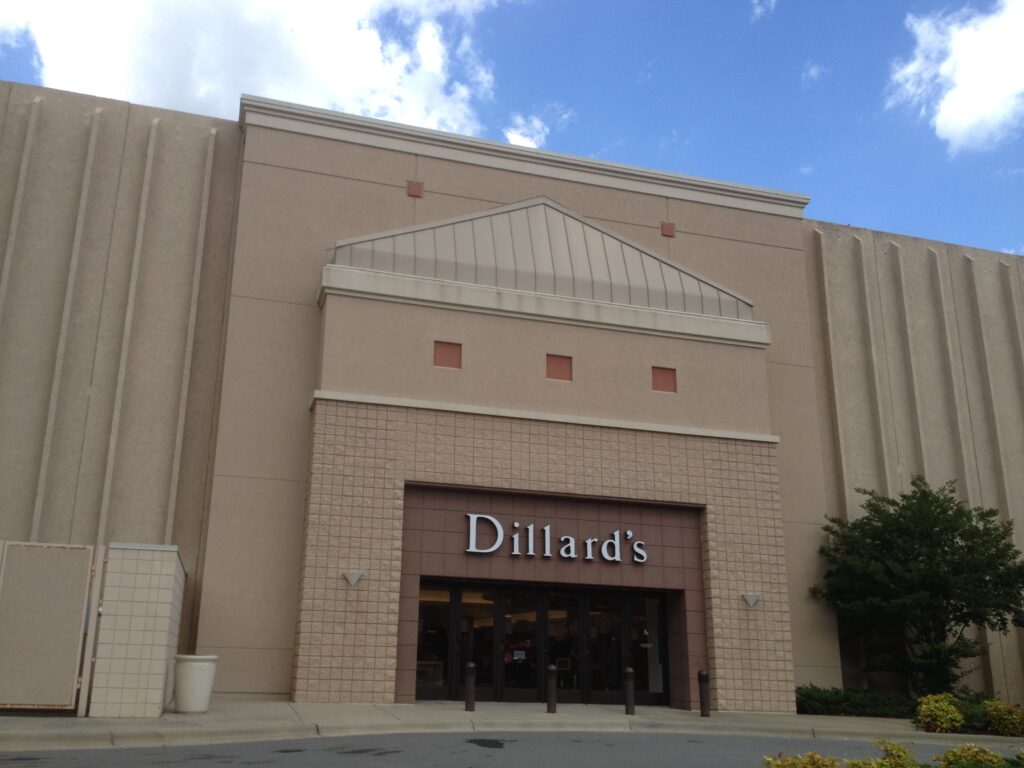
The 1990s came in like a shuffle. Ivey's turned into Dillard's. Uptons closed, and Montgomery Ward took its spot in 1994. The Coleman family sold out in 1997, ending the mall's first era.
A year later, CBL & Associates from Chattanooga took control and started tearing things apart and building them back better.
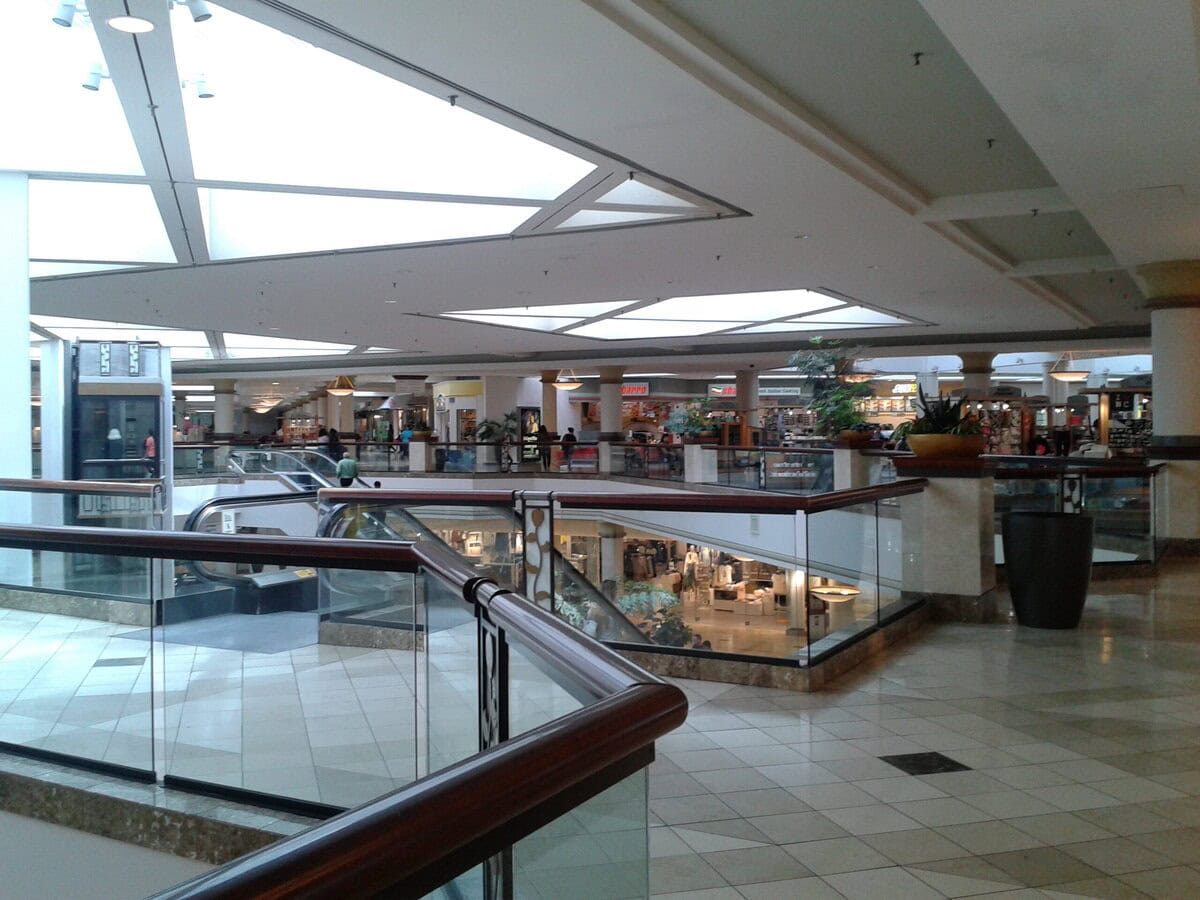
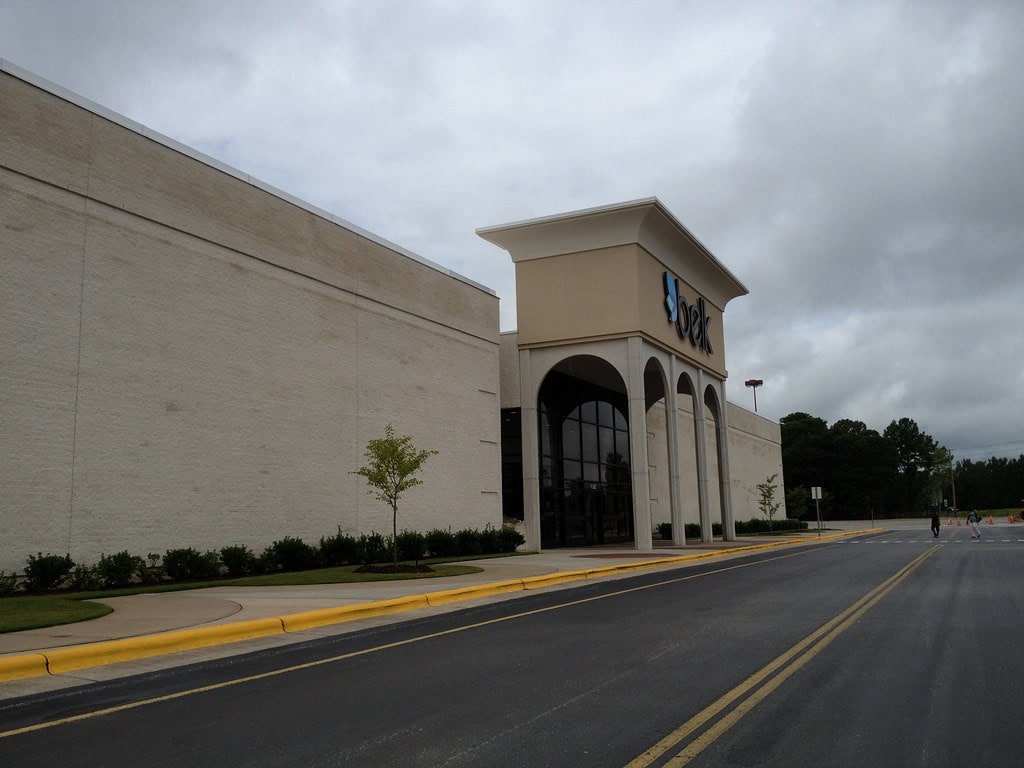
Belk went two stories. The ceilings went up. New carpet, new skylights, a food court with eight places to eat, and parking stacked on the roof.
By 2000, the mall was huge - more than a million square feet, packed with over a hundred stores. Finding a parking spot on a Saturday felt like a sport.
Inside, it was all noise and light and people. You could buy a suit, grab lunch, pick out a diamond, and leave with a sofa. For a lot of folks, that place wasn't just a mall. It was the center of town.
The Slow Unraveling
Then the edges started to fray. Montgomery Ward shut down in 2000, and its space was divided into two Dillard's stores.
National retail began to tilt online. CBL's renovations couldn't fix what the internet was undoing. Still, the mall hung on. Old Navy opened in 2006. Belk stayed strong.
Sears, the mall's oldest tenant, became a ghost of itself. Once the store that sold everything from appliances to optimism, it finally closed in July 2018 after forty-six years.
Developers proposed turning the space into apartments, restaurants, and a ten-screen theater. The plans were filed, then forgotten.
By 2020, the mall's owner was drowning in debt. CBL filed for bankruptcy that November, listing Asheville Mall among properties headed toward foreclosure.
For a few months, no one knew who would end up with it. The corridors were still open, but the mood was brittle. The pandemic had emptied stores and made shopping feel strange and unnecessary.
The Rescuers
A new name appeared in 2022: Kohan Retail Investment Group, based in New York.
They bought the mall for $62 million, one of dozens of distressed malls they'd snapped up around the country. The company's approach was simple - buy cheap, keep the lights on, and wait.
Against expectations, it worked. The general manager said occupancy climbed to ninety percent, and foot traffic returned. Local businesses filled some empty spots, and the mall began to feel alive again, if only in patches.
Then, in September 2024, Kohan sold to Summit Properties USA, the American arm of a British investment firm, spending hundreds of millions on shopping centers across the country.
Summit called its plan "repositioning," a vague word that could mean anything from a remodel to a reinvention.
A month later, Hurricane Helene tore through the region, flooding the Swannanoa River corridor and soaking parts of East Asheville.
The mall shut down for cleanup, reopening in October with shortened hours and the smell of industrial fans in the air. It was open, but subdued.
The Last Anchors Standing
In February 2025, JCPenney announced plans to close its Asheville Mall store by May 25. The decision didn't surprise anyone, though it still landed hard.
When the store locked its doors that spring, only Belk and the two Dillard's locations remained as anchor tenants.
In November 2025, Explore Asheville announced a Holiday Pop-Up Market scheduled for December 6 inside the Food Court corridor.
The plan calls for local artisans to set up in the former dining bays, selling candles, prints, and hand-stitched goods before the holiday season.
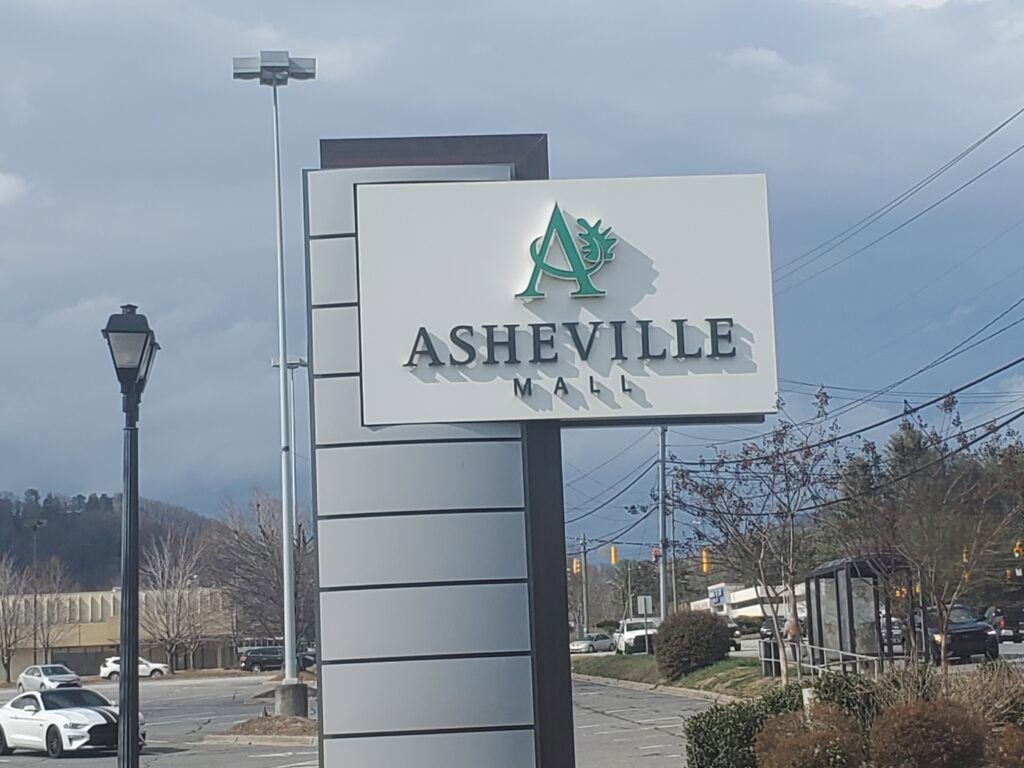
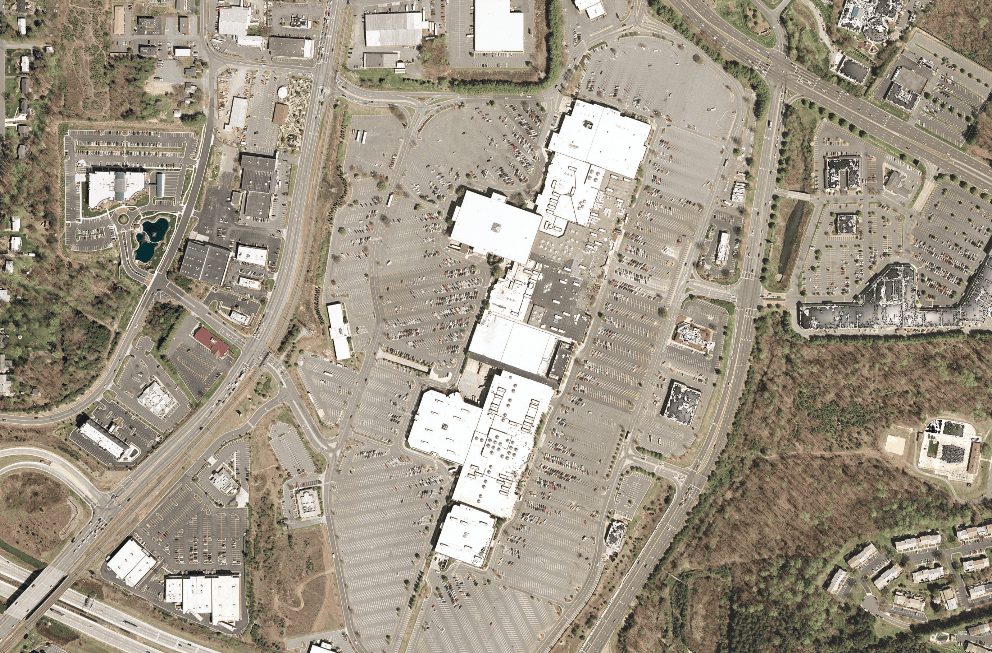
From the outside, the mall looks much as it always has: a white, low-slung building framed by the Blue Ridge Mountains. Parking is still easy.
Inside, the rhythm of foot traffic rises and falls through the day, steady enough to keep the lights on and the doors open.
What It Is Now
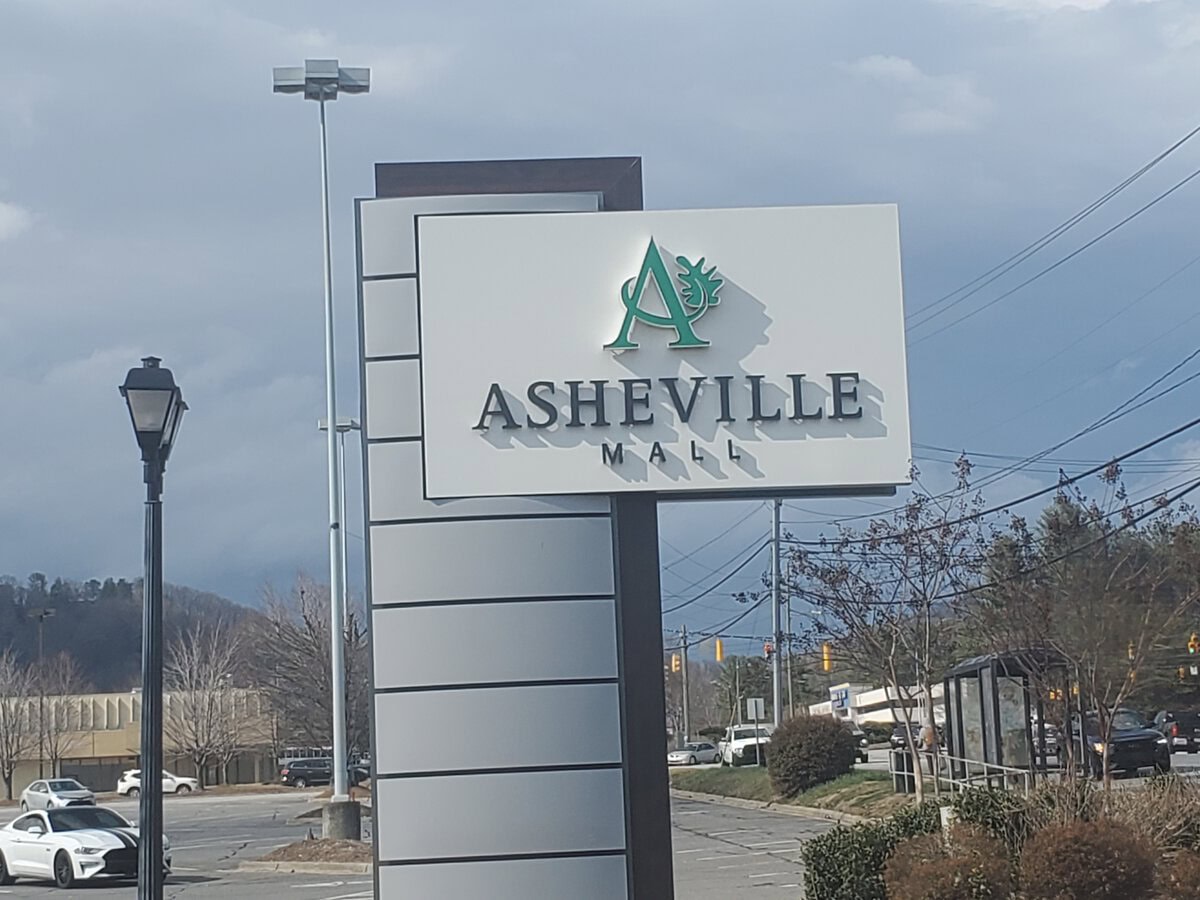
Asheville Mall in 2025 covers 974,000 square feet, holds over 100 stores, and still claims the title of Western North Carolina's largest mall.
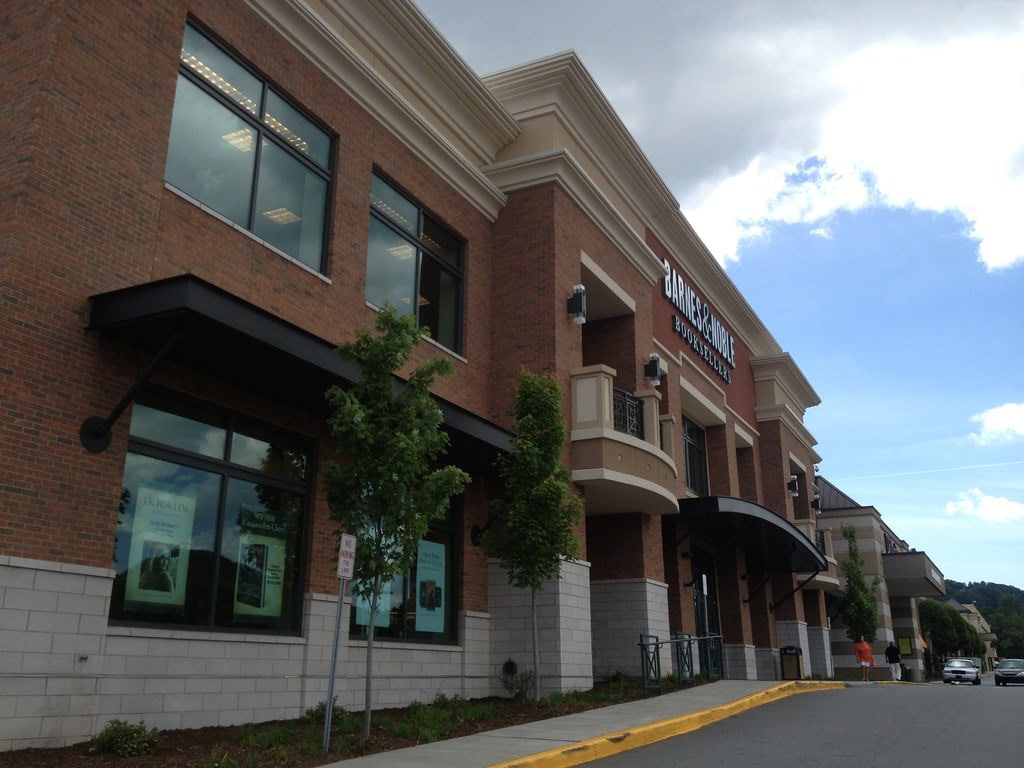
The footprint is mostly one level, though Belk, Dillard's, and Barnes & Noble stretch to two.
Summit Properties hasn't said much publicly, only that it plans to "invest in quality and growth." The words sound corporate, but the message is clear: the mall isn't going anywhere soon.
What keeps it alive isn't just shopping - it's geography and habit. The site sits at the crossroads of Interstate 240 and Highway 70, perfectly accessible, impossible to miss.
For thousands of locals, it's still where you buy gifts, spend an afternoon, or meet for coffee on a rainy day.
the thugs have taken over the mall
I hear the frustration behind that, but I want to be careful with that kind of blanket label. Malls can absolutely feel rougher or less safe than they used to, but it is usually a mix of loitering, weak security, and neglect rather than some single monolithic group that "took over."