Gateway Mall starts at the dump
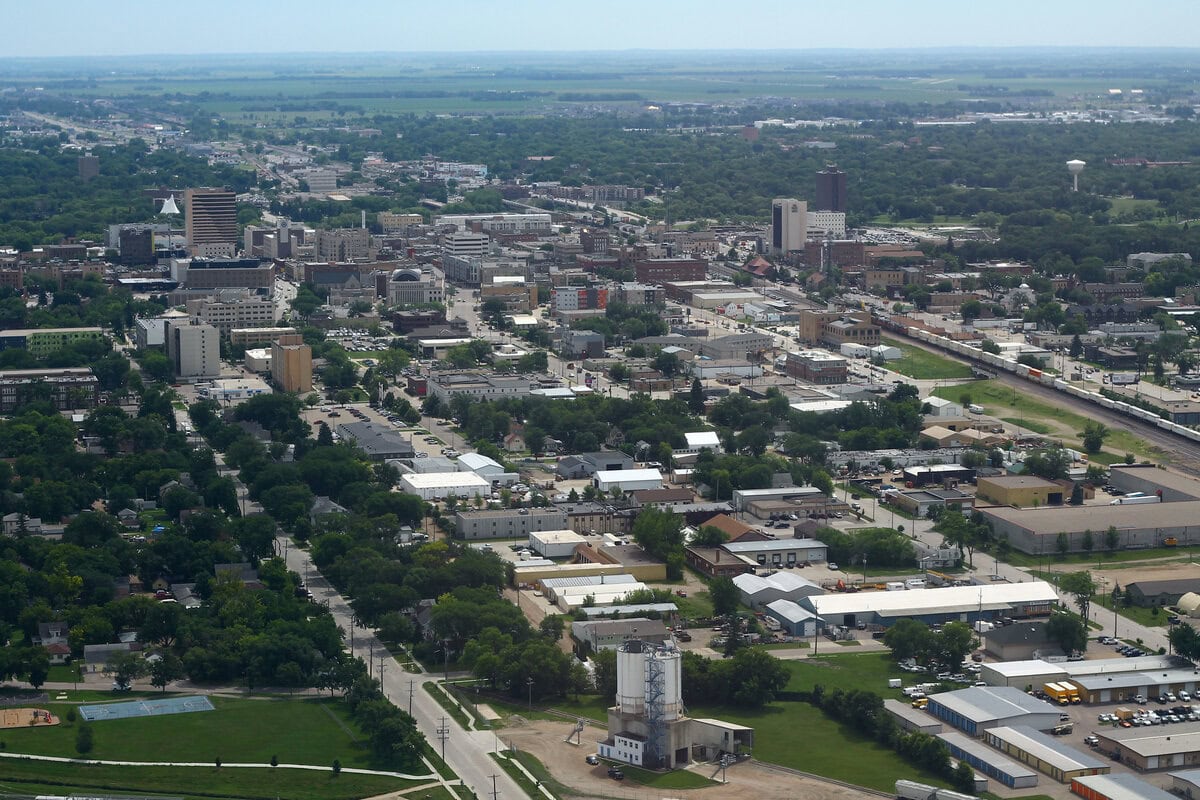
Before the mall, the site off State Street served as Bismarck's town dump. The land was undeveloped and utilitarian, located on what was then the northern edge of the city.
In August 1968, Denver-based Century 21 Corporation announced plans for a regional shopping center on the site.
The proposal called for three anchor stores, about 50 tenants, and between 600,000 and 650,000 square feet of retail space. The projected cost was $11 million, with an anticipated opening in 1970.
The Bismarck project was part of a broader plan for similarly designed Century 21 Malls across North Dakota, South Dakota, and Colorado.
Retailers attached to the concept included White Drug, Maurices, and Orange Julius.
By March 1970, Century 21 had secured a 45-acre parcel roughly one mile north of the North Dakota State Capitol.
Shortly afterward, the project was abandoned. None of the proposed Great Plains malls were completed as planned.
The only plan to take hold was in Fort Collins, Colorado, where Century 21 acquired the already-built University Plaza and renamed it Century Mall in June 1970.
In 1973, the Kavaney family acquired the north Bismarck site and began new planning efforts. The dump had already been cleared.
The property was repositioned for commercial development, marking the start of what would become Gateway Mall.
Deals on paper, rezoning on the ground
Formal planning for the mall began in 1973. That year, the Kavaney family submitted platting and annexation requests to the city, establishing the basic development framework for the property.
Early site plans advanced over the next several years as the land was prepared for commercial use.
By 1976, the project was identified in planning documents as "Gateway West." The directional suffix was dropped before opening.
In February of that year, Bob Kavaney requested rezoning and re-platting of the site, expanding the project boundaries.
An additional 27 acres were set aside, bounded by Century Avenue and Gateway Avenue, to accommodate a large-scale shopping center.
Development proceeded through a joint venture between North Bismarck Associates, led by the Kavaney family, and Decom Corporation of Minneapolis.
Architectural and design work was handled by Ralph Shimer of Minneapolis and Mastney Associates of Minnetonka, Minnesota.
Plans called for a fully enclosed regional mall with approximately 320,000 square feet of leasable retail space, designed to allow for future expansion.
Anchor store commitments were secured in May 1978. Decom Corporation began construction on June 29, 1978. The mall was developed at a cost of approximately $8 million.
Site plans included a reserved area on the northwest side for a potential 150,000-square-foot expansion and a fourth anchor store. The expansion was never built.
Ribbon-cutting while the sawdust settled
Gateway Mall's first open door belonged to a drugstore. On May 7, 1979, Osco Drug began operating in a 16,300-square-foot space, relocating from downtown 4th Street while keeping another location at Kirkwood Mall.
The mall itself held a soft opening on August 15, 1979. A.W. Lucas Company, a Bismarck department store, opened that same day in 44,200 square feet, leaving downtown for the new north corridor.
The grand opening came on September 12, 1979, with construction still in motion. Thirty of the 57 leased tenants were operating.
Governor Arthur Albert Link cut the ribbon, with Mayor Eugene Leary there for the ceremony. The lineup filled in over the next months.
Sears, 83,700 square feet, was dedicated on October 3, 1979, another downtown relocation. White Mart, 70,800 square feet, opened February 28, 1980, as a new discount division of White Drug.
Inside, the mall leaned into the era's comfort food and practical shopping. Orange Julius, Taco Tina, Turn of the Century, Pop's Ice Cream Shoppe, and a snack bar fed the loop.
Stores ranged from Jo-Ann Fabrics and Musicland to RadioShack, Regis, Kinney Shoes, and a long list of small tenants that made the mall feel complete.
Anchors swap names as the screens multiply
By the early 1980s, Gateway Mall was fully operating and entering a period of tenant turnover and expansion. The interior concourse was active, with a mix of apparel, specialty, and service-oriented tenants.
Desmond's men's wear operated a 7,000-square-foot store from 1980 until 1986. Weight Watchers held meetings at the mall in the late 1980s and into the 1990s, adding non-retail use to the tenant mix.
The center anchor changed in 1982. A.W. Lucas Company closed in June after 83 years in operation. In October 1982, Eckstein Department Store took over the space.
On October 26, 1983, the store was rebranded as Herberger's, which remained the mall's center anchor until January 1994.
Changes also occurred at the northeast anchor. White Mart began winding down operations in the mid-1980s. Menards opened in the space on December 8, 1987, after expanding into adjoining areas.
Entertainment space was added in 1985. Midcontinent Theaters opened a three-screen cinema, Gateway 3, at the rear of the mall.
The first films were shown on June 28, including "St. Elmo's Fire," "Sylvester," and "Lifeforce."
In 1994, the theater was expanded to eight screens, becoming the largest cinema complex in the region at the time.
Closeouts, clinics, and a hollow center
The 1990s brought both stabilization and structural change to Gateway Mall. Several large interior spaces were reconfigured, and anchor turnover became more frequent.
During this period, tenants included Deb, Payless Shoes, Juniques and the House of Sund pet store.
In 1990, Jo-Ann Fabrics relocated within the mall into a space approximately three times larger than its original location.
The expansion combined four adjacent storefronts. By October 1991, with the addition of the House of Sund pet store, only one interior unit remained vacant.
Mall management anticipated full occupancy by 1992, and for a period the tenant mix stabilized.
Herberger's announced its closure in June 1993. In 1995, Jacob's Trading Company moved into the former Herberger's space.
The store was rebranded as World's Greatest Deals in September 1996. The retailer closed in August 1999, leaving the center anchor space vacant.
The northeast anchor shifted shortly afterward. Menards left the mall in Feb 2000 and later opened a freestanding store in 2001.
In September 2001, roughly half of the former Menards space was converted into the Mid Dakota Clinic PrimeCare Medical Mall.
The remaining portion of the space was reconfigured and, by late 2003, occupied by Hancock Fabrics, which operated as a junior anchor with a separate exterior entrance.
In 1994, Gateway Mall added a non-retail tenant when the Gateway to Science Center opened within the mall. The hands-on science museum remained in the space until 2005.
Gateway Mall's 2006 rebrand and short-lived rebound
Ownership changes accelerated in the early 2000s. Between January 2003 and May 2006, the mall was sold three times.
Some accounts report that Triple Net Properties bought the mall in early 2003 for $12.4 million, though other commercial-property reporting lists the 2003 sale at $9 million.
Roughly one year later, it was sold to VP Investments of Utah for an undisclosed amount.
In May 2006, Raymond Arjmand of Encino, California, acquired the mall for $13.25 million. At the time of the sale, occupancy was approximately 60 percent.
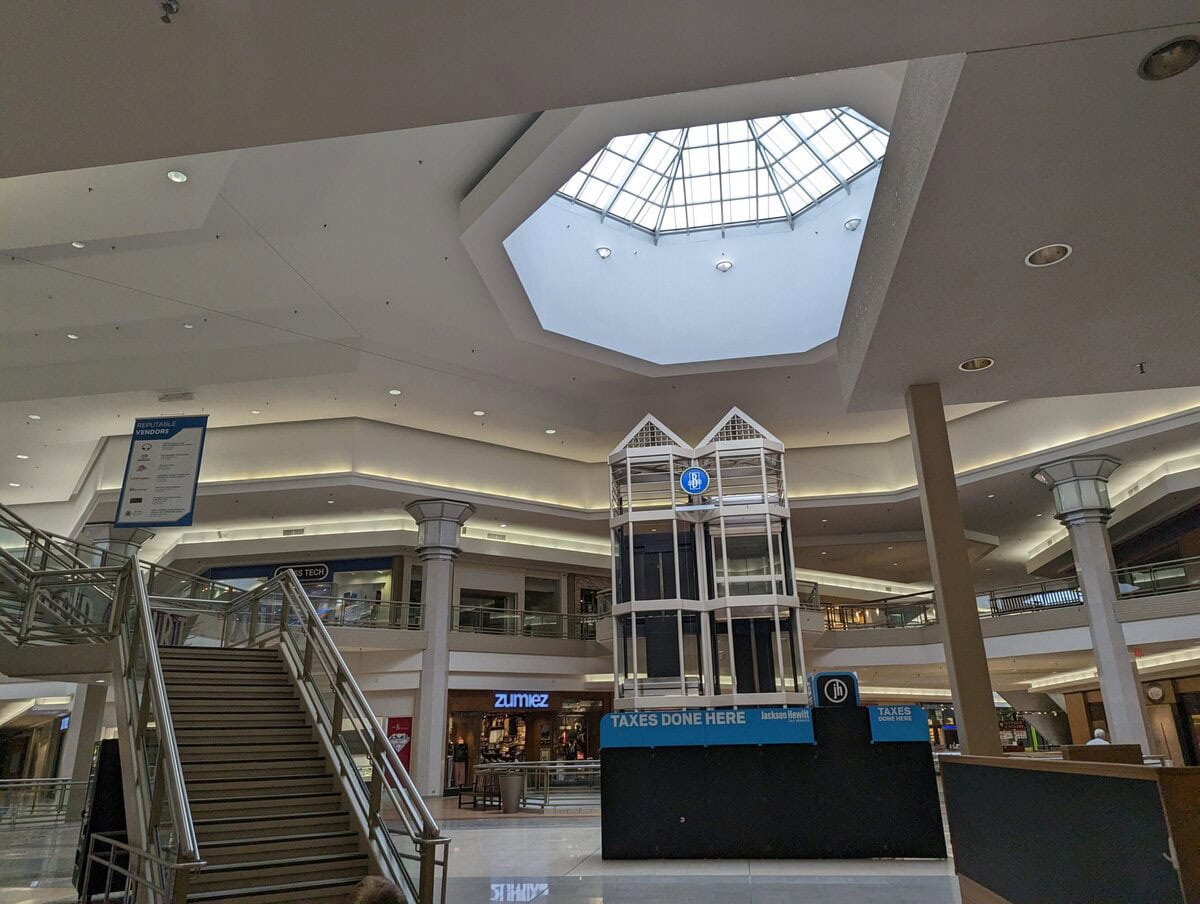
Following the acquisition, Arjmand announced plans for a multi-million dollar renovation, the first major remodel since the mall opened in 1979.
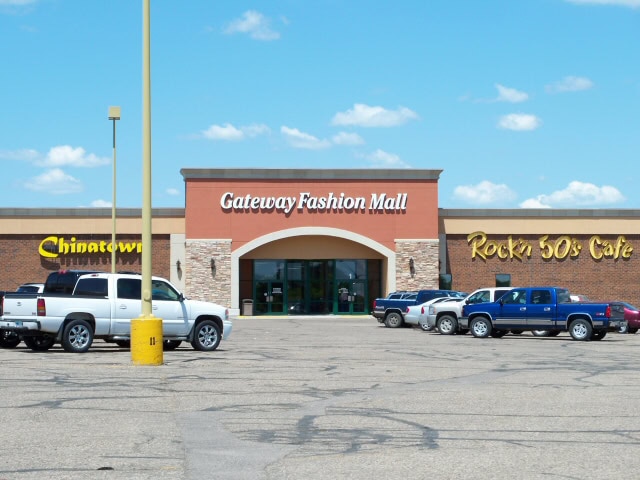
The project included exterior facade changes and interior cosmetic upgrades. As part of the repositioning effort, the mall was renamed "Gateway Fashion Mall" in November 2006.
Plans discussed during this period included relocating the food court to create space for an additional anchor store.
A Macy's location was publicly suggested but never materialized.
By late 2006, Gateway Fashion Mall was reported to be fully leased, marking the highest occupancy level in several years.
The improvement was temporary. Within a few years, tenant departures resumed, and vacancy levels increased as the decade came to a close.
Vacancies, lawsuit, and tenant flight
The exits began with ordinary retail decisions and turned into public conflict.
Osco had become CVS, and CVS announced it would leave in February 2008. The move to a new freestanding store happened in February 2009, leaving a conspicuous vacancy behind.
On June 26, 2009, Conlin's Furniture and Joy's Hallmark both announced intentions to vacate.
Joy's had been in the mall for more than 20 years, and it kept another location at Kirkwood, a habit that made sense until it didn't.
In July 2009, Joy's Hallmark filed a lawsuit against Arjmand, alleging fraud and misuse of money, including inflated common area maintenance charges billed to tenants for work that was not fully completed.
The case stayed alive until it was dismissed in February 2013.
In March 2012, Jo-Ann relocated into the former CVS space, but its interior entrance was closed off after a dispute with Hancock Fabrics.
Retail sometimes collapses into petty geometry.
From Conlin's to Harbor Freight, and Sears' exit
Gateway Mall entered the 2010s with declining traditional retail occupancy and increasing vacancies in its largest spaces.
The center anchor had already undergone multiple changes. Conlin's Furniture Outlet occupied the space from 2004 through December 2009. Famous Labels followed, operating between 2010 and 2012.
After its closure, the anchor space remained largely vacant until August 2015, when Harbor Freight Tools opened in a portion of the former space, occupying 14,200 square feet of what had originally been a full-size anchor store.
Additional long-standing tenants exited during this period. Hancock Fabrics closed on July 27, 2016. Sears announced on January 4, 2018, that it would close its Bismarck location as part of a nationwide store reduction.
The Sears store ceased operations in April 2018, ending 39 years of continuous operation at the mall.
Following the closure, Gateway Mall no longer retained a traditional department-store anchor.
The mall's name changed during this transition. In February 2017, the property discontinued the "Gateway Fashion Mall" branding and reverted to "Gateway Mall," marking the end of the earlier repositioning effort.
The "Gateway Fashion Mall" name remained displayed above the entrance, while the mall's website and logo adopted the simpler "Gateway Mall" name.
Smaller tenant changes continued alongside the anchor departures. In May 2014, Sakura restaurant replaced Chinatown Buffet in the food court.
LongHorn Steakhouse opened as a freestanding outlot in November 2015. In June 2018, Planet Fitness opened in the former Hancock Fabrics space, introducing a membership-based use to the mall interior.
From multiplex to mixed-use interior
The movie theater followed its own sequence of changes. Originally expanded to eight screens in 1994 as Midco 8, the theater was rebranded Carmike 8 in 1995 and later became AMC Classic Bismarck 8 in 2017.
The theater closed in March 2020 during the COVID-19 pandemic. In August 2020, it was announced that the location would not reopen.
The vacant cinema space remained unused until the end of 2022, when Riverstone Church leased the former theater. The church held its grand opening in the space on December 4, 2022.
A functioning mall with a different purpose
By the mid-2020s, Gateway Mall functioned as a mixed-use property rather than a traditional enclosed shopping center. About 30 stores and services operated inside the mall with varied occupancy levels.
Outlot tenants included Hobby Lobby, Gate City Bank, KFC, Perkins, LongHorn Steakhouse, and Oahu Hawaiian Barbeque and Asian Cuisine.
Medical services became the largest interior presence.
Essentia Health-Mid Dakota Bismarck Gateway Clinic occupied approximately 30,000 square feet, offering primary care, pediatrics, imaging, physical therapy, diabetes education, neurology, and related services.
Physical upgrades continued. The parking lot was refurbished, and a new roof was installed.
Large interior retail spaces remained available, including demisable 80,000-square-foot areas with loading docks and exterior access.
In April 2025, Jo-Ann Fabrics, one of the mall's original 1979 tenants, closed permanently following the company's bankruptcy and liquidation.
In fall 2025, Spirit Halloween opened a seasonal location.
Gateway Mall feels like a quiet, still functioning, and useful for a quick stop, even if the interior shows its age, and the parking lot and restrooms could use more attention.
It remains open, operating beside Bismarck's busiest intersection as retail gave way to services, temporary tenants, and everyday uses.