
The cannons fired at 10 a.m. on July 24, 1997, shooting 100 pounds of logo confetti into the air above the parking lot at I-270 and Tuttle Crossing Boulevard.
A trumpet-and-drums fanfare had just finished playing. Mayor Greg Lashutka stood on the platform alongside The Limited chairman Leslie Wexner and his wife, Abigail.
Taubman chief executive Robert Taubman was there too, joined by the mall's general manager, Johnny Scales.
This was the official opening ceremony for The Mall at Tuttle Crossing, the public moment everyone had circled on their calendars.
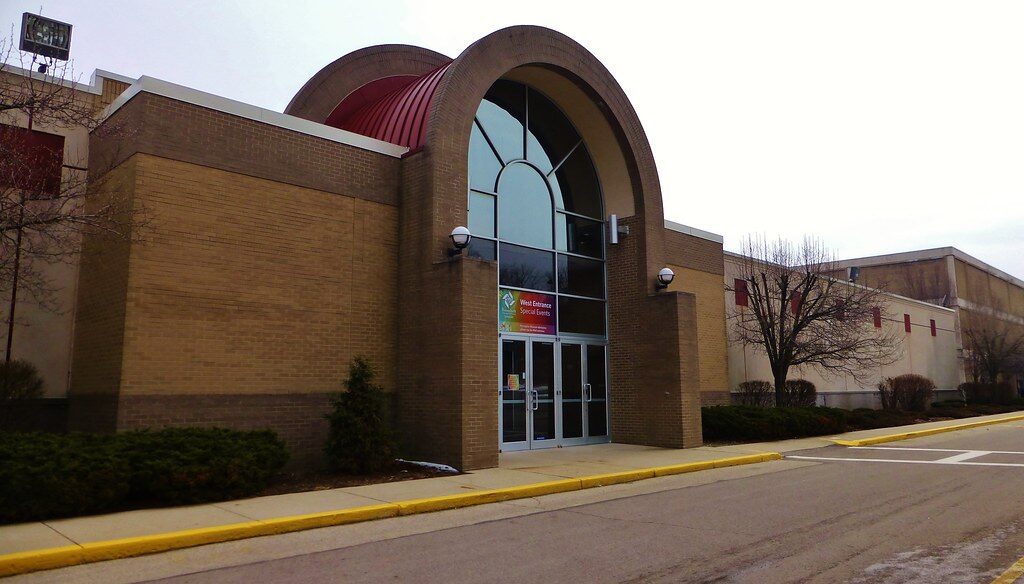
Inside, the two-level enclosed structure stretched between four anchor stores - Sears, Lazarus, Marshall Field's, and JCPenney.
The doors had actually opened earlier in July, but this was the celebration. By 6 p.m. that day, more than 70,000 people had already come through. At opening, 115 of the planned 128 tenants were operating.
The mall was set up to pull northwest Columbus and nearby Dublin into one place, and the weekend carried on like a celebration across the area.
Sawmill Place: the mall that never was
Tuttle Crossing's roots trace back to a different plan that did not survive.
Around 1985, JMB and Federated Realty proposed a 750,000-square-foot enclosed mall called Sawmill Place at the northeast corner of Sawmill Road and West Granville Road.
The schedule aimed for an August 1989 opening. On the same site, a separate plaza was planned by The Linclay Corp., and that plaza was not connected to the mall.
Some pieces moved forward anyway. Anderson's General Store opened on the site in 1987, and Sawmill Place Plaza opened as planned. The enclosed mall did not.
Construction did not start in time to meet the 1989 target, which also happened to be the year Columbus City Center opened downtown.
In early 1990, the mall plan tried to reset, with a proposed 1991 groundbreaking. It stopped in August 1990, when the U.S. Army Corps of Engineers declared the site a wetland and issued a cease and desist order.
Years later, the site was renovated into the Sun Center in 1995, closing the book on the original enclosed-mall idea.
The Mall at Tuttle Crossing fights for approval in 1992
In 1992, The Glimcher Company and Edwards Land Co. announced plans for a new mall concept that became Tuttle Crossing.
The early anchor list included Lazarus, Sears, JCPenney, and Parisian, with an opening goal of fall 1994.
The project needed rezoning for 20 acres out of 83, and neighborhood opposition was immediate. Many nearby residents wanted a smaller, standard strip center instead of a large enclosed mall.
Alcohol sales became a major issue. The proposed sale of alcohol at the mall was voted down, tied to safety concerns for nearby neighborhoods.
That single vote affected plans next door, too. A Marriott hotel planned near the mall refused to build without a liquor license.
In 1993, development rights moved again. Edwards' agreement gave the rights to The Limited Inc., and The Taubman Company took on co-development duties.
After an overwhelming voting period, the project was approved to continue.
By 1994, the mall also had to think about a possible new rival nearby.
The Richard Jacobs Group was planning to build a mall near Avery Road and Route 33 in Dublin, with opening dates that moved into the same late 1990s time frame.
A $300 million build takes shape
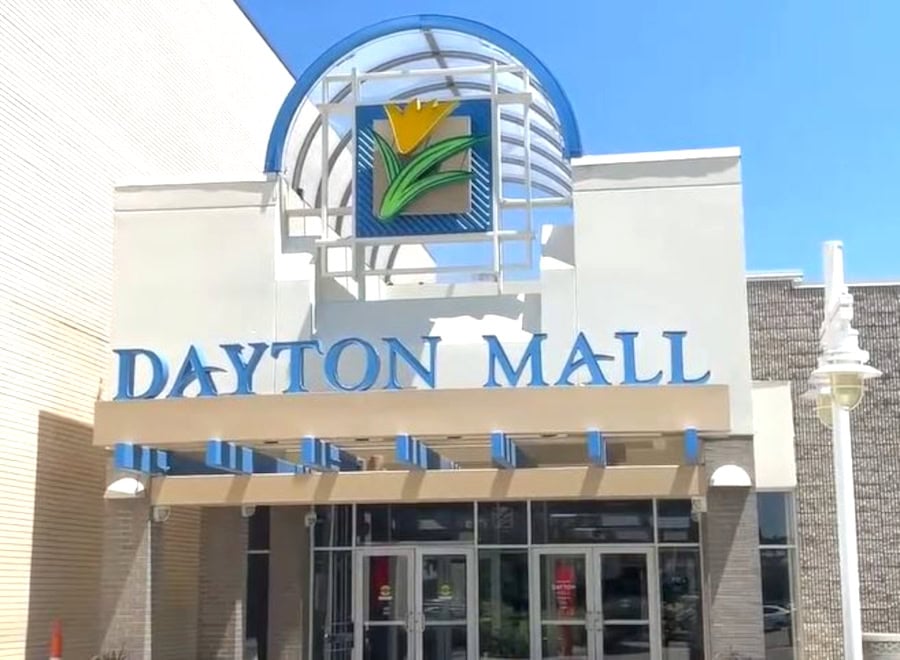
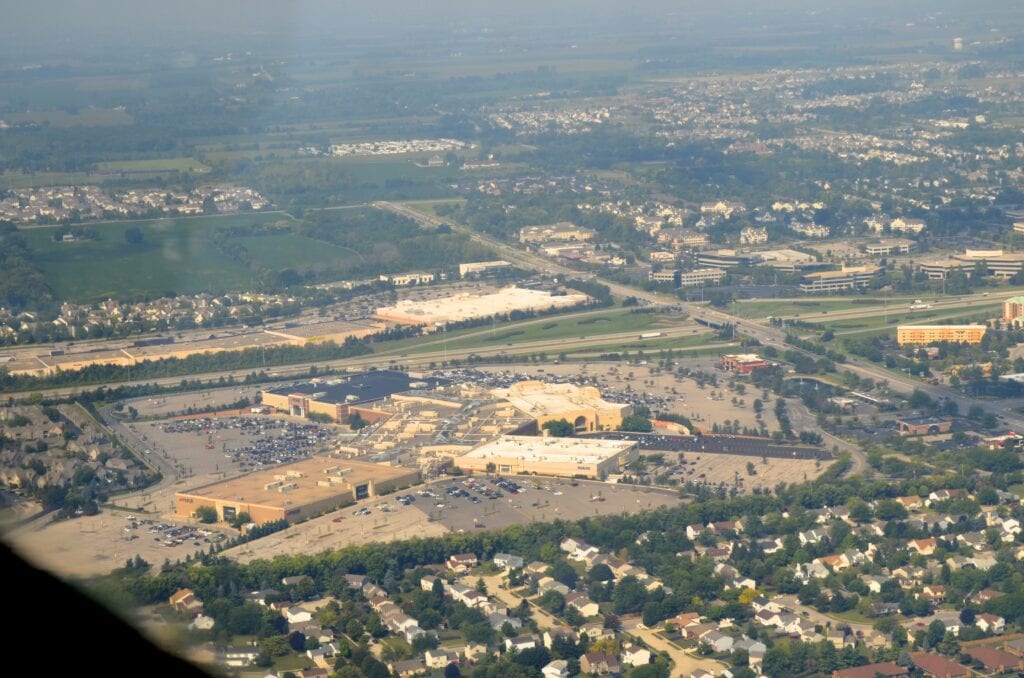
The Mall at Tuttle Crossing was built at I-270 and Tuttle Crossing Boulevard as a $300 million project to bring a full indoor mall to the northwest side of Columbus.
Dublin is close enough to feel connected to it. The address is 5043 Tuttle Crossing Boulevard, marking a spot that used to be empty before this big project.
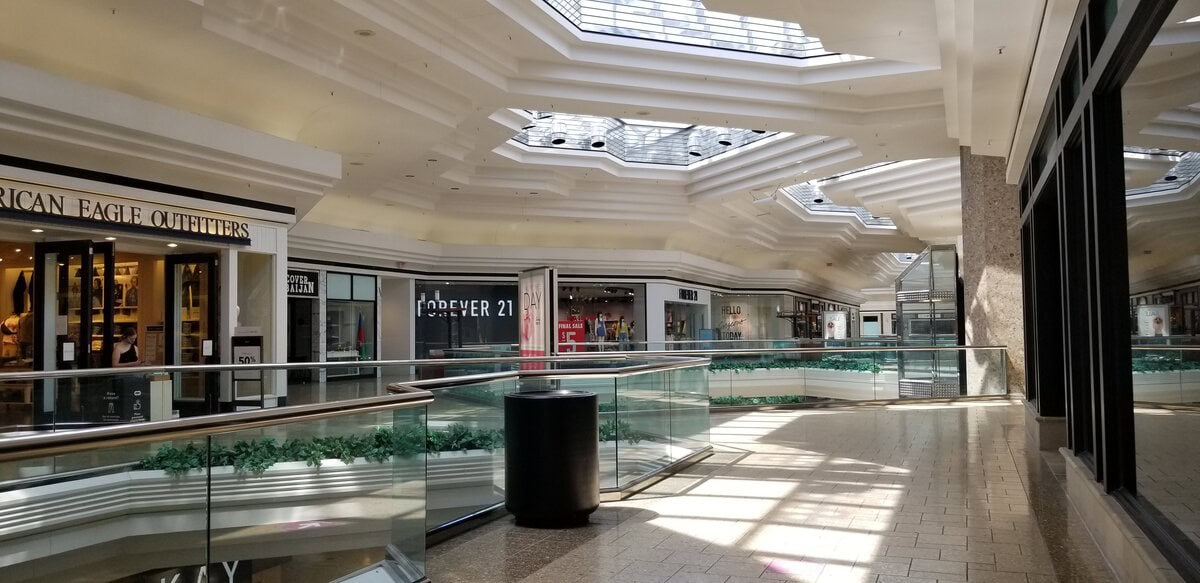
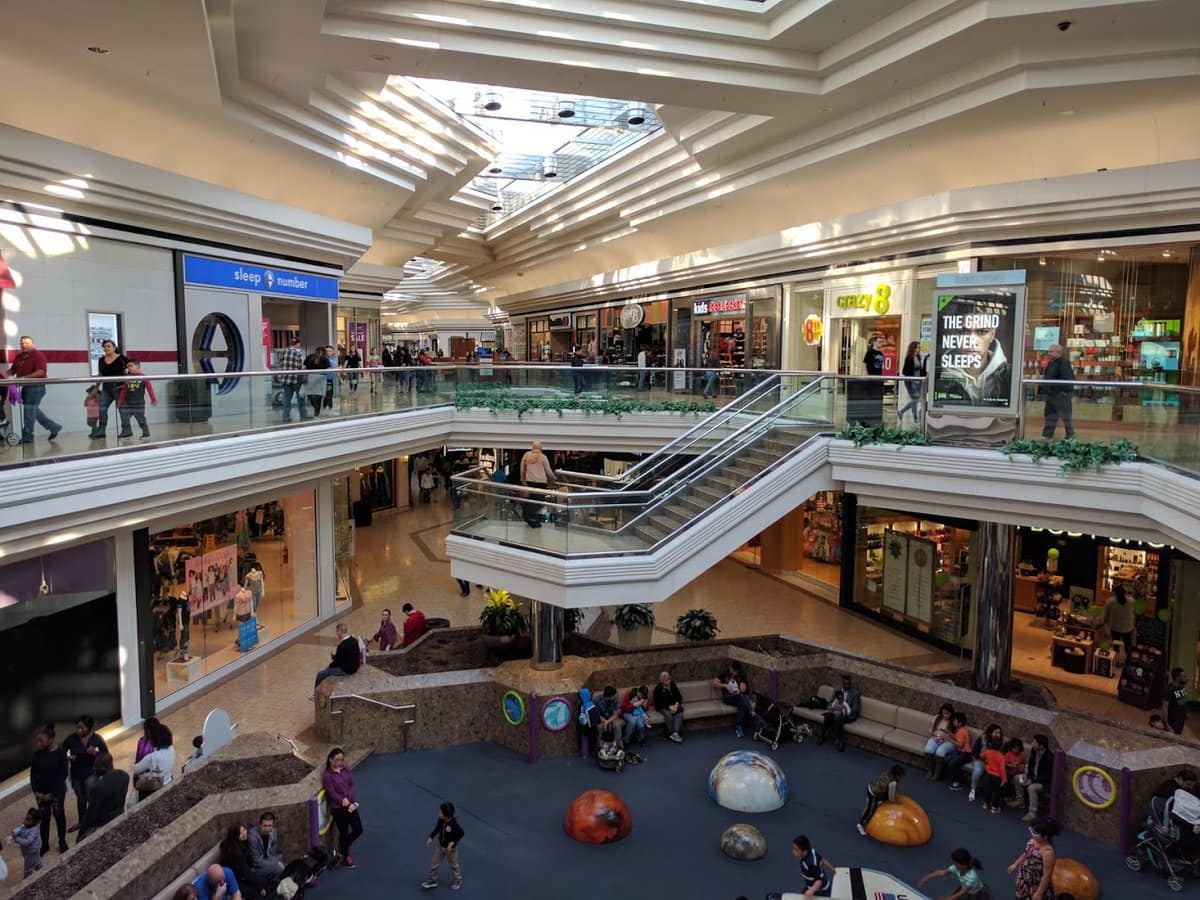
The finished mall was simple in design: a two-story indoor mall with long hallways and a big size.
It covered about 1,123,000 square feet, which decided how far you could walk inside and how many stores could fit under one roof.
Deals and managers kept shifting over time
The ownership story started changing almost right away. In December 1997, The Limited sold its $76.3 million share to Taubman, leaving Taubman as the sole owner.
In August-September 1998, Taubman reached a deal with General Motors' pension trust in which GM exchanged its equity holdings in Taubman for interests in the shopping centers.
Taubman continued to manage (and lease) the properties.
In 1999, Kelly Fisher became the mall's general manager, succeeding Johnny Scales. By 2004, Tuttle and other GM-owned malls were put up for sale.
Taubman considered purchasing Tuttle again, but Mills Corporation acquired it in October 2004, along with City Center.
Mills proposed redevelopment ideas for Tuttle, but the plans people expected largely did not materialize.
In 2007, Simon Property Group became the owner through its acquisition of Mills. Simon managed the mall from April 2007 until 2020.
Over those years, the mall still had strong traffic drivers and a familiar tenant mix, even as the retail world outside the walls started shifting hard toward open-air centers and online shopping.
When department stores became new names
The mall's anchor lineup changed with the department store mergers of the 2000s. In 2003, Lazarus was rebranded as Lazarus-Macy's.
That same year, the original Marshall Field's became Kaufmann's in February 2003. In March 2005, Lazarus-Macy's became Macy's.
In 2006, after the Federated-May merger, Kaufmann's was renamed Macy's at Hayden Run.
For a while, the mall had two Macy's stores at once: Macy's at Tuttle Crossing and Macy's at Hayden Run. That overlap lasted until 2017.
On January 4, 2017, Macy's announced it would close its Hayden Run store later that year, marking a major anchor shake-up.
The next big change was not another department store at all.
In early spring 2018, Scene75 Entertainment purchased the former Marshall Field's-Kaufmann's-Macy's building and tract. Scene75 opened to the public on October 11, 2019.
Scene75 was founded by Les and Jonah Sandler, and the chain was later sold to Kentucky-based Five Star Parks and Attractions in 2023.
Sears closes, and the slide speeds up
Sears followed its own national retreat. On December 28, 2018, Sears announced it would close as part of a plan to shut down 80 stores nationwide.
The Sears at Tuttle Crossing closed in March 2019. That left a major vacant anchor space that did not get a permanent replacement.
The mall's current anchors are JCPenney, Macy's at Tuttle Crossing, and Scene75 Entertainment, with the former Sears space still vacant.
For years, the mall remained strong enough to keep occupancy above 90% and carry many popular tenants.
It was later overshadowed by major competition like Easton Town Center and Polaris Fashion Place, but it still held on.
Then the underlying financial problems surfaced.
In June 2020, the Mall at Tuttle Crossing loan transferred to special servicing for imminent default; the loan balance was about $114 million.
In late 2020, Simon disclosed plans to pursue a ‘friendly foreclosure'/receivership strategy.
The mall moved into receivership in January 2021, and management shifted to Texas-based The Woodmont Company from 2020 to 2023.
Even with anchors still drawing traffic, the tenant picture started thinning out, and the empty spaces became harder to hide.

Violence, exits, and maintenance
June 12, 2022, turned into the day people still point back to. Inside the mall, an altercation in a shoe store ended with a shooting that killed one person.
In 2025, the perpetrator was found guilty of murder and inducing panic and was sentenced to 21 years in prison.
The mall was already in bad shape by then. Stores started closing in 2020; Victoria's Secret and Pink were the first to leave.
Red Robin closed in 2022, and by the end of 2023, the place was less than 70% full. All the usual stores like H&M and The Children's Place either closed or were about to.
Then Forever 21 left, and Claire's disappeared. It just kept happening.
The building itself started falling apart, too. Summer 2024 was tough because the air conditioning kept breaking.
New owners, fewer stores, unclear next steps
In October 2023, The Mall at Tuttle Crossing was sold for $19.5 million.
The buyers were three companies from New York: Namdar Realty Group, CH Capital Group, and Mason Asset Management. Namdar took over running the mall.
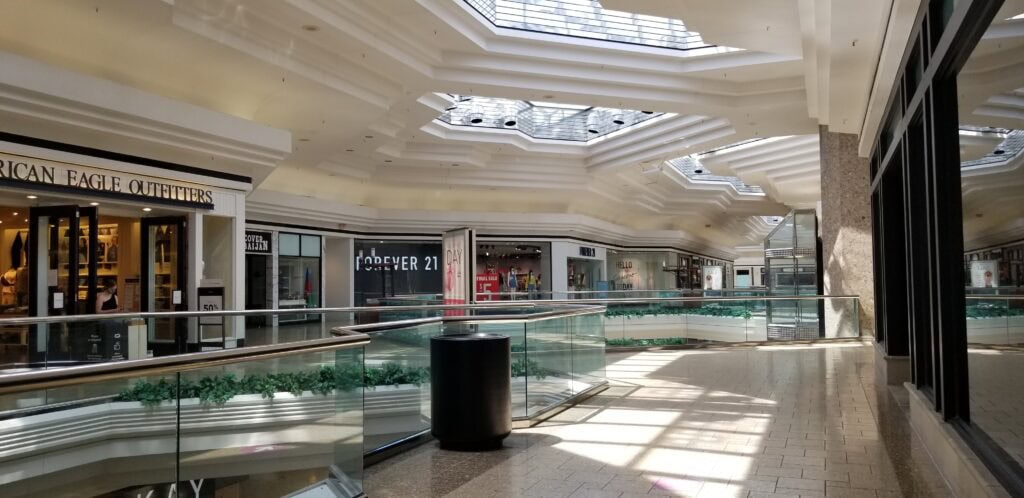
Now it's early 2026, and the mall is still open, but it's much emptier and looks a lot more worn out than it used to.
It has about 60 stores, and now has more local and specialty shops than it did when it was busiest. The old Sears space is still empty, although sometimes it is used for temporary stores during certain times of the year.
The property is in a busy area, and the main stores still get regular visitors. The hallways inside near these stores are quieter.
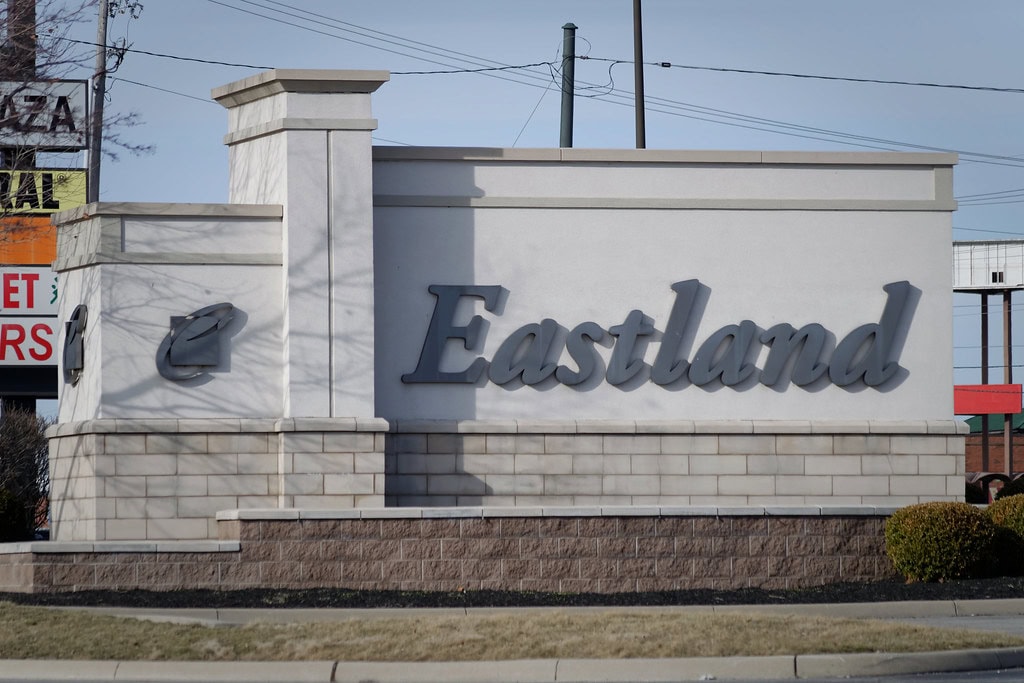
Great story about Tuttle. It is sad how the Mall has declined over the years. So many things have contributed to this and I'm fearful it will not recover and will eventually be like Northland, Eastland & Westland.....demolished and probably changed to living facilities.
Thanks for sharing your thoughts! It is sad to see the decline, but I believe there’s still potential for Tuttle to find a new purpose. Let’s hope for a positive future for this space.
The management of this mall is terrible! I live very close to the mall and hate to see this turn into an eye sore like Westland/Eastland, etc. The a/c in the mall has been out for TWO YEARS! No wonder no one wants to shop there. I was in Macy's and Penney's last summer (2023) and it was so hot in there I could not change clothes. They had huge fans on the floors but that did not help in the dressing rooms. Clean up your act! And people will come back!
Thank you for sharing your experience! The lack of A/C is definitely an issue. It’s disappointing when a place you love isn’t well-maintained. Let’s hope the management takes action to improve things.