
On damp mornings, fog can sit low on the Willamette, softening the view toward Willamette Falls before the day opens up.
A woman in a rain jacket walks her dog past storefronts on Willamette Falls Drive, past a coffee shop where regulars settle in by the window.
This is West Linn, a small city built across hills and along two rivers, about 20 minutes south of downtown Portland. If you pictured a retirement town as flat, dry, and cheap, West Linn breaks all three assumptions at once.
It's also one of the more specific answers Oregon has to a real question: where would an older adult actually build a life here, not just visit one for a weekend?
The Willamette River and its falls are the reason the place exists at all. They're also part of why the cheap version of West Linn is hard to find.
Retiring in West Linn, Oregon: costs, trade-offs, and a practical fit test
West Linn can work well for a retiree who wants to stay in an established, heavily owner-occupied community and can carry relatively high housing costs without putting pressure on retirement income.
U.S. Census Bureau estimates put the city's owner-occupied housing rate at 82.7%, and 19.3% of residents are age 65 or older.
Housing is the harder part of the decision.
For 2020-2024, the Census median for selected monthly owner costs was $3,050 with a mortgage and $1,136 without one.
Median gross rent was $2,116. Zillow's July 2026 Zillow Home Value Index (ZHVI) put the typical West Linn home value at $779,602.
A retiree whose plan depends on a large reduction in housing spending should compare nearby Oregon City and Wilsonville before committing.
A retiree who already owns a suitable West Linn home with little or no debt has a different calculation: the question becomes whether the house can remain affordable, cool, accessible, and practical as mobility and care needs change.

West Linn retirement at a glance
| Measure | West Linn | Retirement relevance |
|---|---|---|
| Residents age 65+ | 19.3% | A substantial older-adult population, without making the city a retirement-only community |
| Owner-occupied housing rate | 82.7% | West Linn is strongly oriented toward homeowners |
| Median owner-occupied home value | $770,200 | Census 2020-2024 estimate, useful for comparison with nearby cities |
| Median selected monthly owner costs, with mortgage | $3,050 | Recurring owner costs remain material while a mortgage is in place |
| Median selected monthly owner costs, without mortgage | $1,136 | A paid-off mortgage still leaves substantial recurring housing costs |
| Median gross rent | $2,116 | Useful as a baseline for renters, though it is a 2020-2024 estimate rather than a current asking rent |
| Zillow Home Value Index | $779,602 | Typical home value through July 31, 2026 |
The Census housing figures are 2020-2024 survey estimates.
ZHVI is a July 2026 index of typical home value, so the two measures should not be read as a before-and-after price series.
Housing data source: Zillow Home Value Index, July 2026. Data Provided by Zillow Group.

The retirement math starts after the mortgage payment
"Mortgage-free" can sound much cheaper than it is.
The Census measure used here, Selected Monthly Owner Costs, combines mortgage payments when applicable with real estate taxes, insurance, utilities, fuels, mobile-home costs, and condominium fees.
That definition makes the $1,136 West Linn median for owners without a mortgage more useful than a property-tax figure alone when thinking about recurring housing overhead.
The measure covers only the categories in its definition.
Repairs, major replacements, accessibility work, and other household spending can arrive on top of it.
A roof, furnace, cooling system, driveway, or bathroom conversion can matter more to one retiree than the citywide median does.
The practical lesson is to build the retirement budget around the exact property.
For a home you already own, use the last 12 months of taxes, insurance, utilities, association charges, and maintenance as the budget base.
For a home you may buy, get property-specific insurance and tax information before the offer becomes difficult to unwind.
For comparison purposes, use a simple annual occupancy figure: 12 times your recurring monthly housing costs, plus expected annual maintenance, plus any required accessibility or cooling work spread across the years you expect to stay.
If $18,000 of necessary work is expected to serve the home for 10 years, that adds $1,800 per year to the comparison.
Treat the lifespan as a planning assumption, not a forecast.
If a mortgage payment already includes tax or insurance escrow, do not add those costs a second time.
The citywide medians still show the size of the location trade-off.
Compared with Oregon City, West Linn's median selected monthly owner costs are $314 higher without a mortgage. That is $3,768 over 12 months.
With a mortgage, the gap is $676 a month, or $8,112 over 12 months. Median gross rent differs by $408 a month, or $4,896 over 12 months.
Those are author's calculations from Census 2020-2024 area medians. They compare communities on one consistent statistical basis.
They do not predict what a particular house, mortgage, lease, insurance policy, or tax bill will cost.

Nearby cities change the cost decision
The same Census 2020-2024 measures make nearby alternatives easier to compare without mixing listing prices, commercial cost-of-living scores, and different time periods.
| City | Age 65+ | Owner-occupied rate | Median owner value | Owner cost with mortgage | Owner cost without mortgage | Median gross rent |
|---|---|---|---|---|---|---|
| West Linn | 19.3% | 82.7% | $770,200 | $3,050 | $1,136 | $2,116 |
| Oregon City | 14.7% | 65.3% | $555,800 | $2,374 | $822 | $1,708 |
| Wilsonville | 16.8% | 49.0% | $615,300 | $2,538 | $963 | $1,878 |
| Lake Oswego | 23.5% | 69.3% | $932,200 | $3,439 | $1,258 | $2,139 |
Among the three nearby comparisons here, Oregon City is the clearest cost-screening alternative when reducing housing expense is the priority.
Its median owner value, owner costs, and gross rent are all below West Linn's on the same Census basis.
Wilsonville also has lower housing medians, while its owner-occupied rate is 49.0% compared with West Linn's 82.7%.
A retiree who wants renting to remain a serious long-term option has a reason to compare the two housing markets in person.
Lake Oswego has the largest age-65+ share in this four-city comparison, at 23.5%, and the highest median owner value and owner costs.
It is useful for someone choosing among nearby higher-cost communities.
For a retiree trying to reduce housing expense, Oregon City or Wilsonville is the more relevant comparison.
The table is a screening tool.
The next comparison should use actual candidate properties or rentals, because neighborhood, home type, mortgage balance, insurance, association fees, and repair needs can move the household budget far away from a city median.

Summer heat belongs in the house-selection test
NOAA's Portland International Airport station gives a regional climate reference for the area.
Its 1991-2020 normals show an August average daily high of 82.3 F. The same normals show 14.6 days per year with a high of at least 90 F and 1.2 days per year at or above 100 F.
That combination matters in retirement because average summer weather can look comfortable while a smaller number of hot days determines whether a house remains usable for someone who is less tolerant of heat.
Elevation, tree cover, sun exposure, insulation, window area, and cooling equipment can make two homes in the same city feel very different.
During a home tour, confirm which rooms can be cooled, whether the bedroom stays comfortable, how much direct afternoon sun reaches the main living areas, and what happens if the cooling system needs repair during a hot spell.
If a property needs new cooling equipment, electrical work, window coverings, or shade improvements, price those items before treating the home as retirement-ready.
The NOAA figures should be used as a Portland-area reference only. They do not establish the temperature pattern of a specific West Linn property.
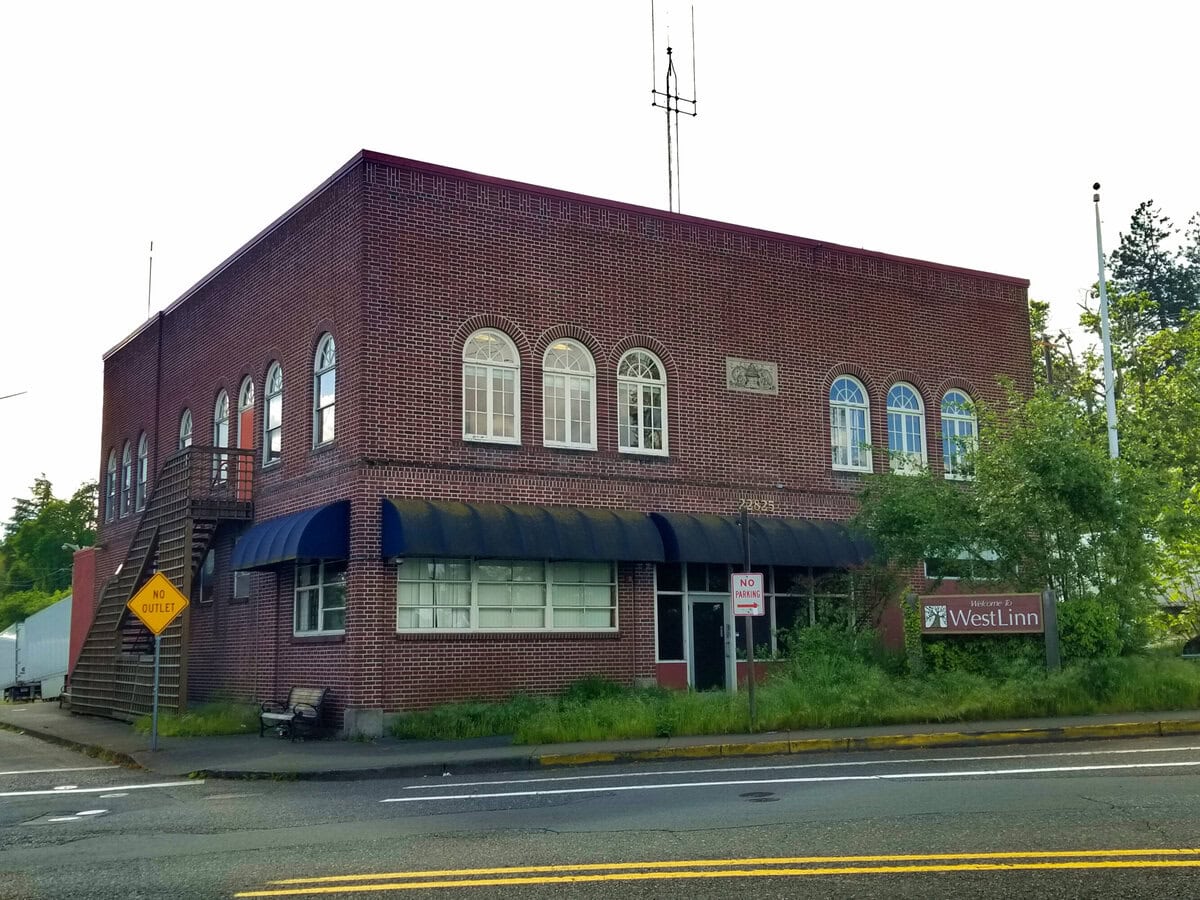
The exact address matters more than a city score
A retirement decision gets weaker when citywide averages substitute for property-level checks.
Three address-specific tests deserve attention before a move.
Flood information
Use the exact street address in FEMA's Flood Map Service Center and keep the effective map date with your notes.
A citywide or neighborhood-level flood map cannot establish the mapped flood zone, elevation requirement, or insurance cost for a specific property.
Treat the FEMA result as one input to property due diligence. Ask the insurer and appropriate property professionals about the specific home.
Healthcare and care transitions
Healthcare access should be tested against your doctors, coverage, and likely future care needs.
Medicare Care Compare lets users compare hospitals and home health agencies, among other provider types.
If you use Medicare Advantage, non-emergency provider choice can depend on the plan's network and service area.
Before choosing an address, check the providers you already use, the specialists you are most likely to need, hospital options, and Medicare-certified home health agencies that serve the area.
Then confirm network status directly with the plan.
This is more useful than a generic statement that a city has "good healthcare," because the workable set of providers differs by person and coverage.
Everyday mobility
Walk the candidate property as if stairs, balance, night vision, or driving tolerance had already changed.
Check the route from bedroom to bathroom, the shower or tub entry, exterior steps, driveway grade, handrail locations, and whether a main-floor living arrangement is possible.
Then test ordinary errands from the exact address.
Try the grocery, pharmacy, medical appointments, and one social activity at the times you would normally go.
If the routine becomes difficult without driving, record that as a housing constraint before the move.
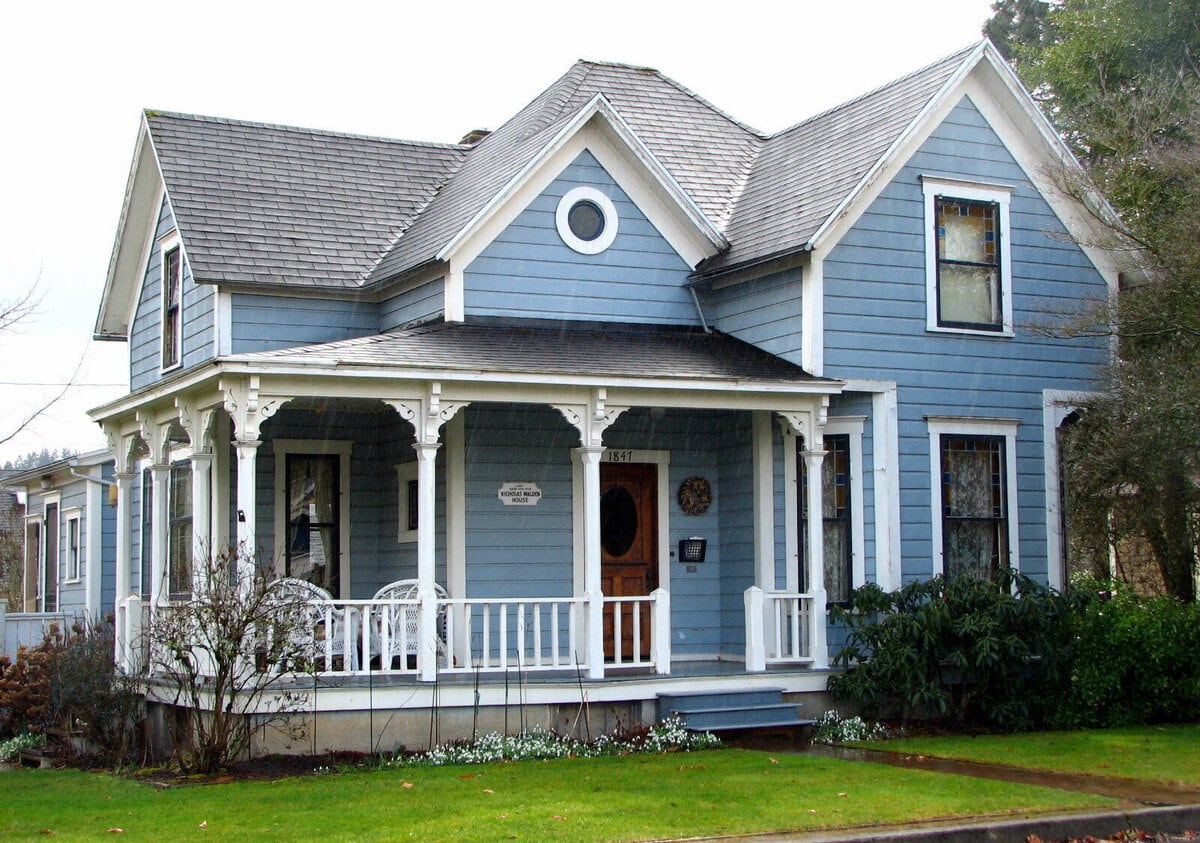
Who is likely to get the most value from West Linn
West Linn is a stronger retirement fit when housing is already secure or comfortably affordable, the chosen home can support aging in place, and the exact address passes the heat, flood, healthcare, and mobility checks above.
The city's 19.3% age-65+ share and 82.7% owner-occupied rate add context. The property still has to fit the budget and remain usable as needs change.
The case is weaker when retirement depends on cutting housing costs by a large amount.
Oregon City and Wilsonville both show lower Census housing medians on the same 2020-2024 basis.
Renting also deserves a deliberate comparison because West Linn's housing stock is much more owner-occupied than Wilsonville's.
For an existing West Linn homeowner, selling and moving solely because the city is expensive may miss the household-level math.
Compare the annual cost of the current home, any renovation needed to make it safer and easier to use, the transaction costs of moving, and the recurring cost of the replacement.
A less expensive city can still produce a poor financial result if the move consumes a large amount in selling, buying, moving, or renovation costs.
Taxes need the same personal treatment.
Run a current Oregon tax projection using your actual retirement-income mix and the property you expect to own or rent.
Housing figures by themselves do not tell you the after-tax retirement budget.

A two-day West Linn retirement fit test
Day 1: money and the house
Choose two or three realistic West Linn properties, including your current home if you already live there.
Build a 12-month housing worksheet for each one using mortgage or rent, property taxes, insurance, utilities, association charges, expected maintenance, and any immediate accessibility or cooling work.
Keep Census medians in a separate comparison column so they remain context rather than substitutes for actual quotes.
Tour the home with future mobility in mind.
Use every exterior entrance, walk the bedroom-to-bathroom route, test stairs and handrails, inspect the shower or tub entry, and identify a main-floor living option.
Check bedroom cooling and afternoon sun exposure.
For a purchase, look up the exact address in FEMA's Flood Map Service Center before the property reaches your final shortlist.
Day 2: care and daily life
Use Medicare Care Compare for the area, then verify your actual doctors, specialists, hospital choices, and home health options with your coverage.
Medicare Advantage members should confirm network status directly with the plan after using the provider search.
Run your normal errands from each candidate address.
Include a grocery trip, pharmacy stop, medical destination, and a social or recreational outing you would genuinely make.
Repeat one route after dark if night driving is part of your current routine.
Finish by running a current Oregon tax projection and adding the result to the same annual budget.
At the end of the second day, each candidate should have four answers: annual housing cost, required property work, healthcare fit, and daily-mobility fit.
A home that fails one of those tests needs a priced remedy before it belongs on the shortlist.
Before you make an offer
- Get the property's current tax information, an insurance quote, known association charges, and repair estimates. Keep escrowed tax or insurance from being counted twice in the budget.
- Search the exact address in FEMA's Flood Map Service Center and save the effective map date with your notes.
- Price any cooling, electrical, accessibility, or main-floor-living work needed for the years you expect to stay.
- Check hospitals and home health options in Medicare Care Compare, then verify your doctors and specialists with your coverage. Medicare Advantage members should confirm network status directly with the plan.
- Drive or walk the ordinary grocery, pharmacy, medical, and social routes from the address at the times you would normally use them.

The decision
West Linn belongs in the high-cost, homeowner-heavy category of retirement choices.
Generic "best places to retire" lists are a poor substitute for checking whether the exact home fits the budget and can remain usable through heat, mobility changes, and future care needs.
If lowering recurring housing cost is one of the main reasons for moving, compare Oregon City and Wilsonville with the same property-level worksheet before choosing West Linn.
If you already own a suitable West Linn home, the $1,136 Census median for owners without a mortgage is the more useful reminder: a paid-off house still carries meaningful monthly costs, and those costs should be measured before a move is assumed to save money.
On the map: West Linn, OR 97068
Sources and further reading
- U.S. Census Bureau QuickFacts: West Linn, Oregon - population, age, homeownership, owner-value, owner-cost, and rent estimates.
- U.S. Census Bureau Glossary: Selected Monthly Owner Costs - definition of the housing-cost measure used in this article.
- U.S. Census Bureau QuickFacts: Oregon City, Oregon - nearby-city comparison data.
- U.S. Census Bureau QuickFacts: Wilsonville, Oregon - nearby-city comparison data.
- U.S. Census Bureau QuickFacts: Lake Oswego, Oregon - nearby-city comparison data.
- Zillow Research: Housing Data and West Linn Local-Info housing page - ZHVI definition and July 2026 West Linn typical home value.
- NOAA/NCEI 1991-2020 Monthly Normals: Portland International Airport - regional temperature normals used for the heat-planning section.
- FEMA Flood Map Service Center - address-specific flood-map lookup.
- Centers for Medicare & Medicaid Services (CMS): Medicare Care Compare and Compare Original Medicare & Medicare Advantage - provider comparison tools and plan-network considerations.
Independent Publisher Notice
BestAttractions is an independent editorial publisher. We are not affiliated with, endorsed by, or acting on behalf of any location, business, property owner, manager, government agency, or organization described in this article.
Comments posted on this page are not forwarded to, reviewed by, or acted upon by any entity mentioned in the article.
For official inquiries, complaints, applications, bookings, or other requests, please contact the relevant entity directly through its official website or other verified channels.