
How The Mall at Steamtown tried to rebuild downtown
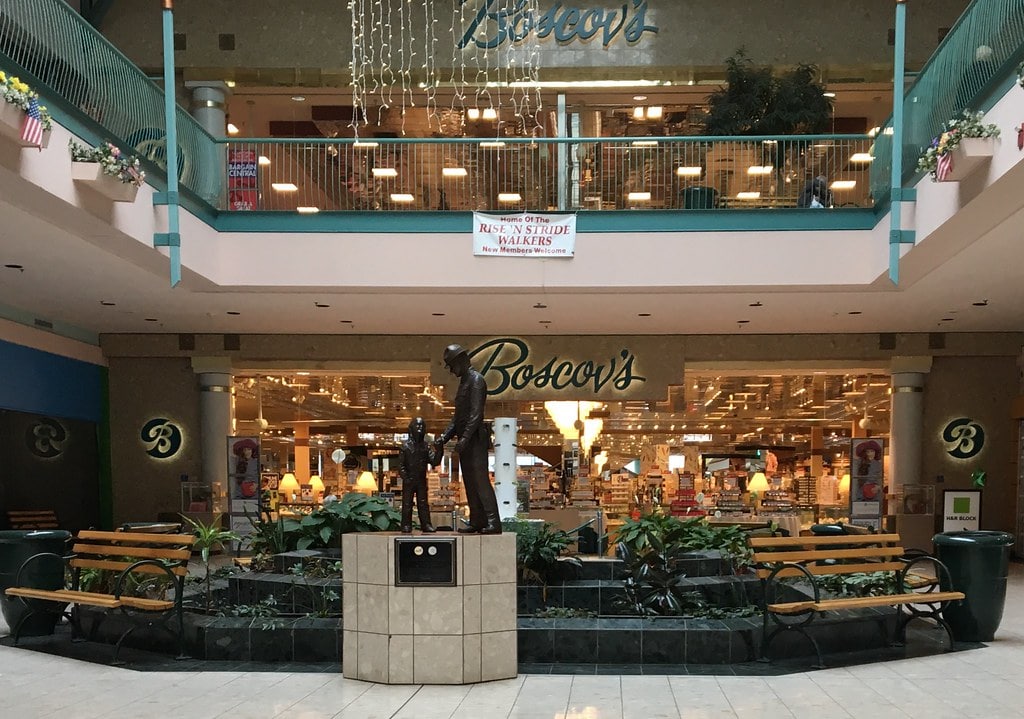
In the mid-1980s, when American retail wisdom said that prosperity lived off the interstate, in the orbit of endless parking lots and food courts, Al Boscov decided to drag the future back downtown.
Al Boscov, longtime head of Boscov's Department Stores, had grown tired of the suburban-mall gospel. If shopping was going to save a place, he believed, it ought to save the center of the city, not an exit ramp.
Scranton, Pennsylvania, was not an obvious test case. Its downtown included the decaying husk of the Oppenheims' building, with a failing parking garage attached like a bad idea that would not fall off.
Scranton's mayor at the time, James Barrett McNulty, offered Boscov that package as a turnkey solution.
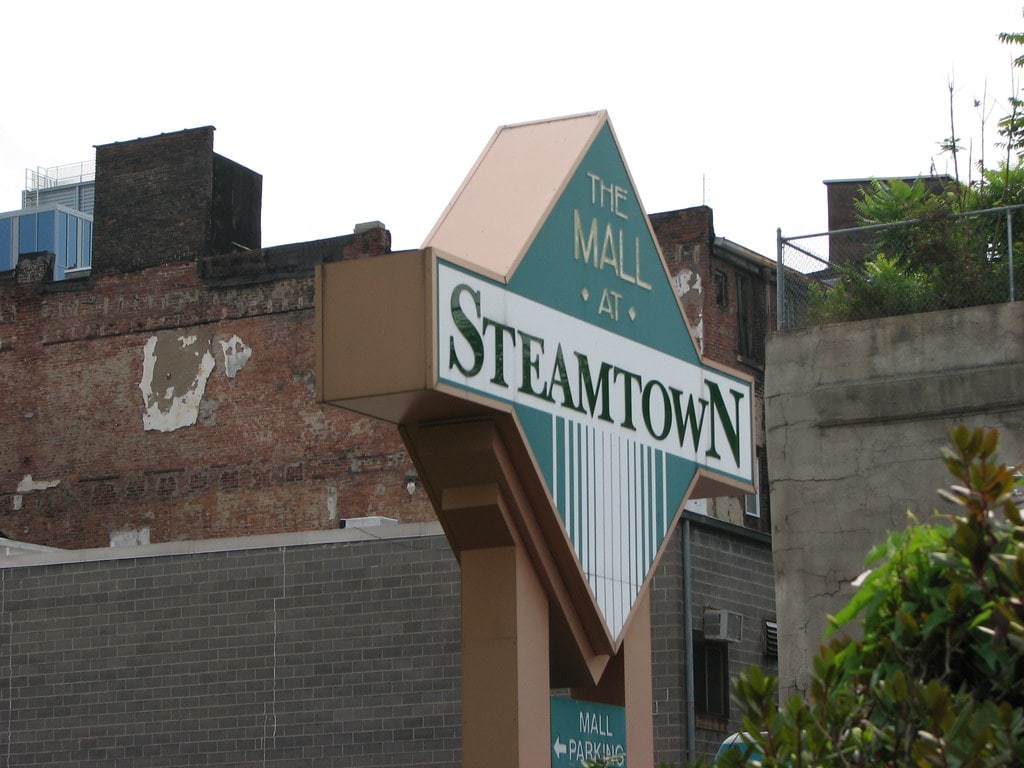
Boscov declined, and in the polite language of redevelopment, proposed instead to demolish an entire block of business buildings along Lackawanna Avenue and extend the project into the railroad property behind it, a yard of rust and memory known, with a certain optimism, as Steamtown USA.
For more than a year, McNulty ignored him. Then, on April 4, 1986, they struck a deal for a two-anchor mall wedged between Lackawanna Avenue and the Steamtown yards.
Within weeks, Boscov announced a limited partnership with the New York-based Shopco Group, under the name Scranton Mall Associates.
The partnership would handle the studies, the engineering, and the task of persuading a skeptical city that bulldozers were a form of love.
The Great Implosion and the mall that replaced downtown
The skeptics came early. In 1986, the Architectural Heritage Association denounced the plan as a throwback, accusing Boscov of locking Scranton into a 1950s vision of downtown.
A federal lawsuit followed, filed on behalf of Concerned Citizens for the Preservation of Historic Commercial Scranton and several downtown merchants.
Republican mayor David J. Wenzel, who had succeeded McNulty, chose a simpler narrative. As far as the city was concerned, he said, there was only one plan - Boscov's.
The deal that ended the deadlock did not come from City Hall but from Washington.
On September 28, 1987, the National Park Service agreed to save the Steamtown USA yards as a historic site, while letting a mall be built around them.
A $13 million grant for city development soon followed. In 1989, a Lackawanna County judge decided it was legal to take over six empty buildings on Lackawanna Avenue.
By spring 1991, the money was ready; by summer, 19 businesses that had fought the project were told to leave, and then did so, though they did not want to.
On April 5, 1992, people in Scranton watched five buildings collapse on live television.
WYOU TV-22 covered the demolition like it was a big sports event, even using a camera called the Kamikaze Cam on top of a bank building that was about to come down.
Interviews with mayors from the past and present described the blast as both wiping out the old and starting something new.
Where there had been old brick buildings, there would be a mall; where there had been busy streets, there would be air conditioning.
Three anchors open, one sinks
Construction on what was variously called a 90 or 101 million dollar project officially began on October 6, 1992.
Precast concrete slabs the size of small barges were swung into place by a 200-ton crane to form the parking deck and the shell of Montgomery Ward, one of the planned anchors.
The design included bridges to the Globe Store and Steamtown, connecting the mall to both retail history and the area's industrial past.
The nearby blocks, which had been filled with boarded-up shops and illegal activity, were set to become a family destination, with 2,441 parking spaces showing the project's ambition.
The Mall at Steamtown opened on October 23, 1993, one week before Halloween weekend, with CNN cameras rolling and Governor Robert P. Casey Sr. cutting the ribbon.
There were bands in the center court, comedians in front of Boscov's, and a food court that looked out over the newly minted Steamtown National Historic Site, linked by a pedestrian bridge.
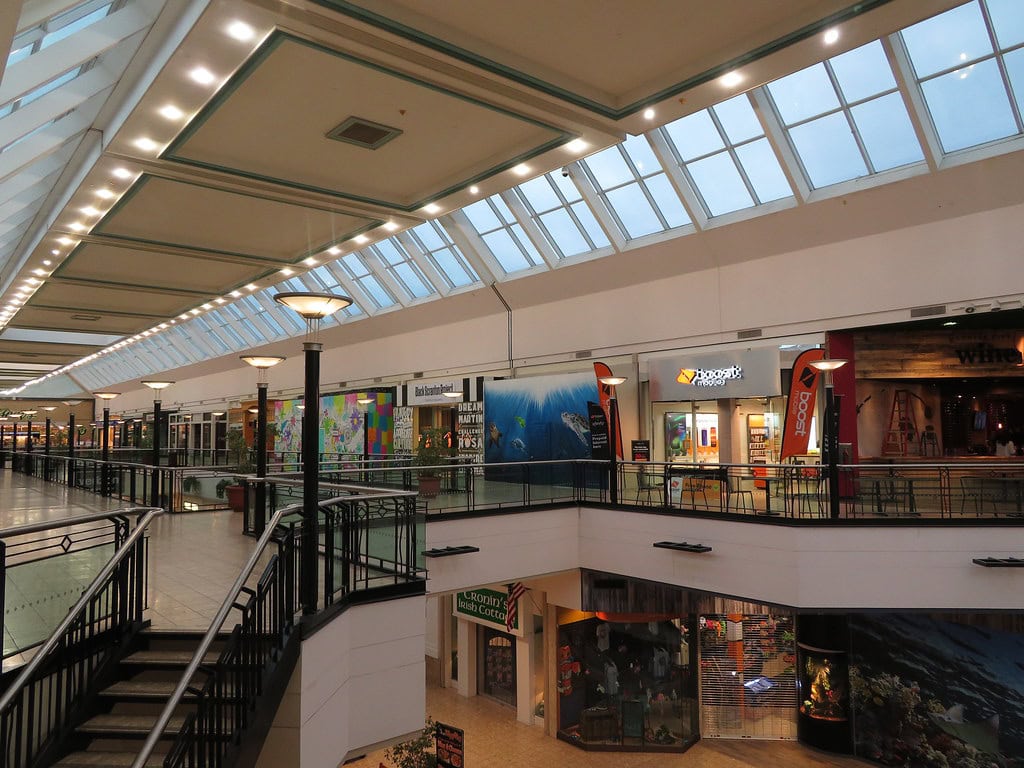
This was the future Scranton was meant to see: two levels, a mix of national and regional stores, and three anchor tenants: Boscov's, Montgomery Ward, and the well-known Globe Store, connected by a 31,000 square foot bridge stretching across Lackawanna Avenue.
The future lasted roughly three and a half months for the Globe. Founded in 1883 and once compared, generously, to Manhattan department stores, the Globe Store could not keep up with modern retail.
It filed for bankruptcy on February 7, 1994, and closed in April after protracted going-out-of-business sales.
Scranton Mall Associates said the empty store made the new mall look more like a flea market than an upscale shopping center. The bridge now seemed out of place.
Television fame, billion-dollar sales, gathering risks
For a while, the rest of the mall did well anyway. In the mid-1990s, The Mall at Steamtown was completely full, with about 70 stores across more than 550,000 square feet.
Montgomery Ward was at one end, Boscov's at the other, and Scranton could once again say it had a downtown shopping spot.
Then, national trends started to have an effect.
Montgomery Ward filed for Chapter 11 in 1997 and closed its Steamtown store in 1999. The space did not sit empty for long.
The Bon-Ton announced in early 2000 that it would take over and expand the former Wards box, even absorbing four smaller inline tenants in the process.
By November of that year, a fresh anchor sign was up.
The mall's finances in this period looked deceptively sturdy.
In 2003, the owners refinanced with a $41 million mortgage through UBS, working with LNR Partners, and brought in Steamtown Mall Partners to manage operations.
Boscov's, at the chain level, was booming; by 2005, the company was ringing up more than a billion dollars in annual sales.
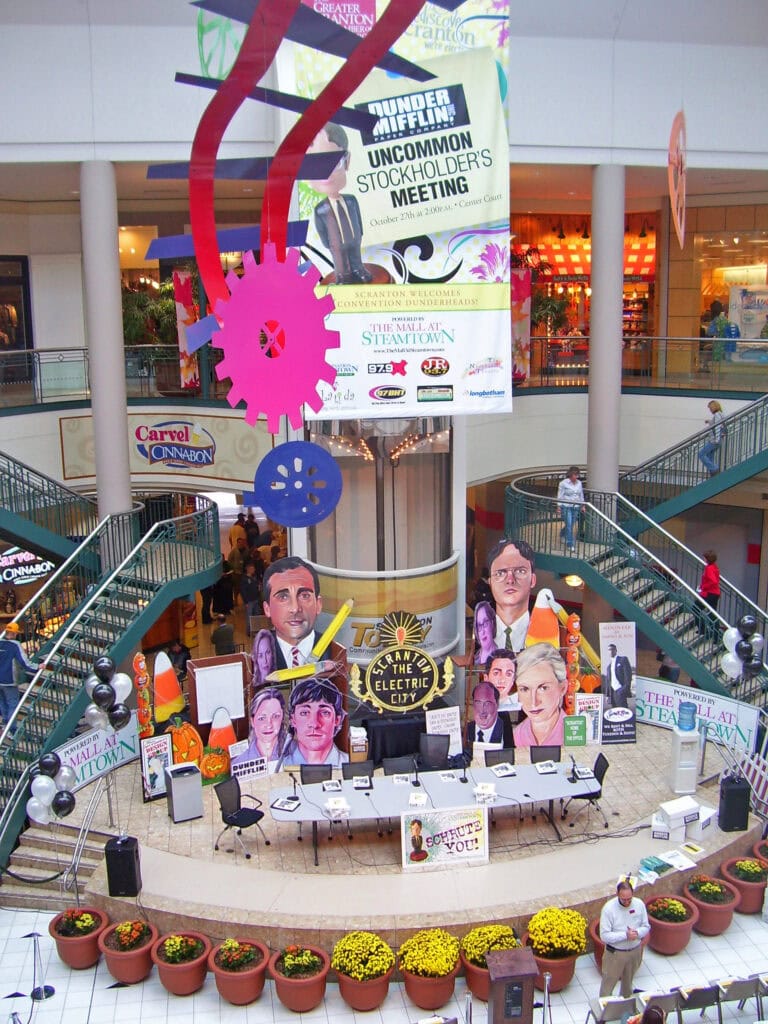
Culturally, the mall basked in an odd, borrowed spotlight. When NBC's "The Office" debuted in 2005, it quickly turned The Mall at Steamtown into the go-to lunch and gift spot for its fictional paper salesmen.
While the show filmed those scenes in sunny Sherman Oaks, California, real-life Steamtown drew devoted fans, many unaware that Hollywood had used a stand-in.
Overexpansion, bankruptcy, and The Mall at Steamtown's debt problem
If the early 2000s were the mall's high gloss years, the back half of the decade revealed the fingerprints underneath.
In 2006, Al Boscov retired, handing control of his company to his nephew, Ken Lakin, who embarked on an expansion bender.
The chain joined the buying spree, picking up ten former Federated department stores in a deal that was part of a $400–$500 million sell-off of duplicate stores just as department-store consolidation was accelerating.
The deal proved as ill-timed as it was expensive. On August 4, 2008, Boscov's filed for Chapter 11.
Al Boscov came out of retirement to clean up the mess, working marathon days, visiting stores, selling off the Strawbridge's additions, and eventually shepherding the chain out of bankruptcy in 2009 with some debts paid.
But the rescue did not erase the load-bearing numbers hanging over Scranton.
By late 2009, more than 37.7 million dollars remained on the principal note for The Mall at Steamtown; tax documents soon put total mall-related debt north of 60 million.
By 2012, Jones Lang LaSalle had been hired to manage day-to-day operations, a move that often signals distress more than ambition.
Foreclosure, tenant exodus, civic fallout
The crucial date arrived on July 11, 2013, when a 40.5 million dollar mortgage came due. The owners could not pay.
Competition from The Shoppes at Montage, the Viewmont Mall, and the internet, combined with stubborn debt and shrinking rents - the mall was only about 65 percent occupied - pushed The Mall at Steamtown into foreclosure in March 2014.
When anchor stores left, lease clauses allowed more tenants to depart, turning a slow trickle into a rush.
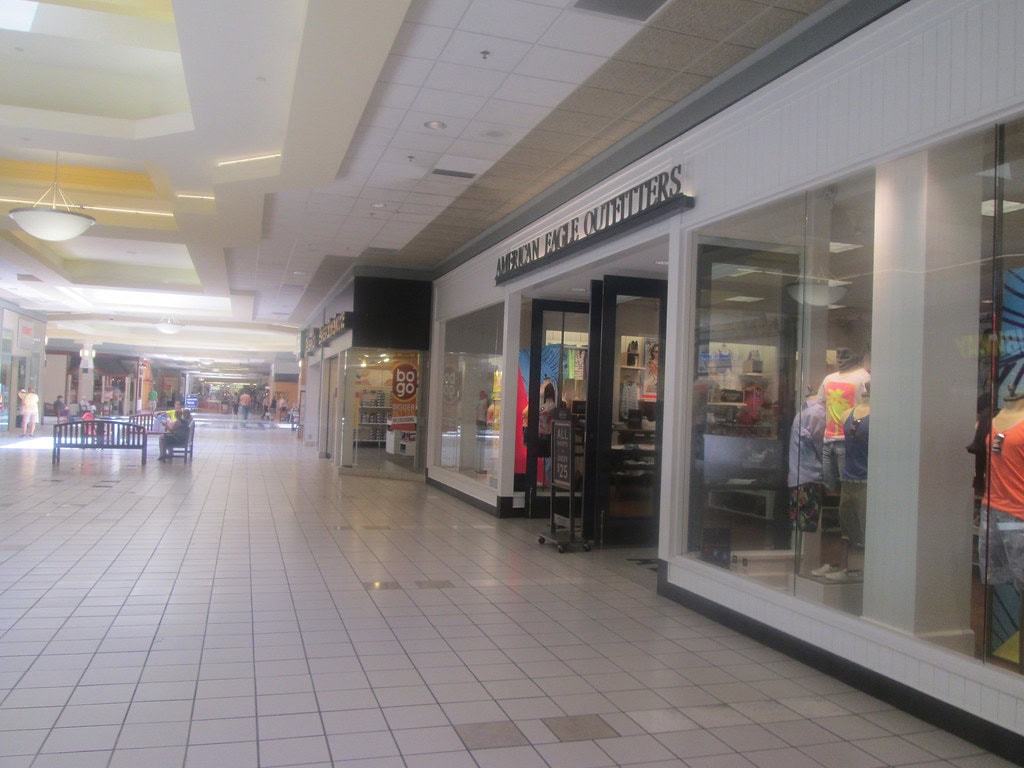
Bon-Ton left in early 2014, followed by many other chains and small shops, from American Eagle to local restaurants.
By 2015, about 75 percent of the mall was vacant, and the cinema closed instead of upgrading to digital projectors. The damage rippled outward.
Scranton itself owed more than 3.6 million dollars on loans it had taken to support the mall, and a missed payment led federal housing officials to withhold more than six hundred thousand dollars from the city.
Later, Al Boscov donated about $715,000 to Scranton to cover missed HUD loan payments. This helped the city balance its finances and, in time, repair its sidewalks.
Sheriff's sale, auction, and new owner
On July 15, 2014, The Mall at Steamtown went to a sheriff's sale. The minimum acceptable figure, 37.3 million dollars, might as well have been a joke.
The lone serious player, LNR Partners, representing the lender, picked up the property for precisely 1,567 dollars and 71 cents - the amount of its costs and taxes - after a contingency-based bid tied to a casino plan was ruled illegal.
The proceedings took less time than a lunch break.
Zamias Services took over management, and for nearly a year the mall existed in a kind of legal limbo, with one strong anchor - Boscov's, still a top performer in the chain - and a weakened center.
In June 2015, LNR put the mall up for auction online, dropping the starting price from 1 million dollars to 700,000 as a gesture toward reality.
Deferred maintenance and an estimated 10 million dollars in parking garage repairs loomed. Boscov's considered bidding but also held veto power over any drastic changes until its lease expired in 2024.
When the digital dust settled, the winning offer was 5.25 million dollars, later finalized at 5.5 million with fees, from a local developer, John Basalyga, who already had a track record converting industrial buildings into lofts.
Mall to Marketplace: fitness, classrooms, and clinics
By 2016, though, Basalyga had introduced a new name, The Marketplace at Steamtown, and began describing a vision that focused less on retail and more on serving the community.
Crunch Fitness opened in the old bridge to the long-dead Globe Store, with Basalyga as a half-owner.
Plans were made to open the Iron Horse Movie Bistro, a fancy theater with leather recliners and a menu with cocktails and special small dishes, in the old cinema space.
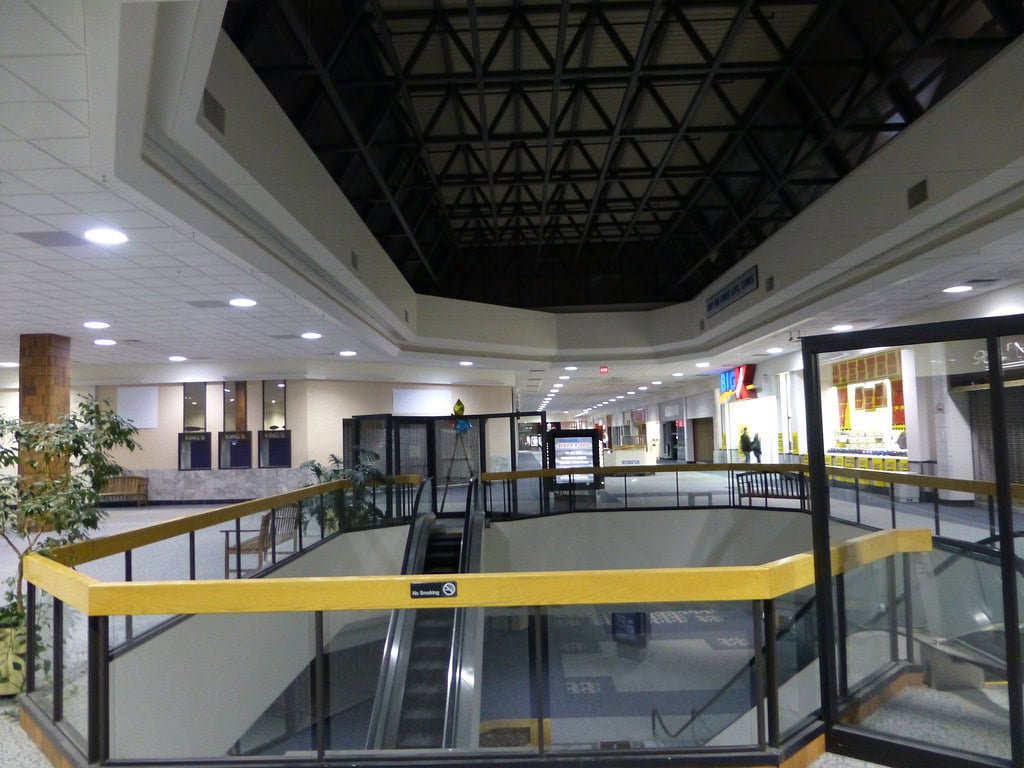
Luzerne County Community College also moved into the former Montgomery Ward and Bon-Ton area, opening in August 2016 and turning the old escalator hallways into classrooms.
Medical offices came then, edging into a Scranton mall that had long kept work, study, healthcare, and waiting rooms at a distance.
Once rare in such places, they became the favored answer to what to do with all that unused interior.
Delta Medix, a special medical group, moved into 44,000 square feet of the complex, dropping the ceilings, marking off color-coded areas, and installing a breast care center.
The experiment echoed a national trend in which empty stores were recast as clinics and classrooms.
Stalls, aquariums, and improvised daily life
If you had to sum up The Marketplace at Steamtown now, you would not point to an anchor store but to a single rented stall.
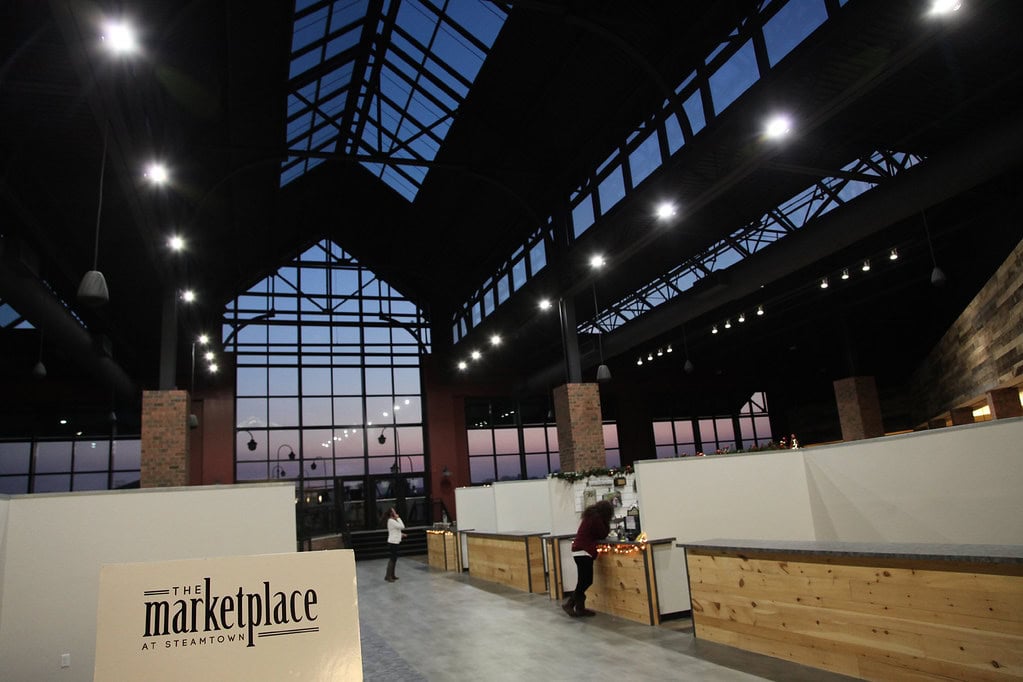
In December 2017, the old food court became the Scranton Public Market, a close group of small booths selling peach cobbler, hand-dyed yarn, organic dog treats, and crafts that used to show up only at church sales and holiday fairs.
On the first floor, the Electric City Aquarium and Reptile Den opened in October 2018, taking more than 20,000 square feet for sharks, turtles, and snakes.
Bee's Backyard, an indoor play area with soft structures, slides, and a luminivision floor, was set up nearby before shifting to make room for a Geisinger facility.
A Grand Army of the Republic Museum moved in with Civil War artifacts and a research library.
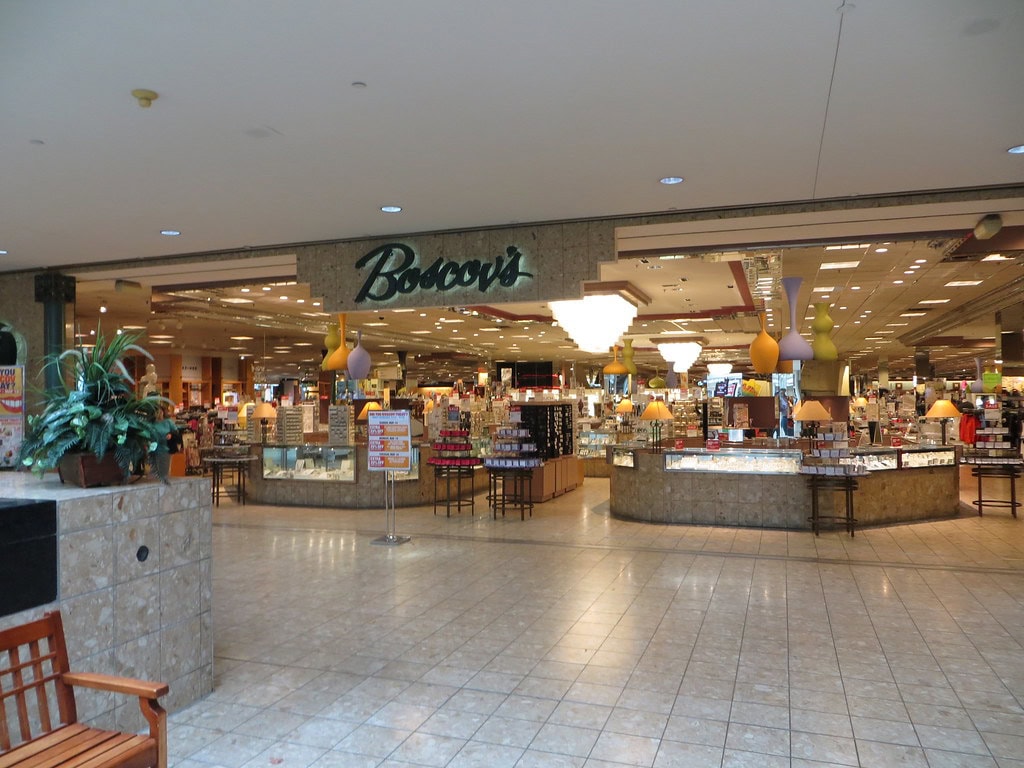
Boscov's stayed where it had always been, still selling dresses, appliances, and eyeglasses in a building that now mixed gyms, doctors, professors, and pretzels.
The entire complex shut down briefly during the pandemic in 2020. COLTS buses kept bringing riders from around the county. The garage continued to give two and a half hours of free parking with validation.
People liked the aquarium and the market's local feel, but they also complained about broken escalators and not having restrooms outside the food court hallway.
Stages, hearings, and a new kind of peace after the mall era
In 2024 and 2025, the Marketplace's schedule looked more like a community center than a shopping mall.
The Scranton Shakespeare Festival put on a holiday pantomime, "Cinderella," in a special performance space in December 2024.
Once a retail space, the first-floor storefront between the aquarium and a health network was, the following year, rented by Lackawanna County to process thousands of property-tax appeals, serving as a makeshift hearing center for the duration.
The Scranton Public Market held a Harvest Pop-up Market in October and Holiday Markets in November and December. Dozens of vendors used the mall as both a place to start their businesses and a venue to showcase them.
Now, The Marketplace at Steamtown is less about making a big comeback and more about finding a new balance with the times.
The classic enclosed mall model that Boscov imported to Lackawanna Avenue has largely collapsed under its own weight.
In Scranton, something different and maybe even more useful is now a building where a department store, a college campus, a medical center, an aquarium, a gym, a Civil War museum, a postal office, a tax appeals court, bus stops, and a rotating group of small merchants all rent booths or seasonal spaces.
It is not what anyone in 1986 imagined, but then neither is the American downtown.

With internet marketing and sales the city will never make a comeback. The shoppers at Montage are also seriously struggling.
You're right that online sales changed the basic rules, but I wouldn't say "never." Downtowns that come back usually focus on what the internet can't deliver: experiences, events, food, services, and reasons for people to stay longer.
Yes I have only been in Scranton 2 years. And the first time I went to Steamtown Mall. It was a little disappointing. I always loved going to the mall the people the different shops. But it seems that it has all gone away.😪 I hope one day that it will come back to its full compacity.
The feelings people had mattered. Malls were part of daily life and had a certain atmosphere. If Steamtown ever comes back, it will be because it gives people a new reason to come together.