
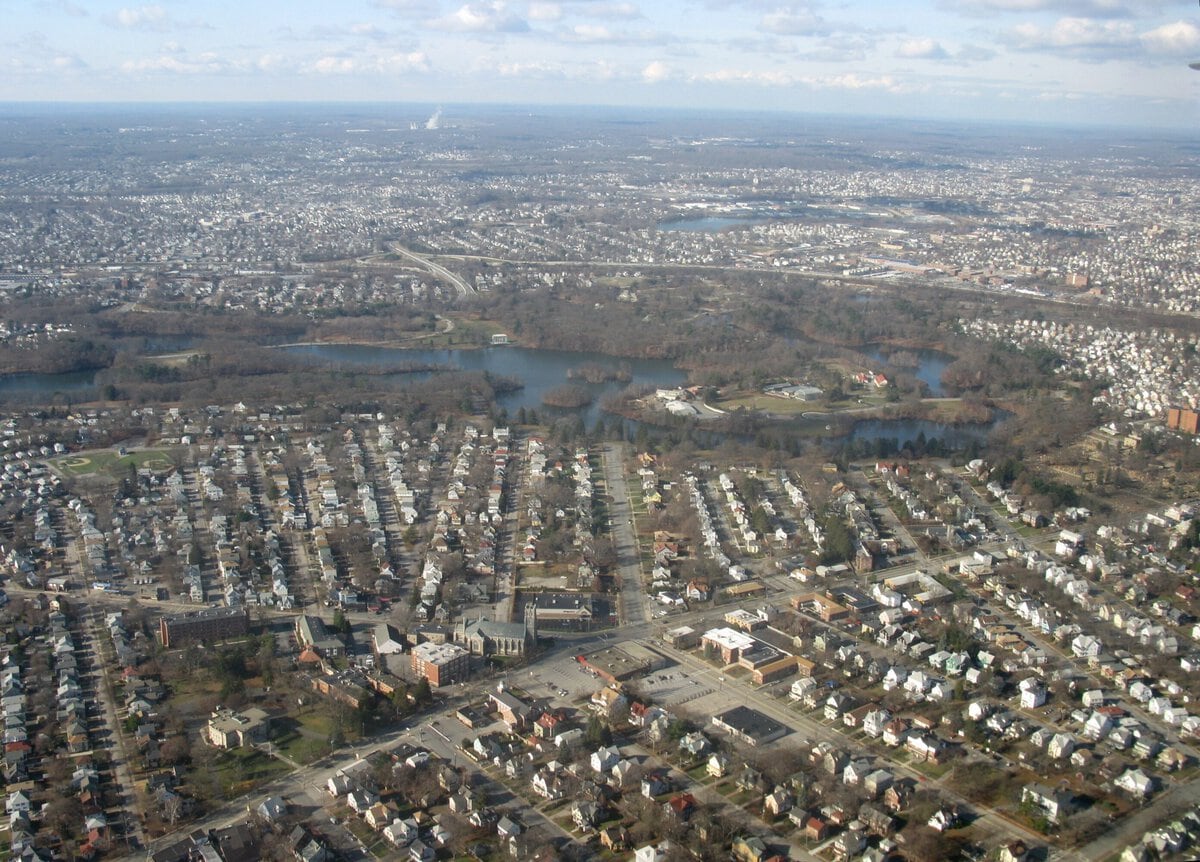
Trying to find "downtown Cranston" is a good way to misunderstand the city. Cranston works more like a collection of neighborhoods attached to smaller commercial and social nodes.
Its 2024 Comprehensive Plan reflects that pattern by identifying Garden City Center, Rolfe Square, Knightsville, and Pawtuxet Village as places suited to neighborhood-scale or mixed-use development.
For someone considering a move, the useful question is not which center is "best." It is whether the center nearest a particular home matches the things you actually do several times a week.
A place that works for errands may not give you the evening routine you want. A center that is pleasant to walk around once you arrive may still require a car from home. Cranston has several local centers, but no single one does every job.
Cranston makes more sense as a network
Cranston covers about 28.35 square miles.
That is enough territory for the city name to hide meaningful differences in how people reach shops, restaurants, services, and the places where they spend free time.
A citywide description such as "suburban and close to Providence" is therefore only the first layer.
The next layer is local geography. Does your normal route run through Garden City?
Can you walk into Pawtuxet Village? Is Knightsville the commercial district you naturally pass on the way home?
Is Rolfe Square close enough to become part of ordinary errands rather than an occasional destination?
The difference sounds small, but repeated trips are what make a location feel convenient.
A five-minute stop you make three times a week has more effect on daily life than an attraction you visit once every two months.
This is also why Cranston's lack of one major downtown is not necessarily a weakness.
It shifts the location decision from "How close am I to the center?" to "Which center would become mine?"
Pawtuxet Village: the strongest village scenario
Pawtuxet is the easiest of these centers to understand as a traditional village rather than a retail destination.
It has a documented historic district, and the village straddles the Cranston-Warwick line around the Pawtuxet River.
That municipal split is part of the place rather than an obvious break in the street experience.
Pawtuxet's advantage is not that it gives Cranston a substitute downtown. It is that a compact historic setting can support a different routine.
If your home is genuinely close enough to reach the village on foot, an evening meal, a short walk, or a small errand can happen without becoming a driving trip.
A listing can be near Pawtuxet on a map while still sitting across a road, intersection, or poor walking route.
The relevant measurement is not a radius around the village. It is the exact route from the front door.
Pawtuxet pays off most when you will use the village repeatedly. If everyday life still happens elsewhere, proximity has less practical value.
Garden City: walkable once you arrive is not the same as walkable from home
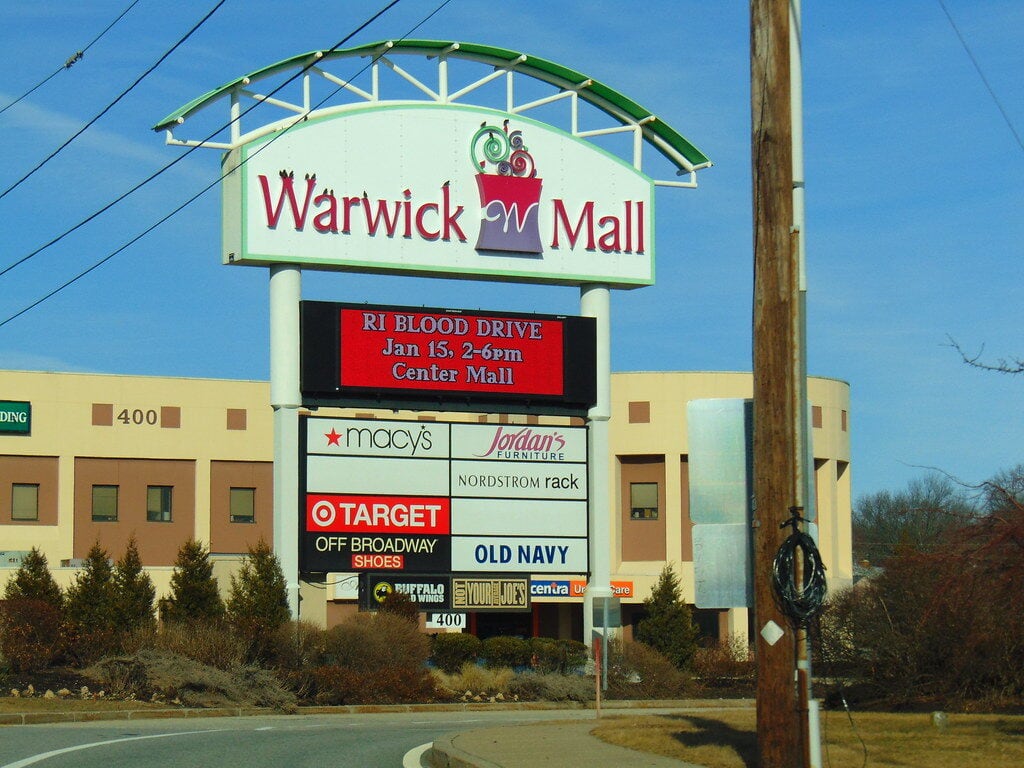
Garden City creates almost the opposite urban pattern. It functions as a suburban retail and social anchor.
The center itself gives people a concentrated place to shop, eat, meet, and move between destinations on foot.
But that does not automatically make the surrounding residential area a walk-from-home neighborhood.
That distinction is easy to miss when comparing properties.
Suppose two homes are both described as being "near Garden City." One might connect to the center through a short, comfortable route.
The other might be only slightly farther away in straight-line distance but require crossing a busy road or making the trip by car.
On paper, both get the same amenity label. In daily life, they may work very differently.
Garden City is most useful when its concentration of errands reduces separate trips.
If a meal, a meet-up, and routine purchases can be combined into one stop, the center earns a recurring place in the week.
If you rarely use that kind of retail cluster, living nearby matters less.
The point is not whether Garden City is walkable. It is where the walking begins.
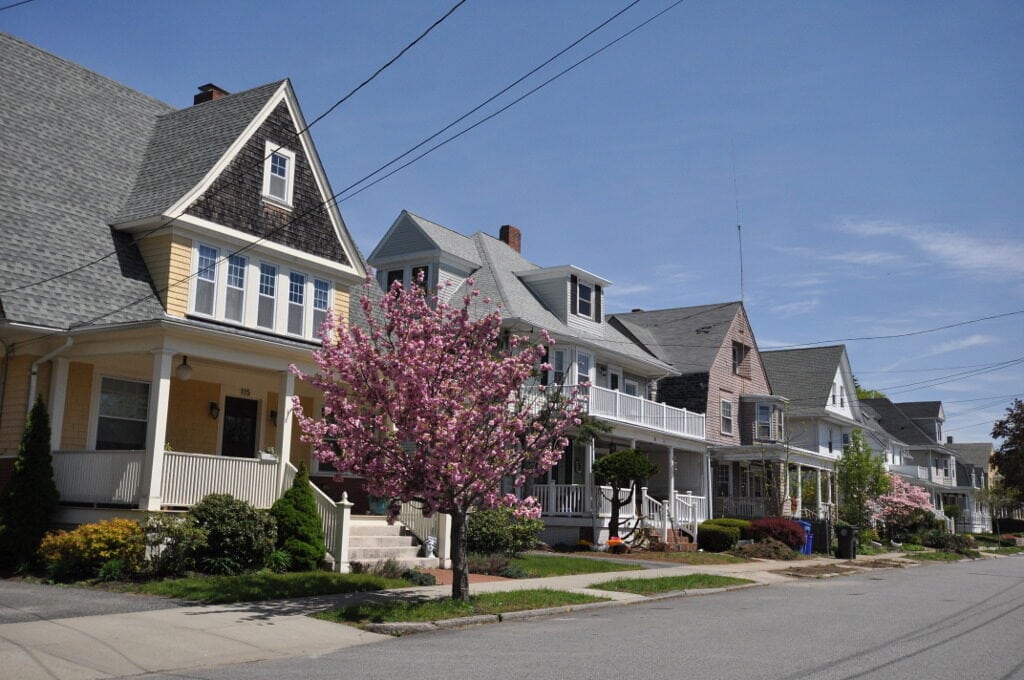
Knightsville: a neighborhood district rather than a citywide destination
Knightsville offers another model.
Its value comes from being a neighborhood commercial district, not from trying to act as Cranston's central business district.
A modest cluster of restaurants and services can shape a routine when it sits on the route you already use.
You can stop without planning a separate outing or treat it as the default place for a nearby meal.
This kind of convenience is easy to undercount during a home search because it is less dramatic than a waterfront village or a large shopping center.
Yet repeated local use is what turns a commercial district into a neighborhood center.
The test for Knightsville is frequency. If it would absorb several normal weekly stops, being close has real value.
If your work, shopping, and social life point elsewhere, its presence may add character without changing much about your routine.
Rolfe Square: the value of an ordinary-use center
Rolfe Square makes the strongest case for looking at Cranston through small centers rather than headline attractions.
A local center does not need to be a regional destination to matter.
In fact, its most useful role may be mundane: giving nearby residents a recognizable place where small businesses, services, and routine stops cluster instead of being scattered across unrelated roads.
That matters because convenience is cumulative. One useful place within a short trip is pleasant.
Several recurring needs concentrated in the same direction can reshape the week.
Rolfe Square should therefore be judged less by whether you would take an out-of-town visitor there and more by whether it would simplify your own schedule.
For a nearby household, that can make the square more relevant than a better-known destination across town.
Where do evenings go when the local center is not enough?
No Cranston center needs to satisfy every social or cultural need.
The practical split is between neighborhood-scale and metropolitan-scale evenings.
A local dinner, drink, walk, or casual meet-up may fit around Pawtuxet, Garden City, Knightsville, or another nearby cluster.
A night built around a broader choice of entertainment or cultural institutions is more likely to pull you toward Providence.
If most evenings are simple and local, the right center can remove driving.
If you expect to spend several nights a week in Providence, the route north may matter more than proximity to Rolfe Square or Garden City.
If you split your time, look for an address that handles both patterns reasonably well.
"Close to amenities" does not answer this question. Which amenities, at what time of day, and how often?
Test the address, not the neighborhood name
Before choosing a home in Cranston, use the exact address and run a simple routine test:
- Pick the local center you are most likely to use and trace the actual walking and driving route from the property. Look at crossings, sidewalks, turns, and the roads you would use after dark, not just straight-line distance.
- List the things you do at least once a week. Ask how many of them that center could absorb without creating a separate trip.
- Test one ordinary evening. If you wanted dinner, a short walk, coffee, a drink, or a quick errand, would the nearby center give you a realistic option, or would you drive somewhere else?
- Test your Providence pattern separately. If work, nightlife, friends, or cultural activities regularly pull you north, compare that route with the value you would get from being closer to a Cranston center.
This exercise usually tells you more than a generic neighborhood ranking.
It turns "Pawtuxet," "Garden City," "Knightsville," or "Rolfe Square" from a name on a listing into a prediction about how the week will work.
Cranston's small centers are part of the point
Cranston does not need one grand downtown to have local centers that matter.
Pawtuxet offers the clearest historic village scenario. Garden City concentrates suburban shopping and social activity.
Knightsville works as a neighborhood commercial district. Rolfe Square shows how a smaller center can matter through ordinary use.
None is automatically the right choice. Ask which center would become yours, how often you would use it, and what would still pull you somewhere else.
Sources and further reading
U.S. Census Bureau QuickFacts: Cranston city, Rhode Island provides current city-scale population and geography data.
National Park Service: Rhode Island National Register listings includes the Pawtuxet Village Historic District and other Cranston-area historic properties.
National Park Service: 1990 National Register weekly lists records additional documentation for the Pawtuxet Village Historic District and its approximate boundary.
National Park Service: Warwick historic resources documentation provides historical context for Pawtuxet and the Pawtuxet River boundary.
U.S. Geological Survey: Pawtuxet River at Cranston provides federal geographic and monitoring information for the river in Cranston.
Independent Publisher Notice
BestAttractions is an independent editorial publisher. We are not affiliated with, endorsed by, or acting on behalf of any location, business, property owner, manager, government agency, or organization described in this article. Comments posted on this page are not forwarded to, reviewed by, or acted upon by any entity mentioned in the article. For official inquiries, complaints, applications, bookings, or other requests, please contact the relevant entity directly through its official website or other verified channels.