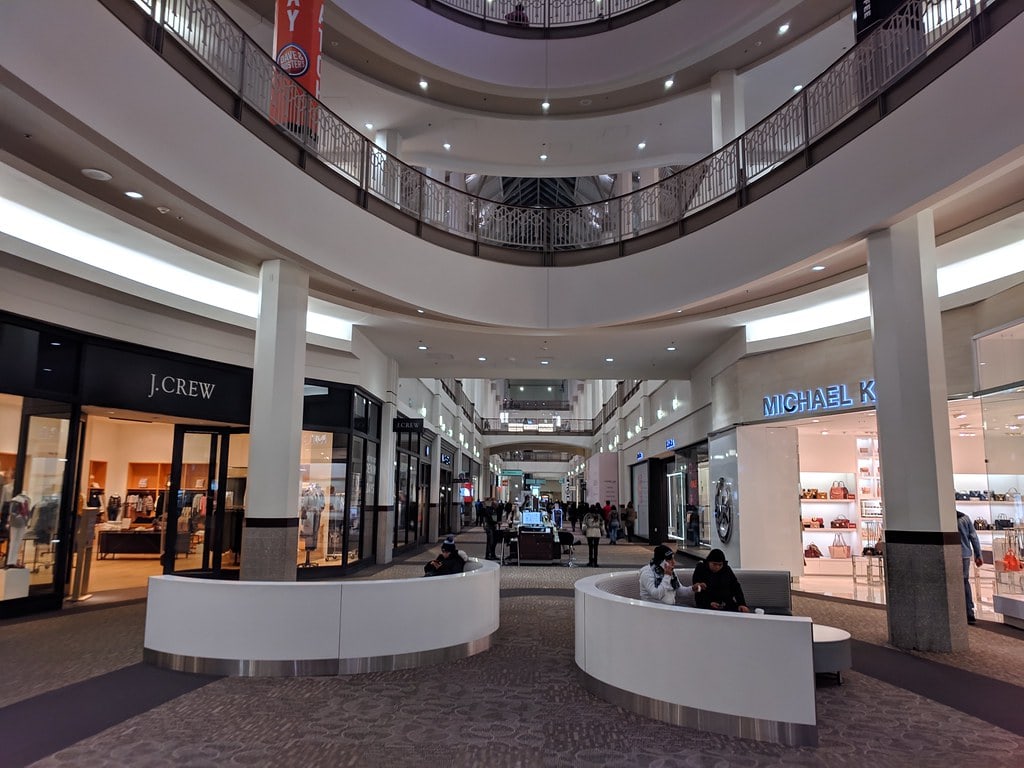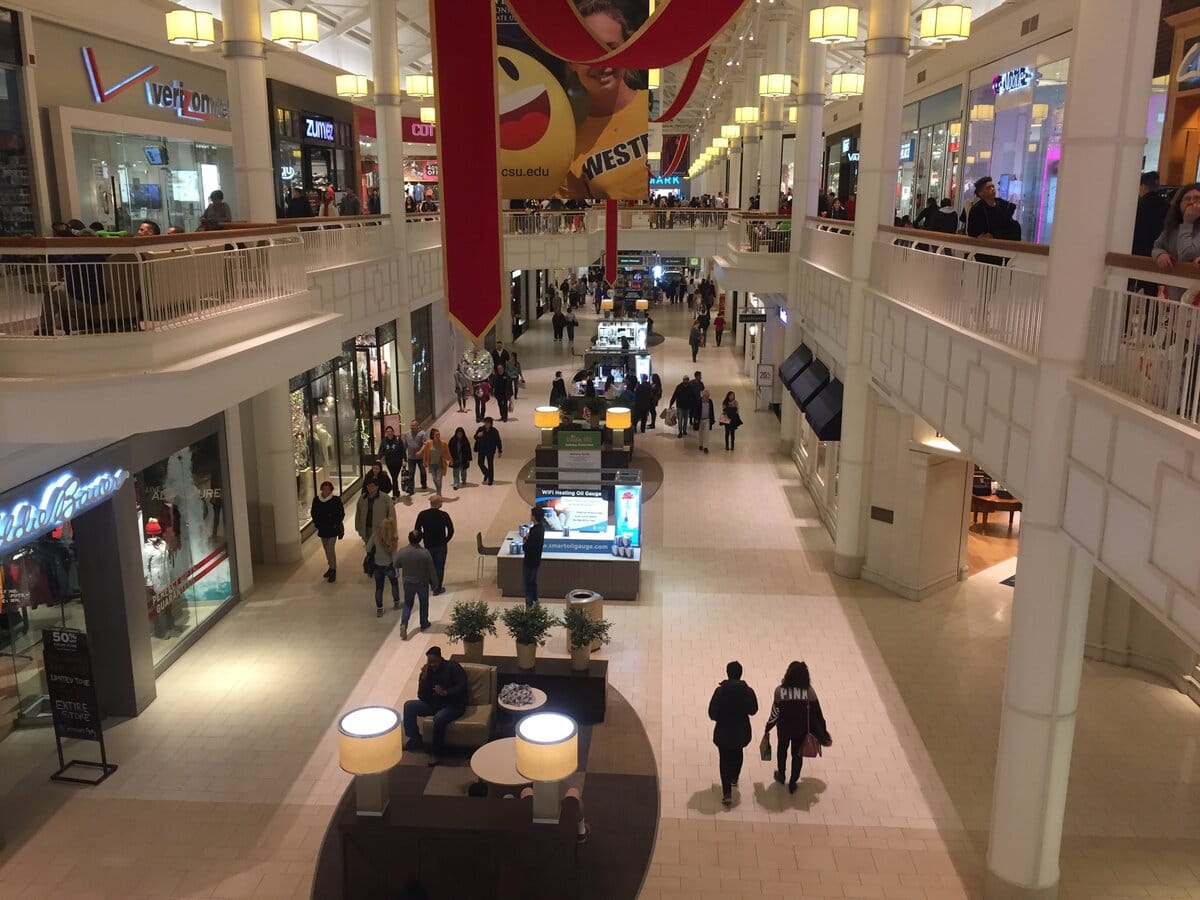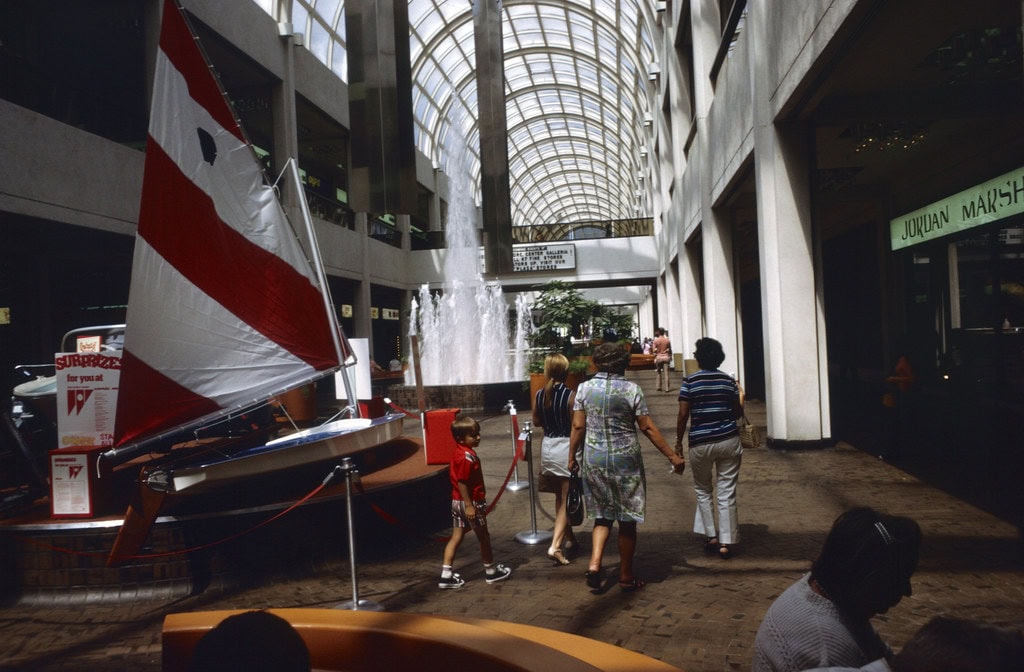
In late August 1999, Providence Place opened and created a new indoor way to cross downtown Providence.
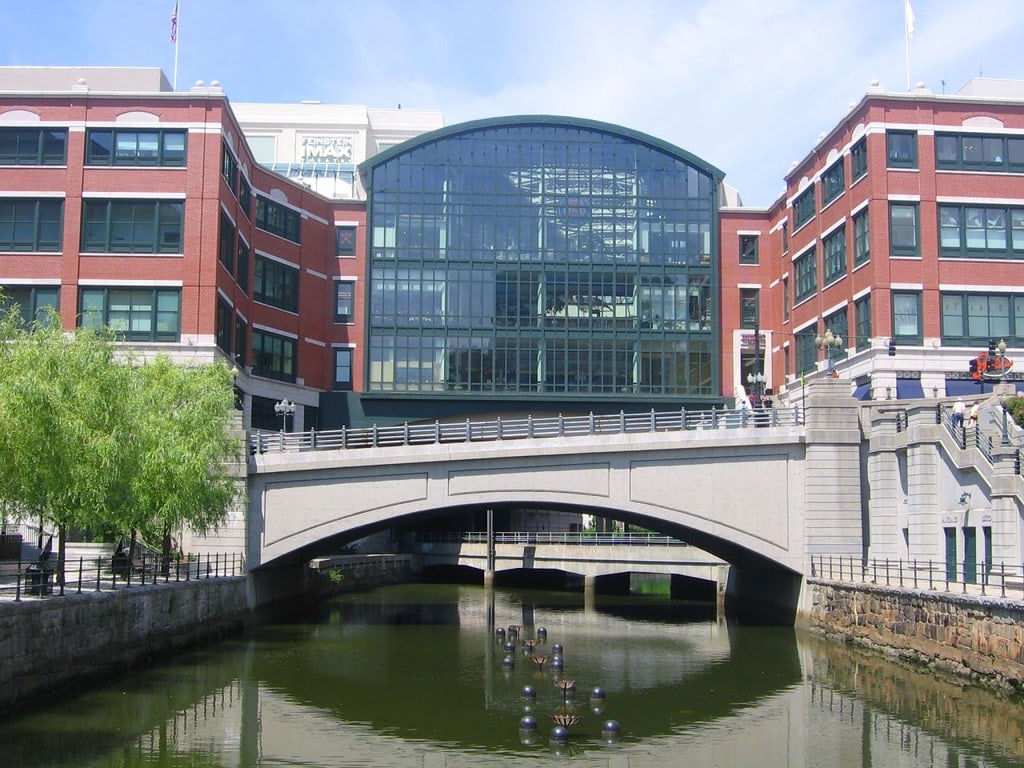
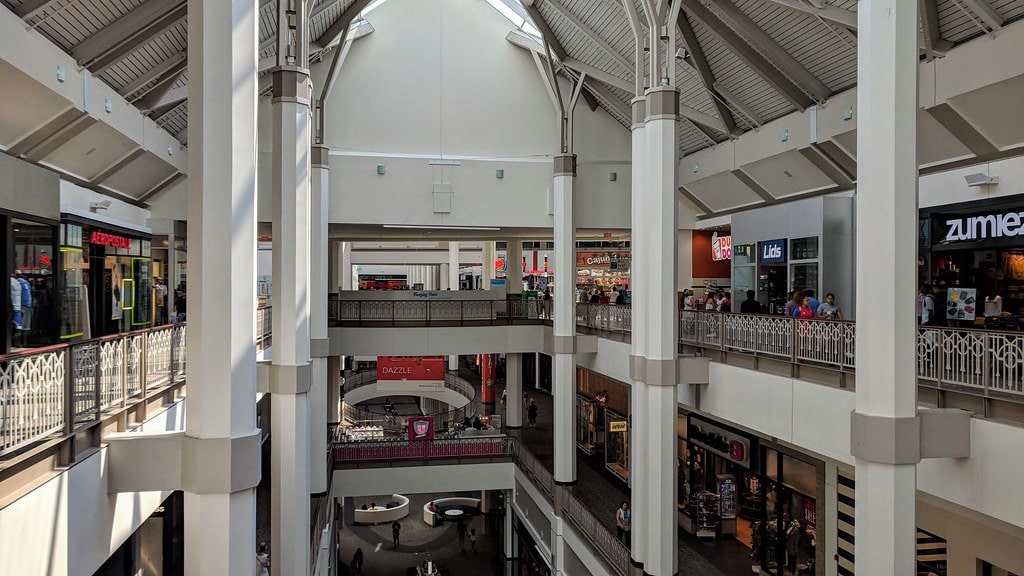
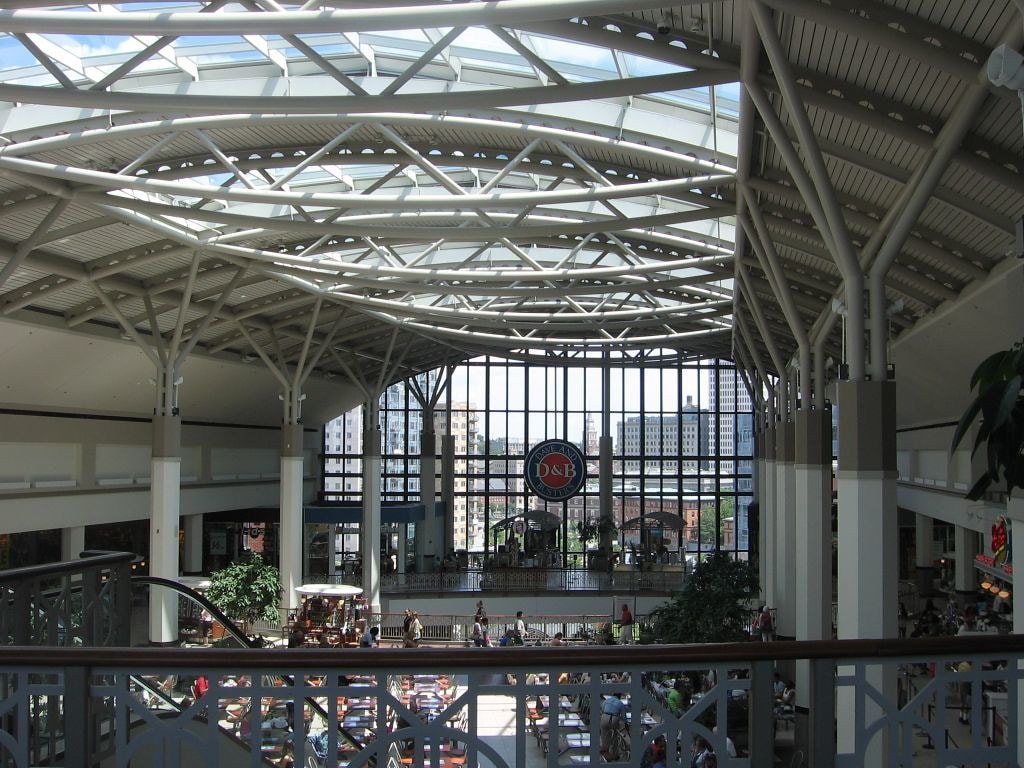
People entered from the street and found long hallways and the Winter Garden, a large glass-covered space above the Woonasquatucket River.
Below the floors, trains continued running on the Amtrak Northeast Corridor because the mall is built over rail lines and water.
The project was built on a 13-acre site between the historic downtown core and the State House district.
On August 20, 1999, it opened with more than 160 planned stores and about 1.4 million square feet of gross leasable space across three main shopping levels.
Two parking garages sat at each end of the complex. The North Garage at 11 Providence Place had 2,866 spaces near the entrance by The Cheesecake Factory.
The South Garage had 1,434 spaces near Park Street, next to Macy's and the skybridge.
Together, they offered about 4,500 spaces, and early visitors often complained about high fees and hard-to-follow routes.
A prison, an execution, then a school
Before Providence Place became a shopping center, this land was home to important Rhode Island institutions. Between 1838 and 1877, the Rhode Island State Prison was located here at the edge of downtown.
In 1845, John Gordon was executed at the prison. He was the last person legally executed in Rhode Island, and the case later helped move the state toward abolishing the death penalty.
Rhode Island's Normal School began training teachers in 1854. However, this place was still connected to the prison until it closed in 1877.
Later, in 1898, a new Normal School building was built here, turning the land over to education.
Over time, it became the Rhode Island College of Education and stayed downtown until 1958. In 1958, the school moved to the Mount Pleasant neighborhood and took the name Rhode Island College.
After the move, the parcel was no longer used day to day as a campus and entered a long in-between period.
Ray's Park & Lock and the missing link
In the decades after the move to Mount Pleasant, this spot was used as a temporary solution.
By the time the Providence Place project started, it was mostly a rough dirt parking lot that people called "Ray's Park & Lock." Squeezed between the Amtrak rail line and the Woonasquatucket River, it was in downtown Providence but felt cut off from everything.
People just parked their cars there and walked away to other places.
The layout made the problem worse. The parcel was "odd-shaped," and the river and the rail corridor forced it into a shape that did not follow the city street grid.
That made it hard to build anything new there, and the lot stayed mostly empty for many years.
By the 1980s, city planners started to see the empty space as an important piece of land. A big project here could link downtown with the State House area and help keep big stores from moving out to the suburbs.
Mayors, delays, and the anchor strategy
In 1987, under Mayor Joseph R. Paolino Jr., Providence first put forward a major plan for an urban shopping mall.
The proposal was priced at about $300 million. It was set up as a mixed-use project with three department stores, two office towers, and a luxury hotel.
At the start, developers wanted to emphasize office space. Providence did not have an office market strong enough to carry a project that large.
By 1990, the plan also ran into delays because it was hard to secure the needed land from Amtrak and because the development team changed.
Mayor Buddy Cianci returned to office in 1991 and made the mall part of his downtown "Renaissance" program, along with Waterplace Park and the relocation of the Providence River.
He focused on landing major anchor stores and worked to bring in Nordstrom and Filene's to pull shoppers back into the city center.
In 1995, Governor Lincoln Almond renegotiated the deal so the private side took on more of the construction risk. In 1996, the Providence City Council approved a $360 million budget.
The tax deal, public opinion, and 2019
Providence Place was built through a financing package that became one of Rhode Island's most debated public-private deals.
Under Governor Bruce Sundlun, an earlier structure proposed a $340 million project with about $120 million in public investment, including a state land donation of seven acres and public support for a 5,000-car garage.
Governor Lincoln Almond took office in 1995 after campaigning against that plan and renegotiated it.
Under the revised terms, developer Dan Lugosch of Commonwealth Development privately financed the garage, and the state and city provided major tax relief.
A scaled state sales tax rebate lets the developer retain $3.68 million per year for five years and $3.56 million per year for the next 15 years, about $72 million total over 20 years.
The city waived $4.5 million in property taxes per year for 20 years, then approved a broader 30-year tax stabilization agreement providing $136 million in relief.
A 1995 survey showed 66 percent of voters opposed the deal. By June 2000, 46 percent viewed it as a good investment, and 26 percent viewed it negatively.
The state supported the project through Economic Development Corporation revenue note obligations funded by a share of the mall's sales-tax receipts, and Rhode Island Commerce approved redeeming the remaining obligations in 2019.
Style fights and building over the rail and the river
Arguments over how Providence Place should look ran almost as hot as the arguments over how to pay for it.
Early designs pointed toward a windowless block of concrete in a Brutalist style. Residents on the East Side and the Providence City Council pushed back.
In 1994, Adrian Smith, a principal at Skidmore, Owings & Merrill, put forward a more traditional plan. It used domes and Postmodern facades that borrowed from 19th-century department stores in London and Paris.
After Governor Lincoln Almond took office, that approach was dropped, and the design work moved to Providence architect Friedrich St. Florian and the firm Arrowstreet.
St. Florian's final exterior used red and yellow brick and added rooftop turrets. Inside, the Winter Garden was placed above the point where the Woonasquatucket River meets the Amtrak lines.
A bright yellow skybridge connected the mall to the Omni Providence Hotel, which used to be the Westin.
Anchor stores like Lord & Taylor and Nordstrom created their own exterior designs, and critic Will Morgan later called the overall result a "dog's breakfast" because it did not hold together as one look.
The engineering challenges drove many decisions. The mall spans the river and the Amtrak Northeast Corridor.
It has three shopping levels, but the parking and service areas are built into the structure and add many more levels below and around them.
The state granted a variance from life safety rules that normally limit covered malls to three levels.
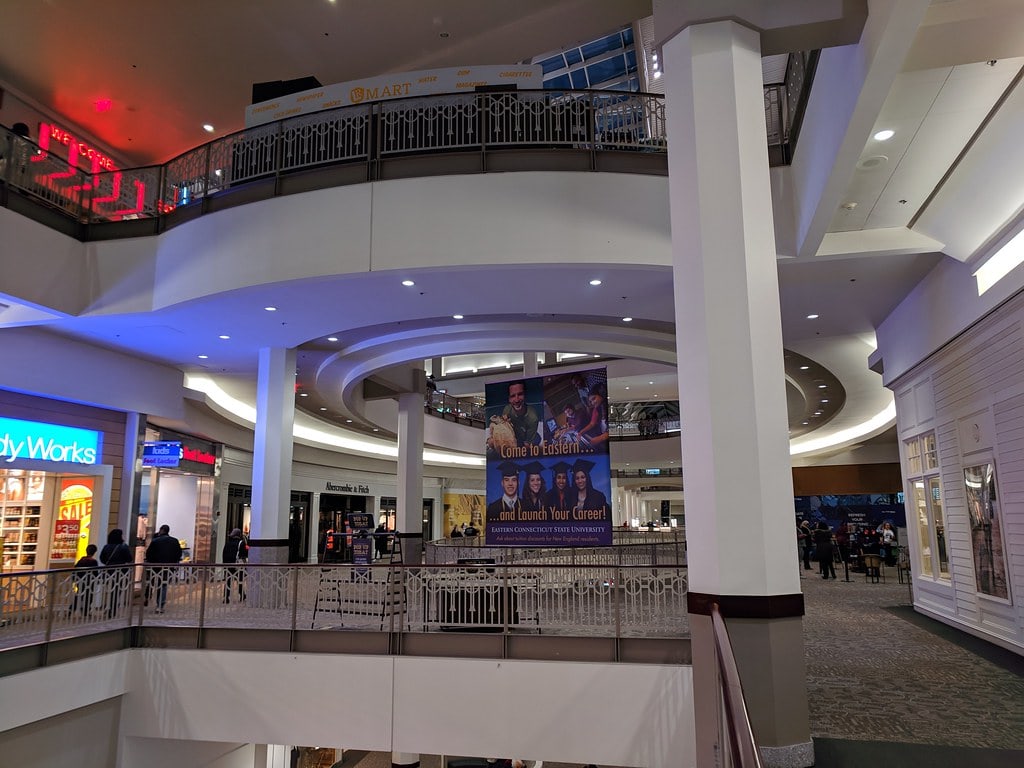
Anchors shift, and the mall remakes itself
Providence Place opened in 1999 with Nordstrom and Filene's as its primary anchors. Lord & Taylor opened in 2001 in a three-level space toward the rear of the middle section.
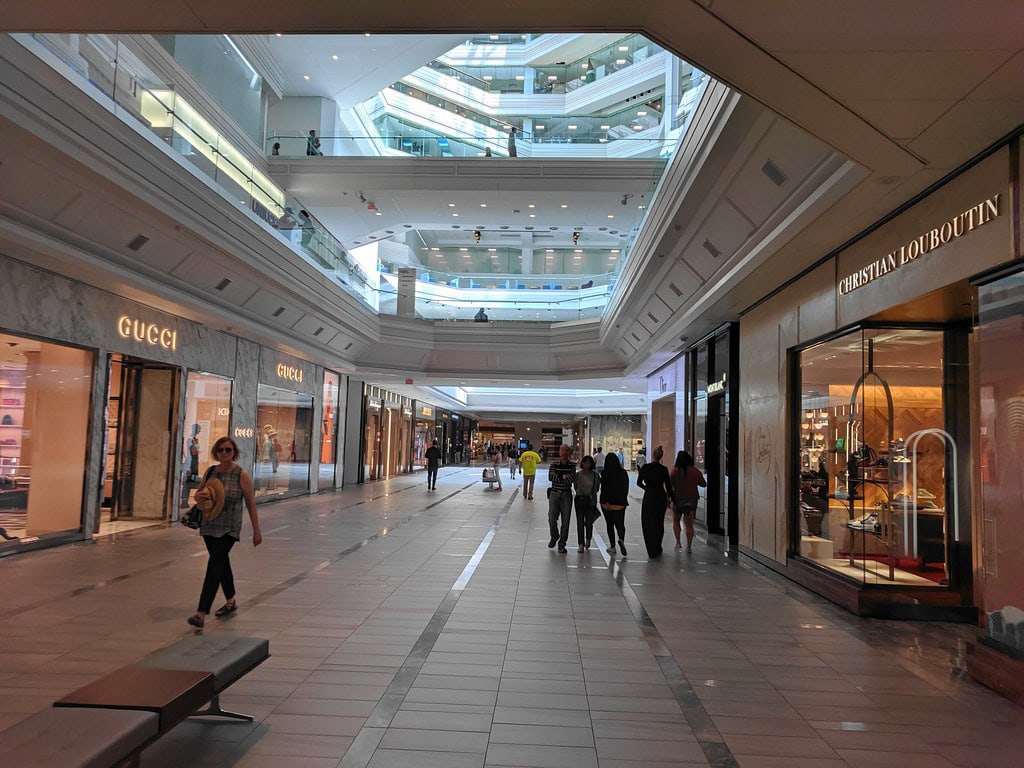
The early tenant mix leaned upscale, including Tiffany & Co., Ann Taylor, and Coach.
Anchor turnover followed. Lord & Taylor closed in 2005. JCPenney opened in that space on February 24, 2006, after a renovation.
In 2006, Filene's converted into a Macy's flagship as part of a national merger. JCPenney renovated again in 2012, then closed in 2015 due to underperformance.
After the closure, the bottom two floors of the former JCPenney space were demolished to expand the North Parking Garage, while the exterior remained intact.
In 2018, Nordstrom announced its closure. Later next year, Boscov's replaced it.
By 2025, the anchor mix included Macy's, Boscov's, Apple Cinemas, Dave & Buster's, and Level99, reflecting a shift toward experience and entertainment.
The changes tracked the wider decline of traditional department stores.
The secret apartment inside the mall walls
In 2003, Michael Townsend, an artist and RISD professor, found a 750-square-foot accidental room inside Providence Place beneath the movie theater near the parking lot.
The space existed because two massive walls were built close together, leaving an unused gap.
Townsend and seven other Rhode Island artists, including Adriana Valdez Young, Andrew Oesch, and Jay Zehngebot, formed the Trummerkind collective and built a hidden apartment there.
They snuck in cinderblocks to build a wall with a locking door, tapped power with extension cords and clamp lights, and moved in a couch, dining table, television, PlayStation, and China hutch, often in broad daylight.
From 2003 to 2007, they stayed on and off, sometimes for up to three weeks, using public restrooms for water and hygiene.
They filmed their time there and planned wood floors, a water pump for a kitchen, a flush toilet, and a second bedroom. The apartment was burglarized once, allegedly by mall security guards who took only the PlayStation.
The project ended in 2007 after Townsend invited visiting artist Jaffa Lam from Hong Kong to see the space, and she was flagged by security, leading guards to the furnished room.
Townsend was arrested and initially charged with breaking and entering, which was later reduced to misdemeanor trespassing.
He pleaded no contest, was sentenced to probation on October 2, 2007, and was banned from the mall for life.
The story later became the 2024 documentary "Secret Mall Apartment," directed by Jeremy Workman. Before the film's release, the mall lifted the lifetime ban on Townsend.
Receivership, sale, and the 2028 cliff
Providence Place ended up in the hands of large real estate owners. The Rouse Company bought the mall in March 2004 for $522 million.
General Growth Properties took it over in November 2004 through a $14 billion deal that included 37 malls.
Brookfield Property Partners bought GGP on August 28, 2018, for about $15 billion and took control of the property.
In 2024, the mall's debt problems came to a head. A $255 million CMBS loan came due in May 2024 and was not fully paid off.
In October 2024, a Superior Court judge put the mall into state receivership at the request of private lenders.
In 2025, Centennial Real Estate Management handled daily operations, and nearly $100,000 was spent on repairs to the mall and the parking garage.
A court order dated July 2025 allowed the receivers to put the property up for sale. Jones Lang LaSalle was hired as the broker and set up an as-is sale using a date-certain bid process.
The city wants a long-term owner who would keep the mall as a central downtown destination.
The next big deadline is 2028, when the tax stabilization agreement ends. Without a new agreement, annual taxes could rise significantly.
Ideas for reusing the building include housing and student suites, along with classrooms, labs, archives, and medical facilities.