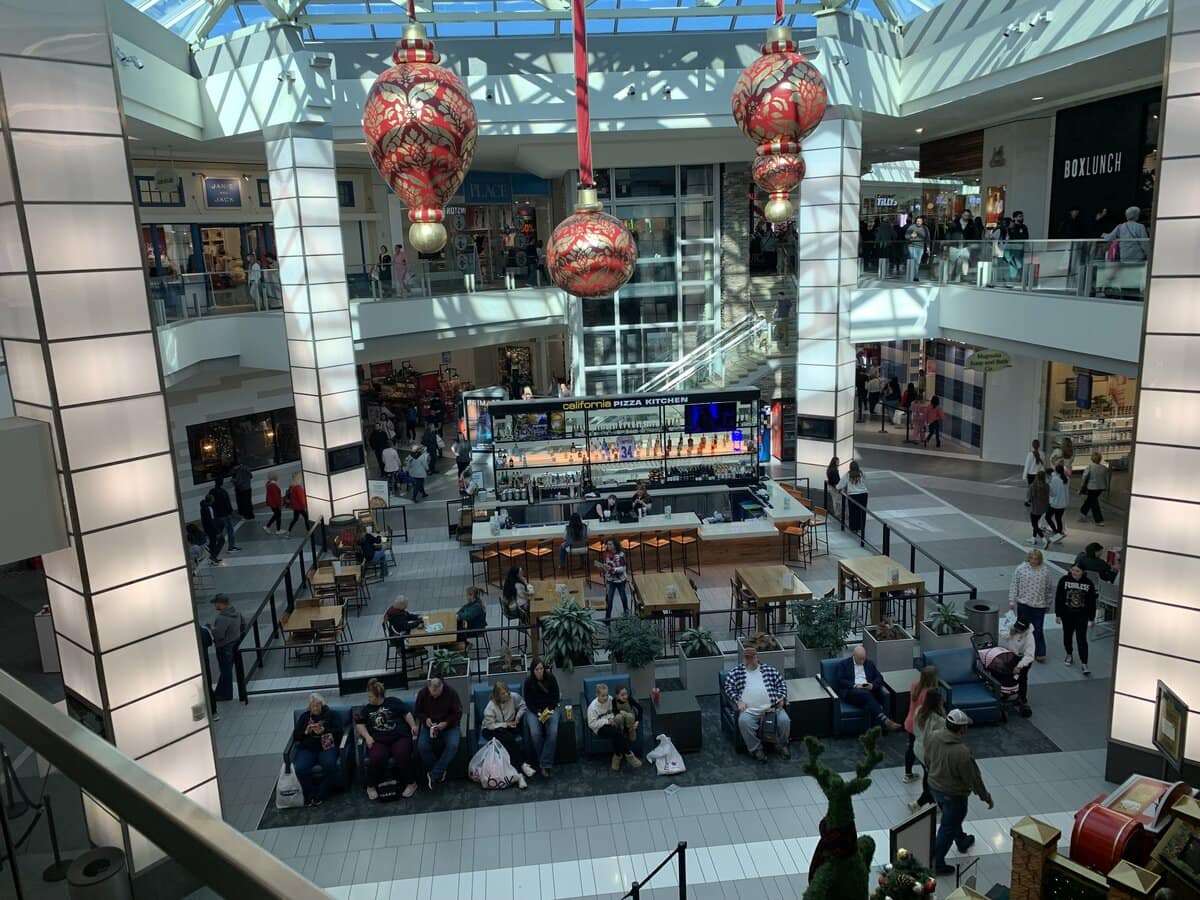
On a Friday night in 1988, the Food Garden at Hickory Hollow was noisy and full. Every table in the food court was occupied. Teenagers went back and forth between the arcade and the food counters.
The movie theater inside the complex was selling tickets for the late showing. Upstairs, department stores and other major stores stood around the mall, with tenants spread across two floors.
Families drove in from all over southeast Davidson County. People from Antioch had been coming here for years.
For many, it was one of the first large enclosed malls they had ever visited, and it gave them a chance to experience many different stores and activities in one place.
That version of the mall is gone. The stores are gone. The food court is gone. The building is being demolished in phases.
But for about twenty years, Hickory Hollow was more than a shopping place for people in southeast Nashville. It was part of everyday life.
Planning, Opening, and Early Expansion of Hickory Hollow Mall
Metro planning records approved the original development for the Hickory Hollow area in 1974, covering about 192 acres north of I-24 on both sides of Bell Road.
That plan allowed roughly 1.5 million square feet of commercial and office space, plus 432 residential units.
In 1989, the permitted commercial square footage was increased to nearly 1.8 million square feet. The plan went through more revisions in the years that followed, and parts of it were eventually canceled.
The mall opened in 1978, during a period of rapid suburban growth in Antioch and southeast Nashville. Cain-Sloan was the first business on the property, opening August 9, 1978.
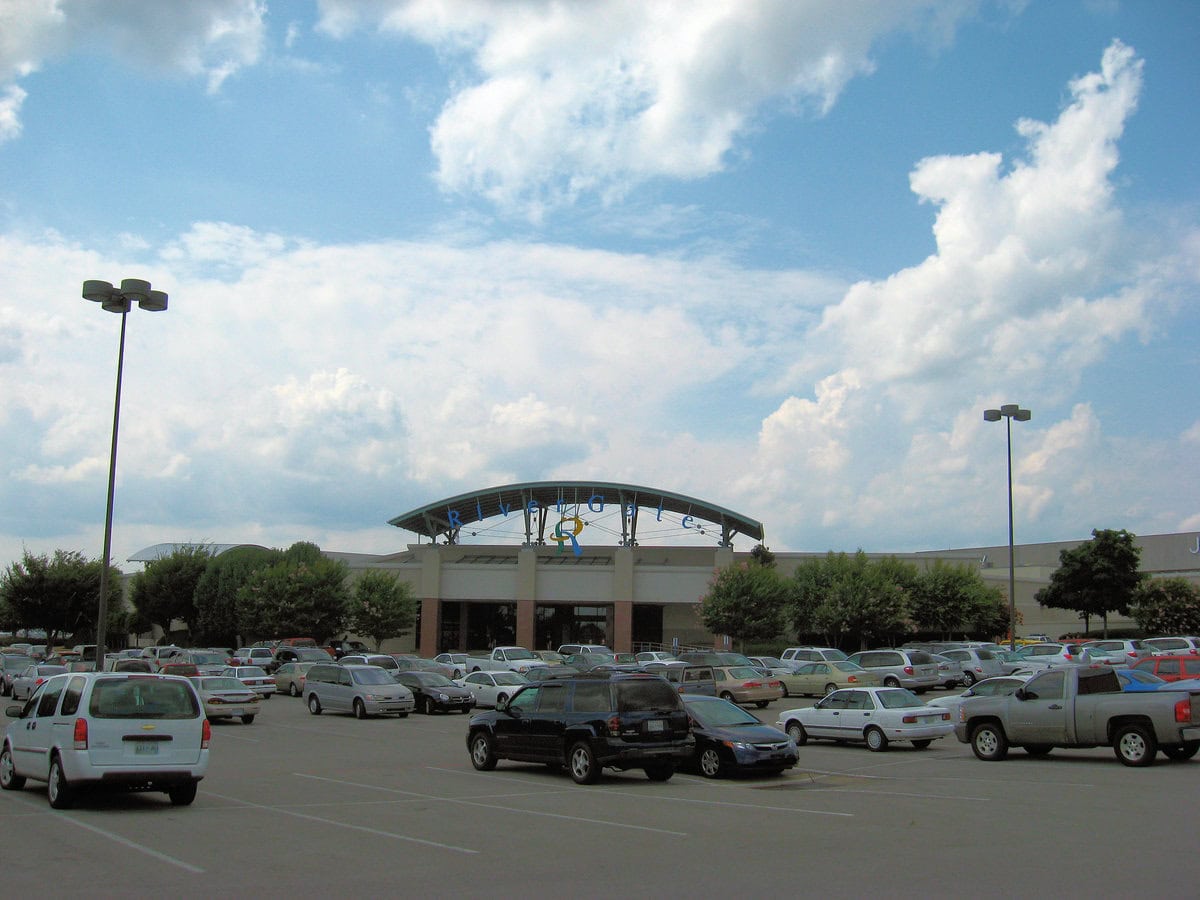
Hickory Hollow was built as a two-level enclosed shopping center - one of Tennessee's first two-tiered malls - measuring about 1.1 million square feet and surpassing RiverGate as the largest retail space in the state.
The original anchors were Cain-Sloan, Sears, and Castner Knott.
JCPenney was added in a 1982 expansion. After Cain-Sloan became Dillard's, a 1991 project converted the old Cain-Sloan space into smaller shops and added a new Dillard's store along with a parking garage.
The food court was expanded in the 1990s, and a newer movie theater was added in the parking area.
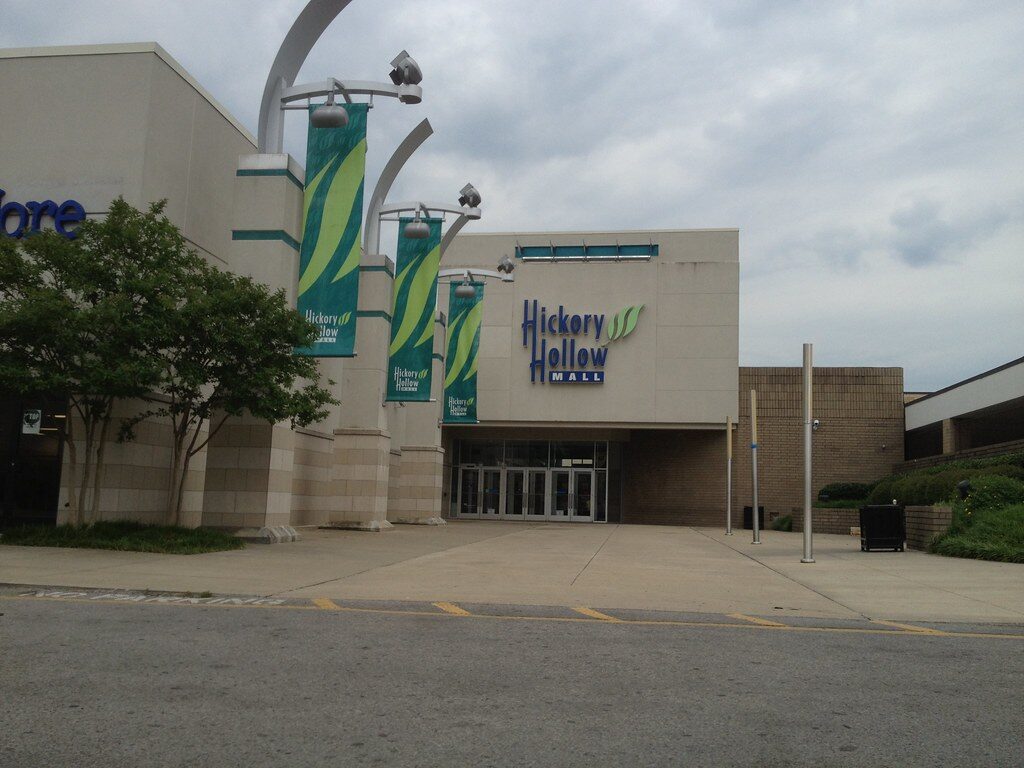
The Mall as More Than a Place to Shop
For about twenty years, the mall had more than 100 tenants, and on most weekends the parking lot was packed. It was the kind of place people could settle into for hours.
There was food, entertainment, stores on more than one level, and enough open space to just walk around without feeling rushed.
Teenagers in Antioch met up there on weekends. Families built it into their usual routine.
It was warm in the winter, cool in the summer, and easy to spend half a day in without really thinking about it. For a lot of people in southeast Nashville, the mall was tied to years of everyday life.
They did not just go there to shop. They went there to hang out, pass the time, and be around other people. They came back because that was simply where people went.
When the anchor stores started leaving, and the hallways grew empty, people noticed. Anyone who had grown up going there could feel the change.
A strip mall closing usually does not hit people the same way. Hickory Hollow meant more than that, and when it faded, people felt the loss.
The Anchor Stores Leave and the Mall Empties
The mall did not empty out all at once. The number of tenants fell from more than 100 to 12 over about ten years.
During the 2000s, newer shopping centers pulled customers away. Online shopping took more business. More people also started to see the mall as unsafe, which kept shoppers away.
At the same time, the recession put pressure on big-box chains and led to more store closings.
The final stage came fast in 2011 and 2012. In December 2011, Sears announced that it would close its Hickory Hollow store at 5244 Hickory Hollow Parkway as part of a nationwide round of closures.
In January 2012, Macy's announced that its 181,000-square-foot store, which had been open since 1979 and employed 77 people, would close in early spring.
Once both anchor stores were gone, the mall no longer had a major reason for people to come.
CBL, the company that owned the property, began removing most of the remaining tenants by June 2012.
A small number stayed. By then, local coverage no longer treated Hickory Hollow as a mall that was struggling to survive.
It was treated as a dead mall. Only 12 stores were left in a building built for well over 100. The food court was still there in 2012.
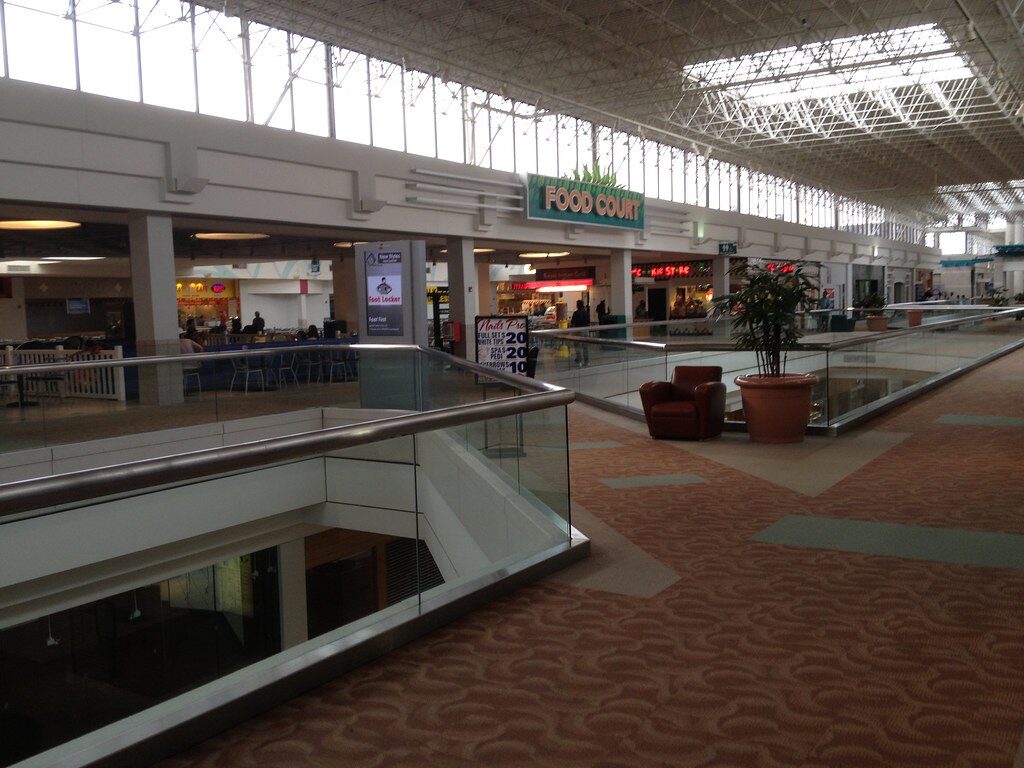
One Dollar Million and a Second Life Begins
On October 31, 2012, the property sold for $1 million to Rajesh Aggarwal and his wife, down from the nearly $200 million it had sold for in 1998.
The buyers acquired all but the big-box anchor properties and planned to reopen the center as Global Mall at the Crossings, a name chosen to reflect the growing diversity of southeast Nashville.
Global Mall opened in May 2013, but the relaunch was uneven.
Traffic was slow, some tenants were not being charged rent, and the effort to build a center serving the area's international population never fully took hold on the retail side.
Tennessee's State Building Commission had approved the acquisition of the former Dillard's store for Nashville State Community College in September 2011, before Global Mall even opened.
Nashville State's Southeast campus at 5248 Hickory Hollow Parkway enrolled 1,075 students as of fall 2023.
Metro spent $32 million converting the old JCPenney space into a library and community center and adding hockey rinks.
The Southeast Branch Library opened in 2014, including the public artwork "From the Four Corners" by Paul Vexler.
Ford Ice Center Antioch opened in September 2014, as a twin-rink facility through a Metro-Nashville Predators partnership.
In 2016, Bridgestone announced it would bring about 450 jobs into the former Sears building as a service operations center.
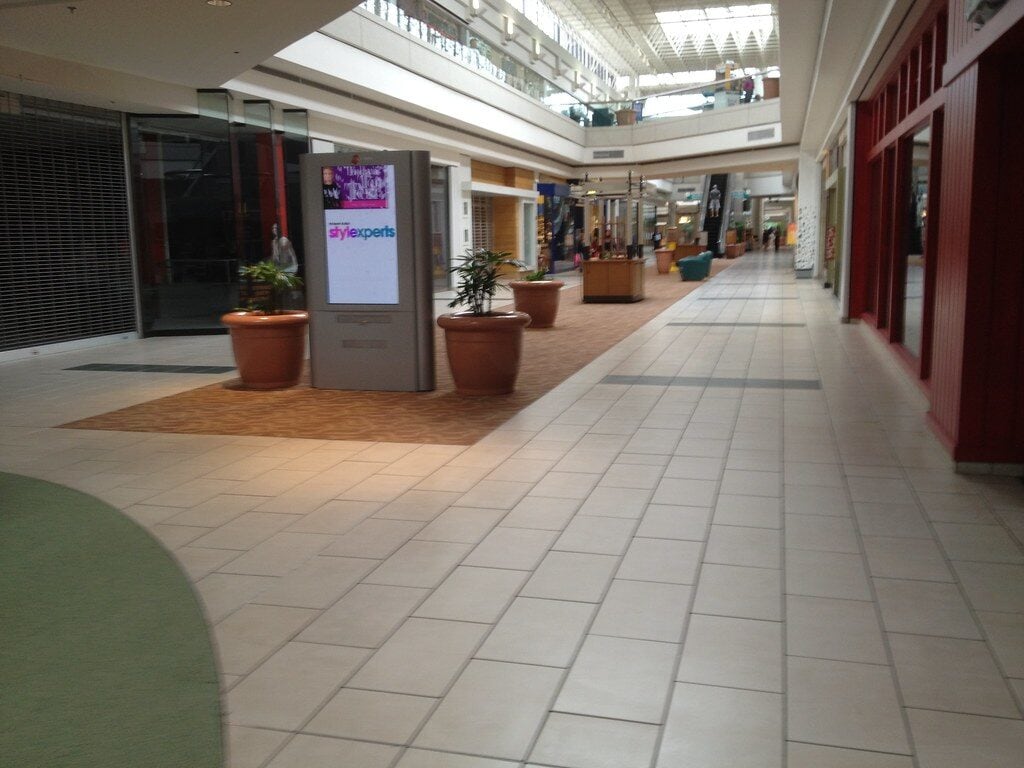
Global Mall's Failed Redevelopment and Metro's Purchase
Global Mall's retail life was over. The shopping side closed for good in 2019.
Antioch businessman Ben Freeland tried to move the property in a new direction with a plan for an innovation hub, but that effort collapsed when previously undisclosed problems with the site came to light.
After that, no private investor had a workable next step for the property.
On March 23, 2022, Mayor John Cooper's office announced that Metro would buy most of the former Global Mall site for $44 million.
The purchase included the former mall building, with about 650,000 rentable square feet, for $24 million, and an adjacent office building, with about 160,000 square feet, for $20 million.
The same announcement included a letter of intent with Vanderbilt University Medical Center for at least 600,000 square feet of healthcare uses.
Other possible uses included arts programming, childcare, Metro offices, and small-business development. The deal covered about 78 acres.
In October 2022, Metro began a yearlong community planning process. More than 1,200 people took part through workshops, stakeholder meetings, and the project website.
Demolition, Transit, and What Comes Next
In July 2024, the Planning Commission approved a master plan for the roughly 57-acre site.
It divides the property into three sections: Arts Village, Innovation Village, and Opportunity Village. Two new main streets, Arts Way and Innovation Boulevard, would run through it.
The plan allows for retail, restaurants, hotel space, a theater, cultural centers, educational facilities, medical offices, day care, and multifamily housing, including senior and mixed-income housing.
Some parts of the site are planned for buildings taller than seven stories.
On September 12, 2023, WeGo received $5 million from federal officials for a regional mobility center in Antioch. That was part of the $17.5 million raised for the project.
The planned Antioch Transit Center would include six to eight bus bays, a climate-controlled waiting area, bike and pedestrian access, and a park-and-ride facility.
In February 2026, the project was still in development and tied to the Global Mall redevelopment.
Demolition of the former mall was underway by March 2025 and was still listed as active in Metro construction records in March 2026.
On March 17, 2026, the Metro Council approved an agreement with KIPP Nashville for structural work and demolition of an adjacent section of the mall, with completion targeted for July 31, 2026.
The Southeast Branch Library, Southeast Community Center, Nashville State's Southeast campus, Ford Ice Center Antioch, and Bridgestone remain on the site.
Planning documents list them as anchors for the next phase.
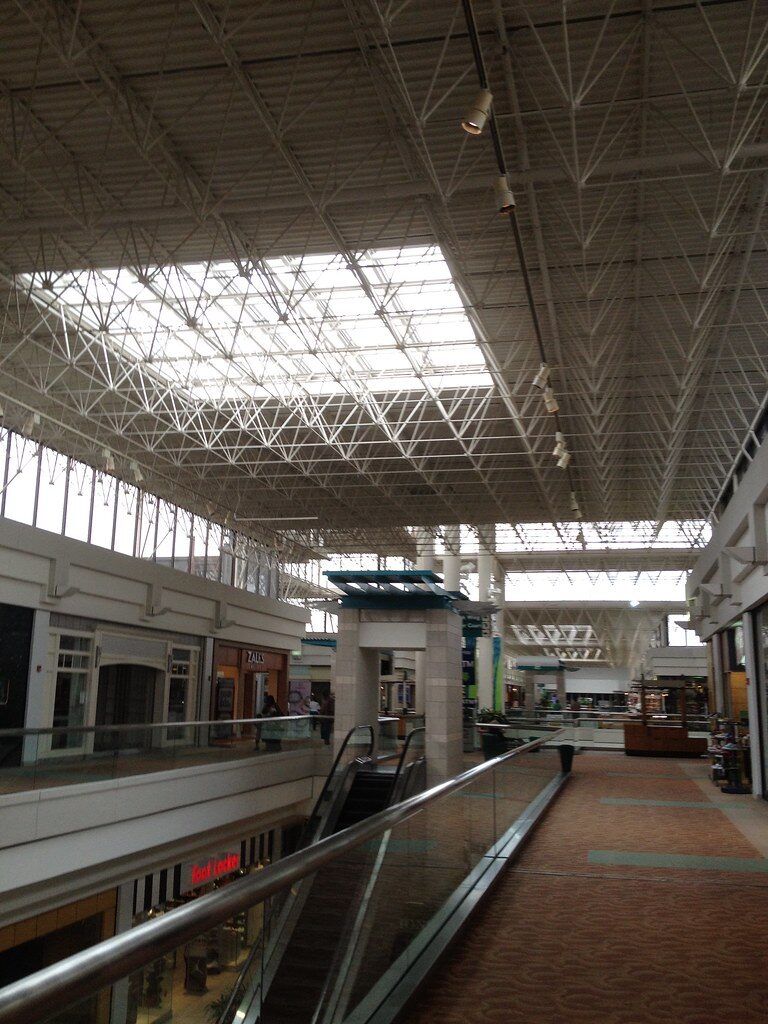
Hickory Hollow Mall (Global Mall at the Crossings)
Former shopping mall in Antioch, TN
Address: 5252 Hickory Hollow Pkwy, Antioch, TN 37013
Opened: September 21, 1978
Closed: April 2019
Developer: Homart Development Company
Owner: Global Mall Partnership
Floor area: 1.1 million-square-footClosest cities:
Nashville, TN
La Vergne, TN
Smyrna, TN
Brentwood, TN
Nolensville, TN