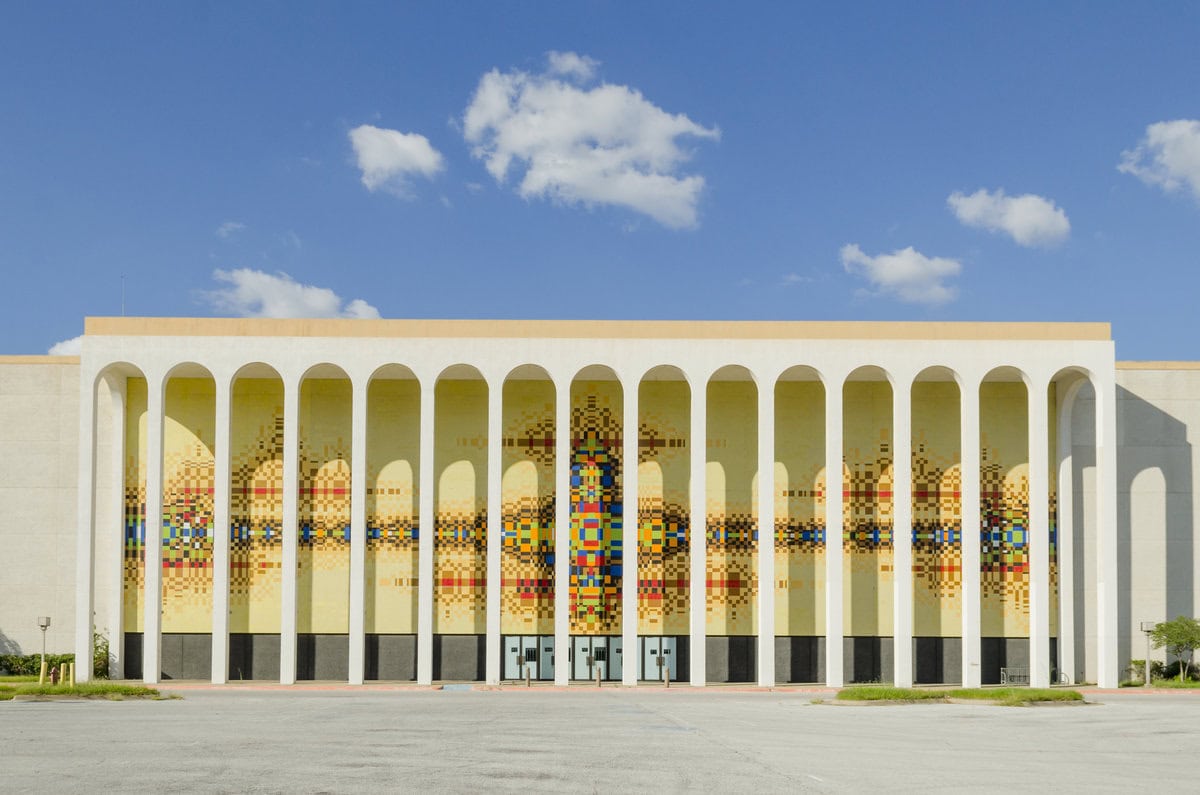
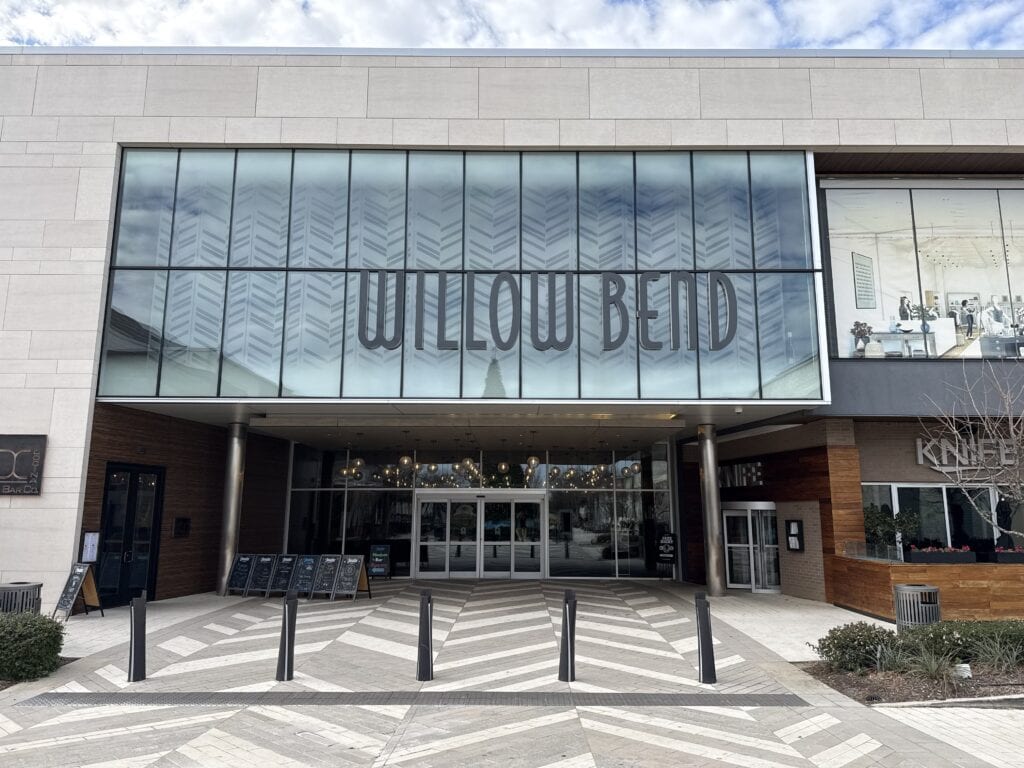
On August 3, 2001, The Shops at Willow Bend opened at the corner of West Park Boulevard and the Dallas North Tollway in Plano, Texas.
The opening date was moved up by two weeks to match Texas's three-day sales tax holiday. By the first weekend, about 250,000 people had visited its two floors.
Taubman Centers, Inc. built the mall as a large, upscale shopping center with four main department stores: Foley's, Lord & Taylor, Neiman Marcus, and Dillard's.
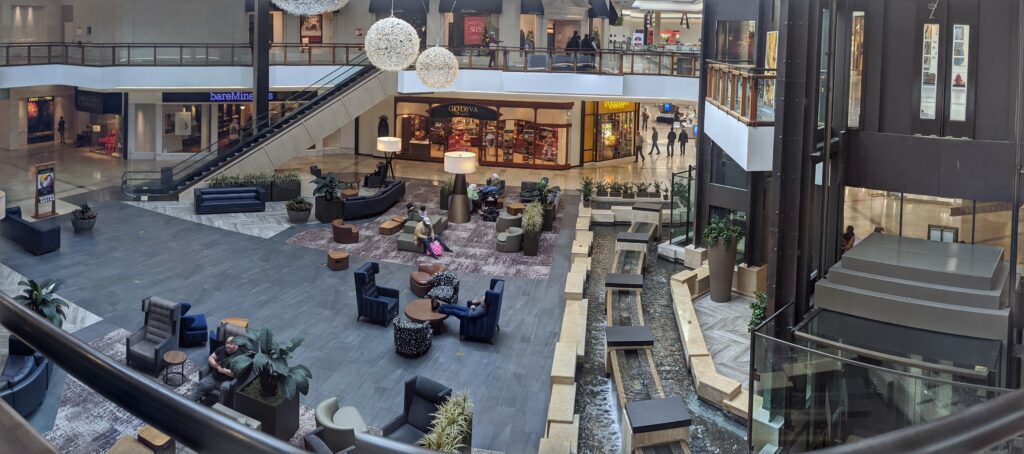
When it opened, about three-quarters of the space was filled, so some areas still felt new and not quite finished. The layout was made to keep people walking.
Escalators and elevators were placed at the ends of long hallways, so shoppers would pass by more stores before going to another floor.
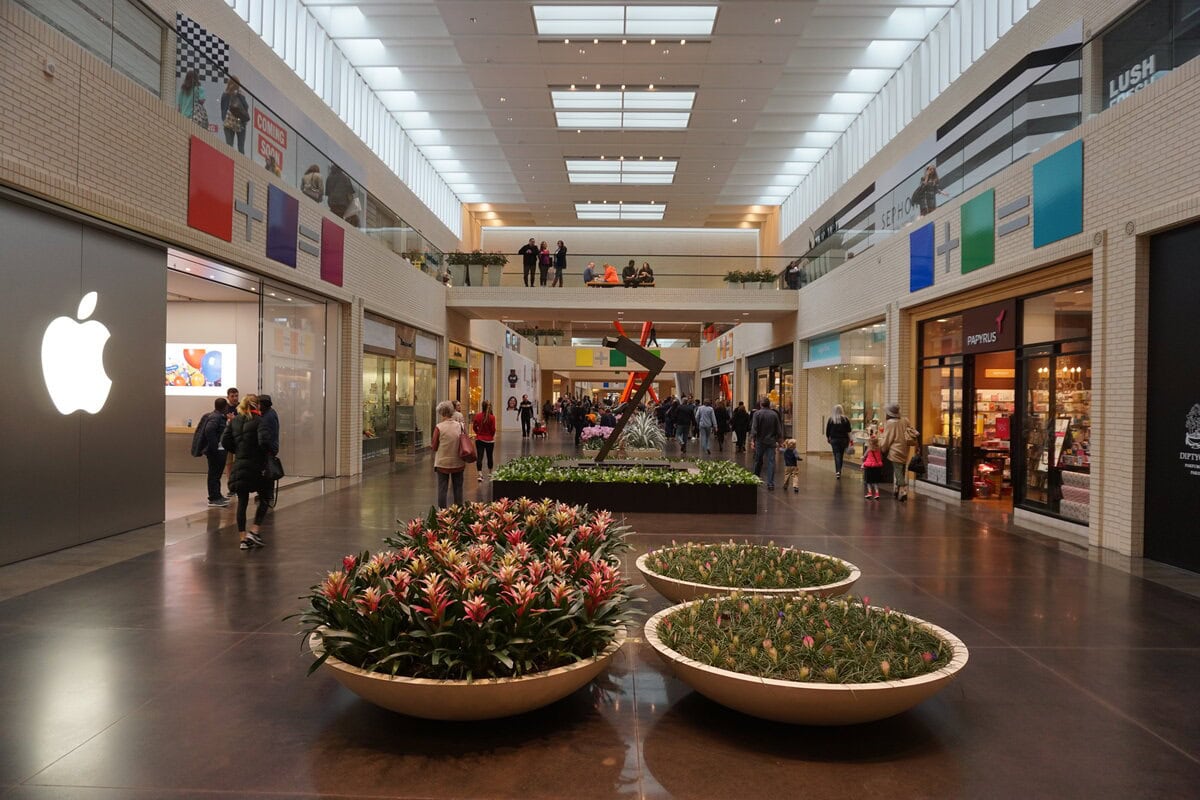
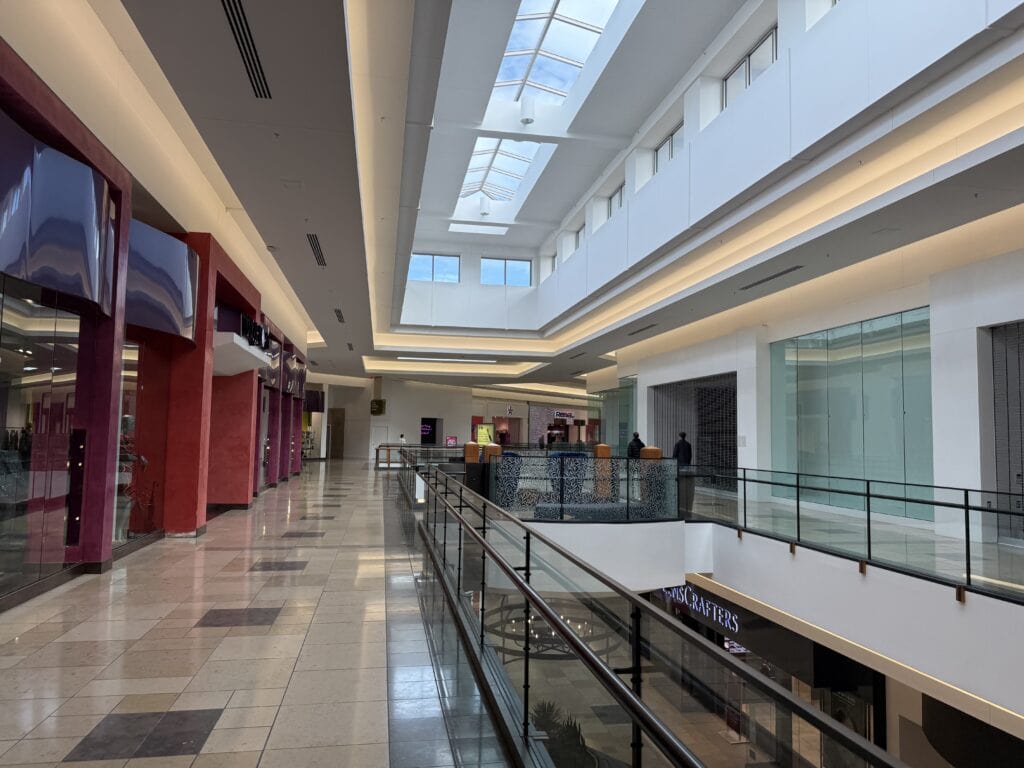
The inside of the mall had a shiny, lasting look. The main floors were made with imported, fossil-filled terrazzo.
There were skylights above, and extra lights were added to them to keep the mall bright all day. On the outside, concrete panels were used to make the building look like it was made of brick or stone.
Taubman's design plan and materials
Taubman Centers built The Shops at Willow Bend by leaning hard on the way its founder, A. Alfred Taubman, worked.
He trained in architecture at the University of Michigan and Lawrence Technological University. There, he studied store planning and drafting.
He looked at mall design as a way to reduce "threshold resistance," the small frictions that keep shoppers from stepping in, browsing, and buying.
He kept it simple: "Planning is everything."
That mindset ran straight through Willow Bend. JPRA Architect designed the project under Greg Tysowski of the environmental design group.
The look leaned "prairie style," and the furnishings were described as Stickley-styled.
The main mall rose as a two-level building, while the anchor stores ran to three levels.
The site plan stayed just as deliberate. A ring road spread cars out across multiple entry points. Parking capacity was set at 6,358 spaces, split between 2,925 lower-level spaces and 3,433 upper-level spaces.
Once inside, sightlines between floors stayed open wherever possible, and the long hallways guided shoppers past more stores.
Taubman also kept close control of the tenant mix. Leases were often kept shorter so the lineup could change quickly when needed.
Luxury lineup meets early headwinds
From day one, Willow Bend tried to look and act like a luxury address.
The tenant list included Lora Piana, Escada, Mont Blanc, MAC, and Armani Collezioni. The mall also opened the first Apple Store in Texas on its first day.
It was Apple's third retail store worldwide.
Rather than relying only on standard mall dining, Willow Bend included a 30,000-square-foot food court and also featured a separate area called the "Cappuccino Court." The mix aimed at wealthy women shoppers in North Texas.
The timing, though, was tough. The mall opened just weeks before the September 11 attacks, and shopping slowed down everywhere.
At the same time, the area to the east suffered when the "telecom corridor" fell apart, which meant people had less extra money to spend at the mall.
The competition was also tough and nearby. Stonebriar Centre in Frisco had opened on August 4, 2000, one year earlier.
It was bigger, had an ice rink and a movie theater, and attracted more types of shoppers. The Galleria Dallas was about seven miles south and was already known for luxury shopping.
Willow Bend's limited focus made it harder to handle a sudden change in how people spent their money.
Anchor shakeups from 2004 through 2014
In 2004, Willow Bend added a fifth anchor when Saks Fifth Avenue opened in a 122,900-square-foot space.
Soon after, one of the original anchors left. Lord & Taylor, a 140,000-square-foot store that opened in 2001, closed in 2005.
That exit cut into the mall's original four-anchor plan.
In 2006, Federated Department Stores changed Foley's name to Macy's. The Macy's store took up about 200,000 square feet and stayed for years, but the new name started a new chapter for the mall.
By 2010, Saks Fifth Avenue closed, leaving only three of the early anchor spaces active. The empty Lord & Taylor pad did not stay vacant forever.
In 2011, Crate & Barrel opened a 29,000-square-foot store built on the former department store's pad.
During this time, the mall kept its upscale look, but the list of main stores became less steady.
Each change made the mall adjust which stores it had and how it attracted shoppers, even as other nearby malls kept adding more choices in North Texas.
Starwood's redo effort after the 2014 sale
In 2014, Taubman Centers sold The Shops at Willow Bend to Starwood Capital Group as part of a seven-property deal worth about $1.4 billion.
Starwood bought the mall, planning to make it do better by putting in a lot of money.
In 2015, Starwood announced a $100 million plan to update the mall. A big part of this plan was changing the old Saks Fifth Avenue building.
The idea was to turn it into a place for entertainment and restaurants, with spots that opened to both the inside of the mall and the outside, so people would not have to walk through the usual mall hallways every time.
New attractions followed. The mall added the 60,000-square-foot Crayola Experience, which opened in 2018. Equinox also opened at the site, adding a fitness club to the mix.
Even with those changes, the mall still had trouble getting a steady flow of visitors.
Nearby outdoor shopping areas like The Shops at Legacy and Legacy West kept attracting people who liked walking on streets, eating outside, and stores that opened right to the parking lot and sidewalks.
Willow Bend stayed an indoor mall, and that style kept getting harder to keep full.
Default, receivership, and empty halls
The mall's finances fell apart in late 2019. Starwood Retail failed to pay back a $135.7 million loan connected to Willow Bend and two other properties in Michigan and Virginia.
The loan was due on November 8, 2019, and they could not get a new loan to pay off what was left. The loan was handed over to a company that handles troubled loans, and the mall was put under new management by the court.
As things got worse, the numbers dropped quickly. By January 2020, Starwood reduced the value of several malls it bought from Taubman to nothing.
Property taxes went down, too, with the mall's tax bill dropping from $4 million to $1 million after officials adjusted what they thought the mall was worth.
During this time, Spinoso Real Estate Group ran the mall for a while as lenders searched for someone to buy it.
Stores kept closing around the same time. In April 2019, the Apple Store at Willow Bend closed and moved to Galleria Dallas.
The COVID-19 pandemic then made things even harder for regular stores and caused more to leave. In 2022, Anthropologie said it would move from Willow Bend to Stonebriar Centre.
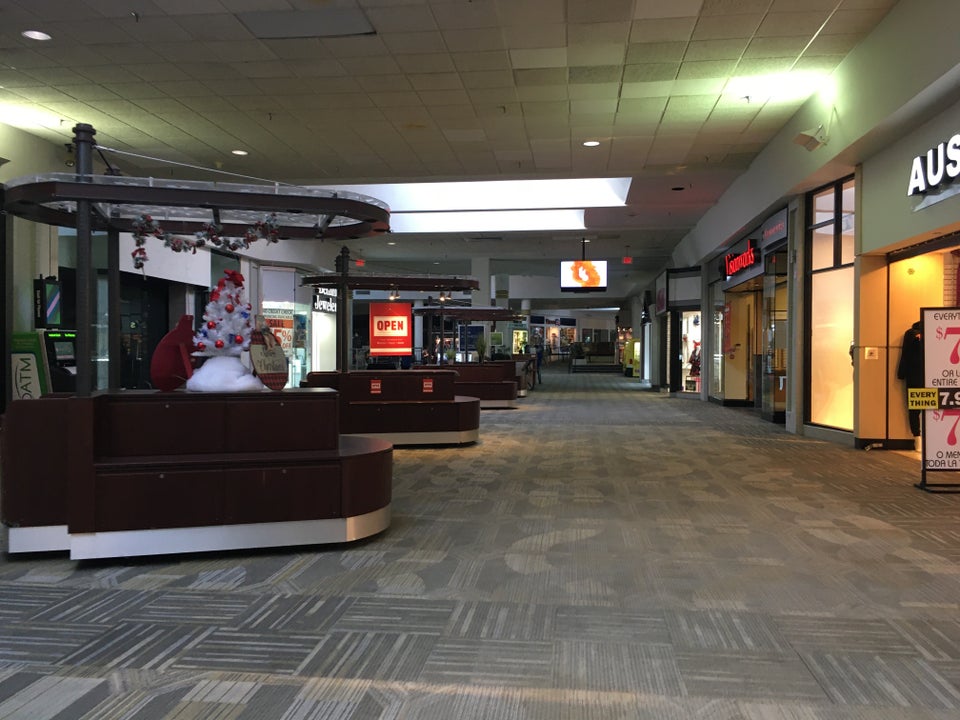
By the time new owners took over, over 30% of the mall was empty.
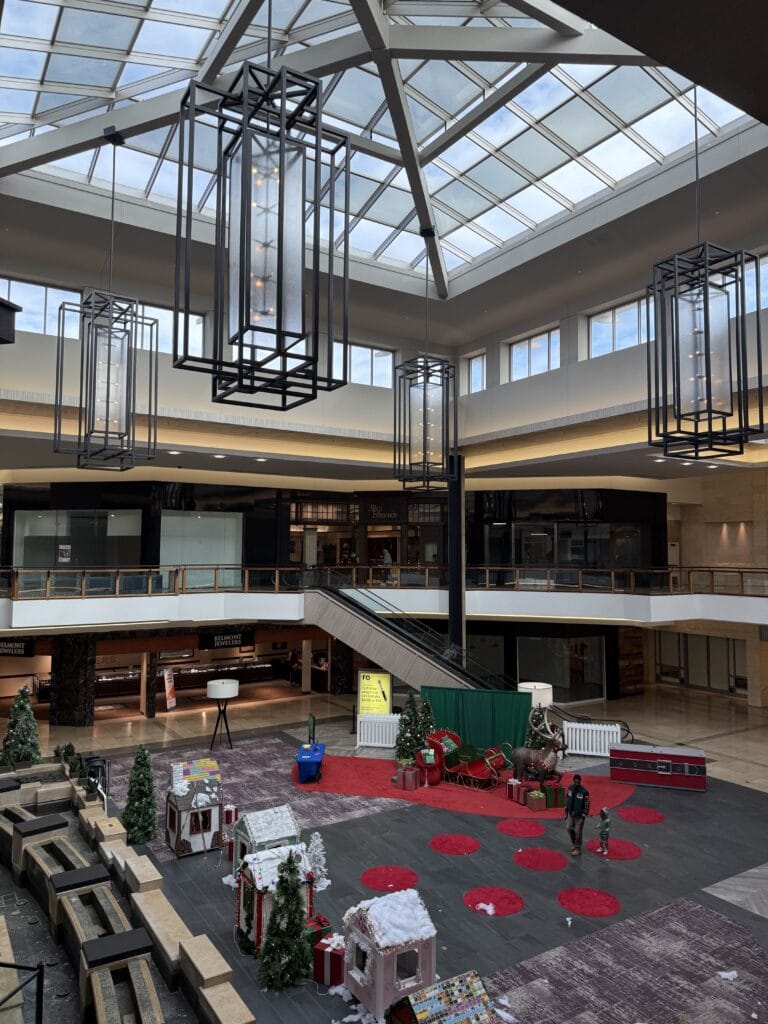
Centennial turns The Shops at Willow Bend into The Bend
In May 2022, a group led by Dallas-based Centennial, along with Cawley Partners and Waterfall Asset Management, bought The Shops at Willow Bend.
The new plan looked at the property as a place for different uses, not just shopping.
The project was renamed "The Bend," with the goal of turning the 107-acre site into a walkable area with homes, offices, hotels, and a smaller shopping area.
Early plans included tearing down about 500,000 square feet of the mall. The whole project was expected to cost between $500 million and $750 million.
The idea included up to 965 homes, an 18-story hotel next to the Dallas North Tollway, and a seven-story office building with about 400,000 square feet.
Plans also saved 10 acres for open space, including a central park and a dog park for the neighborhood, while keeping about 400,000 square feet for shopping, restaurants, and entertainment.
Plano connected the project to its Retail Revitalization Program, which supported adding homes and offices in places that could help protect nearby neighborhoods.
The approval process happened in several steps. In December 2023, the Plano Planning and Zoning Commission delayed a request to change how the land could be used to get more feedback.
The commission approved the change in January 2024. Then, in February, the Plano City Council approved the new building plans.
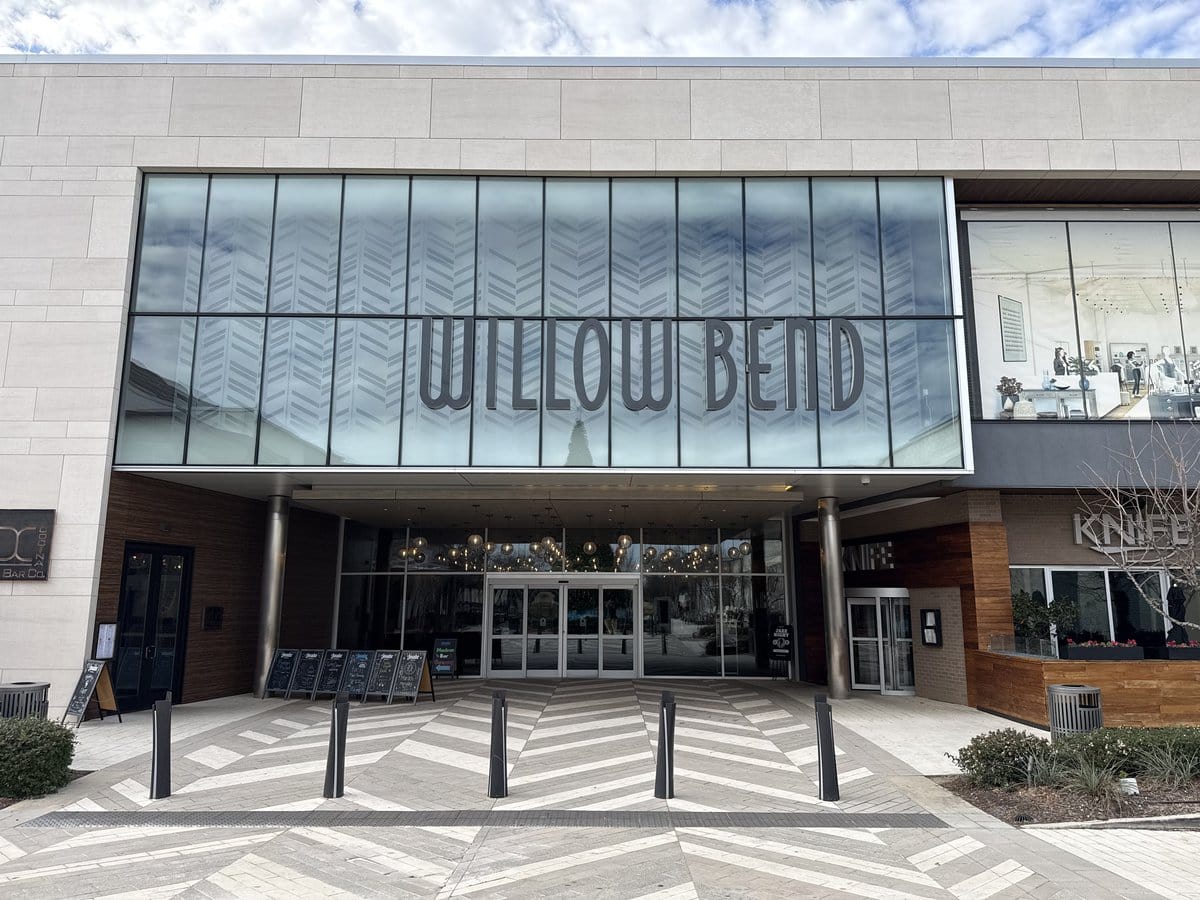
Plano approves updated The Bend plan after Macy's exit
Centennial bought the Macy's building in late 2024. Macy's then announced in January 2025 that the Willow Bend store would close, and it shut its doors on March 23, 2025.
They used that closing to plan the demolition of the mall's southern wing. While the mall was closing, Centennial kept talking with dine-in movie theater companies for The Bend.
Centennial also changed the types of homes planned for the project.
Instead of the earlier concept of a mid-rise with roughly 300 apartments, they shifted to about 50 townhome-style units and also added single-family "villa" homes as an allowed use, similar to the Villas at Legacy West.
The city kept approving changes as the plan developed. On February 3, 2025, the Plano Planning and Zoning Commission voted 4-1 to recommend changes to the rules for the project.
The changes set rules for the single-family homes and changed the timing and amount of open space.
The commission also approved a rule that each home would have two garage spaces and one visitor space for every four homes.
On February 24, 2025, the Plano City Council approved the new redevelopment plans.
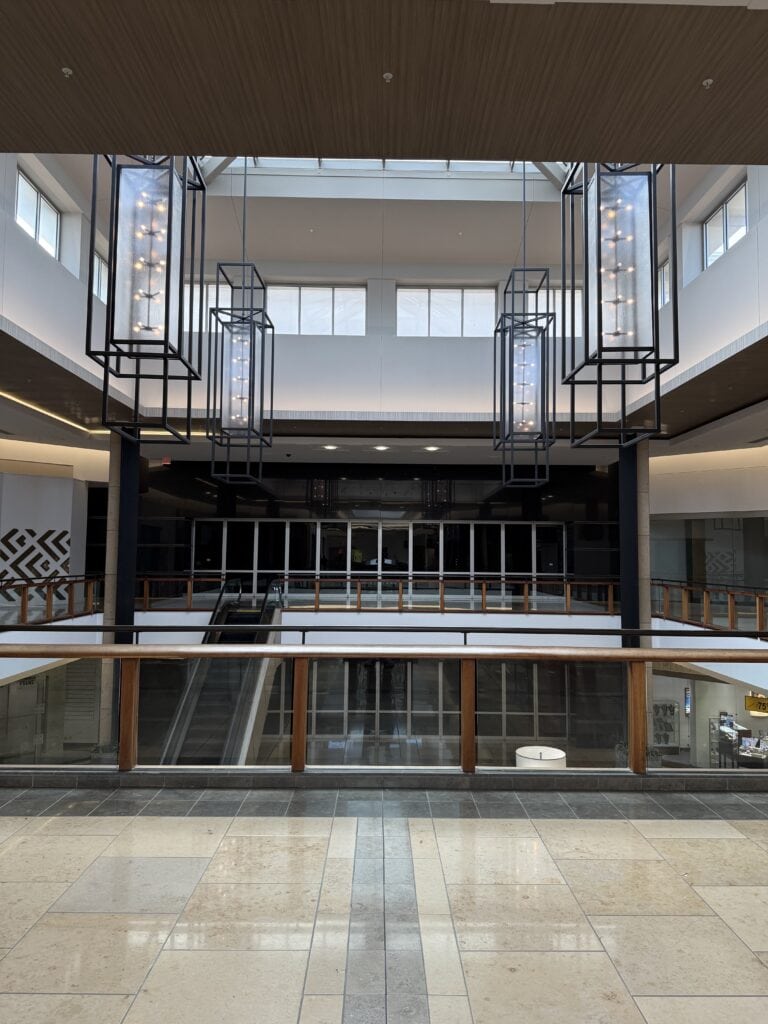
Late-2025 closures and a three-year plan toward 2028
By late 2025 and early 2026, The Shops at Willow Bend was stuck between its past and future. The mall was still open, but there were only about 50 stores left, much fewer than the 150 stores it once had.
More long-time stores left during this time. California Pizza Kitchen, one of the last original restaurants, closed in late 2025.
Dillard's said in November 2025 that it would close its Plano store by 2026.
A state WARN notice posted November 8, 2025, said 93 people would lose their jobs because of that closing, expected on or soon after January 12, 2026, with a January 12 to 25, 2026 window.
On September 18, 2025, Saks Global said Neiman Marcus would close in January 2027. After 2027, Crate & Barrel is expected to be the only main store left.
The main construction is planned to take three years and finish in 2028.