
Cloverleaf Mall plans take shape in Chesterfield
Back in the mid-1960s, when Midlothian Turnpike seemed like the edge of town, plans came up for a large mall in Chesterfield County.
The idea was to get ahead of Richmond's growth before the next big expansion.
The site was the Gresham Nursery property at Midlothian and Chippenham, a large area that fit in with the nearby suburbs, shown by new houses, new roads, and more cars at stoplights each season.
In June 1969, the county approved a zoning change for 85.7 acres to allow the project to move forward.
Construction began on March 9, 1971, with Richmond architects Carneal & Johnston designing the complex.
Developer Leonard L. Farber partnered with Arlen Shopping Centers to build an enclosed mall of about 600,000 square feet.
The mall took its name from the nearby highway interchange. At the time Cloverleaf Mall was being built, the junction still was not a true cloverleaf.
An at-grade intersection remained there until 1978. The mall opened first, and the roads caught up later.
Opening day brings Sears, JCPenney, and carpet
Cloverleaf Mall opened on August 16, 1972, as the Richmond area's first large-scale indoor regional shopping center.
It took the form of a single-story enclosed corridor, with major stores placed at opposite ends to set the route and keep the middle moving.
The anchors were a two-level Sears at 179,200 square feet and a two-level JCPenney at 200,000 square feet.
About 44 other stores and services opened with them, including Harmony Hut Records, Bresler's 33 Flavors Ice Cream, Peoples Drug at 13,000 square feet, and McCrory's 5&10 at 14,800 square feet.
Cloverleaf Mall Cinemas I & II, a twin-screen theater operated by District Theatres, ran as part of the original lineup.
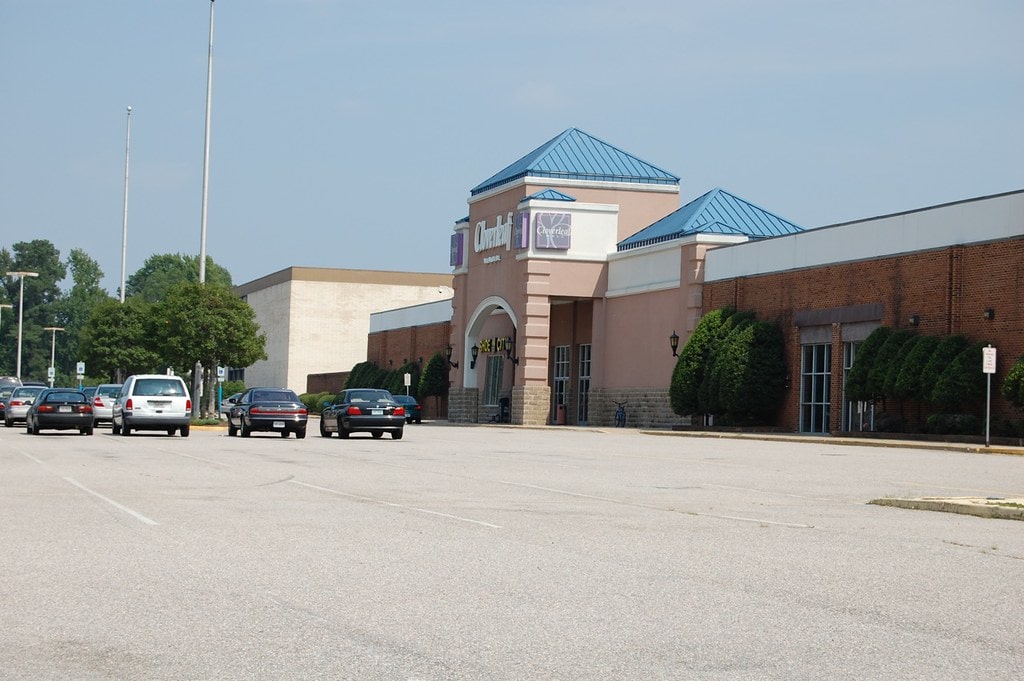
Thalhimers arrives as the mall stretches out
A year after Cloverleaf Mall opened, it expanded again. On August 1, 1973, a second phase added a third anchor, Thalhimers, the Richmond-based department store chain.
The new store opened as a one-level building of 63,000 square feet.
The new section added 16 specialty stores, made the inside walkway longer, and brought in a wider variety of stores.
With the new section, Cloverleaf Mall grew to about 760,000 square feet of space for rent and had 67 stores and services.
The mall called itself "The Fashion Center of Richmond," and it had more department stores, chain shops, and indoor shopping than most places nearby.
The anchors kept exterior entrances, and the mall worked as a set of connected stops rather than a single room. Thalhimers drew shoppers through its doors and back into the enclosed walk.
A trip could begin at a department store and continue past the smaller tenants, including the record shop, the ice cream counter, the drugstore, and the cinema.
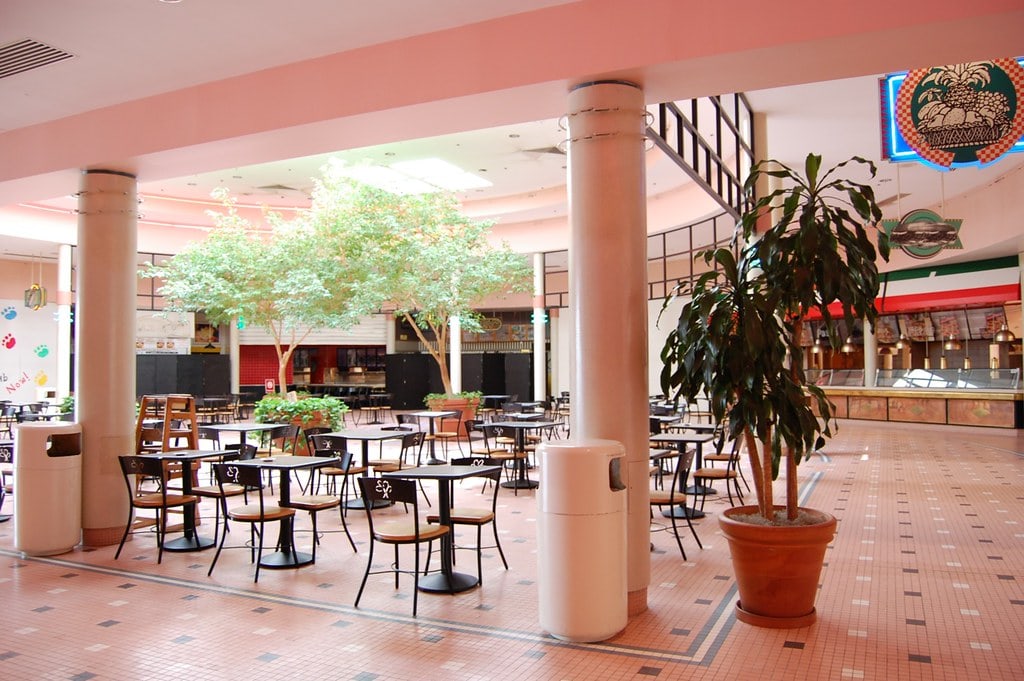
Fountains, crowds, and a suburban town square
During the 1970s and 1980s, Cloverleaf Mall became what it was meant to be, the main suburban place to gather. Shoppers came from across the Richmond area.
The inside was often packed on weekends and during the holidays, when people came not only to shop. The shared spaces were built to keep people there longer.
A large indoor pool and fountain sat in the middle as the center court's focal point. There were plenty of places to sit, so an afternoon could pass there even without buying anything.
In a county of neighborhoods and parking lots, the mall filled the role of a town center in place of a traditional downtown.
Cloverleaf Mall also held community events, fashion shows, and seasonal parties. Its impact went beyond shopping.
The Nickelodeon cartoon Doug used Cloverleaf's name and layout for the fictional "Four Leaf Clover Mall," a sign of how familiar the place had become.
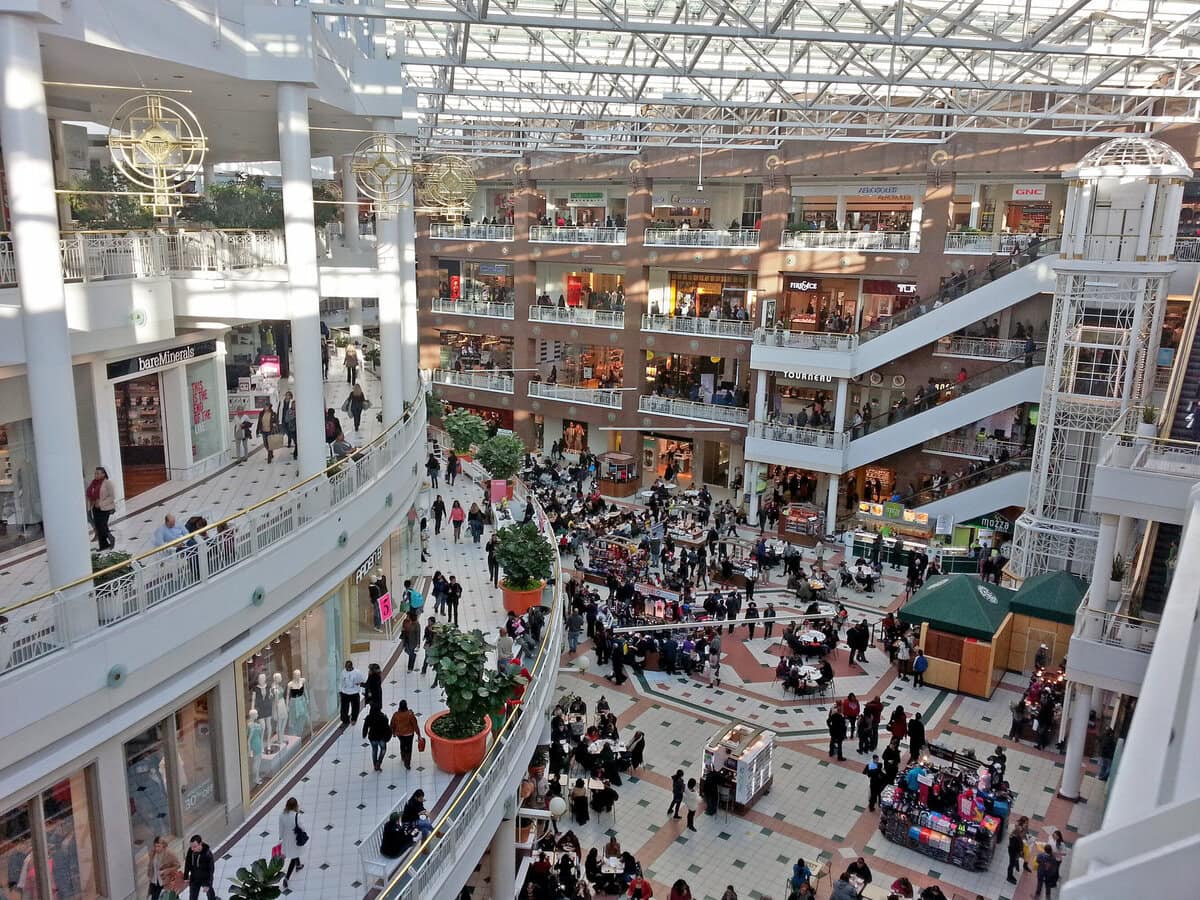

Multiplex and food court remake the 1980s
Cloverleaf did not stay locked in its early-1970s look for long. In 1982, an eight-screen multiplex opened as a free-standing theater at the southwest corner of the property: Plitt Theatres Cloverleaf Mall Cinema 8.
The addition marked a major update and kept the site in the running for moviegoers and shoppers who wanted more than a simple walk between stores.
A larger remodel followed in early 1987, when substantial interior and exterior renovation work began.
The project refreshed the mall's decor to move it past its 1970s appearance and carved out a new food court in space that had been used by the original twin-screen cinema.
The new eight-bay area opened as the "Take A Break" Food Court. It gave the mall a central spot to pause, eat, and spend time while the flow of customers kept moving around it.
Around the same time, the Thalhimers store grew by adding a second floor, helping the mall stay popular in the late 1980s.
At its height, Cloverleaf Mall carried around 70 stores and continued to operate as a busy regional destination.
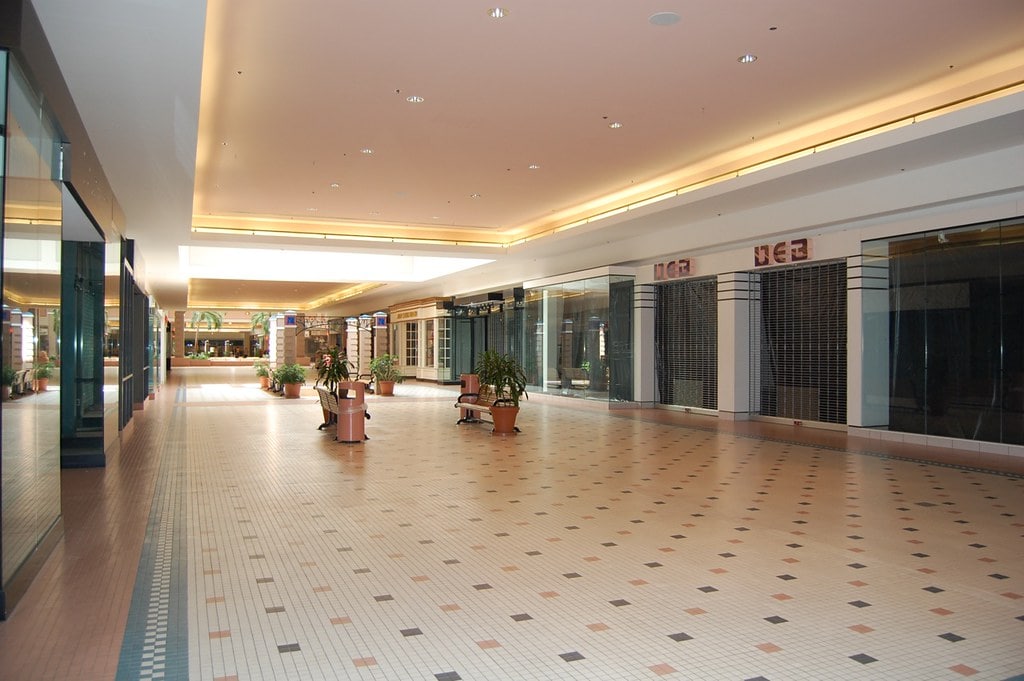
New rivals and a changing customer mix
In the 1990s, Cloverleaf Mall started to lose the steady success it had for twenty years.
Changes in the neighborhood and the types of people living nearby changed how people saw the mall, and some longtime shoppers started to worry about the new mix of customers.
More groups of teenagers without adults began hanging out inside, and the mall felt louder and less calm than its original visitors expected.
Chesterfield Towne Center, only a few miles away, was made bigger and improved in 1987. By the 1990s, it was a newer and more modern option that still felt current.
Big chain stores went where the shoppers were, moving to the newer mall instead of fixing up their old stores.
Cloverleaf Mall now had to compete with malls that kept up with the area's changes.
New stores in the Richmond area were opening in fast-growing suburbs, so Cloverleaf Mall was left behind as new homes and money moved elsewhere.
Mall managers tried to respond. In 1998, Cloverleaf was renovated to improve its appearance. But updates did not restore its former popularity.
The 1996 murders cast a shadow that lingers
On November 8, 1996, a violent crime at Cloverleaf Mall became part of the property's story. Two employees of the "All For One" discount store were found murdered in a back office.
Both women were young mothers. They had been stabbed to death during what appeared to be a robbery. The store's safe was found empty.
The case remained unsolved decades later. The lack of resolution kept the case in circulation long after the day itself. It also fed a wider sense that Cloverleaf Mall was no longer as safe as it once had been.
After that, safety concerns and rumors played a larger role in how the mall was viewed, with talk often moving faster than verified facts.
People who used to spend whole afternoons there began cutting visits down to quick stops, or stopped going altogether.
A mall can keep going with empty storefronts for a while. It has a harder time keeping customers who are afraid to be there.
Anchors close, theaters darken, doors shut
By the early 2000s, the decline became visible in the most obvious way: the anchors started leaving. J.C. Penney closed its Cloverleaf location in October 2000 after 28 years.
The store relocated to Chesterfield Towne Center, which opened a newer Penney location in 2001, but Cloverleaf was left with a vacant endcap that no inline tenants could compensate for.
The movie business followed the same arc. The mall's theater closed in October 2001, after years of declining attendance.
Two years later, the remaining anchors exited in quick succession. Sears, which had downsized to one level by that point, closed in January 2003.
The former Thalhimers store, rebranded as Hecht's in 1992 after May Company acquired Thalhimers, closed in July 2003.
That same year, Stony Point Fashion Park opened about four miles away, pulling remaining high-end shoppers and attention to a newer, open-air format.
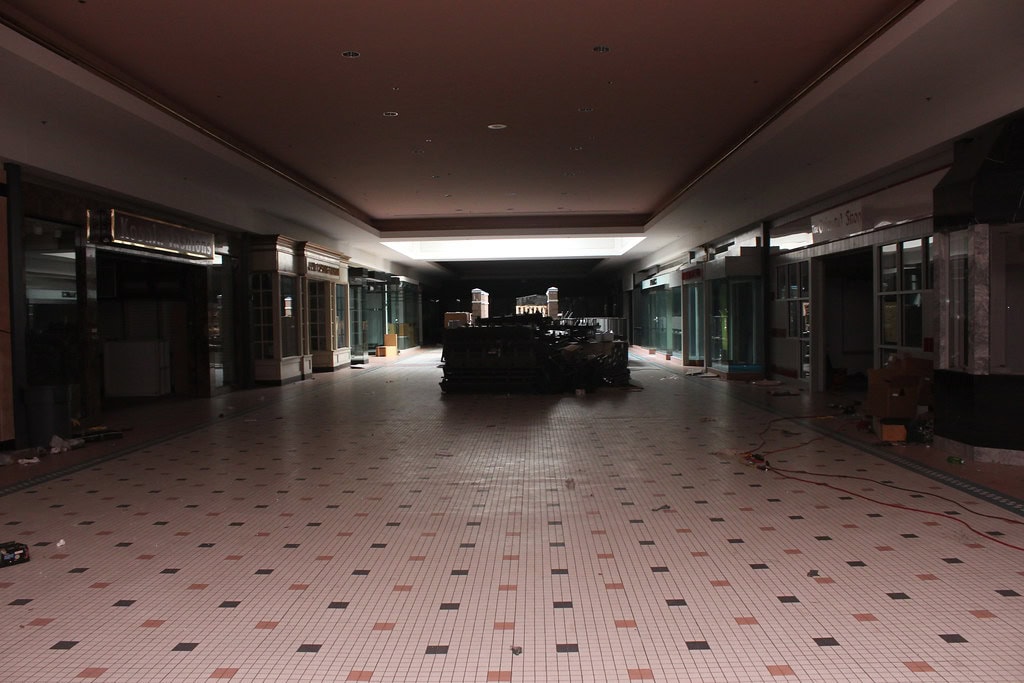
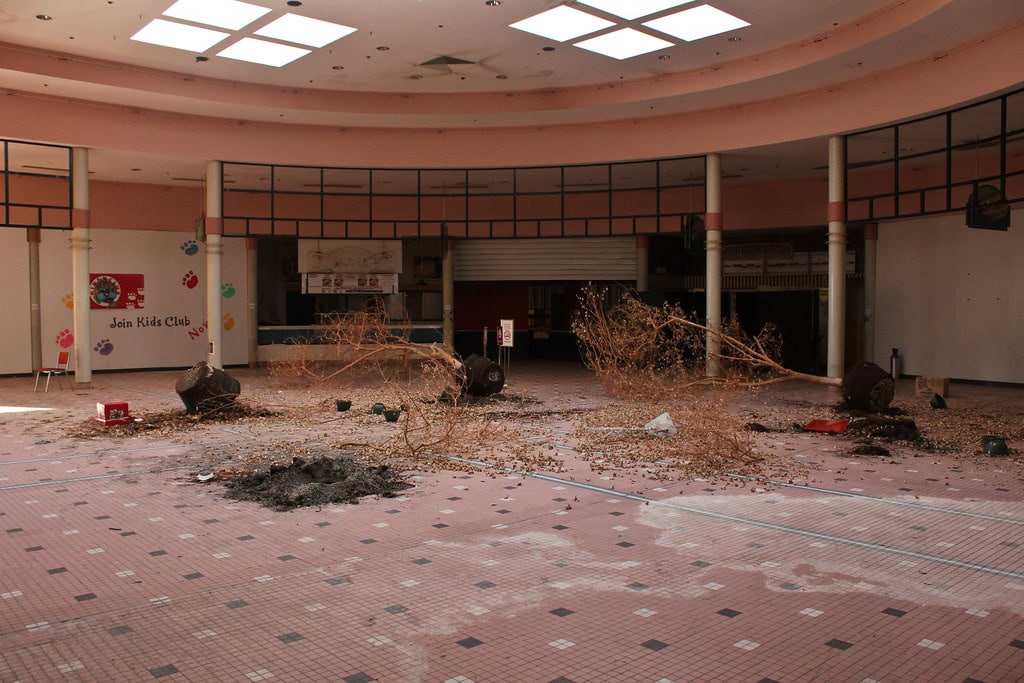
By 2004 and 2005, Cloverleaf Mall was largely a shell. The mall closed for good on February 29, 2008, ending 35 and a half years of operation.
The county buys the site and chooses a new plan
As Cloverleaf's retail life ended, the property became a redevelopment problem large enough to draw public involvement. The mall changed ownership in 2002, but no turnaround followed.
In 2004, Faith Alive Ministries offered to buy Cloverleaf and convert it into a mega-church complex, including a 5,000-seat sanctuary in one of the former anchor spaces.
County leaders rejected the proposal and kept the focus on restoring tax revenue and steering the site toward commercial reuse.
Later in 2004, Chesterfield County's Economic Development Authority purchased the mall buildings for about $9.2 million.
The land beneath the mall was owned separately, which complicated control of the site, and the county assembled full ownership in stages.
The EDA acquired 37 acres in 2004 and purchased the remaining 46 acres in 2008, bringing roughly 83 acres under county ownership.
Through the mid-2000s, the county pursued private development partners and moved through changing concepts, including a mixed-use plan sometimes referred to as "Chippenham Place."
In January 2007, Chesterfield selected Crosland LLC to redevelop the site as a lifestyle and mixed-use center anchored by a 123,600-square-foot Kroger Marketplace, with additional retail, restaurants, office space, and residential units planned around it.
Stonebridge replaces the mall, piece by piece
Before anything new could rise, the old mall had to come down. After delays during the late-2000s recession, the county moved forward with demolition plans in early 2011.
Crosland was set to purchase an initial 28-acre phase by April 1, 2011, and demolition was expected to begin within 30 days.
By fall 2011, crews were tearing through the structure, and in 2012, most of the mall was gone.
A few outparcels survived. A Firestone auto center, tied to the former Penney's auto shop, and a Bank of America branch remained on the periphery.
The redevelopment had already settled on a name by then. Though earlier concepts floated other labels, the project was branded Stonebridge in late 2011.
Construction centered on the new Kroger Marketplace, with work underway by mid-2012 and an opening in December 2012, including a fuel center.
By fall 2013, additional tenants opened nearby, including Sweet Frog, Qdoba, a Virginia ABC store, Great Clips, and Subway.
The first 400 units of Element at Stonebridge were completed by April 2016.
Parts of the project changed hands over time, including a 28.4-acre sale for $5.7 million in 2011 and a $12 million sale of the core retail center in 2016.
In 2017, Chesterfield's Economic Development Authority moved forward with a roughly 50,000-square-foot indoor sports facility at Stonebridge, built to lease to Richmond Volleyball Club and to include space for county recreation programs.
Richmond Volleyball Club opened its Stonebridge location in March 2018, operating eight courts in the building, and the facility remains in use.
As of 2026, the former Cloverleaf Mall site operates as Stonebridge, an open-air mixed-use district anchored by Kroger, with restaurants, services, and apartments.
The place still draws people for the same basic reason Cloverleaf once did: it sits where the roads converge, and it offers a lot in one stop.
There is a tragic unsolved hit n run killing of a young woman in Hampton, VA that I would love to see Spencer Walsh to a story on. His attention might bring renewed interest to the case that could contribute to seeing the matter solved,
I appreciate your comment. The case of young woman, who was struck by a hit-and-run driver on Mercury Boulevard, remains unsolved. The police have identified the suspect vehicle as a red Ford Fusion with damage to the front passenger side. Although our site primary focus is on attractions, I understand the impact of such stories. Raising awareness can indeed make a difference.
I ask everyone reading this article to watch the WAVY TV 10 report and help investigate if they know anything.
https://www.youtube.com/watch?v=6ZGE_WlQfPU
There was also the disappearance of a young woman from the mall. Earlier than this I believe. It was never solved & I believe she was never found.
I believe the closing of most malls in the Richmond area was due in part to the elements that began hanging out & scaring shoppers away.
The disappearance of the young woman from Cloverleaf Mall is a somber reminder of safety concerns that affect public spaces. Incidents like these can certainly influence the perception and usage of malls. Thanks for sharing your thoughts.