
Suffolk, Virginia, earned its title as the Peanut Capital of the World by becoming the commercial engine behind the region's peanut crop - not just a place where peanuts grew, but where they were cleaned, graded, processed, shipped, branded, and sold to markets across the United States and beyond.
Geographic and agricultural advantage: The surrounding sandy, loamy soils of southeastern Virginia were ideal for peanut cultivation, giving Suffolk direct access to a massive regional supply.
Rail-based transportation hub: Suffolk's rail connections allowed bulk peanuts to move efficiently from nearby farms to national markets, giving it an edge over competitors with weaker infrastructure.
Concentration of processing facilities: By 1902, ten of the twenty American peanut cleaning and grading factories were in southeastern Virginia, most clustered around Suffolk.
Pioneer companies establishing the industry: The Suffolk Peanut Company (1898) and Planters Nut and Chocolate Company (relocated to Suffolk in 1913) turned the city into a nationally recognized peanut center.
Peanut machinery manufacturing: The Benthall Machine Company opened in Suffolk in 1906 to produce the first successful commercial peanut thresher, making the city central to peanut technology as well as processing.
National branding through Mr. Peanut: A Suffolk schoolboy's 1916 contest entry became Planters' iconic mascot, giving the city a globally recognized symbol tied directly to peanuts.
Public culture and civic identity: Suffolk was officially declared the Peanut Capital in 1941, backed by festivals, parades, and events that drew tens of thousands and turned an industrial label into community pride.
Ideal Soil and a Ready Regional Supply
Virginia peanuts needed loose, sandy soil to form pods underground. The land around Suffolk, stretching into northeastern North Carolina, had exactly that.
Commercial peanut farming in Virginia began in the early 1840s near Waverly and Wakefield in Sussex County - close enough to Suffolk that the city could step in as a processing and marketing center without building a long supply chain from scratch.
The "Virginia-type" peanut, a large, crunchy variety suited to in-shell roasting, became prized in markets nationwide.
By the late 19th century, peanuts were moving well beyond farm use into food, oil, candy, soap, cosmetics, and livestock feed, and southeastern Virginia had the farmland to supply all of it.
Rail Lines That Moved Peanuts at Scale
Norfolk had earlier been the leading peanut hub in the region. Suffolk overtook it because Suffolk sat closer to the peanut farms and became a convergence point for rail lines running through the area.
Processing peanuts in bulk required warehouses, loading docks, and railroad spurs working together as one system. Without rail, cleaned and graded peanuts had no efficient path to buyers in distant cities.
With it, Suffolk could move ten train-car loads of peanuts per day - the actual output of the Suffolk Peanut Company at its height in 1915.
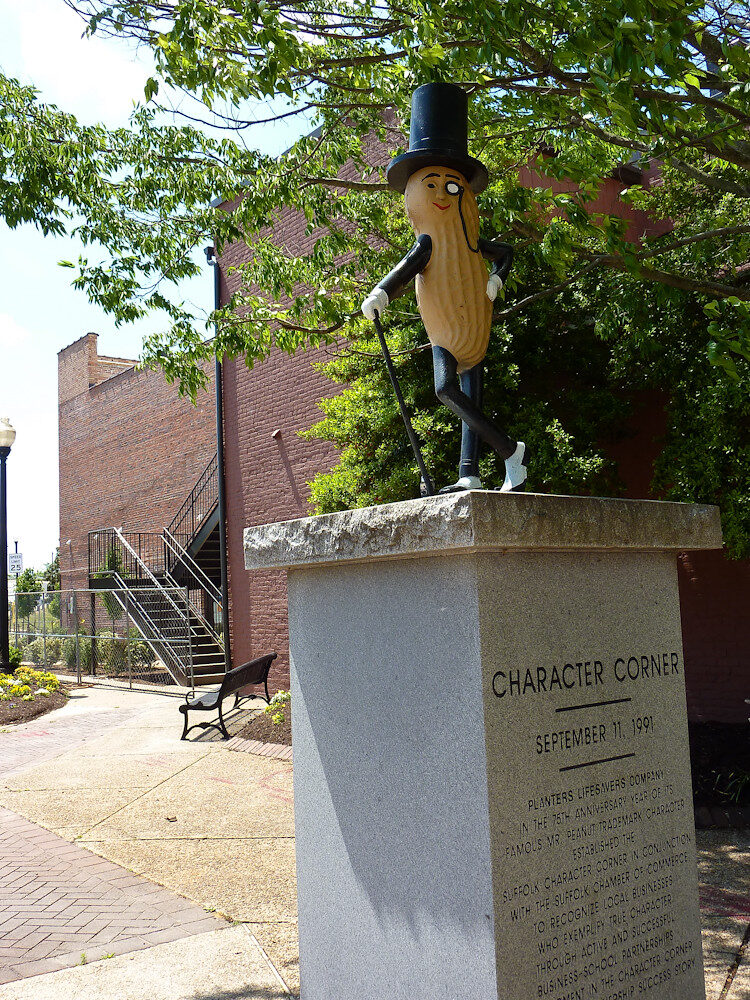
" by formatted_dad is licensed under CC BY-NC-ND 2.0
Suffolk Peanut Company Builds the Template
John Y. King and Colonel John B. Pinner founded the Suffolk Peanut Company on January 20, 1898.
An earlier attempt by the Farmers Alliance of Nansemond County had opened a mill in 1890 and failed. King and Pinner succeeded where others had not.
They leased an abandoned cotton mill, then built a permanent plant in 1903 along the Norfolk & Western railroad tracks.
The company was the first to ship a jobber carload of raw peanuts - connecting Suffolk to wholesale distribution networks across the U.S., Canada, and Mexico.
By 1915, it employed up to 300 workers and 15 office staff. The site later became recognized as one of the most intact historic peanut processing complexes surviving in Virginia.
Planters and Amedeo Obici Put Suffolk on the Map
Amedeo Obici and Mario Peruzzi founded Planters in Pennsylvania in 1906. By 1913, manufacturing had relocated to Suffolk, putting production directly beside the peanut supply and cutting out middlemen.
Planters added national advertising, brand recognition, and a distribution reach that smaller regional processors could not match.
Obici settled permanently in Suffolk, purchased Bay Point Farm overlooking the Nansemond River, and became a major local philanthropist.
After his wife Louise died in 1938, he funded the construction of Louise Obici Memorial Hospital, which opened in 1951.
The Benthall Machine Anchors Peanut Technology in Suffolk
Jesse Thomas Benthall and Finton Finley Ferguson patented the first successful commercial peanut threshing machine in 1905.
The Benthall Machine Company opened in Suffolk in 1906 to manufacture it on a large scale.
Suffolk was no longer just a place that handled peanuts - it was a place that built the equipment the entire industry depended on.
Mr. Peanut Turns Industry into Icon
In 1916, Planters ran a logo contest. Antonio Gentile, a schoolboy from Suffolk, submitted a drawing of a humanized peanut.
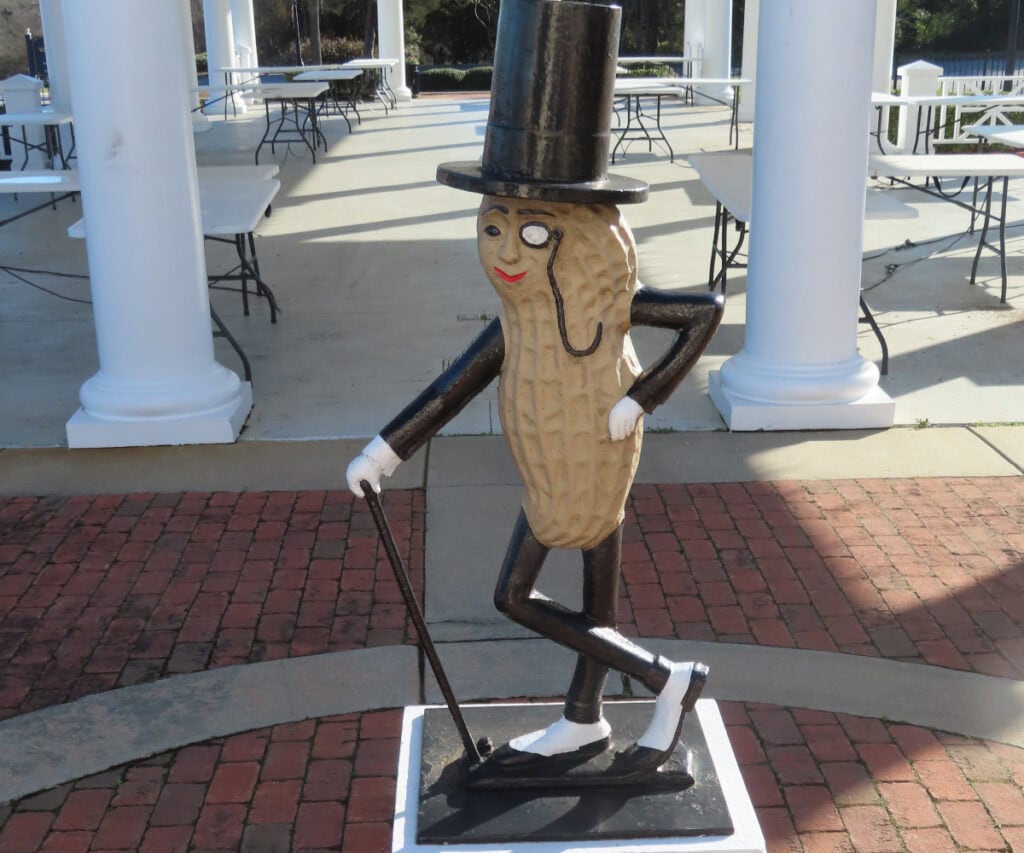
A professional artist later added the top hat, monocle, and cane. The resulting character appeared on packaging, advertising, and storefronts for over a century.
A statue stands today at Character Corner in downtown Suffolk. The Planters Peanut Center on Washington Street still sells roasted peanuts using a 1936 roaster from the original operation.
The 1941 Declaration and the Festival That Followed
Suffolk was officially declared the Peanut Capital of the World in 1941. The first peanut festival, held in January of that year, drew 10,000 attendees. The October 1941 event drew 50,000.
The modern Suffolk Peanut Fest traces its roots to a 1978 downtown event called Harvest Fest, organized by the local Chamber of Commerce, which eventually grew into a four-day October event held at the municipal airport.
Additional Factors That Deepened the Title
Other peanut companies reinforced what Planters and the Suffolk Peanut Company had started. Bain Peanut Company and Lummis and Company both opened plants in Suffolk in 1900.
Columbian Peanut Company followed in 1904. At least eight more peanut-related firms had opened by 1939, including brokers, shippers, and wholesalers.
The labor involved in processing - grading, stemming, polishing, picking - employed large numbers of workers, many of them African American, whose contributions were central to the industrial operation.
Peanuts remained the leading cash crop in Suffolk and surrounding counties through the middle of the 20th century. Modern Virginia peanut production still spans eight counties on nearly 30,000 acres.
Suffolk became the Peanut Capital of the World because it was where the full commercial chain came together - farms nearby, rail lines through the center, factories along the tracks, machinery built in the city limits, and a brand recognized in every grocery store in America.
No single cause explains it. All of them together do.
Independent Publisher Notice
BestAttractions is an independent editorial publisher. We are not affiliated with, endorsed by, or acting on behalf of any location, business, property owner, manager, government agency, or organization described in this article.
Comments posted on this page are not forwarded to, reviewed by, or acted upon by any entity mentioned in the article.
For official inquiries, complaints, applications, bookings, or other requests, please contact the relevant entity directly through its official website or other verified channels.