A Promise Made in the Dark
Think about what it means to make a promise on the night you know you are going to die. Not a simple promise like "take care of the children" or "pay what I owe" but a promise that can only go with you into the darkness.
John McGee Parkman made a promise like that in May 1867, on the night he tried to escape from Cahaba jail near Selma. He vowed he would not leave his house until his name was cleared.
He had been a banker. He had lost U.S. government money in bad cotton trades. Reconstruction authorities had arrested him and jailed him, and everything he owned - including a $65,000 mansion on Mabry Street - had started slipping away faster than he could account for it.
He died that night, shot or drowned, depending on who's telling it, about ten miles from the house he had loved. He never came back to settle the question of his name.
But then, people in Selma started saying he came back anyway.
Whether you believe in ghosts has almost nothing to do with the real power of the story. A man's life collapsed in three years.
He died trying to get home. The house he loved still stands, filled with other people's furniture, and strangers still walk through his rooms from Tuesday to Saturday.
Whether that is justice or tragedy is for you to decide, and Sturdivant Hall leaves the answer up to you.
Sturdivant Hall Rises on Mabry Street
In 1852, Colonel Edward T. Watts, a wealthy cotton planter, paid $1,830 for a parcel of land on Mabry Street in Selma, Alabama. He intended to build something the city had never had before.
Over the next four years, workers built more than a house. They built a large, costly, carefully planned mansion meant to show the wealth that cotton had brought to Selma and the surrounding area.
Watts hired Thomas Helm Lee, a builder and architect born in Virginia, who was also a cousin of Robert E. Lee. When the work ended in 1856, the total cost was $69,900.
Italian artisans came to Selma just to complete the plasterwork and install the marble. The marble came from Italy.
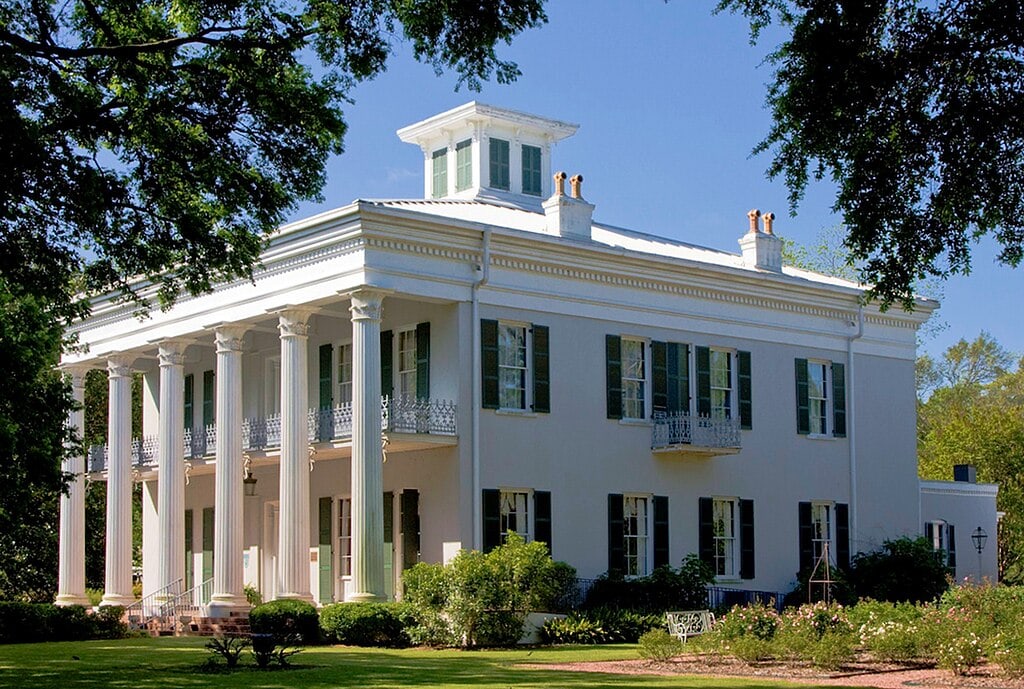
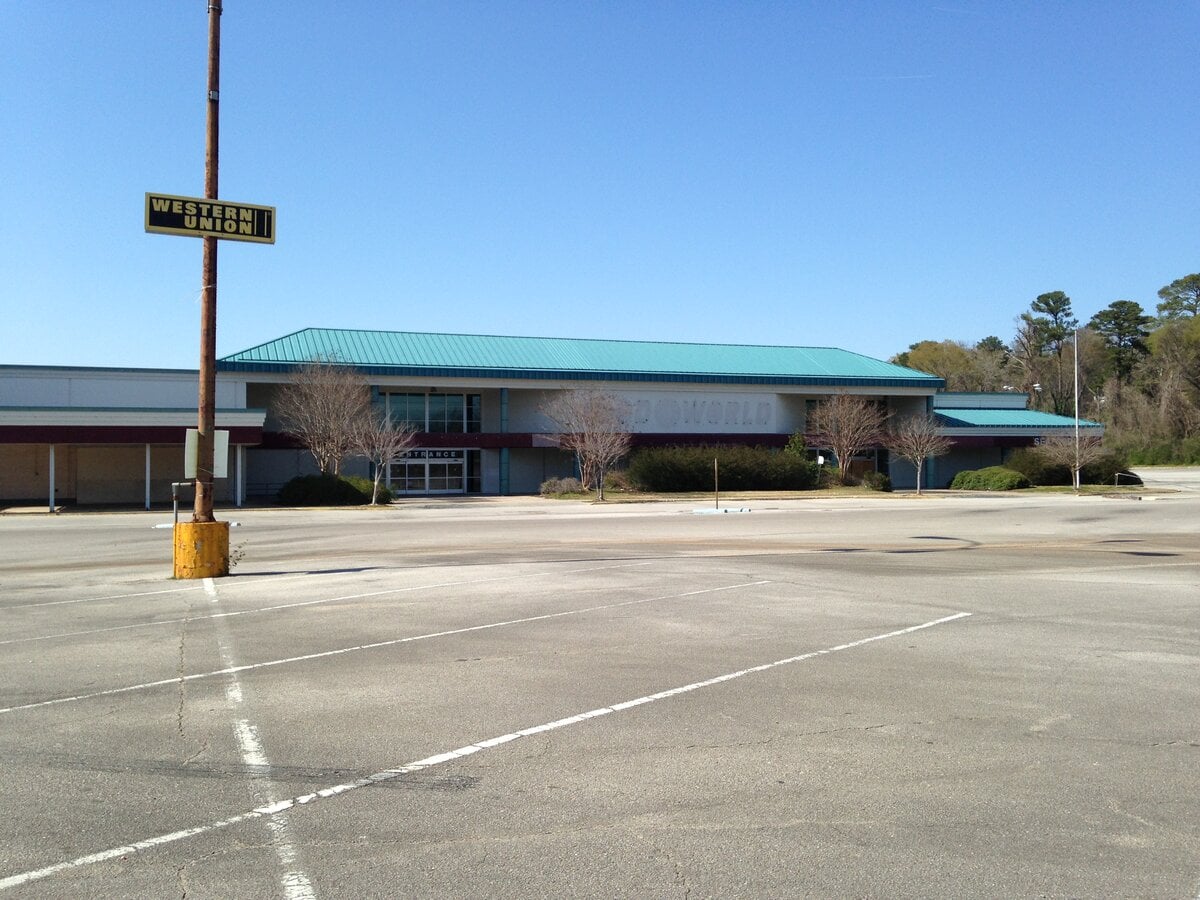
The finished mansion stood at 713 Mabry Street and covered almost an entire city block. Across the front were six fluted Corinthian columns, each 30 feet tall.
Above the entrance, a second-floor balcony stuck out with no visible posts holding it up, and its metal railing had detailed patterns.
Matching doorways on both floors faced the street, each decorated with fancy Corinthian-style trim.
Tall jib windows on each floor could open completely, extending all the way down to the floor.
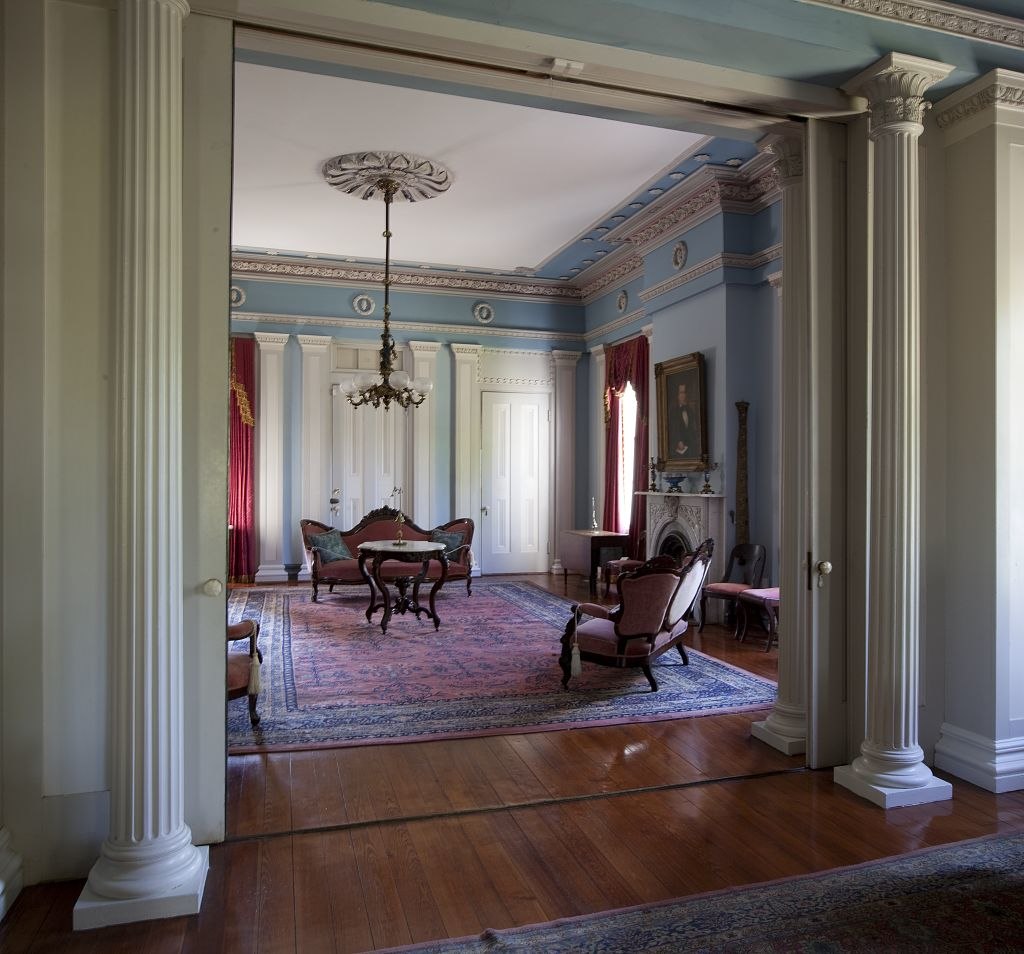
Inside, heart-of-pine flooring ran through every room. Three of the main rooms had marble fireplaces. The ceilings and cornices were covered with detailed plaster decoration.
Behind the house, a detached kitchen, a smokehouse, and servants' quarters enclosed a rear courtyard.
Selma already had fine homes, but before this, nothing on Mabry Street matched this building in size or level of finish.
A Planter's Home in the Cotton Years
Colonel Watts moved his family into the mansion in 1856 and lived there for eight years.
Selma in those years was a successful city connected to the cotton business and the boats that carried goods down to Mobile.
Watts owned large landholdings south of the city, and the house on Mabry Street was a fitting home for someone of his standing.
The interior rooms matched the grandeur of the outside. Double drawing rooms on the north side of the main hall had elaborate plaster cornices, paneled pilasters, and marble mantels.
Beyond the drawing rooms, the first floor also included a ladies' parlor, a gentleman's parlor, a dining room, and a "warming" room.
A library and a rear sitting/work room completed the main suite of rooms off the hall.
The second floor had four bedrooms reached by a T-shaped hall. Gas fixtures by the Philadelphia firm Cornelius and Baker lit the rooms in the evenings.
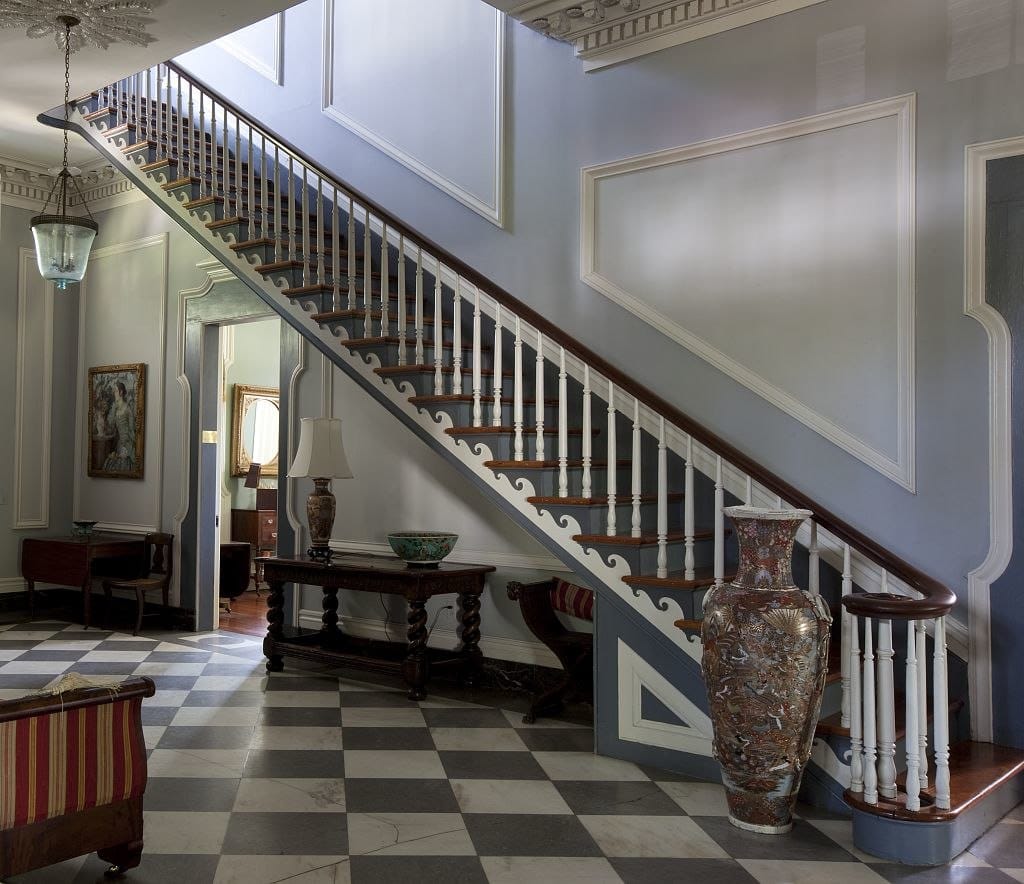
The first floor's lofty hall turned into a side hall, where a broad, single-flight staircase rose to the second floor.
A second staircase on the upper floor led to the attic, and from there a spiral stair wound around a central pole up to a small cupola at the top of the roof.
The decorative details throughout came from well-known architecture books of the time, including pattern books by Samuel Sloan and Minard Lafever.
By 1864, Watts decided to leave Alabama and move his family to Texas. He sold the house that same year for $65,000 and departed.
The Civil War was still underway, and Selma's fortunes were about to change in ways no one could have fully anticipated.
The Banker Who Swore He Would Not Leave
In February 1864, a banker from Selma named John McGee Parkman bought the house from Colonel Watts.
Parkman was well known in the city and later became president of the First National Bank of Selma after the Civil War ended.
The years after the war were hard on Alabama. Parkman's bank got into cotton speculation and suffered massive losses.
Among the money lost were deposits belonging to the U.S. government. Reconstruction military governor Wager Swayne's authorities seized the bank and arrested Parkman.
He was sent to Cahaba Federal Prison, also called Castle Morgan, which sat about ten miles from Selma.
His wife, Sarah J. Norris, and their daughters stayed behind in the house on Mabry Street. Parkman did not stay in prison for long.
In May 1867, he tried to escape with help from friends outside the prison walls. He did not survive the attempt.
His widow and daughters remained in the house for a few more years after his death.
Then, in January 1870, the property was sold at auction for $12,500, much less than the $65,000 Parkman had paid six years before.
A prominent Selma merchant named Emile Gillman was the buyer.
The house moved from one era to the next, and the Parkman chapter came to an end. Still, some people in Selma would later say it might not have ended completely.
How the City Turned a Ruin Into a Museum
Emile Gillman's family owned the house on Mabry Street for nearly ninety years, from 1870 to 1957.
By the time the family decided to let it go, the building had been empty for a while and had badly deteriorated. The mansion needed major repair work.
The City of Selma bought the property for $75,000. Most of that money came from a bequest left by Robert Daniel Sturdivant.
He directed that his estate provide money to create a museum in Selma to hold the antique collections that he and his wife had built over the years.
His estate supplied $50,000 for the purchase. The Selma City Council and the Dallas County Board of Revenue each added $12,500 to pay the remaining amount.
After the purchase, the city hired architect Marvin Schwartz of New York and designer Earl Hart Miller of Natchez to lead the restoration.
Workers repaired and restored the house. They placed period furniture, porcelain, fine art, dolls, and other antiques from the Sturdivant collection throughout the building.
In the main hall, workers installed new marble flooring and raised decorative molding. These replaced painted panels that had previously decorated the hallway and staircase.
The museum opened with the name Sturdivant Hall. The name honored the donor whose gift made the project possible.
The detached kitchen behind the house was turned into a gift shop. The mansion at 713 Mabry Street had become a public museum open to visitors.

Touring the Hall the Way It Stands Today
Sturdivant Hall is still open to the public today as a house museum owned by the City of Selma and maintained by the city, Dallas County, and the Sturdivant Museum Association.
Visitors can walk through the main house on a guided tour that shows the rooms on the first floor, the stairs, and the bedrooms upstairs.
The tour also includes the separate kitchen, which is now a gift shop, and the gardens around the house.
The museum keeps regular hours, generally Tuesday through Saturday from 10:00 am to 4:00 pm, though Saturdays sometimes end at 2:00 pm.
The museum is closed on Sundays and Mondays. Admission is about $10 for adults and $5 for children. For the most up-to-date prices, it's a good idea to check with the museum before you go.
Besides regular tours, you can rent the property for private parties, weddings, and work events. The museum also holds fundraisers during the year, like a yearly barbecue on the property.
The collections on display include period furnishings, antique porcelain, fine art, and a doll collection - all part of the original Sturdivant bequest that made the museum possible in the first place.
The grounds include a cast-iron gazebo and other structures moved from nearby properties, including pieces that came from the Alabama State Capitol grounds.
The National Register of Historic Places added the property on January 18, 1973. Sturdivant Hall remains one of Selma's most visited historic sites.
The Ghost Stories That Followed Parkman Home
The legend attached to Sturdivant Hall goes back to 1969, when Selma author Kathryn Tucker Windham and co-author Margaret Gillis Figh wrote a chapter about the mansion in "13 Alabama Ghosts and Jeffrey," published by Strode Publishers in Huntsville.
The chapter focused on John Parkman and carried the title "The Return of the Ruined Banker."
In the chapter, servants at the house, three years after Parkman's death at Cahaba in 1867, began seeing a man who looked like him moving near a fig orchard at the back of the property.
The story holds that Parkman had made a vow before dying that he would not leave Selma until his name was cleared, and that he kept that promise.
Over the decades since the book came out, staff and visitors at Sturdivant Hall have passed along similar accounts.
Footsteps cross the second floor and stop at the top of the staircase. Doors that were locked fly open. Latches on windows move on their own.
Chairs rock without anyone in them. Some visitors describe seeing the figure of a man in a top hat on the upper balcony, or two young girls peering out of an upstairs window.
The museum's staff takes a light approach to these stories. Tour guides have been known to say, "Mr. Parkman is at it again" when a door opens unexpectedly.
The museum references the Windham book in its history materials but does not make any formal claims about what visitors may experience inside.