
Central Mall is an enclosed shopping mall at 5111 Rogers Avenue in Fort Smith, Arkansas, built by Warmack & Company and opened in stages from 1971.
In 2006, it was Arkansas's largest mall at 864,600 square feet. Years later, it was still advertising itself as the only indoor mall within 60 miles, drawing from eight counties across two states.
Then the anchors thinned out. Boston Store, part of a Fort Smith retail line dating to 1879, closed in 1986. Sears, the first store to open at the mall, shut in January 2018. In 2020, most of the property sold for $17 million.
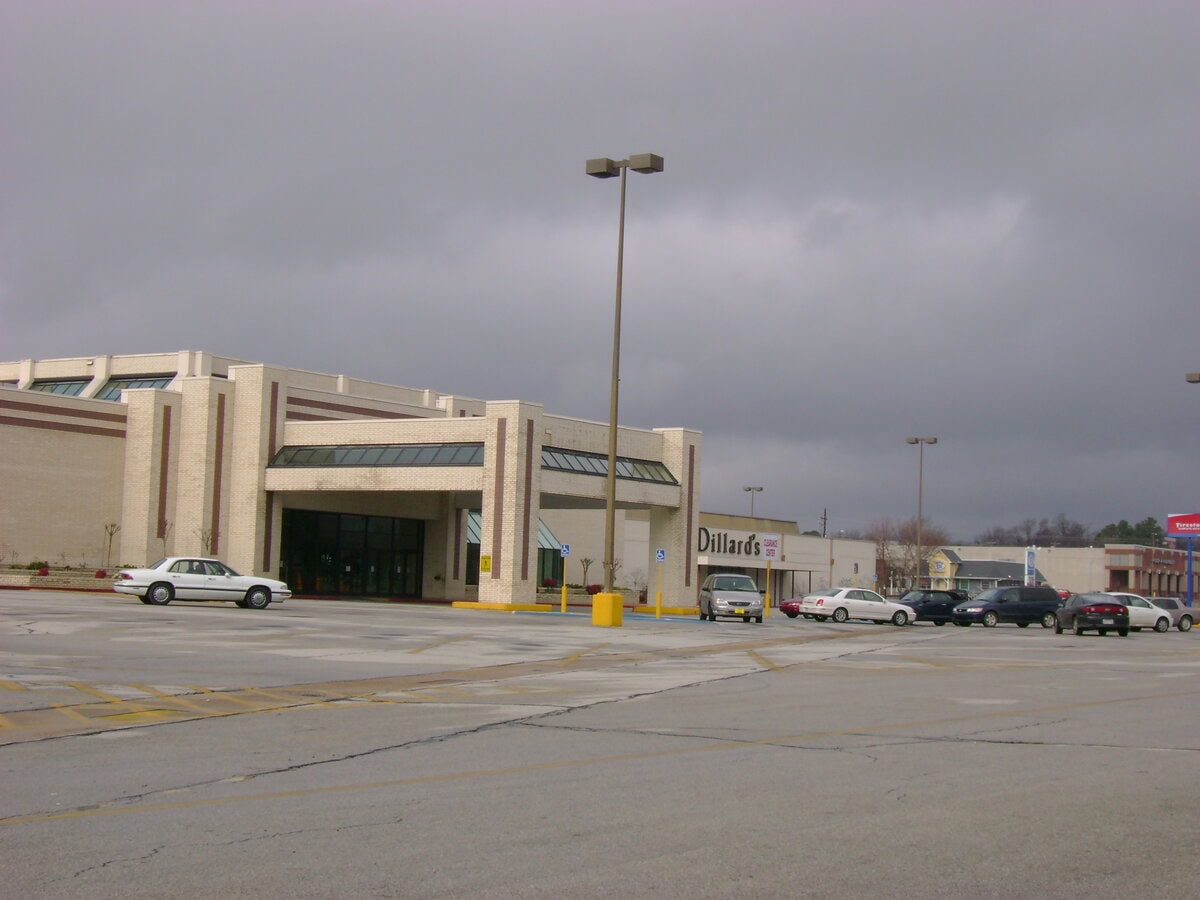
But the building never became empty. Dillard's and JCPenney are still there. A gym open all day and night operates in part of the old Sears space. A dental clinic and a jiu-jitsu school occupy space alongside Bath & Body Works and Victoria's Secret.
The mall stayed open by letting in a wide mix of businesses, and the city board once had to decide whether a truck-driving school could use its parking lot.
Here's how Central Mall learned to keep the doors open after department stores stopped being enough.
Central Mall opened one store at a time
Sears opened first, on August 12, 1971: a one-level store of 108,000 square feet on Rogers Avenue, with much of its mall still taking shape around it.
JCPenney arrived on April 11, 1972, nearly twice the size at 207,200 square feet across two levels.
Within about a year, the pieces had joined into an enclosed complex of roughly 650,000 leasable square feet.
Warmack & Company built it.
The hometown developer, tied to Ed Warmack and his family, put the mall on a 54-acre site 3.6 miles southeast of downtown, near where Rogers Avenue meets South Waldron Road, less than a mile from Interstate 540.
Fort Smith's shopping had lived on Garrison Avenue for generations.
The new mall pulled it east, toward the highway and the parking lots, and it never went back.
The 1879 store that moved in
One of the first tenants was older than the modern American mall.
Boston Store began as Baer Brothers in 1879, was bought by Rudolph Ney in 1892, and spent the next eight decades as one of Fort Smith's best-known downtown names.
It left Garrison Avenue for the new mall and set up as a two-level anchor of about 37,700 square feet.
The Jerome Ney family ran the store in its later years, and shoppers knew it for fashion and the Boston Store Tea Room.
When Boston Store moved in, Central Mall inherited nearly a century of local retail history along with the lease.
Cafeterias, a five-and-dime, and three screens
The early directory reads like a time capsule.
Wyatt's Cafeteria. Tilles apparel. Merchants National Bank of Fort Smith.
A.J. August Men's Wear, The Country Cobbler, Hunt's, S & Q Clothiers, and a 32,000-square-foot S.H. Kress five-and-dime.
In November 1974, the Malco Trio II cinema started showing first-run features on three screens, and the theater stayed part of the mall's identity for decades.
The building itself followed the 1970s playbook: department stores at the ends, small shops along climate-controlled corridors between them, a ring road, and surface parking on every side.
JCPenney ran two levels. Sears kept to one.
The northeast expansion brings Dillard's
Construction crews arrived in early 1984, and by spring 1985 the northeast end of the mall had grown an entire new wing.
It held a two-level Dillard's Women's store of about 124,800 square feet, roughly 60,200 square feet of new inline shops and offices, and a basement parking deck underneath.
The mall now had four department-store anchors under one roof, and its leasable area was closing in on 850,000 square feet.
Boston Store closes, the mall carves it up
On July 3, 1986, Boston Store closed, ending a business line that had run in Fort Smith since 1879.
The mall didn't let the space sit.
The two-level anchor was divided into about 15 inline stores, and part of the Sears wing was rebuilt as a one-level Dillard's Men's store of about 35,700 square feet.
When the work was done, total leasable area stood at about 848,100 square feet.
A 107-year-old local institution had become a row of shop fronts.
The biggest mall in Arkansas
The next two decades were the high-water mark.
By 2000, the Warmack family still owned the property, then the largest mall in Arkansas with about 1 million square feet under roof.
In 2006, it topped the state's shopping-center rankings at 864,600 square feet, ahead of Northwest Arkansas Mall in Fayetteville and Pinnacle Hills Promenade in Rogers.
Geography did a lot of the work.
Central Mall was the only enclosed shopping center within a 60-mile radius, drawing from eight counties in two states and a trade area of more than 275,000 people.
Phoenix Village Mall, the smaller enclosed mall that had opened across town in 1970, was already mostly empty by the mid-2000s.
Central Mall had outlasted its only local rival.
Skylights, a domed food court, a new front door
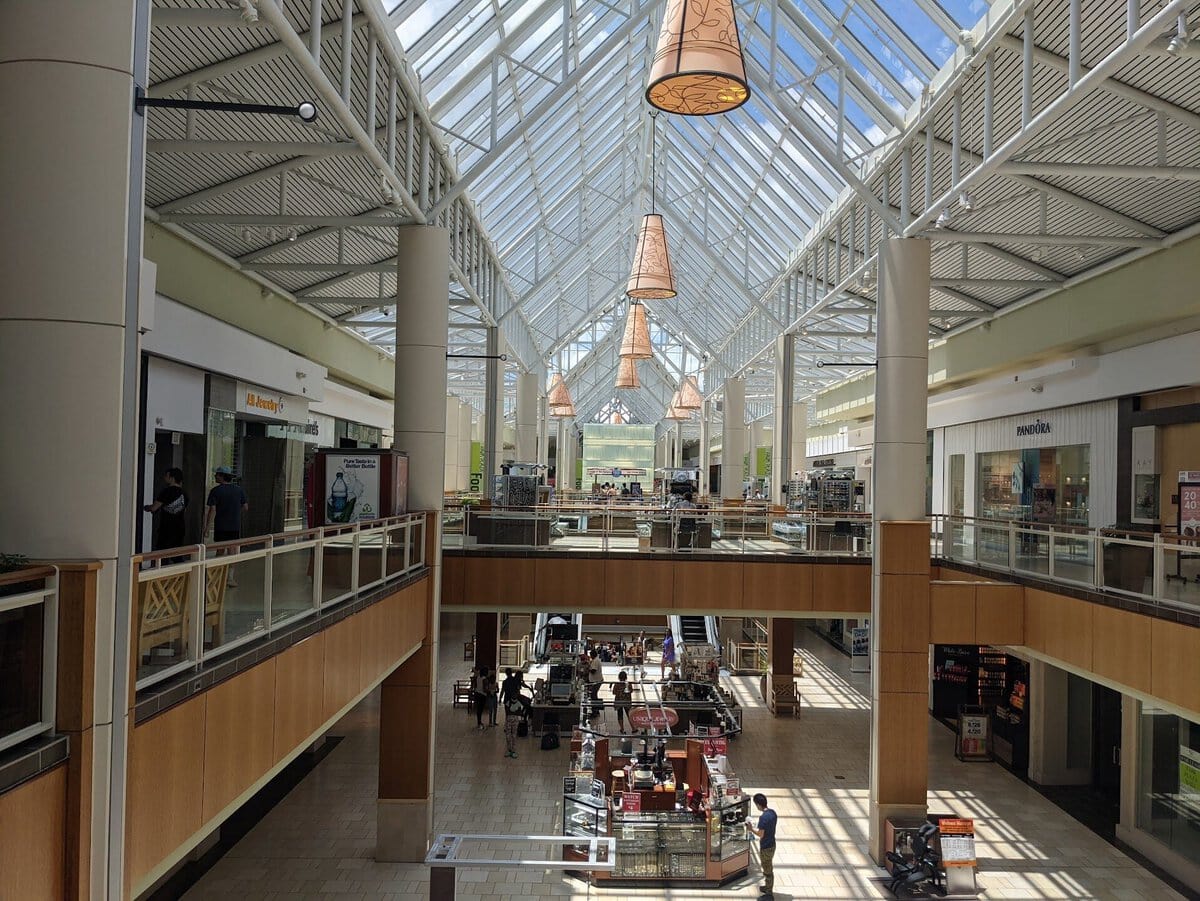
The mall got a full refresh in 1999: new flooring, skylights, interior finishes, and site lighting.
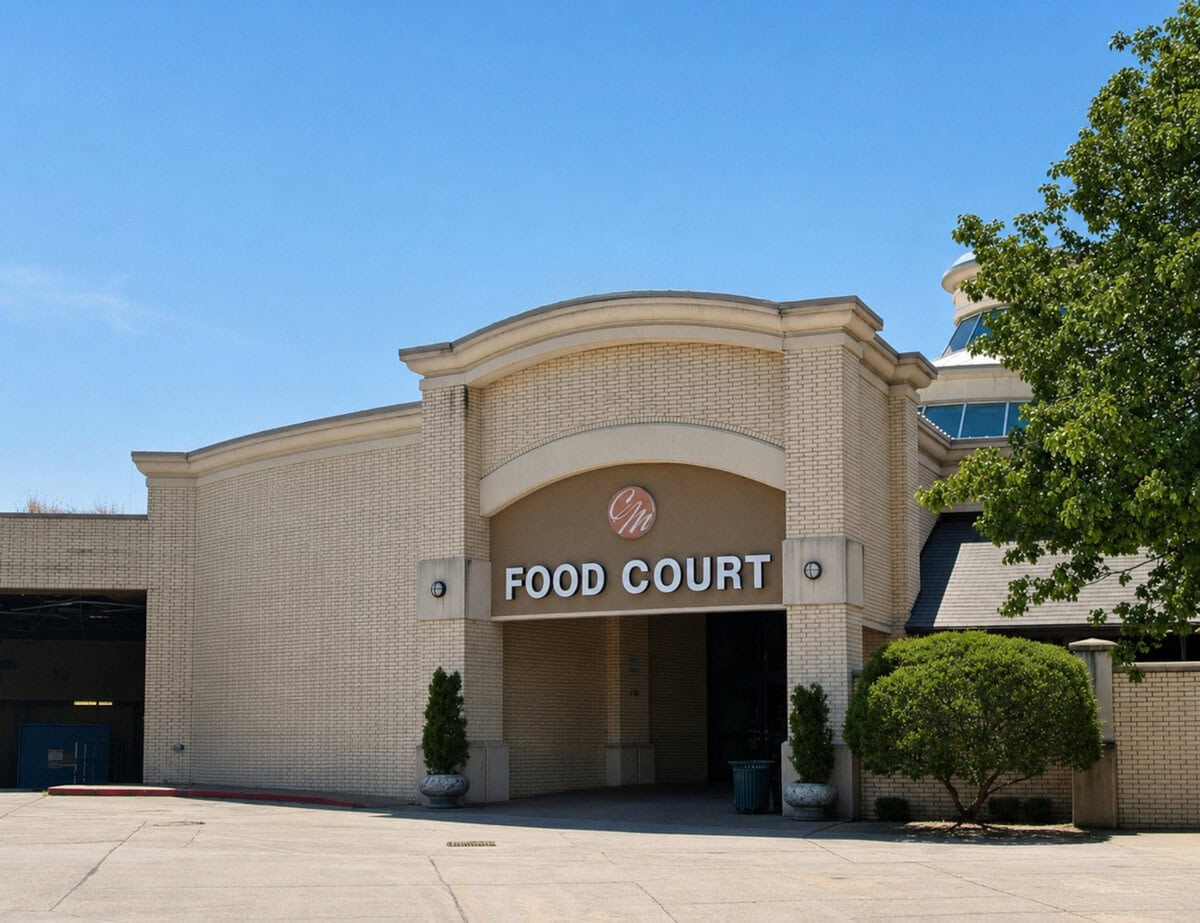
Store space was rebuilt into Food Court Central, an eight-bay court under a dome with 350 seats and an outdoor dining patio.
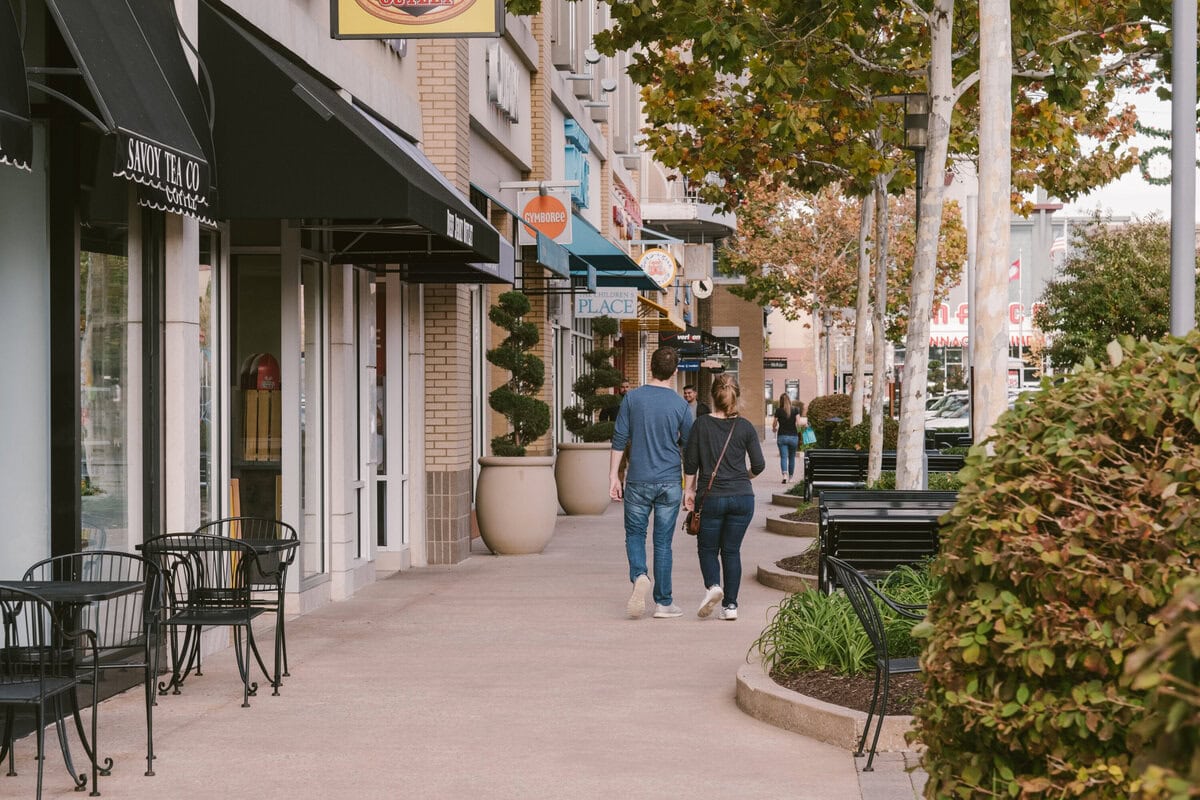
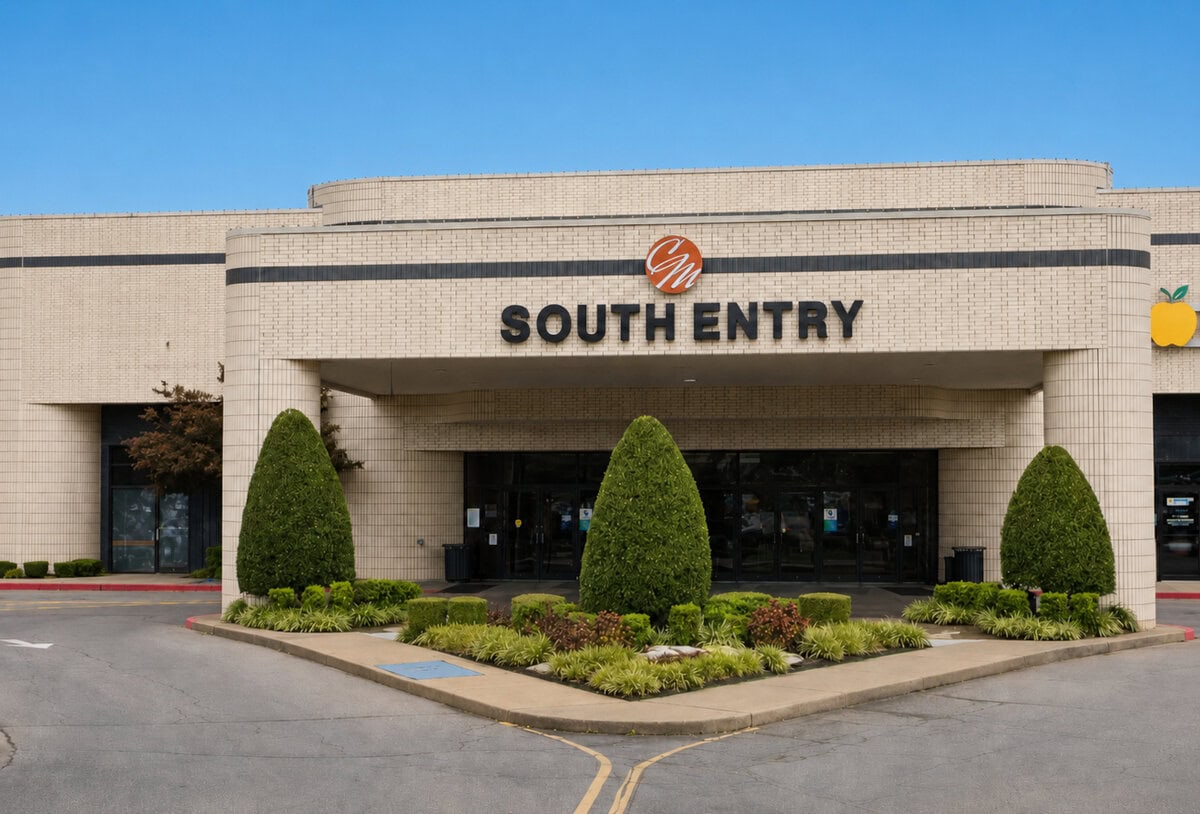
In 2001, a four-store, 16,000-square-foot entrance extension changed the front facade, and a children's soft play area followed in the early 2000s.
By 2013, the operating numbers still read like a healthy property: 95 stores on a 53-acre site, two levels, 3,400 parking spaces, and 862,000 square feet of leasable space.
Sold, sold again, and sold again
Warmack sold the mall to Atlanta-based Gregory Greenfield & Associates in August 2005, and Jones Lang LaSalle took over management.
Two years later, Australia's Babcock & Brown bought Greenfield outright.
In October 2007, Oxford Properties Group of Toronto bought a 48.9% stake in an eight-mall package that included Central Mall.
Three ownership turns in a little over two years, spread across three countries.
Through all of it, the mall kept its calendar.
Charity shopping nights, craft shows, memorabilia shows, Santa events, Salvation Army Angel Tree drives.
A 2012 charity night brought in 17 nonprofits, discounts at more than 90 stores, entertainment, and gift wrap.
Whatever the deed said, the building still worked as the town's indoor gathering place.
The first anchor goes out last century's way
In November 2017, Sears Holdings put the Fort Smith store on a national closure list covering 18 Sears and 45 Kmart locations.
Liquidation sales started within a week.
By late January 2018, the store that had opened the mall was empty, 46 years after its first day.
The same year, Dillard's consolidated its men's departments into the main building and closed the separate Dillard's Men's location.
Within months, the mall went from four department-store boxes in use to two.
A $17 million deed
On January 2, 2020, a deed transferred the 54.7-acre tract and the mall structures, minus the Dillard's store, for $17 million.
The buyers were interests tied to Mason Asset Management and Namdar Realty Group, New York firms with a national habit of buying older malls at a discount.
Mason's Arkansas portfolio already included Northwest Arkansas Mall in Fayetteville and Conway Towne Center.
Fourteen years earlier, this had been the largest shopping center in Arkansas.
In 2020, most of it changed hands for less than many mid-size grocery-anchored strip centers cost to build.
Semi trucks behind the mall
The strangest fight of the mall's recent life was over a truck-driving school.
CDL Academy had offices and classrooms inside the mall and wanted to practice in the parking lots.
The Fort Smith Planning Commission said no twice in 2021: first in March for the southeast lot near Rogers Avenue, then in April for the northeast lot near South Waldron Road.
The first vote was seven against. The second was nine.
The Board of Directors overturned the second denial on May 11, 2021, five votes to one.
Training was allowed in the northeast lot, the old Dillard's overflow parking, with cones marking off the practice area and trucks running only in daytime, for the remaining 20 months of the school's lease.
One director objected because the trucks would use two major thoroughfares.
The only citizen objection had come from an attorney for the owner of a shopping center down the street.
The school did not become a lasting mall use.
By 2026, CDL Academy's Fort Smith operation was no longer being listed as active
A gym where Sears was
The former Sears space found its second life as River Valley Fitness.
By 2026, the gym ran around the clock in a large section of the old anchor, with a weight room, a cardio room, Zumba classes, and tanning.
Price Break, a discount retailer, joined the anchor lineup too.
The rest of the directory went the same way.
Parklane Family Dental Clinic. Fort Smith Massage Therapy. Gracie Jiu-Jitsu.
Recruiting offices, Allegiant Staffing, C&C Market Research, the Kryptic Arcade, a scooter shop.
Space that once held apparel chains now holds whatever pays rent and brings people through the doors.
What Central Mall is in 2026
Central Mall is still open.
It's marketed as an enclosed mall of 864,300 square feet with four anchors: Dillard's, JCPenney, River Valley Fitness, and Price Break.
A May 2026 listing showed 88 available spaces, from a 180-square-foot suite on up, plus food-court bays and kiosk and cart spots.
And the road is still busy. Roughly 27,000 vehicles pass on Rogers Avenue every day.
Inside, the food court still serves: Pho & Eggrolls, Chinese Gourmet Express, Boba B, Geno's Pizza, Pretzelmaker, Great American Cookies.
American Eagle, Bath & Body Works, and Victoria's Secret share corridors with Jo Jo's Grind Coffee and local boutiques like S.O.T Boutique and Sophie Macs.
The two department stores that opened in 1972 and 1985, JCPenney and Dillard's, have never left.
On a weekday, you can get a dental cleaning, take a jiu-jitsu class, eat a bowl of pho, and lift weights in the old Sears, all under one roof.
Independent Publisher Notice
BestAttractions is an independent editorial publisher. We are not affiliated with, endorsed by, or acting on behalf of any location, business, property owner, manager, government agency, or organization described in this article. Comments posted on this page are not forwarded to, reviewed by, or acted upon by any entity mentioned in the article. For official inquiries, complaints, applications, bookings, or other requests, please contact the relevant entity directly through its official website or other verified channels.
I remember the first time my daddy saw the area where the mall was being built. The first thing he said was, “It looks like Europe after the war.”
That description fits the scale of the work. The mall went up on a 54-acre site, and the first Sears opened while much of the complex was still being built around it.