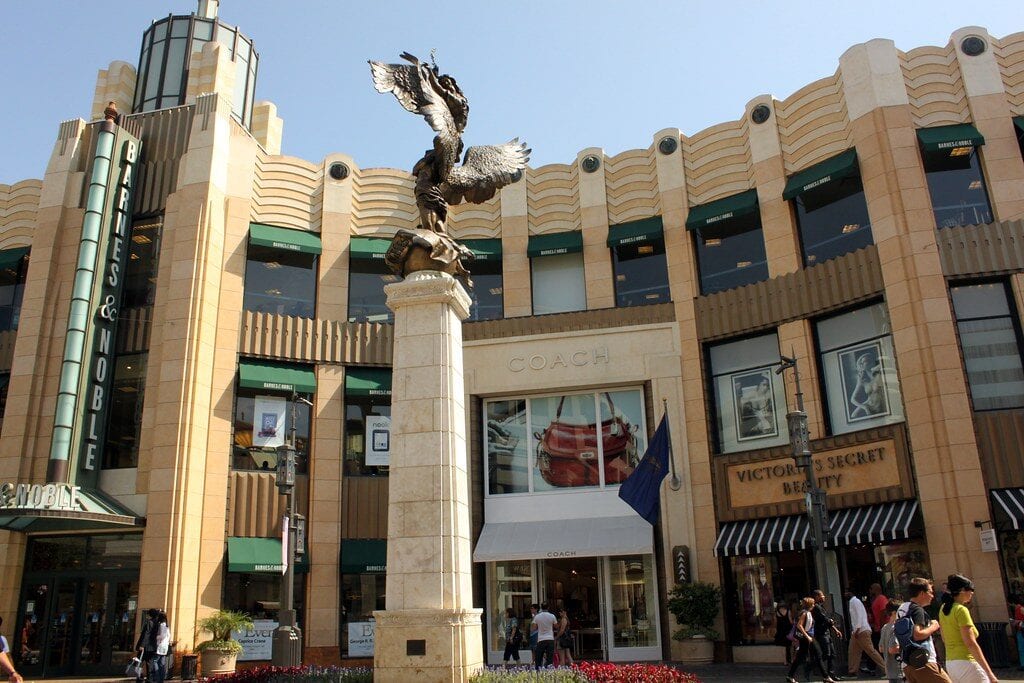
Before Promenade Temecula had storefronts, parking decks, or restaurant patios, this corner of Temecula was already marked for a much larger commercial buildout.
The site at Winchester Road and Ynez Road was not developed piece by piece. It was planned in advance as a major retail project, with the mall meant to anchor a broader stretch of new commercial space.
That direction was set on October 11, 1994, when the Temecula City Council approved the Temecula Regional Center Specific Plan No. 263. The project covered about 80 acres.
Plans called for a two-level mall with 4,300 parking spaces and four anchor department stores. Sears, JCPenney, and The May Company were early commitments to the development.
The mall itself was only part of the plan. The broader project also included nearby retail parcels and a power center, with a total estimated cost of $80 million to $85 million.
From the beginning, this was a larger commercial district designed as a single coordinated project.
Promenade Temecula opens as an indoor mall
Promenade Temecula opened in October 1999. City leaders invited residents to the opening on October 27.
Four days earlier, on October 23, the Overland Overcrossing opened to traffic and connected the mall to nearby roads.
Together, those openings marked the start of a new shopping center in Temecula.
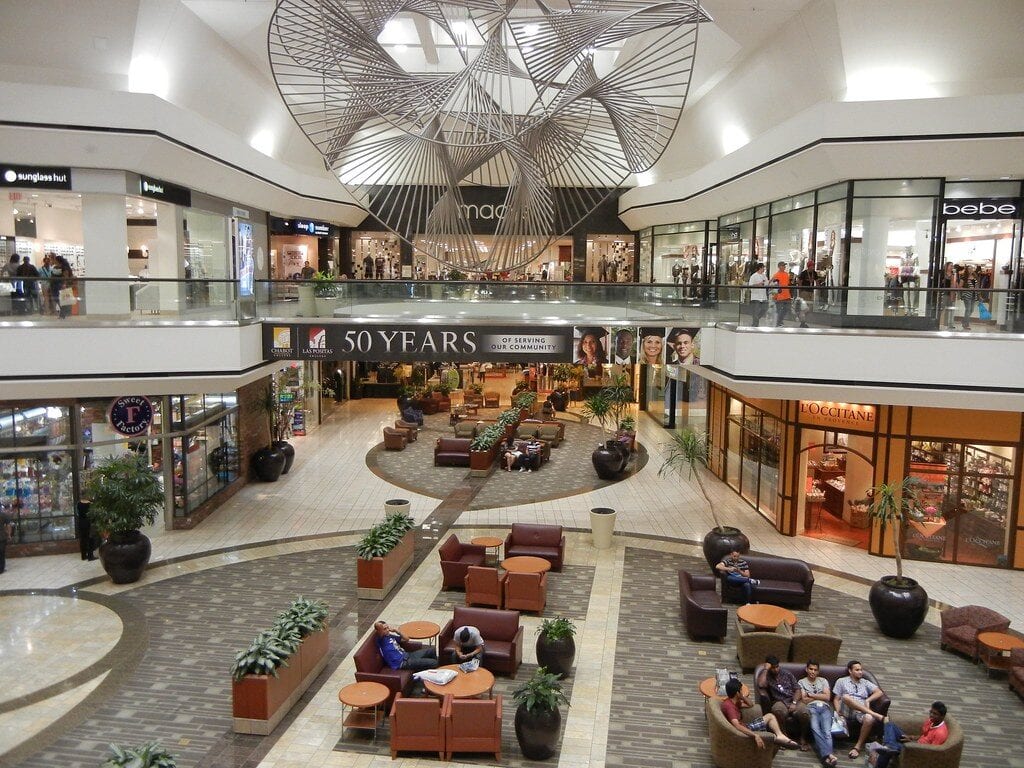
The mall opened as a fully enclosed, two-level shopping center. It followed the late-1990s indoor mall model built around department stores.
Early anchor tenants included Sears, JCPenney, and Robinsons-May. Macy's joined later.
The mall also included a movie theater complex planned as a 14-screen cinema.
By 2004, the property was still called "The Promenade in Temecula." It had more than 120 stores.
Its four anchor department stores gave it a stable retail base and helped draw shoppers from across southwest Riverside County.
The layout followed a standard mall pattern. Large anchor stores brought in customers, and smaller shops filled the interior corridors between them.
At that stage, the mall operated as a traditional indoor shopping destination focused on convenience, scale, and enclosed retail space.

Macy's expansion changes the south end
A major change began in 2001, when the Temecula Planning Commission approved a new Macy's at the south end of the mall.
The project added a two-story, 165,000 square foot department store and made Macy's the fourth anchor tenant.
The city also approved an 80,000 square foot expansion of smaller retail spaces. Those new shops connected to the existing mall and extended the main interior walkway.
The work included other site changes as well, including more trees, updated loading areas, and new parking features.
An earlier idea was dropped before construction moved forward. The plan had included a 50,000 square foot space that could have been used for an ice-skating rink or a large home goods store.
That option was removed and replaced with the Macy's project, which added retail space.
By early 2004, the expanded layout was in place. That expansion reinforced its role as a regional shopping center and set up later changes that moved the property beyond the standard indoor mall format.
The mall shifts toward outdoor space
The biggest change to the mall came between 2007 and 2009. Plans approved in 2007 changed both its layout and how people would use it.
Much of that work focused on the section between Macy's and the movie theater.
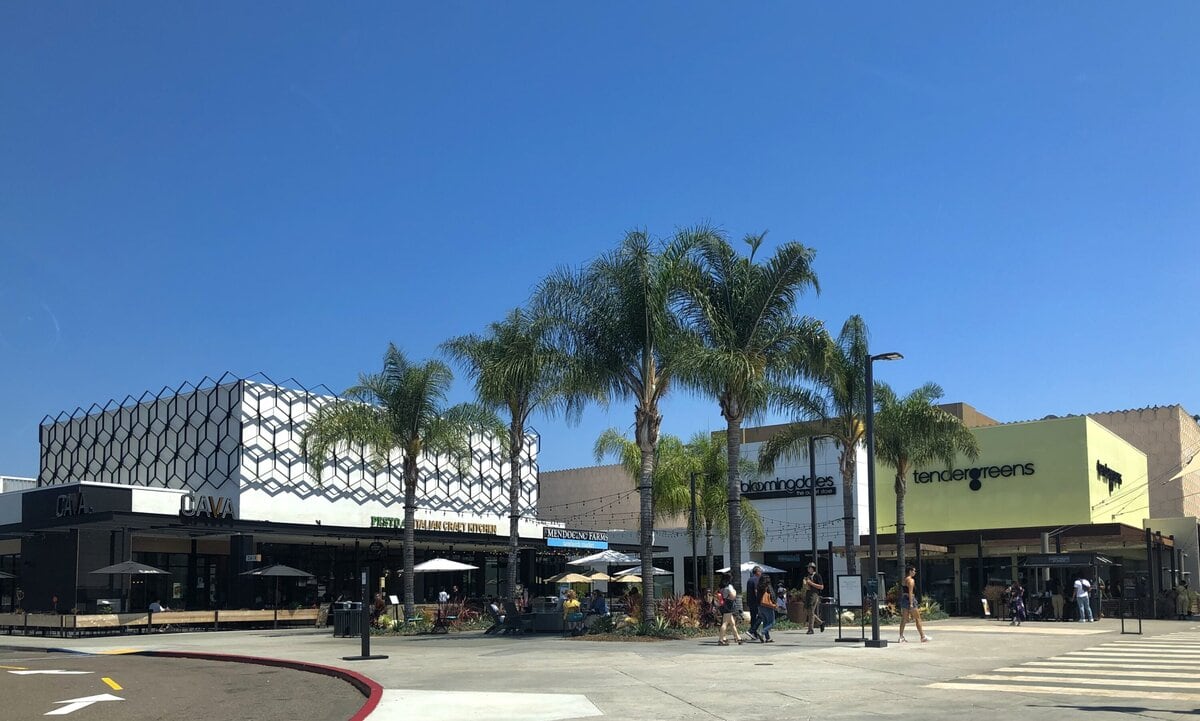
The goal was broader than a basic expansion. The property moved away from an all-indoor format and toward open-air dining, easier walking routes, and a larger mix of restaurants and entertainment.
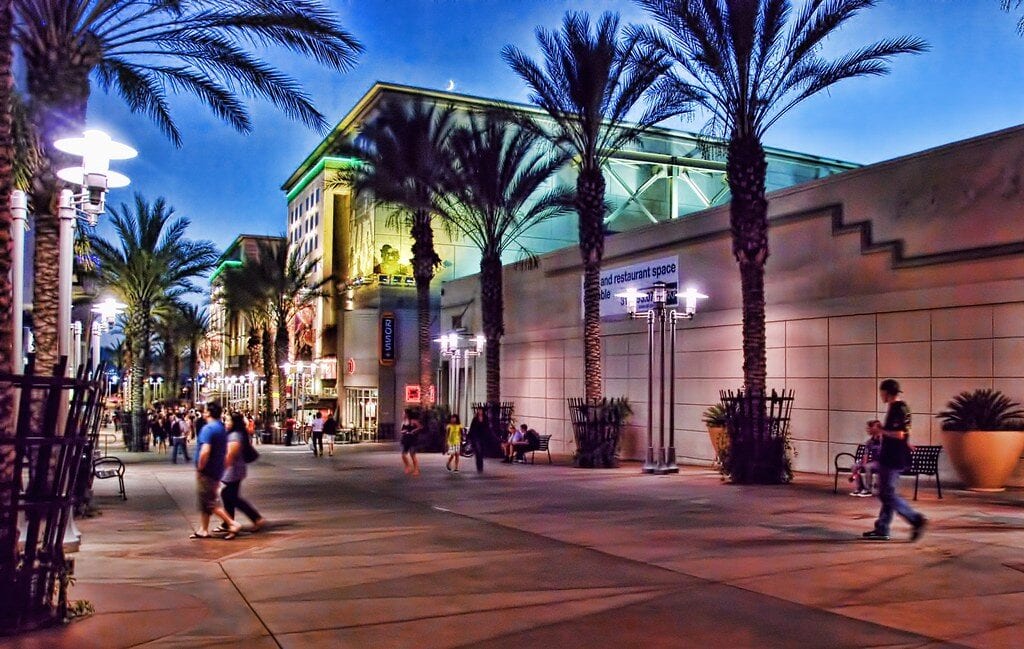
By March 2009, the updated version of the mall opened. It combined indoor shopping with outdoor plazas and pedestrian paths.
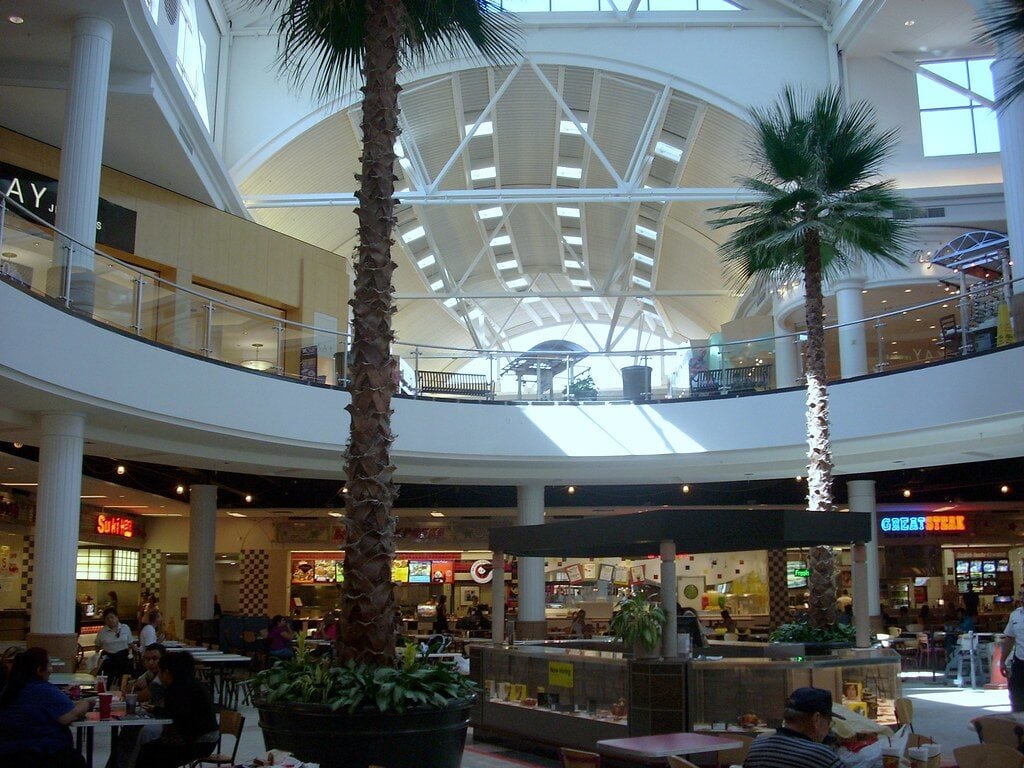
Public areas were rebuilt. Restrooms were upgraded to include family facilities. The food court was redesigned.
New restaurants were added, giving the property a stronger dining component alongside retail.
That change also shifted how the mall presented itself. It was no longer just a traditional enclosed shopping center. It became an indoor-outdoor lifestyle center.
By 2014, the property promoted more than 170 shops and restaurants, along with a "Main Street" style outdoor area built around sit-down dining and entertainment.
Ownership moves into a larger retail system
The mall's ownership and management changed in the late 2010s. Earlier, Forest City West handled development, leasing, and day-to-day operations, while Temecula Town Center Associates, L.P. was listed as the owner.
In 2017, Forest City entered portfolio agreements that included plans involving Promenade Temecula.
Then, in December 2018, Brookfield completed its acquisition of Forest City in a deal valued at $11.4 billion, including debt.
That deal placed the mall inside a much larger real estate system. Today, the property's website runs through the GGP retail platform, which is part of Brookfield's retail business.
The mall itself did not physically change because of the ownership shift. What changed was the corporate structure behind it. Promenade Temecula now operates within a national retail portfolio.
The mall adds public safety and health uses
Over time, the mall took on uses beyond shopping and dining. In 2015, the City of Temecula approved agreements to help fund police services at the property and to set up a police substation inside the mall.
In 2017, the city extended that arrangement through June 30, 2020, with annual funding of $102,500. The substation served as a local security and response center within the shopping complex.
Today, the mall still has an on-site police presence and a police substation. That gives the property a public safety role as well as a retail one.
During the COVID-19 pandemic, Promenade Temecula was used for more than just shopping.
The mall stayed open with shorter hours in March 2020, then closed for several weeks.
By the middle of 2020, big stores like Macy's had opened again. In 2021, a vaccine clinic run by OptumServe was set up at the mall, and COVID-19 testing was offered there in 2022.
Cellphone tracking sparked a privacy dispute
In late 2011, the mall became part of a national debate about privacy and technology.
A system at the property tracked shoppers' movements by detecting signals from their cellphones. Its purpose was to study traffic patterns and shopping behavior.
As phones moved through the mall, the system collected anonymous location data. Shoppers who did not want to be tracked had only one option: turn off their phones. That created concerns about privacy and consent.
The response came quickly. Within days, the mall stopped the tracking program after Senator Charles Schumer spoke out and more people criticized it.
The system, called FootPath, was suspended while discussions continued about adding an opt-out option.
The issue put the mall at the center of a broader argument about data collection in retail spaces.
It also showed how new tracking technology could conflict with visitors' expectations about privacy when no clear choice was available.

Redevelopment of Sears into new uses
The Sears side of the property started to change in 2018. Instead of keeping the building as one department store, the plan divided it into new uses.
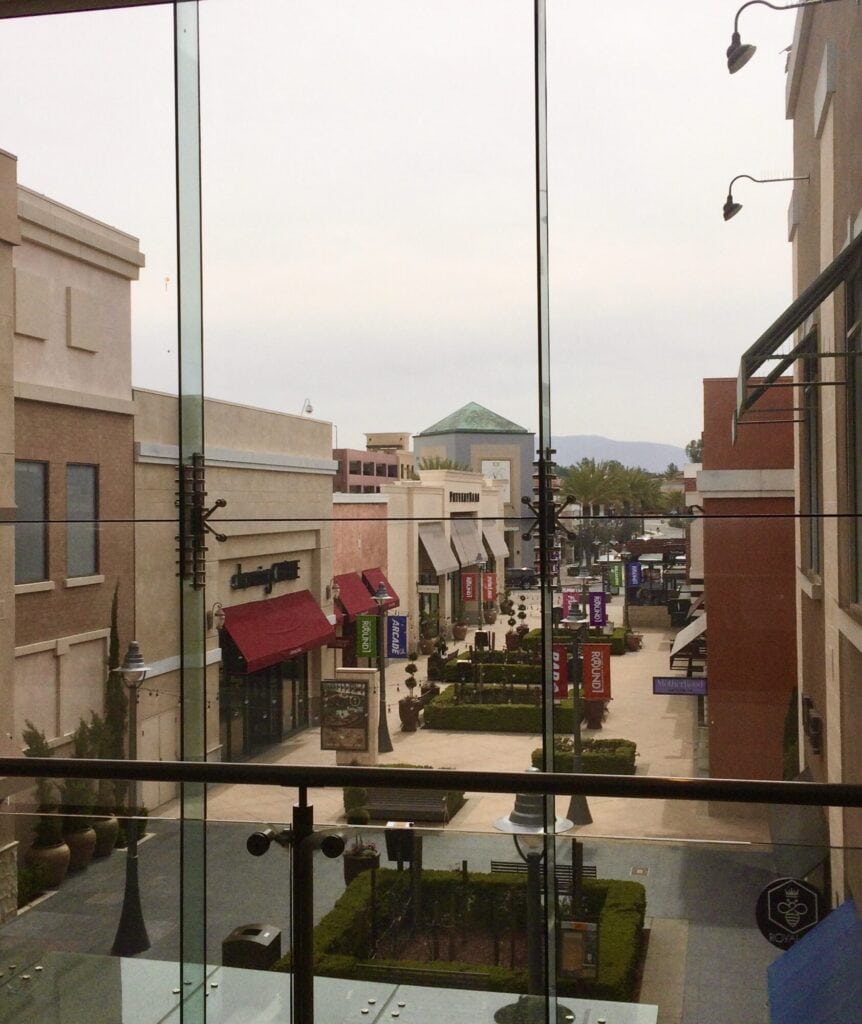
Round1 took 50,000 square feet on the first floor. Round1 opened an entertainment venue with bowling, arcade games, karaoke, and event areas.
Sears remained in the building, but in a smaller space on the second floor.
Dick's Sporting Goods later opened in the same section, adding another large retail tenant.
In August 2024, that section sold for $24 million as a separate investment property. The deal also included a future 8,000 square foot building that was already preleased to Texas Roadhouse.
By 2025, a 129,000 square foot portion of the property was fully leased to Round1, Dick's Sporting Goods, and SoCal Auto Style.
In February 2025, the city approved construction of that Texas Roadhouse location, including a bar, lounge, and outdoor patio.
By then, the former Sears area was no longer functioning as one large anchor store.
Recent changes show ongoing tenant shifts
By 2025, the mall was still changing, but in smaller, everyday ways. Stores closed. New ones opened. Existing spaces were changed around instead of the property having another big renovation.
Williams Sonoma closed in early 2025 after more than eight years at the mall. Later that year, Lazy Dog announced that it would close on September 10, 2025, after deciding not to renew its lease.
New stores were moving in at the same time. In February 2025, plans were for Garage and Aerie to open in summer 2025.
Candeeland and Sip Fresh were also included in that group of new stores. By March 2026, all four were listed in the mall's directory.
These changes reflect the mall's steady day-to-day evolution.
Promenade Temecula remains a center for shopping, dining, and entertainment, with regular events such as its weekly Wednesday farmers market and a mix of indoor retail space and outdoor plazas and dining areas.
Promenade Temecula
Shopping mall in Temecula, CA
Address: 40820 Winchester Rd, Temecula, CA 92591
Opened: October 27, 1999
Developers: Forest City Enterprises
Owner: Brookfield Properties
Floor area: 1,400,000 sq ftClosest cities:
Murrieta, CA
Menifee, CA
French Valley, CA
Lake Elsinore, CA
Wildomar, CA
Canyon Lake, CA
Hemet, CA
San Jacinto, CA