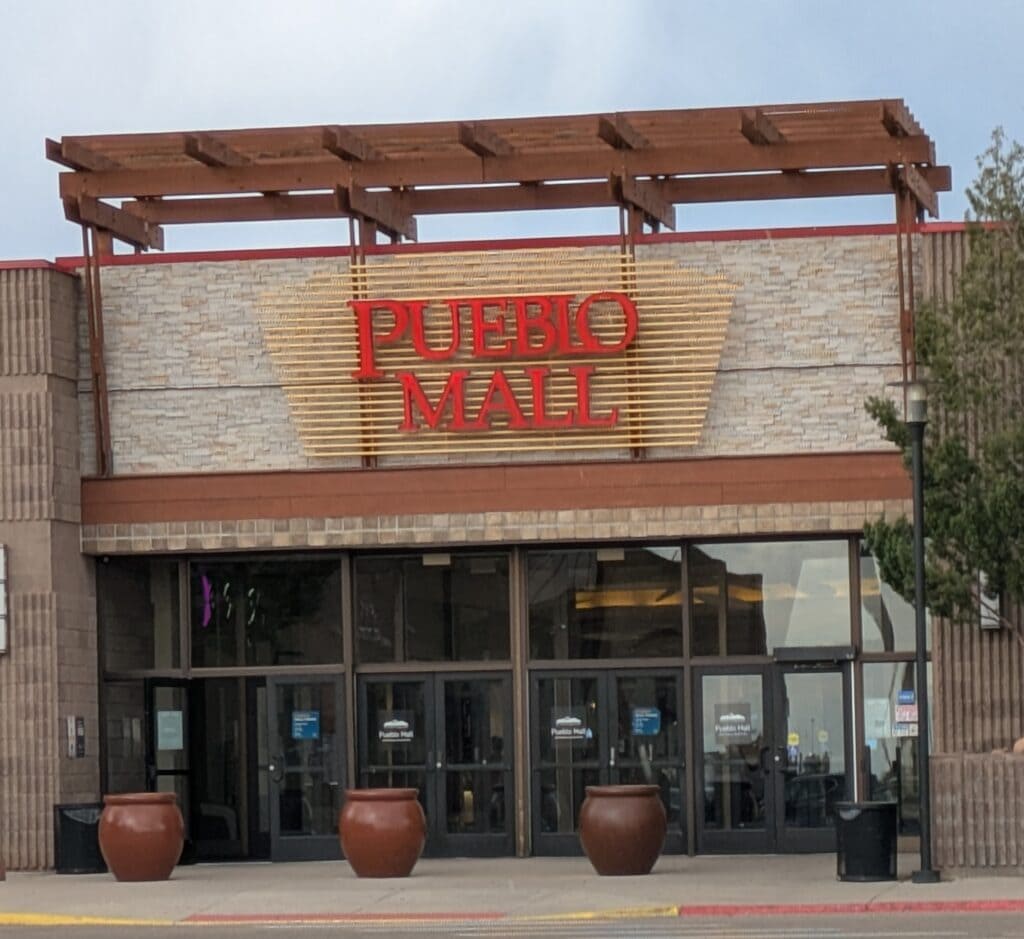
Pueblo Mall, October 1976: A New Loop
Pueblo Mall opened on October 7, 1976, at 3429 Dillon Drive, where Interstate 25 meets State Route 47, and the landscape looks like it was designed by people who believe strongly in exits.
It is about 100 miles south of Denver and 40 miles south of Colorado Springs, close enough for people to compare them, but far enough that these comparisons do not really matter.
The mall arrived as a single-floor, 575,000-square-foot circuit. Mid-size, officially. Once you actually used it, you realized its size turned spontaneity into scheduling, even for the smallest errand.
The first roster felt settled, almost inevitable from opening day on: Montgomery Ward, The Denver Dry Goods Company, Joslins, and JCPenney.
In Pueblo, it established a new center of gravity inside, where weather could not interfere, and shopping, with nowhere else to be, became a mild recreation, simply because you were already there for a while.
Construction had moved through 1975, and the mall opened to immediate success.
It became the primary shopping destination for the area quickly, not through magic, but through the quiet power of concentration: put enough familiar names under one roof, and people will reorganize their weekends around it.
Hahn Company's Blueprint for a Regional Habit
Pueblo Mall was built by The Hahn Company, a business from San Diego that created forty-five shopping malls in eighteen states.
Hahn's strength was not in making things charming. It was in doing things the same way each time: using the same clear plan, adjusted for each place, and turning it into real buildings.
A one-story mall does not sound exciting until you walk through it.
There are no escalators or second floors, and you don't have to worry about missing a section by taking the wrong stairs.
You simply walk forward, turn, and keep going, almost as if the building is gently guiding you along.
At 575,000 square feet, Pueblo Mall was large enough to attract people from the area, but not so big that it was confusing.
It was made to be easy to understand.
The location helped on its own. The mall is in that area next to the highway where a town starts to feel bigger.
From the start, the plan reached beyond Pueblo, aiming to serve the nearby area and make Dillon Drive useful, a place you had cause to visit.
Anchor Tenants, Downtown Drift, Early Boom
The four original anchor stores were more than just shops. They really did hold the rest of the stores in place. Montgomery Ward and JCPenney offered the basics for everyday life.
The Denver Dry Goods Company and Joslins brought a bit more style from a time when shopping could still feel like a social event.
Joslins, in particular, brought a small but important change to the city. The mall's Joslins took the place of a downtown Pueblo store, so shopping moved from the streets and parking lots into the mall's indoor walkway.
Everyone understood what that meant. Downtown shopping was still around, but the main attraction had shifted.
Pueblo Mall became popular right away, and like other successful malls, it quickly felt like it was always meant to be there.
People visited for school clothes, holiday gifts, and items they wanted to check out in person before buying.
You might come in with a list, but the layout often led you to visit a few extra stores, making it feel like a good choice rather than a mistake.
From Dry Goods to Mervyn's, Then Dillard's
The first big change in the original group of stores happened in 1987, when The Denver Dry Goods Company closed.
In many malls, losing a main store leaves a big empty space that makes the whole place feel different. Pueblo Mall avoided that sadness by quickly finding a new store to take over.
The Denver Dry Goods spot was sold to Mervyn's, which moved in and brought back the usual flow of shoppers.
During the late 1980s and 1990s, Pueblo Mall stayed successful and held its own even against bigger malls in nearby Colorado Springs.
This was important because in shopping, bigger often seems like it will always win, but Pueblo Mall kept showing that being close by and familiar can be better than being flashy.
The mall was the usual choice for locals: the place you went because it belonged to you, and because it did the job.
In 1998, the Joslins stores were sold to Dillard's, and the Pueblo Mall location changed over. This was a business deal that affected people in the area.
It started the mall's current setup of main stores, even though most shoppers just saw it as a new name on the same store, with the layout inside staying about the same.
2001-2006: Sears Moves In, Mall Refits
The early 2000s brought another anchor collapse. Montgomery Ward went out of business in 2001, removing a founding tenant and leaving behind a large box that was too big to ignore and too expensive to treat casually.
The mall moved quickly. In November 2001, Sears relocated from the Midtown Shopping Center to Pueblo Mall and took over the former Montgomery Ward space.
It was a practical substitution, the kind that keeps a mall from feeling like it has entered a permanent decline.
Then 2005 arrived with a more sweeping kind of change. Mervyn's announced closure some of its Colorado locations, including its Pueblo Mall store.
This forced not only a tenant replacement but a physical rethinking of the space and, soon, the entire interior.
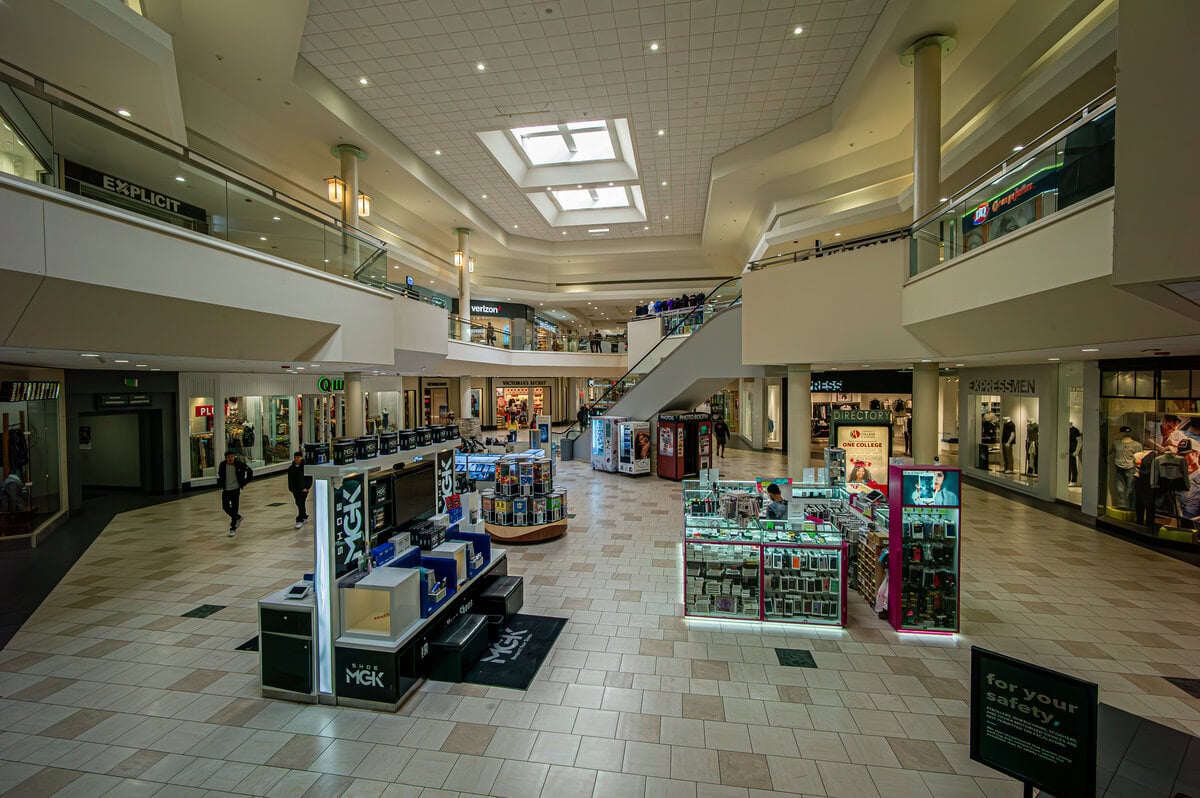
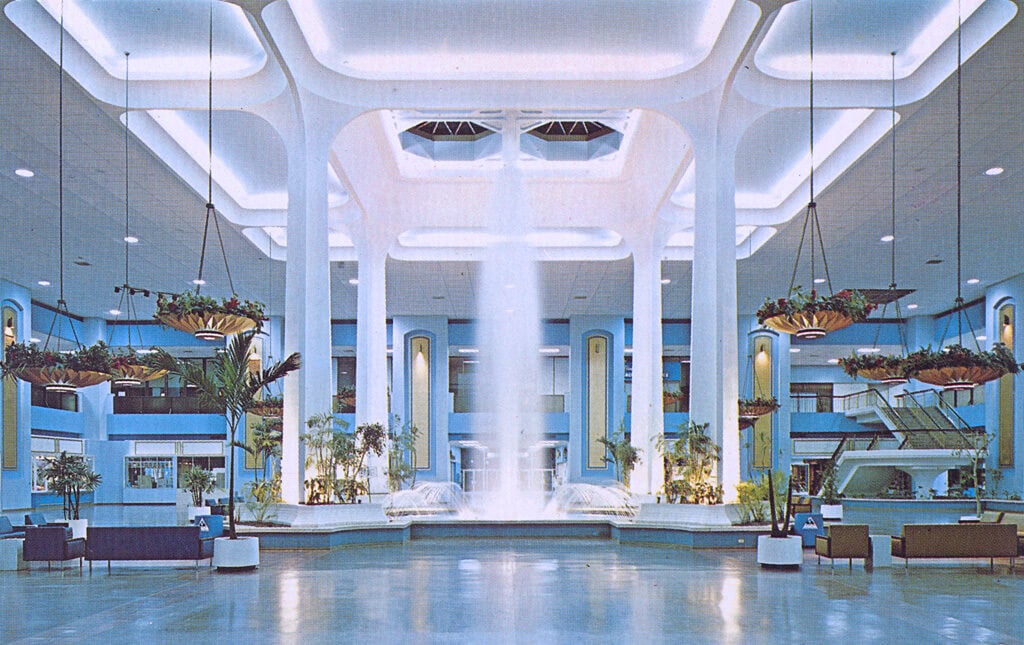
A major renovation was completed on August 31, 2005. The mall's original checkered tile flooring and mirrored ceilings were removed, and the building adopted the modernized look it still carries.
It was less a makeover than a recalibration: a decision to stop looking like a 1970s postcard.
The former Mervyn's space began splitting into new uses. The back portion was briefly occupied by Gart Sports before being converted into Sports Authority in 2006.
Sports Authority did not use the whole building, leaving a remaining back section vacant - a blank area that would linger for years.
2014-2019: Gyms, Trampolines, Empty Sears
That unused back portion of the former Mervyn's space finally found a tenant in November 2014, when Planet Fitness opened a 17,000-square-foot location there.
A gym inside a mall changes the daily rhythm. It creates regulars, early arrivals, and people who come for repetition rather than novelty.
It also made practical use of space that had been sitting empty since the Mervyn's era ended.
Meanwhile, Sports Authority followed the national script. The chain filed for bankruptcy in 2016 and closed its Pueblo Mall location. The space did not remain a long-term void.
By 2019, it had been repurposed as Altitude Trampoline Park, shifting the building further toward experiences that cannot be shipped in a cardboard box.
The mall was no longer only a place to buy things. It was also a place to do things loudly.
The biggest loss came at the other end. Sears announced on December 28, 2018, that it would close its Pueblo Mall store, and it closed for the last time in March 2019.
The result was a major vacant anchor space - the kind of vacancy that is visible from the parking lot and psychologically heavy inside the loop.
As of late 2025, that former Sears space remains unoccupied, a reminder that even quick adaptations have limits.
Now: Occupancy, Walkers, Fires, Detours
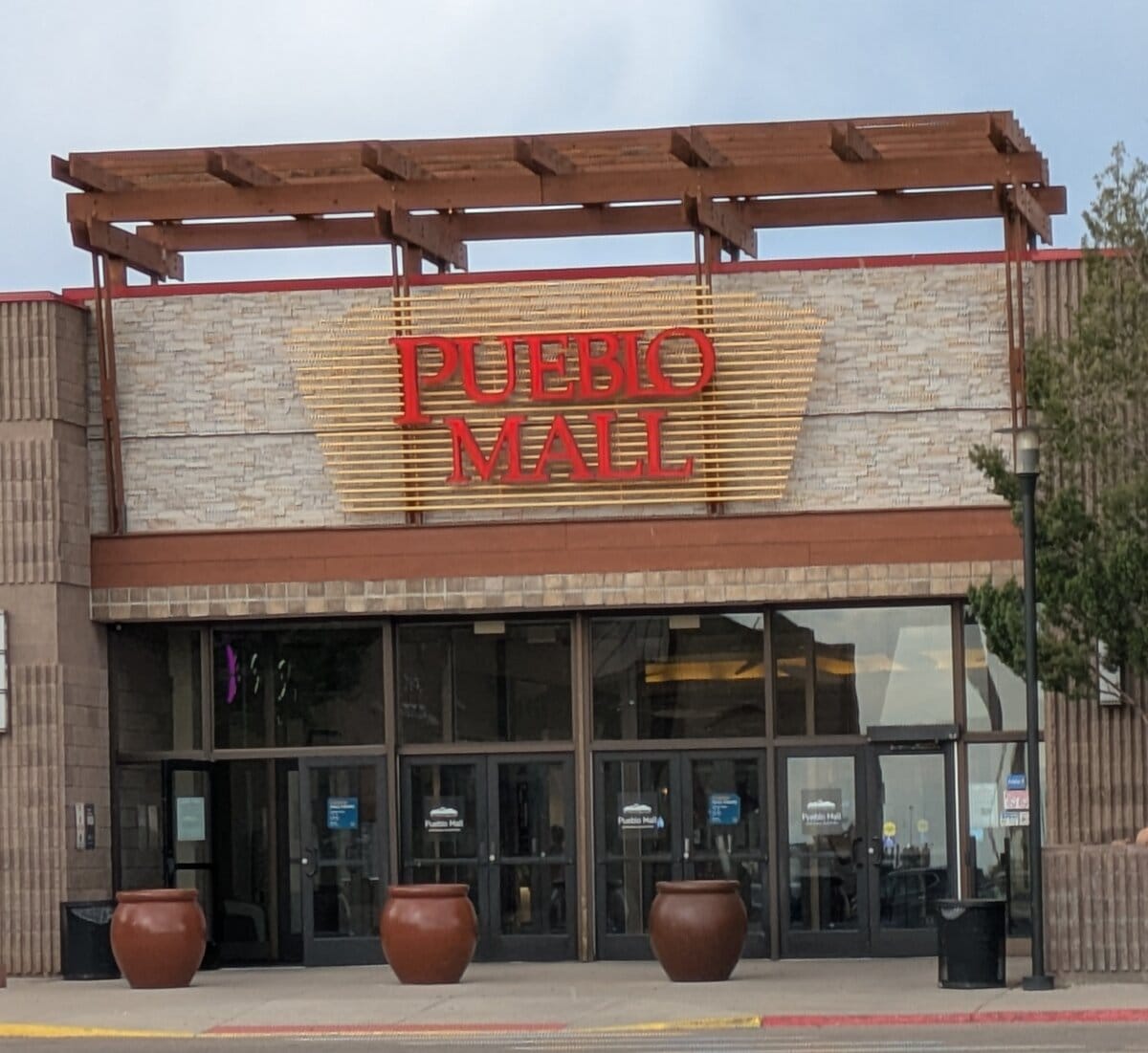
As of late 2025, the mall serves as the primary shopping destination for southern Colorado and pulls customers from northern New Mexico and even western Kansas.
Pueblo Mall today is owned and managed by Centennial Real Estate, based in Dallas.
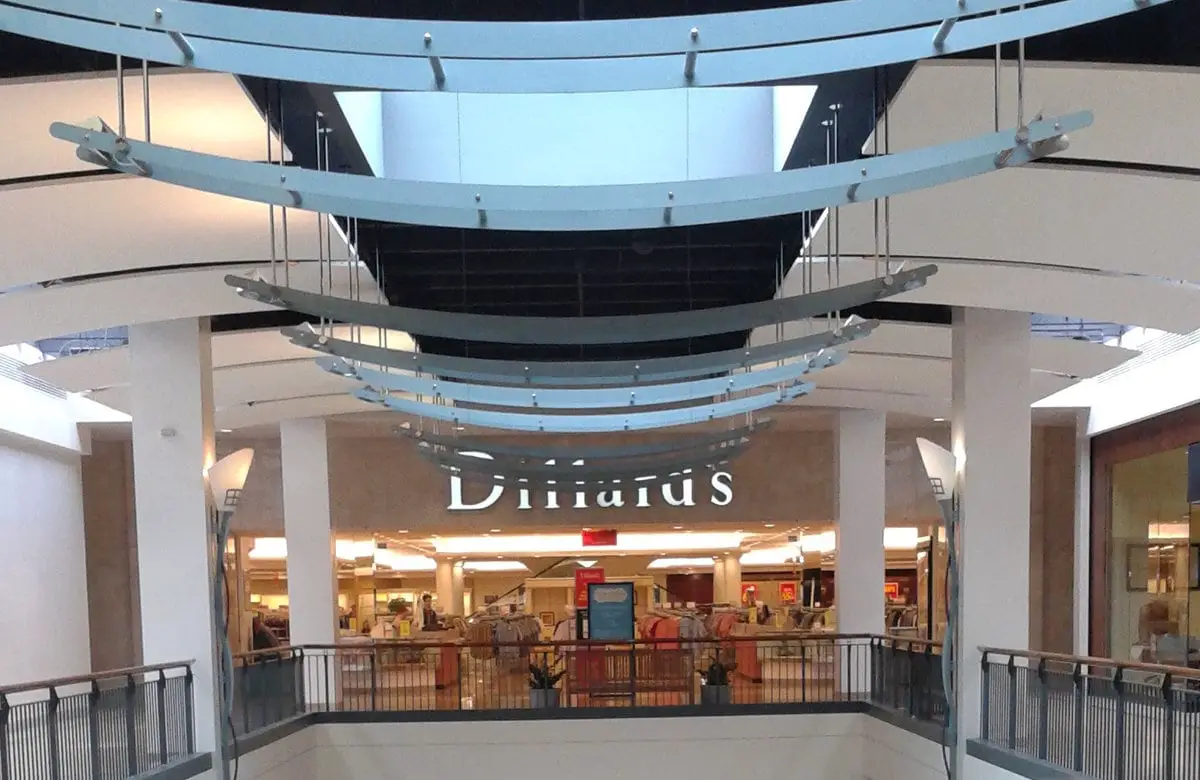
The remaining anchor stores are Dillard's and JCPenney, supported by more than fifty stores and services, plus major tenants that have become part of the place's identity: Altitude Trampoline Park, Boot Barn, The Sleep Better Store, and SHOE DEPT.
ENCORE. There is also the open food court, still doing its quiet job as an indoor pause button for families, teens, and anyone waiting for someone to finish "one last stop."
In 2017, The Washington Post singled out Pueblo Mall as an e-commerce–era outlier, crediting its resilience to a strong tenant mix and an unusually broad trade area that pulls shoppers from well beyond Pueblo.
The mall formalizes walking: access begins at 8 a.m., and two laps around the perimeter equal one mile. Not everything has been calm, though.
There have been fires near the mall - an acre near Fountain Creek in December 2024, and a smaller brush fire just north of the mall in April 2025 - and a high-profile food court vehicle driving in 2023.
North of Dillon Drive: Renewal and What Next
In February 2025, Joann Fabrics said it would close its Pueblo Mall store as part of bigger changes to the company.
The store closed on April 27, 2025, showing that even a mall doing fairly well still feels the effects of national store closings, like a storm coming in from far away.
Around the mall, the future is being planned using official terms.
In July 2025, the Pueblo Planning & Zoning Commission gave initial approval to the Dillon Drive Urban Renewal Plan proposed by the Pueblo Urban Renewal Authority (PURA), covering about 34 acres north of Pueblo Mall.
The plan suggests public upgrades like new traffic lights or roundabouts near 40th Street, and work to take properties out of the flood zone.
These changes are meant to help the area grow and bring in more sales tax. This kind of planning does not promise a big comeback, but it does show there is a plan, which is sometimes the hardest thing to find.
Pueblo Mall comes off as a place that is still physically in good shape - bright, clean, and generally well kept - but emotionally a little under-populated, like a party where the host did everything right and the guests forgot to show.
The result is a mall carries that modern American retail undertone - tidy, serviceable, and a bit haunted by the memory of bigger crowds.