Bayside Marketplace on the Water's Edge
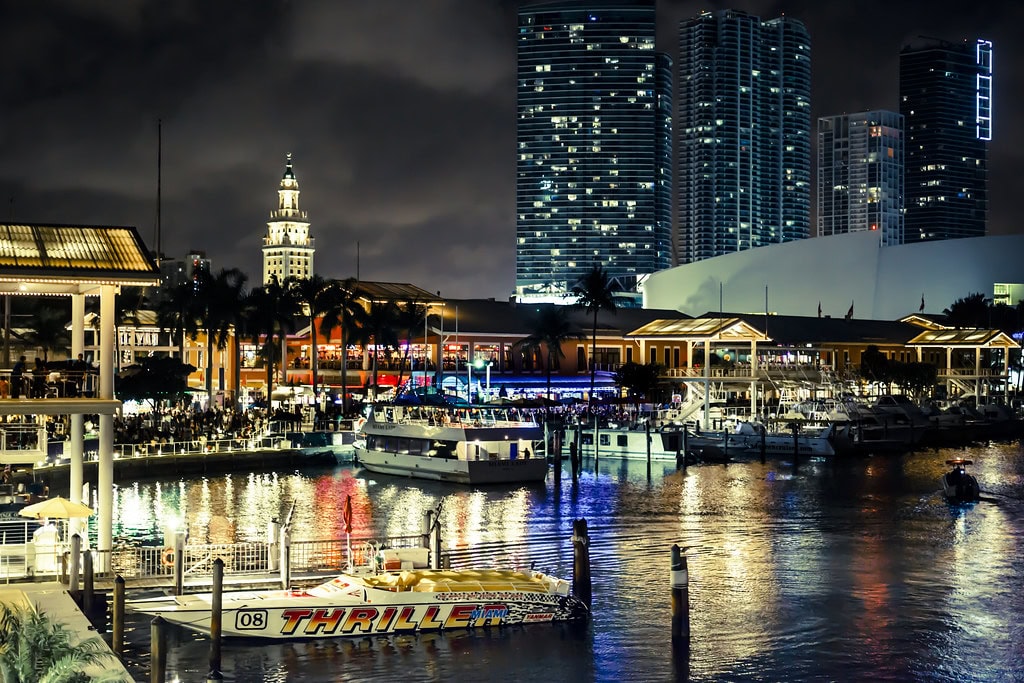
Stand at the edge of Biscayne Bay on any warm afternoon, and you immediately understand why this place has drawn people in for nearly four decades.
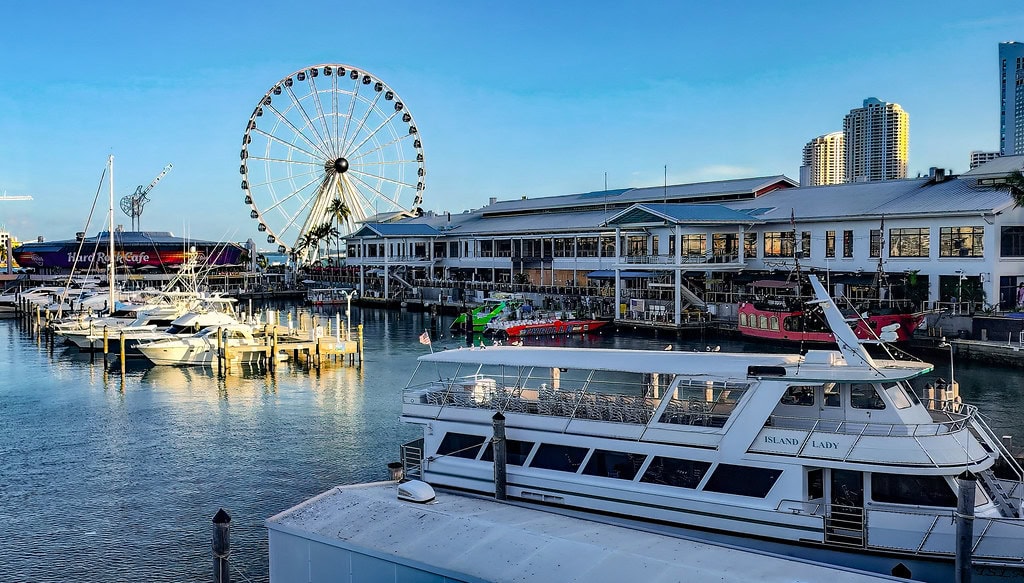
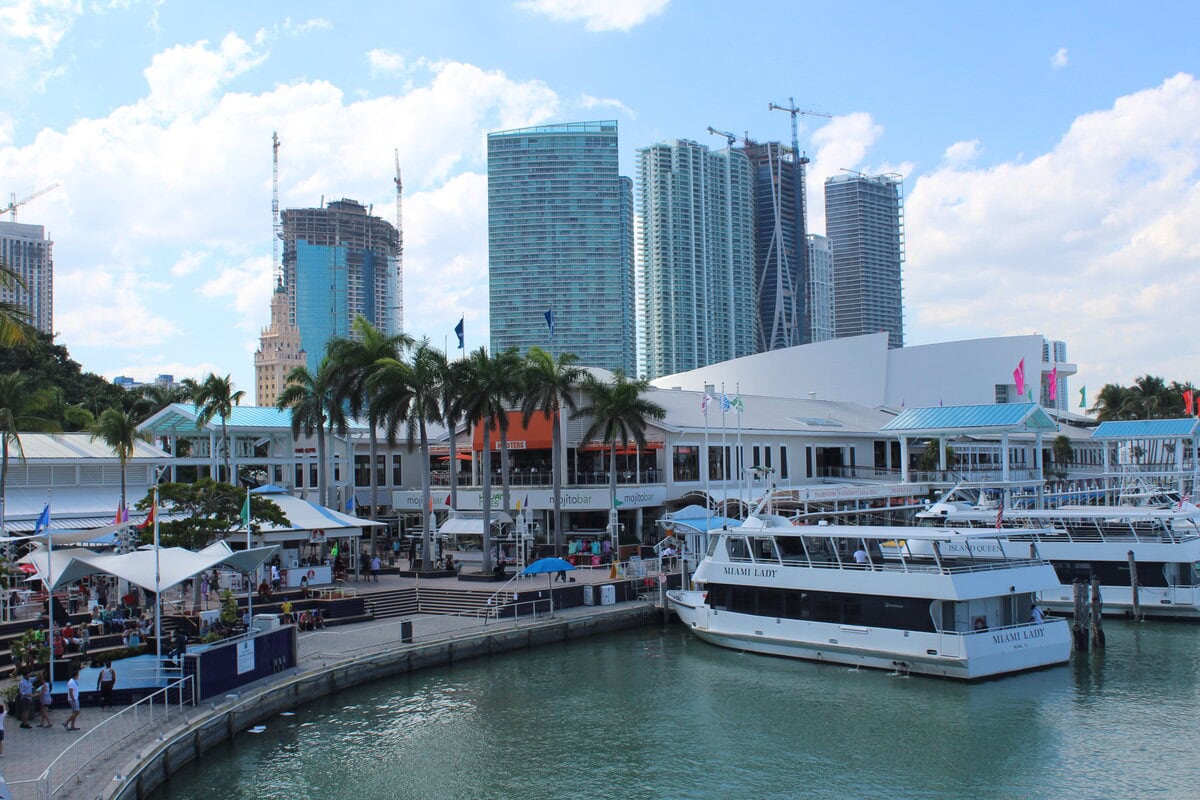
The salt air moves off the water. Charter boats rock at the marina docks. The Miami skyline rises to the west, and the Port of Miami sits just across the bay, its cruise ships stacked tall and white.
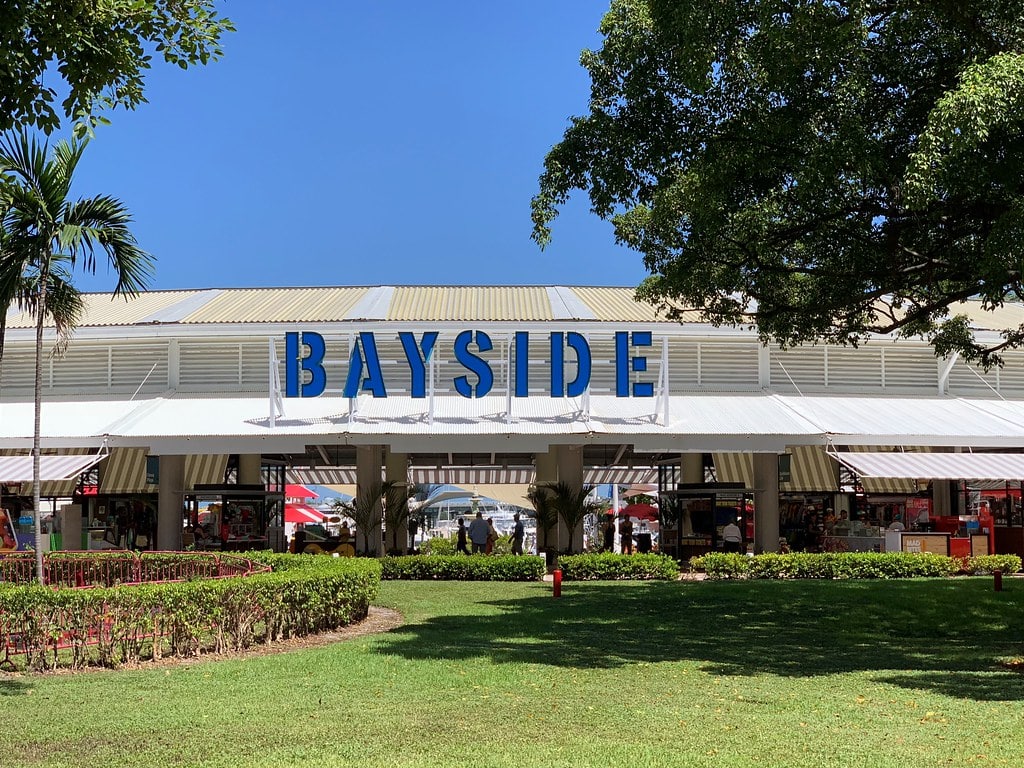
Right in the middle of all of it - at 401 Biscayne Boulevard - is Bayside Marketplace. It is a two-story, open-air complex of shops, bars, and restaurants spread across 22 acres in downtown Miami, and it does not feel like an ordinary mall.
There are no walls to seal you off from the outside world, no forced chill from an air conditioner to remind you that you are inside.
Music drifts out from the waterfront stage. The smell of grilled food and daiquiris hangs in the air. Someone on the upper deck is leaning over the railing, taking a photo of the bay.
Bayside draws more than 25 million visitors a year, with roughly 65% arriving as tourists - many of them cruise passengers who dock at PortMiami.
Over the years, it has changed hands more than once, undergone a major renovation, and had one extraordinarily strange night that turned into a national news story.
For nearly four decades, the complex has been the most recognizable gathering spot on the Miami waterfront, and it still is.
Building a New Vision for Downtown Miami
In 1983, the Maryland-based Rouse Company focused on a neglected stretch of bayfront land in downtown Miami around Pier 5.
The area had once been home to Miami's fishing fleet.
Starting in the 1940s, wooden docks had fish markets, boats for hire, and tour boats that brought in both locals and visitors.
By the early 1980s, as downtown Miami went through a tough time with more crime and neglect, most of the old piers were empty.
The Rouse Company had already built festival marketplace projects in other American cities, and it planned the same model for Miami - an outdoor, street-level mix of shops, restaurants, and entertainment on the water.
The City of Miami backed the plan and put money into the buildout, contributing $16 million for a new parking garage and another $4 million to prepare the site.
This project was part of a larger plan to revitalize downtown. Architect Benjamin C. Thompson designed the complex to use natural light, bay breezes, and water views.
The plan called for two main buildings connected by a footbridge over NE 4th Street, with the structure wrapping around the existing Miamarina.
Total construction cost reached $93 million, and the project was expected to generate around 1,200 jobs in the Miami area.
Construction lasted through the mid-1980s, with the opening planned for 1987.
Twelve Million Visitors in the First Year
When Bayside Marketplace opened on April 8, 1987, an estimated 100,000 people showed up on the first day alone, browsing stores that were still damp with fresh paint.
The five-day grand opening ran from April 8 through April 12 and included nightly concerts and fireworks, a large outdoor show with thousands of performers, and a boat parade through Biscayne Bay.
The complex opened with roughly 235,000 square feet of retail, restaurants, and fast-food stalls across two pavilions.
It included 77 minority-owned businesses, a waterfront stage for live music, a second-floor food court, and open-air decks with bay views.
The H.M.S. Bounty - the replica ship from the 1962 film "Mutiny on the Bounty" - was docked at the marina and available for tours.
The food selection was wide, ranging from oysters and shark kebab to daiquiris, Cajun fries, and gourmet popcorn. A Dixieland band played near the water.
A juggler drew a crowd of 200 on the dock. The place had an energy that is hard to manufacture - it simply arrived on opening day and stayed.
By the end of its first year, Bayside had drawn 12 million visitors. The complex also appeared regularly on the crime drama "Miami Vice," making it familiar to audiences well beyond Florida.
It had become, very quickly, one of the most visited spots in the entire state.
The Long Slide and an Aging Food Court
Bayside Marketplace started off well, but over time, it went downhill.
The second-floor food court, which used to be a popular lunch spot for downtown office workers, slowly lost its restaurants until it was mostly empty stalls instead of a place to eat.
Smaller merchants struggled to pay their rent. The complex itself began to look like many festival marketplaces from the 1980s as they age - worn in spots, dated in style, and not keeping up with what was opening nearby.
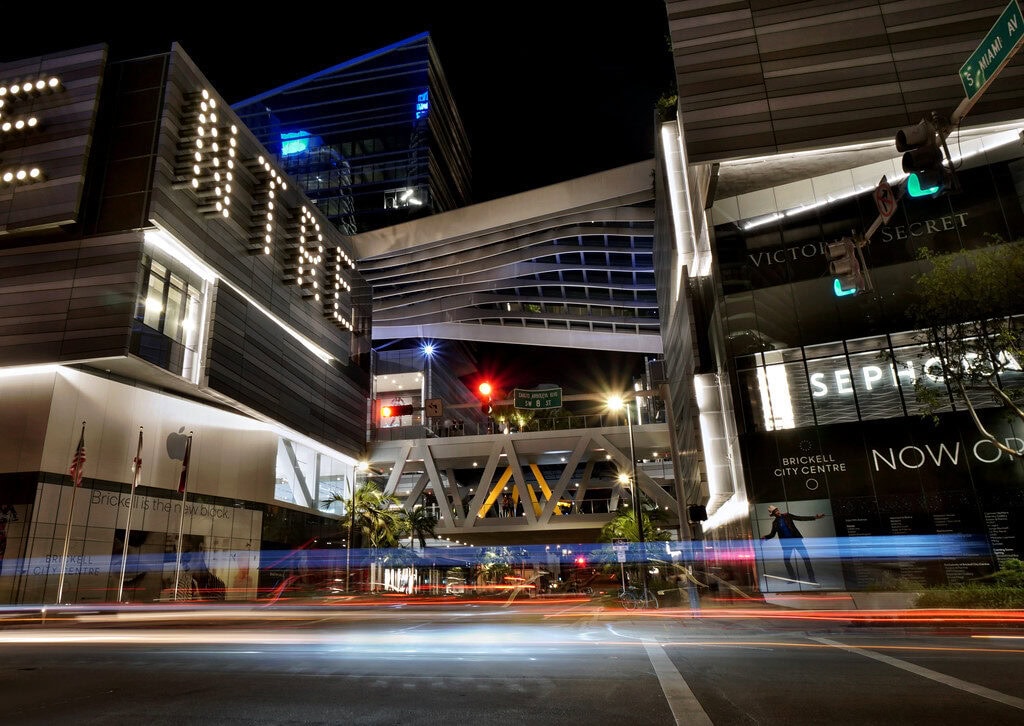
Over time, new retail areas attracted the customers who used to visit Bayside. Places like the Miami Design District, Wynwood, and Brickell City Centre offered something new and different.
Bayside still drew large numbers of visitors, but many arrived off cruise ships, and some locals came to treat it as a tourist stop with little reason for a repeat visit.
Ownership changed during this period. In 2004, General Growth Properties acquired the Rouse Company, taking over Bayside Marketplace.
A decade later, General Growth sold 49% of its shares to Ashkenazy Acquisitions, which took over active management.
By the mid-2010s, Bayside was still around but needed a big update.
The building looked old, there were fewer stores, and the shopping center had to show it could still keep up in a Miami that was very different from the city it first opened in back in 1987.
A $27 Million Makeover Hits Bayside in 2016
In 2016, Ashkenazy Acquisition Corporation began a $27 million renovation of Bayside Marketplace and hired the Miami firm Zyscovich Architects to lead the redesign.
The changes spread across nearly every visible part of the complex, and the work quickly became hard to miss.
The buildings were painted in lighter, brighter colors, replacing the look that had been there for thirty years. New roofs that can stand up to hurricanes were added, and LED lighting was put in everywhere.
Railings, stairs, signs, and landscaping were all improved at the same time, making the complex look cleaner and more modern.
On the second floor, the long-struggling food court was overhauled into a redesigned space with a new, rotating mix of food vendors and eateries.
The former Hooters location became Black Market, one of several new operators added to the updated mix.
Renovation work moved ahead on the north and south buildings at the same time.
The north side was partially elevated to create a new food pavilion on the waterside, while the south building received new awnings alongside the repainted exterior.
The improvements continued into 2017 for the 30th anniversary, with additional paint, lighting, and landscaping updates.
The renovation did not solve every problem, and the retail market did not change overnight, but it refreshed Bayside and helped it stay a major draw on the Miami waterfront well into the next decade.
The New Year's Night That Went Viral
On January 1, 2024, a large group of teenagers got into a fight at Bayside Marketplace.
Fireworks went off inside the complex, and the city responded with one of the largest police deployments it had seen in years.
Police made multiple arrests, and local businesses reported damage from the fireworks and the chaos that followed.
Once the immediate scene cleared, video of the police presence spread across social media. Within hours, people online began layering their own explanations onto what they saw.
The talk moved from airport closures and power outages to the claim that space aliens had arrived at Bayside Marketplace.
The story accelerated over the next few days, with posts about shadow figures, UFO sightings, and mysterious visitors circulating widely enough to turn the incident into a national talking point within days.
On January 5, 2024, the City of Miami Police Department addressed the theories directly and confirmed that nothing was being withheld from the public.
Officers stated there were no aliens, no UFOs, no airport shutdowns, and no power outages. The response on January 1 had been triggered by the teenage brawl and the fireworks.
By early 2025, the story had taken on a life of its own as part of Miami's local folklore, and some visitors stopped by Bayside specifically because of the alien rumors.
Still Busy After Almost Forty Years
Nearly four decades after it opened, Bayside Marketplace still draws crowds along the waterfront.
The Skyviews Miami Observation Wheel stands over the property as one of its most visible attractions, with enclosed cabins that give 360-degree views of the Miami skyline and Biscayne Bay.
At the marina, Thriller Miami speedboat tours load and depart, carrying passengers past Star Island and out across the bay.
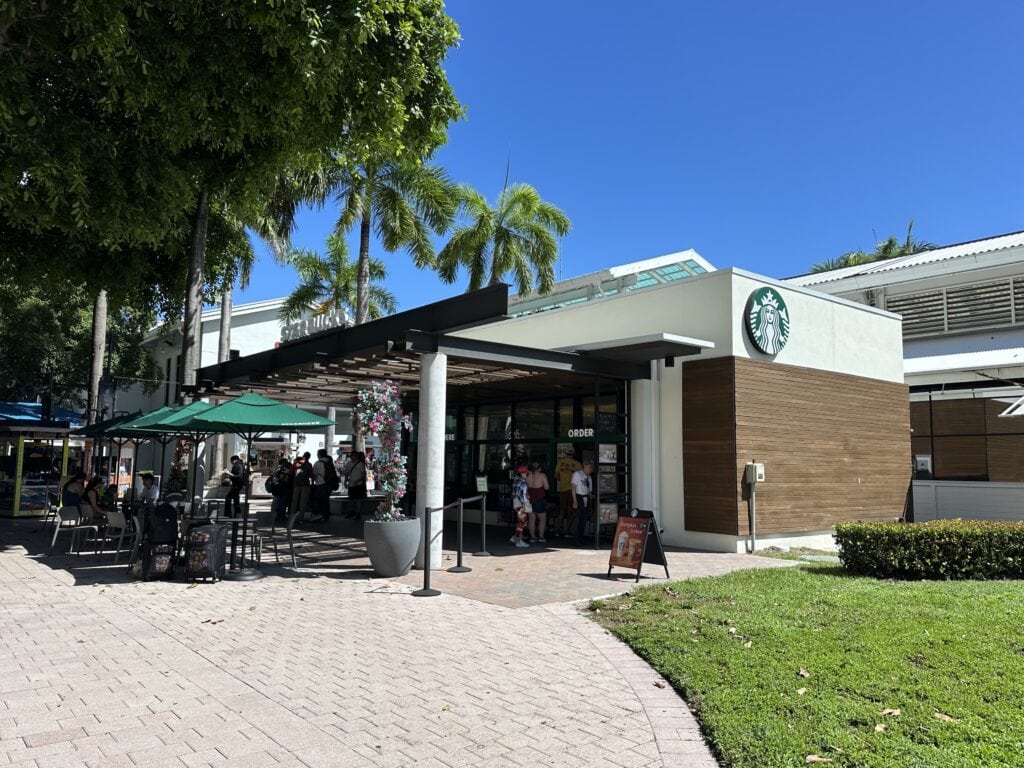
Live entertainment and seasonal events run through the year alongside a tenant mix that includes Hard Rock Cafe, Margaritaville, Sugar Factory, Starbucks, Victoria's Secret, and LandShark Bar and Grill.
Bayside Marketplace continues to evolve under Ashkenazy's management. It remains the busiest outdoor retail and entertainment destination in downtown Miami, with Biscayne Bay still just outside.
Next door, the bayfront site where the SkyRise Miami entertainment tower was planned had a very different outcome.
SkyRise was planned as a tower about 1,000 feet tall, with attractions like a bungee jump, a nightclub, restaurants, and several observation decks.
After about ten years of legal battles and money problems, the project was officially canceled on June 28, 2021, and for a while, the waterfront site was just a pile of rubble and leftover building materials.
Just up the street from Bayside Marketplace, building work has been going on at the Waldorf Astoria Hotel and Residences Miami at 300 Biscayne Boulevard, across from Bayfront Park.
Work started in 2022, and by June 2024, the project had gotten a $668 million loan to keep construction going.
By December 2025, the building had finished its 50th floor, which is more than halfway to its planned 100 floors.
The tower is expected to be 1,049 feet tall and will have 387 private homes above a 205-room hotel, with the whole project expected to be finished in 2028.
At the corner of Biscayne Boulevard and NE 4th Street, where the Holiday Inn Port of Miami-Downtown is now, a plan called Regalia on the Bay proposes an 82-story building with homes, a hotel with about 120 rooms, and a rooftop lounge.
The building would be about 1.44 million square feet and have around 365 luxury apartments.