
Before there were glass storefronts and valet lanes, this site was a mangrove swamp. In 1943, Hugh Taylor Birch left a 112-acre stretch of that lowland in northern Fort Lauderdale to Antioch College in Ohio.
Starting in the early 1950s, the college filled the swamp, then sold off portions for nearby housing while holding back 40 acres for a retail project. Lot sales brought in about $2 million in the early 1950s.
This money helped pay for Antioch's Fort Lauderdale project as it got closer to building the shopping center.
In June 1953, construction began on an open-air shopping center designed by Fort Lauderdale firm Gamble, Pownall & Gilroy.
On January 27, 1954, Sunrise Shopping Center opened with a dedication attended by Antioch officials and Mayor Malcolm Carlisle.
The new center opened with 50 stores and planned to grow to 60 when fully leased.
Early tenants included Thom McAn Shoes, Grayson's ladies' wear, Barclay's Limited, House & Garden Furniture, Kasdin Drugs, a 12,000-square-foot Saks Fifth Avenue, a 10,000-square-foot Food Fair supermarket, and F.W. Woolworth.
Nearby, Creighton's Restaurant sat along the Intracoastal Waterway.
Sunrise Center grows through the 1960s
In 1955-56, Charles W. Creighton acquired the property and renamed it Sunrise Center.
By February 1957, he announced a new wave of expansion: a three-level Jordan Marsh planned at 170,000 square feet, a larger 30,000-square-foot Saks Fifth Avenue that opened November 1, 1957, and an enclosed concourse that was planned but never built.
As the center expanded, it reached 272,000 square feet.
Jordan Marsh opened on October 3, 1960, adding a major draw to the lineup. The center also added entertainment.
General Cinema Corporation opened Sunrise Cinema I & II on December 18, 1963, an early twin cinema. Jordan Marsh kept growing, too.
In 1966, it expanded to 256,000 square feet by adding the fourth and fifth levels.
By the 1970s, Sunrise Center was no longer the new option in town. Competition arrived from Coral Ridge Shopping Plaza in 1962, Lauderhill Mall in 1966, and Lakes Mall in 1972.
In June 1977, Leonard L. Farber, Inc. acquired the site, and in 1978, redevelopment planning moved from talk to action.
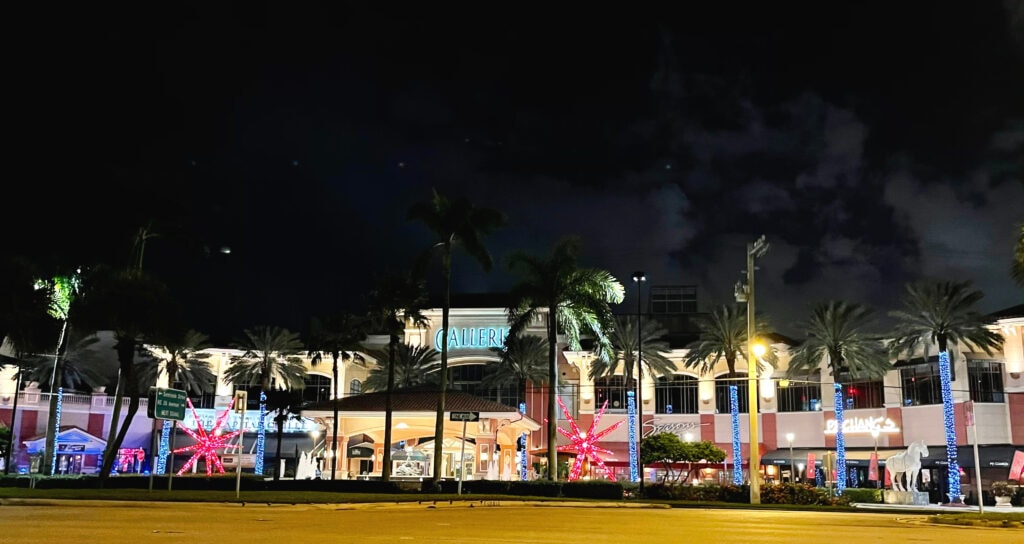
Rebuilding into a two-level enclosed Galleria Fort Lauderdale
Redevelopment broke ground in 1978 as a four-phase plan that demolished most of the older center while keeping the Jordan Marsh building.
Phase one brought two major openings in 1980: a two-level, 210,000-square-foot Burdines that opened on October 29, 1980, and a two-level, 84,000-square-foot Saks Fifth Avenue that opened on October 31, 1980.
Phase two enclosed the project and set the new identity. The fully enclosed Galleria Fort Lauderdale was dedicated on November 11, 1980.
It opened with two retail levels built above parking, a roster of 126 stores, and more than 1 million square feet of leasable space.
Sunrise Cinema evolved into Galleria Cinemas 1-2-3-4 as the mall's footprint and branding shifted.
The later phases added more upscale anchors. A two-level, 80,000-square-foot Neiman Marcus opened on September 13, 1982. A two-level, 80,000-square-foot Lord & Taylor opened on October 2, 1983.
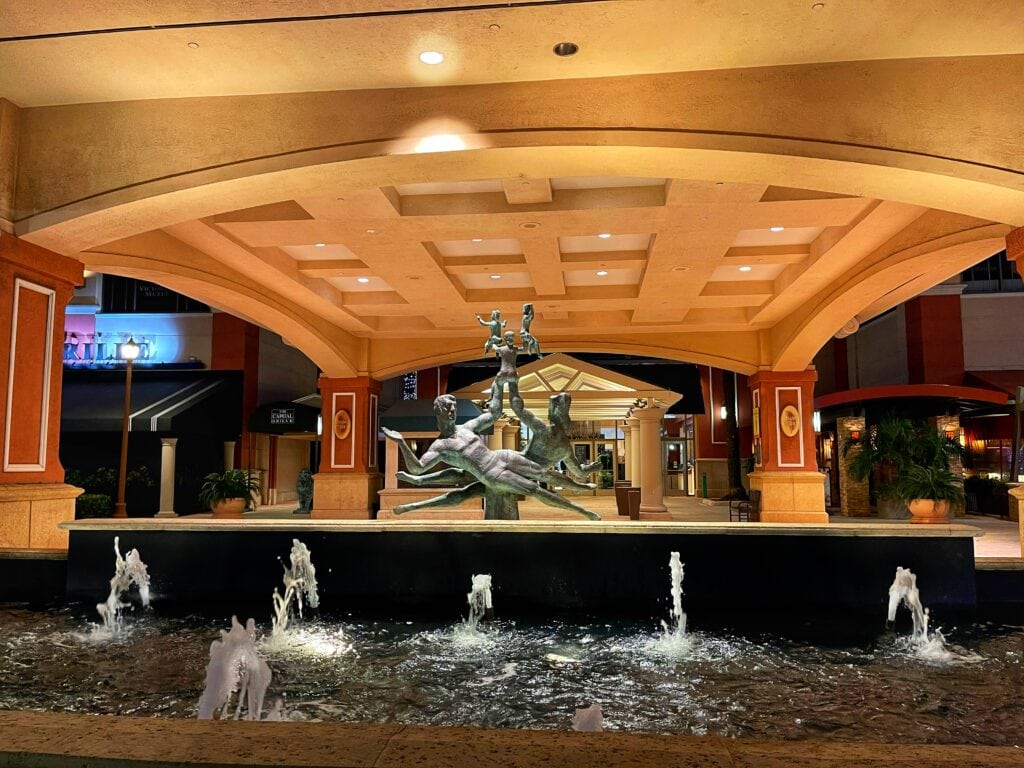
The mall also installed major artworks, including Bruno Lucchesi's "After Shopping," Roy Butler's "Silent Flight," William Hodd McElcheran's "The Group" and "The Family," and Chaim Gross' "Mrs.
& Mr."
Crowds, events, and the first big turning point
By the mid-1980s, Galleria Fort Lauderdale had settled into regular use beyond quick errands. The busiest days piled up around the holidays. Christmas crowds showed up in December.
The mall also held organized events that pulled people in for reasons other than shopping. "Jail for Bail" ran on May 29, 1985.
Camp Galleria was active by June 26, 1990, and it fit the way the property worked as a family stop as well as a retail center.
Some moments cut through the normal routine. On May 17, 1985, a blackout closed the mall and shut the building down for the day.
Through all of that activity, the bigger change was in the anchors. Burdines still drew foot traffic.
But Jordan Marsh, a holdover from Sunrise Center's expansion era, closed in September 1991. That closure set up a major name change that would help define the next decades.
New owners, new names, and a major remodel
In 1993, the Pennsylvania Public School Employees' Retirement System bought the mall for $125 million through Keystone-Florida Holding Corp.
That same year brought the next anchor identity: the former Jordan Marsh reopened as Dillard's on October 27, 1993. It was Dillard's first store in South Florida, and the chain later expanded to other malls.
The property's management shifted over time. It moved through Kravco, then Simon Property Group, Jones Lang LaSalle, and Centennial Real Estate in 2025.
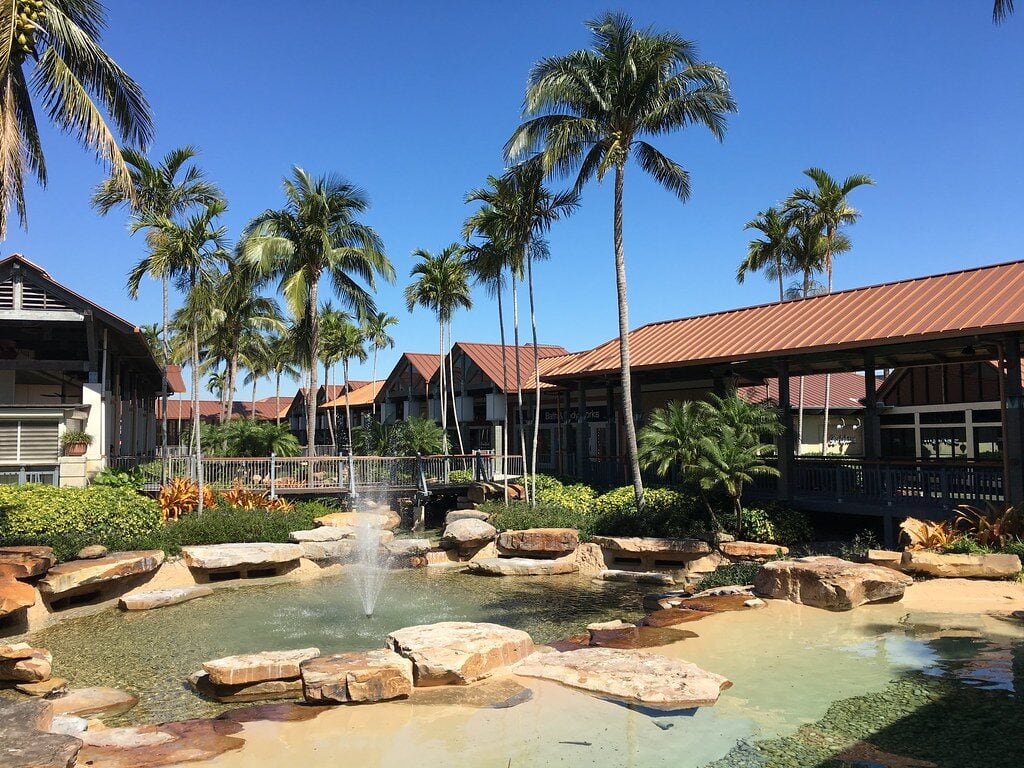
A long renovation cycle reshaped the look and feel. From 2001 to 2003, a $44 million renovation updated the interiors with palm trees and new flooring.
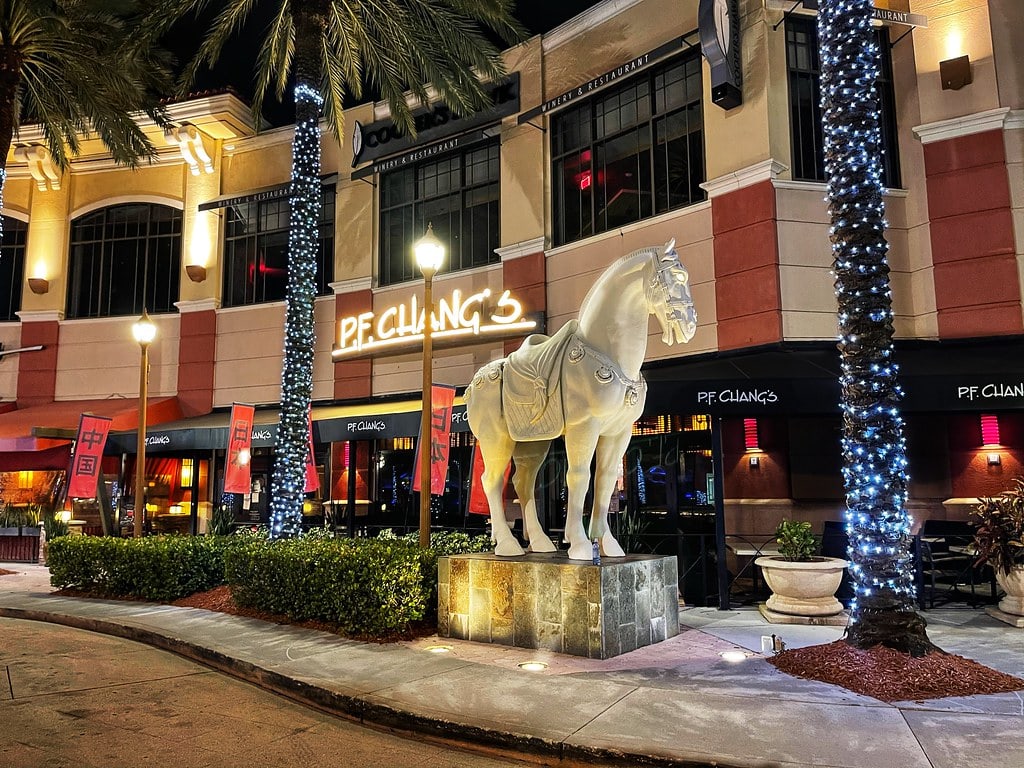
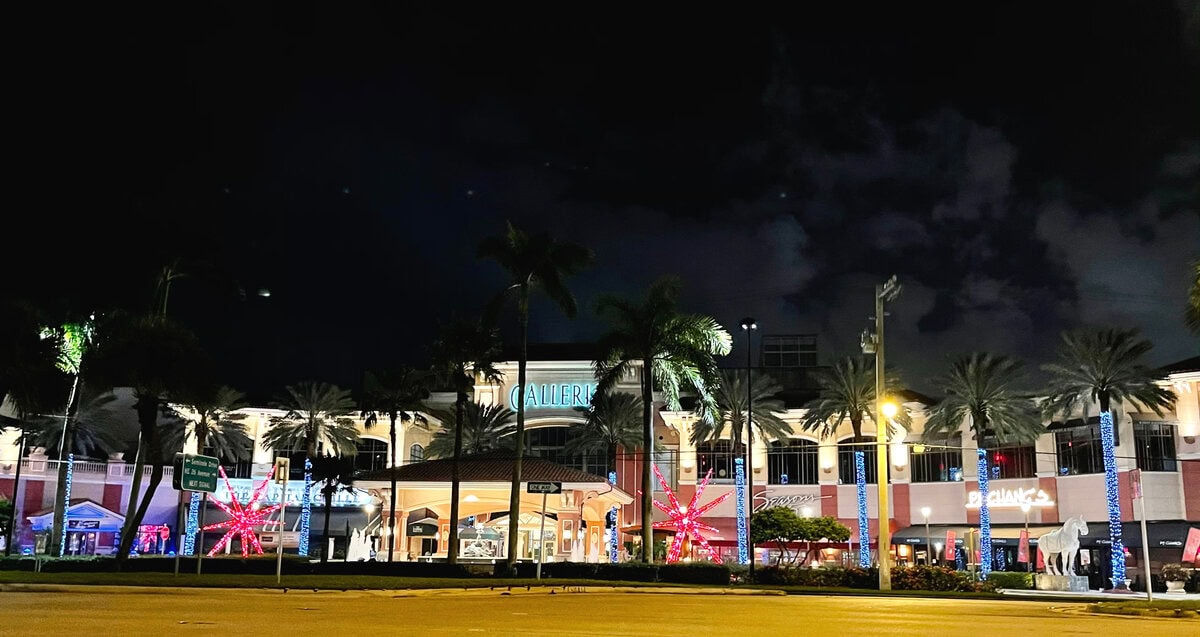
That work reworked the exterior from a Brutalist look into something styled more like an 1880s Florida hotel, added windows and vaulted skylights, built glass escalator lobbies, created a Palm Court, and installed new flooring throughout the complex.
The updated mall was dedicated in 2005, reaching 1,047,500 square feet of leasable space with 150 stores.
Anchor closures and rebrands (2002–2020)
Lord & Taylor closed on February 1, 2002. Part of that space became Powerhouse Gym at 22,000 square feet, while 63,000 square feet remained vacant.
Burdines became Burdines-Macy's on January 30, 2004, then became Macy's on March 6, 2005.
Saks Fifth Avenue closed July 20, 2009. The space briefly hosted a Publix Health Expo in 2011.
By 2016, the former Saks area had been split into H&M at 28,000 square feet, IWG at 22,800 square feet, and 22,000 square feet left vacant.
H&M opened on July 7, 2016. Neiman Marcus later closed on September 12, 2020, leaving another large anchor box empty.
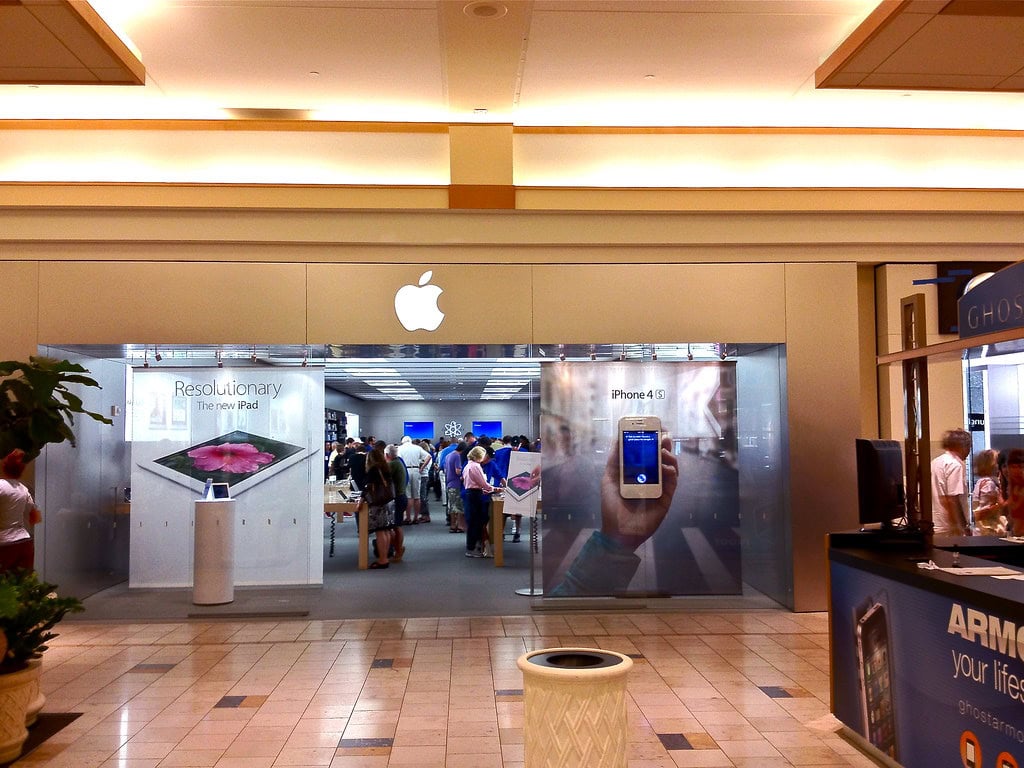
The mall kept drawing attention for consumer-tech moments. An iPad celebration took place on April 3, 2010. Lines formed for the iPhone 4 on June 24, 2010.
Food and common areas changed, too. Piazza di Giorgio Food Court became Palm Court Market on November 1, 2015.
In 2026, the property operates at about 1.4 million square feet, with anchors including Dillard's at 192,000 square feet, Macy's at 198,400 square feet, and H&M at 28,000 square feet, alongside stores such as Apple and Sephora.
Sale in 2025 and a Live Local rebuild pitch
After many years owned by the pension fund, the property was sold in September 2025.
The sale closed on September 23 for $73 million. The buyers were GFO Investments, InSite Group, Atlas Hill RE, and Prime Finance.
Centennial selected as manager, and Atlas Hill took on leasing. The 32-acre site is being pitched for higher density under Florida's Live Local Act, tied to workforce housing.
The redevelopment pitch would shrink the retail footprint and add major new construction. It would add eight 30-story towers and a 170-room hotel.
The residential total would be 3,144 units, including workforce units priced around 120% of the area median income, with an example studio rent of $2,400 in Broward.
The layout would be split into two zones.
Galleria East would include five 30-story towers and 1,981 units, would retain about 676,000 square feet of mall space, and would add 128,000 square feet of health, fitness, retail, and restaurants.
Galleria West would include three 30-story towers and 1,163 units, would add the hotel, would retain 251,700 square feet of commercial space, and would add office and restaurant space.
Arquitectonica is listed as the designer, with glass walls, balconies, rooftop features, and a maximum height of about 300 feet.
A city town hall on October 28, 2025, focused on the proposal and raised worries about traffic and city services. In January 2026, the project entered a faster review process.
On February 3, 2026, Fort Lauderdale's City Commission approved a motion related to the October 28, 2025, town hall and a November 6, 2025, federal courthouse meeting, while the process continued into 2026.

Spencer, Your article on the Galleria mall in Fort Lauderdale was a nice read. I've lived in the Ft Laud area and shopped at the mall since 1993 and also worked in the mall at one time, for the toy store KayBee Toys. Also long gone. A few notes which might be interesting in a follow-up piece, Galleria Mall saw a significant decline in shoppers with the population moving west into Plantation, Sunrise, Parkland, Westin and the like. Cheaper real estate and new build homes became attractive in the early 80's and continue today. In order to accommodate the growing west communities, two enclosed malls were built at Broward Blvd and University Drive, walking distance from each other. The Broward Mall and The Plantation Fashion Mall. Anchor stores were Burdines, Dillard's, Sears, (Broward Mall) and Lord & Taylor, Macys, Sacks (I think) and The Sheraton Hotel at the Fashion Mall. A few others I can't recall. After this, the development of the A1A beachfront started, and brought with it an open air mall just north of Las Olas Blvd. That project pulled almost half of the Galleria customers away during the mid and late 90's. As of today, Both the Broward Mall and Plantation Fashion Mall are well into their own redevelopment leaving virtually skeletons of their former glory. The A1A beachfront Mall is trying to redefine itself with the nearby hotels and timeshares, as well as the numerous bars and restaurants. The Fort Lauderdale vacation tourist remains the #1 draw here and as long as they continue to find interest I suppose A1A will continue to thrive
Wow, I appreciate your in-depth perspective on the Galleria Mall's evolution and the changes in retail. It's fascinating to hear your perspective as a long-time resident and former employee of the Galleria Mall. You've given us some unique insights into the shifts in Fort Lauderdale's retail scene over the years. Thank you for sharing!
Hi Spencer,
Thank you for the update of the Galleria Mall property. As that residential area remains quite upscale to this day. We believe the concept like a Mizner Park, Boca Raton, Florida with upscale boutique shops, dinings venues and an amphitheater for concerts would be very attractive. There are way too many condos being built already in downtown Fort Lauderdale. The Fort Lauderdale water/sewer infrastructure cannot handle any more multi unit complexes.
Thank you,
Kelleigh Bywaters ( Native Floridian )
Hi Kelleigh,
Thank you for sharing your thoughts and insights regarding the Galleria at Fort Lauderdale. It's great to hear your perspective as a native Floridian and your vision for the mall's future. While there is a need for new housing, it's crucial to ensure that the city's infrastructure can adequately support the growing population.
We need stores like Nordstrom,Saks, Neiman Markus, to attract more shoppers. Consumers are driving either to Aventura or Boca to shop rather than The Galleria
Thank you for your suggestion. It would indeed be great to see more high-end stores in the Galleria. Your point about attracting more shoppers is very reasonable.