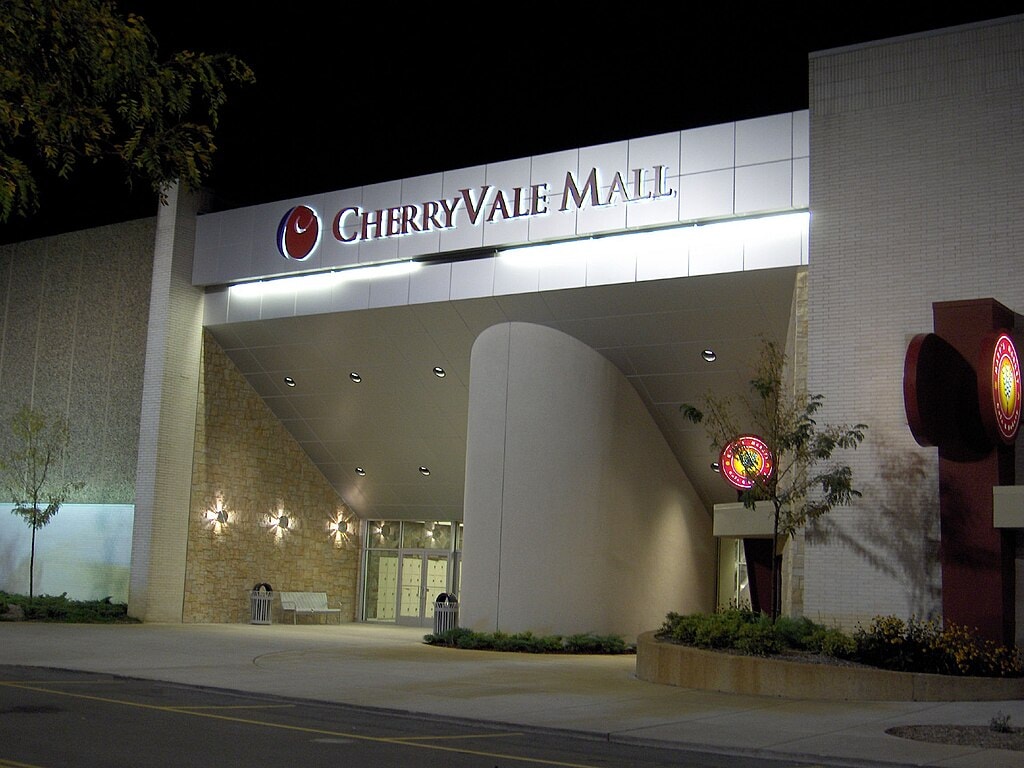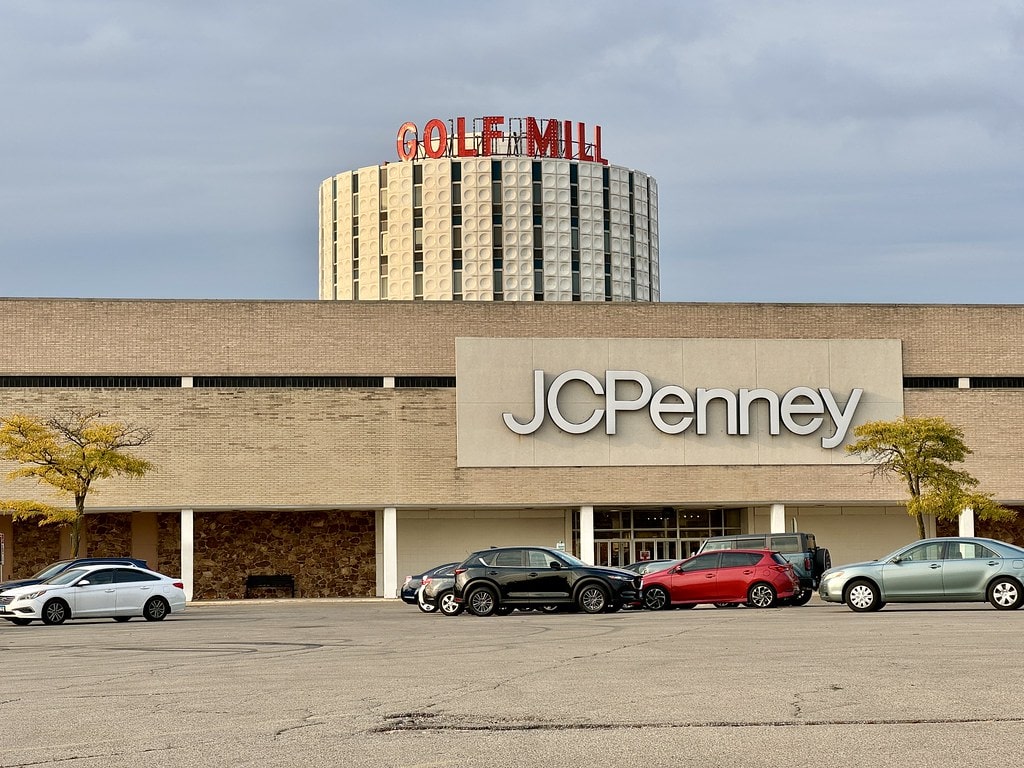
Stand at the corner of Route 30 and Mall Loop Drive today, and it is easy to forget what was there before. Fields. Open land. Gravel roads.
In the late 1970s, this stretch of Will County west of downtown Joliet was the kind of place people drove through rather than to. That was about to change - and not by accident.
The mall was built by Homart Development Company, the real estate arm of Sears. Getting the project into Joliet took real work.
Former city councilman Bob Hacker learned that land in the area was being quietly assembled and pushed to have it annexed into Joliet before either Plainfield or Crest Hill could claim the project and its tax base.
The city also offered access to its new west-side water plant, sparing Homart from building its own water and sewer lines.
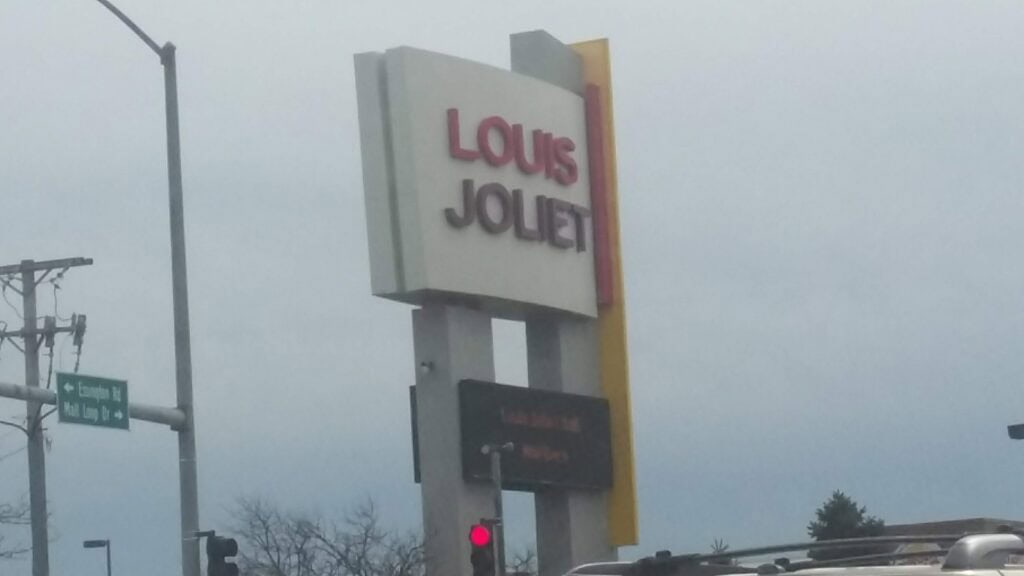
One condition was written into the annexation agreement: the project had to carry the Joliet name.
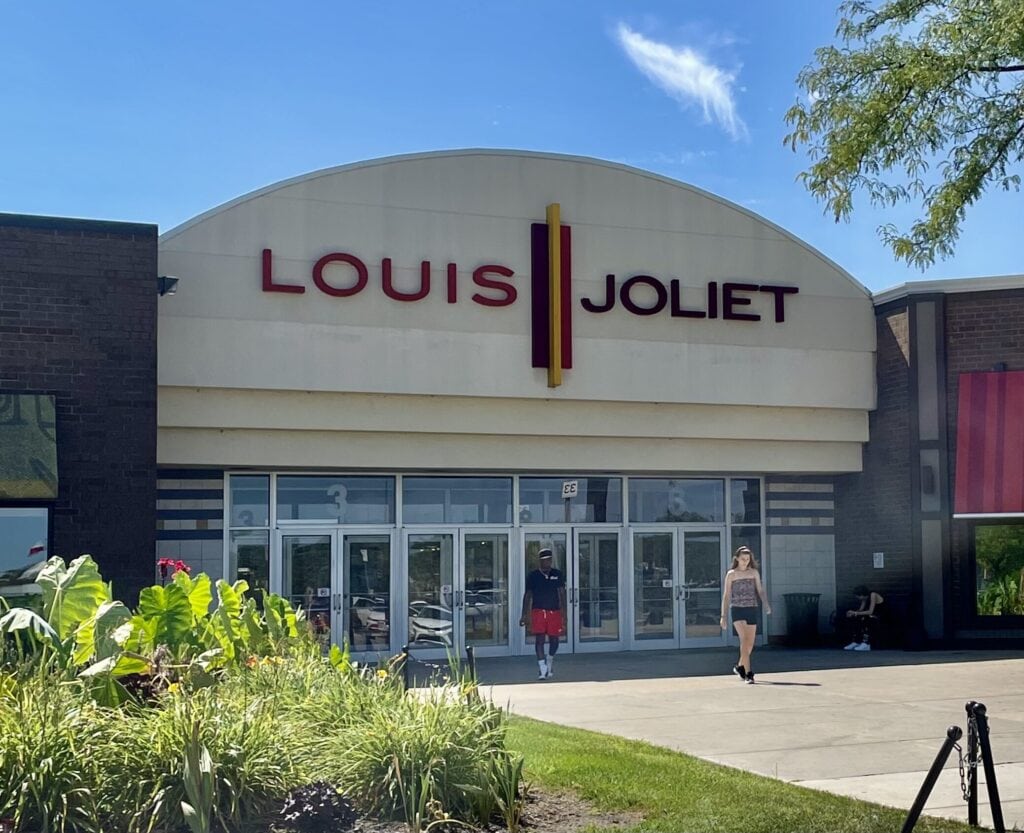
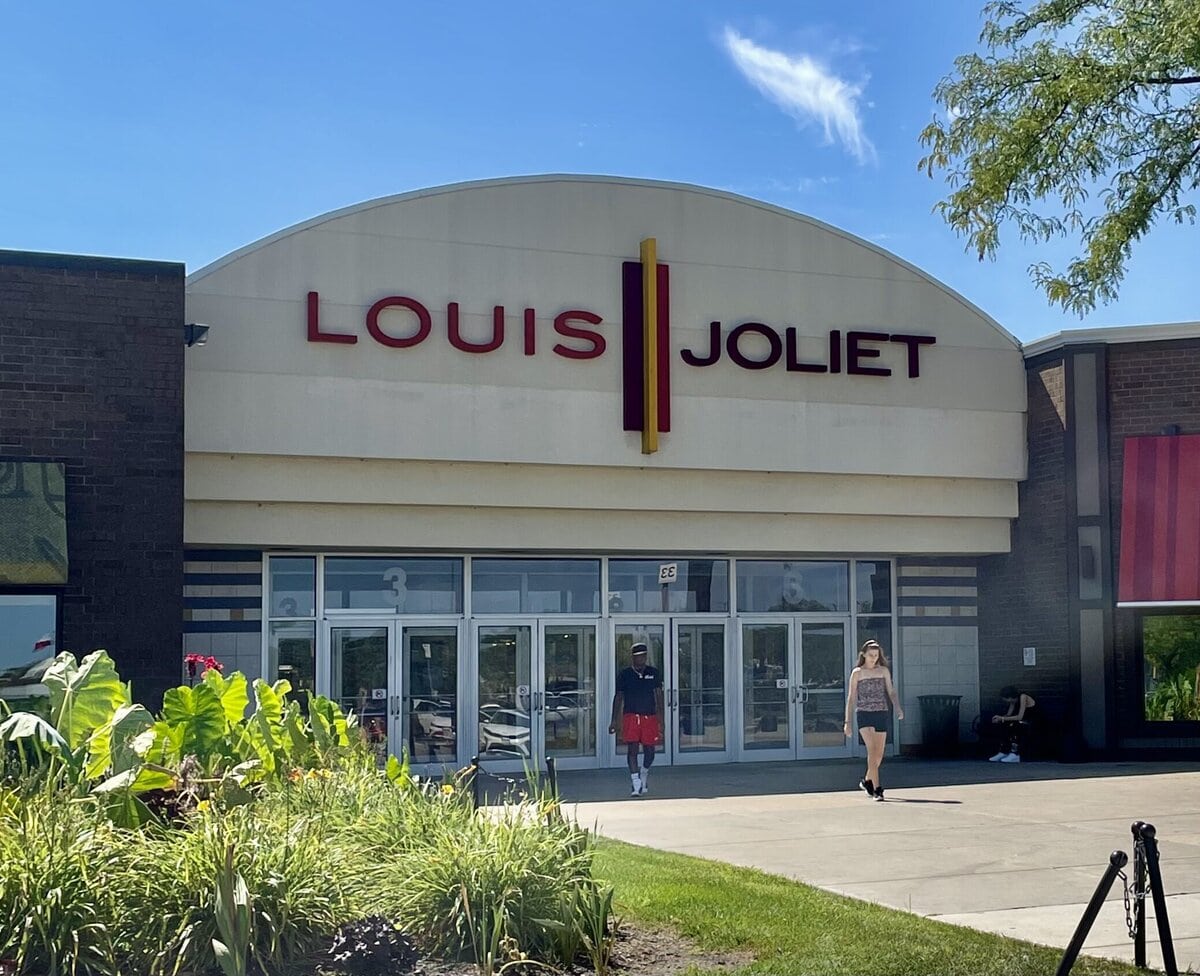
That is how farmland along Route 30 became Louis Joliet Mall - and why that name still stands at 3340 Mall Loop Drive.
Opening Anchors and Joliet's Westward Retail Shift
Louis Joliet Mall opened in 1978 with Sears and Marshall Field's as its first two anchor stores. JCPenney moved from its downtown Chicago Street location to the mall in 1979.
Bergner-Weise opened around the same time, and these two stores completed the main anchor lineup.
The mall entered a market that already had an enclosed shopping center.
Jefferson Square Mall, Joliet's first enclosed mall, had opened in 1975, three years earlier. For a period, some retail chains had stores in both malls.
Louis Joliet Mall was newer and larger than Jefferson Square. Over time, it drew more shopping activity toward the Route 30 and Interstate 55 area.
The mall changed, where much of Joliet's shopping activity took place. Shoppers and stores moved away from older business streets and toward the newer mall area.
Easy highway access and large parking areas gave the mall advantages that downtown shopping streets could not match. Joliet's original retail center never fully recovered from that change.
The Plainfield Tornado and the Westfield Years
On August 28, 1990, one of the most destructive tornadoes in Illinois history cut through the area just south of Joliet.
Shoppers inside Louis Joliet Mall watched from the entrance as the funnel passed just southwest of the building.
The Plainfield tornado killed 29 people and leveled entire neighborhoods nearby. The mall was not damaged, but how close the storm came has stayed in local memory.
The 1990s brought renovation work to the building, and the property was updated by 1995.
In 2003, Westfield America Trust paid $93 million to acquire the mall, adding it to its national shopping-center portfolio and running it as Westfield Louis Joliet for the following decade.
The biggest physical change of the Westfield years came in 2009.
A 14-screen all-digital movie theater opened under the Cinemark name on May 8, 2009, and an upgraded food court was part of the same project.
Both additions gave the center a new draw at a moment when many regional malls across the country were already beginning to slide.
Starwood Buys Into the Louis Joliet Mall in 2012
In June 2012, Starwood Capital bought a 90% ownership stake in seven shopping centers in the United States from Westfield.
Louis Joliet Mall was one of those properties. Westfield kept the remaining 10% stake.
Starwood set up Starwood Retail Partners to oversee the group of malls and retained CBL to provide management services for six of the seven properties, including Louis Joliet Mall.
The deal valued the Louis Joliet Mall at $125.5 million. It was supported by an $85 million fixed-rate loan. At the time of the sale, the mall was 97.6% occupied overall.
The in-line section of the mall was generating average sales of $419 per square foot.
The mall's trade area included about 460,000 people, and the average household income within a ten-mile radius was about $83,700.
The four anchor stores - Macy's, Sears, JCPenney, and Carson Pirie Scott - each owned their own parcels of land, so they were not part of the financed section of the deal.
The financed core covered about 358,500 square feet. That section included tenants such as Cinemark, Toys "R" Us, and MC Sports.
In 2012, the mall was a regional shopping center with high occupancy and strong numbers for investors.
Anchor Closures and Later Tenant Losses
The second half of the 2010s hit the mall's anchor lineup hard. In February 2017, MC Sports filed for bankruptcy and closed all its locations, including the store at Louis Joliet Mall.
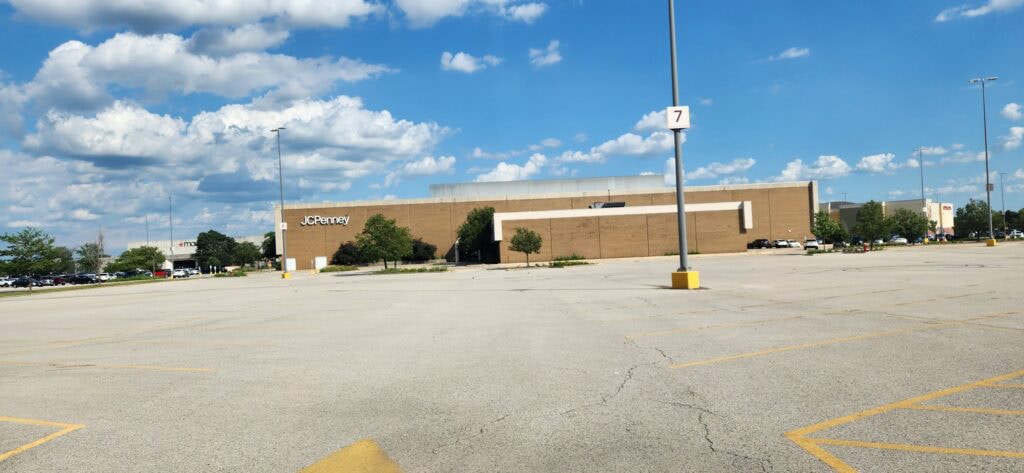
In August 2018, Carson Pirie Scott closed at the Louis Joliet Mall after the parent company, Bon-Ton, entered liquidation in April 2018.
The store space had originally operated as Bergner-Weise in the mall's early years. It was the first anchor closure in the mall's 40-year history.
Sears followed later in 2018, and its departure in early 2019 marked the end of a business whose connection to Joliet stretched back long before the mall opened.
Marshall Field's had already become Macy's in September 2006 as part of a nationwide rebrand. Macy's kept operating, but a founding brand name was gone.
Food tenants also left. Panera Bread's last day at the mall was August 30, 2022.
TGI Fridays, at the mall entrance, closed on December 23, 2024. Those empty storefronts became the most visible signs of the mall's struggles.
CMBS Default and the Discounted Sale of Louis Joliet Mall
The $85 million loan Starwood took on in 2012 was a CMBS loan - a commercial mortgage packaged and sold to investors on the open market.
When the mall's finances weakened, the problems became a matter of public record.
In March 2020, Starwood stopped making payments. By October, the company was more than 90 days behind and in talks about a possible foreclosure. The loan went to special servicing in May 2020.
Estimated valuations of the property fell sharply: $132 million in 2012, then $55 million in 2020, $65 million in 2021, and $48 million in 2022.
By spring 2023, the property was being put up for sale. An online auction opened at $5 million and reached $15 million on the first day.
In June 2023, Namdar Realty Group bought the mall interior for $31.4 million. The four anchor parcels, each separately owned, were not included.
After liquidation expenses, the CMBS trust recorded a large realized loss.
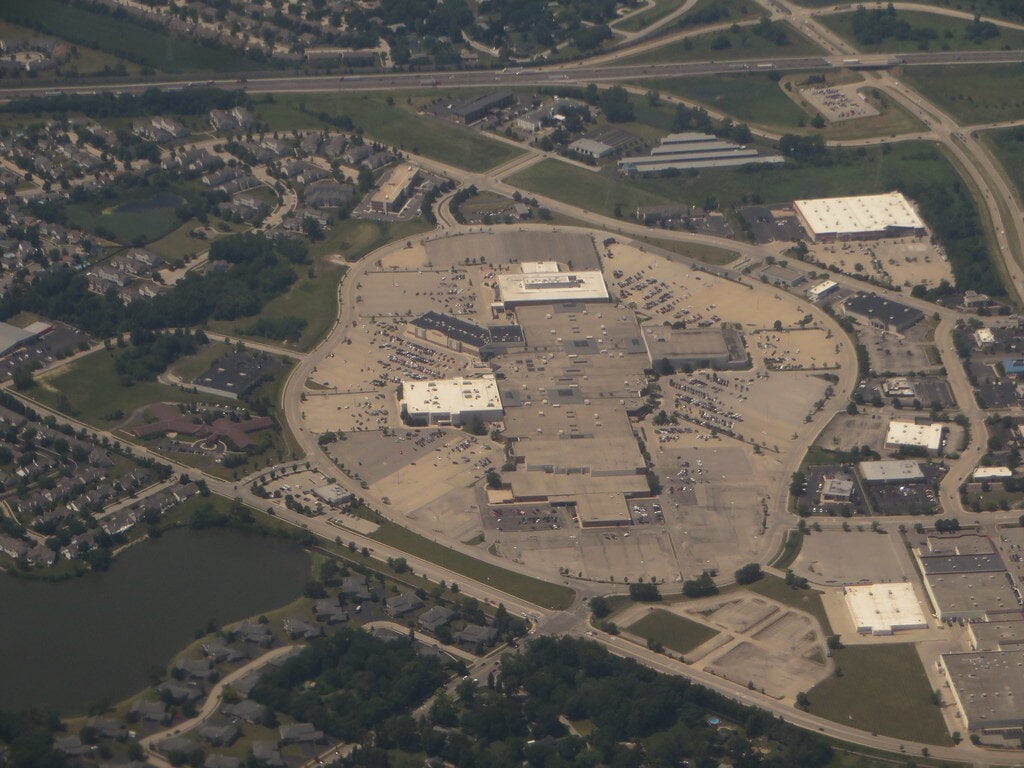
New Owner, Vacant Anchor Spaces, and the City's Planning Efforts
Namdar Realty Group now owns the property, and Mason Asset Management handles leasing. Macy's, JCPenney, and Cinemark are still listed as active tenants.
When Namdar bought the mall in 2023, the mall's core area was about 92% occupied.
National chains there included American Eagle, Bath & Body Works, H&M, Hot Topic, and Foot Locker.
New businesses have continued to open in the surrounding area. A 98-room Tru by Hilton hotel opened near the mall in June 2025.
During the first half of that year, five new business licenses were issued in the area.
The former Sears and Carson's anchor buildings are still vacant. The Sears property was sold to Ghaben Auto Group in early 2023 for $4.3 million.
By the middle of 2025, there was still no plan for what would happen next.
The former Carson's property is owned by New American Retail Fund LLC, and no public plans have been announced for that site either.
Joliet has officially labeled the mall area as Character Area #1 in its planning process.
Starting in early 2026, residents are encouraged to see the area as a walkable, mixed-use district. This means it will include different types of development in one place.
No development agreements are in place, but the city's plans for this corridor now go beyond retail alone.
Louis Joliet Mall
Shopping mall in Joliet, IL
Address: 3340 Mall Loop Dr, Joliet, IL 60431
Opened: August 2, 1978
Developer: Homart Development Company
Owner: Namdar Realty Group
Floor area: 982,659 sq ft