
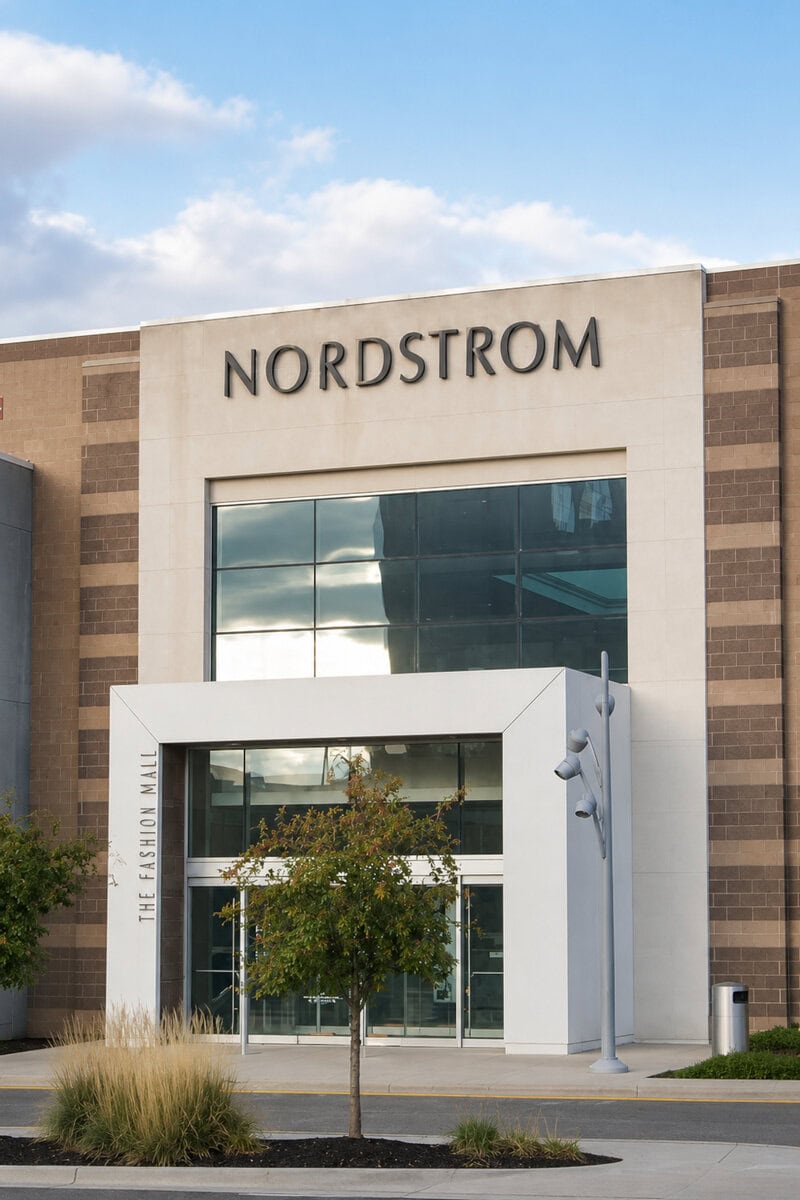
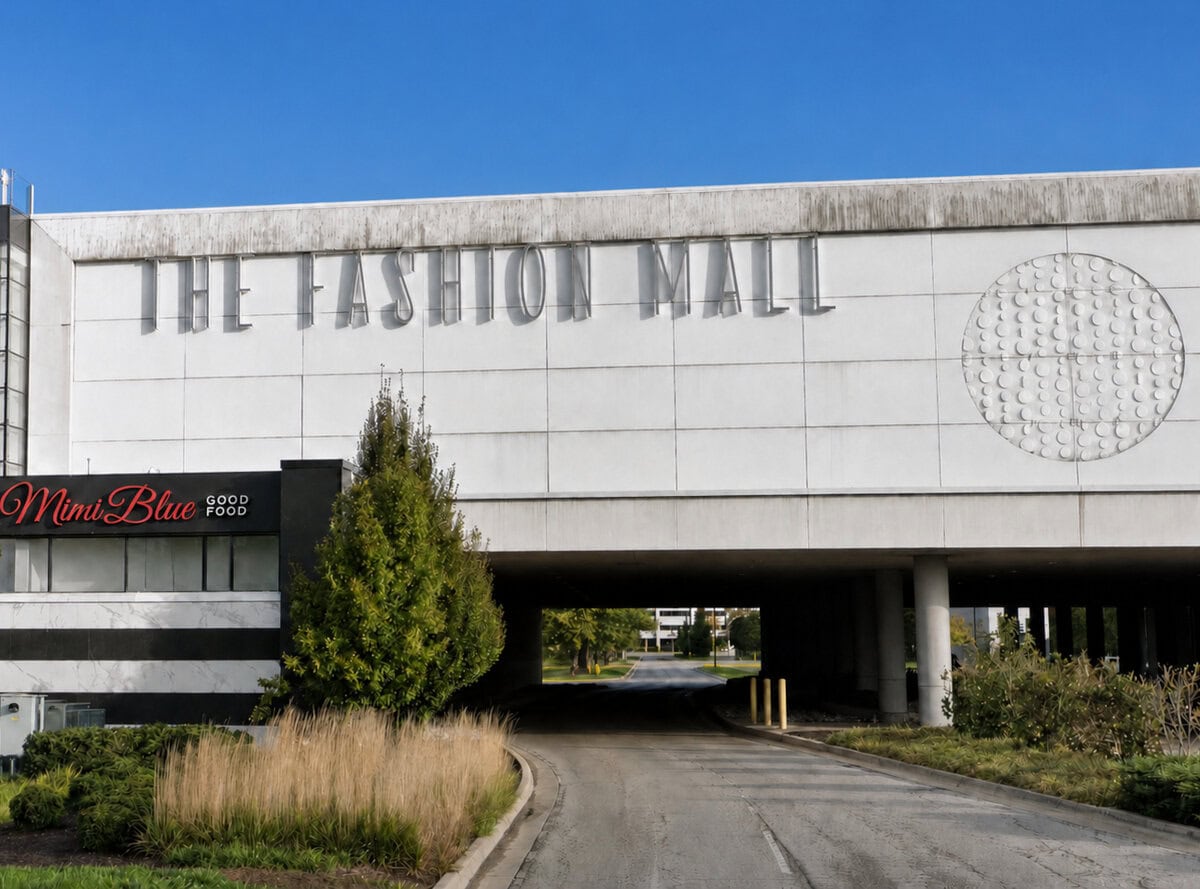
The Fashion Mall at Keystone is an enclosed, two-level luxury mall at 8702 Keystone Crossing in north Indianapolis, Indiana, home to the state's only Nordstrom and a tenant list heavy with market-exclusive brands.
It has been under construction, on and off, for its entire life. Expansions in 1980, 1982, 1988, and 1993. A razed companion shopping center.
A Saks built into a bankrupt Jacobson's in 2003, a Nordstrom built into a departed Parisian in 2008, and a food court pulled off a pedestrian bridge in 2012 so the bridge could hold 30,000 square feet of stores.
The current project is a big one.
Saks closed in 2024, and Simon moved to take down most of its 120,000-square-foot building so a four-story office building called One Keystone Crossing could go up with restaurants, storefronts, and a plaza.
The next openings are already dated: a Reis-Nichols flagship at the end of 2026, then Arhaus, Design Within Reach, North Italia, and more from late 2027.
The construction fence just keeps moving.
The Fashion Mall opened next to a bazaar in 1973
In 1973, Melvin Simon and Associates opened Keystone at the Crossing on the north side of Indianapolis, and with it two retail pieces: The Fashion Mall, an enclosed shopping center at 8702 Keystone Crossing, and The Bazaar, a companion cluster of smaller shops next door.
The site sat northeast of East 86th Street and Keystone Avenue, just inside I-465, in what was still becoming one of the region's biggest commercial corners.
For more than a decade, the two shared the property.
Only one of them made it out of the 1980s.
A mall inside a 200-acre office campus
The mall was never a lone box in a parking field.
It went up inside the Keystone Crossing Office Center, a 200-acre suburban campus built in the 1970s by Indun Realty, Hunt Development, and the Northland Shopping Center Company, with office buildings, restaurants, a hotel, and the mall at its heart.
Landscaping alone was budgeted at $2 million.
The campus idea outran the money.
By 1978, the mixed-use project was struggling, and Duke & Associates bought it that year.
Duke built high-rise offices, hotels, and restaurants around the mall, and the district settled into the pattern that still defines it: shopping in the middle, office workers and hotel guests on every side.
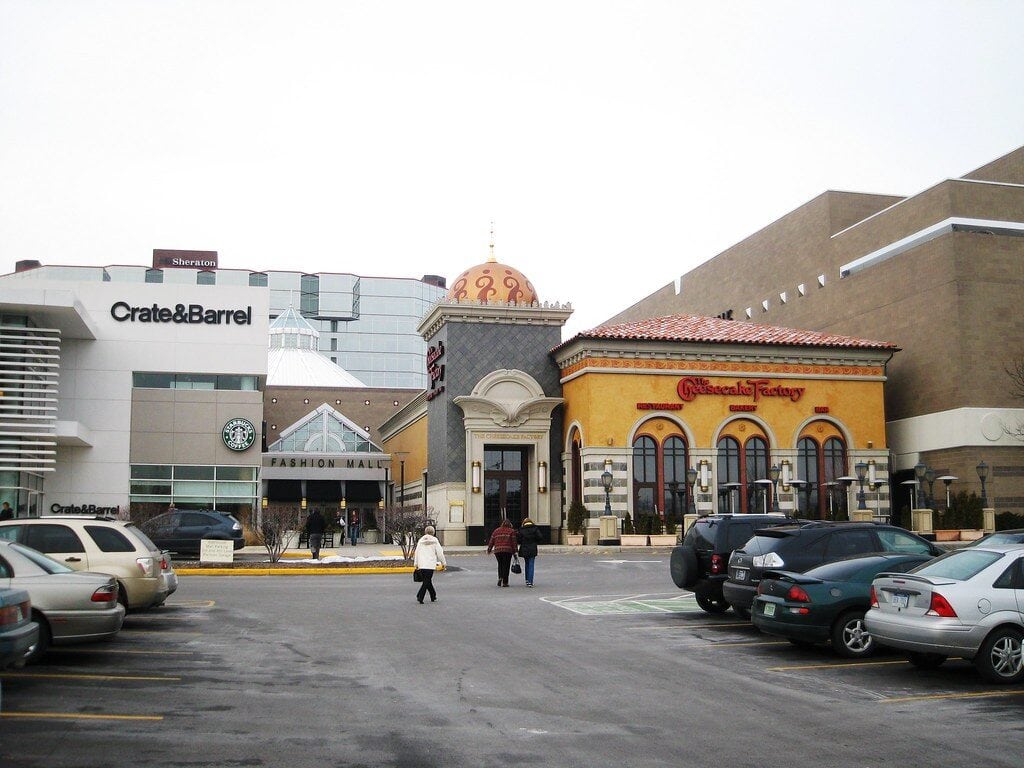
Four expansions and the end of The Bazaar
The mall grew in bursts: 1980, 1982, 1988, 1993.
By the 1988 campaign, the site had changed for good.
Crews had razed The Bazaar, and the enclosed mall spread across the ground its smaller sibling had occupied.
The Bazaar name was gone.
Duke put $25 million into expansion work in the late 1980s, then sold its mall shares in 1989.
By 1997, after the 1993 expansion, the property had its mature shape: two levels, two department-store anchors, outparcels, 2,157 surface parking spaces plus 990 more in decks, all sitting on 48 leased acres.
What $359 a square foot looked like in 1996
Jacobson's and Parisian anchored the mall through the 1990s, Jacobson's in 120,000 square feet and Parisian in the building that would matter most later.
But the small shops carried the place.
In 1996, comparable mall stores sold $359 per square foot while the two anchors together managed $197.
The corridor list explains why: Coach, Brooks Brothers, Williams-Sonoma, Pottery Barn, Banana Republic, Laura Ashley, Abercrombie & Fitch, J.Crew.
Combined anchor and mall-store sales reached $151 million that year, with occupancy running in the high 80s.
Sales like that had a suburban Indianapolis mall tied to some very distant money.
A pension fund in London held the mall
By 1997 the mall was owned, through two layers of holding companies, by Shell Pensions Trust Ltd. in the United Kingdom, trustee of the Shell Contributory Pension Fund.
That June the property secured a $65 million mortgage at an initial fixed 7.85 percent, against a fresh appraisal of $116 million.
The loan's final maturity date was set for July 1, 2027, a horizon still 30 years away.
The same year, ownership came home.
Simon Property Group, the Indianapolis company descended from the mall's original developer, acquired the property along with the neighboring Keystone Shoppes.
Simon has owned it ever since, on a ground lease that runs to 2067.
Jacobson's went bankrupt, Saks took the keys
Jacobson's was the first anchor to go.
The Michigan chain went bankrupt, and the Keystone store closed on September 15, 2002, emptying 120,000 square feet at the mall's east end.
The box didn't sit long.
Saks Fifth Avenue took the space and opened in fall 2003, giving Indiana its first and only Saks.
Even before the store opened, Simon's 2002 books, filed the next spring, showed the mall at 96.8 percent occupancy, a stronger figure than the property had managed in the late 1990s.
The trade that gave Indiana one Nordstrom
Parisian's exit was a planned swap.
Nordstrom signed a letter of intent in late 2006 for the Parisian space; Parisian kept selling through summer 2007, and Nordstrom spent the next year remodeling the building.
The new 131,000-square-foot store opened on September 19, 2008, Nordstrom's second full-line store in the Indianapolis area after the downtown Circle Centre location that dated to 1995.
The downtown store lasted three more years.
Nordstrom closed it on July 31, 2011, and Keystone became the only Nordstrom in Indiana. It still is.
Crate & Barrel, Tiffany, and the luxury climb
The mid-2000s filled in the tier around the anchors.
Crate & Barrel opened a two-story store in 2005 at 8701 Keystone Crossing.
Tiffany & Co. planned a 5,000-square-foot store for summer 2006, adding a national fine-jewelry name to the lineup.
By the time Nordstrom announced its move, the mall held more than 100 shops and restaurants in 680,000 square feet, and more than 40 percent of its retailers had their only Indiana store at Keystone.
The mall had become the state's default address for brands that open one location per market.
The food court came off the bridge
A big interior change of the 2010s started with lunch.
The food court had lived on the pedestrian bridge between the mall's two sections.
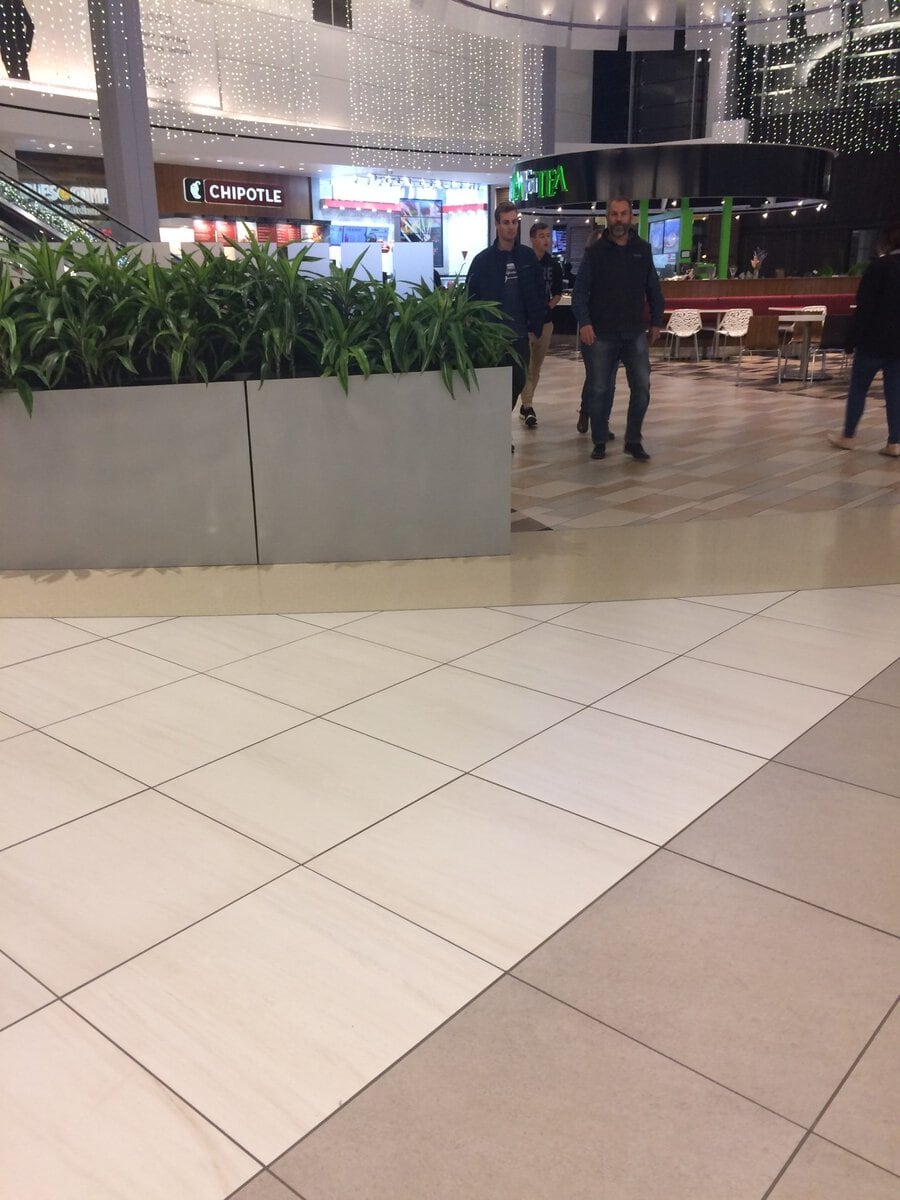
In 2011 and 2012, Simon cleared it out, converted the bridge into more than 30,000 square feet of retail space, and moved dining to a new Fashion Cafe at the main entrance, built with outdoor seating and an indoor/outdoor fireplace.
New entrances, flooring, lighting, and ceiling work came with it.
Elevation Burger, Freshii, Pinkberry, and Naked Tchopstix signed on, with the relocated cafe slated to open in November 2012.
Restoration Hardware got its own two-story gallery in the same era: 18,000 square feet with a signature staircase, an exterior entrance, and a gated patio display.
Saks closed after 21 years
Saks made it 21 years.
In April 2024, Simon announced the store would close so the southeastern section of the mall could be redeveloped.
Saks was the second-largest store on the property at 120,000 square feet, ahead of Crate & Barrel's 33,000, and its exit removed the only Saks Fifth Avenue in Indiana.
Demolition of at least two-thirds of the building was set to begin that August, once the store went dark.
This anchor vacancy arrived with blueprints already drawn.
Offices where the department store stood
The office piece is called One Keystone Crossing, and it trades most of a department store for an office building.
The four-story structure fronts River Crossing Boulevard on part of the old Saks footprint and the parking lot east of it, with up to 100,000 square feet of Class A office space on the upper floors.
The third floor connects into the piece of the Saks building left standing, up to 40,000 square feet on that level, while the surviving Saks structure gets first-floor retail and restaurants plus an entertainment space split across two levels.
Outside, the project adds more than 80,000 square feet of streetscape, exterior-facing storefronts, green space, and an outdoor plaza.
A blank anchor wall becomes a street with doors on it.
What's at The Fashion Mall at Keystone now
As of July 2026, The Fashion Mall at Keystone is open, leased, and still Simon's showcase in its home city.
Nordstrom holds the anchor role alone.
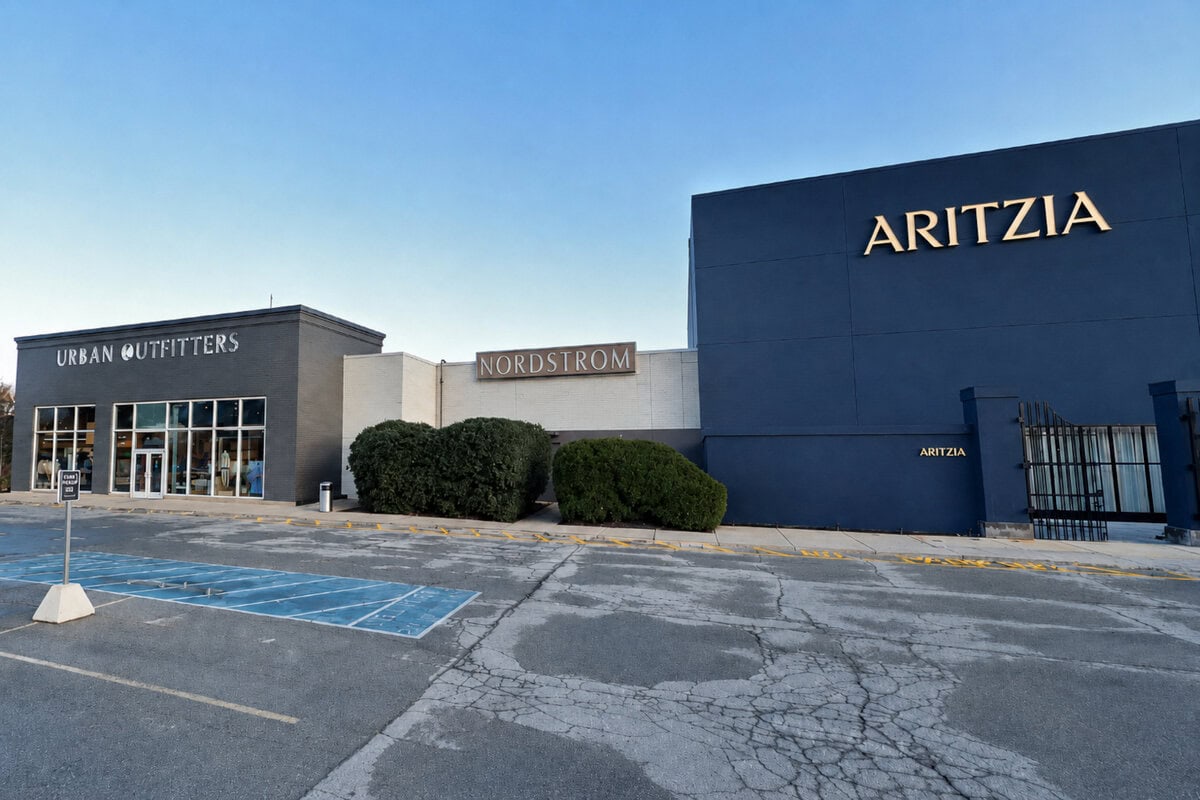
Apple, Louis Vuitton, Gucci, Tiffany & Co., David Yurman, Aritzia, and lululemon fill the corridors, the Sheraton is still attached next door, and the dining list runs from Shake Shack and sweetgreen to Sullivan's Steakhouse and The Cheesecake Factory.
The next wave is already under construction.
Reis-Nichols Jewelers opens a 25,000-square-foot flagship showroom at the end of 2026, its buildout documented on a time-lapse running since September 2025.
Arhaus, Design Within Reach, 7th Avenue, North Italia, and Kitchen Social follow in phases starting in late 2027.
People still come because so much of what's here exists nowhere else in the state: the one Nordstrom, the Louis Vuitton, and a tenant list built around one-per-market names.
Soon they'll share the parking garage with office workers.
Independent Publisher Notice
BestAttractions is an independent editorial publisher. We are not affiliated with, endorsed by, or acting on behalf of any location, business, property owner, manager, government agency, or organization described in this article. Comments posted on this page are not forwarded to, reviewed by, or acted upon by any entity mentioned in the article. For official inquiries, complaints, applications, bookings, or other requests, please contact the relevant entity directly through its official website or other verified channels.