
The plan for Woodmar Mall's last act was straightforward: tear it down, build a new shopping center, move the department store into a new building, then tear down the old building. Clean sequence, clean site. Only the first step happened in that order, and most of it did not happen at all.
Woodmar Center opened in Hammond, Indiana, in 1954, anchored by Carson Pirie Scott's first Indiana store, in a residential district that had itself been planned for a different future.
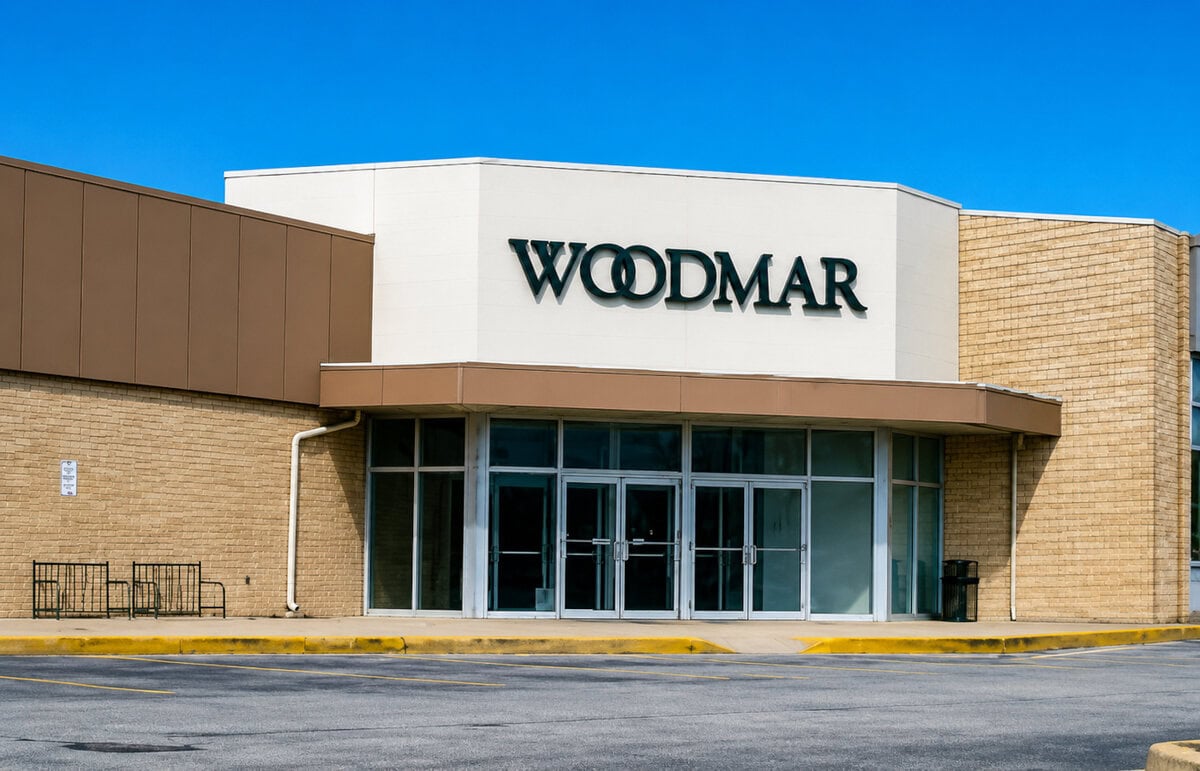
By 2006, the enclosed mall had been demolished around the original Carson's, which kept operating as a freestanding department store on a cleared lot for twelve years.
The new Carson's that was supposed to replace it never got built. The old one closed in 2018 when Bon-Ton liquidated. What replaced the cleared site was not retail at all.
Woodmar Mall and the Open-Air Shopping Era That Built It
Ground broke on December 22, 1953, on a 19.7-acre site along Indianapolis Boulevard in Hammond's Woodmar neighborhood.
The project cost about $3 million and was planned by Chicago developers Herbert Heyman and Howard Landau, with design by Victor Gruen Associates of Los Angeles and Sidney C. Finck.
The Woodmar district had been platted in the mid-1920s as an upscale residential community with landscaped parkways, garden-block planning by Jacob L. Crane, a golf course, bridle paths, and a country-club setting.
Developer Roscoe E. Woods and future Hammond mayor Frank R. Martin were behind the residential vision.
The Depression kept the neighborhood from being built exactly as planned, but Woodmar became one of Hammond's established residential areas, and the shopping center anchored its commercial edge.
The project was designed for the automobile era: surface parking, open-air pedestrian paths between buildings, and a major department store as the central draw.
Carson Pirie Scott occupied a two-level, 65,000-square-foot anchor. That selection mattered more than the square footage suggests, because the Woodmar branch was the Chicago-based chain's first Indiana location.
Carson's gave the center department store gravity that most suburban shopping centers of that period could not claim.
Carson Pirie Scott at Woodmar: The Anchor That Outlasted Everything
Carson Pirie Scott was dedicated on November 1, 1954. The inline stores followed in two waves: eight stores on March 30, 1955, and more tenants on May 19, 1955.
By the time the first phase was complete, Woodmar Center held 26 stores and services in about 200,000 square feet of leasable space.
The original tenant mix covered the practical needs of postwar suburban families. J.J. Newberry operated a 22,000-square-foot five-and-dime.
National Food Stores ran an 18,000-square-foot supermarket. Andes Candies, Kinney Shoes, and Chapman Launderers and Cleaners came in with the March 1955 opening.
Benson-Rixon men's wear, Fabric Fair Draperies and Upholstery, Miles Paint and Wallpaper Company, Einhorn's Town and Country Sportswear, and Hoosier State Bank of Hammond followed in May.
The combination of Carson's prestige, Newberry's everyday merchandise, a full grocery, and neighborhood services made Woodmar a destination for almost any household errand.
Carson's remained the center's dominant commercial force for more than six decades. The store expanded over time from 65,000 square feet to more than 110,000 square feet.
It outlasted the mall that surrounded it, operating as a standalone department store on the former mall site from 2006 until Bon-Ton's 2018 liquidation.
No other original tenant came close to that record.
Woodmar Mall: Enclosing the Center as Regional Competition Arrived
Two major competing shopping centers opened in the region within weeks of each other in 1966.
Dixie Square Mall launched in Harvey, Illinois, in August. River Oaks Center was dedicated in Calumet City, Illinois, in October.
Woodmar Center responded with a $1.5 million renovation that enclosed its open-air walkways with glass, converting the center into a temperature-controlled indoor mall.
The work also expanded Carson's to more than 110,000 square feet, giving it a third level, a mall entrance, a beauty salon, and The Heather Room restaurant.
The renovated center was rededicated on October 24, 1966.
The enclosure kept Woodmar competitive for a period, but it did not change the property's basic scale. It remained a single-anchor mall.
A proposal emerged in the late 1970s to expand Woodmar into a three-anchor, 750,000-square-foot mall, which would have put it in a different retail category.
That expansion was never built.
Woodmar stayed near its existing scale, enclosed and modernized but small relative to its larger competitors, which were pulling shoppers from across the region with multiple department stores and far more tenant space.
The Court of Lions, the Court of the Turtles, and the Mini-Mall Decade
J.J. Newberry closed on April 30, 1975. Its former 22,000-square-foot space did not stay empty long.
On September 11, 1975, it reopened as the Court of Lions, a small interior retail cluster designed around an Old World theme.
Tenants included Rockin' Horse Records, The Gift Box, Just Jeans, and The Pastry Kitchen.
Breaking a large variety-store space into smaller units was a common 1970s strategy: it increased rent potential and added shopper variety, and it gave aging malls a way to absorb the loss of midcentury retail formats that no longer had a market.
The National Food Stores supermarket space followed a similar path. The grocery had been rebranded as Sterk's Super Foods in July 1974. It went dark in early 1978.
On August 10, 1978, the former supermarket became the Court of the Turtles, another interior mini-mall with So-Fro Fabrics, Foxmoor Casuals, Lewin's Dresses and Tresses, and Keepsake Diamond Center.
The Court of the Turtles was associated with a turtle-themed fountain.
Woodmar Center was officially promoted as Woodmar Mall by 1979.
A 1982 expansion added five inline stores at the southeast corner.
In December 1986, the former Walgreen's luncheonette and grill space was converted into Cafe Woodmar, a five-bay food court with Schoop's Hamburgers (a regional Northwest Indiana chain), Pizza Pizazz, Zante's Delicatessen, and Franks and Fries.
After those changes, Woodmar Mall held about 275,000 square feet of leasable space and 52 stores and services.
The food court was the last major tenant-area addition before Woodmar Mall's late-1980s renovation and later decline.

Woodmar Mall's Decline: Vacancy, Neglect, and the End of a Retail Era
By the early 1990s, most of Woodmar Mall was empty. Several things pushed it into decline. Newer regional malls had more than one anchor store.
Hammond's industrial economy had shrunk. Discount stores and big-box retailers were growing along the same Indianapolis Boulevard corridor.
A Walmart and a supermarket on nearby or adjoining land pulled shoppers toward newer kinds of stores.
Woodmar had only one anchor, older building systems, and less space than its competitors. That left it with little to compete on.
By the late 1990s, the mall's ownership had gone into bankruptcy. A Denver-based insurance company took over the property through that process.
In February 2003, investors from California bought Woodmar and talked about redevelopment plans, including turning it toward discount retail.
None of those plans led to a completed reconstruction.
By 2004, tenant complaints showed how poor the mall's condition had become. Tenants pointed to a leaking roof, overflowing sewers, potholes in the parking lot, and management that mainly showed up to collect rent.
The Court of Lions and the Court of the Turtles no longer had enough visitors to work as active parts of the mall.
The food court had lost tenants. A Mexican restaurant opened in the food-court area in the early 2000s, but it stayed open only a short time.
The stores that remained could not hold the property together. By then, the enclosed mall's main use was giving shoppers a way to reach Carson's.
Demolition, the Lone Department Store, and a Plan That Changed Mid-Course
Praedium Development of Northbrook, Illinois, stepped in during 2005 with a plan to demolish the mall except for Carson's, build a new 127,000-square-foot strip-style retail center, construct a new two-level, 100,000-square-foot Carson's store, and then remove the original Carson's building.
Demolition began in February 2006.
Then, Bon-Ton acquired the Carson's chain from Saks Incorporated in March 2006. The new Carson's store was not built.
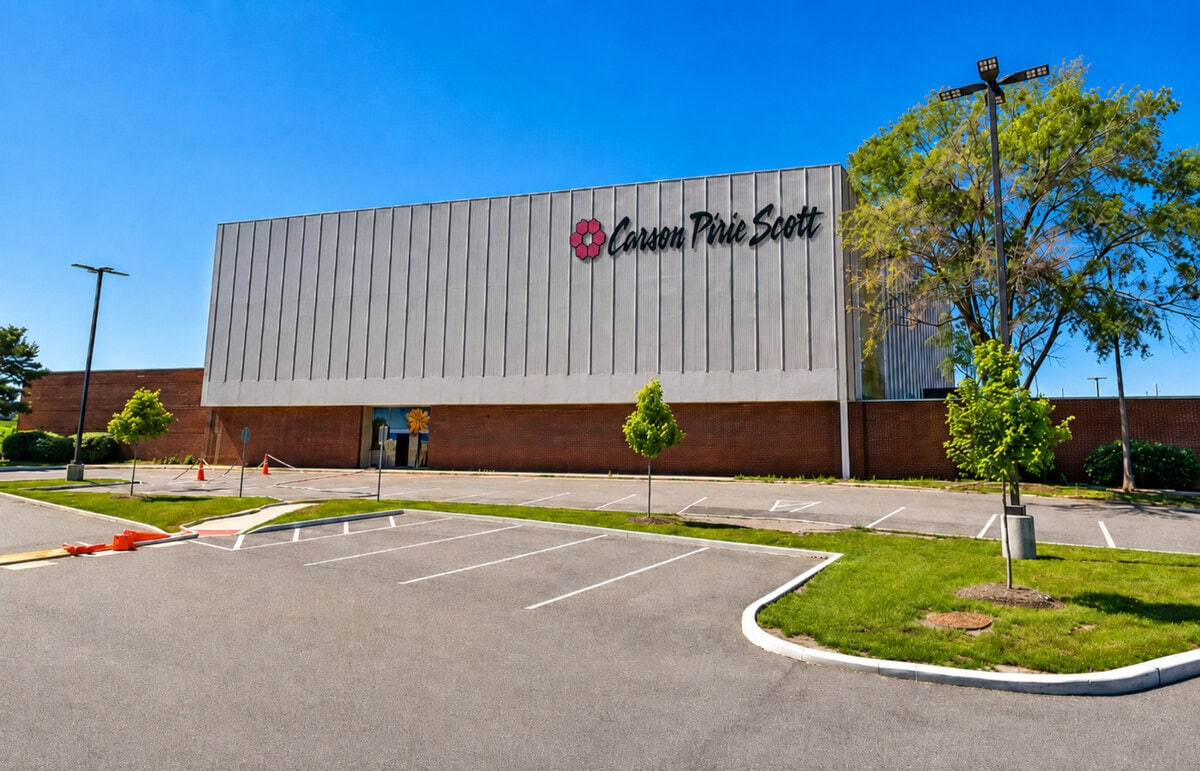
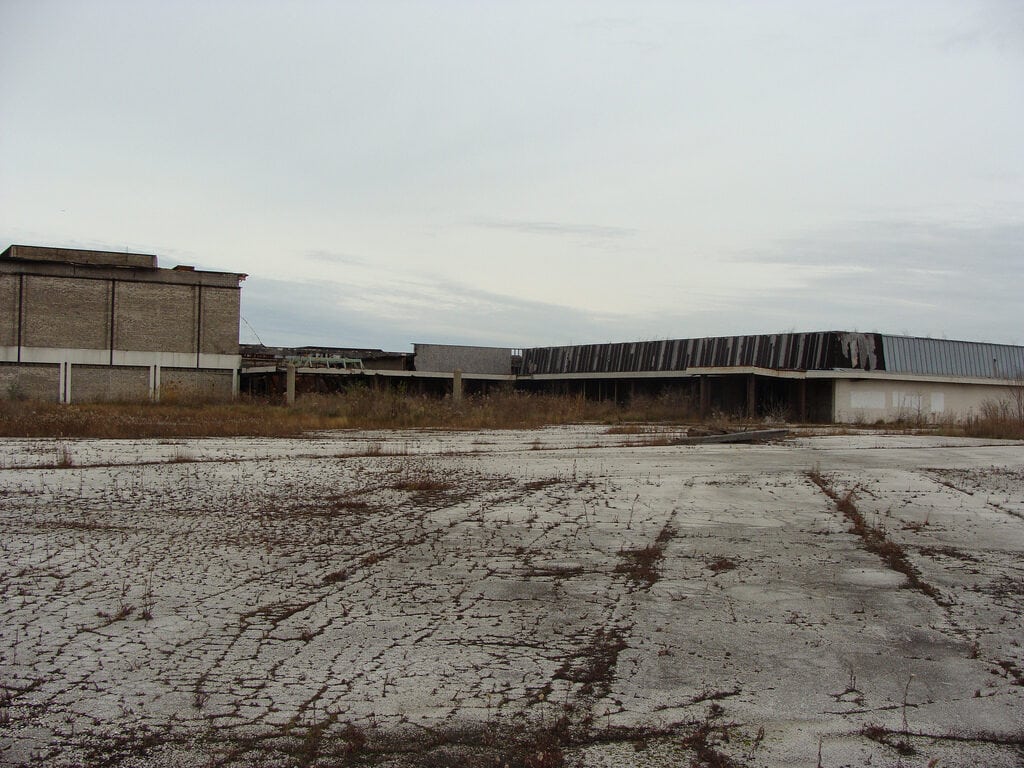
The original Carson's stayed in place, and the mall around it was removed. By the end of September 2006, the enclosed shopping center that Woodmar had become since 1966 was gone.
The Carson Pirie Scott building stood alone on the cleared site, a three-story department store with no mall attached to it.
Carson's had again outlasted the structure built around it, this time as the only piece of Woodmar still standing.
A smaller private redevelopment followed. Ground was broken in February 2011 for a new Woodmar Center strip project on the north end of the former mall property.
Work stalled and resumed in October 2011. Two small retail buildings were completed, including one of about 12,000 square feet, and the parking area was repaved.
Subway opened in February 2012. That project did not recreate the mall and did not produce a significant retail replacement for what had been demolished.
Hammond Sportsplex: Public Recreation Replaces the Old Mall Site
In June 2016, Hammond announced a plan to acquire the former mall property and build a large indoor sports and community facility.
With retail redevelopment having failed twice on the site, the city pivoted from private commercial use to a publicly financed recreation model.
The Hammond City Plan Commission recommended rezoning on May 15, 2017, converting the address from C-2 Shopping Center District to Planned Unit Development.
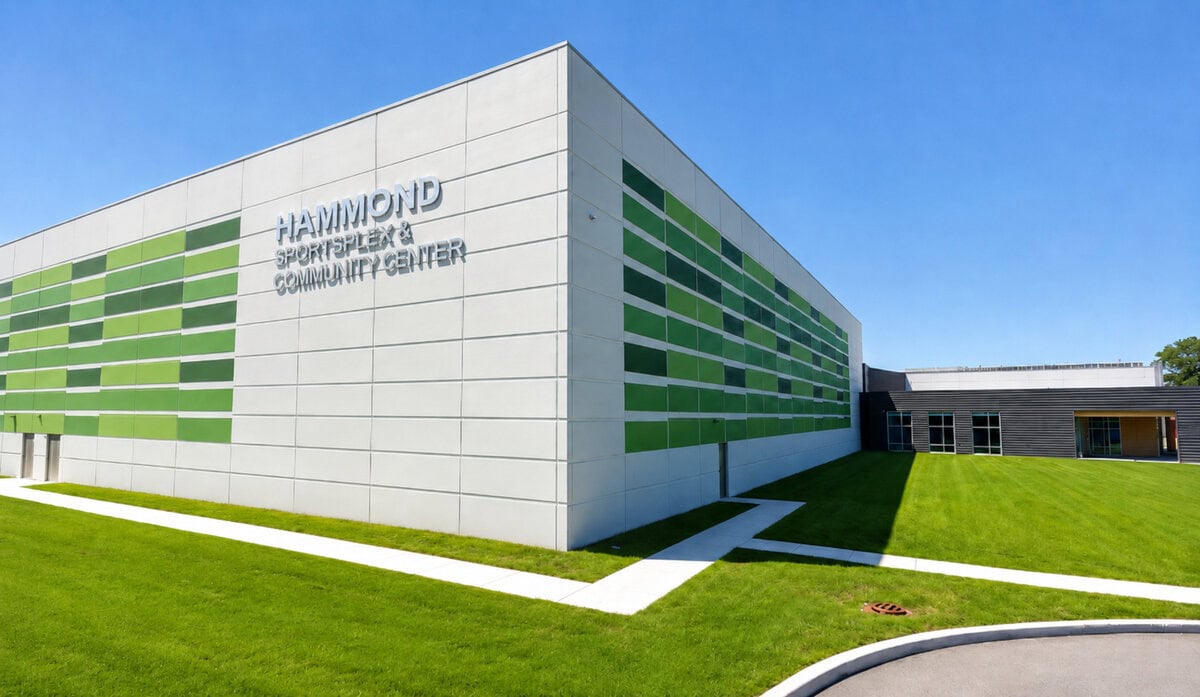
Ground broke for the Hammond Sportsplex and Community Center in August 2017.
The sportsplex opened in September 2018.
Its original 135,000-plus square feet included six basketball courts, volleyball configurations, two regulation indoor soccer fields, six batting cages, a quarter-mile suspended walking track, community rooms, concessions, offices, restrooms, changing rooms, and upper-level viewing areas.
The financing included an $8.7 million HUD loan guarantee, which required community-center elements such as the meeting room and walking track.
The total construction cost reached about $20 million.
Carson's closed in 2018 during Bon-Ton's liquidation, ending a Woodmar tenancy that had begun in 1954 and continued through every form the property took.
The former Carson Pirie Scott building was demolished in August 2019, and no original Woodmar structure remained after that point.
The sportsplex continued to develop: Union Lounge opened on the second level in October 2019, Swingers Golf Simulator and Lounge followed on the second floor in September 2025, and a 20,000-square-foot expansion with a new soccer wing was completed in November 2025.
The expanded facility includes 20 volleyball courts, 10 basketball courts, four relocated sand-volleyball courts, and the golf-simulator lounge.
What the Woodmar Site Is Today, and What Remains of What It Was
The Hammond Sportsplex and Community Center now operates at 6630 Indianapolis Boulevard.
Its users include Velocity 219 Volleyball, Hammond FC youth soccer, NWI Tradition basketball, indoor soccer leagues, youth skills programs, people who use the walking track, renters of the community rooms, and Swingers Golf Simulator and Lounge.
In January 2026, the Hammond Common Council voted 9-0 to pass an ordinance changing the Hammond Sports Facilities planned-unit development.
The change allowed a YMCA expansion with a water park. It also dealt with commercial buildings along 165th Street as temporary structures until later construction phases.
The project was expected to bring $250,000 to $300,000 a year in extra spending to nearby hotels, restaurants, and businesses.
That is a different kind of economy from the old mall. The mall brought in daily shoppers from nearby neighborhoods. The sportsplex brings in athletes, families, and tournament visitors from a wider region.
Carson Pirie Scott's Woodmar store opened in 1954 as the chain's first Indiana location.
It served customers when the site was an open-air shopping center, then when it became an enclosed mall, and then as a standalone department store after the mall was gone.
It stayed open until 2018. The enclosed mall is gone. So are the mini-malls inside it, the food court, and the department store.
Today, the 19.7-acre site is used for court time, league schedules, and gym access. It is still a community place, but it serves the community in a different way on the same land.
Independent Publisher Notice
BestAttractions is an independent editorial publisher. We are not affiliated with, endorsed by, or acting on behalf of any location, business, property owner, manager, government agency, or organization described in this article.
Comments posted on this page are not forwarded to, reviewed by, or acted upon by any entity mentioned in the article.
For official inquiries, complaints, applications, bookings, or other requests, please contact the relevant entity directly through its official website or other verified channels.