
Country Club Mall and the three-state pull
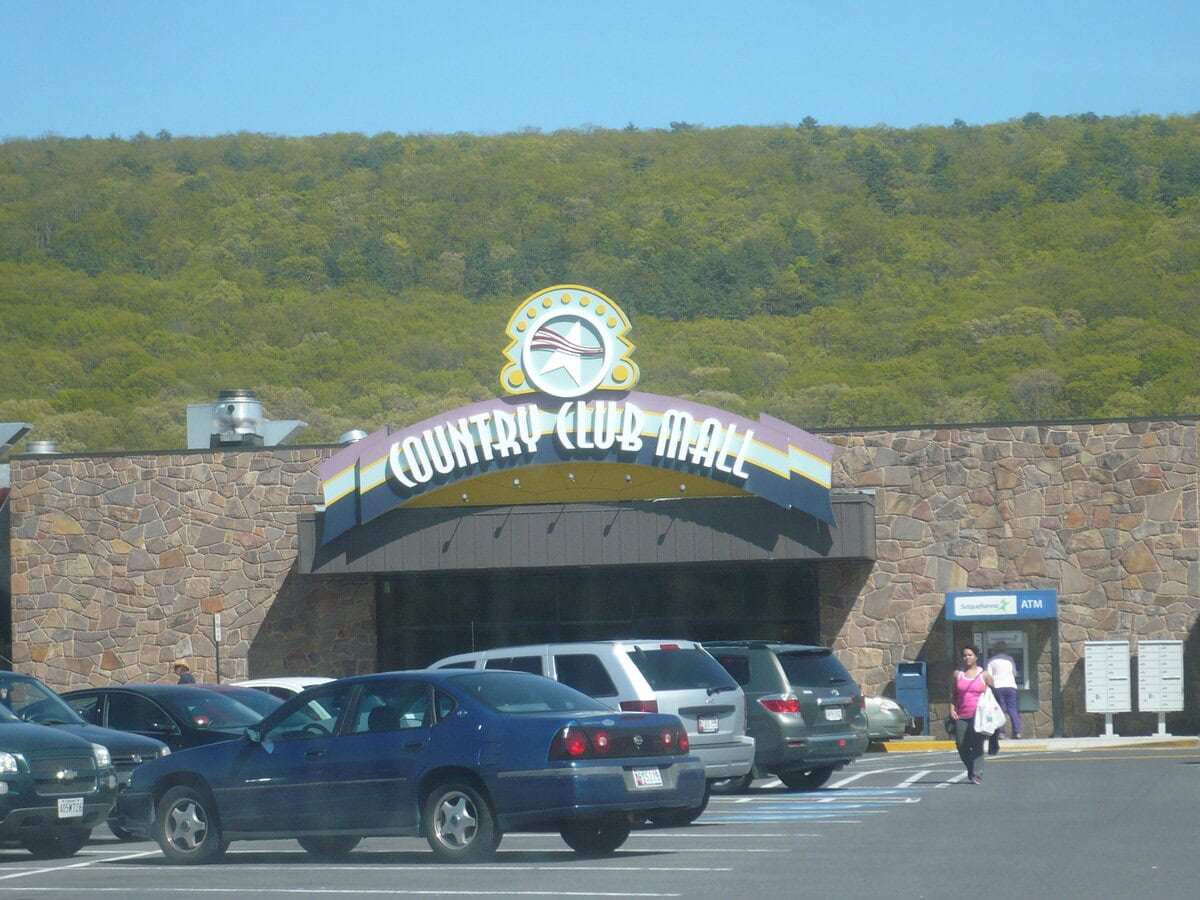
Country Club Mall is in LaVale, just outside Cumberland, at 1262 Vocke Road. It is so close to Interstate 68 that it always feels busy. In Western Maryland, convenience is not common.
It only happens in special cases out here. For years, this mall has been that rare special case: it is the only indoor shopping center for about 65 long Appalachian miles.
That distance makes the mall more than just a local spot. Shoppers come from Allegany and Garrett counties, and also from northwestern West Virginia and southern Pennsylvania.
People from all three states come here, especially in winter, because they can shop and run errands without having to go back outside.
Downtown Cumberland has its small shops and places to walk and browse. There are antique stores, outlet stores, and other places to shop.
But none of them offer the simple comfort of an indoor mall where the weather does not matter.
The economy around the mall changed in ways that made the mall's appeal even more useful.
In 1970, about a third of jobs in Allegany County were in manufacturing. Over time, jobs in services and stores grew, expected to reach about 36% and 22% by 2030.
The mall did not cause this change, but it took advantage of it. As the area shifted from making things to selling and helping with them, people coming to the mall became an important part of local life.
Strip mine, Coverwood, and $12M roads
Before anyone bought perfume here, the land had a much tougher job. The mall's 64 acres are part of a bigger 192-acre area that was once used for strip mining and for a golf course called Coverwood.
The difference is almost too perfect: the ground is dug up, then turned into a place for fun, then covered for business.
In 1979, the strip mine was filled in. It was an environmental cleanup, not the kind of project that gets celebrated, but it made the next step possible.
A filled pit becomes a solid surface. A solid surface becomes a place to build.
That is the plain process that creates most suburban shopping areas.
Maryland moved things along by building roads. The state spent about $12 million on new roads to help the area grow.
The new roads made it possible for a big shopping center to work in LaVale, and they also pulled shoppers away from downtown Cumberland.
Many people in the area started to think that the roads that made the mall possible also sped up the closing of smaller stores downtown.
Roads do not usually show their side effects. They just make new routines easier than the old ones.
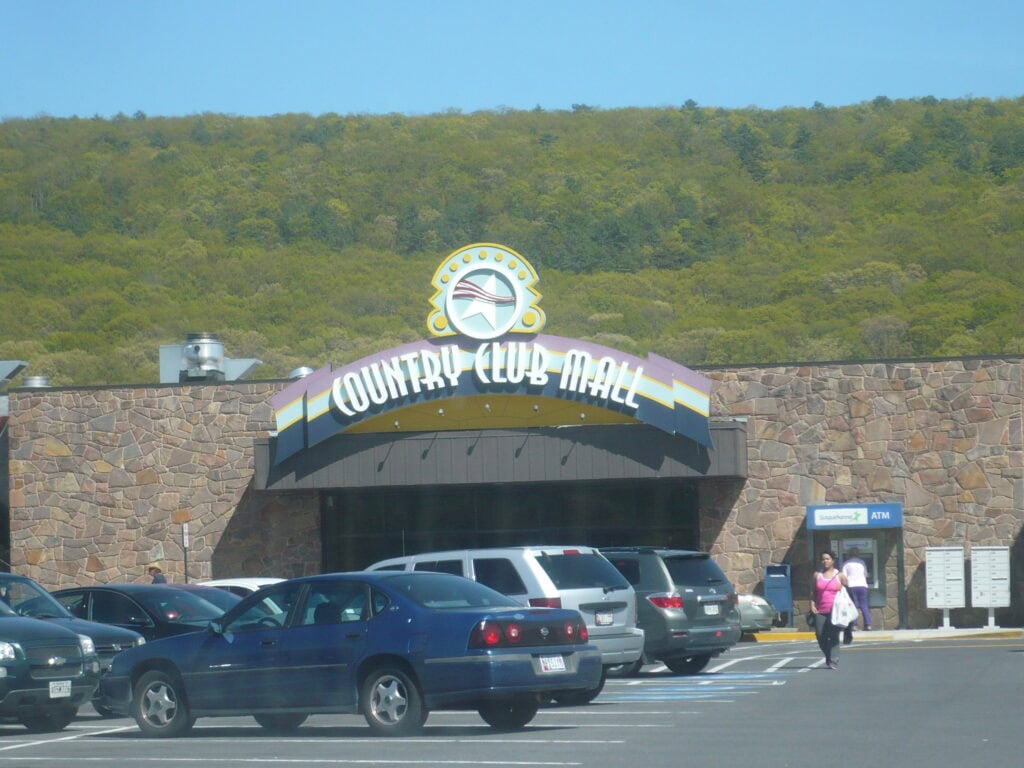
1981: Anchors Arrive in LaVale
Country Club Mall opened in 1981, built by Shopco Development Company of New York City. It was designed as an indoor shopping center for the Cumberland area.
The plan included about 60 smaller stores along with big department stores that made the trip worthwhile.
The original main stores were Kmart, JCPenney, and Eyerly's, with Sears opening about a year later, in 1982. Eyerly's was the most familiar local name.
The store was bought in 1948 by S. Grumbacher & Son, the company connected to what became the Bon-Ton department store chain.
When the mall opened, Eyerly's gave the new building a name people in the area already knew. Later, it was replaced by Bon-Ton, which was mostly just a new name on the sign.
The layout was simple and straightforward.
Large stores were at the ends, smaller shops were in between, and a hallway let people walk around like they were on a downtown street, but without worrying about the weather or parking.
In an area where places are far apart, the real new idea was putting all your errands in one place so you could finish them in one afternoon.
DeBartolo to Simon, the ownership shuffle
In the late 1980s, Country Club Mall was acquired by the Edward J. DeBartolo Corporation of Youngstown, Ohio, one of the most influential mall operators in the country.
By the early 1990s, DeBartolo controlled over 78 million square feet of retail space across more than 100 malls and centers.
The company had helped define what the enclosed regional mall even was.
By then, the industry was changing. As bigger suburban areas filled up with malls, major developers started looking at smaller towns and less crowded areas where one mall could become the main place to shop.
Country Club Mall was a good fit for this plan: it served a wide rural area, had little competition, and was in a spot where other shopping options seemed far away.
The 1990s saw a lot of ownership changes. Records show Compass Retail owned ownership interests of the mall around 1993.
In 1996, Simon Property Group bought DeBartolo Realty Corporation for about $3 billion, making a much bigger company with more power to make deals with stores.
After the merger, Lend Lease Real Estate Investments managed the property, but they were selling off their U.S. malls to focus on other things.
For shoppers, nothing seemed to change: the same hallways, just different owners behind the scenes.
Gumberg's steady years and the Walmart weld
On January 15, 1999, J.J. Gumberg Properties purchased Country Club Mall for $32.4 million.
Gumberg started in retail in 1977 and was known for hands-on management, always updating its properties and keeping most spaces filled in a group of buildings that added up to about 22 million square feet.
The way they did business was simple and traditional: keep everything clean, repair things quickly, and treat the people who rent space like long-term partners.
Then a crisis opened the door to a rare improvement. Kmart filed for bankruptcy and closed its store in 2002.
Instead of letting that box sit empty, Walmart acquired the Kmart structure and opened a Walmart Supercenter in 2004.
The new store included a direct interior entrance into the mall, an uncommon configuration for Walmart.
For two decades, it worked. The mall stayed busy through the 2000s and 2010s, still having about 90% of its spaces filled as late as 2017.
Stores like FYE and a food-court Chick-fil-A were not just nice to have. They showed that the mall still had enough activity to support stores that sold more than just basic needs.
By September 2004, the property measured about 527,000 square feet. By May 2013, it was about 600,000.
Screens, buses, and the mall's odd days
A mall can survive without charm. It has a harder time surviving without something to do.
Country Club Mall has long had its cinema, the largest theater facility in Allegany County, and it has changed hands in ways that track the wider movie business.
The original venue operated as AMC Country Club Mall 6. AMC's lease was set to expire on July 31, 2011, and the chain chose not to renew.
The theater closed on July 17, 2011, a mid-summer shutdown that left the building briefly feeling unfinished.
In August 2011, WPA Theaters took over and reopened it as Country Club Cinemas, expanding from six screens to eight.
The mall's daily life has always been broader than its parking lot.
Allegany County Transit runs Green, Gold, and Purple lines to the mall and Walmart, and Frostburg State University shuttles use the property as a destination.
And then there are the stories a mall collects by accident: a police-impersonator scam at JCPenney on May 14, 2012, and a deer wandering into Barbara's Hallmark on December 15, 2012, before staff guided it out through a back door.

2018-2020: anchors go dark, one by one
From 2004 through 2018, the mall's anchor roster held steady: Walmart, JCPenney, Sears, and Bon-Ton, with about 60 inline tenants filling out the interior.
Then the department store era began to collapse in public, one bankruptcy notice at a time.
Bon-Ton, a chain founded in 1898, filed for Chapter 11 bankruptcy on February 4, 2018, and announced it would close all locations.
At Country Club Mall, the Bon-Ton store closed on August 29, 2018, leaving a 74,200-square-foot anchor space empty.
The mall still reported about 90% occupancy around that period, which made the closure feel less like a local failure and more like a national wave washing through a small place.
Sears followed. In November 2019, Sears Holdings announced plans to close 96 stores as part of its restructuring.
The Country Club Mall Sears closed in February 2020, removing another 90,000 square feet and creating what the industry calls dark space.
JCPenney, an original 1981 anchor, filed for Chapter 11 bankruptcy in May 2020 amid pandemic disruption and announced 154 store closures.
The company closed hundreds, even as it was later acquired out of bankruptcy in 2020 by major mall owners and partners.
The LaVale location was closed in October 2020, ending a run that had lasted from opening day.
Namdar's hot summers, Rural King's arrival
In April 2021, Namdar Realty Group and Mason Asset Management acquired Country Club Mall, with Mason handling leasing and Namdar managing day-to-day operations.
The ownership style shifted from long-term upkeep to cost-cutting, a pattern Namdar has carried across many secondary-market malls and one that has brought public criticism and legal pressure in other cities.
FYE closed in 2021 and was replaced by a pickleball entertainment venue. Chick-fil-A left in 2021. Occupancy that had been about 90% in 2018 fell to roughly 60% by 2023.
The summers were worse: two consecutive seasons of HVAC trouble culminated in July 2025, when Books-A-Million shut down after liquidating its inventory.
TJ Maxx closed for weeks during air-conditioning problems before later reopening.
Late 2025 brought a counter-story. Rural King opened in the former JCPenney space in early November and held grand opening festivities November 7-9.
It arrived as "America's Farm and Home Store," with an expanded "Country Cupboard" grocery section, free popcorn and coffee, mobile and self-checkout, an updated customer service desk setup, and a "Gun Barn" department.
The opening created more than 70 local jobs, and for a mall that had been bleeding anchors, that counted as a pulse.
Tenants, dark anchors, and what's next
By December 2025, Country Club Mall totals about 600,000 square feet.
It still works as an enclosed, climate-controlled circuit, with skylights that keep the building's 1981 bones visible, whether you find that charming or merely persistent.
Inside are roughly 25 retail units that stand along the main concourse, plus a food court with four vendor spaces.
The parking is ample, the access is easy, and the region still does not have another enclosed competitor within that long radius.
The anchor list is both a survival story and a warning label. Five anchors operate: ULTA Beauty, Walmart Supercenter, Country Club Cinemas 8, TJ Maxx, and Rural King.
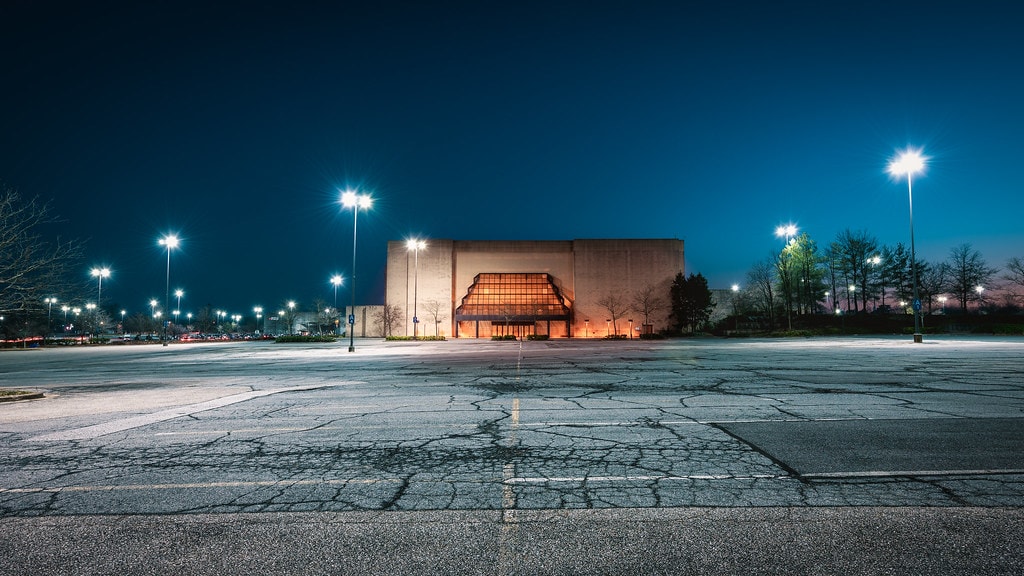
Two large anchors remain vacant: the former Bon-Ton at 74,200 square feet and the former Sears at 90,000, more than 164,000 square feet total, roughly 27% of space sitting dark.
Inline life is a mix of familiar retail and practical services: American Eagle Outfitters, maurices, Shoe Show Mega, Finish Line, Spencer's, Claire's, Kay Jewelers, Bath & Body Works, GameStop, General Nutrition Center, AT&T, Cell Fix, New New Spa, Keller Williams Realty, Holiday Hair, and Walmart Auto Care Center.
Dining holds on through Wasabi Steakhouse, Smoothie Grille, Auntie Anne's, and In Between Cafe.
LongHorn Steakhouse was planned as an outparcel on the Country Club Mall property at the Vocke Road entrance. In April 2025, early site work was visible, and construction continued through the year. In the first week of December 2025, it opened in LaVale.
The mall's long-term odds still hinge on the same basics: fill the dark anchors, fix the building systems, keep the loop comfortable enough that people keep choosing it.
Sears was not an original anchor. It was down at Searstown where Kohls is. The old Sears Auto free standing now houses a Cell Phone company, eye doctor and hair care. Kmart was where the Mall center is now. Original Anchors were Kmart and JC Penny. I know this because I was a manager for Hills in the south end and had to go price checking there numerous times in the early 80's . After Kmart closed which I do not know when, it appears that the mall was expanded to where Walmart began. I believe Walmart was originally where Gabes is now. The entire Mall might be 600,000 SF but Rural King and Walmart are separate parcels that were split off over the life of the mall. There is no smoothie grill anymore. The owners of what is left appear to be milking it not putting any money into it.
I appreciate you taking the time to share those specifics. Firsthand experience from that time adds real clarity to the history.
I wish they would put a Target store and an Ikea store in the Lavale (Cumberland) mall. We need some big name stores. Would love to see JCPenney and Sears come back. Miss them so so much.
The "big name stores" point is practical, not just preference. Recognizable retailers help rebuild habits. People come in for one store, then stop for food, browse a few others, and spend more time there. That kind of foot traffic is what gives a mall a real chance to stabilize.