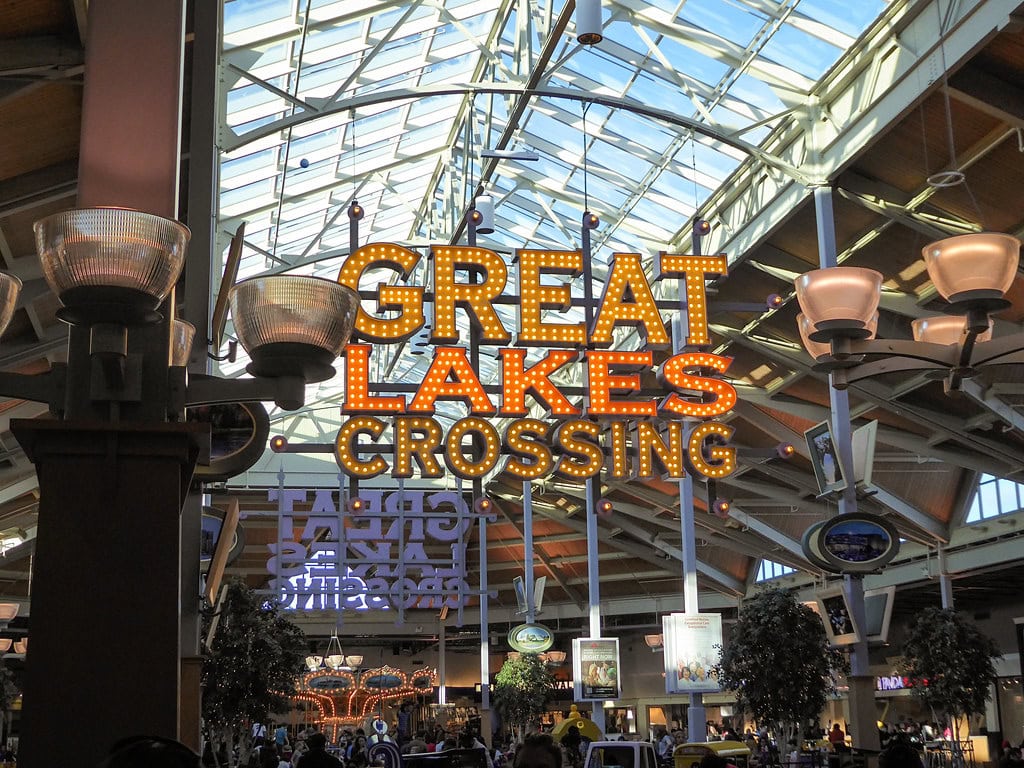
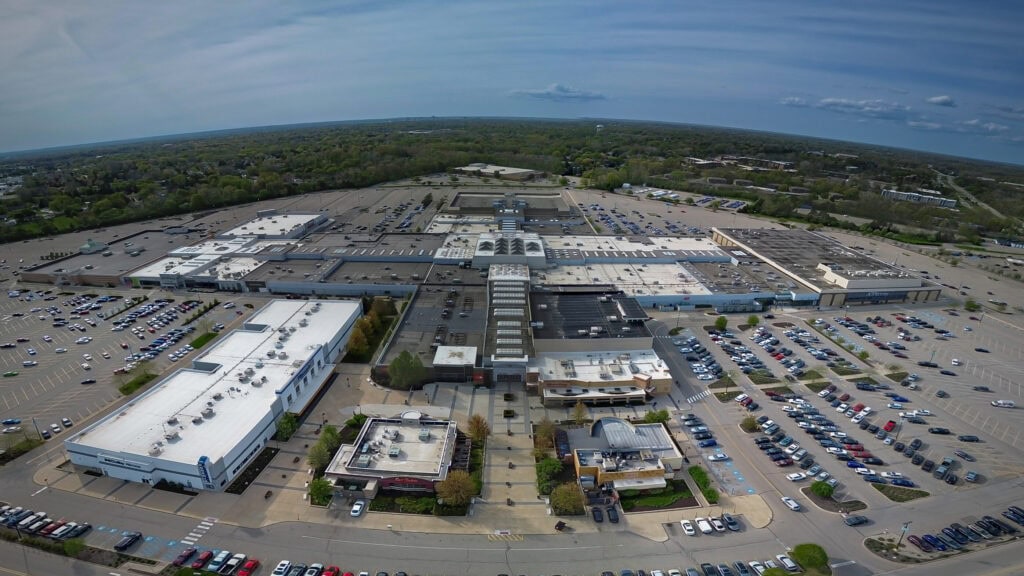
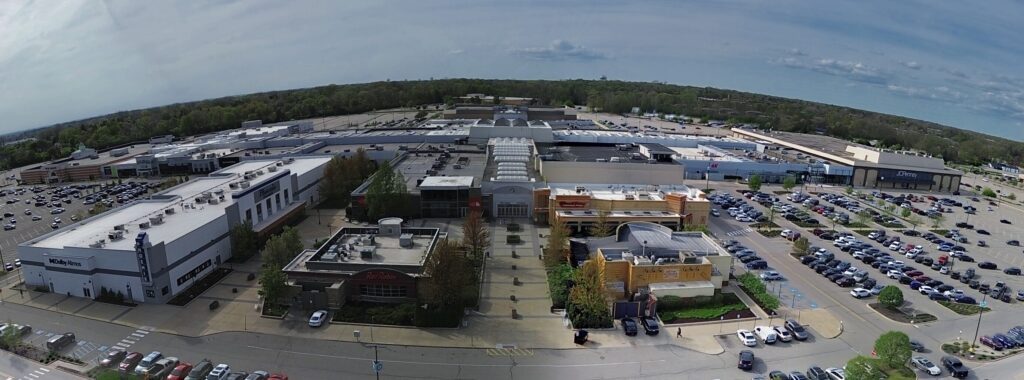
Woodland Mall sits in Kentwood, Michigan, within the Greater Grand Rapids area of Kent County.
It's an enclosed super-regional shopping center located where 28th Street SE meets East Beltline Avenue, two heavily traveled roads with a combined daily traffic count of about 85,000 vehicles.
The mall draws shoppers from a wide region of about 1.5 million people, including Grand Rapids, Wyoming, Kentwood, and other communities across western Michigan.
It opened on March 13, 1968. At that time, it was the largest shopping center in Michigan outside the Detroit area, and for over 30 years, it remained the only super-regional mall serving the Greater Grand Rapids metro.
A Cold Wednesday and a Crowd That Wouldn't Fit
March 13, 1968, was a cold Wednesday in West Michigan. Thousands of people drove in from around the region to stand inside a building unlike anything they had seen before.
Woodland Mall stood at the corner of 28th Street and East Beltline Avenue in Kentwood.
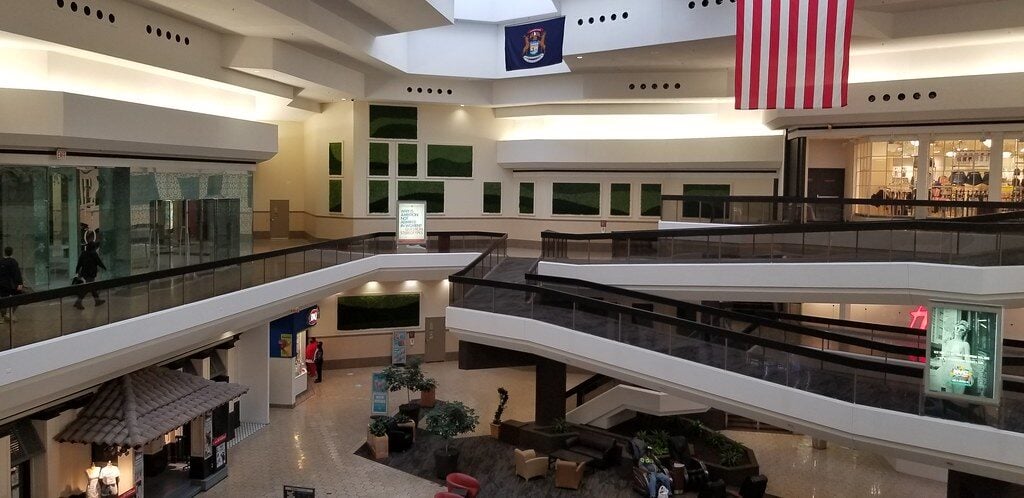
It was fully enclosed, with heating and air conditioning, and featured 952 feet of interior walkway connecting stores from one end to the other without ever stepping outside.
Sears anchored the southwest end with 326,000 square feet. JCPenney anchored the northeast with 256,000 square feet. A Kresge dime store was located in the Sears wing.
The 145-acre site had space for 5,200 cars. On opening day, it was the largest shopping center in Michigan outside the Detroit area. People came from around the region just to see it.
Developer A. Alfred Taubman and his Chicago partner Archie Siegel set the project cost at $20 million.
The 69 stores, shops, and service businesses that opened on March 13 were only part of a larger plan for the site.
The full proposal included auto-service buildings for both anchor stores, a Farmer Jack supermarket, a 1,200-seat movie theater, a 300-room motel, office and professional buildings, and a 400-unit apartment complex on nearby land.
The original target opening date was February 28, but the mall opened two weeks later. Most of the surrounding buildings were never built. The mall itself opened largely as planned.
Woodland Mall and Kentwood's Incorporation
The mall did not just open in Kentwood - it helped bring Kentwood into existence. In 1967, Paris Township was still an unincorporated stretch of land southeast of Grand Rapids.
Grand Rapids had already annexed territory east of the proposed mall site, and township residents knew the mall parcel itself could end up inside city limits if they waited.
The expected tax revenue from Woodland was the single most important factor that pushed enough people to vote for incorporation.
Paris Township became the City of Kentwood in 1967, one year before the mall opened, and Woodland's property taxes stayed in Kentwood.
Taubman and Siegel had picked the 28th Street and East Beltline intersection deliberately - it sat at the edge of the region's growth corridor, accessible by car from Grand Rapids and the suburbs spreading southeast.
Rogers Plaza had opened in 1961, making Woodland part of a second wave of suburban mall construction in Greater Grand Rapids, but Woodland was far larger than anything that had come before it.
The city that incorporated to keep it has grown up around it ever since.
Kentwood today has its own police department with a dedicated Woodland Mall officer - a position that exists because of the mall's scale and the volume of development that has continued on and around the property.
Hudson's, Holiday Traditions, and the Macy's Transition
Seven years after opening, Woodland added a direction it had not originally included.
A Hudson's department store opened on July 21, 1975, completing a northwesterly central wing that gave the mall its third major anchor.
Hudson's quickly became the store people recalled most strongly when looking back on Woodland's first decades.
The holiday atmosphere inside was its own thing - a pianist played during the Christmas season, and the mall staged an annual production of "A Christmas Carol."
The original Christmas decorations throughout the mall were elaborate enough that, when they were eventually retired, some pieces went to the Grand Rapids Public Museum's "Streets of Old Grand Rapids" exhibit.
Hudson's kept its name above the door until 2001. In 2001, parent company Target Corporation consolidated its department store brands nationally, and Hudson's became Marshall Field's.
In 2006, a national acquisition converted Marshall Field's locations across the country into Macy's.
The store that Woodland shoppers had known as Hudson's for 26 years was now Macy's, and it has operated under that name ever since.
The mall's holiday identity kept evolving long after: by 2017, Woodland was staging an "Arctic Forest" display with 12 decorated trees and a 12-foot lighted polar bear named Ursa.
The Woodland Mall free-speech case
In April of 1982, members of the Michigan Citizens Lobby went to Woodland Mall to collect signatures for a ballot initiative petition.
Woodland had a written policy that prohibited activities unrelated to retail - no soliciting, no petitioning, no speeches, and no distributing handbills.
The mall refused permission. The group entered anyway and began collecting signatures, and Woodland obtained a court injunction to stop them.
The dispute did not stay a minor trespass matter. Both sides continued the case until it reached the Michigan Supreme Court. In 1985, the court issued its decision in Woodland v. Citizens Lobby.
The central question was whether the Michigan Constitution prevented a private shopping mall owner from denying access to people seeking to exercise rights of free speech, assembly, petition, and initiative on the property.
The court held that it did not. It ruled that private mall owners in Michigan could enforce no-petitioning rules and were not required to allow expressive activity simply because the public gathered there.
The decision drew a clear distinction between a public square and a privately owned commercial space.
Michigan courts still cite this case in disputes involving speech in spaces that function like public areas but are privately owned.
The RiverTown Fight and the Anchor That Never Opened
Through most of the 1990s, Woodland held a position no mall had enjoyed in West Michigan in decades: it was the only super-regional shopping center in the entire metro.
That ended when a competing developer announced plans for RiverTown Crossings in the neighboring suburb of Grandville.
Taubman, which still co-owned Woodland, tried to block RiverTown through legal action. Grandville residents voted to support the project anyway, and RiverTown opened in 1999.
Taubman had anticipated the competition and started planning a $45 million renovation of Woodland's interior - new flooring, updated lighting, curved ceiling details, and modernized entrances throughout.
Alongside that renovation, Lord and Taylor was proposed in 1997 as a fourth anchor at the mall's southeastern end.
Hudson's objected, claiming it held veto power over new anchor tenants, and sued to block the addition. The lawsuit worked.
Lord & Taylor never opened at Woodland. The southeastern end got a food court instead - called "Cafes in the Woods" - added next to JCPenney in 1999, along with a children's play area in the Sears wing.
The interior renovation went forward and updated the common areas throughout, but the fourth anchor planned since 1997 was gone.
Woodland entered the 2000s with three department stores.
PREIT Acquires Woodland Mall
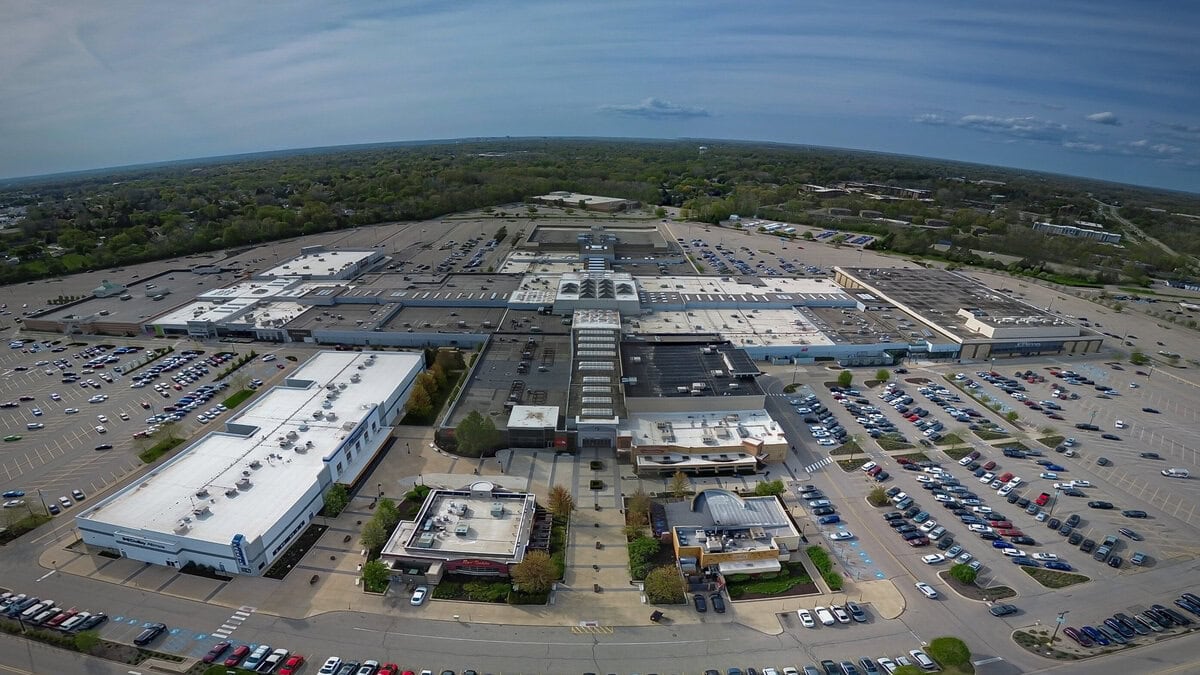
In January 2006, Pennsylvania Real Estate Investment Trust paid $177 million for Woodland, buying it from the joint venture that Taubman Centers and Prudential Real Estate Investors had maintained together since 1968 - a 37-year, 50-50 partnership dissolved in a single transaction.
Woodland became PREIT's only Michigan property.
In 2005, a 14-screen Cinemark multiplex opened at the mall's southeastern end, joined by Red Robin and On the Border restaurants.
Cinemark sold the theater to Celebration Cinema one year later. Barnes and Noble relocated from a nearby standalone store into a two-story space at the mall, opening on October 21, 2009.
By 2013, Woodland was still functioning as the standard entry point for national retailers coming into West Michigan.
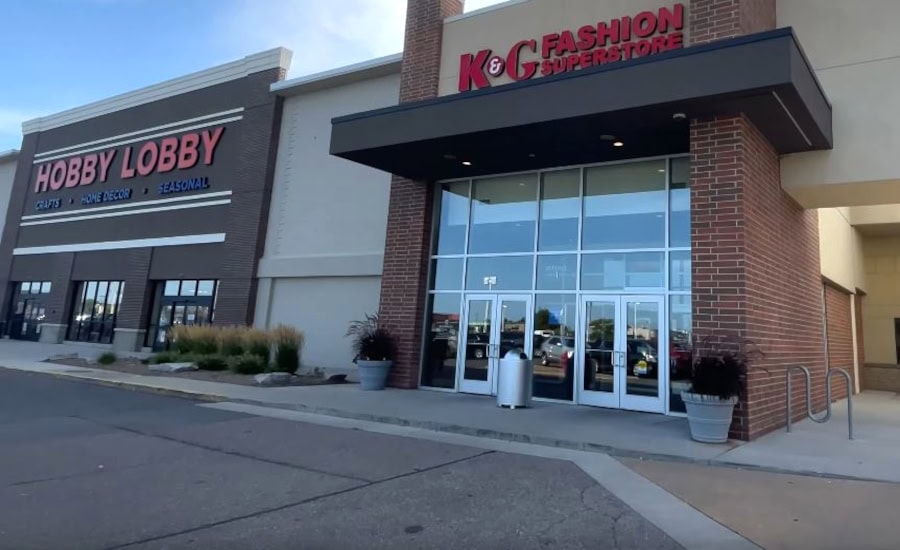
H&M signed a lease for a 19,000-square-foot store - its first location in western Michigan - which opened in October 2013.
That pattern had held since the mall's earliest years: brands wanting a West Michigan presence started at Woodland.
The 2006 acquisition gave PREIT a property it would spend the next two decades reshaping, and the years immediately after the purchase were focused on stabilizing the tenant mix and adding the entertainment and dining uses along the southeastern wall that Woodland had lacked for most of its history.
Sears Closes, Former Sears Wing Is Rebuilt, and $100 Million Remakes the Mall
Sears closed its Woodland Mall store on March 26, 2017. It had been there since 1968, anchoring the southwest end from the beginning.
What usually followed closures like that was a search for another large tenant to take over the space. That didn't happen here.
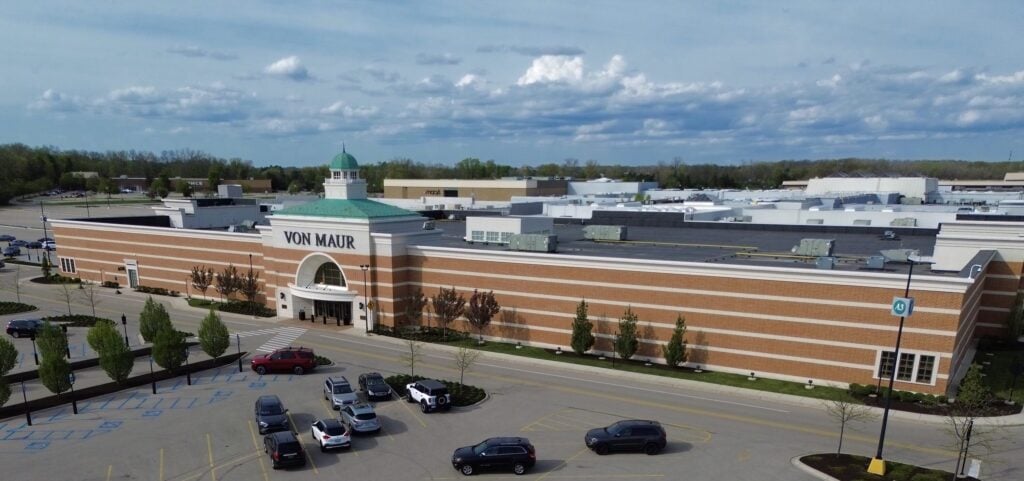
PREIT cleared the entire Sears site and started over. The old building came down. In its place, they built a new wing shaped around a different concept. The project cost about $100 million.
Instead of relying on one massive store, the space was divided into a mix of retail, dining, and experience-driven tenants, along with a smaller anchor.
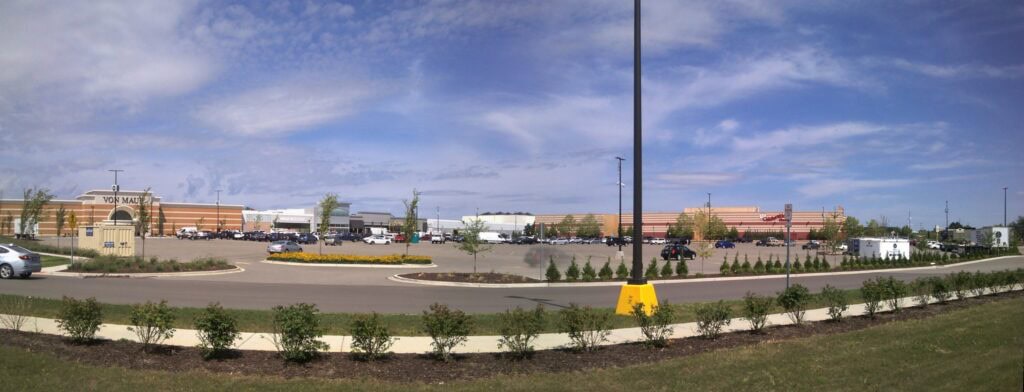
Von Maur filled that anchor role, opening a 90,000-square-foot store on October 12, 2019. It was the company's first in the region.
The same day, several other tenants opened: Urban Outfitters, a larger Williams-Sonoma, a larger Bath and Body Works, White Barn, Tricho Salon, and Paddle North.
REI had already opened earlier that year, in May 2019, with a 20,000-square-foot store, its first in West Michigan.
The Cheesecake Factory followed on November 5, 2019, opening an 8,500-square-foot restaurant. Black Rock Bar and Grill joined the lineup as well.
Less than three years after Sears closed, that part of the mall had been completely remade into its busiest new destination.
Phoenix, Main Event, Texas de Brazil, and Upcoming Changes at Woodland Mall
In July 2021, PREIT announced that Phoenix Theatres had signed a lease to operate the mall's 14-screen cinema, which had been sitting dark since Celebration Cinema vacated it.
Phoenix committed $4 million to a full renovation - premium heated recliner seating, 4K projection in every auditorium, and West Michigan's first Dolby Atmos-equipped theater.
Main Event signed for a 49,000-square-foot entertainment complex in a new building just outside the southeast entrance near Von Maur, with arcade games, laser tag, bowling, billiards, and a Family Kitchen restaurant.
It opened August 14, 2024, with grand-opening programming running through August 18. The LEGO Store opened at Woodland the same week, on August 16.
Texas de Brazil - a churrascaria and the first of its kind in the area - opened in the Von Maur wing in September 2025.
In December 2023, PREIT filed for bankruptcy protection for the second time since 2020, targeting $880 million in debt. Woodland's stores kept operating without interruption.
PREIT completed its restructuring and emerged from bankruptcy on April 1, 2024, then refinanced Woodland with an $80 million mortgage in November 2024.
A Shake Shack drive-thru is planned at 3029 28th St. SE in Kentwood, with an opening targeted for 2027.
A Portillo's has been speculated for roughly the same period, the first at any PREIT-owned property. Pop Mart and Swarovski are both set to open in 2026, and Garage had already opened by January of that year.