Crossroads Center: From groundbreaking to opening
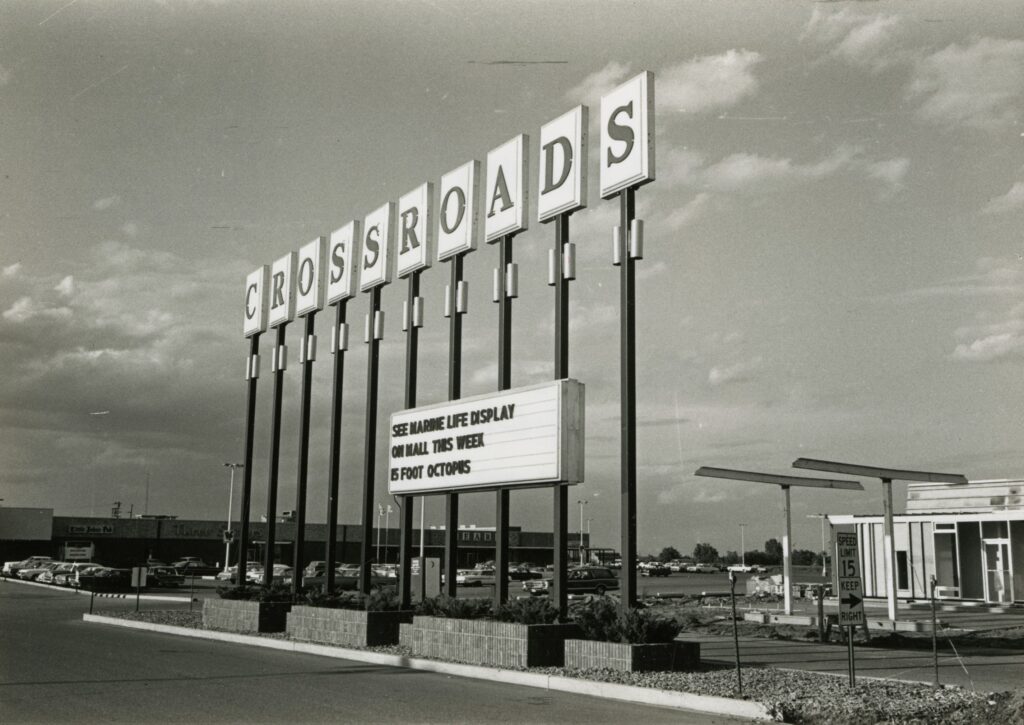
Construction started in September 1964 on a forty-acre site in St. Cloud, Minnesota, and Crossroads Center quietly but steadily started to become a regular part of the area.
The building went fast. By the end of 1965, before the mall even officially opened, Sears was already open next to a movie theater, with popcorn and appliance manuals in the same space.
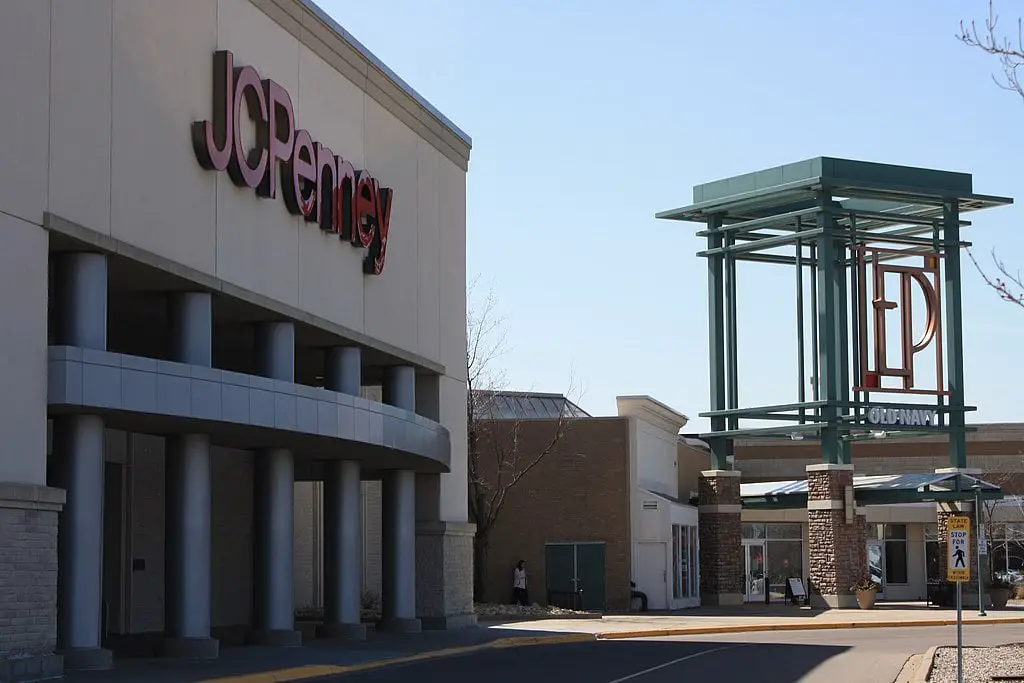
In the first week of 1966, JCPenney opened as the next big store in the shopping center, and in April, the mall had its grand opening.
The original design was a simple barbell shape, made to be easy to spot from Division Street, the main road.
Drivers saw the neat front of the mall, but shoppers found out how long the hallways stretched behind that front.
Even then, Crossroads Center had two main ideas that would shape it: to be easy to find, and big enough to turn a quick trip into an afternoon.
A roster of candy, shoes, and certainties
The opening-day list of stores at Crossroads Center followed the mid-1960s idea that a mall should feel like a whole town inside one building.
Besides Sears, JCPenney, and the theater, there were American Family Insurance, Buttrey's, Del Farm Food Store, Walgreens, and F.W. Woolworth Company, which made a certain kind of everyday hopefulness feel lasting.
Crossroads Barbershop and Lucille Heinen Beauty Salon took care of haircuts and styling at opposite ends of the mall.
The rest was a list of simple needs and small joys: D.J. Bitzan Jewelers, Fanny Farmer Candy Store, Hallmark Cards, Jensen Fabrics, Kiddie Koncessions, Kinney Shoes, Musicland, Pako Film Shop, Ralph's Bakery, Scheels Hardware, Shirley's Maternity Fashions, St Clair's Menswear, Stevenson's, Three Sisters, and Walbom's Apparel.
Altogether, the list shows a time when you could buy a card, a music tape, and a loaf of bread, then leave feeling like you had really done something.
Dayton's wing and the racetrack take shape
In 1976, Crossroads Center performed its first major growth spurt. The mall added 200,000 square feet and introduced Dayton's, a Minneapolis-based regional department store that arrived as both anchor and endorsement.
A new wing ran perpendicular to the original concourse, bending the old barbell into something more complicated and laying the groundwork for a quadrilateral racetrack.
The expansion was a response to success, but it also made a bet on the surrounding population that kept showing up.
Nearby were three major campuses: St. John's University, St. Cloud State University, and what is now St. Cloud Technical & Community College, supplying a steady procession of students looking for clothes, snacks, and a climate-controlled place to be.
Crossroads Center could sell them things, yes, but it could also hold them for a while, which is what malls do when they want to become part of the calendar.
With Dayton's in place, the property felt less like a local convenience and more like a regional destination, the kind of stop that could justify a drive from smaller towns and still leave you with time to wander.
Target arrives, and the corridors multiply
A second big expansion came in 1985, when a 108,000-square-foot Target and 23 specialty stores opened on the northeast end of the mall.
At that time, Target was a department store from Minnesota and the discount branch of the Dayton-Hudson Corporation. It was not yet the go-to national store it would later become.
Adding Target made Crossroads Center more appealing: you could visit for the style of a department store or for the simple value of a good bargain.
The shape of the building changed again.
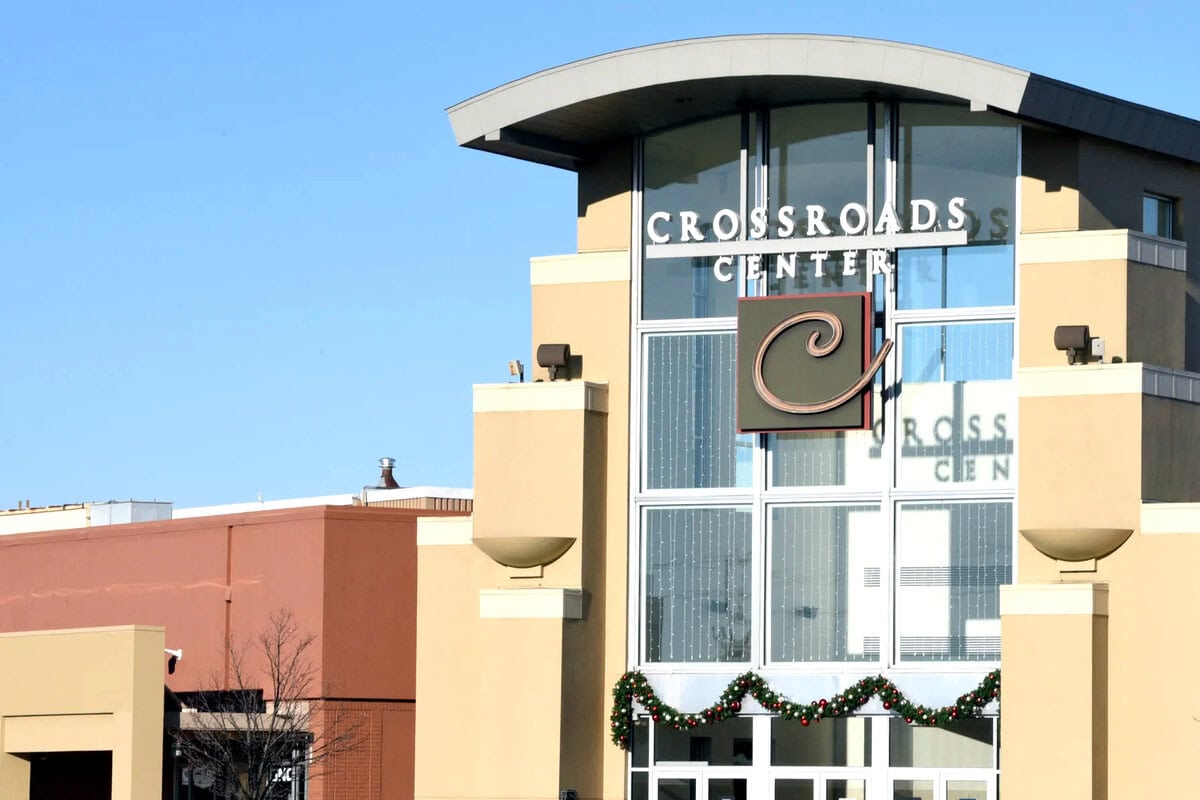
Several new sections built at different angles pushed Crossroads into the large, looping layout it would become known for, with hallways going in different directions and main stores placed at separate entrances.
It stayed a one-story mall, but it started to feel bigger because of how spread out it was.
Above the tile floors, the world of department stores was coming together. Dayton's changed its name to Marshall Field's in 2001, as part of an effort to use fewer store names.
Marshall Field's was later bought by May Department Stores, which then joined with Federated.
On September 9, 2006, Crossroads Center Marshall Field's became a Macy's, showing how retail history often starts with business deals and only later becomes something we remember fondly.
Skylights, a food court, and Scheels go big
By 2004, Crossroads Center needed to look less like a survivor of the 1980s and more like a mall that expected to see another generation.
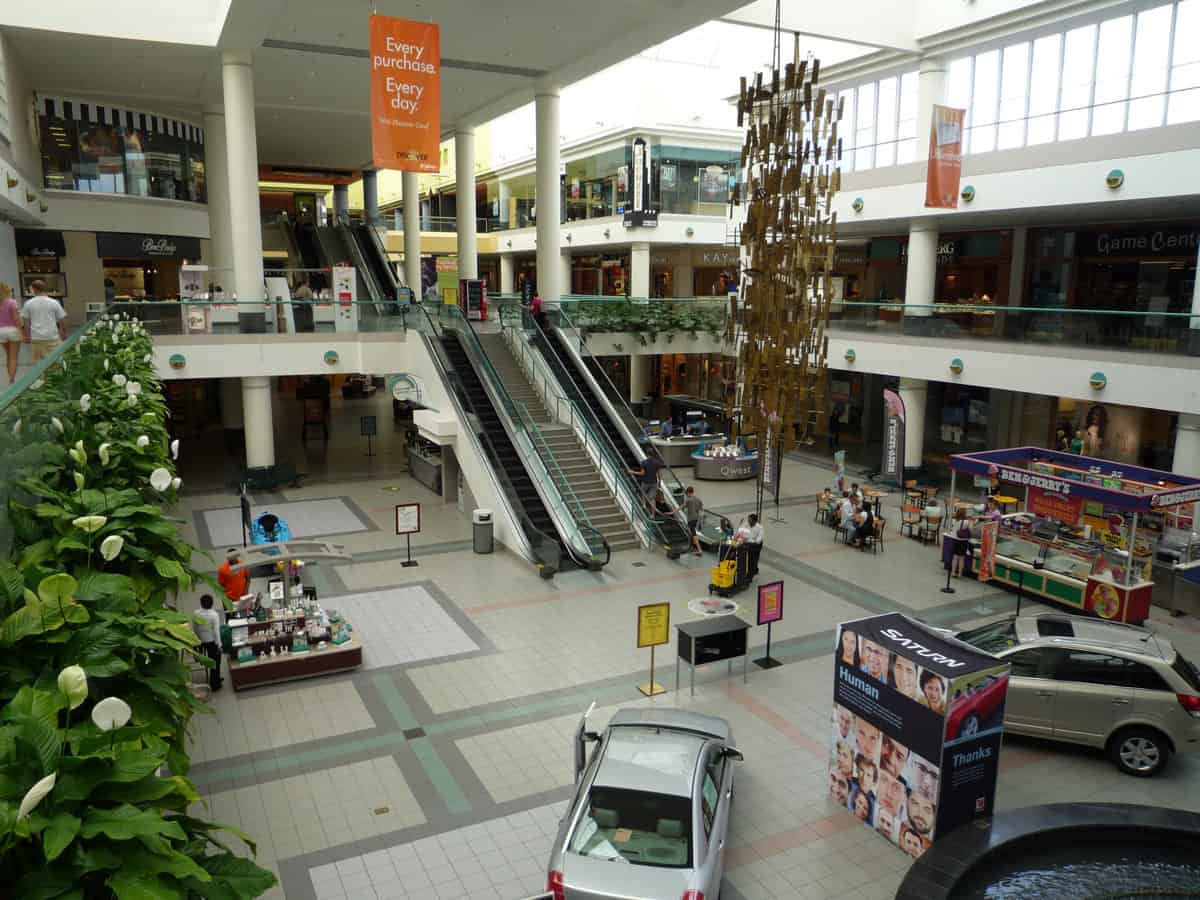
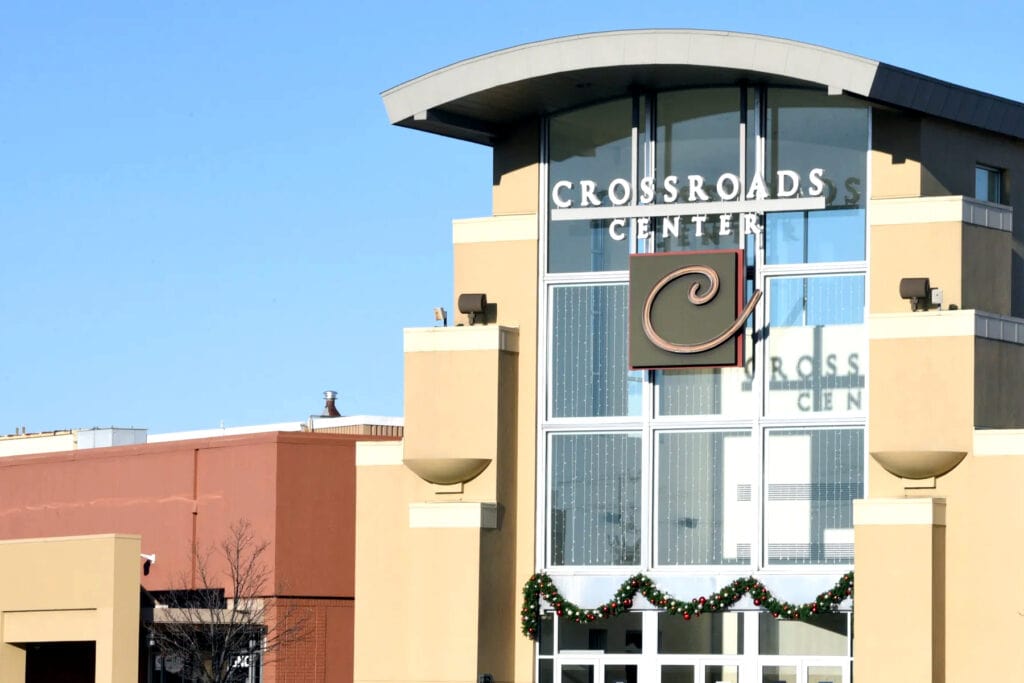
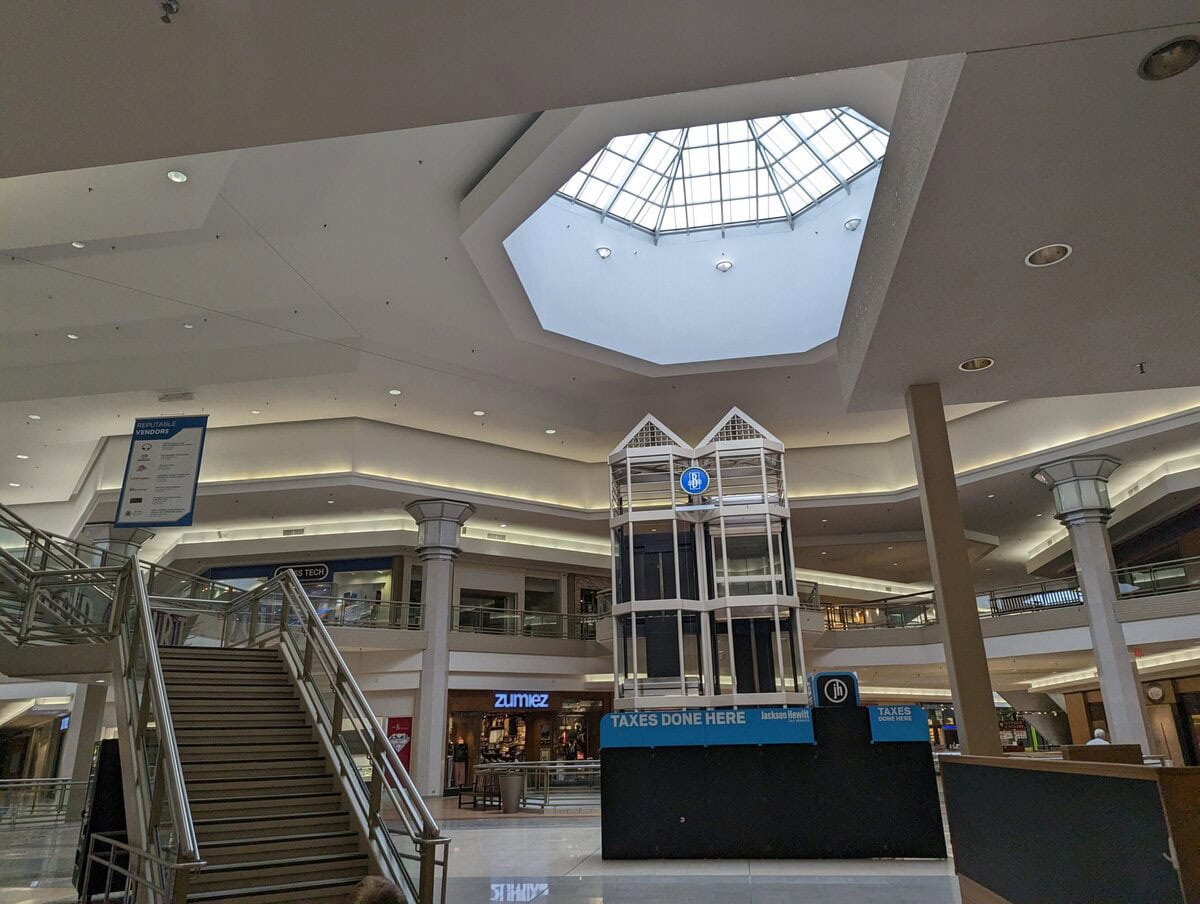
A comprehensive renovation delivered the modern promises: a 700-seat food court, additional skylights throughout the building, family restrooms, improved traffic flow and parking configurations, streamlined common areas, and a children's soft play area for the shoppers who were technically not shopping.
The renovation also arrived with a tenant statement.
In March 2004, Scheels All Sports relocated within Crossroads Center and opened a 128,000-square-foot superstore, expanding from a smaller in-mall presence into something closer to an attraction.
The chain, rooted in the Upper Midwest, was positioned as a regional draw, and the St. Cloud location would later be identified as one of Scheels' strongest in the region.
Together, the skylights and the superstore said the quiet part out loud: the mall was selling the idea of an outing.
A September night when the mall went quiet
On September 17, 2016, the mall stopped being a place for errands and became, briefly, something else. At about 8:15 p.m.
a 22-year-old Kenyan-born American, carried two steak knives - one ten inches long, one nine - and began stabbing people at Crossroads Center.
The first attacks occurred outside a nutrition store. He entered the main mall building, moving through the mall toward the Target and Macy's areas, where the evening had been ordinary until it wasn't.
Ten people were stabbed, ranging in age from fifteen to fifty-three. Their injuries were non-life-threatening, and those initially hospitalized were released by the next day.
Jason Falconer, an off-duty police officer and firearms instructor from nearby Avon, confronted Adan and fired multiple rounds, fatally wounding him.
Adan fell, then charged Falconer, fell again, charged a second time, and later crawled toward him before collapsing and dying from blood loss.
The FBI investigated the incident as a potential act of terrorism. Authorities ultimately said Adan's precise motivation remained unclear, though investigators explored whether radical ideology had played a role.
The mall closed on September 18 for the investigation, a closure the community remembered long after the doors reopened.
Sears departs; debt, courts, and receivership
In January 2018, Sears, which had been open since 1965 and was even older than the mall itself, finally closed after more than fifty years.
Crossroads Center did not leave the old main store empty. The space was split up for smaller stores: HomeGoods, Ulta Beauty, Crunch Fitness, and DSW Shoes, replacing one big department store with four more focused ones.
Then, in August 2020, the story shifted from shopping to money problems. Brookfield Properties, which owned Crossroads Center through St. Cloud Mall, LLC, stopped paying its mortgage during the COVID-19 pandemic.
The original loan had been more than $107 million. By 2023, court papers showed more than $83 million still owed, with extra charges adding up.
In July 2023, U.S. Bank Trust Company filed a foreclosure lawsuit and asked the court to appoint a receiver to manage the property; separate reporting put the mall’s value at roughly $50 million.
Trigild IVL was put in charge in October 2023, with the job of keeping the mall running and getting it ready to sell.
It also contacted local business leaders and the St. Cloud Chamber of Commerce, which was a clear change from the quieter way the previous managers did things.
New owners, full leases, and odd new tenants
A January 2024 judgment approved the purchase by Contrarian Crossroads LLC.
In May 2024, Contrarian Properties and Spinoso Real Estate Group acquired the mall through a debt assumption of just under $80 million, with a balloon payment of $79,870,000 due in May 2027.
Spinoso (a forty-one-mall operator) said its goal was "to evolve, redevelop and establish Crossroads Center as the premier shopping and entertainment destination" in the St. Cloud area.
Crossroads Center sits at 4101 West Division Street, straddling Waite Park and St. Cloud, and is 897,605 square feet (often rounded to 900,000), the largest mall in Minnesota outside the Twin Cities.
It is reported as almost fully leased, anchored by Scheels, Target, JCPenney, and Macy's. Target owns its connected building.
St. Cloud (about 72,000 people) leans on Centra Care Health (6,250 jobs), the VA hospital (1,700), and St. Cloud State University (about 9,600 students), and has been called Minnesota's fastest-growing labor force.
As of 2025, Crossroads Center feels like a mall that still follows the basics: it stays open, stays pretty organized, and gives people in the area a place to do errands without making it stressful.
The mall is in good but not amazing shape. It is clean enough to feel comfortable and works well for getting around, but sometimes the wide hallways feel a bit empty, like the place is taking a break between busy times.
The big stores, especially Scheels, are what keep the mall busy and important, not just a place people remember from the past.
The food court is where things are not as good. It has few choices and feels a bit worn out, like just being okay is not enough.
Still, the mall is easy to get to, has what people need, and feels well taken care of and reliable.