
The Birdcage Garden and the Name Cherry Hill
Before it had a food court, a Nordstrom, or a nine-story office tower, Cherry Hill Mall had birds.
The Birdcage Garden sat inside the original 1961 building: a 21-foot aviary holding finches, toucans, and myna birds, surrounded by a stream, a waterfall, a wooden bridge, and a gazebo.
Thousands of living trees and plants lined the interior courts, and full-time gardeners kept them. The air inside smelled like soil and humidity in the middle of a New Jersey autumn.
Cherry Hill Shopping Center opened on October 11, 1961, with Strawbridge & Clothier as its anchor and about 75 stores in its first phase.
New Jersey Governor Robert B. Meyner attended the ceremony. Tens of thousands of shoppers came that first day.
National attention followed almost immediately, because what stood at 2000 Route 38 in Delaware Township was something the eastern United States had not yet seen at this scale: a fully enclosed, air-conditioned regional mall.
Less than two months later, on December 6, 1961, Delaware Township officially renamed itself Cherry Hill Township. The mall was not the only reason, but it was the most visible one.
The Cherry Hill name had been circulating through the area for years - tied to a historic farm, and to Eugene Mori's Cherry Hill Inn - but the shopping center drove it into regional identity fast and permanently.
The township took its name from Cherry Hill Farm and the Cherry Hill name already used in the area.
How Cherry Hill Mall Became the First of Its Kind in the East
Eugene Mori announced his plans for the center in December 1953: a proposed $15 million development on an approximately 80-acre tract.
Delaware Township had no traditional downtown, no historic main street, no single commercial center of the kind a shopping center would compete with or complement.
A shopping center was conceived as a major retail and civic gathering place for a fast-growing suburb.
Strawbridge & Clothier signed on as the primary anchor in January 1955.
The Philadelphia department store chain planned its fourth and largest suburban branch - a three-story building of about 215,000 square feet, with a restaurant terrace and a main entrance opening onto the mall's central Cherry Court.
By March 1960, revised plans emerged for a fully enclosed center developed with James Rouse's organization and designed with ideas from Victor Gruen, the architect whose Southdale Center in Minnesota had introduced the enclosed-mall model to the country in 1956.
Strawbridge & Clothier held its groundbreaking in September 1960. Construction on the broader mall began in November.
What rose over the next year was the first fully enclosed, air-conditioned shopping center in the Northeast, and what most mall historians identify as the first of its type east of the Mississippi River.
The exterior used white brick, fieldstone, and decorative metal siding - deliberately plain outside, deliberately rich inside.
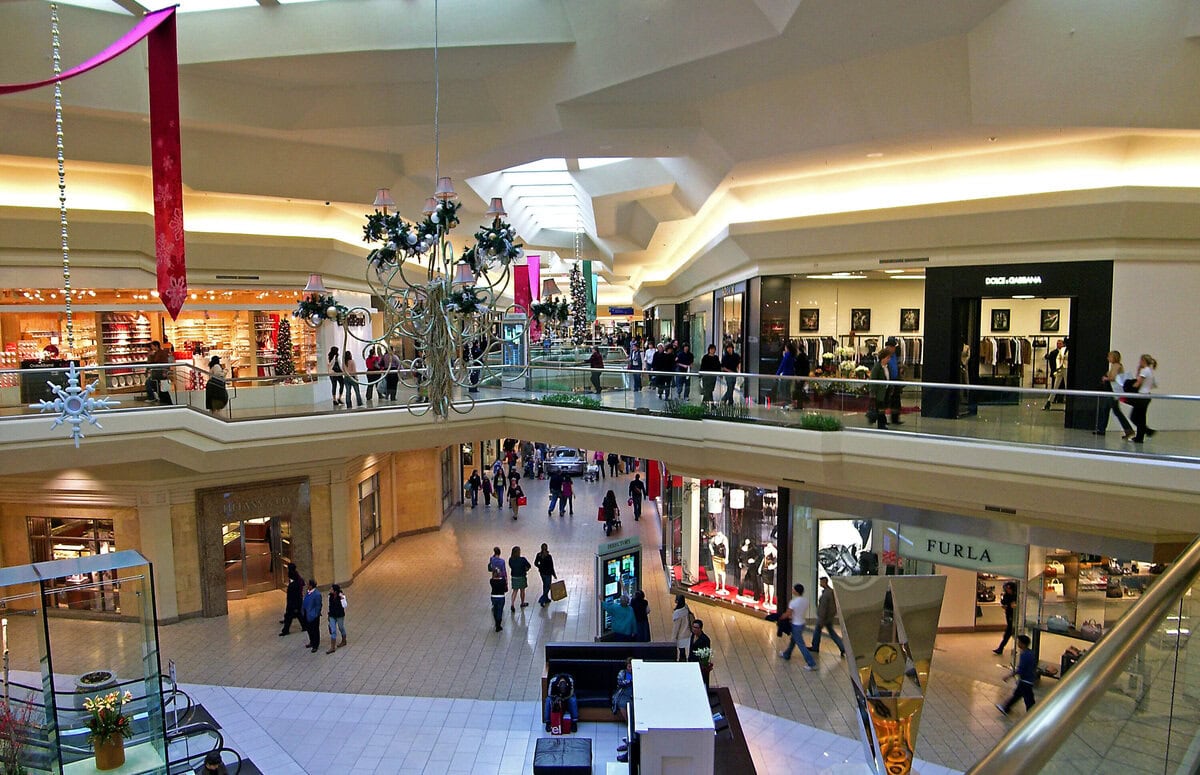
Named interior courts, quarry tile and terrazzo floors, skylights, and clerestory windows created a controlled public environment that bore no relationship to a strip mall and only a stylized relationship to a main street.
It was intended to be its own world.
Cherry Court, Community Rooms, and What the Mall Was Built to Replace
The original Cherry Court was the mall's center of gravity. It had a high arched ceiling, living trees, flowers, and a fountain with changing water patterns.
People sat there without buying anything. That was part of the design.
Along Delaware Mall, a community meeting room offered a main hall seating about 400 people, a smaller room seating about 90, and a full kitchen.
Churches, nonprofit organizations, and community groups used it the way they would use a town hall. A sidewalk cafe operated nearby.
A large movie theater opened in March 1962, with about 1,600 seats, and it ran for 25 years before dividing into two screens in 1970 and closing in February 1987.
Penn Mall held Market Court, designed to suggest a European market square.
Court of the Islands came later with the 1962 Bamberger's expansion: wood bridges over water curtains, fountain jets, and landscaped island plantings.
A Woolworth's Harvest House Cafeteria, a Cherry Hill Grill, and a Food Fair supermarket of about 28,000 square feet rounded out the early tenant list.
The place was meant to replace everything that Delaware Township did not have.
Bamberger's Opens and the Court of the Islands
When Bamberger's opened on September 26, 1962, the addition brought more than a second department store.
A new wing extended the building east, with a landscaped interior court called the Court of the Islands: wood bridges spanning water curtains, fountain jets, and planted islands that gave the new corridor its own distinct character.
The Bamberger's building itself ran about 210,000 square feet across three stories, cost about $12 million, and added approximately 20 more stores to the center.
Bamberger's had announced its first South Jersey location in 1961, making Cherry Hill its destination before the mall had even finished its first full year of operation.
With Strawbridge & Clothier anchoring the west end and Bamberger's anchoring the east, the mall became one of the largest shopping centers in the United States during the early 1960s and the dominant retail address in South Jersey.
Bamberger's stayed for 24 years before the nameplate disappeared. On October 5, 1986, all Bamberger's stores converted to Macy's as part of a corporate rebranding within the department-store structure.
The building did not change; the sign did.
The former Bamberger's space is still the Macy's anchor at Cherry Hill Mall, now listed at about 305,000 square feet - the largest department-store footprint in the current building.
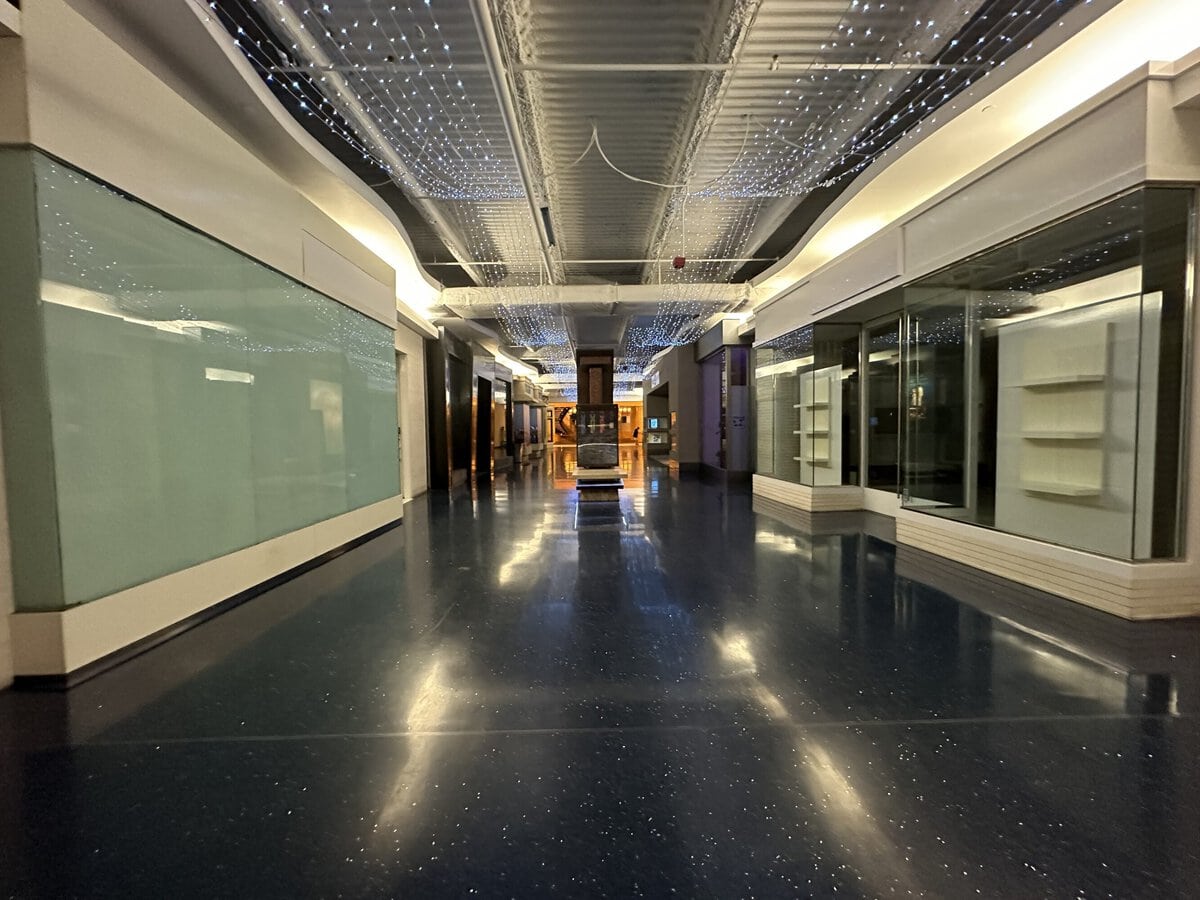
JCPenney, the Food Court, and the Teenage Years
The mall Rouse originally proposed in November 1973 was much bigger than what got built.
The plan included JCPenney, about 65 new stores, apartments, office buildings, a hotel, park space, squash courts, and a 500-seat amphitheater.
It imagined Cherry Hill Mall as a full town center with residential and civic uses woven in among the retail.
The 1973-1975 recession ended that version of the plan. Local planning-board changes narrowed the scope further.
A revised expansion was approved in June 1976, groundbreaking followed in November, and the new two-level wing opened March 2, 1978, with 64 stores.
JCPenney opened on January 3, 1979. The food court came in 1985.
The project cost about $5 million and created a dining area called Picnic at Cherry Hill, with 16 eateries, about 8,900 square feet of leasable space, a fountain, a stage, and seating for about 600 people under a domed glass roof.
It opened September 19, 1985, in the north wing.
The food court was the architectural signal that the mall had entered its teenage era - the period when high school students occupied the tables after school, when first jobs were held behind fast-food counters, and when a trip to the mall required no specific purchase and no particular destination.
Five years later, in October 1990, Rouse completed a $16 million renovation and celebrated the mall's 30th anniversary.
New colors, neon accents, imported marble, updated lighting, and simplified landscaping replaced much of the original mid-century garden aesthetic.
The Cherry Court fountains and the most elaborate original plantings came out. A new T-shaped fountain and water-cascade feature went in. The Birdcage Garden was long gone by then.
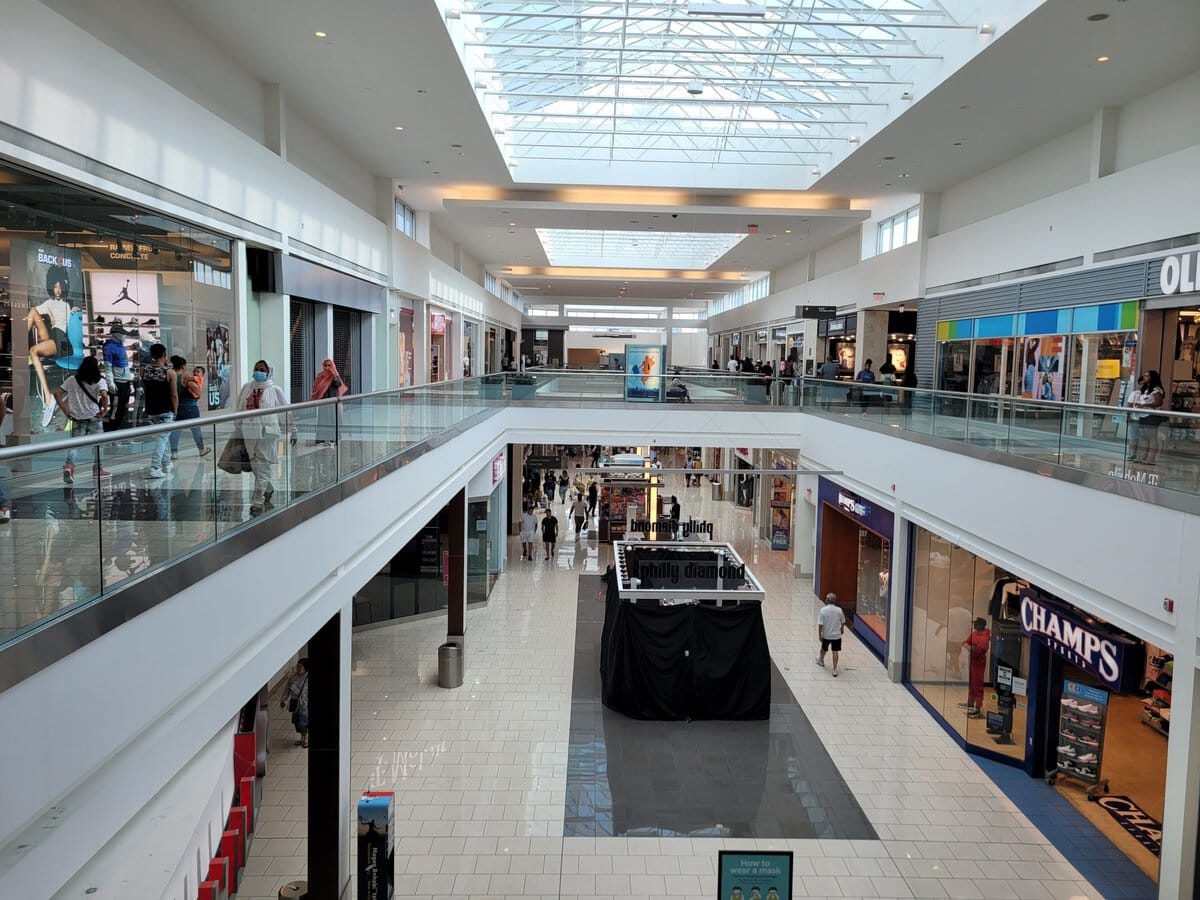
Strawbridge's Last Years and the End of an Era
Strawbridge & Clothier had been at Cherry Hill Mall since the groundbreaking in September 1960.
For more than four decades, the store's three-story building defined one end of the mall. It was the original reason the center existed.
When it closed in early 2006, Federated Department Stores had acquired May Department Stores, Macy's and Strawbridge's were now under the same corporate roof, and Cherry Hill already had a Macy's in the old Bamberger's space.
Two department stores from the same parent company in the same mall created redundancy, and Strawbridge's was the one that closed.
The building sat empty. PREIT presented a redevelopment plan in March 2006.
The plan called for demolishing the vacant anchor and replacing it with a new fashion anchor, additional retail and restaurant space, freestanding large-format stores, and a renovated interior.
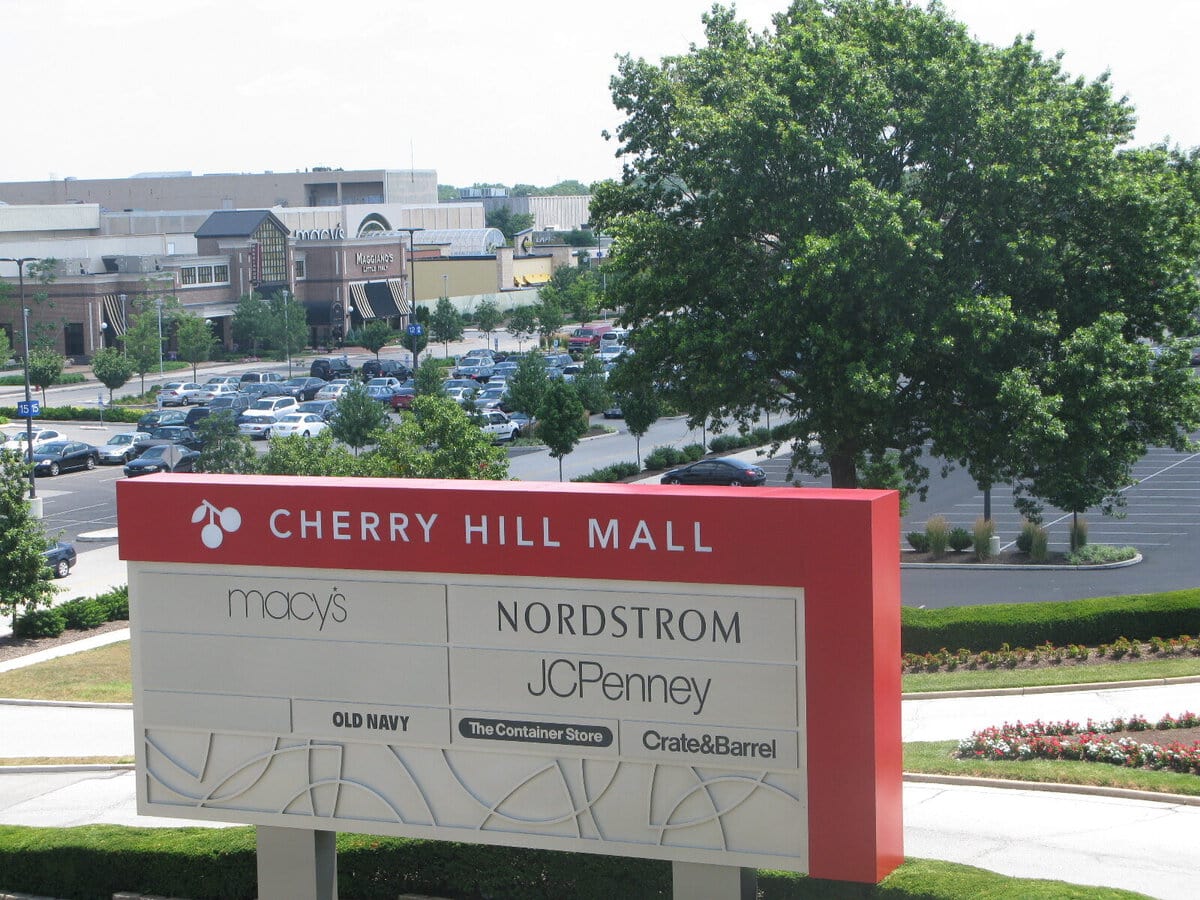
In August 2006, local approvals came through for Crate & Barrel and The Container Store. In September 2006, Nordstrom was announced as the new anchor.
The old Strawbridge's building came down, and what had been the original anchor site for 45 years became a construction zone.
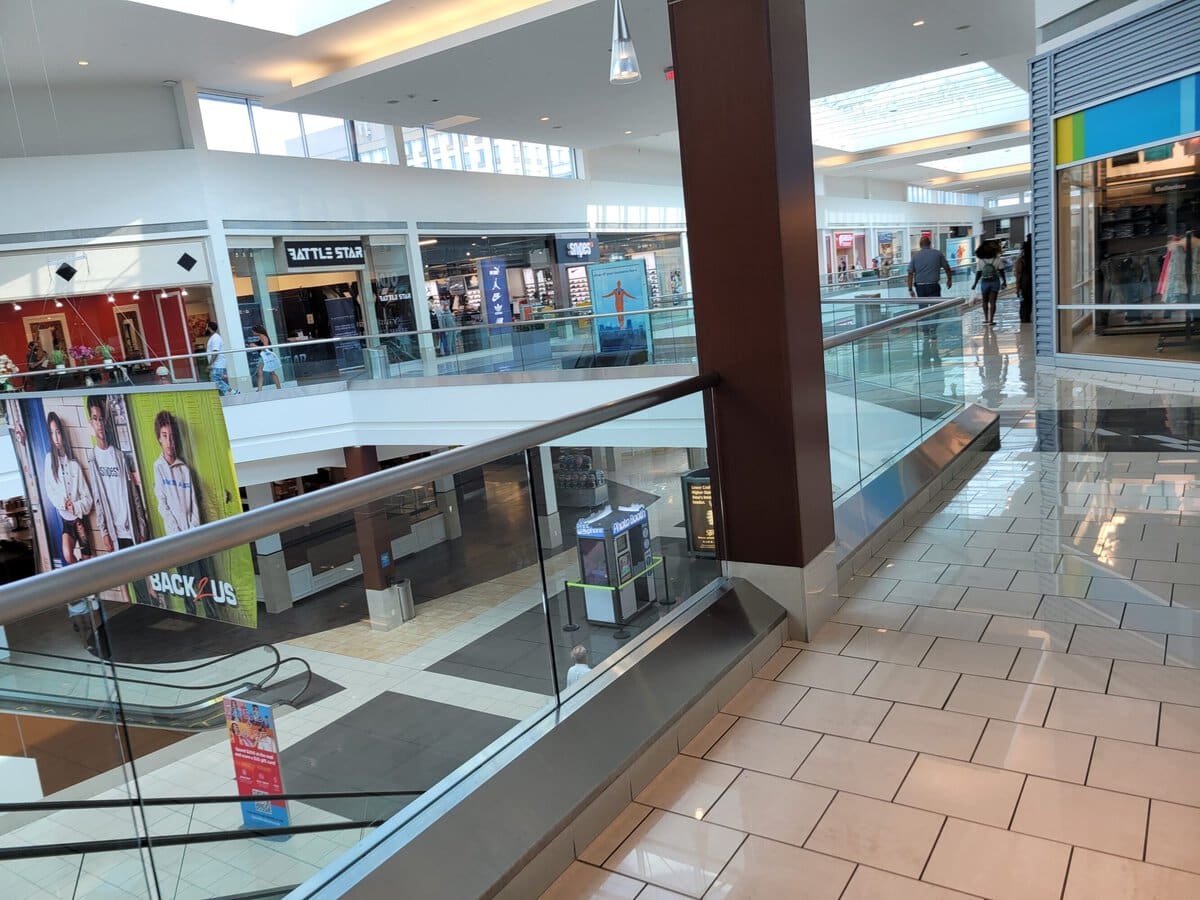
The Nordstrom Redevelopment and the Mall's New Center
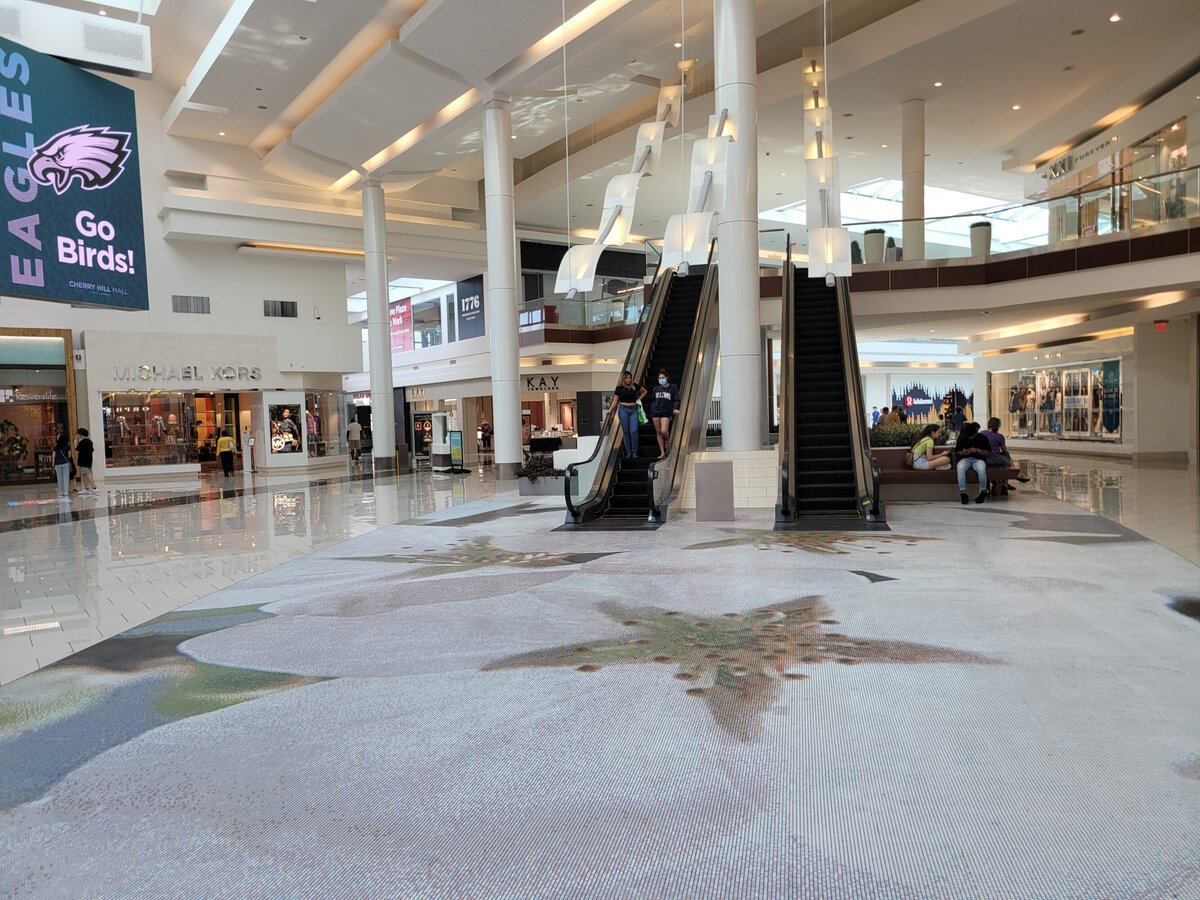
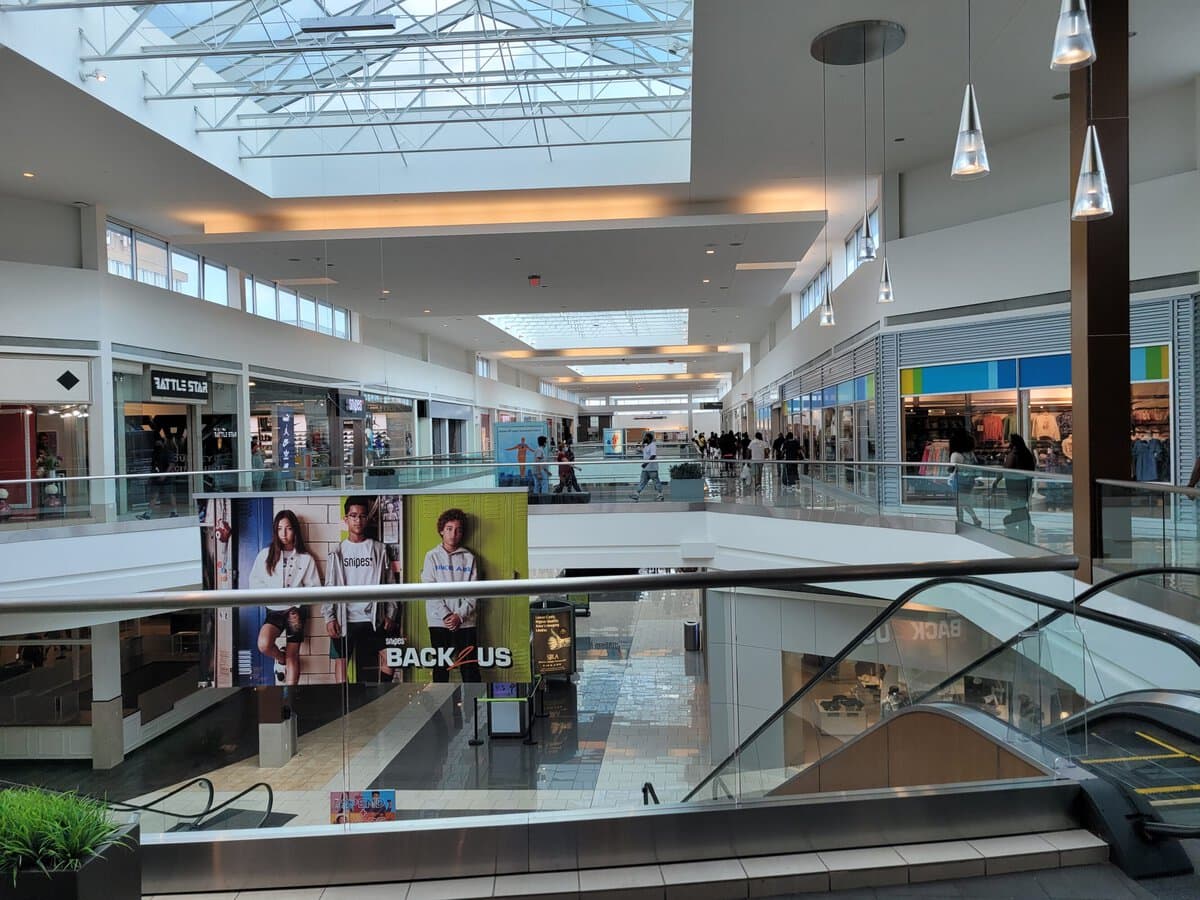
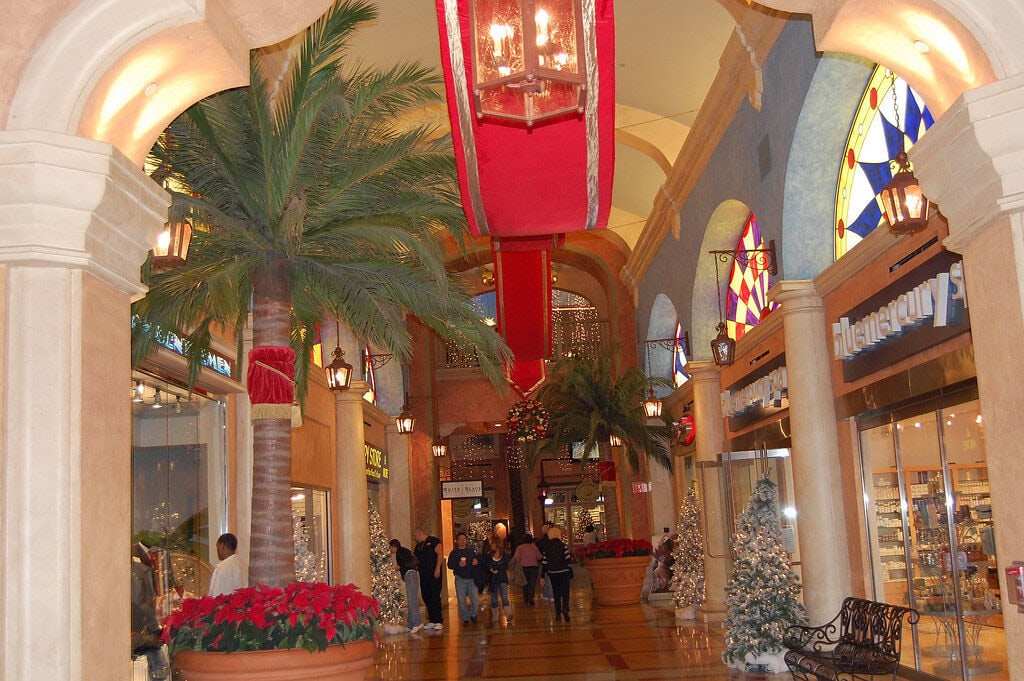
Where Strawbridge's had stood for 45 years, a new Grand Court now drew foot traffic toward Nordstrom the way Cherry Court had once drawn it toward Strawbridge's.
The $218 million project rebuilt the western end of the mall entirely: a two-level Nordstrom of about 138,000 square feet, an expanded and relocated food court, upgraded floors and finishes throughout, and restaurant frontage facing outward toward Route 38.
Crate & Barrel and The Container Store opened as freestanding large-format stores on the property, at about 34,300 and 24,200 square feet respectively.
Nordstrom opened on March 27, 2009. It was the mall's newest traditional department-store anchor, and it replaced a building that had stood since the mall opened.
By 2021, sales productivity reached about $936 per square foot. In 2022, the figure rose to about $944.
In 2023, it held at about $940. Those numbers placed Cherry Hill well above most conventional regional malls in the country.
One Cherry Hill Comes Down, and What Rises Next
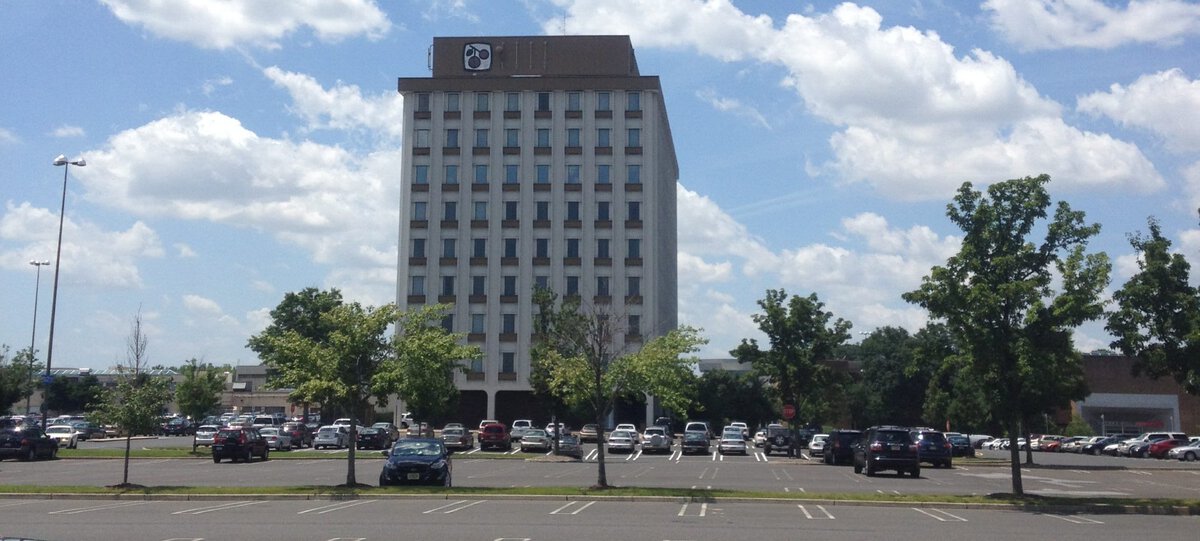
Nine stories tall and visible from Route 38, One Cherry Hill opened on October 29, 1968, as part of an earlier vision for the property - one in which the mall site would contain office tenants, lobby retail, and a mix of commercial uses stacked vertically alongside the horizontal retail corridors.
Small shops, a coffee shop, a barbershop, and a copy center occupied the ground level. That model had made sense in 1968.
By the 2020s, the tower was one of the older structures on the property and the least integrated with how the mall was actually being used.
In December 2024, the Cherry Hill zoning board approved PREIT's plan to demolish the office building and replace it with a two-story DICK'S House of Sport of more than 120,000 square feet.
Demolition began in July 2025 and was complete by September. Foundation work started September 29, 2025. Steel was rising by January 2026.
The new building includes a climbing wall, golf bays with TrackMan simulators, an outdoor track and field, and a multi-sport cage for baseball, softball, lacrosse, and soccer.
A new mall entrance will connect it to the existing building.
Meanwhile, in April 2026, Greyhound shifted its South Jersey intercity operations to Cherry Hill Mall, joining FlixBus there and adding nearly 35 daily combined trips from the surface lot near the Haddonfield Road side of the property.
The mall that once held an aviary and a community meeting room now serves as a bus terminal. The function has changed many times over 65 years. The address has not.
Independent Publisher Notice
BestAttractions is an independent editorial publisher. We are not affiliated with, endorsed by, or acting on behalf of any location, business, property owner, manager, government agency, or organization described in this article. Comments posted on this page are not forwarded to, reviewed by, or acted upon by any entity mentioned in the article. For official inquiries, complaints, applications, bookings, or other requests, please contact the relevant entity directly through its official website or other verified channels.