In the spring of 1957, Garden State Plaza opened in Paramus, New Jersey, at the intersection of Routes 4 and 17. About 75,000 people came for the opening.
A three-story Bamberger's department store anchored the development. It covered 340,000 square feet. Seventeen smaller shops stood around it, including a shoe store, a candy shop, a bank branch, and a five-and-dime.
The stores were arranged along open-air walkways, so shoppers moved between buildings outdoors. The layout resembled a traditional downtown shopping street. Large parking areas surrounded the complex.
R.H. Macy & Co. announced the project in May 1954. It formed a subsidiary to own and operate the center.
Abbott, Merkt & Company of New York City designed the complex. Muscarelle Construction Company built it. The construction cost $26 million, or about $298 million in today's money.
The ribbon-cutting took place on May 1, 1957. Eight-year-old Barbara Brannon of Saddle Brook cut a ceremonial ribbon made from one thousand donated dimes.
Paramus Mayor Fred C. Galda stood with her. The fundraiser supported the National Foundation for Infantile Paralysis and was part of a broader campaign to encourage polio vaccination.
From Open Air to the World's Biggest Mall
New tenants moved in soon after the mall opened. By November 1957, nineteen more stores had been added to the original eighteen.
These included a Merrill Lynch brokerage, Russek's women's clothing, and a Horn & Hardart restaurant.
A Grand Union supermarket also opened, giving shoppers a reason to stay longer and do a full grocery trip instead of making a quick stop.
The next major expansion was Stage II, which opened around October 23, 1958. This phase added a Safeway grocery store and the Garden State Bowl-A-Rama.
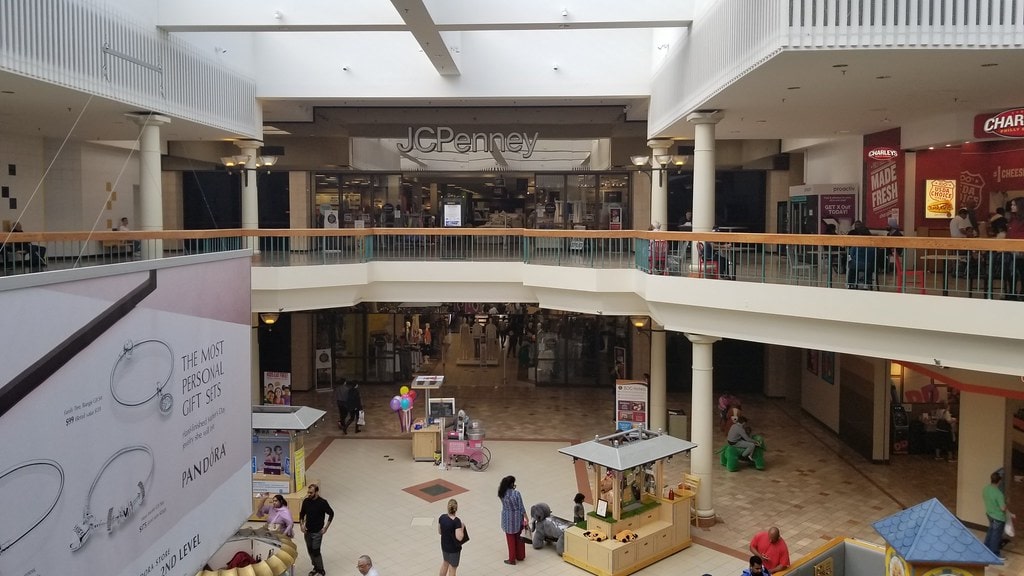
It also added a three-story J.C. Penney, the largest new feature in the expansion.
The store covered 88,000 square feet and was built with structural support for a future fourth floor.
A major turning point came when Gimbels, a longtime Macy's rival in the New York market, secured a building site at the mall in September 1958.
Its three-story, 245,000-square-foot store opened on September 12, 1960. It was Gimbels first location in New Jersey.
After that addition, Garden State Plaza totaled about 1.34 million square feet and included 72 stores and services. At the time, it was the largest shopping center in the world.
The mall also benefited from New Jersey's tax policy. New Jersey had lower sales taxes than New York and did not charge sales tax on clothing.
Many shoppers came from across the state line. Garden State Plaza was a cheaper place for New Yorkers to buy clothing.
Garden State Plaza Falls Behind Its Competitors
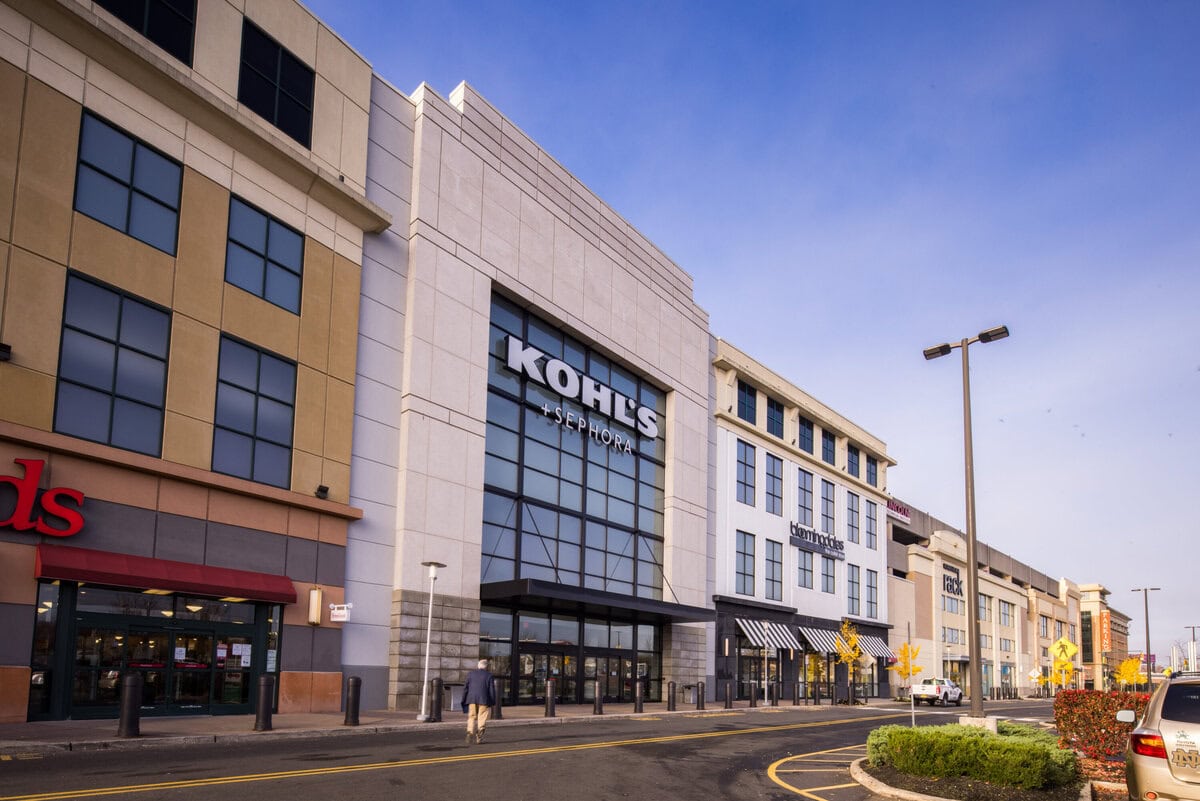
For all its early success, Garden State Plaza had a real problem by the 1970s - the mall was still open-air while enclosed shopping centers were multiplying around it.
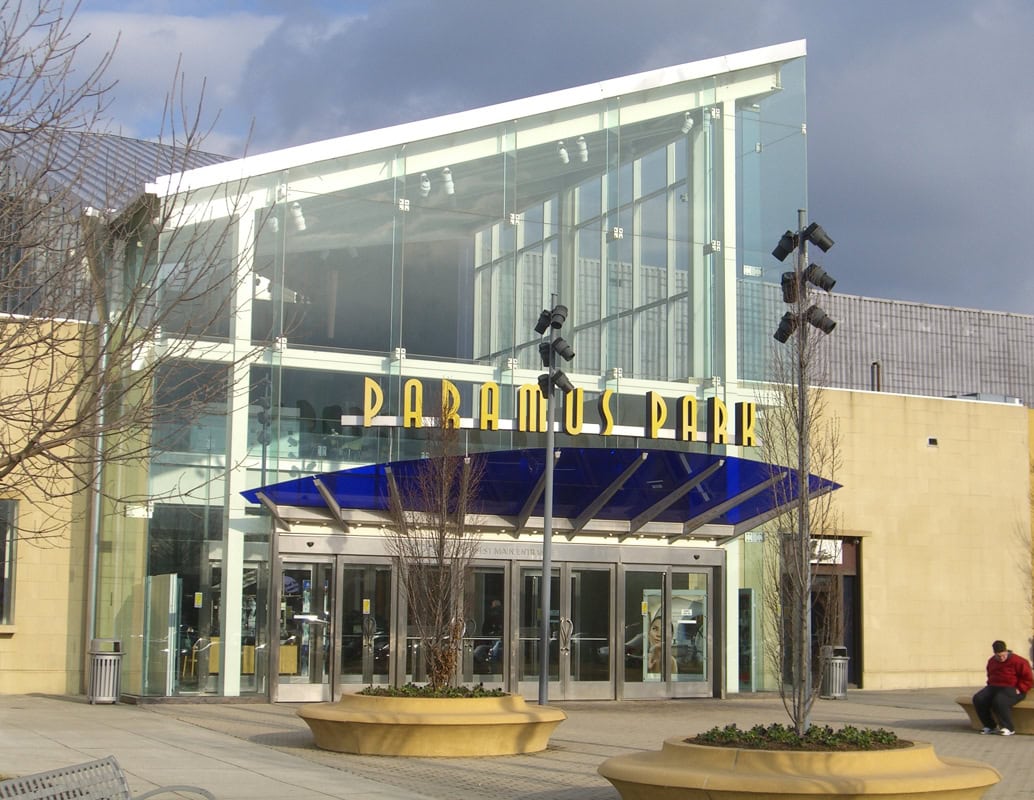
Within a few miles of the Route 4 and Route 17 intersection, shoppers could choose Bergen Mall, Fashion Center, and Paramus Park.
All three offered the comfort of covered, climate-controlled shopping. Walking between storefronts in the rain or cold was something fewer customers wanted to do.
In February 1975, the mall announced a $20 million project to enclose the complex in three phases - a process that would take nearly a decade to finish.
Phase 1 began by expanding Bamberger's into nearby inline store space.
Phase 2 got underway in early 1981, enclosing courts and concourses across the mall's southern half.
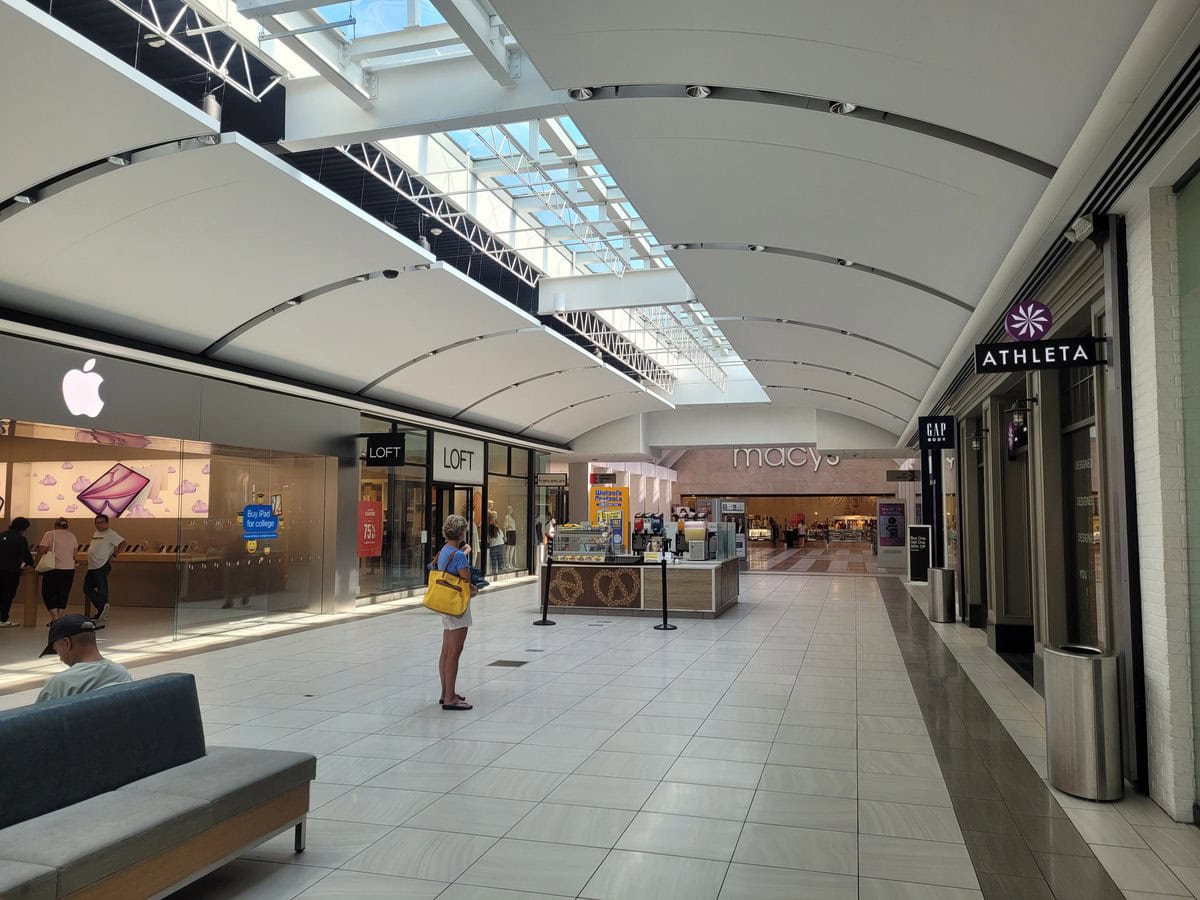
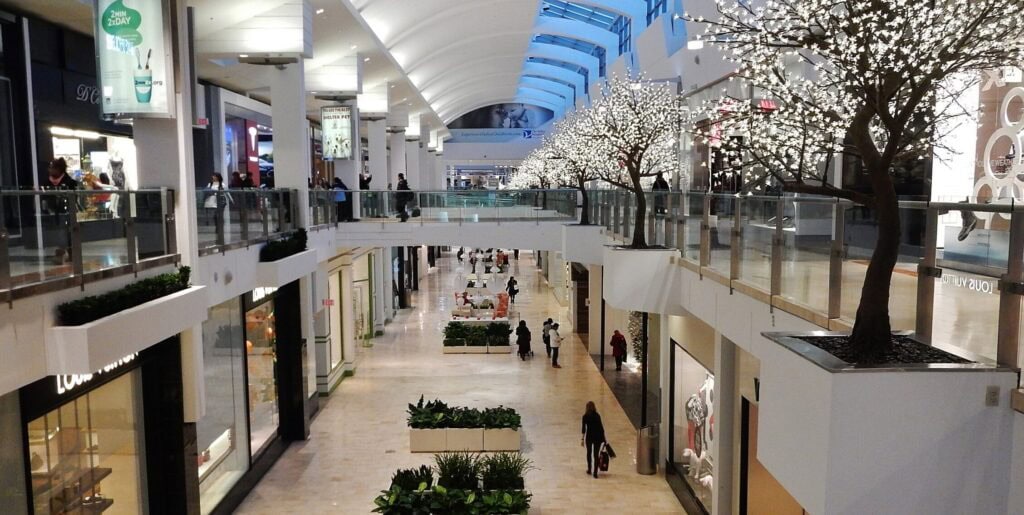
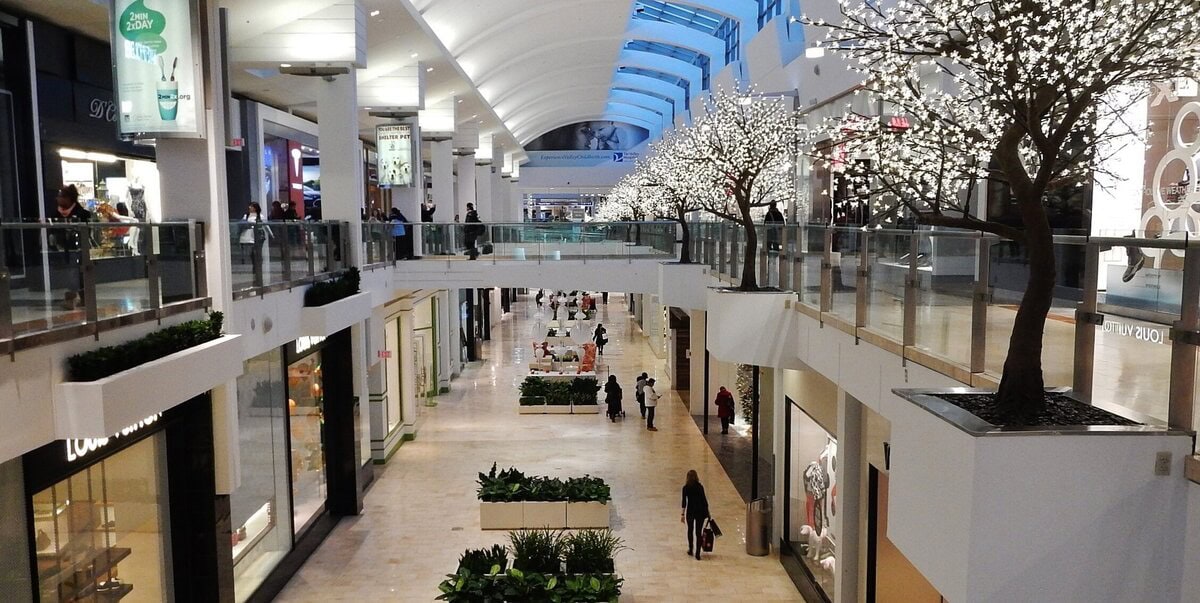
New tile floors, cathedral ceilings, fountains, and landscaping went in.
A food court opened on the lower level, and a dedication ceremony was held on October 21, 1982.
Phase 3 followed quickly, enclosing the North Mall and enlarging Bamberger's a second time - from 470,600 square feet to 485,000.
The work was dedicated in late 1984. The shopping center now held 120 stores and services.
New tenants that moved in during the renovation included Talbots, Victoria's Secret, and The Express.
The enclosure brought Garden State Plaza back into real competition with the newer indoor centers that had been pulling shoppers away for years.
Westfield Arrives, Nordstrom Lands, and the West Wing Expands
Two things happened in late 1986 that would quietly define the mall for decades. In October, all stores in the Bamberger's chain became Macy's - a rebrand that cost the mall none of its anchor power.
Two months later, Australia-based Westfield acquired an ownership stake in Garden State Plaza.
In 1993, Westfield entered a joint venture with Holland's Rodamco North America, and by May 2002, the company had bought out its partners and held full ownership.
None of that corporate shuffling was visible to shoppers, but the physical changes were.
In 1987, Westfield announced plans to create a second retail level out of the existing basement.
The former Gimbels space - which had briefly run as a Hahne's department store before permanently closing in April 1989 - was demolished.
On September 7, 1990, a brand-new Nordstrom opened on that site: three levels, 272,000 square feet, and $37 million invested.
The biggest project came in January 1995. The mall pushed west into its own parking area.
The Paramus Drive-In Theater, which had flickered away next to the property since 1947, was finally demolished to make room.
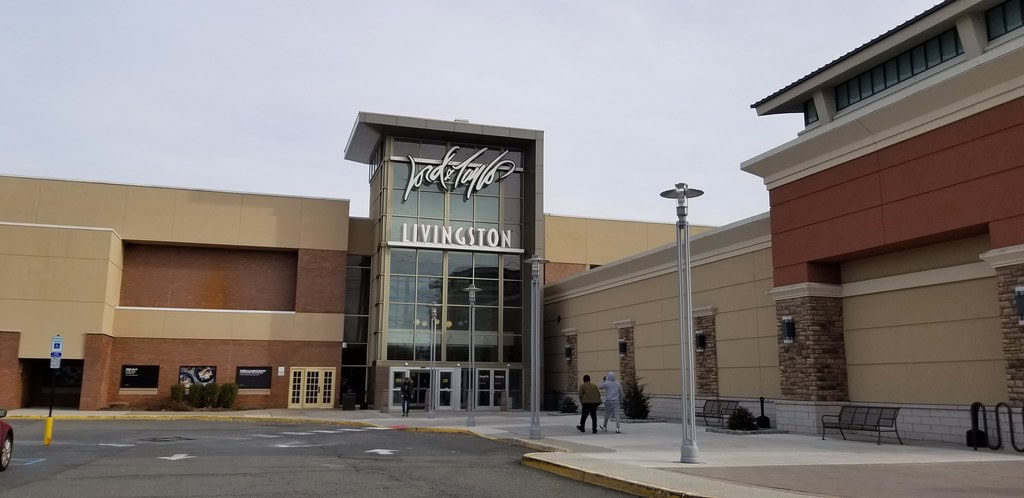
The expansion added a two-level Lord & Taylor at 130,000 square feet, a three-level Neiman Marcus at 135,000 square feet, and two parking garages.
When the West Wing opened on August 15, 1996, the mall covered close to 1.98 million square feet with 275 stores - a facility that barely resembled what had opened four decades earlier.
A Fashion Makeover and a New Movie Theater Complex
By the mid-2000s, the mall was making room for things that had nothing to do with shopping.
A 163,000-square-foot entertainment and dining complex called the Promenade opened in 2007 in a space built over a covered parking area.
A 16-screen AMC Theatres anchored it, with restaurants filling in around the perimeter - Johnny Rockets, Chili's, Charley's Grilled Subs, and others.
The Promenade replaced space that Macy's had previously used for its children's department and furniture gallery.
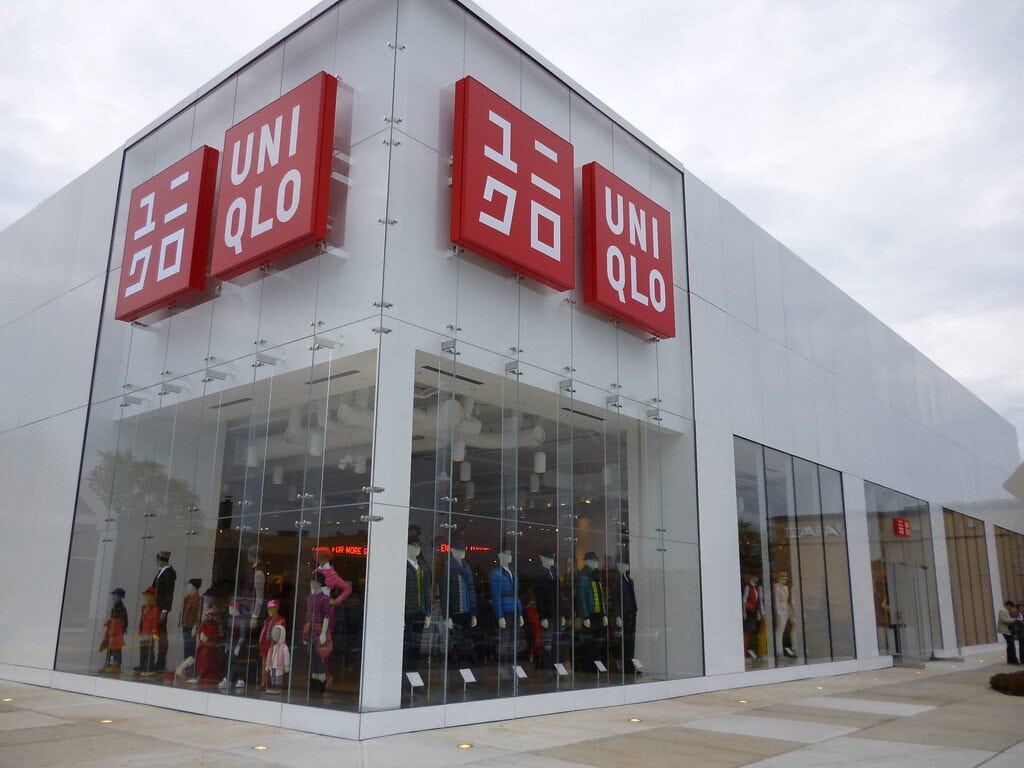
In a separate move, a 43,000-square-foot space that had long been home to Old Navy was renovated and reopened on September 28, 2012, as a Uniqlo location, the Japanese fashion chain that was growing across the United States at the time.
Then, in January 2013, a $160 million renovation project began. A parking garage next to Neiman Marcus was torn down and replaced with a newer, larger structure.
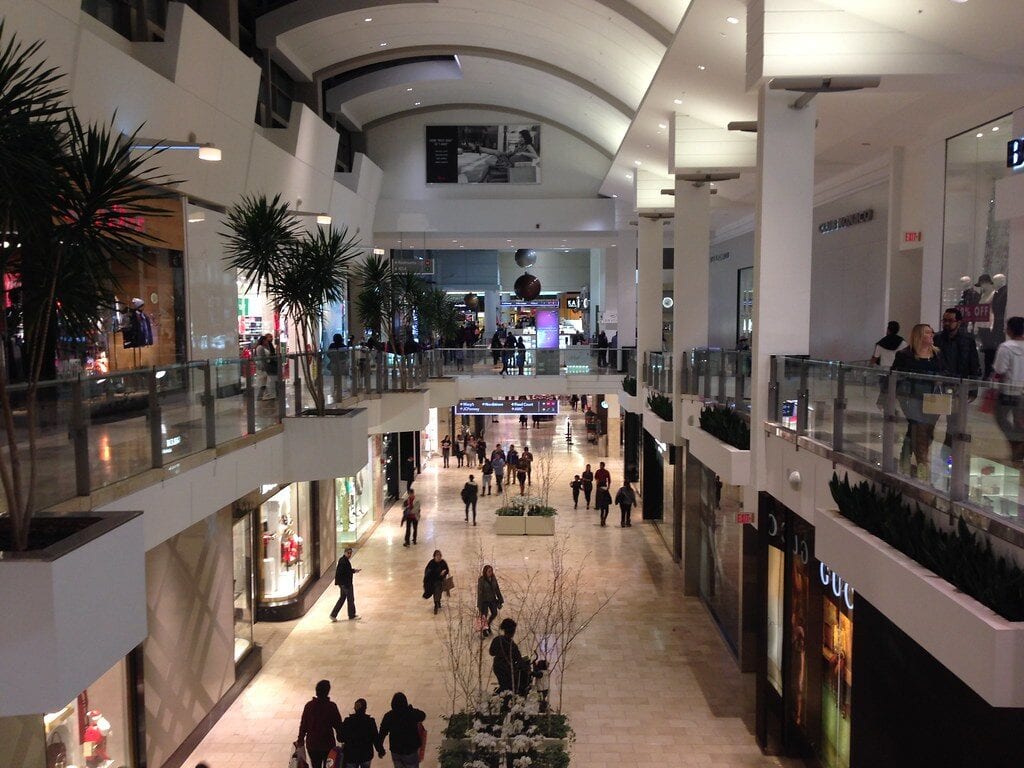
The retail space in the mall's southwest corner was reconfigured into a two-level area called the Premium Fashion District.
Its 23 tenant spaces filled up with brands like Burberry, Gucci, Ferragamo, Louis Vuitton, Longchamp, Tory Burch, and Lush.
The first phase - the new parking deck - was dedicated in November 2013. The boutique district opened in March 2014.
With those additions, the mall's total leasable area reached roughly 2.18 million square feet, with 314 stores and services operating under one roof.
Security Incidents and Weekend Rules for Teens
A mall that draws very large crowds each week has to deal with issues that go beyond shopping.
Over the years, several incidents at Garden State Plaza drew public attention and led to new rules.
In November 2013, a 20-year-old man fired multiple shots inside the mall shortly before closing time. Hundreds of law enforcement officers responded and searched the building.
On May 16, 2019, a woman robbed the Abercrombie & Fitch Kids store at knifepoint, using a large butcher knife and taking $900 from the register.
In the evening of November 6, 2021, a brawl broke out near the AMC theaters shortly before the 9:30 p.m. closing time, and police from several towns responded as the mall was cleared by about 10 p.m.
On April 30, 2022, a fistfight in the food court triggered a lockdown and self-evacuations after the sound of a bottle breaking was mistaken for gunfire, and the mall resumed operations around 5 p.m.
After these incidents, management adopted new policies.
Starting April 28, 2023, anyone under 18 must be with an adult age 21 or older on Friday and Saturday evenings. The rule targets the heavier weekend crowds.
The mall also faces a long-standing limit tied to Bergen County's blue laws. These laws require most retail stores to close on Sundays.
Several efforts to end the rule have failed, and it still affects when people plan to shop.
Garden State Plaza contributes about 10% of the property taxes collected in Paramus, in a borough where commercial properties generate roughly half of all property tax revenue, which means the Sunday closure costs everyone something.
Apartments and a Town Green Transform Paramus
The mall is planning a major change for its next phase. Instead of only adding stores, it plans to build a neighborhood on land that used to be part of its parking lot.
Lord & Taylor closed on February 27, 2021. That closure left a large empty space in the mall while it was still dealing with the JCPenney closure from three years earlier.
The mall handled those two empty anchor spaces in different ways.
The former JCPenney space was divided into smaller storefronts, and tenants such as Old Navy, Under Armour, Champs Sports, and others moved in.
The former Lord & Taylor space was kept for a much larger redevelopment. In 2021, Unibail-Rodamco-Westfield announced a revised plan to rebuild the area.
The plan called for tearing down the Lord & Taylor building instead of reusing it and replacing it with a new kind of development for the area.
By September 2023, the plan had expanded. The first phase was planned to include 575 luxury apartments, a one-acre public town green, and an outdoor main street district with restaurants and everyday shops.
Later steps could include a hotel, offices, a place for seniors to live, and better transportation. Mill Creek Residential joined as a co-developer.
Construction is planned to start in early 2026, and the first part is expected to be finished by the end of 2027.
If all parts of the project move forward, the total could reach up to 1,400 apartments.
The goal is to turn what began as a parking lot into a town center for Paramus, where people can live, eat, and gather, not only shop.