
There is a house at 726 West Onondaga Street in Syracuse that tends to stop people.
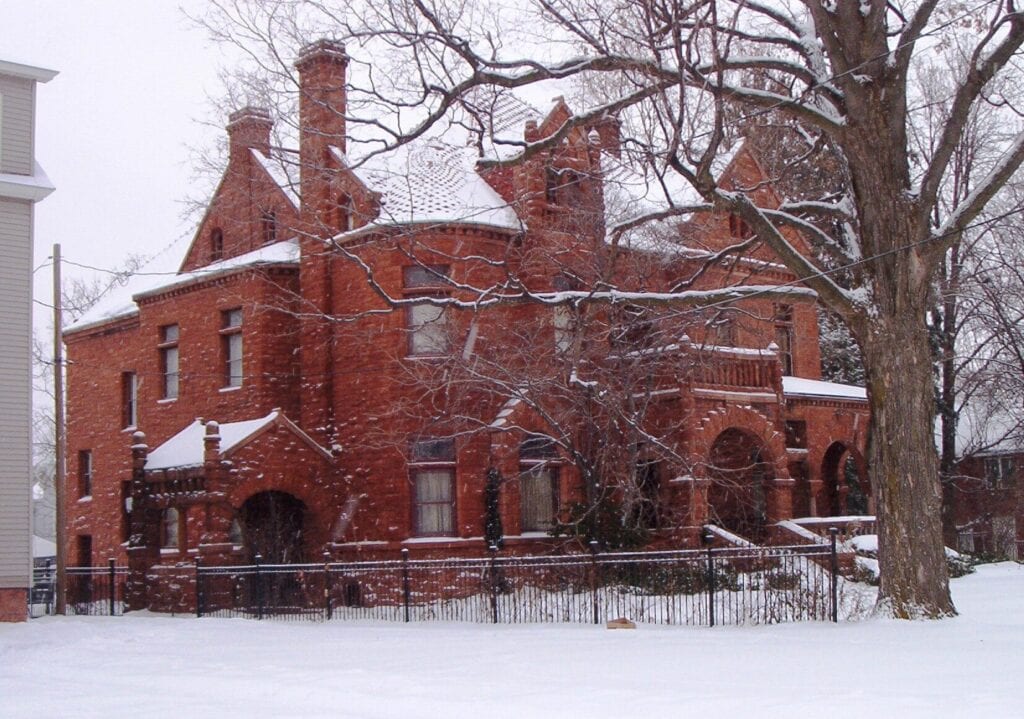
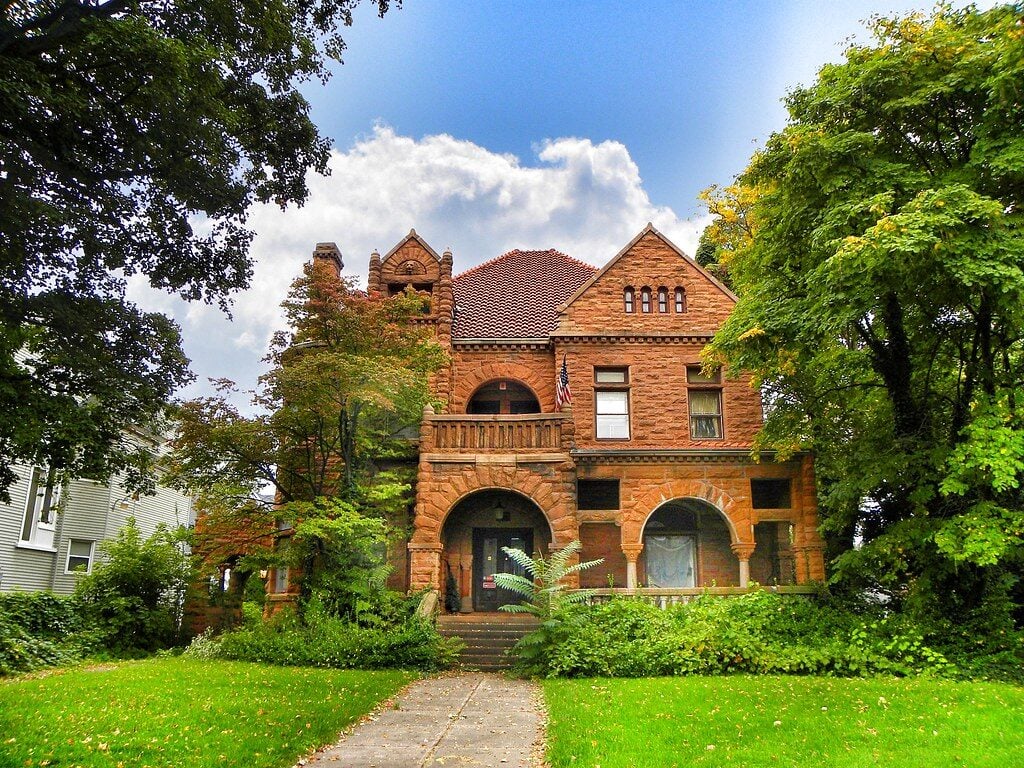
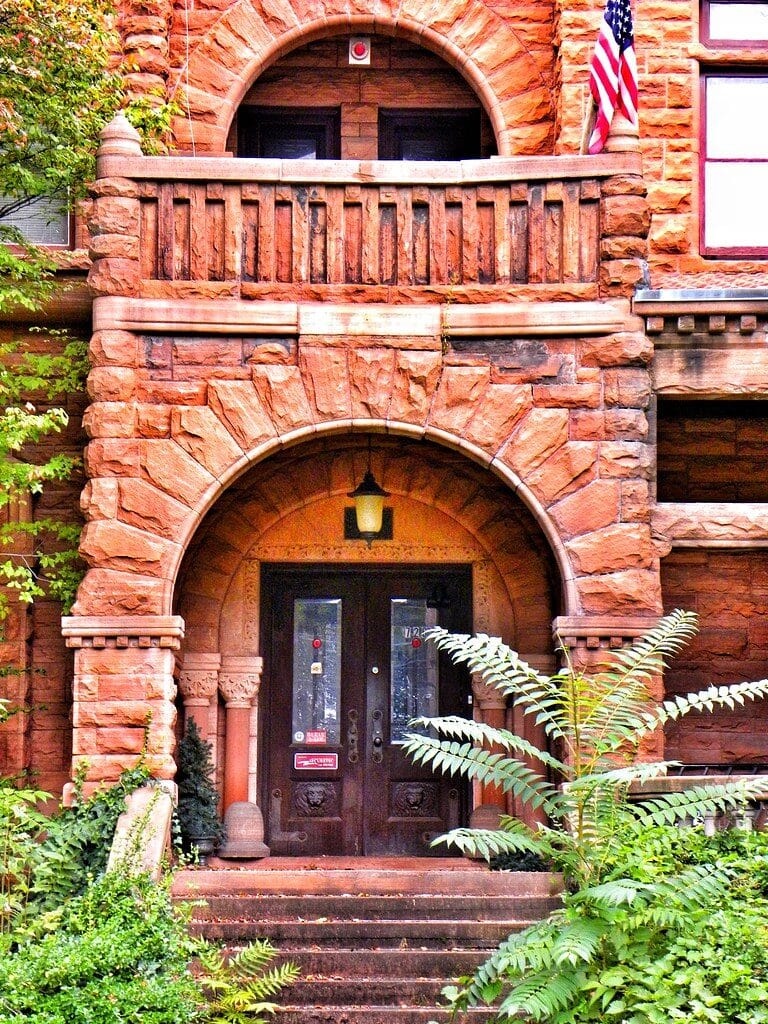
The walls are Potsdam sandstone - dark, dense, rough-cut - and the roof is Spanish clay tile instead of the slate that every other house on the block would have used in 1895.
The building sits on close to eight-tenths of an acre, with a separate stone carriage house behind it that adds another 5,500 square feet.
The main house is about 6,580 square feet with five bedrooms.
The man who built it was Alexander Timothy Brown, an inventor and businessman who had been working in Syracuse since the late 1870s.
He helped develop the Smith Premier typewriter and the L.C. Smith breech-loading shotgun.
He sold a telephone patent to Stromberg-Carlson. He co-founded a gear manufacturing company that eventually became part of General Motors.
By 1895, when the house was finished, he was 40 years old and had enough money and strong enough opinions to build the house he actually wanted.
He hired a Syracuse architect named Gordon Wright to design it and then added his own engineering on top of what Wright had planned.
Brown spent years in the house and died in 1929. The building remains at 726 W. Onondaga Street today, and while it saw major interior changes in 1947, much of it has been restored back toward its original character.
Stone, Arches, and a Very Unusual Roof
Gordon Wright designed the house in the Richardsonian Romanesque style. This style takes its name from Boston architect H.H. Richardson.
In the 1870s and 1880s, he designed buildings with heavy stone construction and large, rounded arches.
Those buildings looked solid and long-lasting, and they made many nearby buildings seem less durable by comparison.
By 1895, the style was no longer new, even though people still used it. Whatever Brown's reasons were, he did not choose it just to follow current fashion.
Wright covered the entire outside of the house with Potsdam sandstone from upstate New York. This stone looks different depending on the light and on how close you are to it.
Its surface has natural changes in texture and appearance that pressed brick and poured concrete could not produce.
The window arches are thick and rounded. The heavy stone supports at the corners add to the sense that the house was built to stand for a very long time.
The roof was the most unusual choice. In 1895, slate was the normal roofing material in central New York.
Brown used warm reddish-brown Spanish clay tiles instead, a type of tile more often found on houses in southern Europe.
More than 130 years later, those tiles still look unusual on West Onondaga Street. They also fit the dark sandstone better than slate would have.

What Brown Wired and Bolted Into His House
Most people building expensive houses in 1895 hired an architect, approved the design, and moved in. Brown hired an architect and then also treated the house as a separate engineering project.
He had a hydraulic elevator installed running from the basement all the way up to the attic - unusual in any private residence at the time, requiring solutions well outside what a general contractor would provide.
He ran pipes and inlets through the walls for a central vacuum cleaning system, so cleaning could happen without carrying equipment from room to room.
In the attic, a skylight with a clay frame and glass pieces brought sunlight into a floor that most homeowners usually kept dark.
The carriage house behind the residence was its own operation.
Brown built it to hold up to ten cars, which was a lot for 1895, and added a machine-powered lift so cars could come up from outside straight into the workshop above.
His drivers lived there and worked on his projects.
He also stored his weapons collection in the carriage house, which was the largest private collection of military arms in the country at the time.
In the old stable section, he kept a live bear.
Doctors, Dentists, and a Fading Address
Alexander Brown died on January 31, 1929. He had lived on West Onondaga Street for 34 years and was buried at Oakwood Cemetery in Syracuse.
By 1944, the property belonged to new owners. In 1947, those owners changed the inside of the house into professional offices for several physicians.
The front parlors were turned into exam rooms. The floor plan was adjusted to fit a medical practice.
A sign above the front door read "The Professional Building." A marquee near the sidewalk listed two doctors and a dentist.
During the work, the builders left many original interior features in place, including the trim, the mantelpieces, and the sliding doors, instead of removing them.
The reason for this choice is unknown, but it later proved important.
The building remained in professional use for many years. The Syracuse Builders Exchange used the address through the 1970s. By 2001, a local architectural firm owned the building.
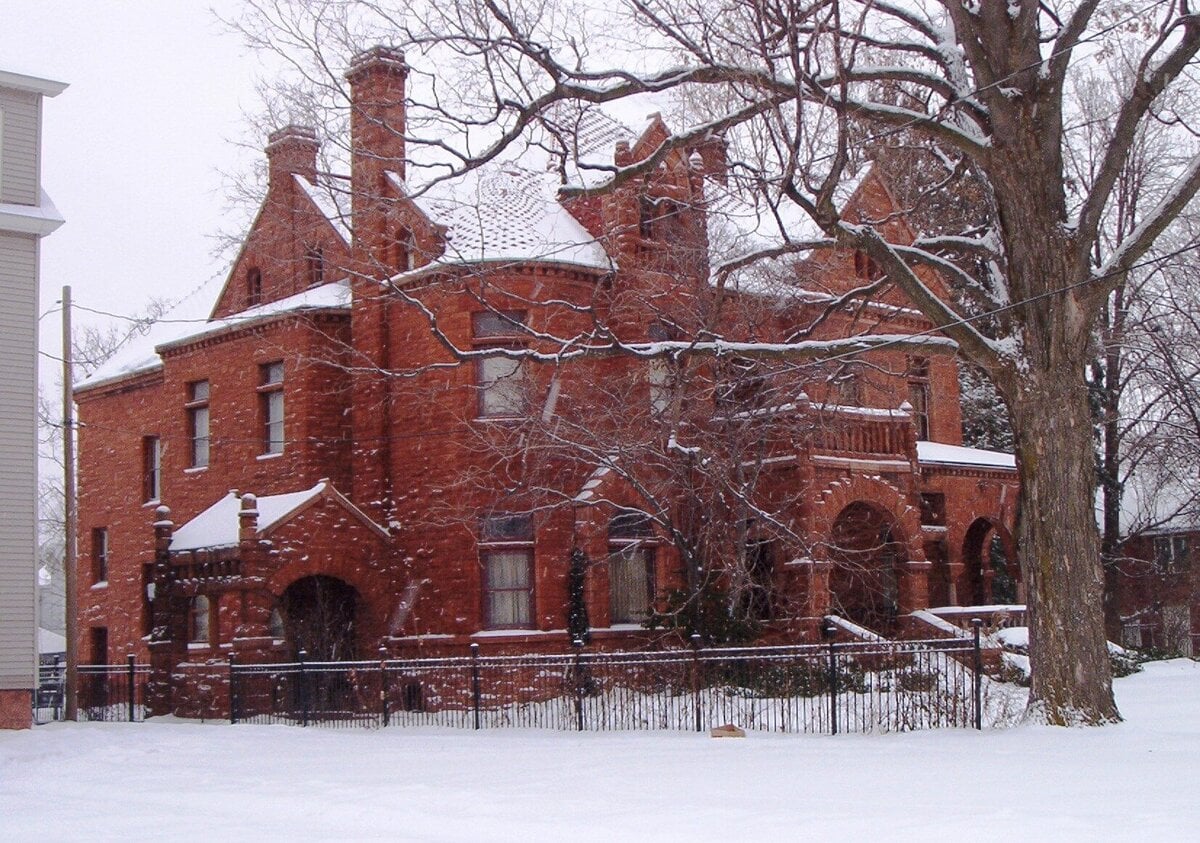
A sign out front showed a security company called Securetec. The grounds looked run-down and not well cared for.
The property no longer showed what Brown had wanted when he built it. The stone exterior had changed very little since 1895, and it was not about to change.


How the House Became a Home Again
In November 1988, Alexander Brown House was added to the National Register of Historic Places. Historian Mark Drumlevitch prepared the nomination in January of that year.
He used documentation that Jack Barker Jr. had put together for the Historic American Buildings Survey in 1983.
The property was listed for two reasons. Its architecture is a well-preserved example of Romanesque residential design from the 1890s. This address is closely tied to Brown's career as an inventor and manufacturer.
In July 2018, the house sold for $286,000 to private buyers. They moved in and began work on the interior.
The office changes that had covered Brown's original rooms since 1947 started to be removed. Much of the original trim had survived.
The sliding doors, which the 1947 contractors left in place instead of removing, still worked. That was the result of a decision made 70 years earlier.
The current owners use the property as their permanent home, and restoration work has continued. As of early 2026, the house at 726 West Onondaga Street is privately owned, occupied, and not for sale.
Alexander Brown House
Mansion in Syracuse, New York
Address: 726 W Onondaga St, Syracuse, NY 13204
Architect: Gordon Wright
Opened: 1895
Architectural styles: Romanesque architecture, Richardsonian Romanesque
Function: Mansion