
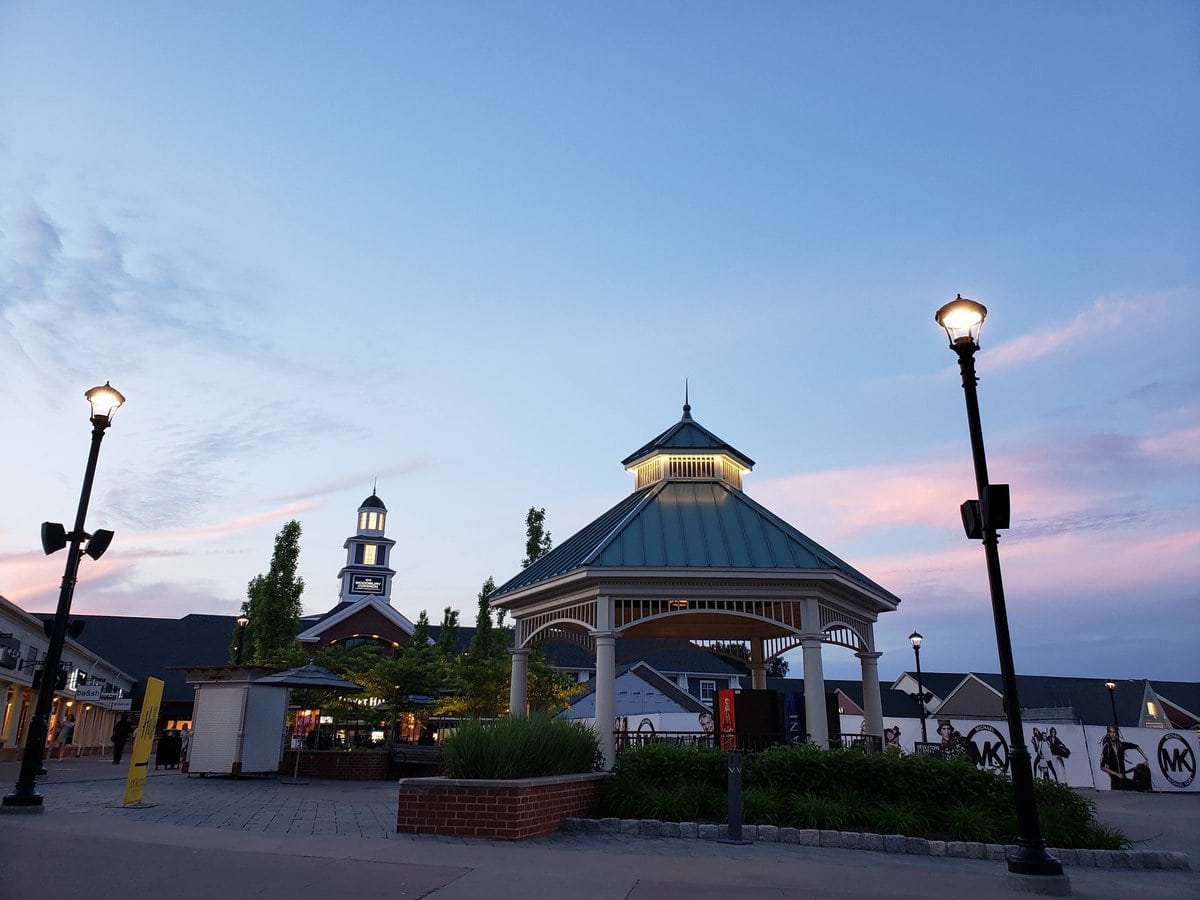
The early years of Woodbury Common Premium Outlets
Late in 1985, on a piece of land in the Central Valley section of Woodbury, New York, a new kind of shopping experiment opened its doors.
Woodbury Common Premium Outlets took its name from the town, but its real orientation was 55 miles south, toward New York City.
Built just north of Route 17, off Route 32 and a quick hop from Exit 16 on the New York State Thruway, it was positioned less as a local mall than as a regional magnet.
The pitch was simple: brand-name goods, discounted enough to justify the drive.
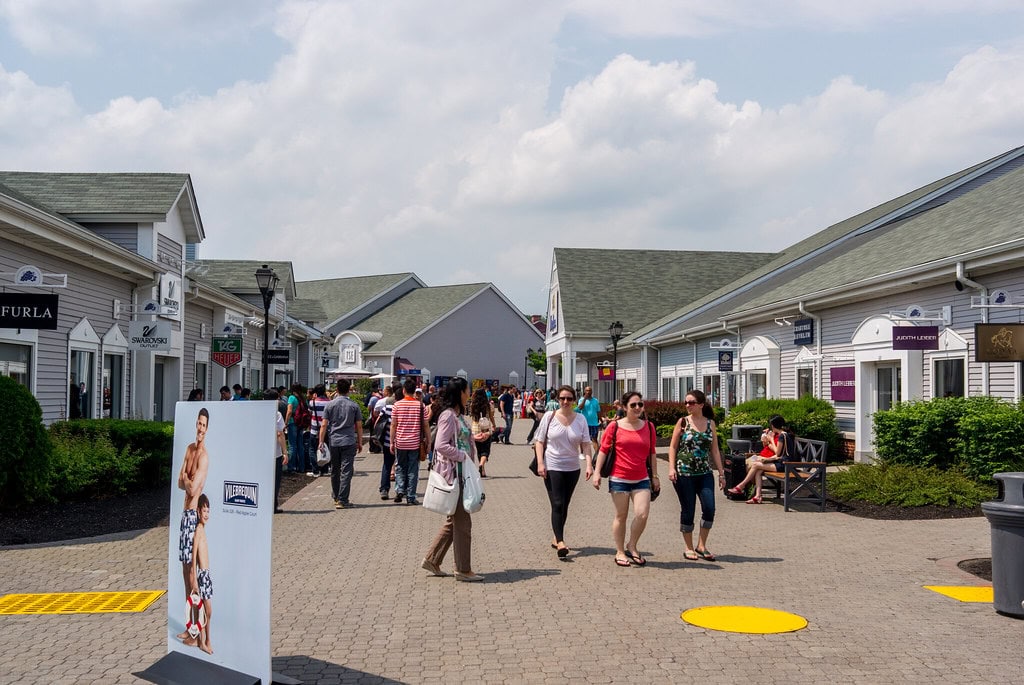
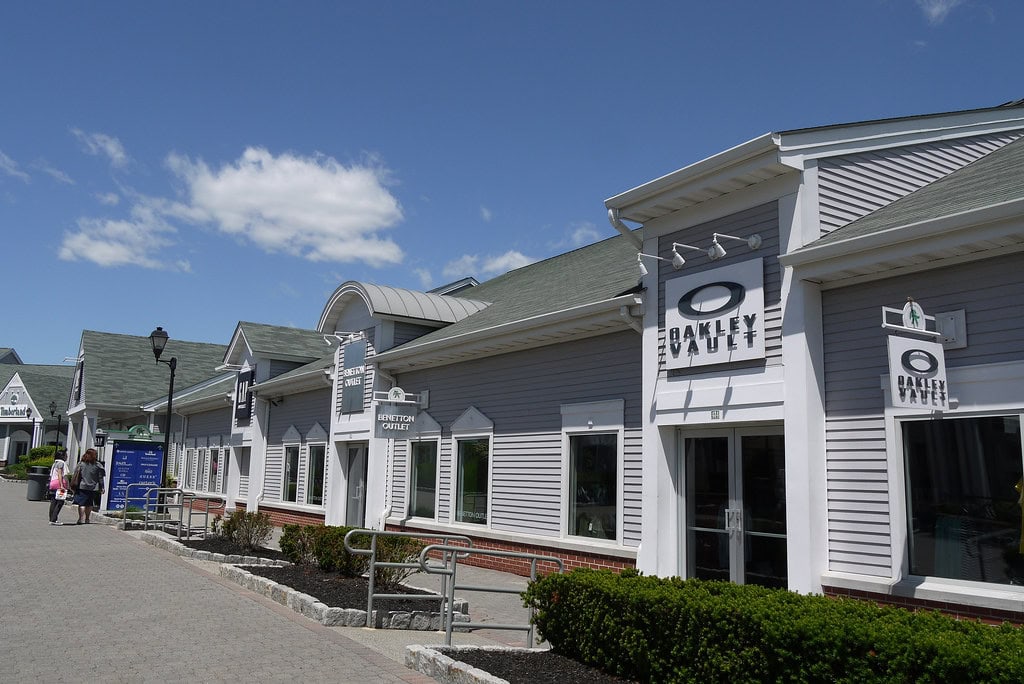
At first, it looked like a typical outlet center, low buildings arranged in a village pattern, tailored to the car.
But the location did a lot of silent work. City residents could make a day trip; travelers on the Thruway could peel off almost without thinking.
From the beginning, the place was conceived as a destination, not a strip of stores people happened to pass.
The experiment paid off. By 1993, demand had already outgrown the original footprint, and the first major expansion was built. A second followed in 1998.
Those two waves of construction dramatically increased the store count and square footage, turning a single outlet cluster into the skeleton of what would become one of the world's largest contiguous outlet centers.
From outlet stop to shopping village
As the buildings multiplied in the 1990s, the outlet shed its small-experiment aura.
Under the ownership of Premium Outlets, a subsidiary of Simon Property Group, Woodbury Common slotted into a portfolio that spanned the United States and several other countries.
Corporate descriptions talked about premier shopping and mixed-use destinations; shoppers cared that more brands were being added, and that prices stayed low enough to feel like a win.
The center grew into a full-blown retail village. Over time, it would reach between 220 and 250 stores, occupying more than 800,000 square feet of space, and, after later projects, roughly 912,000.
More than 4,000 people came to work there as sales associates, managers, cleaners, security guards, and construction workers attached to one expansion or another.
Annual visitor counts climbed past 13 million, a steady migration of people through color-coded mall districts.
Transportation infrastructure adapted to the reality on the ground. Daily tour buses and shuttles began running from New York City. Short Line, part of Coach USA, added regular service of its own.
On weekends, a shuttle bus linked the complex to Harriman station on Metro-North's Port Jervis Line, turning a commuter rail stop into a transfer point for shopping bags.
What had begun as a roadside outlet had become a planned village dedicated almost entirely to buying things slightly cheaper than in Manhattan.
Cash cow, global tourists, and very long hours
With size came money. Orange County officials started calling Woodbury Common Premium Outlets their cash cow, and it was not a metaphor they used lightly.
The sales tax on clothing and footwear sold at the center became one of the county's most reliable revenue streams, even after state-level reductions.
The Monroe-Woodbury Central School District leaned on its property-tax contribution.
The property now generates more than $1.2 billion in sales each year, and in the fourth quarter of 2023 alone, it produced around $375 million.
The crowds that feed those numbers are strikingly international. Japanese tourists, once the dominant foreign contingent, were eventually overtaken by Chinese visitors.
Staff were hired who could speak Japanese, Spanish, French, Portuguese, and other languages.
Interpreters, currency exchange counters, and foreign shipping services were layered onto the basic act of buying a coat.
The center became one of the most popular outlet destinations in the country, a regular stop on the itineraries of visitors who might never set foot in midtown department stores.
To keep up, the operating day stretched. Standard hours run from 10 a.m. to 9 p.m., Monday through Sunday.
Holiday rules are simple: stay open whenever humanly possible. New Year's Day, Memorial Day, Columbus Day, Veterans Day, and many other holidays are regular workdays.
Thanksgiving Day and Christmas Day are closed, but Thanksgiving Eve and Boxing Day come with long, often punishing hours, and Black Friday opens as early as 6 a.m.
Extended hours begin in November and run into early January, a drawn-out season engineered for maximum throughput.
Gridlock legends and traffic control experiments
The flip side of all that prosperity was visible on the roads. On Black Friday 2001, the traffic around Woodbury Common Premium Outlets turned into a sort of rolling cautionary tale.
Highways leading in were backed up for miles, local roads froze, and some drivers spent hours inching forward on the mall's internal roads, unable to reach a space or an exit.
Town officials and residents, already frustrated by weekend jams, accused both Simon and state police of ignoring earlier warnings.
The pattern repeated with a vengeance on the Sunday of Labor Day weekend in 2006. Bad weather cleared just in time for back-to-school sales, and the results were almost cinematic.
U.S. Route 6 was bumper-to-bumper all the way to the Palisades Interstate Parkway.
The Thruway was backed up roughly 15 miles north to Newburgh. Afterward, local officials argued for a new Route 32 exit ramp to get southbound drivers onto the Thruway without having them block intersections.
Black Friday 2007, with its heavily promoted Midnight Madness opening, produced another 15-mile backup on the Thruway.
The mall's reputation, at least for people who loved a good traffic horror story, became as much about gridlock as about discounts.
Behind the scenes, officials began rethinking their approach.
On Memorial Day after the 2001 chaos, state troopers, Woodbury police, and mall managers set up a shared command center, watching traffic in real time and making joint decisions.
That model, tweaked and expanded, became standard practice for peak shopping days.
Facelifts, Market Hall, and a polished outlet village
By the early 2010s, there was no question that Woodbury Common Premium Outlets worked as a business.
The question was whether it still looked like the kind of place people wanted to spend a day. Years of high traffic had worn down surfaces and facades.
In 2011, a $100 million expansion plan was proposed: a three-level parking garage, 60,000 square feet of extra retail space, new storefronts, and better traffic circulation.
It was pitched as the first major expansion since the late 1990s and promised hundreds of construction and permanent jobs.
The most visible transformation arrived with a major redevelopment completed in 2018.
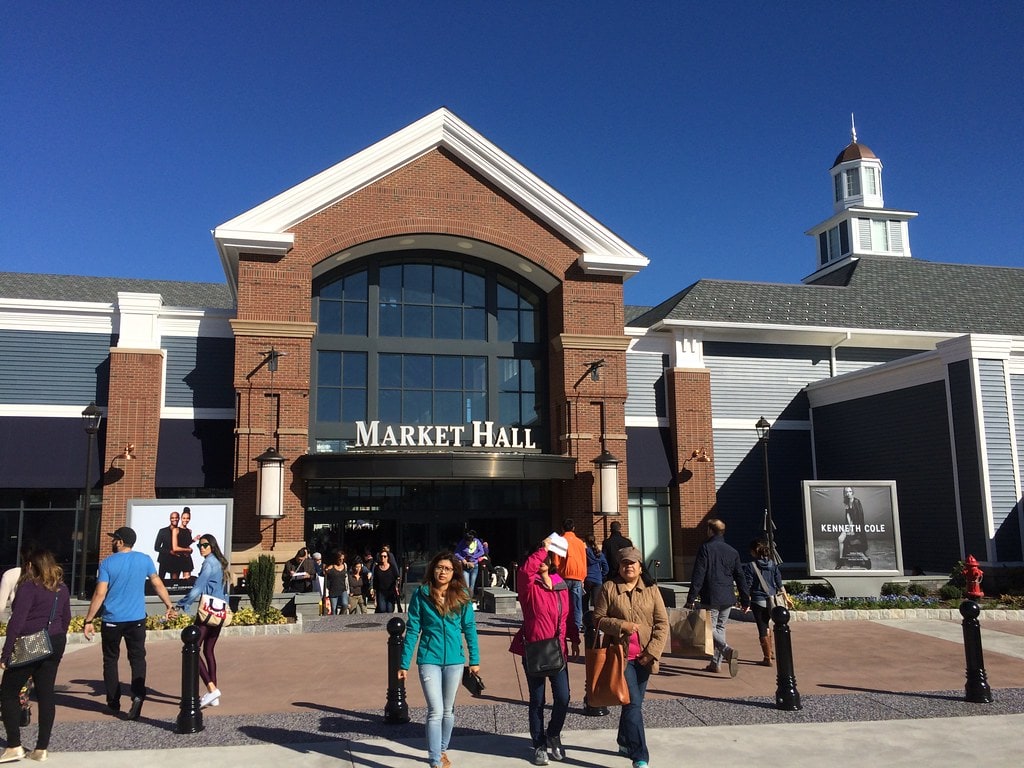
That project added another 60,000 square feet of retail space and built a four-story parking garage, but its real statement was Market Hall.
Designed as a front door to the center, Market Hall combined an entrance pavilion with a food hall, bringing in tenants like Chipotle, Pret A Manger, and Pinkberry.
It signaled that the outlet was not just a cluster of stores but a place where meals, bathrooms, and seating had finally been given some thought.
Across the rest of the property, facades were redesigned to create a more coherent aesthetic.
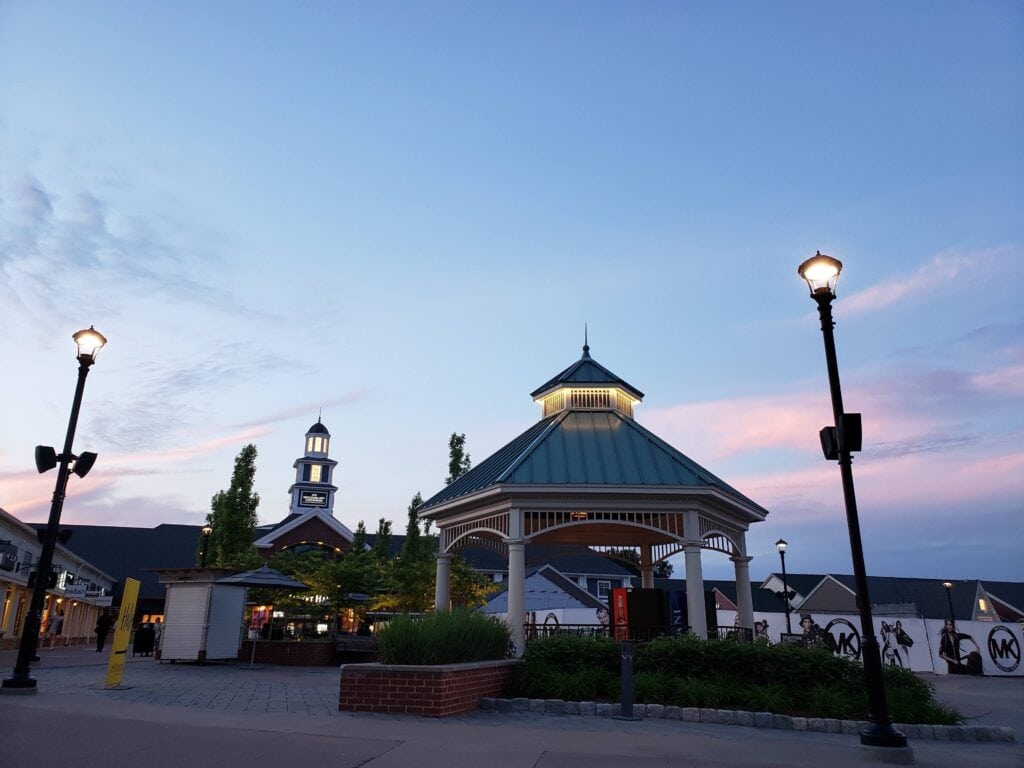
Old, irregular walking surfaces were replaced with new paving; hardscape and landscape plans introduced plantings, lighting, and the occasional fire or water feature.
A new Bus Plaza and Welcome Center tried to make bus arrivals less chaotic. A Parking Deck with guidance lights telling drivers where spaces were open reduced some of the old circling.
A Luxury Tenant Avenue, new restaurants, kiosks, and art installations all pointed toward a more curated, slightly more polished version of the outlet village.
VIP suite, luxury tenants, and the $250M expansion
The next round of plans arrived around 2019, by which point Woodbury Common Premium Outlets had already gone through three major expansions.
New proposals called for roughly 165,000 square feet of additional retail, a five-level parking garage alongside an expanded four-level one, pads for two 120-room hotels, a spa, and about 37,000 square feet of restaurant space.
Consultants estimated 1000 new on-site jobs and more than 1,600 construction positions over two years.
They projected another $22.5 million in annual retail sales taxes, including more than $12 million for Orange County and millions more for the state and regional transit authorities.
In 2023, the narrative was sharpened into a simpler figure: a $250 million expansion plan.
The multi-year project would add around 155,000 square feet of new retail and restaurant space, a 200-key luxury hotel, a second structured parking facility, a children's play area, improved crosswalks and wayfinding, and more elaborate landscaping.
It was framed as yet another expansion phase on a site that had been growing, one way or another, since the mid-1980s.
In 2024, a new VIP Suite in the Adirondacks District, the mall's luxury wing, was completed.
At roughly 2,500 square feet, it offered multiple private spaces with dressing rooms, an upscale lounge furnished with plush seating and curated art, and a private kitchen for events.
It was aimed at VIP shoppers and private groups and deliberately echoed the private salons of high-end city boutiques.
Meanwhile, the mall's tenant list kept getting more upscale. In 2023, twenty stores opened or expanded, and more than twenty did the same in 2024.
New or larger stores included David Yurman, Roberto Cavalli, Maison Margiela, Ladurée, Bogner, Sferra, Bollicine Champagne Bar, Jil Sander, Eleventy, MCM, and Reformation.
Arc'teryx, Tory Burch, Marc Jacobs, and Golden Goose grew their footprints. The outlet was still selling discounts, but the brands on offer looked more and more like the line-up of a luxury high street.
Phase V: hotels, hearings, and the road ahead
For all the press releases, the future of Woodbury Common Premium Outlets has been moving through a more mundane channel: local boards and environmental reviews.
By April 2024, the expansion was being described as underway, but approvals were still active.
In mid-2025, the Village of Woodbury Planning Board spent a meeting focusing not on handbags but on infrastructure.
Members pressed for a detailed report on village water and sewer capacity, which had not yet been delivered.
They asked how a 200-room hotel with its own restaurant would fit into already tight parking conditions on peak days.
They wanted construction traffic plans and possible extensions of the parking management system that would help control holiday crowds.
In October 2025, the Orange County Planning Board reviewed the Phase V site plan and a Final Supplemental Environmental Impact Statement.
Meanwhile, the mall kept operating like the machine it had become. Wayfinding systems were refined, with districts color-coded to keep visitors oriented.
Trolleys continued to haul shoppers from remote parking lots. New children's play areas, crosswalk improvements, and landscaping upgrades began to appear in renderings and then on-site.
On Black Friday 2025, news photos once again showed long lines outside brand-name stores, proof that, whatever happens in hearings, the appetite for in-person bargain hunting is still there.
Woodbury Common Premium Outlets remains what it has been for four decades: an ever-expanding outlet village that turns international tourism and regional free time into tax revenue, jobs, and quarterly results, one purchase and one traffic plan at a time.
Independent Publisher Notice
BestAttractions is an independent editorial publisher. We are not affiliated with, endorsed by, or acting on behalf of any location, business, property owner, manager, government agency, or organization described in this article.
Comments posted on this page are not forwarded to, reviewed by, or acted upon by any entity mentioned in the article.
For official inquiries, complaints, applications, bookings, or other requests, please contact the relevant entity directly through its official website or other verified channels.