Joseph Koury did not start by building a mall. He started by taking a risk. In 1958, the Greensboro developer began buying land on the southwest edge of the city.
The land was rough, mostly unused acreage near a new interchange where Interstate 40 crossed the road that later became Gate City Boulevard.
Few people were interested in that area at the time, but Koury moved in anyway. His company built a Holiday Inn on the property in 1970. The mall came a few years later and opened in stages.
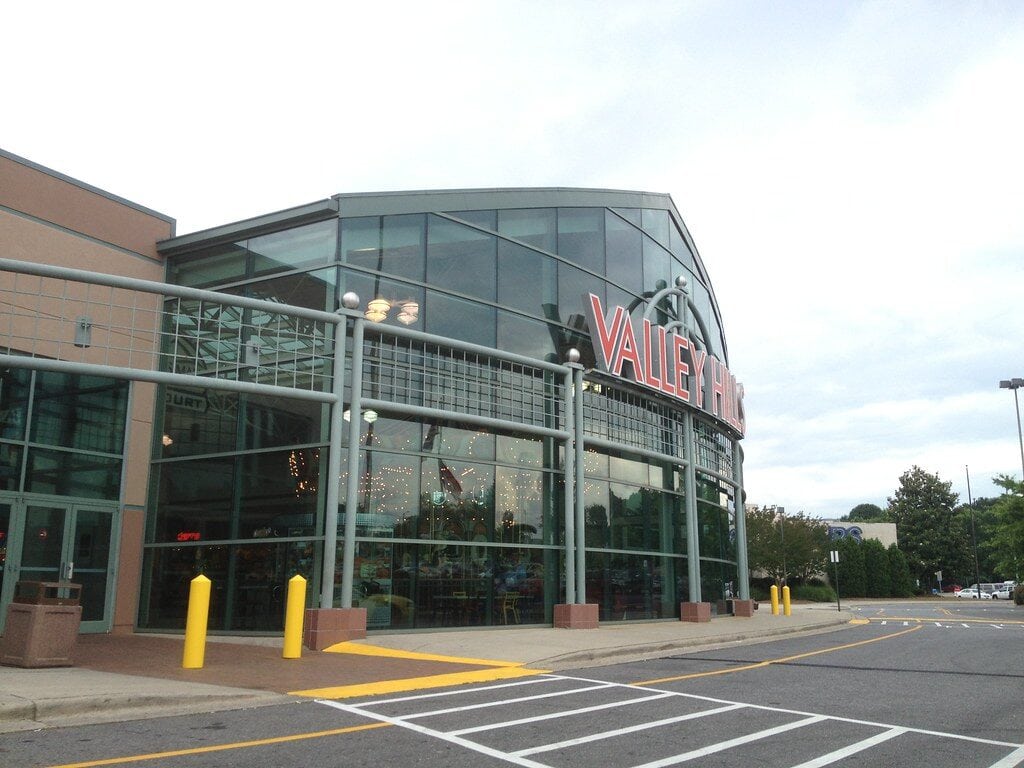
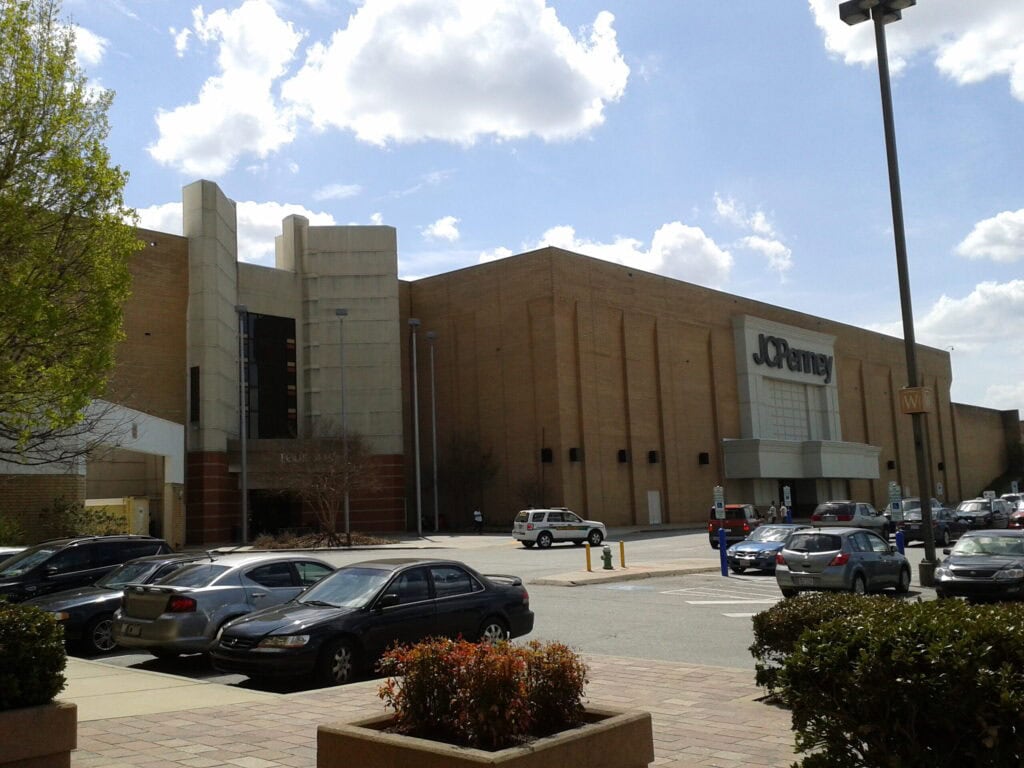
JCPenney opened first on August 7, 1974. The rest of the inside of the mall opened that October. Belk opened in February 1975, and the project received a formal dedication ceremony on February 6.
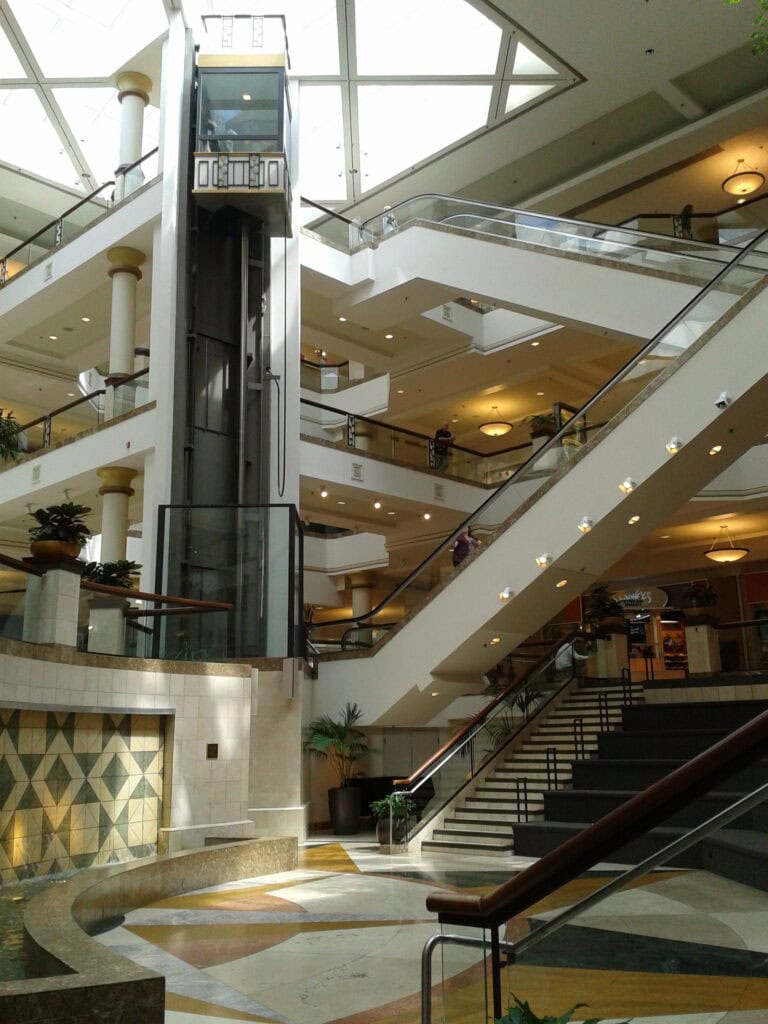
The result was Greensboro's first enclosed mall. It had two levels and 900,000 square feet of space. Its store lineup was much larger than what people in the area would have expected a generation earlier.
Shoppers could visit Belk, JCPenney, Miller & Rhoads, Thalhimers, Frankenberger's, McCrory's, and Eckerd Drugs without going outdoors, and a full Winn-Dixie grocery store sat on the property nearby.
There was also a Piccadilly Cafeteria for lunch. A four-screen General Cinema opened in February 1979.
People came from across the Triad to shop there. On Saturdays, the parking lot filled up before noon. Koury's risk worked.
Tenants Come and Go Through the Early Years
Four Seasons Mall barely had time to settle before the anchor lineup started moving. The north anchor was originally planned as Meyer's, but it opened under the Jordan Marsh name, and by 1979 it had become Ivey's.
JCPenney had been running an auto service center out of a standalone building on the property, but that ended in 1983, and the building eventually came down.
Full-service shopping - fix your car, buy your clothes, grab lunch - was the whole idea back then.
Through all of it, Four Seasons kept drawing people in. Greensboro was growing outward, toward the mall rather than away from it, and the shopping center had positioned itself perfectly.
But the building was running out of room. The original design had actually anticipated this - the main structure was built with a third floor and a basement level held in reserve for future retail.
By the mid-1980s, there was no good reason to keep waiting. The traffic was there.
The demand was there. All that was missing was the space, and the space was already built into the walls.
A Third Floor Opens in 1987
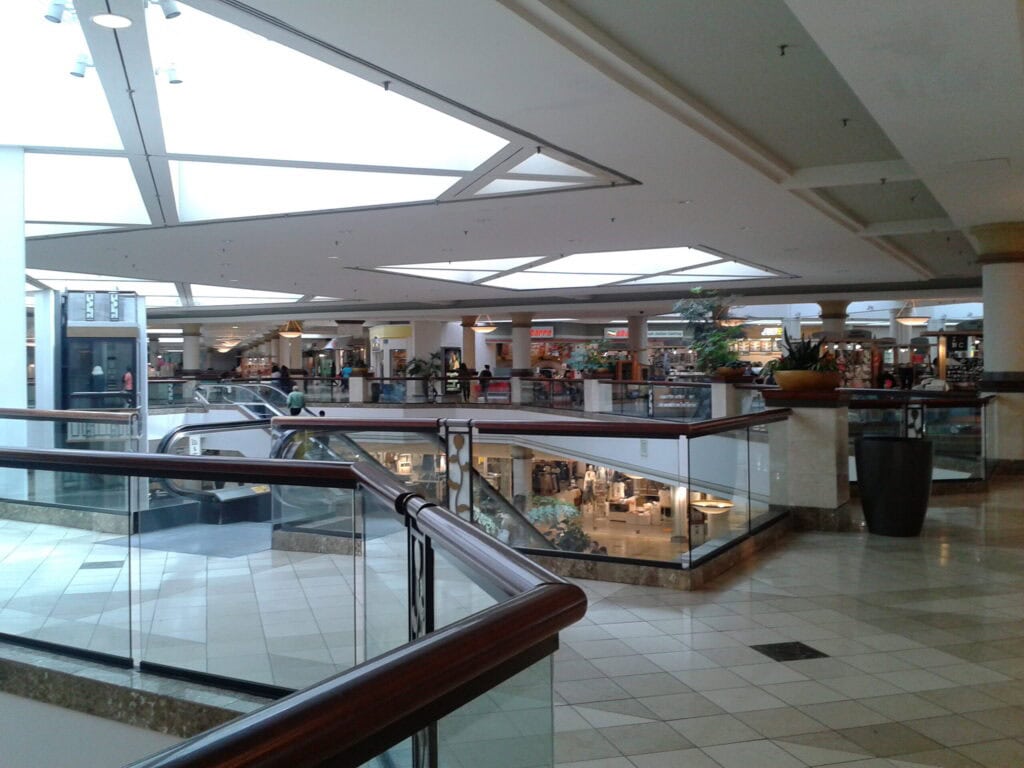
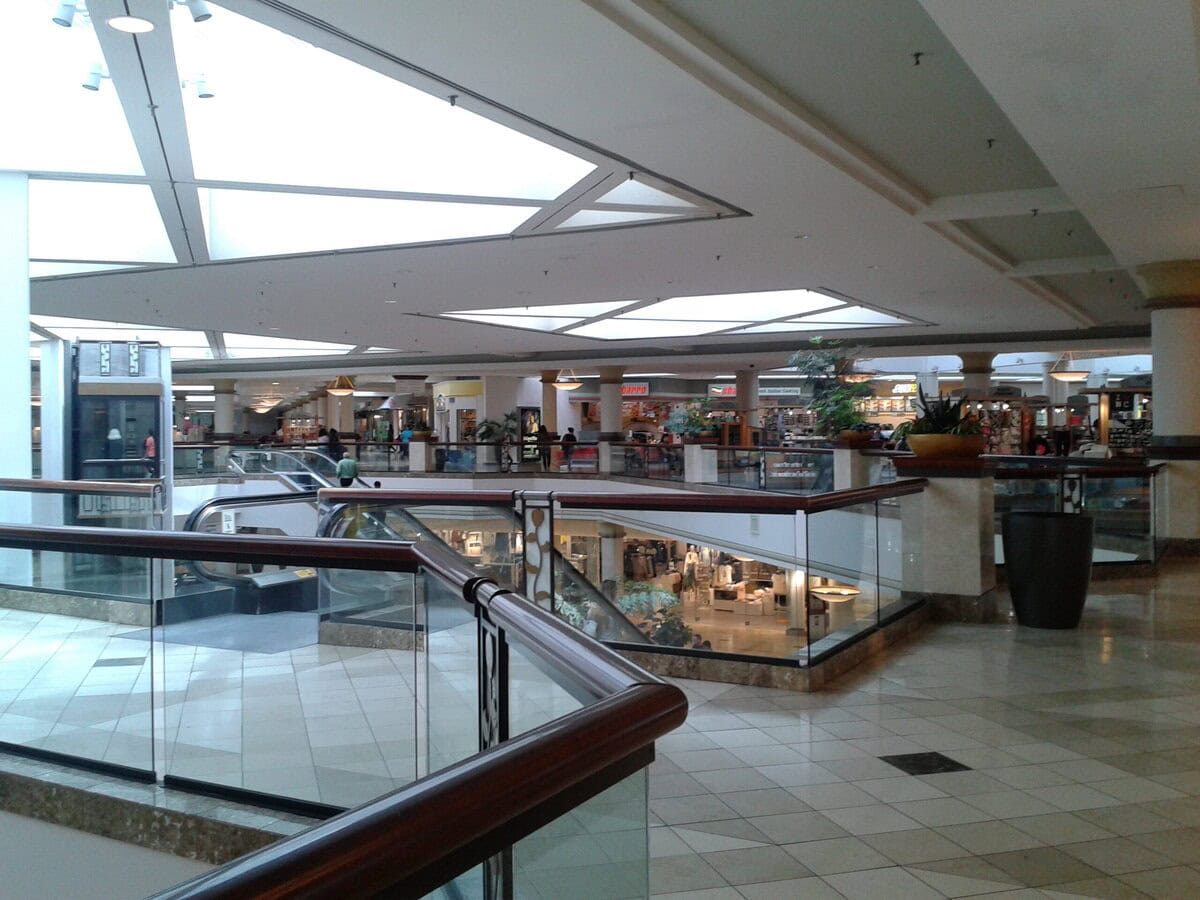
When the third level opened in 1987, it brought a large new food court with it - the kind of thing that becomes the gravitational center of a mall almost immediately.
Total retail space went past one million square feet. The number of stores reached about 200. Four Seasons was now one of the largest enclosed malls in North Carolina.
The mall also got a new name. "Four Seasons Mall" changed to "Four Seasons Town Centre," and the logo was updated to match.
A few years later, the basement level was opened for retail use. That let the mall run commercials promoting "four floors of stores," which was technically true.
Shoppers in Greensboro who remembered the original 1974 mall would have seen a very different place. The food court was busy on weekends.
The hallways were wider, the ceiling was higher, and the mall felt more like a regional destination than a local shopping center.
Dillard's In, Old Names Out, Nineties Arrive
Ivey's had barely finished renovating its store - a project that connected it to the new third level - when Dillard's came in and acquired the whole chain in 1990.
The Four Seasons location flipped to Dillard's without missing much of a beat.
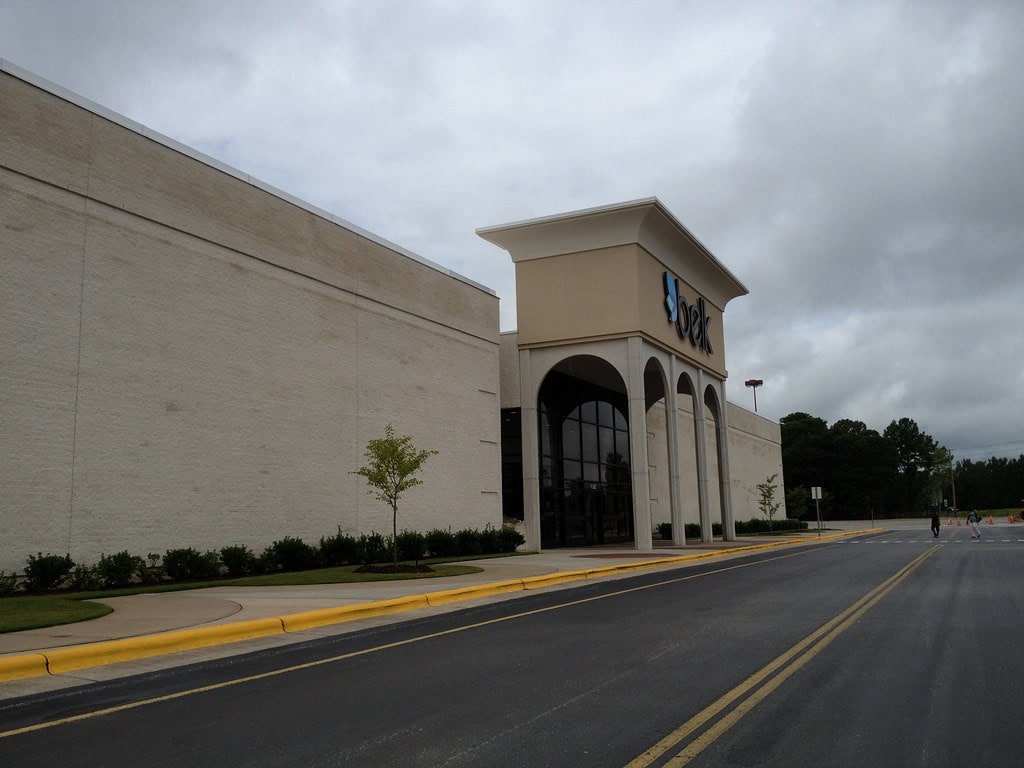
That same year, Belk added its own third level and tacked on more than 50,000 square feet of selling space. The mall was still growing, still adding.
Thalhimers got sold to the May Department Stores Company in 1990 as well. When May phased out the Thalhimers name in 1992, the Four Seasons store closed.
It was only 20,000 square feet - barely enough for a proper department store - and May decided it wasn't worth saving.
They looked at putting in a Hecht's but ended up expanding a different Hecht's at Friendly Center and building a standalone one out on Wendover Avenue instead.
Mid-decade, the Interstate 40 widening project added a Koury Boulevard ramp for westbound drivers and cleaned up the Gate City Boulevard junction, making it easier to actually get to the place.
Then, late in the nineties, Four Seasons brought in Thompson, Ventulett, Stainback & Associates for a full interior overhaul.
The firm dropped a fountain and an amphitheater into the center court, lined the corridors with kiosks, and added soft seating areas that made the mall feel a little less like a racetrack and a little more like somewhere you might want to sit down.
One Mall Left Standing After Carolina Circle Falls
Carolina Circle Mall had been the only other enclosed shopping center in Greensboro, and it had been struggling for a while.
By the mid 2000s, it was gone - closed, then demolished - which left Four Seasons as the last indoor mall in the city. It still holds that distinction today.
Dillard's used the early 2000s to make a significant move of its own. In 2002, the store tacked on 73,000 square feet and went through a complete renovation.
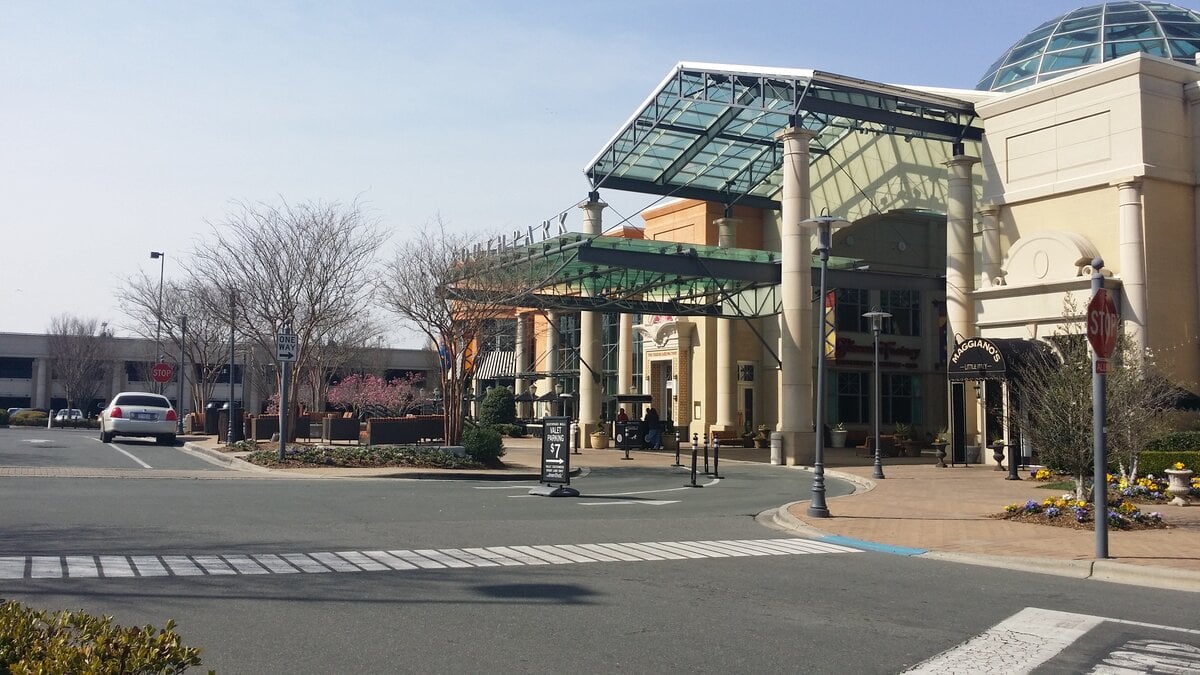
The mall's exterior entrances were all redesigned around the same time, a project that stretched across roughly three years.
Then, in 2004, General Growth Properties bought the mall. The company ran some of the biggest shopping centers in the country.
Hence, the sale was a clear signal that Four Seasons was considered a going concern rather than a property someone was looking to flip.
Shoppers wouldn't have noticed much right away. But the money behind the place had changed, and that tends to matter eventually.
Belk Walks Out and a New Tenant Bowls In
Belk had been at Four Seasons since opening day in February 1975. When the chain announced in May 2014 that it was closing the location, that was nearly four decades of history going out the door.
The reasoning was straightforward enough - Belk wanted to pour money into a flagship store at Friendly Center instead, and the Four Seasons spot didn't fit that vision anymore.
Closing sales started in November 2014. The store locked up permanently on January 18, 2015, just weeks shy of its 40th anniversary.
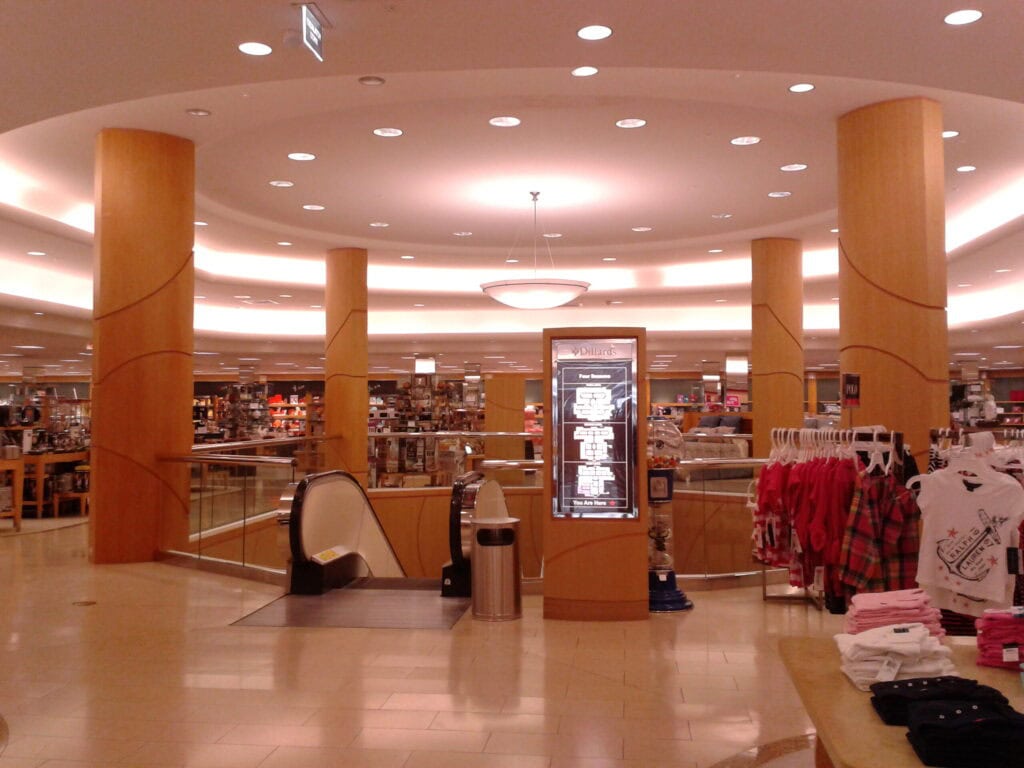
Dillard's made its own move not long after. The chain announced in April 2016 that it was leaving its longtime space and relocating to where Belk had been.
Before packing up, Dillard's ran a clearance center out of the old location to move excess merchandise.
The new store opened on October 25, 2016. That freed up the original Dillard's footprint for something nobody would have predicted a decade earlier.
Round1 Bowling & Amusement, a Japanese entertainment company, moved onto the first floor of that space in January 2018 - bowling lanes, arcade games, the works.
It was the chain's 20th American location. Watching a department store anchor get replaced by an arcade is, depending on your age and your perspective, either a sign of the times or genuinely exciting.
At Four Seasons, it turned out to be both.
Four Seasons Today: Still the Last One Standing
Four Seasons Town Centre is different from the mall it was in 1974, 1987, and even 2005.
Today, the property has 141 stores and service businesses in a little more than 1,084,000 square feet, and Dillard's and JCPenney remain the anchor stores.
Round1 continues to attract younger visitors, and many of them are not coming to shop at a department store. In 2025, the mall installed a maimai DX rhythm game machine, showing how its visitors are changing.
Wrestling events were held there in August under the name Mall Mania, and the annual Shopper's Day event brought nearly 2,500 people through the mall in December 2025.
In January 2026, as a big ice storm approached the Carolinas, around 400 Duke Energy trucks and crews from over 20 states and Canada met in the mall parking lot before heading out to restore power.
The mall's recent history also includes some problems. In November 2024, a man was shot in the parking lot, but he survived.
In 2025, Claire's closed at Four Seasons after its second Chapter 11 bankruptcy.
That same year, a Whataburger opened at 1408 Four Seasons Station Drive, adding a new business near the mall.
Fifty years after Koury's investment succeeded, the mall is still open. That matters.