Columbia Mall and the Saturday That Never Ended
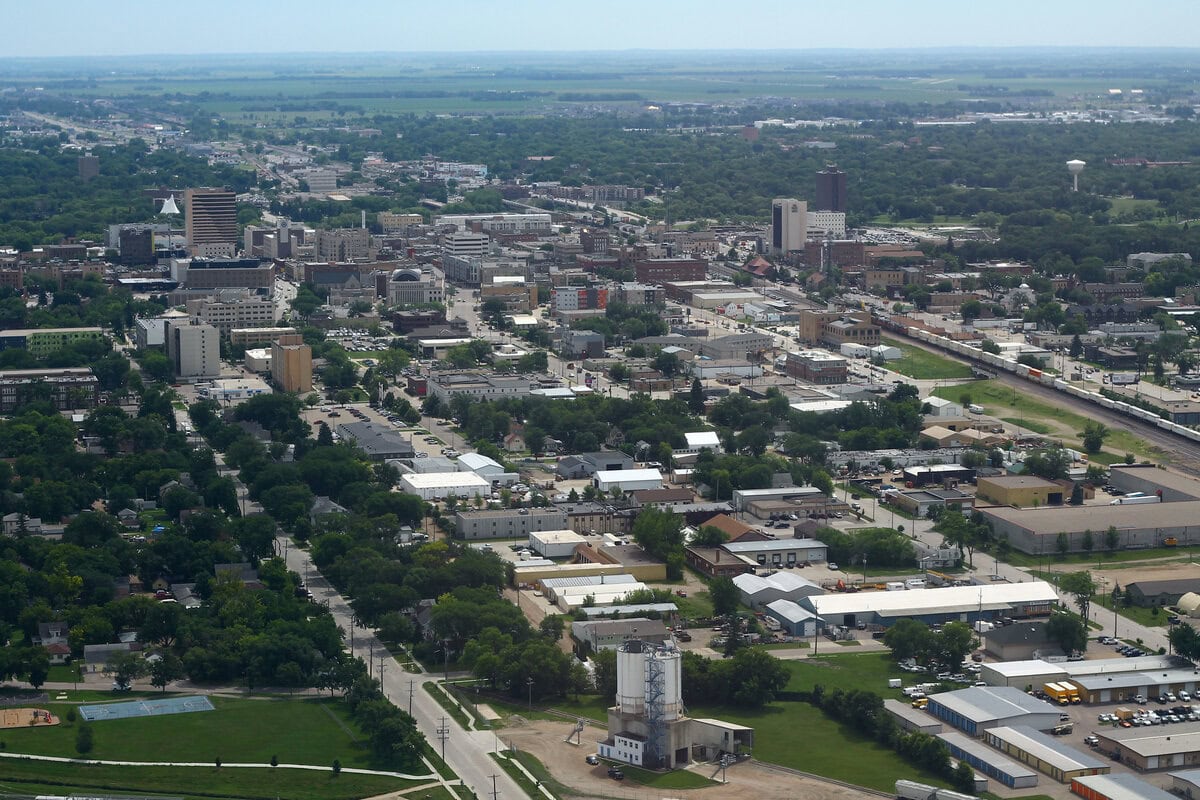
It is January in Grand Forks, North Dakota. It is one of those mid-1980s Saturdays when the wind off the northern plains genuinely punishes you for being outside.
The parking lot at the corner of 32nd Avenue South and Columbia Road is already full, with cars from across a fifteen-county stretch of the region.
Trucks with Minnesota plates are mixed in, along with a fair number of vehicles from across the Canadian border, with people down from Winnipeg or somewhere south of it because the exchange rate made the trip worthwhile.
Inside, the air is warm and smells like department store perfume and mall food.
Dayton's is at one end, JCPenney at the other, Target somewhere in the middle, and the corridors are genuinely busy.
A family from a small town 40 miles west is here for the day, the kids running ahead, the parents taking their time.
This was not just the largest mall within 70 miles - it was, for much of the region, the only mall that counted.
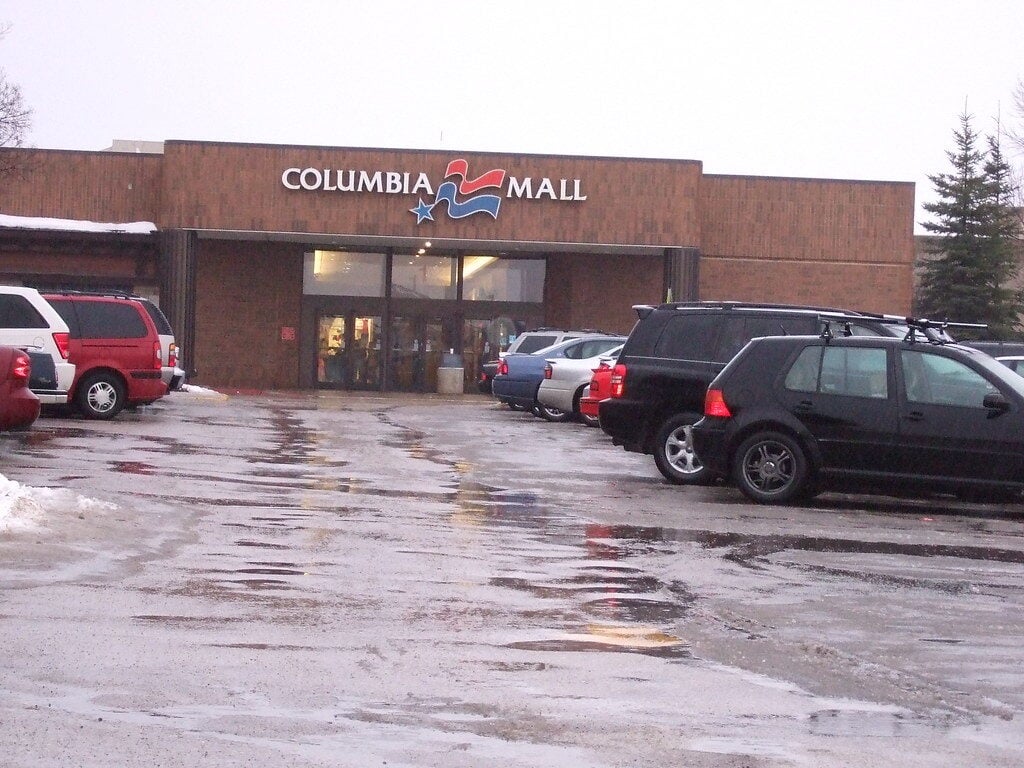
Columbia Mall opened on August 2, 1978. The Dayton Hudson Corporation built it at a cost of roughly $20 million.
It covered 571,800 square feet on a single floor at the intersection of 32nd Avenue South and Columbia Road in Grand Forks, just east of Interstate 29.
It drew from northeast North Dakota, northwest Minnesota, and southern Manitoba. People did not just shop here - they made a whole day of it, and for a long stretch of years, they kept coming back.
Before a Single Shovel Hit the Ground in 1975
Getting Columbia Mall built where it stands required winning a fight most people have long since forgotten.
In 1975, three groups came forward with plans for a major shopping center in Grand Forks, and the competition was not especially polite.
Dayton Hudson proposed building at 32nd Avenue South and Columbia Road.
Inland Construction of Edina, Minnesota, wanted a site at 32nd Avenue South and Washington Street, about a mile east. That idea was set aside quickly.
The more serious challenge came from a partnership between local investors and Farber-Kelley Ltd. of Toronto, which had drawn up plans for a mall at DeMers Avenue and 42nd Street.
They called it Marketplace West. The city's own planning department initially preferred that location, and for a while it looked like Dayton Hudson had made a long trip for nothing.
What changed things was a referendum on whether to annex Dayton Hudson's proposed site into the city limits. Voters approved it, and the city council read that result as public support for the Columbia Mall project.
Marketplace West never became a mall. The site eventually became the Alerus Center, Grand Forks' arena and convention center.
Two proposals that could not coexist in the same city became two entirely different things in two different places, and Grand Forks ended up with both.
That annexation vote, which probably felt at the time like a minor municipal formality, ended up determining what Grand Forks looked like commercially for the next five decades.
New Owners and a Decade of Anchor Turnover
Columbia Mall ran under Dayton Hudson's ownership for roughly the first eight years of its life. Then, in 1986, Met Life of New York acquired the property.
The company proved to be a hands-on owner, which showed most clearly in 2000, when it invested in bringing Sears to the mall as a fourth anchor tenant.
Sears relocated from the nearby Grand Cities Mall, and its arrival gave Columbia Mall its fullest lineup since opening day.
The same period brought a cascade of other changes that were harder to keep track of.
Target left its original interior space and built a larger SuperTarget on 32nd Avenue South just south of the complex, leaving a big empty footprint behind inside the mall.
Dayton's became Marshall Field's in 2001 following a national corporate reorganization.
Marshall Field's was acquired by May Department Stores in 2004, then folded into Federated Department Stores in 2005, which converted the location to Macy's in 2006.
For anyone who had shopped in that same corner of the building since 1978, that was three name changes on one door in about five years.
In 2004, a private real estate company called GK Development Inc., based in Barrington, Illinois, bought the whole mall from Met Life for $30 million.
The company president was candid about his ambitions - a broader tenant mix, better food options, and more reasons to come.
At that point, the mall had 72 tenants and an 85 percent occupancy rate, and there was genuine reason to believe the place was still worth betting on.
A Food Court, a Tornado, and a Giant Sports Store
GK Development spent a few years making its presence felt at Columbia Mall. In 2005, a renovation added a food court named Dakota Cafe.
The mall had gone nearly its first three decades without a dedicated eating space, so the change made the place more functional, even though it did not change the mall's larger situation.
That same year, the mall made news for something unrelated to retail.
On August 26, 2007, a tornado hit Northwood, North Dakota, about 25 miles southwest of Grand Forks.
After that, the American Red Cross set up a temporary disaster relief headquarters at Columbia Mall and used the large enclosed space to coordinate aid for affected families.
Then the bigger change came in 2014. Scheels All Sports opened in the former Target space, which had sat empty since 2001.
Scheels is a sprawling sporting goods and outdoor retailer, and people made a deliberate trip to it.
Its arrival felt like a real turning point. Shoppers still came from the same wide territory they always had, but now they had a specific stop in mind.
For a few years in the mid-2010s, the anchor lineup looked stable. Scheels and JCPenney still drew customers, and Macy's and Sears were both operating.
It seemed possible that things might hold roughly as they were for a while longer. They did not.
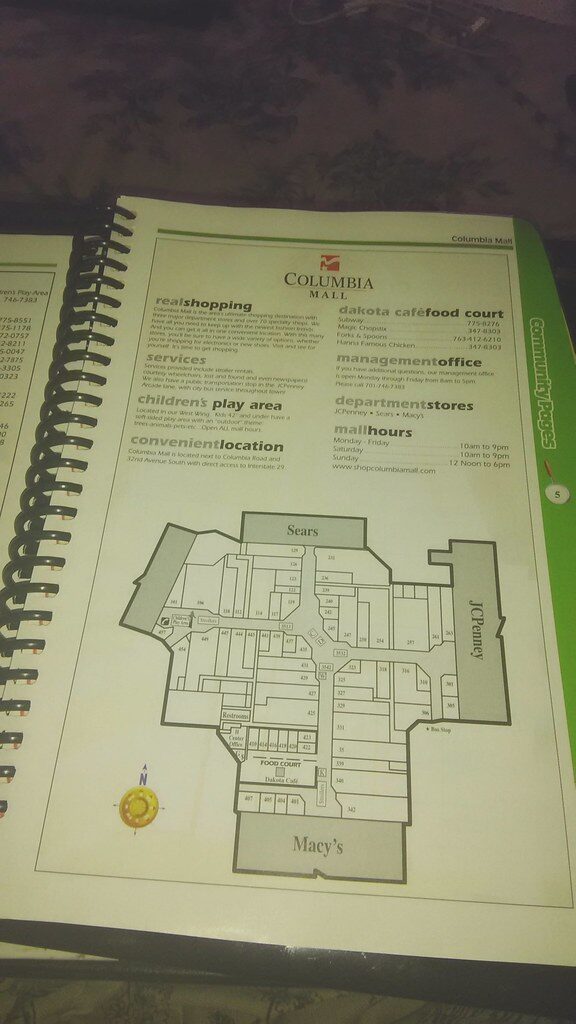
When Macy's Left, and Then So Did Sears
In 2017, Macy's closed its Columbia Mall store. The next year, Sears did the same.
In roughly a year and a half, the mall went from having four main stores to only two, and you could really see the difference inside.
Two big, empty buildings stood on either side of the parts of the mall that still had stores.
There were long hallways where nothing was open.
The usual sounds of a busy mall, like voices, footsteps, and music coming from stores, were much quieter.
Different possible renters checked out the empty spaces in the years after.
A Christian school in East Grand Forks thought about using the Macy's building as late as 2022, and other buyers showed up from time to time, but nothing worked out.
Then, in January 2025, three more stores closed in just one month.
Court records from this time showed that about $1.3 million was owed in a foreclosure case connected to the mall property.
This highlights just how serious the building's financial problems were. Visitor reviews from this time were surprisingly similar.
People who had been coming from Winnipeg for years wrote about walking in and finding a place that felt empty, with closed stores on both sides, and on a Saturday afternoon, most of the people were just walking for exercise instead of shopping.
It was quiet in a place that used to be really loud. "A shell of its glory days" was one description. "Dying a slow death" was another. Neither was unfair.
A Mall in Decline and a City's Open Question
The property values confirmed what everyone already knew. In 2017, the whole Columbia Mall property was worth $59 million.
By 2025, it had dropped to $18 million. The mall building itself went from $31 million to $3.4 million, showing eight years of steady decline.
JCPenney and Scheels are the only two main stores still open as of early 2026. The old Macy's and Sears spaces are still empty.
Early in 2026, Midtown Ventures bought the former Macy's building, and the sale price was not disclosed. The $1.9 million figure was the asking price shown in the listing.
They plan to turn it into an indoor self-storage business, as they did at the old Kmart building across town.
GK Real Estate formally objected to the Planning and Zoning Commission, saying that changing the zoning would hurt the other tenants and block better uses for the space.
On February 17, 2026, following a public hearing, the Grand Forks City Council approved the second reading to rezone the former Macy's property from a B-2 shopping center district to a B-3 general business district.
City Administrator has been clear about what he wants: to turn the area into a mix of stores, services, and apartments, the kind of mix that has worked in other places where old malls have been changed into more neighborhood-like spaces.
Whether any of this actually happens is still unknown.
Columbia Mall has been the main shopping spot for this part of the northern plains for almost 50 years. What it will become next, if anything, is still truly uncertain.