
Grapevine has an advantage that is easy to describe and harder to evaluate.
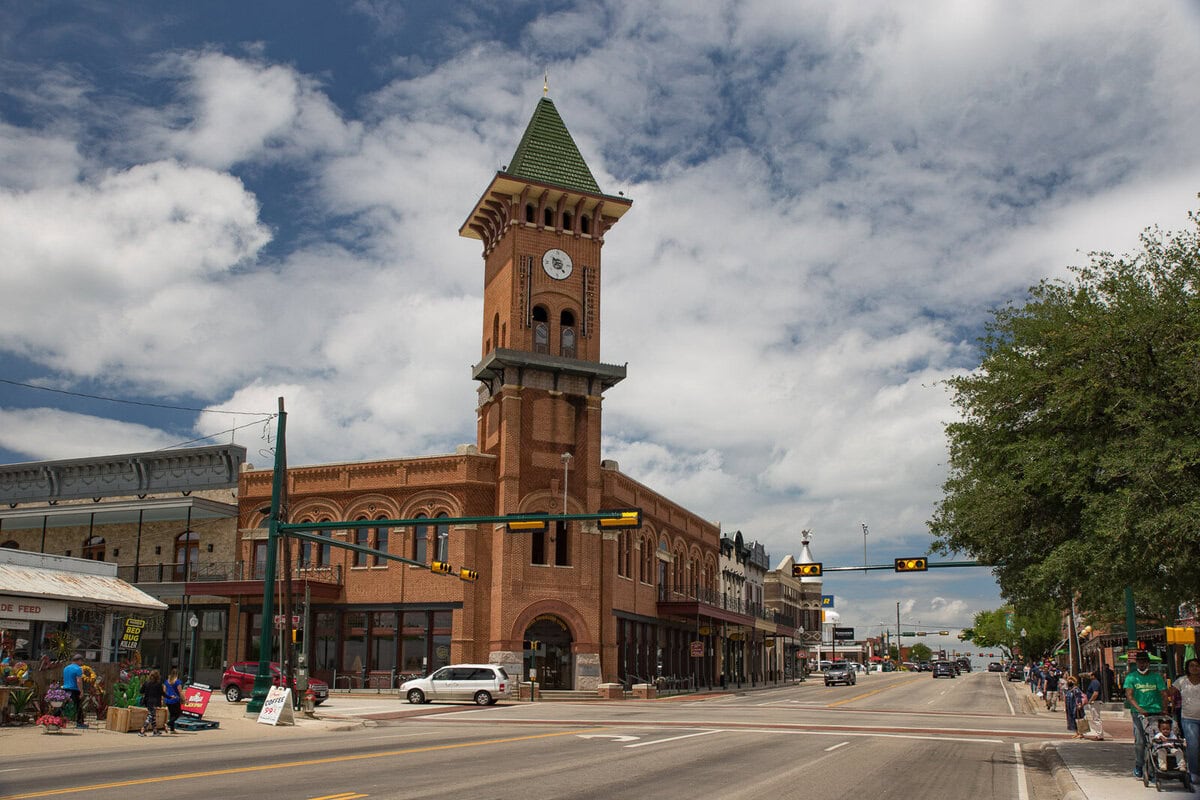
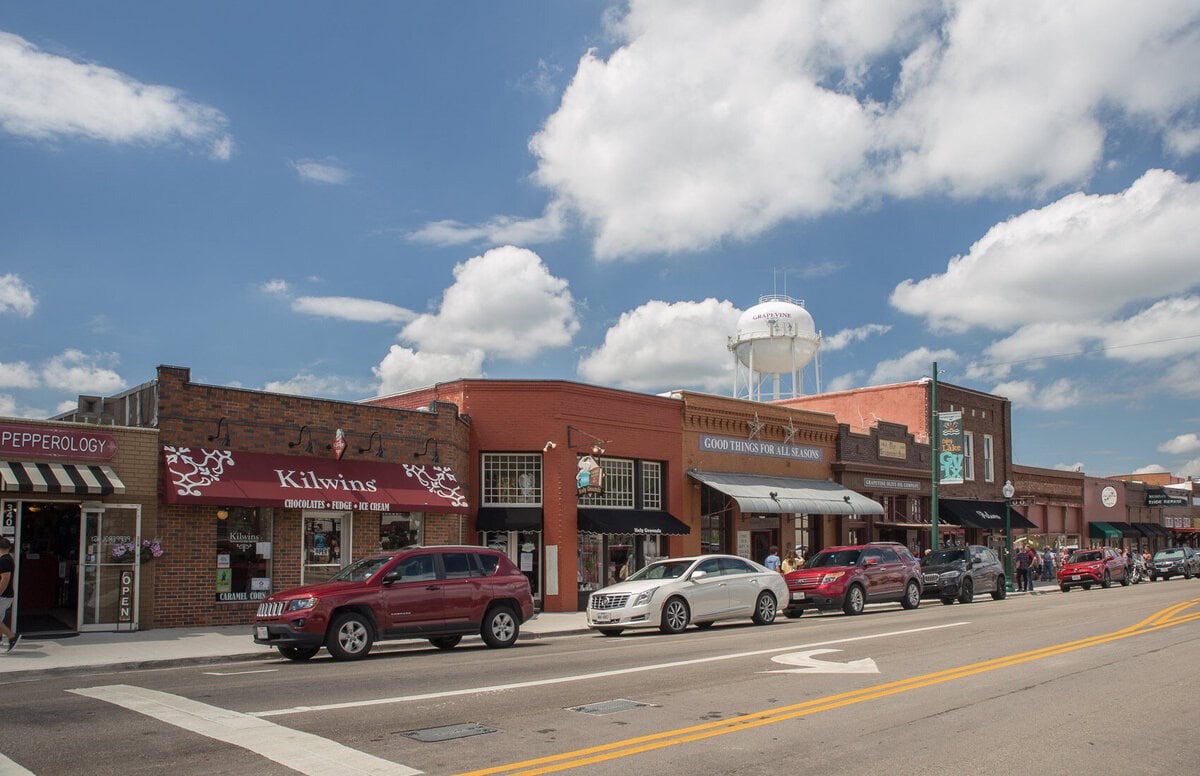
Historic Main Street is a real center with restaurants, shops, events, preserved buildings, and a TEXRail station on South Main Street.
The unusual part is not simply that these things exist. It is that downtown and commuter rail occupy the same small piece of the city.
That can make Grapevine feel more connected than a suburb where every outing begins in a parking lot. But the effect changes sharply across the city.
If Main Street is a comfortable walk or bike ride from home, downtown can absorb ordinary trips: coffee, dinner, an evening out, a train to the airport.
If reaching it starts with getting into the car, the same downtown may remain a pleasant destination rather than part of the machinery of daily life.
That distinction matters more than a citywide "walkability" label. The question is not whether Grapevine has a center.
It is whether your normal routes let you use it without planning around it.
The real benefit is replacing trips, not having attractions nearby
Picture two households that both have a Grapevine address.
The first lives close enough to Main Street that a quick coffee, dinner, or train ride can begin on foot.
On a normal weekday, someone can leave the car at home for an evening meal.
A traveler can roll a suitcase to Grapevine/Main Street station and ride directly to DFW Airport Terminal B. A festival does not require a parking strategy because the last leg is a walk.
The second household lives in a conventional residential part of Grapevine.
Historic Main Street may still be only a short drive away, and that is a real amenity. But the pattern is different.
Dinner downtown becomes another car outing. TEXRail is useful only after a drive, drop-off, bike ride, or other first-mile trip to the station.
Grocery runs, school trips, appointments, and many other errands continue to follow the road network.
Living two miles from downtown creates a different weekly rhythm from living six blocks away. Distance matters, but the route matters just as much.
Main Street has the bones of a center, not just a themed shopping strip
Grapevine's downtown is not a newly branded retail district borrowing an old-town look.
The city has formal historic districts, including its Historic Township District, and the Grapevine Commercial Historic District follows South Main Street.
The rail corridor is part of that same geography.
There has also been deliberate work to connect housing and pedestrian space to Main Street.
The North Central Texas Council of Governments documents the Fairfield on Main Street project as a mixed-use development with apartments above ground-floor retail, paired with wider pedestrian-oriented sidewalks, crosswalks, landscaping, and street lighting.
That does not make every nearby street equally comfortable for walking.
It does show that parts of the center combine housing, sidewalks, commercial activity, and rail access closely enough to support repeated trips without a car.
The useful test is therefore home-to-destination, not citywide averages.
The lived difference shows up in the route to Main Street and the station: sidewalk continuity, street crossings, shade, traffic, and how the trip feels at the times people actually use it.
A short line on a map can still be an annoying daily walk.
TEXRail is powerful when your life points in the right direction
The station is where Grapevine's center becomes more than a dining and event district.
TEXRail runs between downtown Fort Worth and DFW Airport Terminal B, with Grapevine/Main Street between them.
Trinity Metro lists the Grapevine-to-airport trip at about 10 minutes.
The current 2026 service also gives Grapevine a one-seat ride west to Fort Worth Central.
That can be genuinely useful for an airport employee, a frequent flyer, someone whose work or entertainment routinely points toward Fort Worth, or a household that values being able to reach an airport terminal without driving and parking there.
The limitation is just as important: TEXRail is a corridor, not a local transit grid for Grapevine and not a one-seat train to downtown Dallas.
If your work, friends, children's activities, or regular destinations point elsewhere across the Metroplex, living near the station does not suddenly remove the car from those trips.
This is the practical way to judge the rail benefit. Do not ask, "Is there a train?" Ask, "How many trips I already make line up with this train?"
The car still handles much of ordinary life
Living close to Main Street can reduce some driving without producing a car-free lifestyle.
Downtown is especially well positioned to absorb social and discretionary trips: coffee, dinner, drinks, browsing, events, and rail departures.
Those are meaningful because they recur and because removing the car changes the experience.
Walking home after dinner is different from hunting for a parking space, and taking the train to the airport is different from budgeting time for airport parking.
But a household's full errand map is broader than downtown.
Supermarket runs, bulky purchases, medical appointments, school and youth activities, services, and trips to destinations elsewhere in DFW still spread across the road network.
TEXRail cannot solve trips that do not fall along its line, and Main Street does not need to contain every daily service to be a successful center.
Living close to the center can convert part of the week from drive-first to walk-first or train-first.
How large that part becomes depends on the routines a household actually repeats.
A Tuesday evening tells you more than a festival weekend
Historic Main Street can feel like two different places depending on the calendar.
On a quiet Tuesday, the benefit is spontaneity.
You can decide late to go out for dinner, take a walk, meet someone for coffee, or catch a train without treating downtown as an excursion.
This is when proximity proves whether it belongs to ordinary life.
During major events and the Christmas season, downtown becomes a regional destination.
That creates an upside for nearby residents: they can often approach on foot rather than joining the parking search. It also creates a cost.
Crowds and heavier event activity become part of living near the center rather than something experienced only after arriving there.
Rail data illustrate the difference.
Trinity Metro reported record TEXRail ridership in December 2025 and specifically pointed to Grapevine Christmas activities, along with holiday airport travel, as contributors.
That is evidence that the station and downtown reinforce each other during peak periods.
It is not evidence that residents use the train or Main Street at the same intensity on an ordinary weekday.
For anyone trying to understand downtown as lived geography, the contrast between those two moments matters: an ordinary weekday shows its routine value, while a major event shows how the same streets behave under regional demand.
Living nearby means experiencing both versions.
How close is close enough?
There is no universal mileage answer because a useful half-mile and a miserable half-mile are different things.
The relevant distance is the one people repeat. A walk to dinner may feel easy while a bike trip to the station with a bag may not.
A teenager or older family member may experience the same route differently.
Summer heat can change the choice, and one major road crossing can make a nominally short trip feel much longer.
The train works the same way. Frequent airport trips can turn the station into routine infrastructure. A Fort Worth-oriented commute can do the same.
A Dallas-oriented routine may leave TEXRail as an occasional option even for someone who likes having the station nearby.
When does Main Street become everyday infrastructure?
Frequency is the clearest way to separate an everyday center from a nearby amenity.
Suppose living close enough to Main Street leads to three round-trip outings each week by walking, biking, or TEXRail instead of driving.
Over 50 weeks, that is about 150 outings in which downtown geography changes how the trip happens.
At two trips per week, it is about 100. At one trip per week, about 50.
If downtown enters the routine only once or twice a month, it may still be enjoyable, but it is functioning more like an amenity than daily infrastructure.
This is not a score or a cost calculation.
It is simply a way to see how strongly the center shapes the week: the more often Main Street or TEXRail changes a repeated trip, the more downtown functions as part of everyday life.
Grapevine's strongest case is not that it offers suburban life plus a nice downtown.
It is that, in the parts of the city closely connected to Main Street, downtown, the rail station, and home can form one repeatable routine.
Elsewhere only a few minutes away by car, those same assets may be things residents visit rather than things they live with.
That is the distinction that explains why "living in Grapevine" can describe more than one everyday geography.
Sources and useful further reading
- Grapevine Historic Districts - City of Grapevine.
- Historic Main Street District - Grapevine Convention & Visitors Bureau.
- About TEXRail - Trinity Metro.
- TEXRail Schedule - Trinity Metro.
- Grapevine - Fairfield on Main Street - North Central Texas Council of Governments.
- TEXRail breaks record - Trinity Metro, January 14, 2026.
Independent Publisher Notice
BestAttractions is an independent editorial publisher. We are not affiliated with, endorsed by, or acting on behalf of any location, business, property owner, manager, government agency, or organization described in this article. Comments posted on this page are not forwarded to, reviewed by, or acted upon by any entity mentioned in the article. For official inquiries, complaints, applications, bookings, or other requests, please contact the relevant entity directly through its official website or other verified channels.