
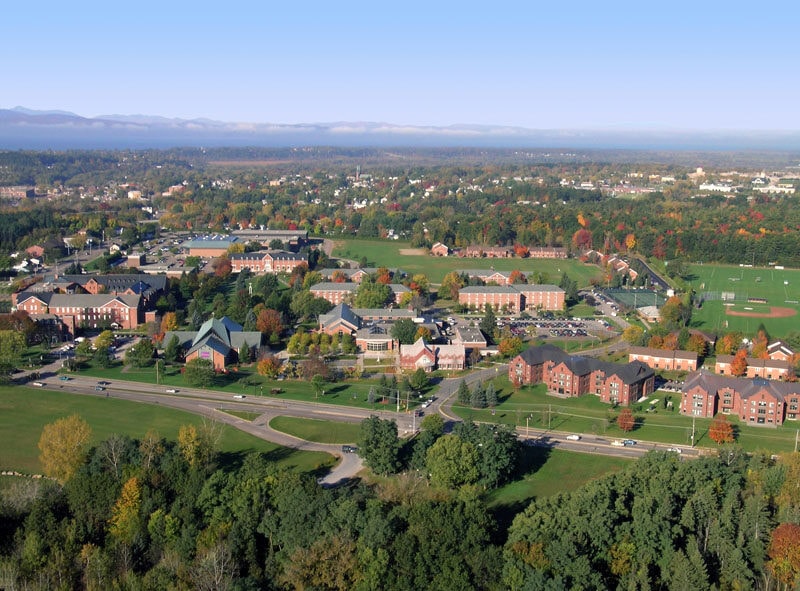
A few miles north of Burlington, the road does that Vermont thing: it gives you a grocery plaza, a school driveway, a patch of woods, a lake view, and a traffic backup before you have time to decide which version of the town you are in.
That is the first useful fact for a buyer. This is not one tidy village with a postcard center and one obvious housing market.
It is a lake town, a commuter suburb, a school district, a growth corridor, and a patchwork of older roads where the house you choose can change the whole deal.
The second useful fact is less scenic. A typical home here is already around $490,000, and recent closed sales have been closer to $500,000. That puts this market above Vermont's statewide home value.
Still, in line with nearby South Burlington, which is exactly the point: you are buying into the Burlington-area orbit, not escaping it.
Buying a House in Colchester, Vermont: Home Values, Flood Risk and Winter Costs
Colchester housing costs run above the Vermont-wide home-value measure, while Lake Champlain, nearby rivers and a northern Vermont winter add property-specific costs that a listing price cannot show.
Zillow's July 2026 Home Value Index puts Colchester's typical home value at $490,568, compared with $405,980 statewide.
A sound purchase starts with the exact property: tax bill, insurance, heating, drainage, water, wastewater and winter access.
Lake-adjacent or low-lying homes also deserve an address-specific FEMA check before inspection and financing deadlines expire.
Start with a current price baseline
The July 2026 Zillow Home Value Index (ZHVI) for Colchester was $490,568, up 0.8% from a year earlier.
Vermont's July 2026 ZHVI was $405,980, up 1.1% over the same period.
The Colchester number gives a useful citywide reference, but ZHVI is a measure of typical home value.
It is not an asking price, appraisal or prediction of what a particular house will sell for.
Housing data source: Zillow Home Value Index, July 2026. Data Provided by Zillow Group.
The U.S. Census Bureau reports a $394,400 median value for owner-occupied Colchester homes for 2020-2024.
That number belongs to a different dataset and period.
The Census figure and July 2026 ZHVI should not be treated as a before-and-after appreciation series.
For an offer, compare the property's price with recent comparable sales supplied through your agent or appraiser, then account for condition.
A cheaper house can cost more soon after closing if the roof, heating system or drainage needs work.
On a hypothetical $500,000 purchase, 20% is $100,000, 10% is $50,000 and 5% is $25,000. These are only down-payment examples.
Closing costs, prepaid taxes and insurance, moving expenses and repair reserves require additional cash, while the down payment available to you depends on the loan program.
Budget for the house after closing
Census 2020-2024 data put median selected monthly owner costs in Colchester at $2,070 for owners with a mortgage and $857 for owners without one.
This Census measure combines several ownership expenses, including mortgage payments when applicable, real estate taxes, property insurance, utilities and fuels, plus certain condo or mobile-home costs where relevant.
The figures show that a paid-off house still carries monthly costs, but they are not a quote for a 2026 buyer.
Insurance, taxes, heating use, loan terms and condition vary by property.
For each serious candidate, build an annual cost estimate from the current tax bill and an address-specific insurance quote.
Identify the heating fuel and ask for recent usage records when available.
Add any association fee, private-road charge, snow service, water or wastewater cost that applies. Keep a repair reserve separate from routine bills.
Winter should change the inspection questions
Nearby Burlington International Airport recorded an annual normal snowfall of 87.5 inches in NOAA's 1991-2020 climate normals.
The January normal daily mean temperature there was 20.9 degrees Fahrenheit.
Those are station normals rather than a forecast for a specific Colchester house, but they describe the cold-weather load a buyer should plan around.
Roof age and condition matter because snow and freeze-thaw cycles expose weak flashing, gutters and drainage.
Ask the inspector to check for past ice-dam leakage and moisture as well as visible roof defects.
Check where roof runoff and snowmelt go once they reach the ground.
Record the heating system's fuel, age and service history.
If the house has a long driveway, steep access or large paved area, price snow clearing before you buy.
Visit after rain or during snowmelt when possible; summer conditions may not reveal how the site drains.
Flood risk is an address-level question in Colchester
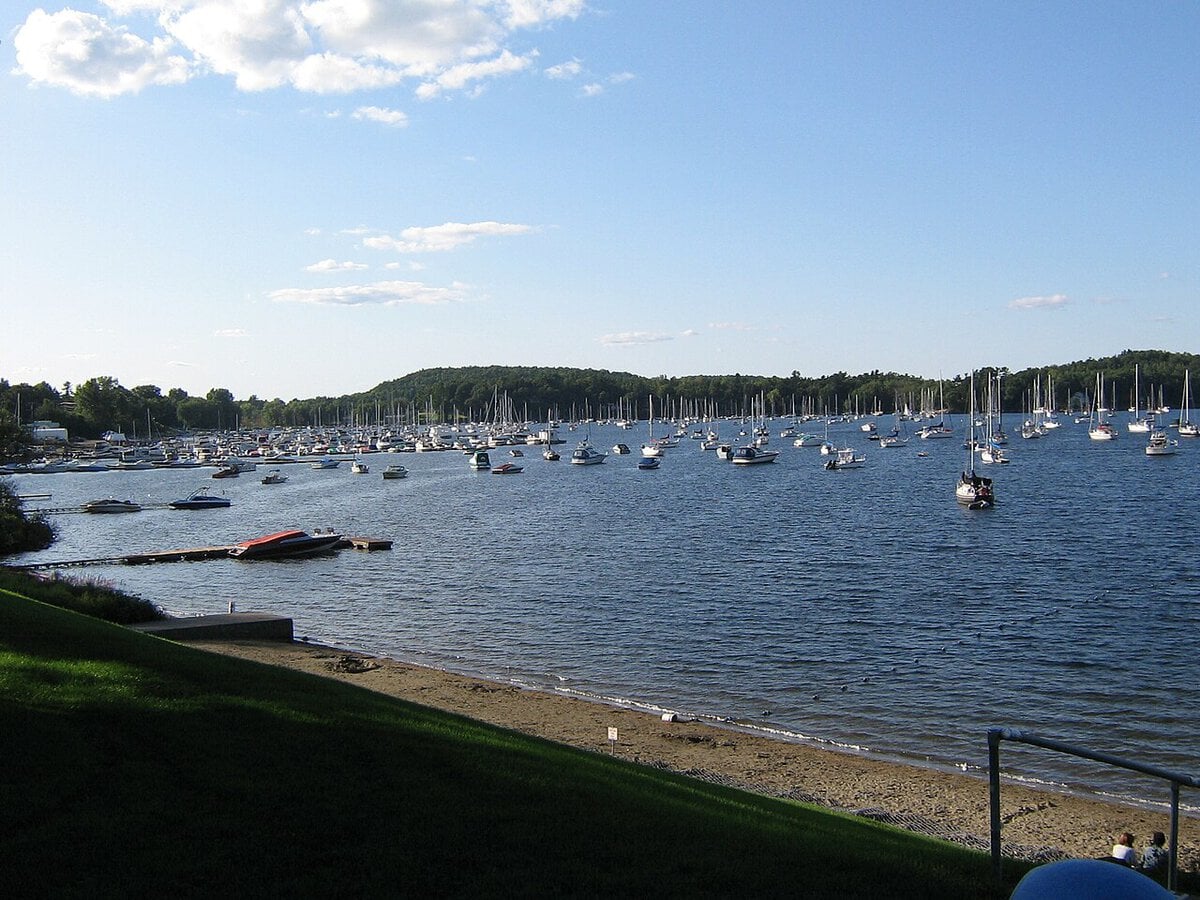
FEMA's Flood Insurance Study for Chittenden County identifies Colchester as a Lake Champlain shoreline community.
The study states that low-lying areas in town have been subject to periodic flooding from the Winooski and Lamoille rivers and their tributaries, while Lake Champlain water-level changes have caused shoreline flooding.
That evidence supports extra due diligence for some properties; it does not assign a flood zone to every Colchester home.
FEMA instructs users to search the Flood Map Service Center by street address for the current effective Flood Insurance Rate Map and to check revisions, amendments and other Letters of Map Change associated with the map.
Check early enough to affect the deal.
If the structure is in a Special Flood Hazard Area and the financing triggers federal mandatory-purchase rules, flood insurance may be required.
An insurance agent can also quote flood coverage when a lender does not require it.
For lakefront and low-lying homes, inspect grading, basement or crawlspace moisture, sump equipment, foundation staining and access during high water.
The FEMA map and the physical site answer different questions.
Match environmental checks to the house
EPA's 2024 home buyer guide recommends knowing the indoor radon level in a home you are considering and recommends fixing at 4 picocuries per liter (pCi/L) or higher.
An older seller test may justify a new test if the house changed or you plan to use a lower level differently.
For most housing built before 1978, federal rules require disclosure of known lead-based paint information and available records before the contract is signed.
Sellers must also give buyers a 10-day period for a lead inspection or risk assessment.
If the property has a septic system, EPA's homebuyer guidance recommends inspection before purchase.
Ask for system records and locate the tank and drainfield. For another wastewater arrangement, verify that system and its current charges.
Choose the property, not a townwide average
Colchester includes shoreline, low-lying and inland properties, so similarly priced houses can produce different ownership costs.
Before making an offer, assemble a property file with:
- the proposed price, down payment and cash remaining after closing;
- the current property tax bill and an address-specific homeowners insurance quote;
- heating fuel, recent usage information and the age and service history of the heating equipment;
- the FEMA address result plus any applicable map changes and a flood-insurance quote when exposure or lender requirements warrant one;
- inspection findings on roof, drainage, foundation, moisture and winter access;
- radon results, lead records when the home is covered by the pre-1978 rule, and septic records and inspection when the property has septic.
Colchester can suit a buyer who wants this part of Chittenden County and can carry the purchase price plus winter and site-specific costs.
An offer backed by this property file gives you a clearer picture of ownership after closing.
On the map: Colchester, VT 05446
Sources and further reading
- U.S. Census Bureau QuickFacts: Colchester town, Chittenden County, Vermont - 2020-2024 housing and owner-cost measures.
- Zillow: Colchester, Vermont housing market - July 2026 Colchester ZHVI.
- Zillow: Vermont housing market - July 2026 Vermont ZHVI.
- FEMA: Chittenden County Flood Insurance Study - Colchester river and Lake Champlain flood history.
- FEMA Flood Map Service Center - Address search for effective flood maps and map changes.
- NOAA/NCEI: 1991-2020 Burlington International Airport climate normals - Nearby snowfall and temperature normals.
- EPA: Home Buyer's and Seller's Guide to Radon - Radon guidance for home buyers.
- EPA: Lead-Based Paint Disclosure Rule - Federal rules for most pre-1978 housing.
- EPA: New Homebuyer's Brochure and Guide to Septic Systems - Septic inspection guidance.

Independent Publisher Notice
BestAttractions is an independent editorial publisher. We are not affiliated with, endorsed by, or acting on behalf of any location, business, property owner, manager, government agency, or organization described in this article. Comments posted on this page are not forwarded to, reviewed by, or acted upon by any entity mentioned in the article. For official inquiries, complaints, applications, bookings, or other requests, please contact the relevant entity directly through its official website or other verified channels.