Tucson Mall opens on Oracle Road
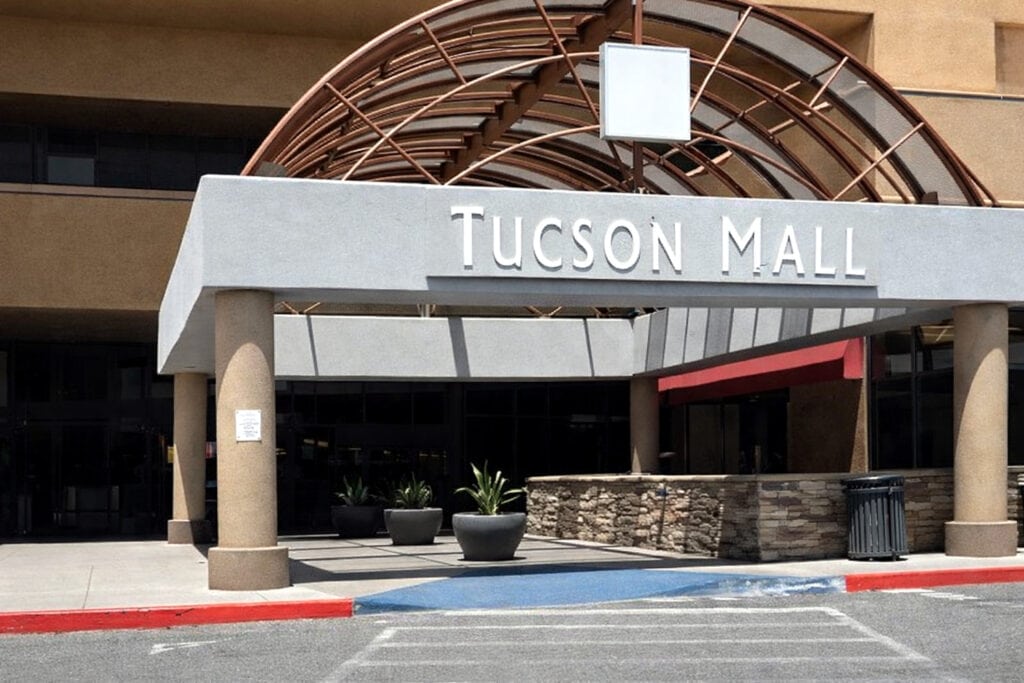
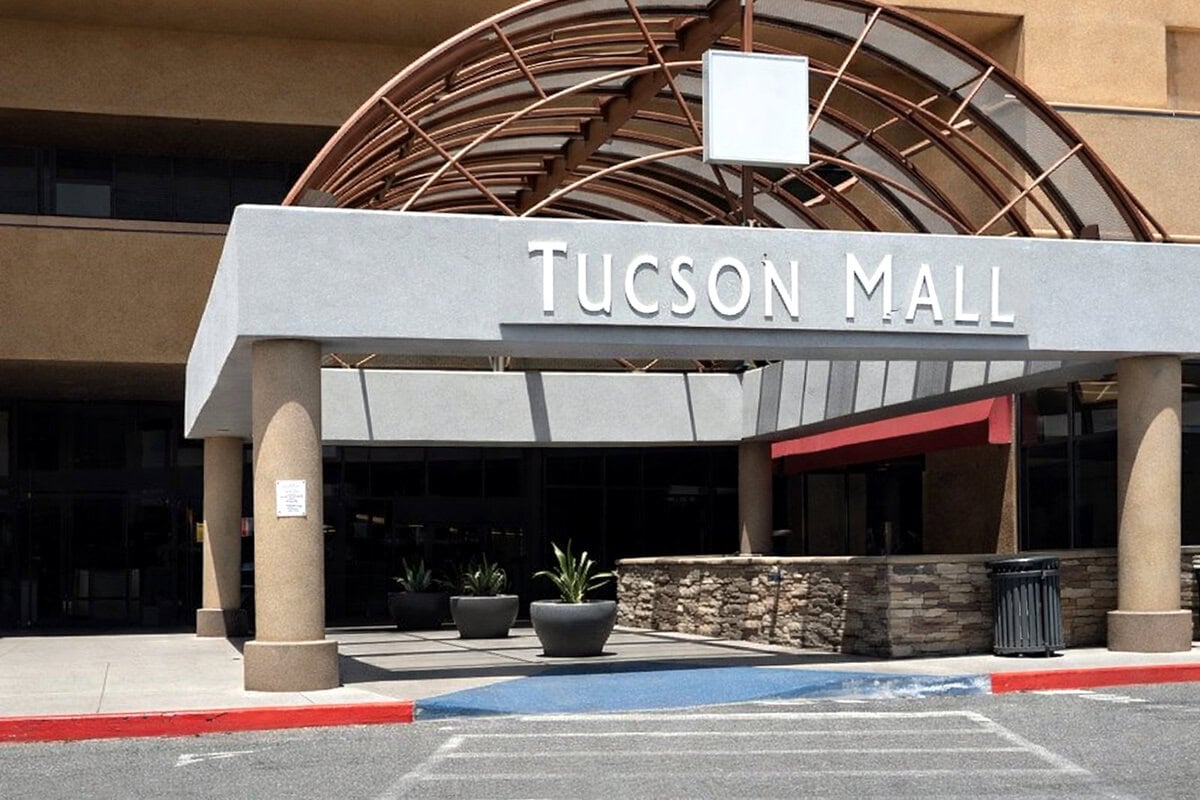
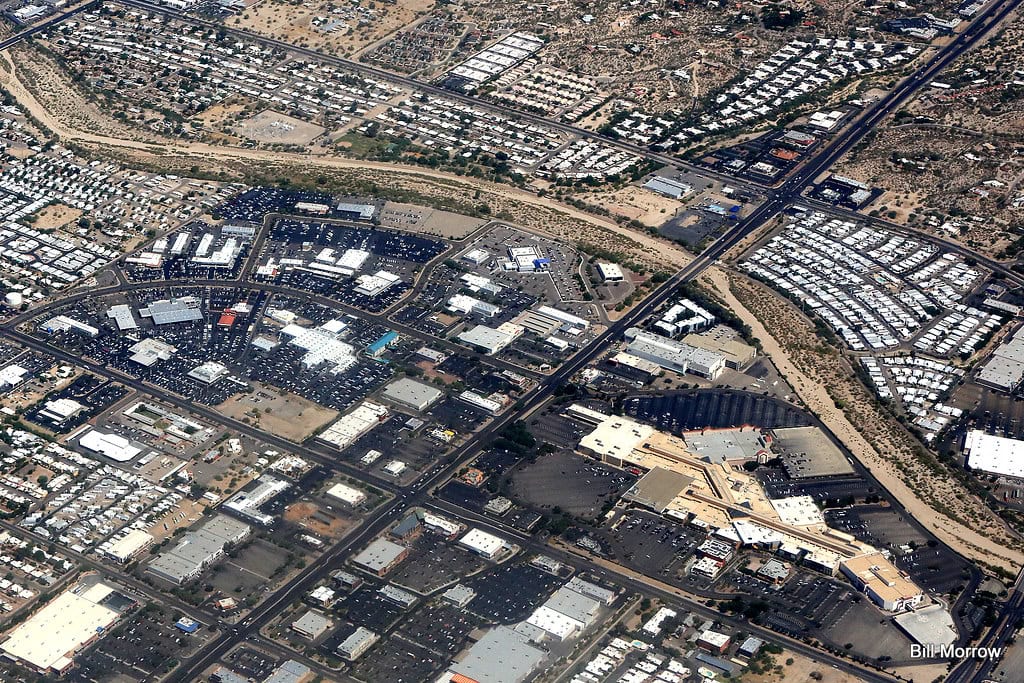
On March 22, 1982, Tucson Mall opened at 4500 North Oracle Road on Tucson's north side. It was set back from the street on a 91-acre property, with large parking lots in front and big entrances that led people right inside.
The mall was indoors, so once you walked in, you could go from store to store without having to go back outside.
The property filled a large block bounded by Oracle Road (Arizona State Route 77), Wetmore Road, Stone Avenue, and the Rillito River.
Opening day came with about 100 stores and five anchor department stores placed at the ends of the layout: Broadway Southwest, J.C. Penney, Mervyn's, Diamond's, and Sears.
Forest City Enterprises developed the mall, and HOK designed it.
The main hallway between the big stores felt the same all the way through, but the corners looked different as you got to each department store.
Each of the original five anchors hired its own designers, so the stores did not feel like copies of one another.
From the beginning, Tucson Mall was built to be a shopping center big enough to bring in shoppers from all over the city.
Wetmore land, a Chicago moment, 1978 plans
The land under Tucson Mall did not start as a retail site. It was originally homesteaded by the family of Helen Wetmore's husband in the late 1800s.
In the 1930s, Helen Wetmore visited Chicago and saw a shopping center on the Skokie Highway.
She decided, "That's what I am going to have on my land."
The idea stayed in place for decades, and she preserved the parcel until planning finally moved forward.
In 1978, plans began with Forest City Enterprises. The architects tied to the project included Hellmuth, Obata & Kassabaum of St. Louis, Missouri, and Forest City Dillon Inc. served as the general contractor.
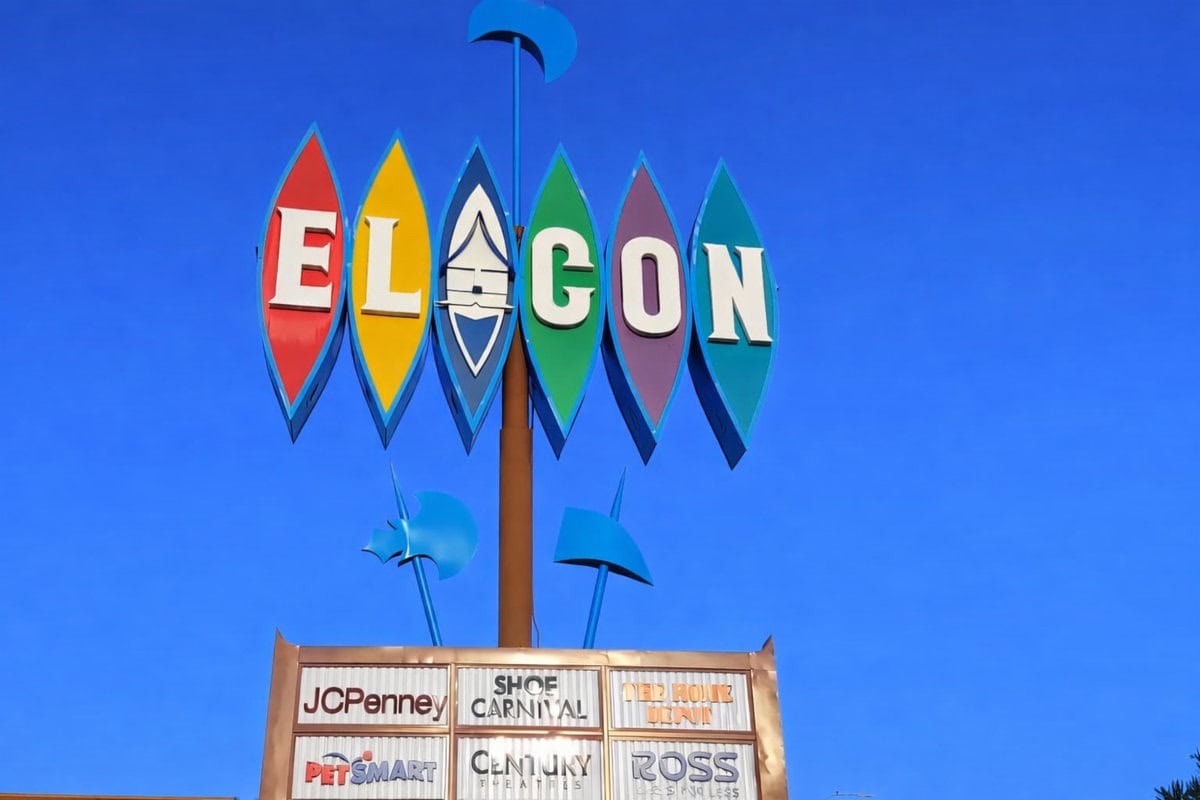
The new mall was built in a city where people were already used to shopping in malls. El Con Mall opened in 1960. Park Mall opened in 1975.
Tucson Mall joined them as a bigger mall on a bigger piece of land, built along Oracle Road, where heavy traffic and growth on the north side could keep it busy.
Early years: busy summers and local food
At first, Tucson Mall was especially popular in the summer. When the heat in June, July, and August made people stay away from shopping outside, the cool air and indoor walkways made the mall the best place to go.
Families would spend hours there, moving from one large store to another and staying inside instead of going back out into the hot weather.
The food court became part of that routine. Pappoule's opened in March 1982 and added Greek food to the mix right from the start.
Other early vendors included family-run operations tied to local names, including the Christianis, who worked in burgers and Orange Julius, and Ralph Larocca, who ran an Italian restaurant.
Around the mall, it also stood out as the first major non-Kivel family mall in Tucson, changing who controlled the city's biggest retail footprint.
By the early 1990s, the food court was not as busy as before. Around 1992, the 10-year rental agreements ended, rents increased, and some of the family-run places had to leave.
Pappoule's eventually left in the mid 2000s for its own standalone location.

Dillard's grows, and the mall expands east
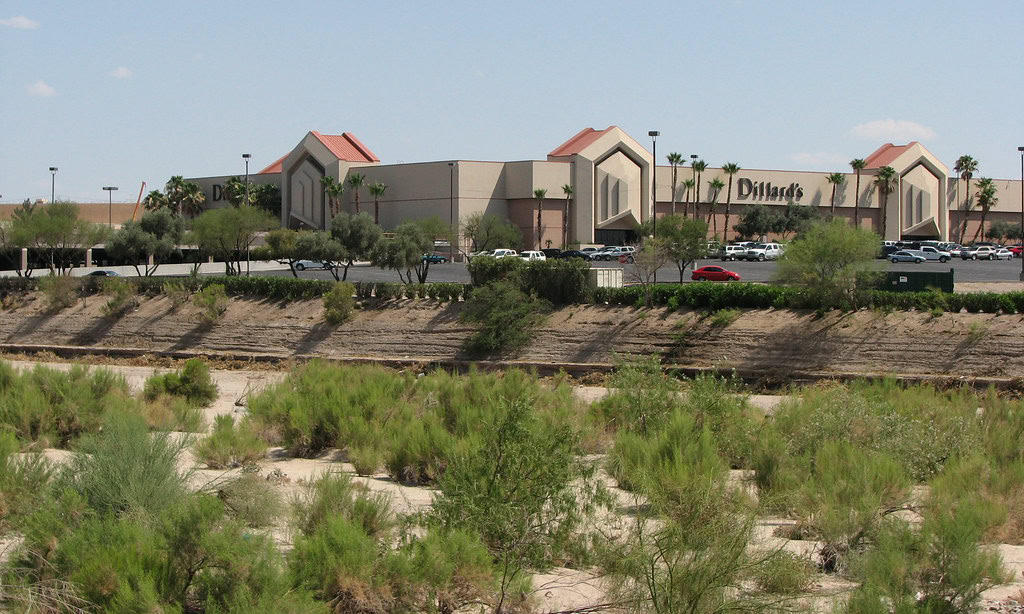
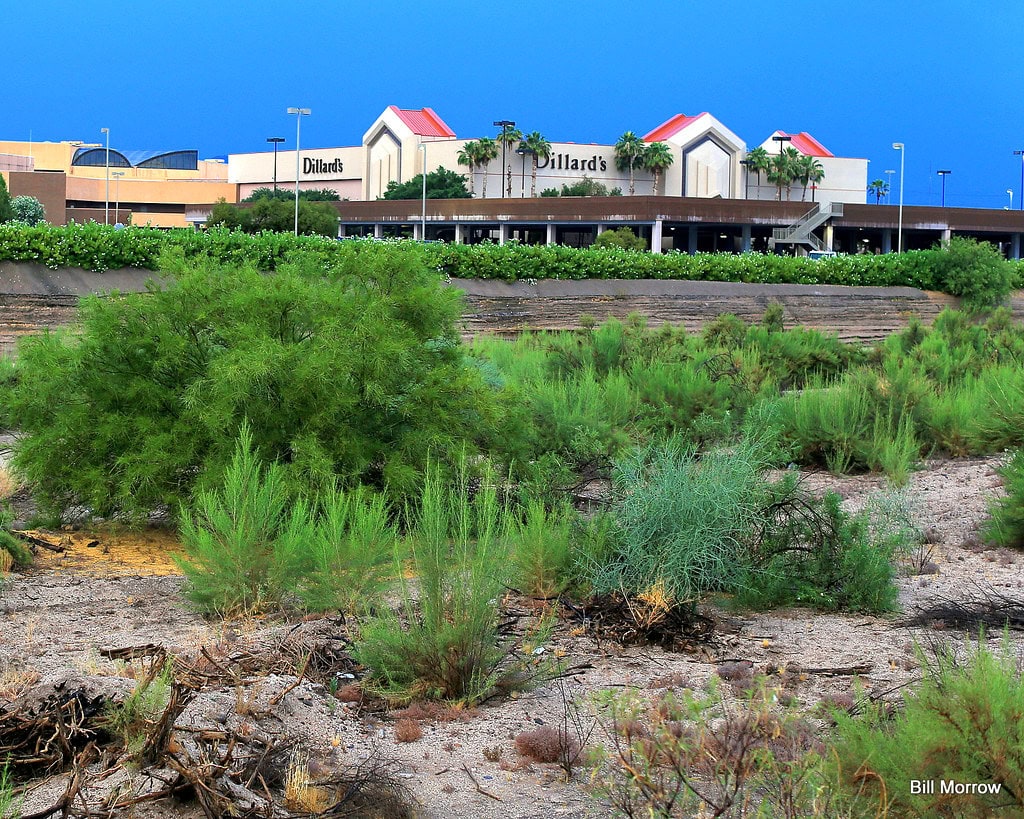
The anchor change started early. In 1984, Diamond's was sold and converted to Dillard's, keeping the same corner active while changing the name above the doors.
The mall got bigger next. In 1990, Dillard's was made larger, and a new parking garage was built next to it, making more room for the many visitors.
In 1991, Tucson Mall added a new wing of roughly 400,000-plus square feet. The expansion introduced a sixth anchor, Foley's, and brought in more than 70 new specialty shops.
In 1993, the mall added more interior pull. The food court was renovated, and an indoor "Arizona Avenue" arcade was added, including a carousel and a Southwestern-themed area.
In 1994, Sun Tran's Tohono Tadai Transit Center opened next to the mall, making it easier for people to get there without just using the parking lots.
By the mid-1990s, Tucson Mall had the original core and a major new wing. It had added entertainment and food features layered into the same enclosed loop.
Macy's arrives as anchors change names
In the mid-1990s, Tucson Mall started seeing the anchor names change even as the buildings stayed put. In 1996, the Broadway store converted to Macy's after Federated acquired Broadway.
The next change followed the newer anchor that came in with the 1991 expansion. In 1997, Foley's was rebranded Robinsons-May. The mall did not need new construction for either switch.
Through it all, the rest of the mall kept running with the expanded footprint it already had, along with the food court and the Arizona Avenue arcade.
Tucson Mall stayed the main shopping center on the north side, and a pattern was starting to show: the building stayed the same while the biggest store names kept changing.
2001 sale and the 2002-03 interior overhaul
In 2001, Forest City sold its 67.5% tenancy-in-common interest in Tucson Mall to General Growth Properties in a $180 million transaction.
Forest City reported the deal produced about $73 million in cash proceeds at its share (and a ~$52 million gain), and Tucson Mall was subsequently described as owned and managed by GGP.
After that change, the mall went into a broad interior overhaul that started on April 15, 2002, and ran through 2003.
The work covered the parts people touched and used every day. Flooring was replaced throughout, and the sunken center court and ramps were removed so the mall could switch to level tile.
New escalators and elevators went in where stairs had been, and glass railings were added on the upper level.
The project also added a children's play area, upgraded restrooms, and created soft seating areas. New carpeting and a refreshed paint scheme changed the look, and the fountains were modified.
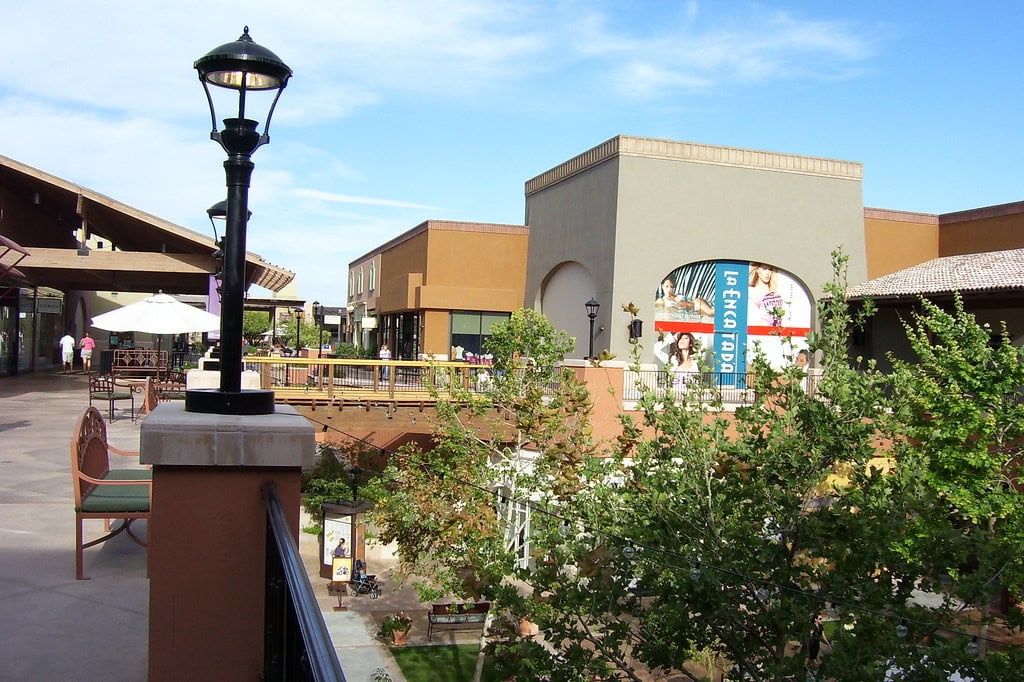
The food court was reworked as part of the same push, and Arizona Avenue was reworked too, with a makeover meant to resemble an outdoor mercado.
Early on, the renovation was described as costing over $10 million. By 2003, the full interior overhaul was summed up at roughly $15 million, covering the same set of upgrades across the mall.

Demolition, a new entrance, and Forever 21
Anchor changes set up the next visible overhaul.
In 2006, the Robinsons-May store was converted to Macy's after Federated Department Stores (Macy's parent company) completed its merger with The May Department Stores Company.
The older Macy's store on the south side was vacated, and in October 2007, the old Broadway-Macy's wing was torn down for a new grand entrance.
The south-side work added a two-story entrance hall, water fountains, and multiple new inline stores, along with a complete update of the facade in that stretch.
A parking structure was added in front of Macy's. New tenants on the rebuilt south side included REI and The Cheesecake Factory. In 2008-09, GameStop was relocated inside the mall.
Another big-box shift followed the collapse of Mervyn's. Mervyn's closed in 2008, and in March 2009, Forever 21 opened an approximately 80,000 square foot store in the former Mervyn's space.
In December 2009, GGP completed a 120,000 square foot redevelopment with a new south-facing main entrance, and The Cheesecake Factory opened in February 2010 as part of that updated front door era.
Sears closes, Curacao opens, sale listing
In 2020, Tucson Mall lost one of the last of its original 1982 anchors. Sears announced in February 2020 that it would close, and it shut its doors in April 2020.
After that, the former Sears building moved into a new phase as a vacant or subleased anchor space.
The next big change came in a different box. Curacao relocated to Tucson Mall and took over the old Forever 21 space.
The two-story store opened with a grand opening on October 5, 2024, and the current anchor details list Curacao at 86,600 square feet.
The move kept that former Mervyn's box active after Forever 21 to another part of the mall and eventually closed in 2025.
In April 2025, CBRE put Tucson Mall up for sale and shared the details: about 1,287,000 square feet of space that can be rented out on about 91.5 acres, with 94% of it already rented.
Later that year, on September 8, 2025, Spinoso Real Estate Group was picked to take care of the property and look for people to rent it.
As of 2026, Tucson Mall remains the largest shopping mall in Southern Arizona. It has about 150 stores across two levels, with three levels in Macy's.
The mall includes a food court and "Arizona Avenue." Current anchors include Macy's, Dillard's, JCPenney, Curacao, Dick's Sporting Goods, and REI, with one former anchor space vacant.