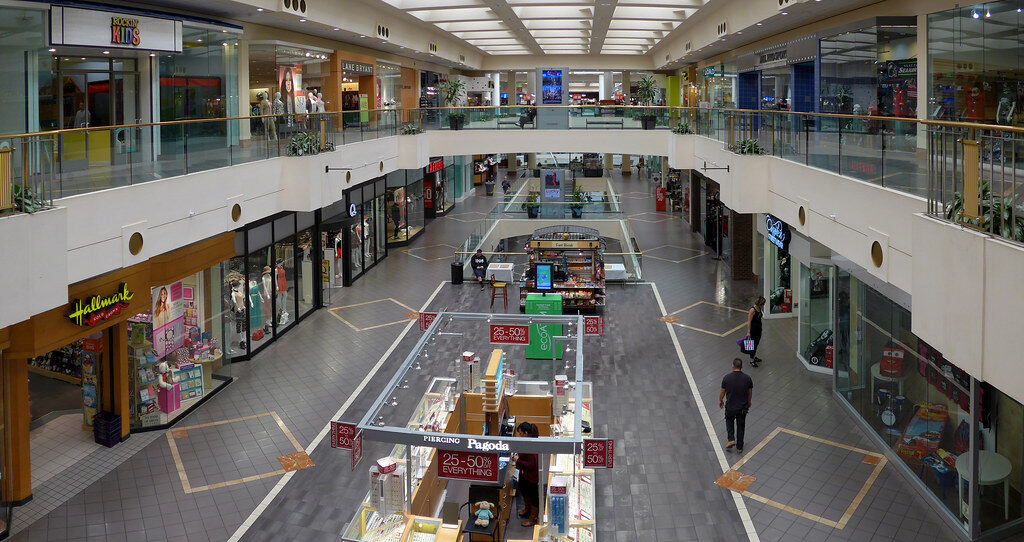
Walk into Burbank Town Center on a busy afternoon, and the place has a rhythm to it.
Shoppers walk between three floors of stores, families meet near the food court, and a steady crowd heads into ROUND1 Bowling and Amusement on the bottom floor.
Macy's holds on the north side, and Burlington on the east side, and between them sit more than 100 stores spread across 1.2 million square feet.
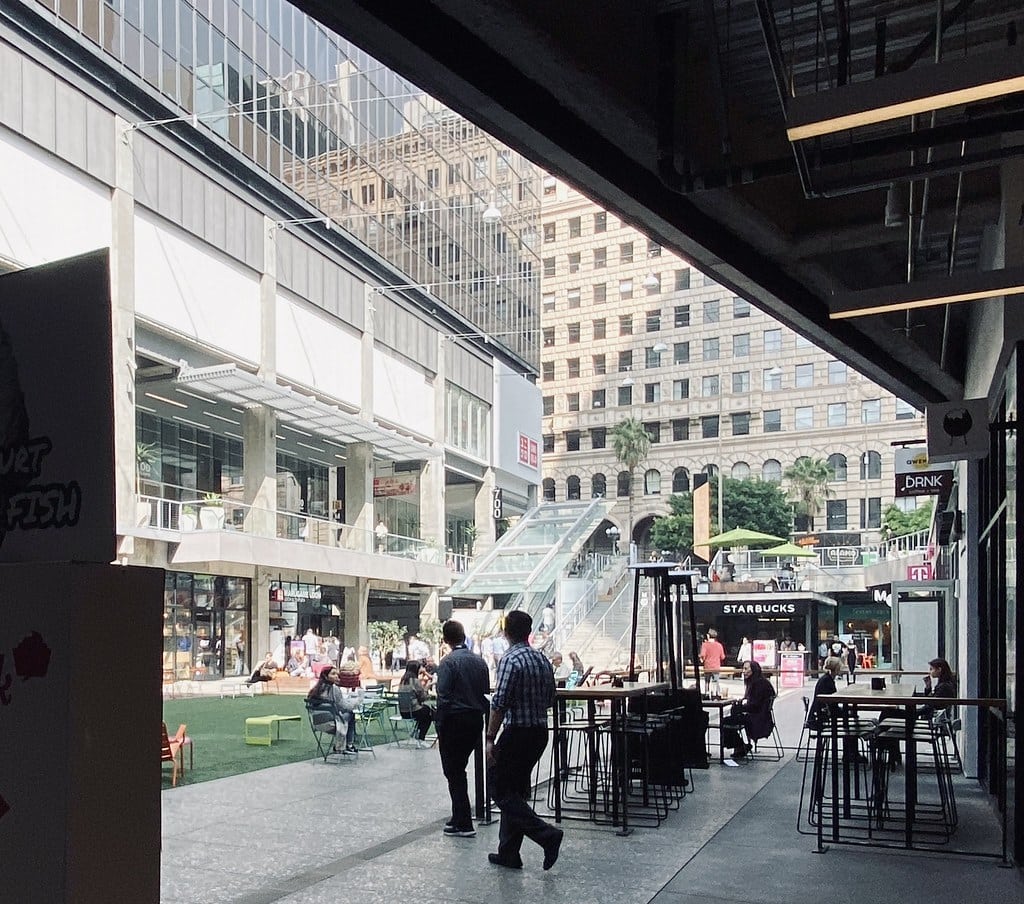
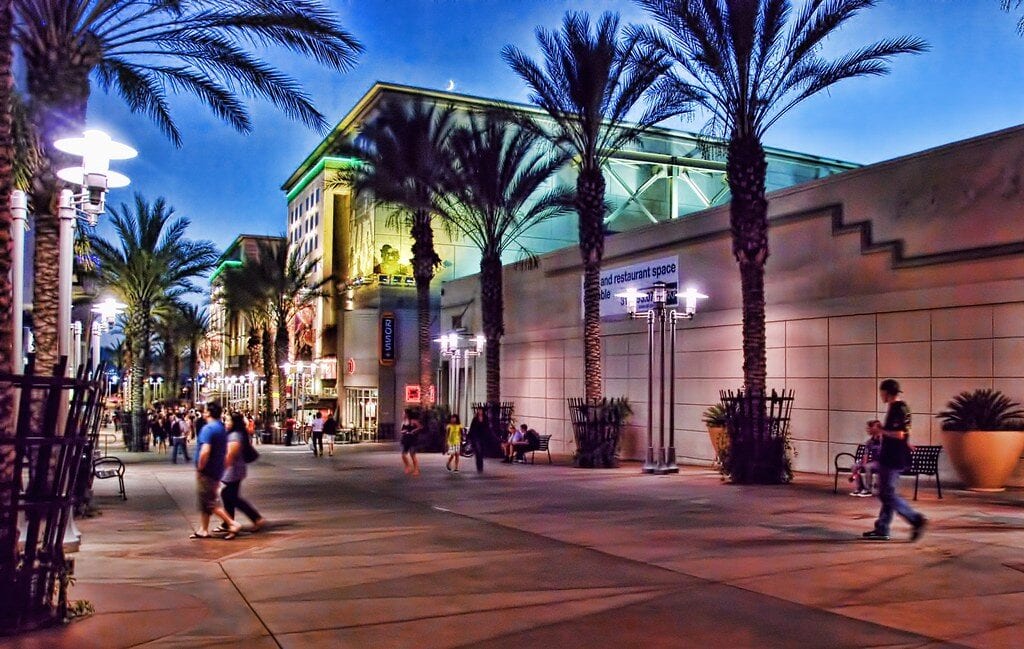
Just outside on San Fernando Boulevard, an open-air plaza links the mall with the restaurants and sidewalks of Downtown Burbank.
When the weather is clear, you can see the Verdugo Mountains from the third-level terrace.
This mall at 201 East Magnolia Boulevard in Burbank, California, has been part of the city's downtown for more than three decades.
It opened in 1991 under a different name - Media City Center - on a site that gave city planners trouble for years.
Getting something built on those forty acres took more than twenty years, three different developers, and one very public commercial failure just down the road - a failure that, in many ways, made the mall possible in the first place.
The Golden Mall and the Long Road to Renewal
In 1967, the City of Burbank closed six blocks of San Fernando Boulevard to cars, from Angeleno Avenue to Magnolia Boulevard, and turned the strip into a pedestrian shopping street called the Golden Mall.
The project came with trees, fountains, benches, and open grassy areas, and about 120 existing stores became part of the new mall. For a while, it attracted shoppers, but the momentum did not last.
By the early 1970s, fewer shoppers were coming through, and merchants said the pedestrian mall suffered because stores were harder to see from the street and parking was less convenient than before.
By the mid-1980s, the Golden Mall was run-down, with empty shops and not much to draw people in.
Cars returned to the Golden Mall in 1989, with the full reopening to traffic completed in October of that year. Attention shifted to a vacant forty-acre redevelopment site adjoining the west end of the Golden Mall.
Developers had been interested in the site since 1975, when Ernest W. Hahn suggested building a big mall with five main stores.
The revised project fell apart in 1987 when anchor tenant Robinson's pulled out, and no replacement was found.
The Walt Disney Company then came up with its own idea for the same land, but left in 1988 when the costs kept going up. Each failed try meant the city had to start over.
Breaking Ground After Years of False Starts
After Disney's plan collapsed, the Burbank City Council selected shopping-center developer Alexander Haagen in 1989 to build the project on the downtown site.
Haagen reached a deal with the city that split net operating profits from the mall fifty-fifty, and the City Council approved the project as Planned Development 89-4.
Construction started on the forty-acre parcel, bounded by Burbank Boulevard, Third Street, Magnolia Boulevard, and Interstate 5.
IKEA was the first business to open on the property, launching in late 1990 and drawing 146,000 visitors in its first six days. While IKEA was already pulling in shoppers, work on the main mall building continued.
In February 1991, a 12,500 square foot, $2 million branch of the Natural History Museum of Los Angeles County was announced as a planned addition to the site, with a target opening of summer 1992 - the museum's first satellite location anywhere in the county.
The mall opened for a preview on August 21, 1991, with 20 of its planned 130 stores up and running. Sears and Mervyn's served as the two opening anchor tenants.
By November 1991, the mall had reached 60 percent occupancy, and a four-screen AMC movie theater had opened inside the building.
A Grand Opening and the Stars Come Out
Bullock's, the fourth anchor tenant, opened on September 2, 1992, with a parade and appearances by cast members from "The New WKRP in Cincinnati" and "The Young and the Restless."
The $400 million complex was built by Alexander Haagen Co. and was partially financed with $50 million in Burbank city redevelopment funds.
Bullock's did not stay under that name for long.
In 1996, the Bullock's chain rebranded all of its locations under the Macy's name, and the Burbank store became a Macy's without the building or the customer base changing much.
That anchor has stayed in the same spot ever since.
The Natural History Museum satellite branch, first announced in February 1991 with a target opening of summer 1992, opened in Burbank in 1993 after delays and later closed in 1996 because of low attendance.
Several elements from the original development vision never came together. A planned hotel and office elements for the site did not get built during this period.
The mall had become the central piece of Burbank's downtown redevelopment effort, but by 1993, the broader Media City Center vision was already being revised as the weak economy slowed the rest of the project.
Burbank Town Center: New Owners, New Name, and Fresh Look
In March 2003, the mall was sold to Crown Realty for $110 million.
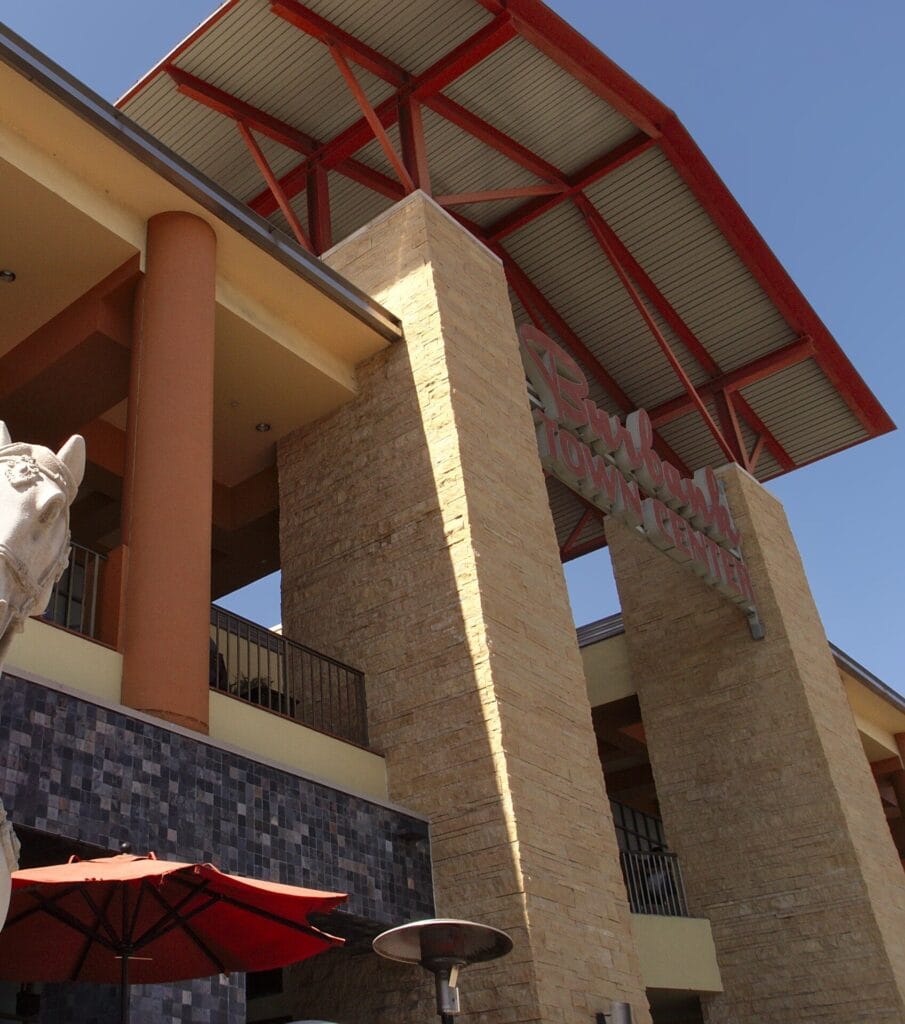
The new owners announced a remodeling plan that August, designed by the Dallas architecture firm Omniplan, with a focus on natural stone and other natural materials throughout the building.
In late 2004, the name changed from Media City Center to Burbank Town Center.
More changes came in the years that followed. Mervyn's, one of the two original anchor tenants from 1991, closed in 2008 when the chain shut down nationally.
Burlington Coat Factory moved into that same space in 2010. Ashley HomeStore filled the anchor space Circuit City had vacated in 2008.
IKEA, which had operated on the property since 1990, closed its Burbank location on February 4, 2017, and moved to a larger store nearby just a few days later on February 8.
Beginning in 2017, the mall underwent a $60 million renovation to update the building and connect it more directly to the surrounding downtown streets.
The work added an outdoor dining terrace on the third level with views of the Verdugo Mountains, reached by a new exterior escalator at the corner of Magnolia Boulevard and San Fernando Boulevard.
The renovation was completed in early 2018.
Closing Doors, Changing Plans, and What's Next
In January 2018, a $350 million redevelopment plan was announced for the former IKEA space and other surrounding parcels.
The plan called for 1,025 apartments, 56 condominiums, a 200-room hotel, and 45,000 square feet of retail and restaurant space arranged around a public plaza.
The developer was CC Development Partners, a joint venture between Dallas-based CAPREF Manager and Costa Mesa-based Crown Realty and Development.
In 2021, Canadian developer Onni Group purchased the property for $136 million and stepped in with those redevelopment plans already in place.
The earlier mixed-use redevelopment plan for the surrounding site was withdrawn in 2022, and the city is now working with the property owner on possible future land uses tied to the proposed Downtown Burbank Transit Oriented Development Specific Plan.
Sears, the last of the original 1991 anchor tenants, closed at Burbank Town Center on December 18, 2022.
The store partially reopened in October 2023 using two of its three floors, but in July 2025, the closure was confirmed for good, with a final date of August 31, 2025, and the Sears name was removed from the mall directory.
In early March 2026, the City of Burbank scheduled a Planning Commission hearing on a conditional use permit for a Sky Zone indoor playground and trampoline venue in the former Bed Bath & Beyond space.