Horton Plaza: The Postmodern Mall That Jump-Started Downtown
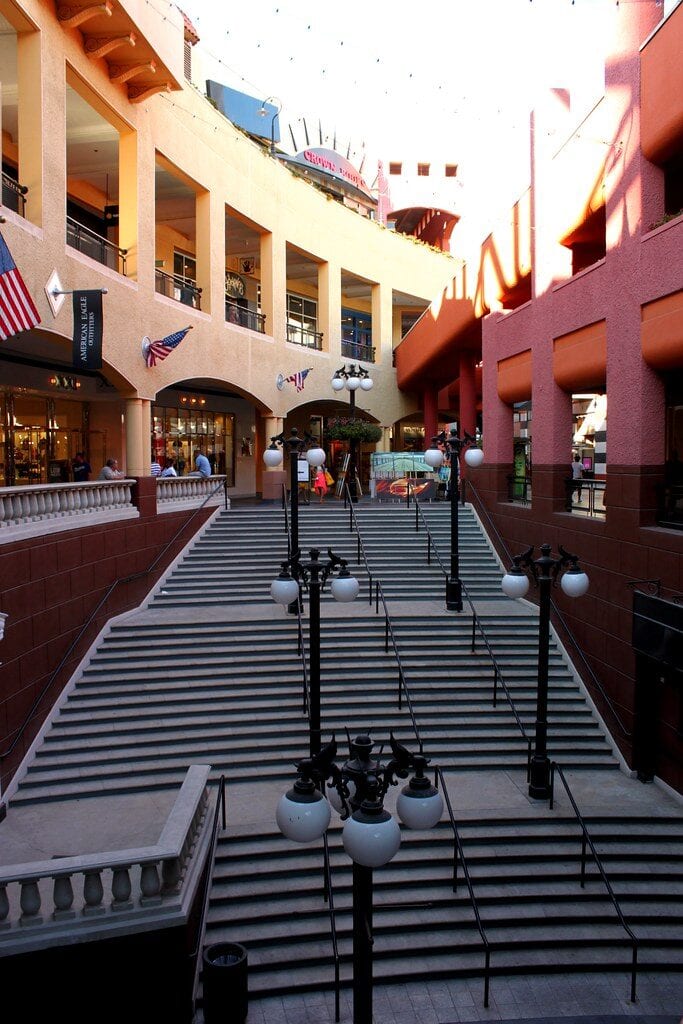
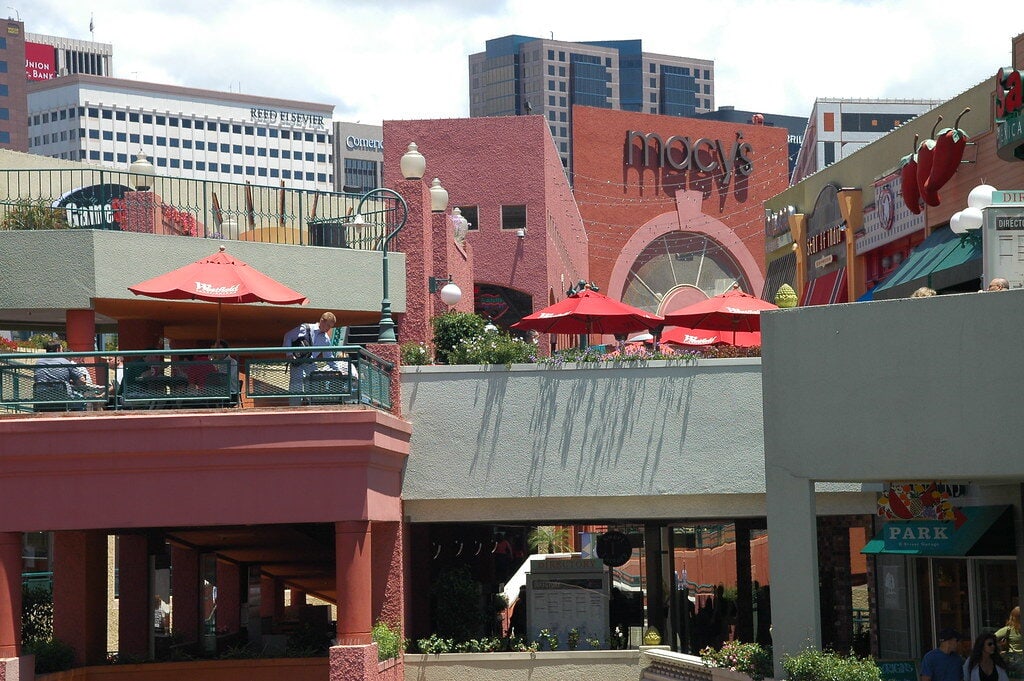
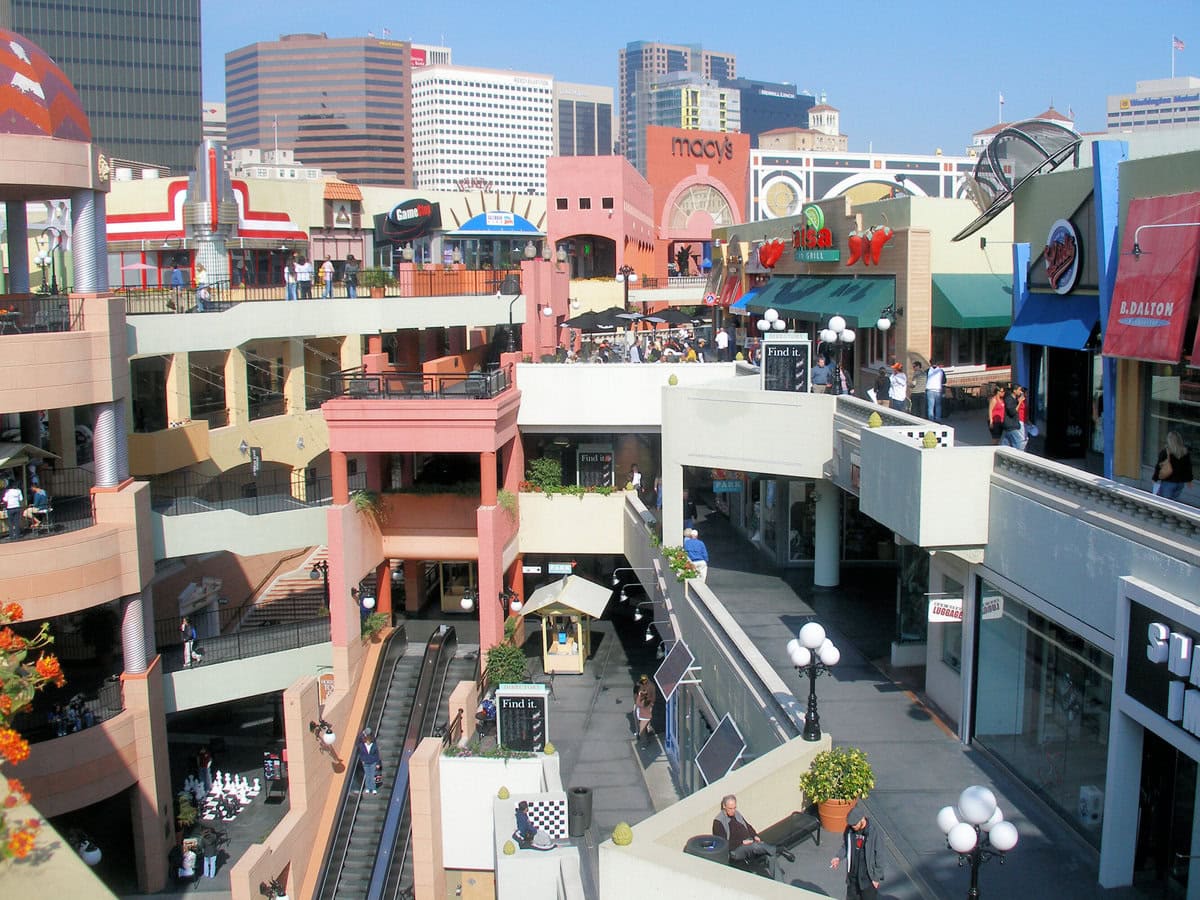
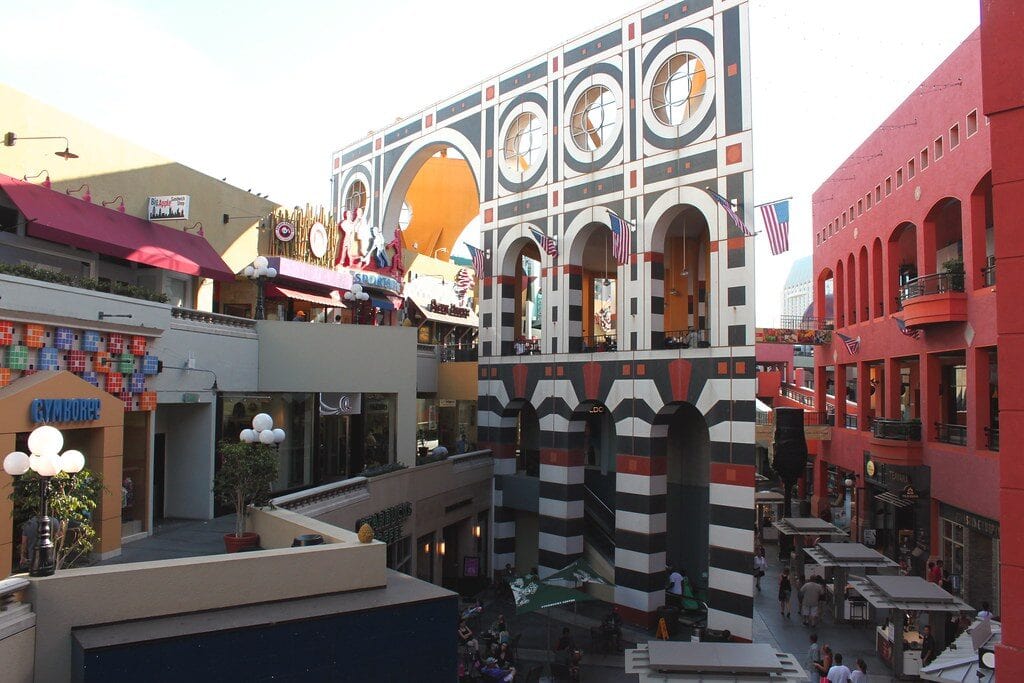
You couldn't miss it when it opened in 1985. The building was orange and pink and yellow and had levels that didn't line up with each other and ramps that ran in only one direction and a parking garage where each floor was named after a piece of fruit.
The architect had been reading Ray Bradbury. The developer had spent his career building regular malls and wasn't completely sure what he had signed up for.
The whole thing cost $140 million and looked like someone had studied Italian hill towns closely and then tried to make something similar, but much flashier.
Horton Plaza - not the park, which is adjacent and technically a separate address - opened on August 9, 1985, in a downtown San Diego that desperately needed something to happen.
About 13,000 people lived downtown at the time.
The Gaslamp Quarter used to be the place for peep shows, not for dinner.
The area around Horton public square, named after 19th-century developer Alonzo Horton, had been losing its importance ever since the suburbs started drawing people away in the 1950s.
Twenty-five million people showed up in the first year.
Architecture critic Paul Goldberger flew in from New York, walked around for a while, and wrote: "This city has desperately needed a town square, and now it has one." Downtown San Diego had arrived.
Ten Years of Delays Before Anyone Broke Ground
The name goes back to the 1800s. Alonzo Horton was the man who, more than anyone else, decided where downtown San Diego would be built, and the public square that bore his name was once the actual center of city life.
By the mid-20th century, it had become the center of nothing in particular.
The San Diego City Council voted in 1972 to do something about it, approving a redevelopment plan that included a major shopping center.
Then, mostly nothing happened for two years.
In 1974, developer Ernest Hahn signed on to build the thing. Hahn was a Southern California shopping center developer, pragmatic and specific about what he needed from the city before he'd commit.
The conditions he attached to his 1978 land purchase - $1 million for the site - included the city finishing the San Diego Trolley, approving the new convention center, and formally establishing the Centre City Development Corporation as a downtown redevelopment body.
None of it was optional.
Then came the demolitions, which drew protests. The Lyceum, Cabrillo, and Plaza Theatres had to come down. The Horton Grand Hotel had to come down.
Several of these buildings were on the National Register of Historic Places, and preservation groups showed up at every meeting and filed every objection available to them.
From the 1972 vote to the actual start of construction in 1982 was ten full years.
What got torn down in the process couldn't be put back, and not everyone had made peace with that when the bulldozers finally arrived.
Jon Jerde, Ray Bradbury, and a Weird Idea
Before Hahn hired Jon Jerde in 1977, the project had already chewed through two firms.
Rockrise, Odermatt, Mountjoy, and Amis had produced an early plan heavy on park space and light on retail.
Frank Hope III came up with an enclosed mall over a parking garage, which San Diego's downtown redevelopment agency dismissed as too conventional.
Jerde's first attempt was rejected, too, too close to what Hope had proposed.
What changed the project was Hahn telling Jerde to "take the lid off" around 1981, after locking in five anchor tenants. Jerde removed the roof entirely.
The central walkway ran diagonally across the site, curving just enough that you couldn't see what was coming around the next bend.
Jerde called it the "armature" and designed it to make people wander out of curiosity rather than follow a straight path toward a store.
The intellectual grounding came from Jerde's weekly sessions with Ray Bradbury - the author of "Fahrenheit 451" - who had written a 1970s essay called "The Aesthetics of Lostness" about the pleasure of wandering safely through stimulating city streets.
Bradbury was explicit about the connection before he died in 2012: Jerde had built the whole building from ideas in that essay.
One section of the complex, a triangular striped structure called the Palazzo Building, drew a comparison to Siena Cathedral from the New York Times in 1986.
The painted cardboard model Jerde used to pitch the design was theatrical enough that it's now preserved at the San Diego History Center.
Twenty-Five Million Visitors in Year One
The mall opened with three anchor stores - Mervyn's, Nordstrom, and J.W. Robinson's, which occupied a detached building just north of the main complex - plus 60 smaller shops.
The Broadway did not open on August 9, 1985, but opened later, in October.
Twenty-five million people walked through in the first year. It pulled in suburban shoppers who had no good reason to come downtown in years.
When they arrived, they found themselves in a neighborhood that was also, at that exact moment, getting cleaned up.
The Gaslamp Quarter's transformation from a strip of adult entertainment into a restaurant district didn't happen solely because of Horton Plaza, but the timing of the two things was close enough to be inseparable.
The building became a required stop. It sat alongside Balboa Park and the San Diego Zoo on the short list of things you were supposed to see in San Diego.
Food and entertainment pulled in around 30 percent of total revenue in the early months, roughly three times the industry average, which suggested that people were coming to the place as much as they were coming to any specific store.
Jon Jerde's reputation took off from here. The Horton Plaza commission helped him land the work for the 1984 Los Angeles Olympics.
He went on to design Universal CityWalk in Los Angeles, which opened in 1993, and later worked with Mori Building's team on the public/pedestrian-space design for Tokyo's Roppongi Hills, which opened in 2003.
He died in 2015 at 75, having spent most of his career building variations on the idea he first worked out in downtown San Diego.
The Walkways People Stopped Enjoying
The same layout that made Horton Plaza well known also made it frustrating to shop there after the newness wore off.
Wandering around could feel fun when people had time to spare. It was much less appealing when someone needed to find a restroom and then find their car.
By the 2000s, the maze-like design that had attracted 25 million visitors in its first year was wearing people out.
Many shoppers wanted something simpler: a quick trip to buy socks and an easy place to park for free. Downtown parking cost $2 for every 15 minutes after the first free hour.
There were also different flat-rate prices for evenings and weekends, and the system was confusing.
The major tenants began to leave. Mervyn's closed in 2006. The detached J.W. Robinson's building was demolished in 2012 so the park next to it could be expanded.
Nordstrom closed its location at the mall's southwest corner in 2016.
Panda Inn, the last full-service restaurant on the property, closed in early 2017.
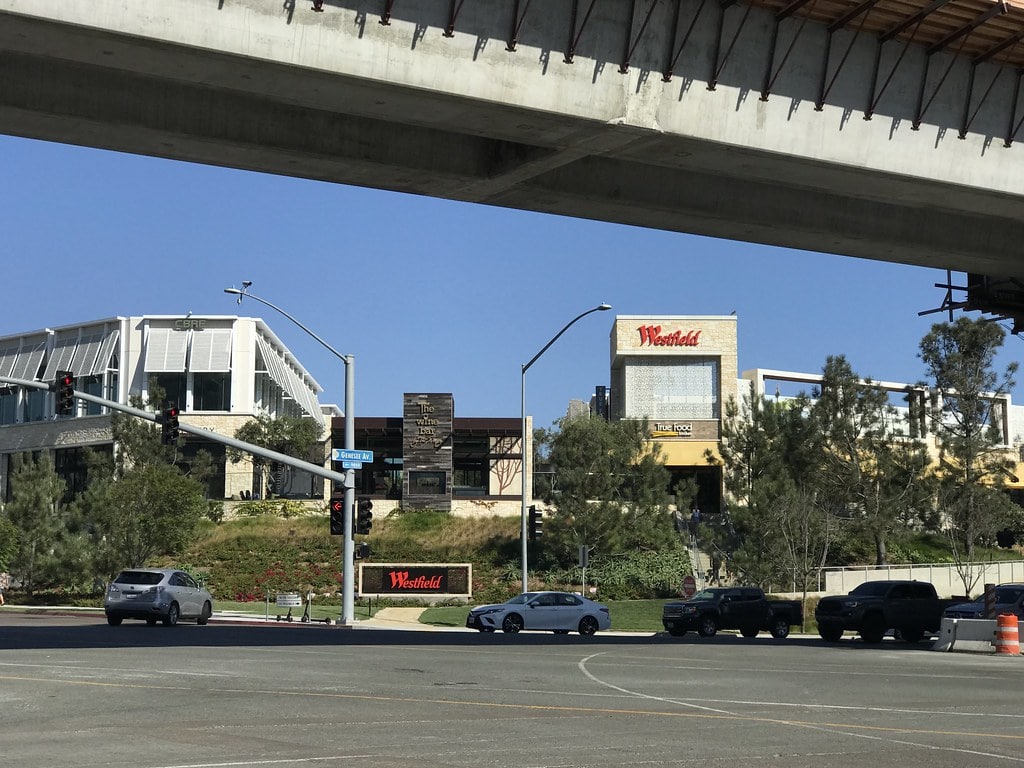
Westfield, the Australian company that owned the mall during that period, talked publicly about future plans to revive the property, but did not give specific details.
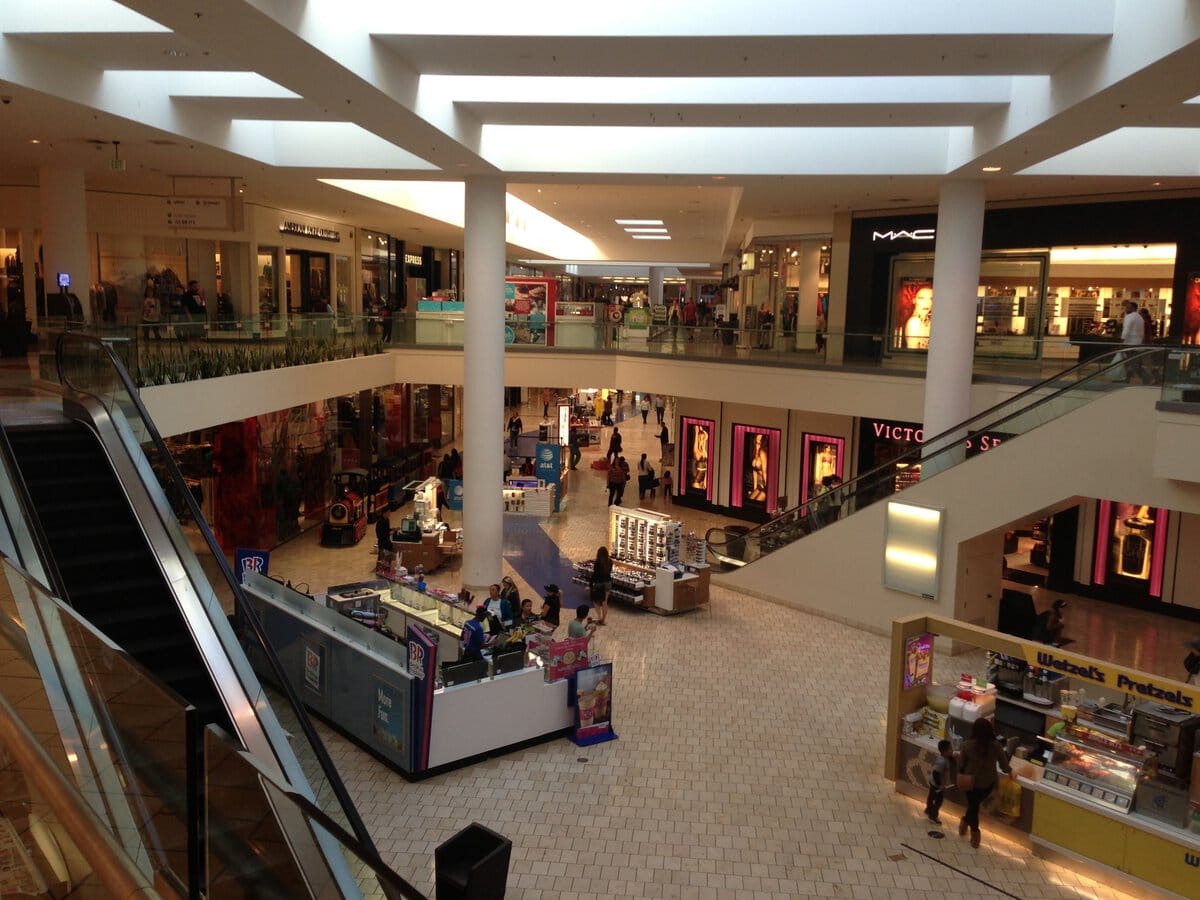
In those years, people walking through the complex saw peeling paint, cracked tiles, and more and more storefronts sitting locked and empty.
Macy's had operated in the original Broadway anchor space since 1996, and it stayed until April 2020.
By that point, Stockdale Capital Partners had already bought the property in August 2018 and was saying the mall would be overhauled into a mixed-use creative-office and retail remake of the existing site.
That ended 35 years of retail on those blocks.

From a Closed Mall to a Planned Tech Campus
Stockdale Capital Partners introduced a redevelopment plan called The Campus at Horton. It was a large project.
The plan would turn the property at 324 Horton Plaza into 700,000 square feet of office space for life science, technology, and creative companies.
It would also add 300,000 square feet of retail space. The old concrete walkways would be rebuilt as outdoor corridors with trees and landscaped paths.
Stockdale presented the project as one of the largest adaptive reuse efforts on the West Coast.
The idea was to take a failed shopping mall and turn it into a business and innovation center.
The environmental features were laid out in unusual detail. The office spaces were planned to operate at net-zero energy and net-zero carbon.
Part of that system would come from a rooftop solar array expected to produce more than 3,200 megawatt-hours each year.
That would make it the largest private solar installation in downtown San Diego. The plan also included water recycling systems designed to process 7.5 million gallons of water each year.
Outside, the site would change just as much. Areas that had been entirely covered in concrete would become half-landscaped.
The park at the northeast corner, which had previously been 100 percent paved, would become 75 percent green space, with trees covering more than half of the area in shade.
Stockdale secured a $330 million construction loan in 2020. The company projected that the completed campus would create 4,000 new jobs and generate $1.8 billion in economic activity each year.
For a time, it appeared the project was moving forward.
How $351 Million in Debt Stopped the Campus Project
In February 2025, AllianceBernstein, the lender for the property at 324 Horton Plaza, filed a notice of default. The debt had reached $351 million. A court-ordered receivership followed, but it did not save the project.
In August 2025, the site was put up for public auction. AllianceBernstein made a $130 million credit bid for the main campus parcel and a separate $9 million bid for the city-owned park leasehold at 199 Horton Plaza.
No outside buyer placed any bids. The lender took control of the entire unfinished property.
As of early 2026, the blocks between Broadway Circle and G Street are in an in-between state.
The old mall has been partly demolished. Construction on the new campus is partly finished. There is no public timeline for completion.
The city of San Diego has considered moving municipal offices into the unfinished structure. No decision has been made.
The property at the corner of Broadway and Fourth Avenue has gone through several major changes. It began as Alonzo Horton's public square in the 19th century. It later went through years of decline.
After that, it became a postmodern mall that helped draw the city back downtown. More recently, it became the site of a roughly $500+ million office/life-science campus redevelopment that defaulted before opening.
Whatever San Diego chooses to do with the site next, the process is likely to be complicated. The history of this property has never been simple.