From Fairway to Indoor Mall: Westfield Plaza Bonita
Before it became a mall, the land at 3030 Plaza Bonita Road was an 18-hole golf course in National City.
In the late 1970s, May Centers bought the land from the city and turned the golf course into a shopping center, thinking that people in the South Bay would rather shop indoors under bright lights than spend time outside in the sun.
By the fall of 1981, Plaza Bonita opened as the area's first fully indoor mall, sitting between Interstate 805 and State Route 54, about ten minutes north of the border and just far enough from downtown San Diego to feel like its own place.
Even though it was in National City, the mall got its name from the nearby area of Bonita.
The original mall always looked like fall, with brick walls inside and outside, lots of brown and beige colors, tile floors, wooden railings upstairs, and concrete planters with benches and many plants.
Skylights and orange and silver ceiling banners tried to make the place brighter, but the big black glass fountain in the middle did most of the work.
Around that fountain, four big stores showed what shopping was like in the early 1980s: JCPenney, Mervyn's, Montgomery Ward, and the May Company.
Even the logo felt hopeful, with a rainbow of red, orange, and yellow spelling out "Plaza Bonita" in Dynamo font.
On December 18, 1981, a six-screen Mann Theaters opened by the east entrance, finishing the classic mix of shopping and movies.
Westfield Moves In: The Giant Freeway Sign Era
By the mid-1990s, Plaza Bonita was part of the worldwide trend of building malls. In 1994, Westfield America bought the mall from May Centers and added it to its group of malls.
The new owner also gave it a new name. In 1998, the mall became Westfield Shoppingtown Plaza Bonita, a name that sounded like it was chosen by a group of people.
Most shoppers ignored the word "Shoppingtown," and by 2005, Westfield quietly took it off all its malls.
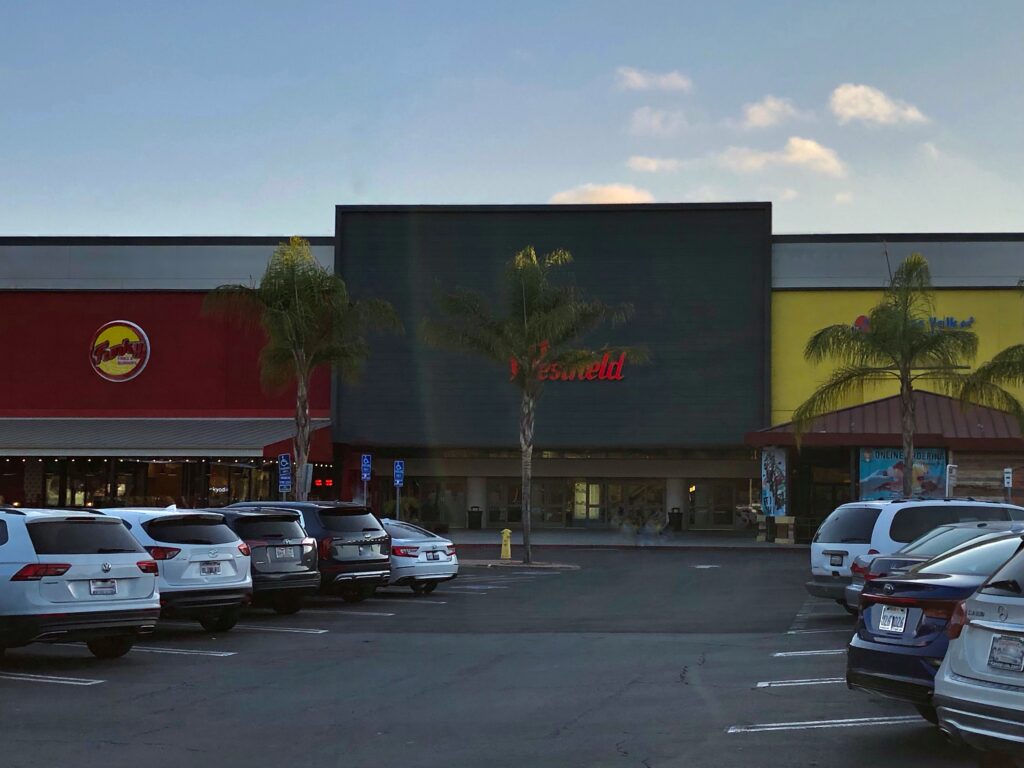
The biggest change that decade was outside, facing the freeway. In the late 1990s, a huge sign went up by Interstate 805, making it clear this was a place to shop.
Locals and people who care about building design disliked it right away.
The San Diego Union-Tribune even gave the sign an Onion award, a bit of public shaming that design review had not managed.
Over time, most of the decorations were removed, leaving mainly the electronic display board.
Inside, the mall still felt like a newer version of its 1981 design. The brick walls remained, the fountain kept running, and the new corporate branding mixed with old habits.
Teenagers still walked in circles around the levels, and families enjoyed the air conditioning.
The Mann Plaza Bonita 6 movie theater lasted into the late 1990s or early 2000s before it closed, ending the mall's first era of moviegoing.
Stucco Facelift, Steel Expansion: Plaza Bonita in the 2000s
The 2000s came with the feeling that the mall's fall colors were starting to look old.
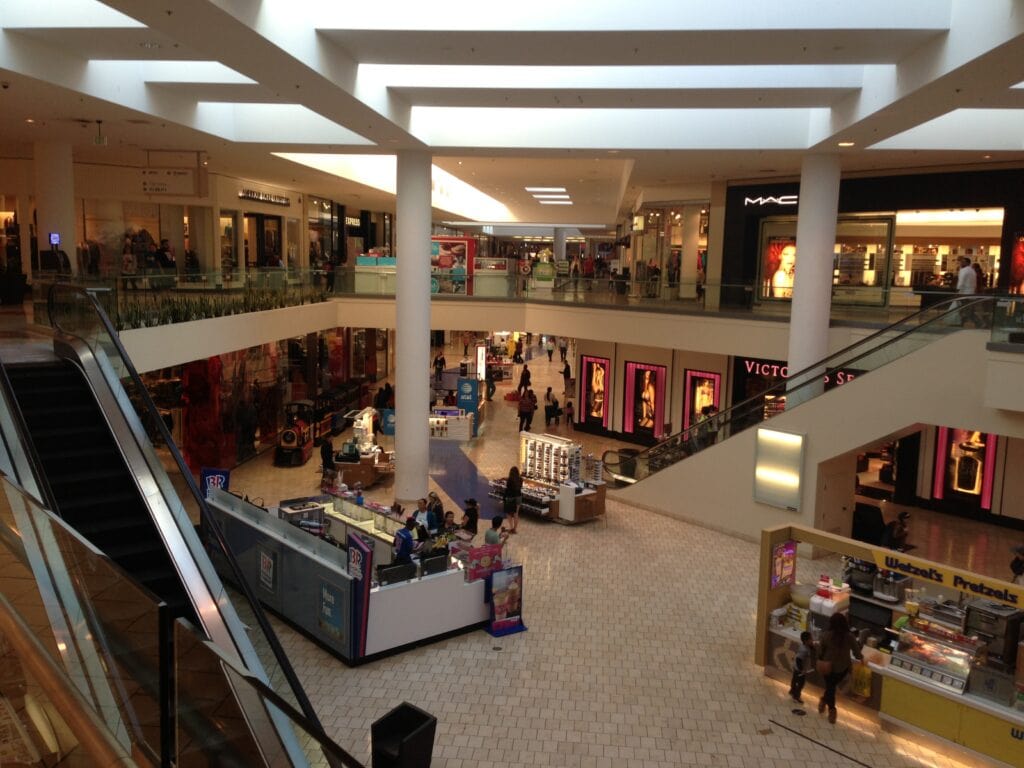
In 2002, Westfield covered the brick with stucco, made the inside brighter, and put in new ceramic tile floors. The big two-story central fountain was dismantled around mid-2002.
The feeling changed from cozy to more modern and stylish. The food court got an update, and Applebee's, which had opened in 1993 as the center's first full-service restaurant, stayed as a reliable sit-down spot.
In the northwest parking lot, an Outback Steakhouse opened in the early 2000s.
By 2006, the company was ready for big changes, not just small updates.
The large, empty Montgomery Ward space at the south end, which had recently been used for Halloween stores and art shows, was cleared out to be torn down and rebuilt.
The original food court was removed that year and turned into a Forever 21 in 2007, showing the move from cafeterias to fast fashion.
Robinsons May, which came from the old May Company anchor, had already become part of Federated Department Stores and was renamed Macy's in 2006.
Then came 2008 and the big expansion. The mall grew by 380,000 square feet, supported by 4,100 tons of steel, making Plaza Bonita a place people from the whole region wanted to visit.
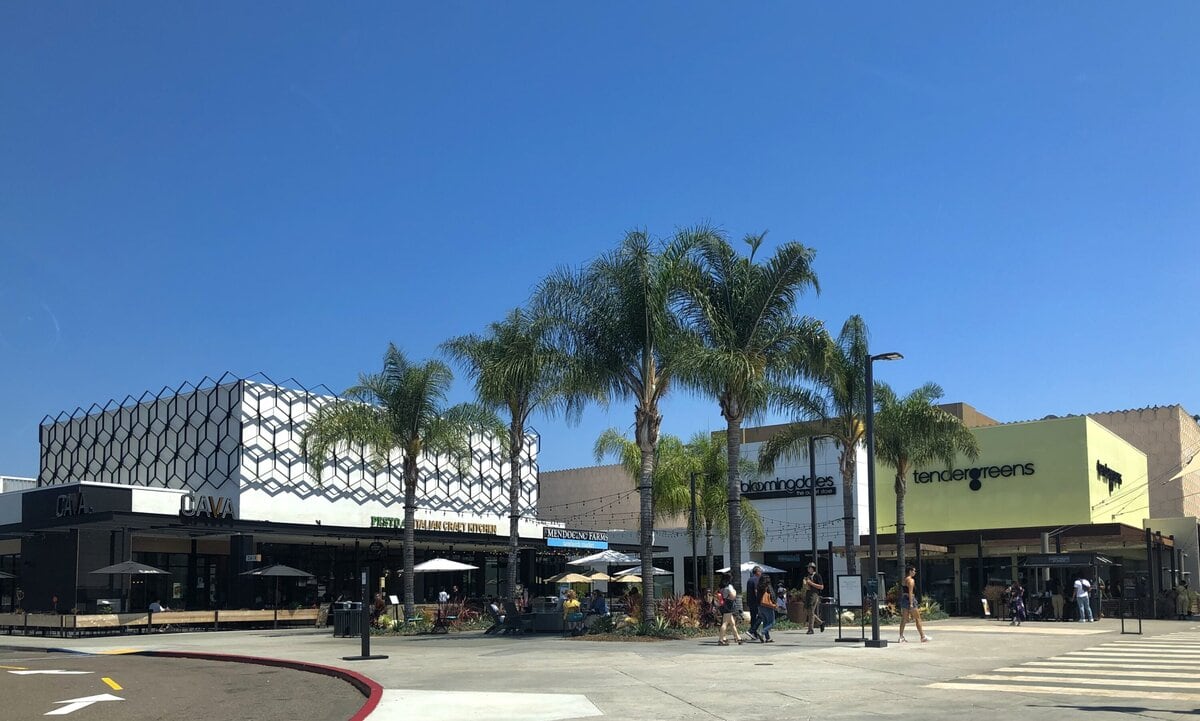
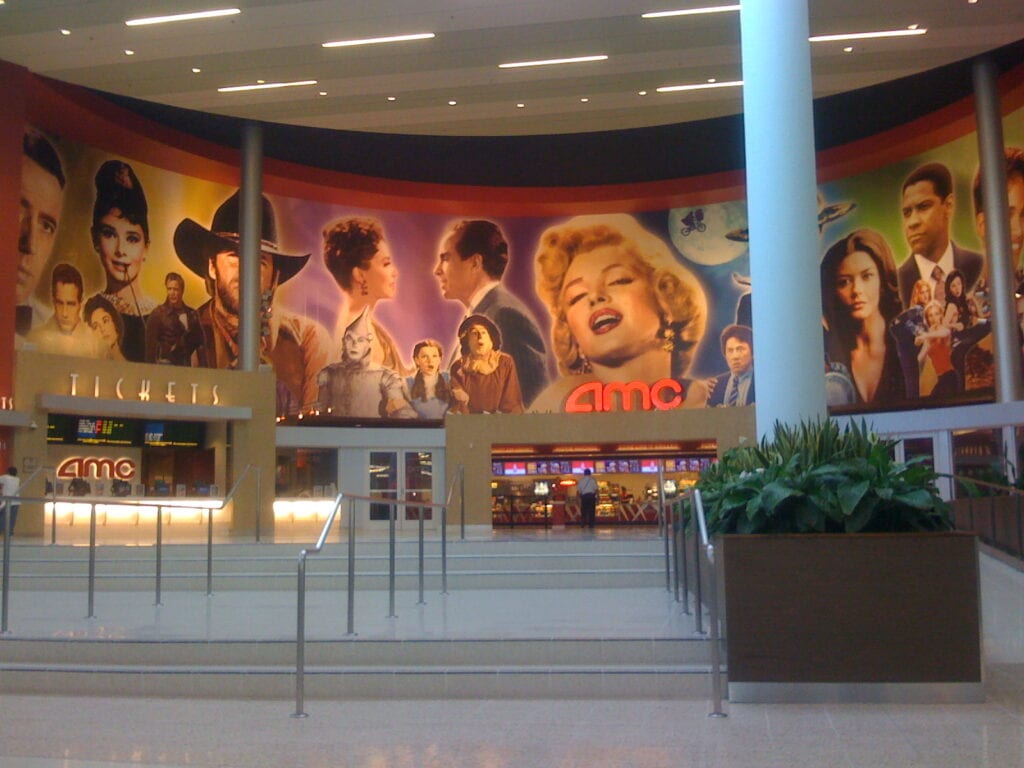
Target and a 14-screen AMC Theatres opened as main attractions, Borders moved over from Otay Ranch Town Center, and many new stores followed, including H&M, Hollister, Victoria's Secret, MAC, Urban Decay, and NYX, all built around a new Dining Terrace and a three-level parking garage.
Pizza Buffets, Bookstore Closures, Discount Racks, and Gyms
Right after the expansion finished, Plaza Bonita started trying new ways to attract and entertain visitors.
On March 3, 2009, Jollibee Foods Corporation opened a Filipino food court next to Target, bringing together Jollibee, Red Ribbon Bakeshop, and Chowking around a small party room.
It was promoted as the first of its kind in the United States. By 2011, it had closed, and Hooters took over the space until 2020.
The biggest changes at the mall happened inside the old department stores.
In 2010, John's Incredible Pizza Company moved into the first floor of the former Mervyn's, turning it into a place for family meals, games, and birthday parties.
The second floor got a new purpose in October 2011, when Nordstrom opened its third Nordstrom Rack in San Diego County, swapping out Mervyn's everyday items for name-brand clothes at lower prices.
Elsewhere in the mall, the Borders bookstore that opened in 2008 closed in 2011 after the company went bankrupt.
A year later, in August 2012, Crunch Fitness moved into the space, replacing bookshelves with treadmills and weight machines.
Throughout the 2010s, Plaza Bonita found a new balance: pizza and parties on the lower level, discounted fashion upstairs, and gym members working out where people once read.
Global Owners, Border Shoppers, and COVID Risk
By the late 2010s, people in Europe were making decisions about Plaza Bonita. In December 2017, the French real estate company Unibail Rodamco agreed to buy Westfield Corporation for $25 billion.
The deal finished in 2018, adding 35 shopping centers in the U.S. and U.K. to a group of European malls.
The new company, Unibail Rodamco Westfield, saw border areas like Plaza Bonita as important parts of a global group, not just unique local places.
COVID-19 changed everything. In March 2020, URW closed its U.S. centers, including Plaza Bonita, because of public health orders.
Non-essential stores shut down, and the usual activity stopped. When the mall reopened in May 2020, John's Incredible Pizza, known for birthday parties and buffets, did not return.
By June, the space was empty, leaving a strange gap near the old Mervyn's location.
In 2022, the company changed its plans again. In April, URW said it wanted to sell all 24 of its U.S. properties by the end of 2023, including Plaza Bonita.
As business got better, the company slowed down this plan. By 2024, it had sold or handed back 17 U.S. properties for about $3.3 billion and cut vacancy in its flagship malls by just over six percentage points.
In 2024, sales at URW's U.S. flagship malls were 6.6 percent higher than in 2023, and the company shifted from a full exit to keeping its strongest American centers, even as regional malls like Plaza Bonita remained part of a shrinking, more cautious portfolio.
Round1, a Gas-Line Fire, and Uneasy Tenants
The 2020s brought a new kind of main attraction: the arcade as a way for malls to stay open.
In 2022, Japan-based Round 1 Bowling & Amusement was first connected to another San Diego mall, then switched to Plaza Bonita, taking over the space left by John's Incredible Pizza.
By September, the company's website had moved the 'coming soon' sign to National City. When Round1 opened in June 2024, it brought bowling lanes, karaoke rooms, claw machines, and hundreds of arcade games.
The parking lot, for a short time, became the main attraction. Early on July 31, 2024, workers digging near Round1 and Nordstrom Rack hit a big natural gas pipe around 2:50 a.m.
Flames shot several feet into the air. National City firefighters got everyone out and kept the center closed for several hours while the gas burned away.
About 800 nearby homes and businesses lost service, but the mall building itself was left with nothing worse than another story to tell.
Taco Lines, Store Bankruptcies, and What Remains
In September 2024, it was announced that the Michelin-recognized, Netflix-famous Tijuana taqueria Tacos El Franc would open at Plaza Bonita across from The Broken Yolk Cafe.
A May 2025 preview promised late hours, adobada and carne asada tacos, aguas frescas, and a cheve bar. On June 11, 2025, the first U.S. Tacos El Franc opened, and by 11:30 a.m., the line wrapped around the block.
That same year, the mall shed two large tenants.
Forever 21, which had taken over the old food court in 2007, saw its parent file for bankruptcy in mid-March and begin closing U.S. stores, including its Plaza Bonita branch.
Crunch Fitness, which had replaced Borders in 2012, shut down in May after lease renewal talks with Westfield collapsed.
A leasing profile put Plaza Bonita's occupancy around 95 percent in late 2025, with JD Sports, Tacos El Franc, and arrivals like Mad For Cheesecake and Jaws Topokki helping to fill the gaps.
On the ownership side, Unibail Rodamco Westfield continues to list Plaza Bonita among its U.S. holdings, despite its earlier promise to exit the country.
The 816,000 square foot mall carries more than 160 tenants, including H&M, Bath & Body Works, Tajima Ramen, and Manna BBQ, alongside anchors such as JCPenney, Macy's, Target, AMC, Nordstrom Rack, and Round1.
It draws cross-border shoppers from both sides of the region and still functions, as it has since 1981, as a South Bay living room with better parking.