
St. Luke Hospital of Pasadena is what longtime neighbors still call the big concrete hospital on E. Washington Boulevard in northeast Pasadena, California.
The Sisters of St. Joseph of Orange opened it in 1933 and ran it until 1986. A convent and chapel went up beside it in 1947. In 1986 the Sisters sold the hospital to Summit Health. The name changed to St. Luke Medical Center.
Another company owned it before Tenet Healthcare closed it in 2002. By then only 70 to 75 of its 165 beds were filled on a normal day.
The hospital block, convent, and chapel are city landmarks now. The buildings are empty. Owners have proposed senior housing, medical offices, and a medical mall, and none of it got built.
The Sisters of St. Joseph opened St. Luke in 1933
The Sisters of St. Joseph of Orange opened St. Luke Hospital of Pasadena in 1933, a Catholic community hospital on E. Washington Boulevard in northeast Pasadena, at the Altadena line.
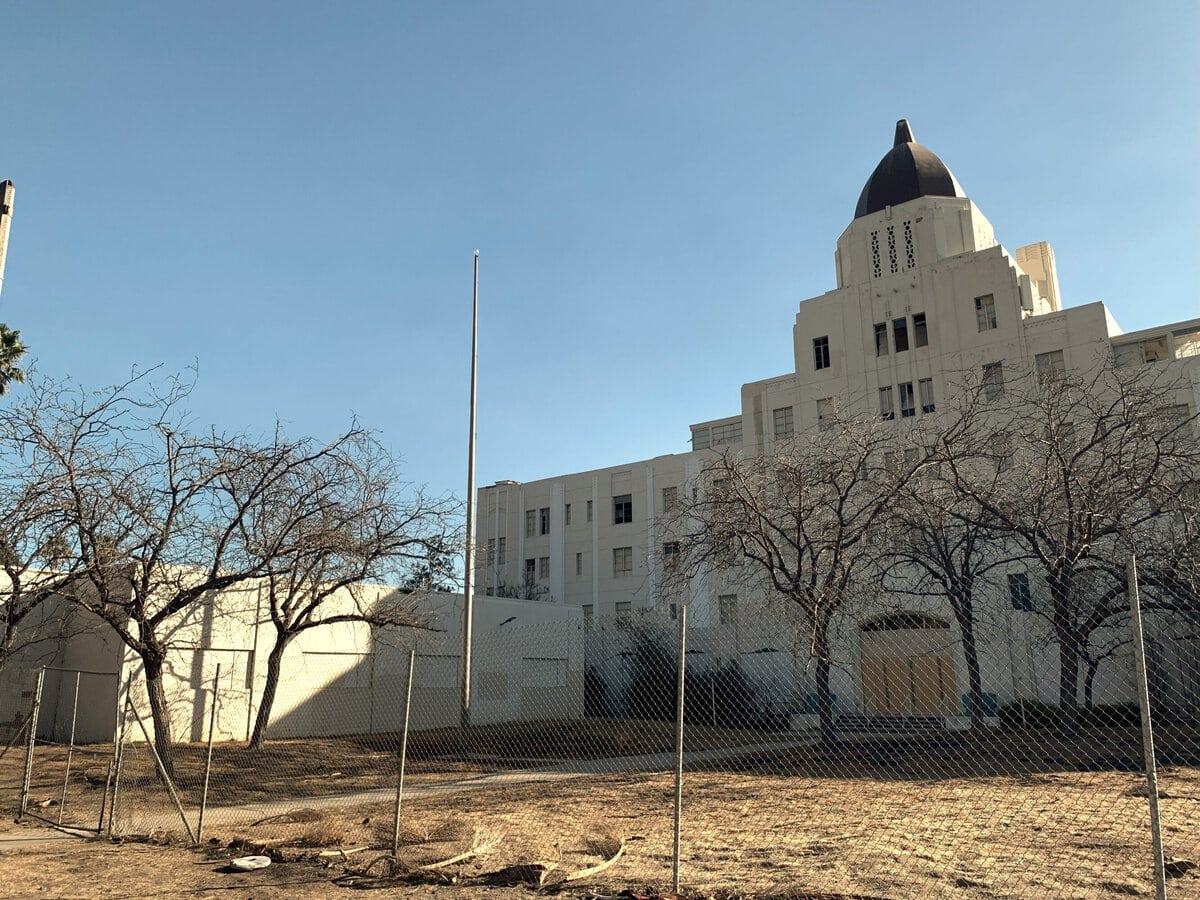
Gene Verge Sr. designed it: four floors of reinforced concrete under a stepped tower and dome that took the building to 115 feet and made it visible across that side of town.
A loggia of 13 arches ran the length of the ground floor, and cast-concrete panels at the entrances showed scenes from the life of Christ.
The hospital sat well back from the street behind a lawn, with orchards and gardens around it.
A convent in 1947, a lit cross in 1965
The campus grew in pieces after the war. A two-story annex went up in 1945, X-shaped so several wings could be watched from one nurses' station.
A convent and chapel followed in 1947, tied to the hospital by an enclosed ramped walkway.
The chapel faced Washington Boulevard with buttresses and five stained-glass windows.
The arched loggia lasted 20 years. In 1953 plate glass filled the arcade and turned most of it into interior space.
An emergency room was added at the west end in 1958.
In 1965 a neon-lit cross went up on the dome. After dark it was the most visible thing on the building.
Two wings went up on the front lawn
In 1976 intensive-care and radiology wings went up in the deep front setback, joined to the old hospital by glass walkways.
They reached almost to the boulevard, cutting into the lawn.
Maternity closed around the same time. Local births had fallen.
Money was the harder problem.
Around 1982 the hospital announced a capital program of $45 million; a medical office building went up in 1983, and the program's $6 million co-generation plant followed in 1984.
After 1983, Medicare's payment rules shortened stays, and occupancy fell to 50 percent.
The Sisters sold it for $13.5 million
By the mid-1980s the Sisters were weighing two other options: close the hospital, or turn it into a home for older people.
They sold instead. A $13.5 million contract with Summit Health was signed on December 20, 1985.
The sale closed in March 1986.
The name changed to St. Luke Medical Center, a Catholic nonprofit hospital became a for-profit one, and the five Sisters still working there moved to other assignments.
Of the 630 people who had worked there, 44 were laid off by June. Then Summit built.
A 35,000-square-foot surgery and obstetrics wing in 1988 brought maternity back, and a 210-space parking structure followed in 1989. Licensed capacity: 167 beds.
Three corporate owners in 11 years
OrNda HealthCorp bought Summit in April 1994. Tenet Healthcare bought OrNda in January 1997.
The dome changed that year.
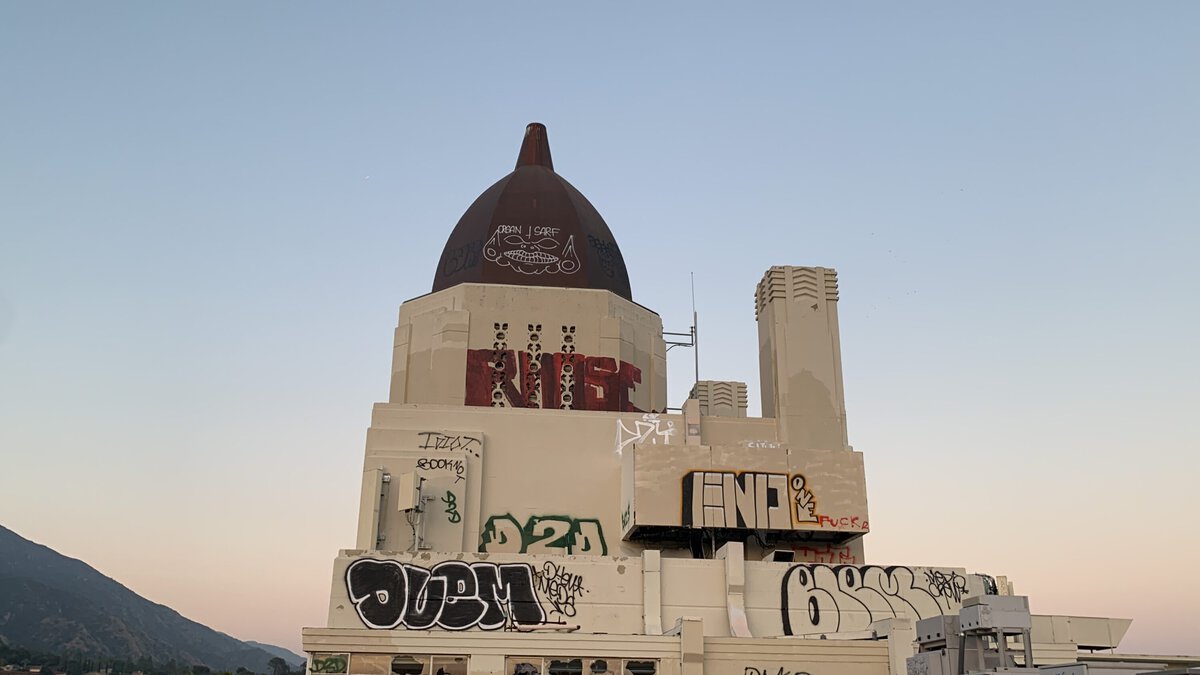
Earthquake damage forced a repair that replaced the turquoise tile and stepped ribbing with lead and copper sheeting, a smoother shape on the same tower.
Inside, use stayed thin. The 165-bed hospital recorded 5,945 discharges in 2000, and on a normal day only 70 to 75 beds were filled.
Five other hospitals within eight miles offered more than 1,700 beds between them.
Seismic work and disability-access upgrades were still ahead, on a campus assembled from 1933, 1945, 1947, 1958, 1976, and the late 1980s.
What closed with the emergency room
On January 3, 2002, Tenet announced a 120-day phase-down, and St. Luke stopped taking elective admissions that day.
The emergency department went faster than planned.
Ambulance diversion began February 4, and the emergency room closed on February 10, when anesthesiology coverage ended.
The hospital had 442 employees then.
Pasadena absorbed the rest.
St. Luke's emergency room had handled 15,976 cases in 2000, and city ambulances had been taking 30 percent of their rescue patients there.
Huntington's emergency department, built for 30,000 visits a year, took nearly 50,000 in 2001.
Thirty percent of the deliveries in the city's prenatal program had been happening at St. Luke.
The landmark held, the plans didn't
On October 7, 2002, the council designated the 1933 hospital block, the convent, and the chapel as a city landmark, backed by a petition carrying 1,089 signatures.
Caltech bought the campus in 2003 and ran research in parts of it, including a telescope program.
It also took the cross down, a $9,000 job slowed by corrosion and a beehive inside the structure.
The cross went to a retreat center in Sierra Madre. Caltech sold the 13.4 acres in 2007.
Then came the drawings. A 2009 proposal for 352 senior housing and assisted-living units never got past pre-application review.
A 2013 medical-office plan with a 280-space garage never reached entitlement.
Film and television crews rented the corridors, which still read as a hospital on camera.
Helicopters over a vacant hospital
In March 2020 Pasadena inspected the building as COVID-19 overflow space. The plumbing had been stripped out.
By June 2023 the city was calling the property a public nuisance: broken windows, graffiti, open access through broken basement windows, and 96 police calls since January 2022.
Fencing and cleanup followed.
The Eaton Fire took structures at and around the campus in January 2025. The main hospital stood.
On the night of June 3, 2026, helicopters came in low over northeast Pasadena.
Personnel rappelled onto the hospital roof, and controlled explosions and simulated weapons fire ran until about 2 a.m. Residents called the police.
The vacant landmark was hosting a U.S. military training exercise.
As of August 2026 it's still vacant and still privately owned.
Independent Publisher Notice
BestAttractions is an independent editorial publisher. We are not affiliated with, endorsed by, or acting on behalf of any location, business, property owner, manager, government agency, or organization described in this article. Comments posted on this page are not forwarded to, reviewed by, or acted upon by any entity mentioned in the article. For official inquiries, complaints, applications, bookings, or other requests, please contact the relevant entity directly through its official website or other verified channels.