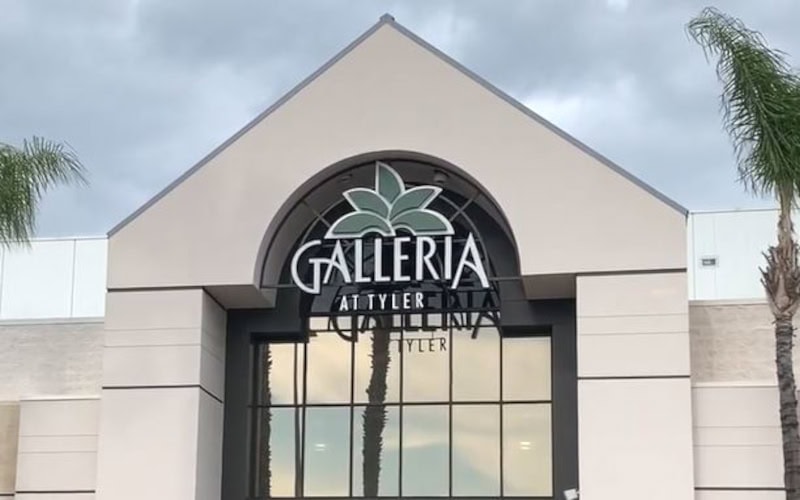
Westfield UTC and the oversized 1972 pitch
In 1972, Ernest W. Hahn presented a proposal for University Towne Centre to the La Jolla Town Council. It covered 150 acres and was framed as a mixed-use development rather than a retail-only center.
The program called for 10 high-rise buildings, underground parking, a 200-room hotel, and 4,000 residential units. Retail was included as one use within that larger plan.
Planning followed and ran for five years. The project moved through disputes during that period and did not reach construction on a predictable schedule.
Objections came from public and private stakeholders. Traffic was a recurring concern. Density was another. The proposed towers added intensity to both issues and kept the size of the plan in the foreground.
The most consequential resistance came from the U.S. Navy, focused on the site's proximity to Naval Air Station Miramar.
Hahn revised the proposal. The plan that ultimately moved forward was reduced to 74 acres. The earlier version depended on height and a large buildout.
The approved version shifted toward a lower, more spread-out development intended to function at ground level.
1977 opening courts, anchors, and odd extras
Construction began in August 1977. Early work included bringing in several 40-foot Indian Laurel fig trees from the Los Angeles area and setting them on site before the center was finished.
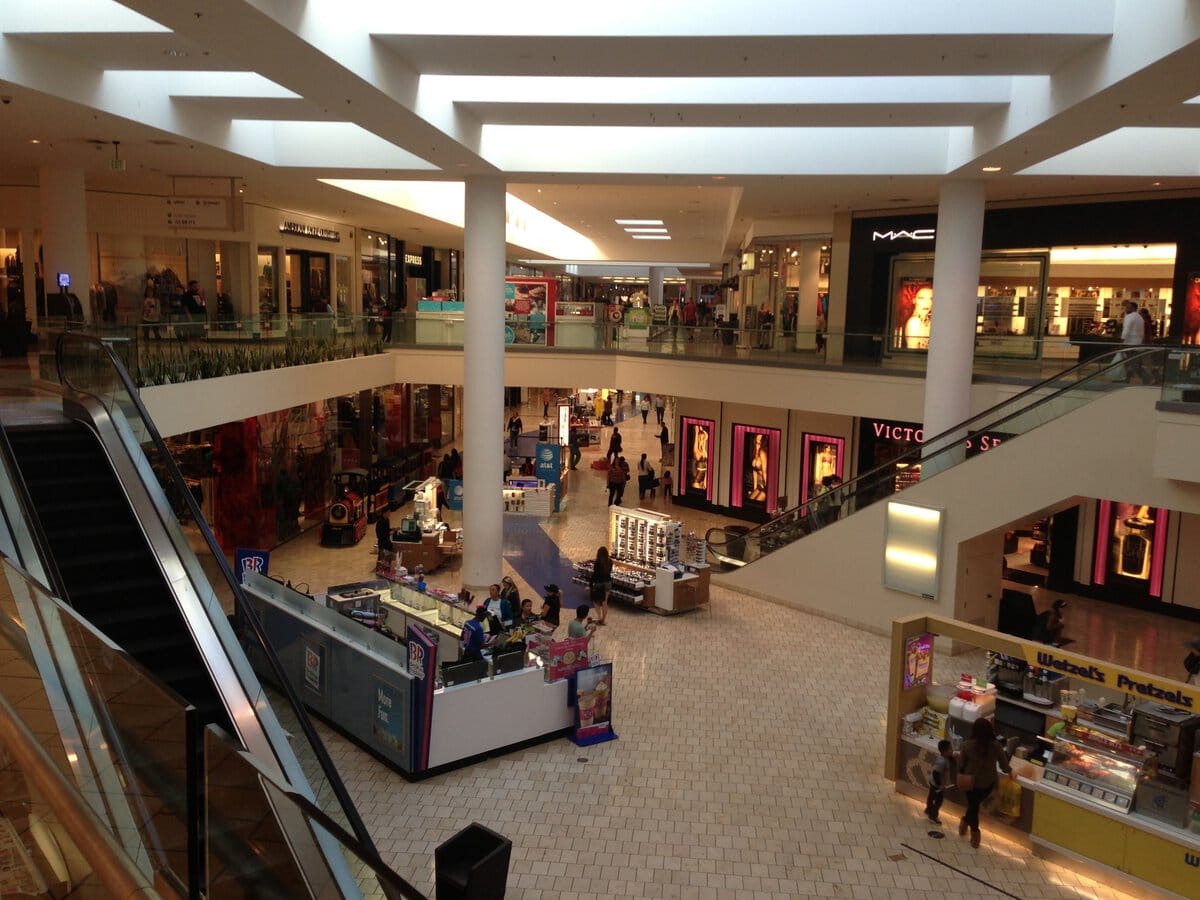
The original University Towne Centre was described as a one- and two-story, open-court, mixed-use center.
Three department stores served as anchors: Robinson's opened at 127,100 square feet. Broadway opened at 155,600 square feet.
Sears was the largest at 190,000 square feet.
From the start, the center included amenities beyond retail. Child care services were provided.
Community meeting rooms were included for local use. The tenant and program list also included an ice skating rink, a museum, and an art gallery.
Entertainment uses were built in as well, including a six-screen theater and a discotheque.
A 1989 pipe bomb near the mall corridor
In March 1989, a pipe bomb attack near University Towne Centre brought the UTC corridor into the news.
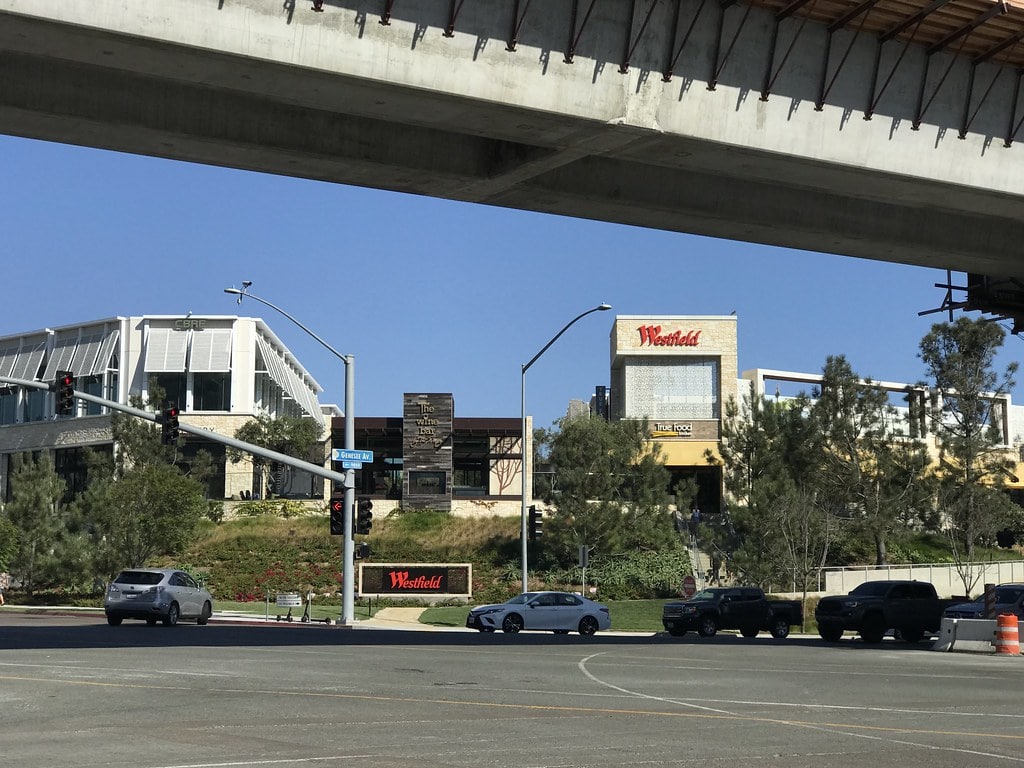
On the morning of March 10, Sharon Rogers, the wife of Capt. Will Rogers III of the USS Vincennes was driving a van on Genesee Avenue.
The van stopped in the northbound left-turn lane just south of La Jolla Village Drive, a main approach road along the edge of the center.
While she waited at the light, she heard two sharp popping sounds and thought something had struck the vehicle from behind.
She got out to check. Moments later, the device detonated. The van caught fire and burned. Rogers was not injured.
The location mattered to the property mainly because it sat on a visible boundary and a common route in and out of the center.
The incident read to many people as happening "at" the mall, even though it occurred on the street.
Investigators treated the bombing as a federal case. The FBI took control early.
Attention centered on the Vincennes and the anger that followed the 1988 downing of Iran Air Flight 655, without a settled motive stated at the time.
Witnesses reported a red car making a sudden U-turn and speeding away. The mall remained open. The event stayed attached to the area, not to UTC operations.
Westfield arrives and plans stall, 1996-2012
By the mid-1990s, UTC was already losing some of its unusual features.
In August 1996, the Mingei museum moved to Balboa Park, taking 6,000 square feet of art and design displays out of the mall and leaving behind a center that looked more like a typical shopping mall.
After that, ownership and money matters became stricter.
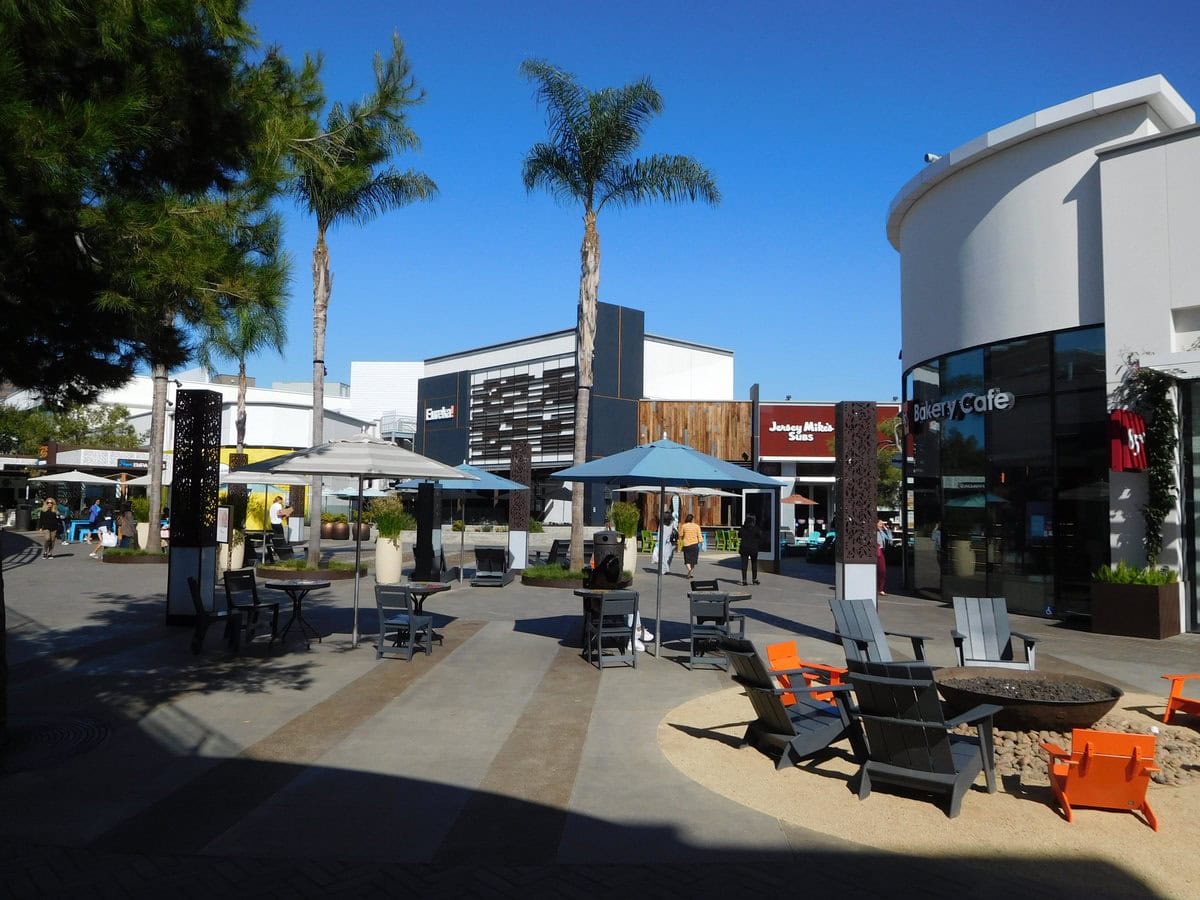
In 1998, Westfield started buying the Hahn properties, and University Towne Centre was included in the first deal on July 31, with Westfield also taking over management.
In 1999, a partnership with JP Morgan Investment Management put the property into a more official business setup, described at the time as a 1,035,000-square-foot large shopping center with Nordstrom, Macy's, Robinsons-May, and Sears, plus 162 specialty stores and $309 million in yearly sales.
The next ten years involved a lot of planning, but not many changes that people could see. Westfield started working on an upgrade and expansion around 2001.
The city approved a big addition in 2008 that included much more shopping space and housing, but the project stopped when the economy got worse.
By late 2011, the delay was over.
Phase 1 had started: Robinsons-May had been torn down, ArcLight was planned as a 14-screen movie theater above a much bigger fitness club, the food court was being turned into the "Dining Terrace," and the ice rink was being covered with glass walls.
2012 renovation brings money and new habits
In 2012, Westfield UTC completed a redevelopment phase described as a $180 million renovation carried out over 14 months.
The work concentrated on areas shared by all tenants, the parts of the center that shape how it feels between stores.
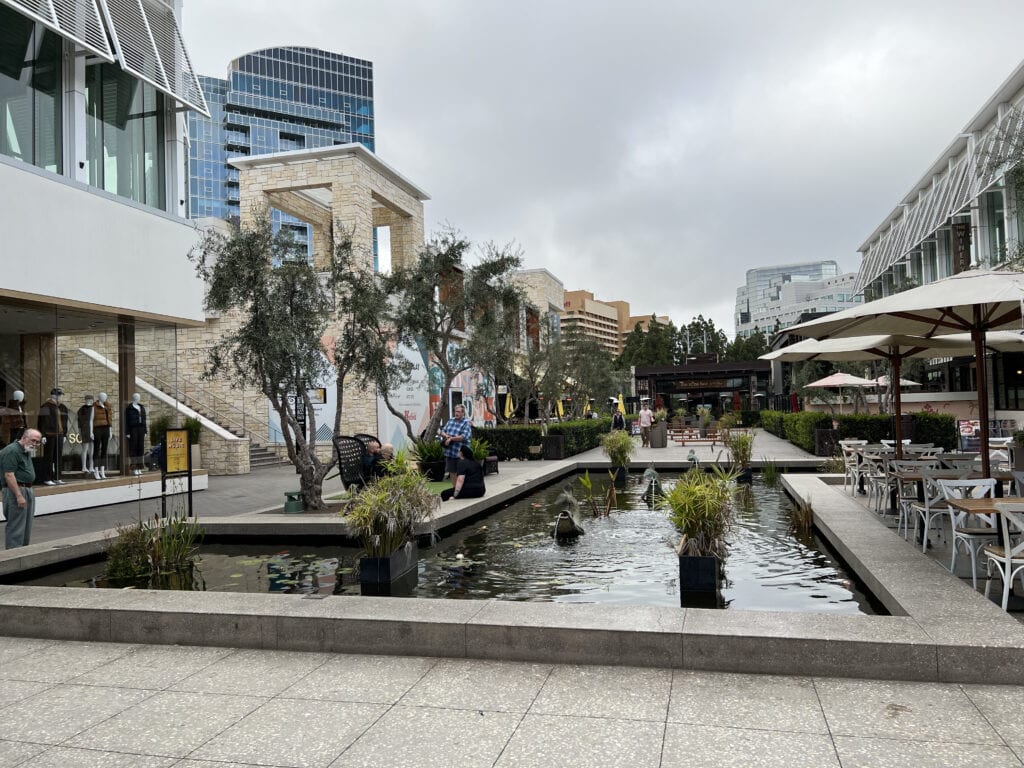
Common areas were rebuilt and updated. Changes included a redesigned children's play area, new family lounges, the addition of green elements, and the replacement of paving throughout the property.
New outdoor amenities were introduced. A remodeled dining area was also part of the project, reflecting a shift toward food and dining as a primary draw rather than a brief stop during shopping.
The renovation added 40,000 square feet to the center. New uses and tenants were selected to signal a more upscale and experience-oriented direction.
A 14-screen ArcLight Cinema opened. A 53,000-square-foot Super Sport Fitness Club was added.
New retail and dining tenants included Seasons 52, Tiffany & Co., and J. Crew. Existing tenants such as Starbucks and Forever 21 expanded their footprints.
Technology upgrades were included in the scope of work. Free Wi-Fi was introduced across the center.
An LED screen was installed in Palm Plaza. At the time, the property was described as anchored by Nordstrom, Macy's, and Sears.
The renovation marked a shift in how the center was expected to be used and how long visitors were expected to stay.
2017 adds space and a new Nordstrom store
In 2017, Westfield UTC went through a major update that made the site noticeably bigger. The project added 400,000 square feet of new space.
Upscale stores were added, along with new places to eat, office space, and a five-story parking garage.
Nordstrom's relocation provided a clear point within the broader construction period. A new Nordstrom store at Westfield UTC opened on October 12, 2017.
The changes in 2017 also made it clearer how the property was meant to be used. Earlier versions of UTC mixed shopping with community and cultural spaces.
This time, the focus was on business and shopping. Office space was added to the area.
Dining became a main attraction. Parking was put into a multi-level garage, which freed up ground-level space for stores and people walking around.
By the end of the redevelopment, the center continued to function as a shopping mall, but its layout and uses supported a broader range of daily activities.
From Sears to The Collection at UTC
On the northeast side of Westfield UTC, the Sears building began its transition before the store itself closed. In July 2015, the property was transferred to Seritage Growth Properties.
In May 2017, Sears announced that its store would close later that year. By the end of 2017, the building was vacant, but the site did not remain idle.
Seritage and Invesco Real Estate formed a joint venture to redevelop the former Sears store and auto center into a new project branded as The Collection at UTC.
The plan was valued at approximately $165 million and outlined about 226,200 square feet of premium retail, restaurant, and office space.
Equinox was identified early as a major tenant, committing to roughly 33,000 square feet.
Demolition and early site work were tied to activity in 2019, when the former Sears structure was cleared as part of the redevelopment process.
Leasing plans expanded beyond fitness to include office users such as Industrious.
The Collection at UTC officially opened in October 2021, with Pacific Catch among the first tenants to begin operations.
Additional openings continued into early 2022. By that year, the project was described as largely leased. Amazon occupied approximately 123,000 square feet on the upper floors.
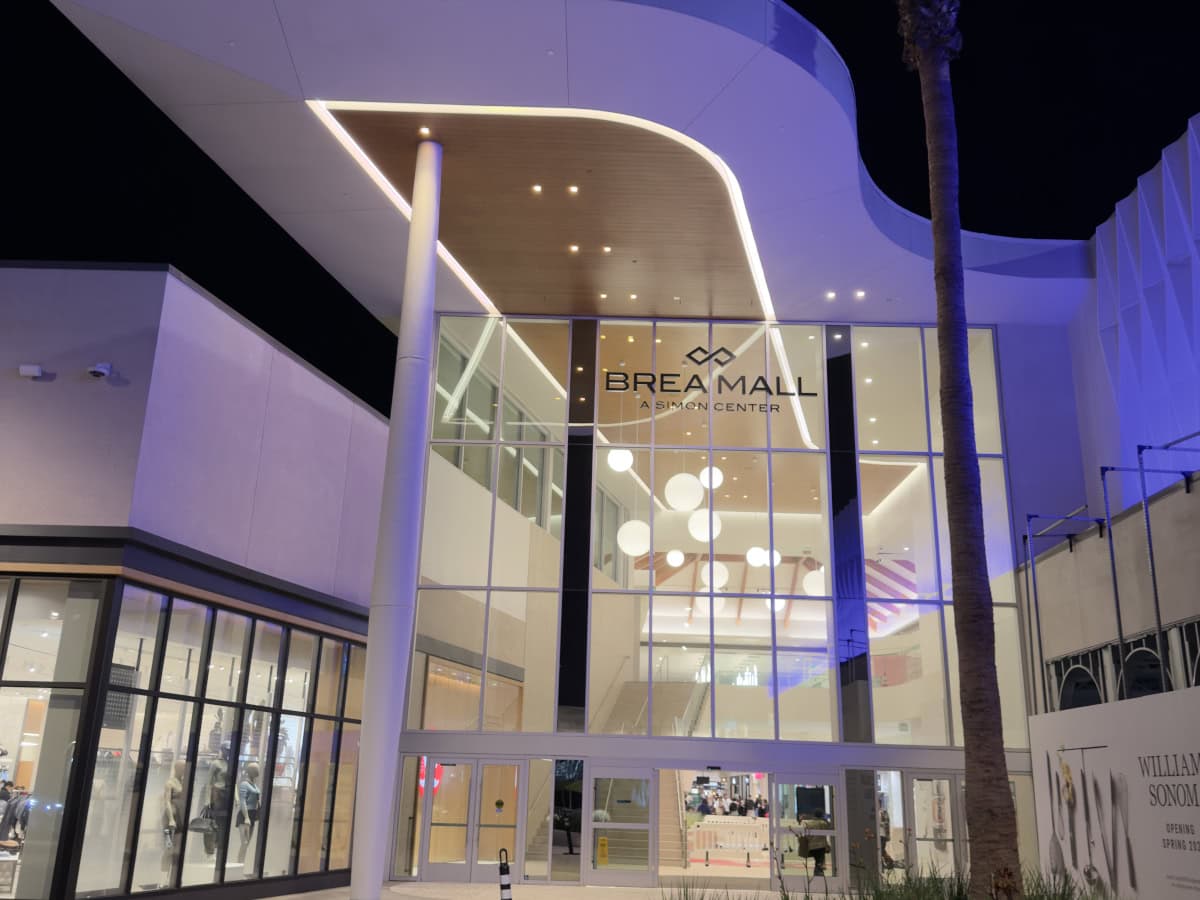
Street-level tenants included Williams Sonoma, Pottery Barn Kids, CB2, Blue Bottle Coffee, Ideal Image, and Madison Reed.
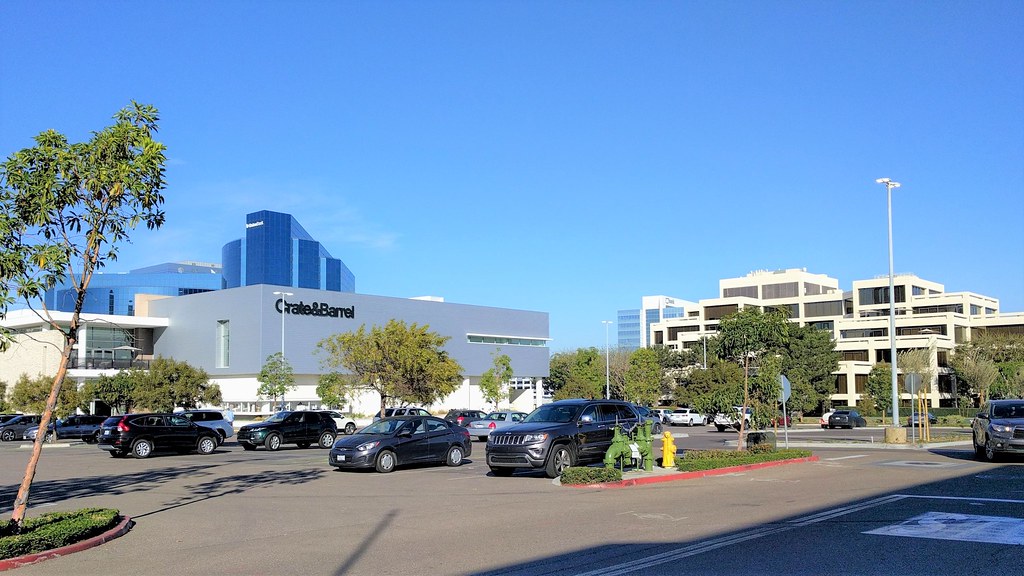
Nearby, Crate & Barrel relocated to a standalone two-story outparcel, marking a clear shift away from the former department store model.

2018 to 2021: takeover, tower, trolley
In 2018, Westfield UTC got new owners. Unibail-Rodamco-Westfield took over Westfield, putting the property under a company based in Paris.
The change did not immediately change how the center looked, but it gave the new owners control over future plans and updates.
In 2019, housing was added to the site. The Palisade apartment tower opened in the Nobel Drive parking lot area of the mall.
This change made the area more clearly a mix of shopping and living spaces, showing an old idea to combine stores and homes, but done much later and in a different way.
Transit access changed in 2021. On November 21, the UC San Diego Blue Line light rail extension opened to the UTC Transit Center, starting regular service.
The new train line connected the site directly to the area's rail system and gave people another way to get there.
The center, which had mostly been built for cars, now welcomed a steady stream of people arriving by train.
2022 to 2026: clearing boxes for the luxury wing
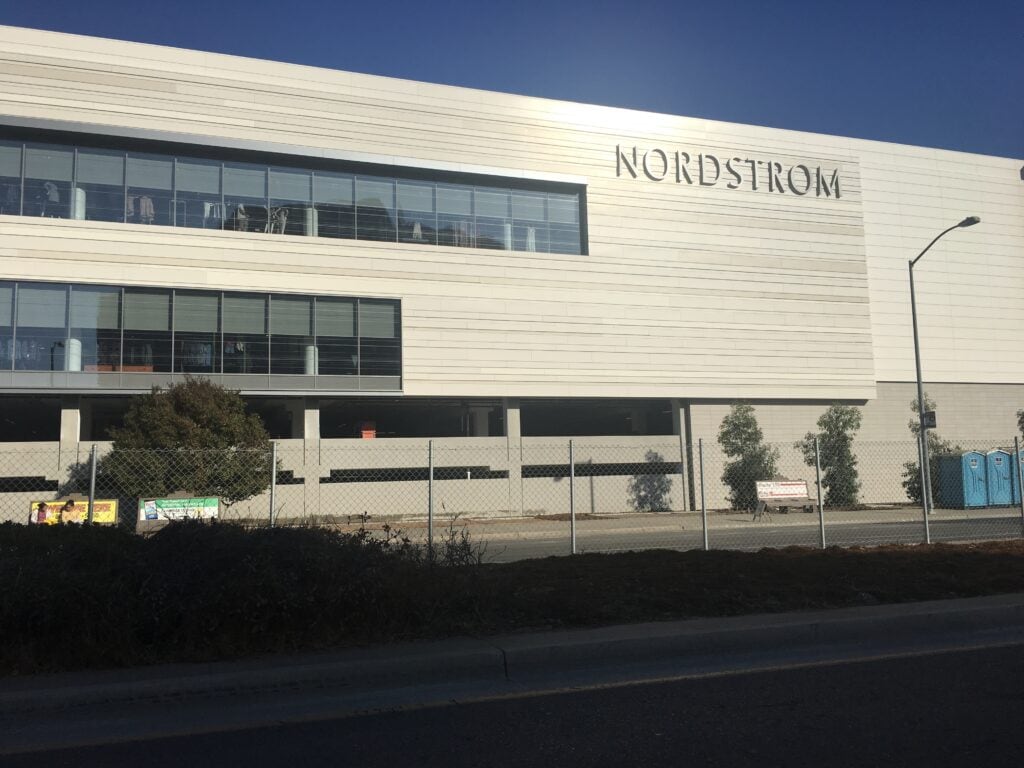
In 2022, Westfield UTC prepared for its next redevelopment phase by demolishing the former Nordstrom store and several adjacent shops.
Construction on the new expansion began on April 1, 2024. The project was described as adding 50,000 square feet across two buildings. The layout included nine storefronts and two restaurants.
Design elements focused on extending the existing promenade at the same grade, with construction spanning over 70 additional parking garage spaces.
A second valet area was added. Landscaping upgrades and an art piece were included. One of the buildings was designed as a two-level restaurant structure.
Leasing activity was reported as advanced early in the build. More than 80 percent of the new space was leased.
Space turnover to tenants was scheduled for mid-2025. Public openings were projected for early 2026, with phased openings beginning in spring.
By late 2025, the expansion was nearing completion. Tenant announcements during the year clarified the direction of the new wing.
Luxury boutiques included CHANEL, Carolina Herrera, Saint Laurent, Tom Ford, and Zegna. Restaurants included JOEY and Teleferic Barcelona.
Other openings in 2025 included L Space, which opened March 20; Dreame, which opened April 26 with events held April 26-27; and The Escape Game, which opened in the summer.
Condition: polished, busy, still building
Westfield UTC is in good condition. The open-air layout makes the upkeep easy to see. Storefronts and common areas look current.
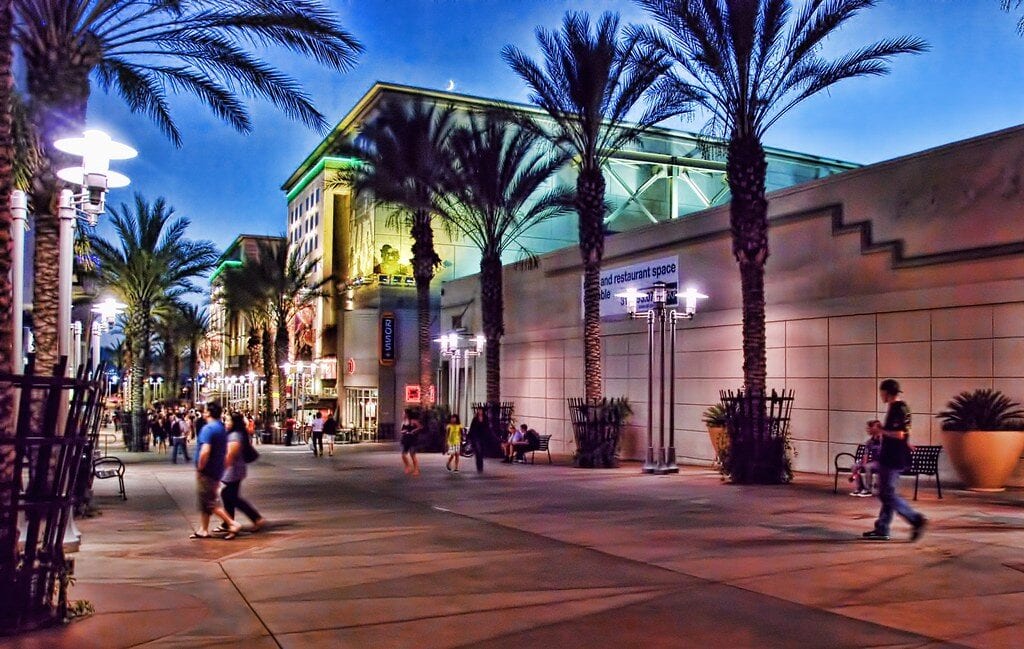
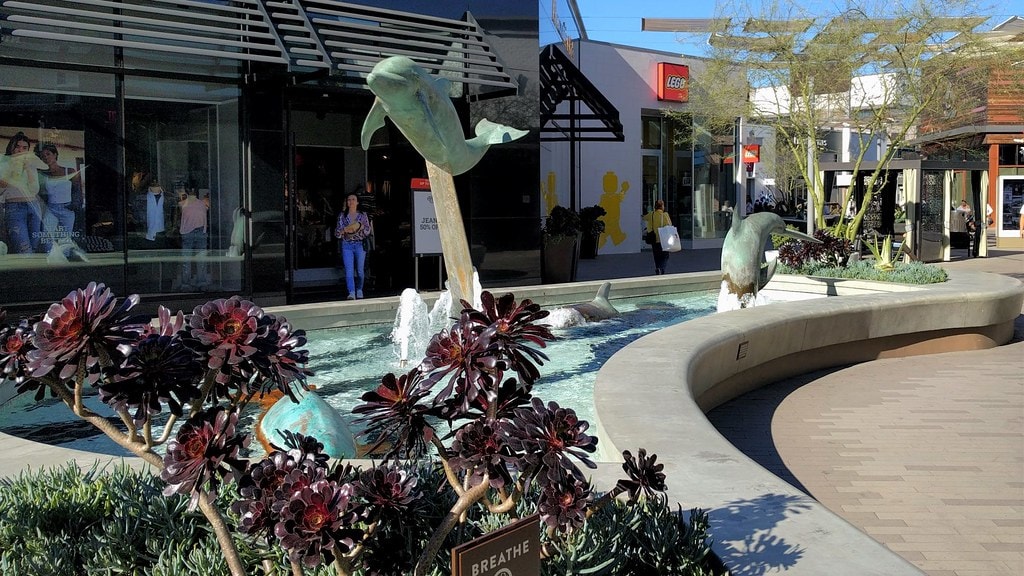
The property is arranged for pedestrians. Paths are wide and connect across the site without forcing movement into one narrow corridor.
Seating and stopping areas are built into the circulation routes and appear planned rather than improvised.
The center carries weekend crowds without looking rundown.
Parking is the main problem. Spaces fill up fast during busy times. Charging for parking after the first two hours makes it harder for people who want to stay longer, like those eating or visiting several stores.
In 2025, work areas caused detours, temporary fences, and changed walking routes. The finished parts work as usual next to areas still being built, so the place feels like it is growing, not getting worse.