Cherry Creek Shopping Center goes from open mall to enclosed
In the mid-1980s, the Cherry Creek Shopping Center in Denver, Colorado, spread across 47 acres: an open mall, two local department stores, a cinema, a supermarket, a cluster of smaller buildings, and surface lots for cars.
It dated to 1949, when it went up on ground that had held a sand pit and a city dump, and its stores filled about 435,000 square feet.
An enclosed regional mall under the same name replaced it and opened on August 17, 1990.
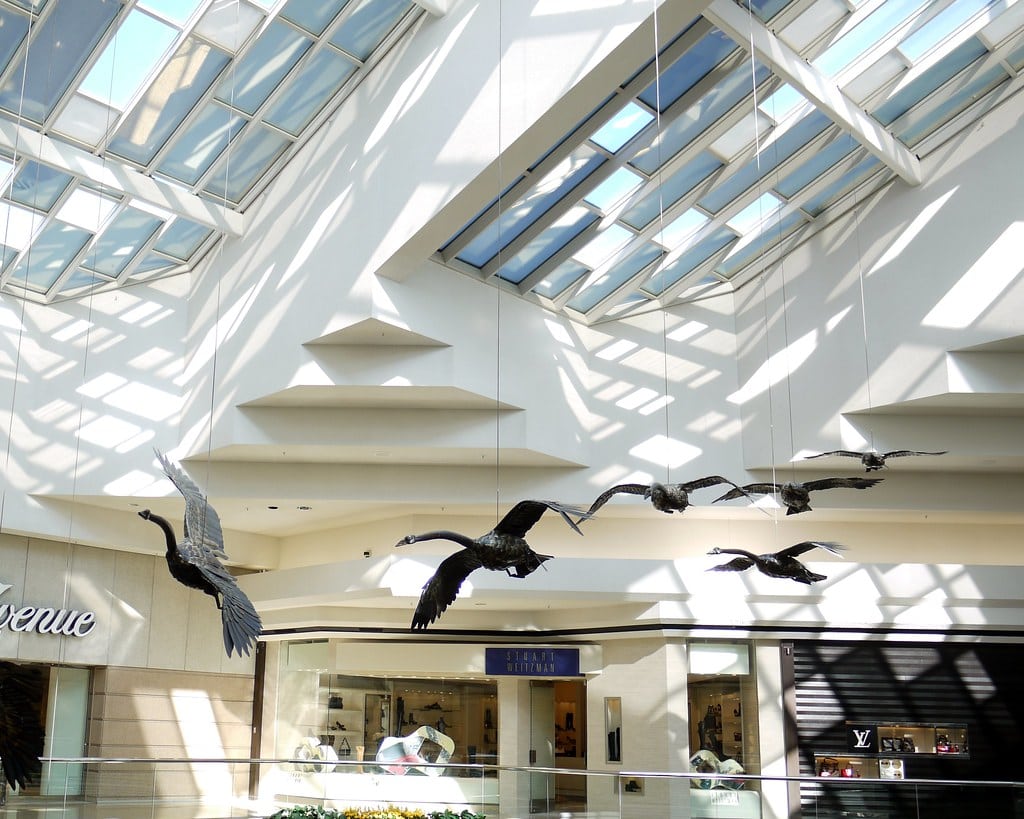
The neighborhood shaped that mall before it was built.
Traffic, design, and the size a bigger center might reach were the worries when a steering committee began planning for the property and its streets in 1984.
The plan Denver adopted in 1986 asked for usable open space, walkways, street improvements, and limits meant to keep the property from becoming one unbroken stretch of buildings and pavement.
Taubman built the new mall, and the public improvements around it, under a development agreement with the city.
From its first years the mall sat at the top of the Denver market: Neiman Marcus and Saks Fifth Avenue were among its department stores, beside Foley's and Lord & Taylor, and Taubman expanded the building in 1998.
Nordstrom later moved into the space Lord & Taylor left behind. Saks gave up its Cherry Creek store in March 2011, and the Saks site was redeveloped for RH.
In February 2026 Simon Property Group, which had taken over the mall's management the year before, announced a renovation program focused on the mall's appearance and its major retail spaces.
West of the building, a separate project called Cherry Creek West started demolition in March 2026, and several former retail buildings on that land have been razed to make way for planned housing and offices.
The enclosed mall is not part of that project and stays open.
The mall covers more than a million square feet, and two covered garages hold its parking, as the 1986 plan required.
Its shops lean to luxury, with Louis Vuitton, Burberry, and Tiffany & Co. among the labels trading there. Neiman Marcus, one of the department stores of its first years, is still an anchor.
Park Meadows turns Lord & Taylor's space into outdoor shops
Timber beams, stone fireplaces, Western trim, and original art filled Park Meadows when it opened on August 30, 1996, near the interchange of I-25 and C-470.
The site sat outside the limits of Lone Tree, Colorado, a city incorporated the year before, which annexed the main property in January 2007.
Its operators built the enclosed mall as a retail resort in the style of a Colorado lodge, with a fireplace 66 feet tall and a food hall.
About 180 retailers opened there, Colorado's first Nordstrom and a Dillard's among them.

An earlier plan to put a big regional mall where I-25 meets I-225 had been dropped in favor of this site.
South metro Denver was growing fast.
Stores, restaurants, and other businesses spread around the I-25/C-470 interchange after Park Meadows opened.
By the end of the decade, the district had more than 60 stores and about 2.5 million square feet of retail space.
The enclosed core stayed, and the additions went outdoors.
The Vistas opened in 2008 on Lord & Taylor's old footprint, adding about 154,000 square feet of open-air shops and restaurants.
Brookfield took over General Growth Properties in 2018; in the 2020s it renovated the food hall and added an outdoor play area.
In July 2024 Lone Tree approved a new parking garage, new shop space, and a plaza.
The 994-stall garage is finished, and the mall's anchors include Nordstrom and Dillard's, two anchors it opened with.
Park Meadows holds more than 185 stores and restaurants on about 1.57 million square feet.
FlatIron Crossing reworks its village and old Nordstrom
Ground was broken in 1998 on the corridor between Denver and Boulder, near U.S. 36 and the Interlocken business district in Broomfield, Colorado.
On August 11, 2000, FlatIron Crossing opened there as a mall on two enclosed levels, with an outdoor village for shops and entertainment beside it.
The project was part of Broomfield's late-1990s push for growth and sales-tax money, and the city's sales-tax revenue climbed sharply once the mall opened.
In November 2001 Broomfield became a combined city and county.

The complex covered about 1.5 million square feet, roughly 250,000 of them in the village.
Two park areas and local sandstone were part of the design, with trails threaded through native landscaping around streams and waterfalls.
Its early anchors included Nordstrom, Dillard's, Lord & Taylor, and Foley's, alongside about 170 specialty stores and AMC theaters.
Nordstrom closed its FlatIron store in 2020, leaving a large anchor building empty.
That building and the original village are the core of HiFi, a redevelopment that Macerich, owner of the center since 2002, is carrying out with joint-venture partners around the working mall.
The plan calls for 347 apartments, about 90,000 square feet of restaurant and retail space, and 2.5 acres of public plazas, with a hotel also in planning.
Dick's House of Sport is planned for the former Nordstrom side.
Construction is under way: four new tenant spaces, Shake Shack's among them, are under construction, and three more tenants have signed leases inside the mall.
The first HiFi openings are planned for 2027, with more to follow through 2029.
Until then the enclosed mall, with Dillard's and Macy's trading inside, stays open while the work goes on around it.
Colorado Mills gets a new roof and a new interior
On May 8, 2017, hail damaged the roof of Colorado Mills in Lakewood, Colorado, rain came in, and most of the mall closed.
Mills Corporation had opened it in November 2002 as a one-story outlet and entertainment mall, on a large site by I-70 and West Colfax Avenue about 10 miles from downtown Denver.
At its opening it held 11 anchors and 154 specialty stores on about 1.2 million square feet of leasable space.
The Mills formula mixed outlet stores, off-price chains, big category stores, and entertainment inside a colorful interior the company called Mainstreet.
Before the 2002 opening, the lineup included Target, Borders, Gart Sports, and an ESPN Skate Park, and a United Artists theater was due soon after.
The hail closure lasted about six months.
When the doors opened again on November 21, 2017, more than 100 stores were expected back for the holidays, and construction was still going on around them.
The roof was replaced along with much of the interior, and the mall's managers used the closure to redo the common areas and change the old Mainstreet look. The work ran into 2018.
Simon Property Group, which bought Mills Corporation with Farallon in 2007, runs the rebuilt mall, and the Mills mix of outlet shopping and entertainment has held.
Factory and outlet stores share the single floor with anchors that include Burlington, Dick's, H&M, 2nd & Charles, Arhaus The Loft, Round1, and Slick City.
The United Artists theater is still an anchor, and Target is attached to the building.
Permanent tenants occupy about 89 percent of the mall, and with short-term tenants added, it is nearly full.
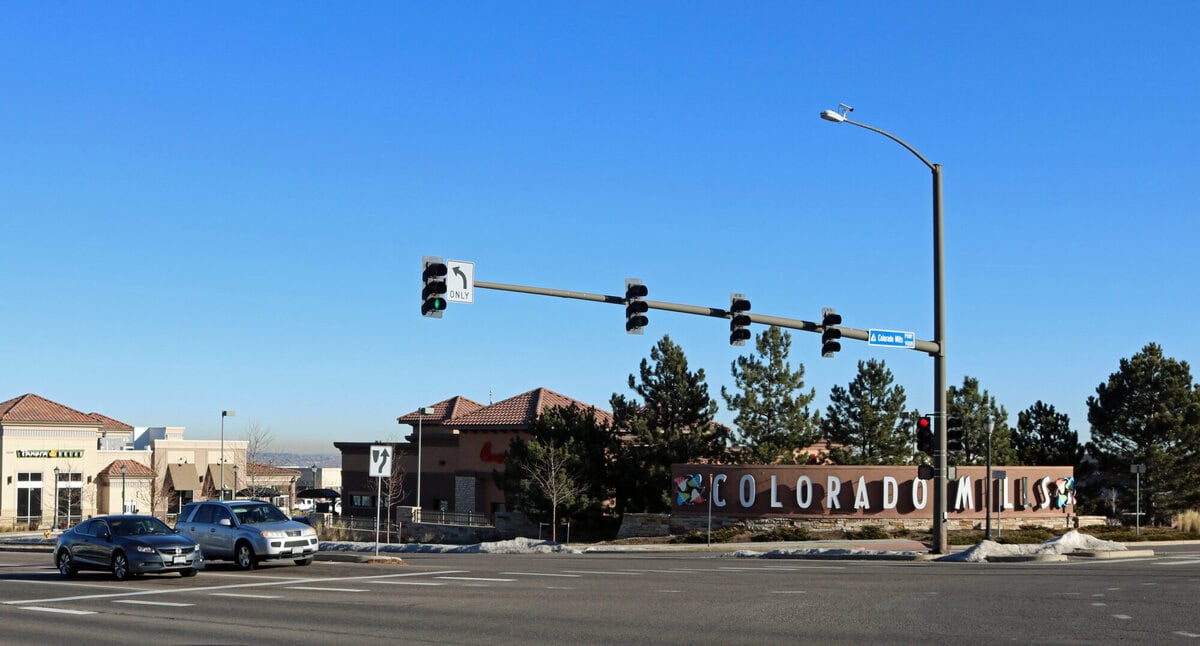
These four malls opened between August 1990 and November 2002, and no two were built on the same idea of a mall. All four still have stores trading indoors.
Independent Publisher Notice
BestAttractions is an independent editorial publisher. We are not affiliated with, endorsed by, or acting on behalf of any location, business, property owner, manager, government agency, or organization described in this article. Comments posted on this page are not forwarded to, reviewed by, or acted upon by any entity mentioned in the article. For official inquiries, complaints, applications, bookings, or other requests, please contact the relevant entity directly through its official website or other verified channels.