Danbury Fair Mall on the Bones of the Great Danbury Fairgrounds
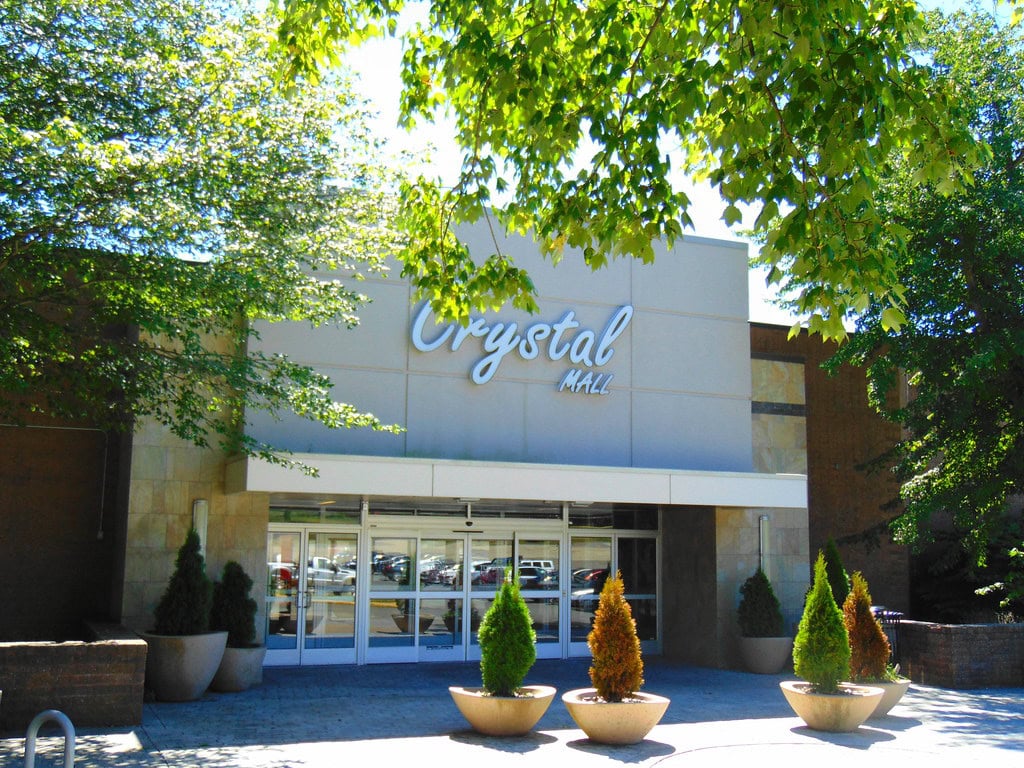
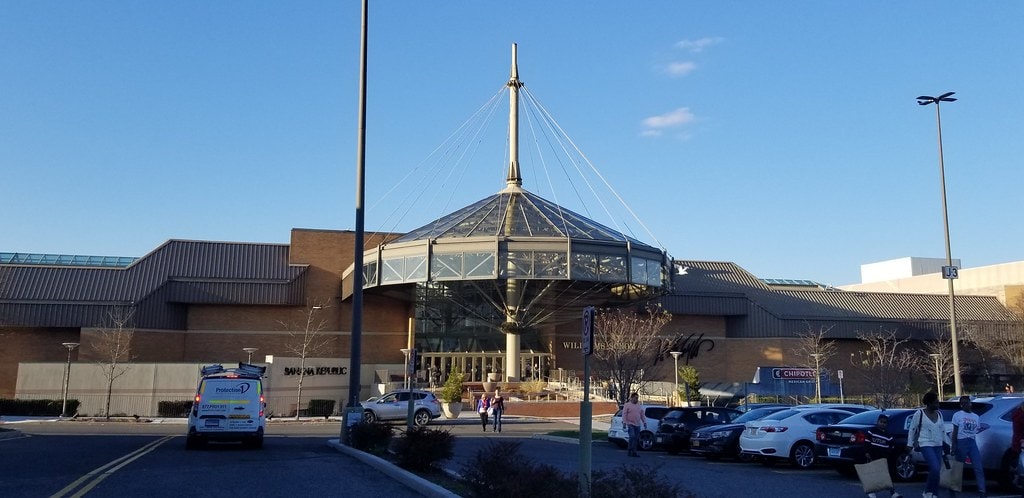
If you visit Danbury Fair Mall today, you will find the usual late-capitalist comfort: roughly 1.2 million square feet of climate-controlled certainty, about 170 to 180 stores, and a parking lot that appears on satellite photos like a man-made lake.
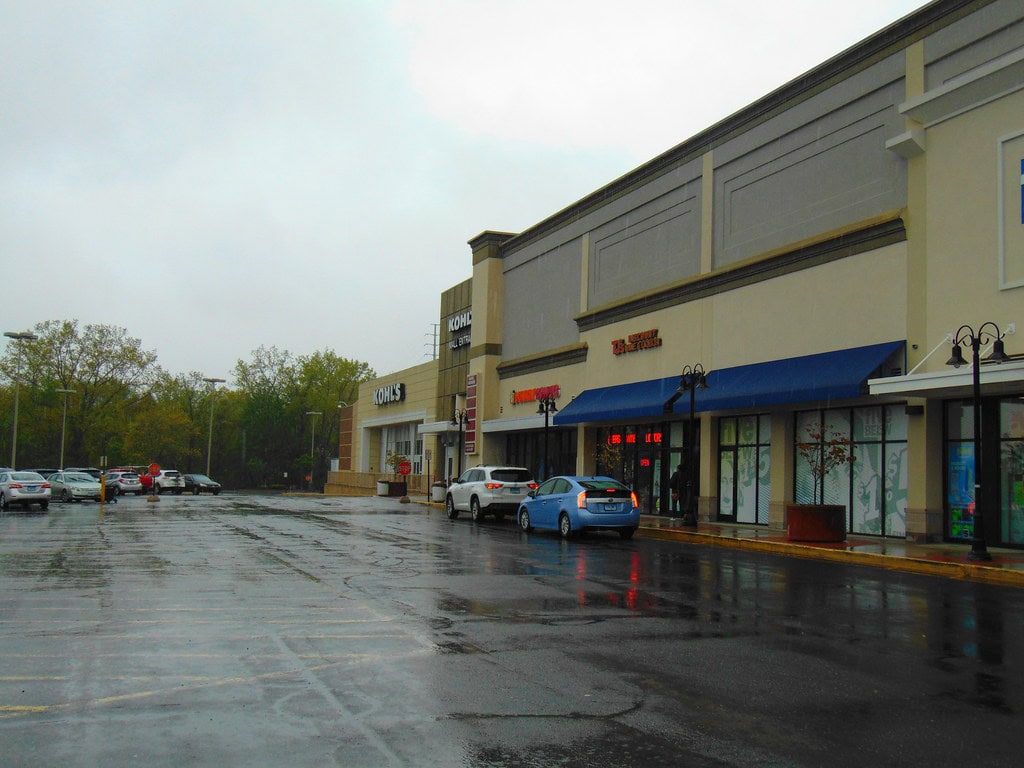
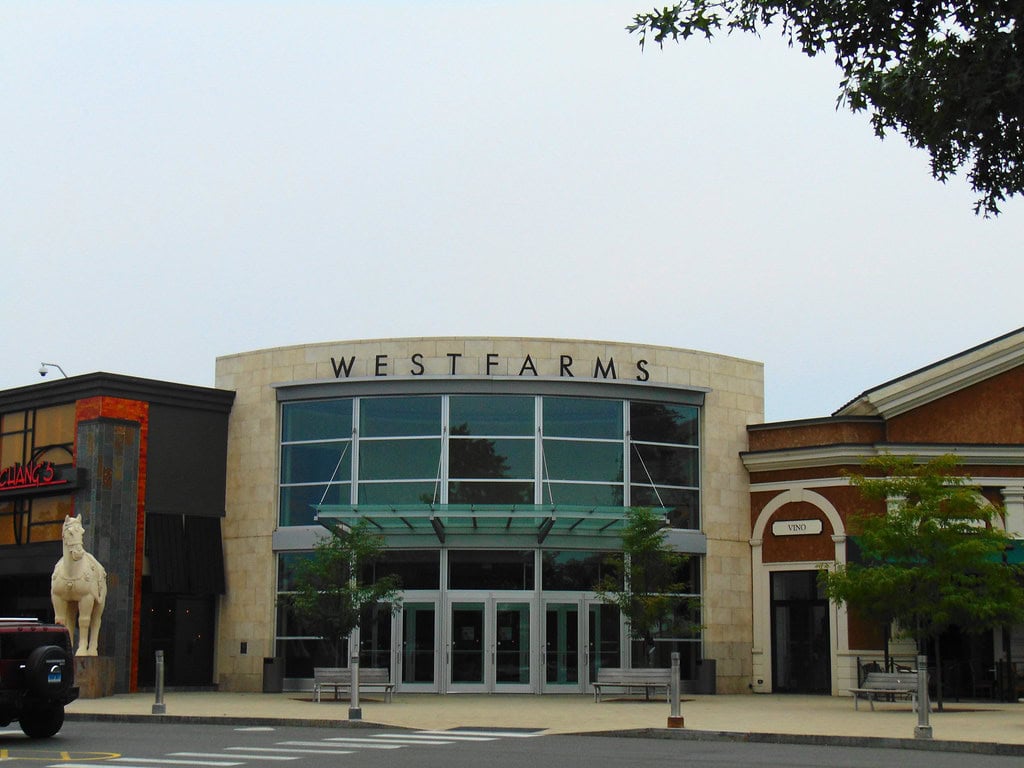
The mall sits at 7 Backus Avenue, across from the municipal airport and just off I-84 and US-7, a convenient regional magnet for shoppers from Fairfield and Westchester counties.
It is one of Connecticut's largest malls, among New England's biggest, pulling in an estimated 12 to 14 million visitors a year and paying more than five million dollars annually in local taxes.
The irony is that this highly managed environment stands atop land once devoted to a far less controlled spectacle.
Long before Macy's, Target, and Primark, the site was Danbury Pleasure Park, the permanent home of the Great Danbury State Fair.
The fair traces its roots to 1821 as a modest agricultural show, but it took on its ten-day October form in 1869, when local hat manufacturers helped found the Danbury Farmers and Manufacturers Society.
Over the next century, the fair swelled to about 142 acres, added permanent livestock barns and exhibit halls, and hired more than a thousand workers by the 1890s.
Tobacco and fruit shared space with hats, stoves, wagons, and carriages; the smell of livestock met the clang of machinery. The ground that now sells bubble tea was once used to raise pigs.
From the Last Fair to the First Sears
By the twentieth century, the fair embraced speed and spectacle. By 1929, horse and auto races on the fair's half-mile track had become the main draw, foreshadowing the dedicated speedway that would follow after the war.
In 1946, a banked speedway replaced the horse track, soon hosting stock-car crowds.
The grounds sprouted oversized fiberglass mascots - Uncle Sam, Paul Bunyan - that loomed over midway games like proto-Instagram backdrops.
The fair paused only twice, for the Spanish influenza in 1918 and World War II, when a patriotic Danbury Exposition filled in for one year.
The end came not from lack of enthusiasm but from arithmetic.
After owner John Leahy died in 1975, rising land values and estate taxes made it difficult for his heirs to keep a seasonal enterprise going on acreage that had suddenly become too valuable to remain whimsical.
The last fair opened in early October 1981 and closed on October 12, drawing about 400,000 people for its final ten-day run.
Immediately afterward, rides, livestock pens, and even the fiberglass giants were auctioned off; one collector carted hundreds of pieces to an amusement park in upstate New York.
The 142-acre site was sold to the Rochester-based Wilmorite Corporation for what was then a record local price per acre.
Danbury had seen its last fair. Its first Sears anchor was on the way.
From Carousel to Scandal to Lord & Taylor
Wilmorite did not just cover the fairgrounds with pavement and put stores on top.
When construction started in 1984, they built a two-story mall with wide hallways and rooflines shaped like tents, meant to remind people of the fair's big tents.
The hallways were so long and straight that people joked you could see from one end of the mall to the other without turning your head.
In the main food court, the developer put in a 38-foot, two-level carousel, made with fiberglass horses from Italy, as a real and emotional connection to the old fairgrounds.
Danbury Fair Mall opened to the public on October 28, 1986, with Sears and Hartford-based G. Fox as the main stores.
Macy's joined in 1987 and JCPenney in 1988, making the new mall a strong choice for department store shopping.
The building soon became known as the largest mall of its kind in New England, with about 200 stores.
It also got a political story: during construction, two Wilmorite leaders admitted giving about sixty thousand dollars in cash to Mayor James Dyer, sometimes hidden in newspapers, in return for political help.
The scandal helped end his career. He lost the 1987 election and was later found not guilty of federal corruption charges, but the mall stayed.
In 1990 and 1991, the mall grew with a new parking garage and a new main store: Lord & Taylor, showing that this was not just a regular shopping center but a place aiming to be a fashion hotspot.
Macerich Buys the Mall, and the Fountains Disappear
By the early 1990s, the mall's main stores included Sears, G. Fox (which became Filene's in 1993), Macy's, JCPenney, and Lord & Taylor.
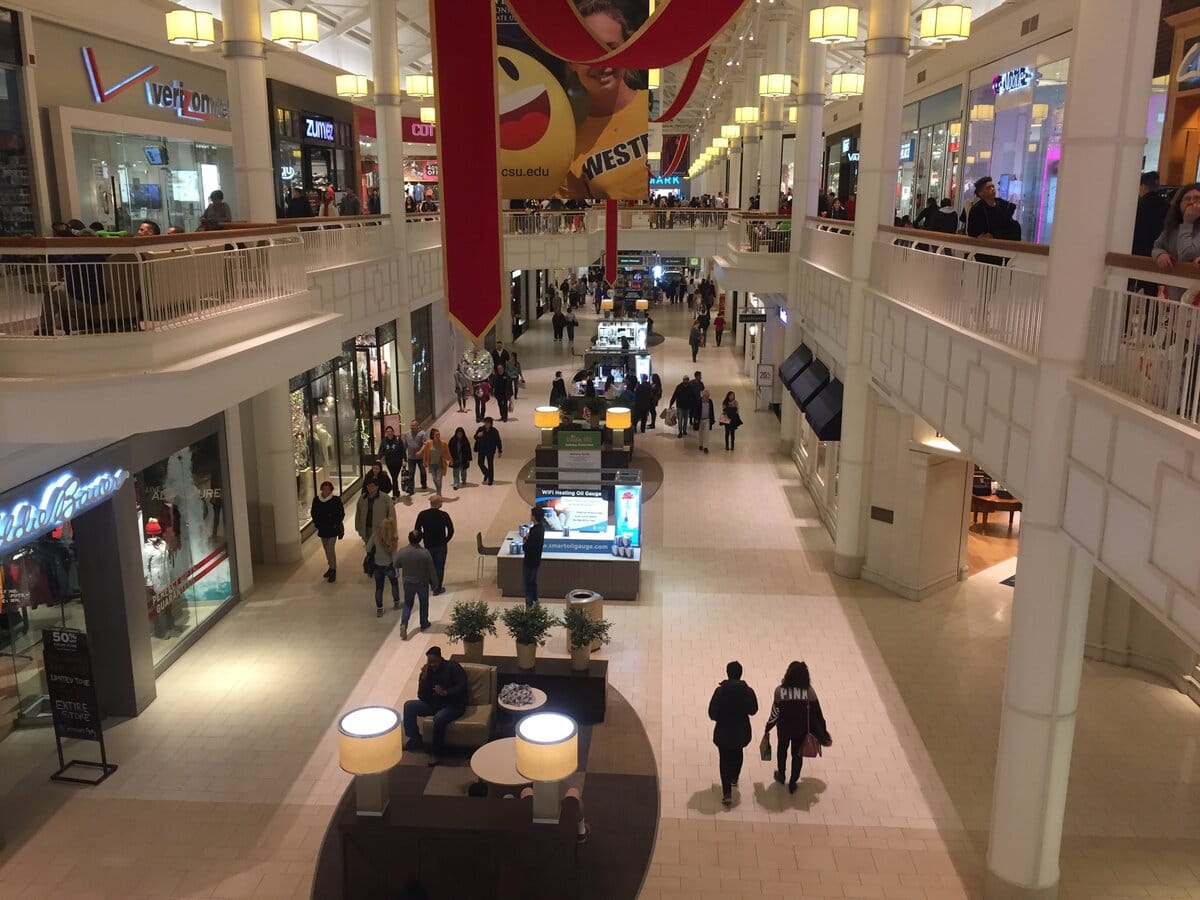
The inside still looked like it did in the late 1980s, with brown tile floors, round lights, and a huge pool and fountain area in the middle that was also used for events.
People called it Olympic-sized, though that was not really true.
In 2005, Wilmorite sold Danbury Fair as part of a multi-property deal to the Macerich Company, a national mall owner with a taste for renovation.
One of the more consequential changes followed the consolidation of Federated and May Department Stores.
Filene's closed in 2006, and its original space was marked for redevelopment. Then Macerich turned to the public areas.
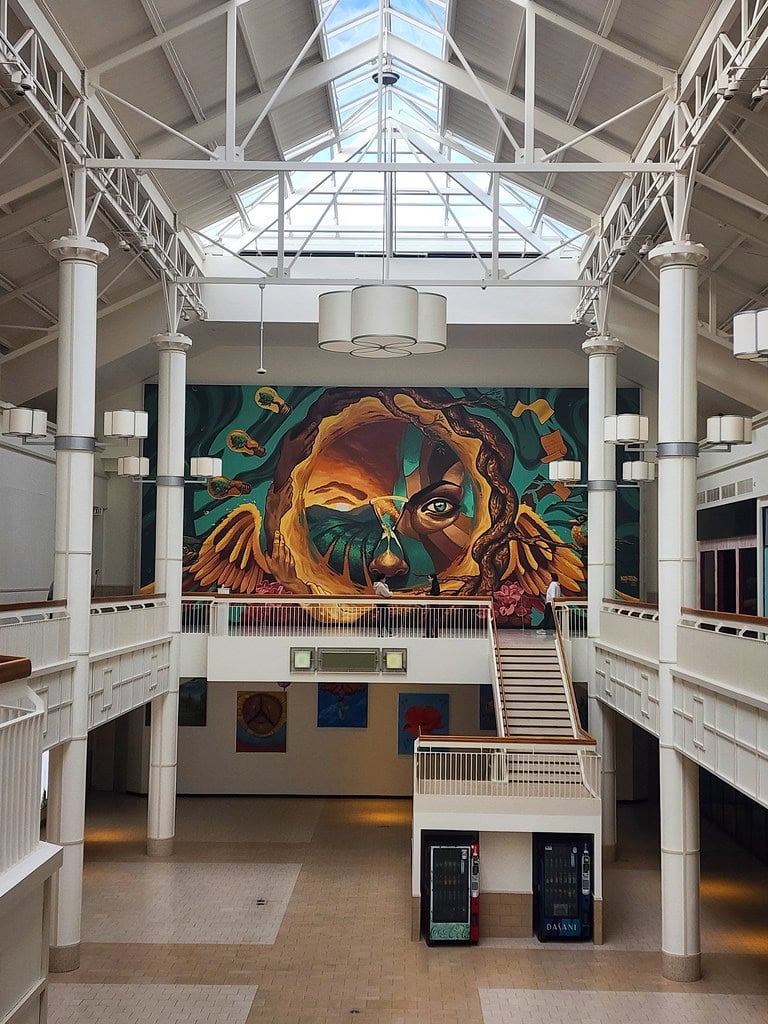
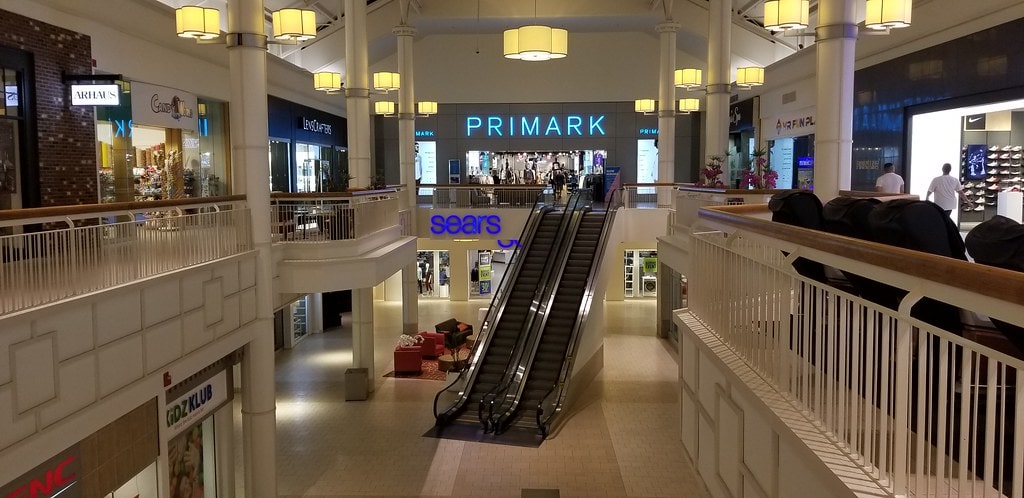
Between 2007 and 2008, the company took out the brown and green tile, changed the round lights, and gave the hallways a new look with wood details, soft leather chairs, and warmer lights.
The big pool and fountains were removed and replaced with a Starbucks bar, smaller water displays, and more places to sit.
The food court was changed to a gentle curve, with fewer food stalls but nicer furniture. The carousel, surprisingly, stayed even after the fountains were gone.
Primark, Shrinking Sears, and a Shaken Illusion
The late 2000s and early 2010s brought a new kind of anchor: fast fashion and lifestyle brands layered onto the traditional department-store skeleton.
The former Filene's space was chopped and re-let to Dick's Sporting Goods, Forever 21, Brio Tuscan Grille, The Cheesecake Factory, and L.L.Bean.
The mall's role as a regional economic engine was repeatedly stressed in local reporting - roughly 200 stores, more than 2,500 employees - even as critics pointed to empty storefronts downtown.
Then came Primark. In the mid-2010s, the Irish fast-fashion chain chose Danbury Fair for one of its earliest U.S. locations, taking about 70,000 square feet on the upper level of the Sears building.
Sears, already in decline, retreated to a compact store on the lower level, its real estate spun off into a separate trust.
Forever 21's arrival had signaled youth appeal; its 2019 closure, amid bankruptcy, signaled the volatility of that same market.
Sears itself announced in late 2019 that the Danbury store would close. The doors shut in February 2020, just before the pandemic emptied malls across the country.
In August of that year, Lord & Taylor, a presence since 1991, declared bankruptcy and decided to go out of business entirely; its Danbury store closed on December 28.
An entertainment and dining push took shape, with Shake Shack and LongHorn Steakhouse announced just before the pandemic and delayed by COVID, and Round1 Bowling & Arcade added a few years later as part of the same strategy.
Target, Round1, and a Mall That Will not Retire
If the early 2020s were supposed to mark the death of the mall, Danbury Fair did not receive the memo.
Round1 finally opened on March 9, 2024, in part of the old Forever 21 footprint, filling the concourse with neon, bowling pins, and Japanese arcade machines.
One month later, on April 9, Target cut a ribbon and opened on the lower level of the vacant Sears box.
For the first time, a broad-spectrum discounter anchored the property, and local officials cheerfully credited the move with helping keep the mall Danbury's top taxpayer.
Nature contributed its own drama. Heavy rain in January 2024 caused major flooding behind the mall, a reminder that runoff respects neither tax assessments nor site plans.
January 2025 brought a substantial water leak inside the mall itself, forcing most tenants to close for several hours while crews ripped up carpeting and worked with health inspectors; anchor stores on separate systems stayed open.
Meanwhile, the interior kept tilting toward the all-day experience.
The food court is filled with Terra Nossa Brazilian Grill, Chomp Chomp, Taichi Bubble Tea, and T-Swirl Crepe, turning a once-generic lineup into a small atlas of fast-casual cuisine.
New fashion and lifestyle names arrived: Goat USA opened its first Connecticut store; JD Sports joined Primark in courting sneakerheads; Miniso took space upstairs; Coach and jewelry brand Gorjana signed on; The Children's Place relocated into a fresh build-out; Victoria's Secret temporarily decamped while its store was rebuilt to a new prototype.
Apartments on Paper, a Carousel Still Turning
The departures arrived one at a time. Vera Bradley, in the mall since 2012, closed on May 27, 2025.
Eddie Bauer followed on July 29 after a last round of markdowns. Danbury Family Diner, open since February 2020, served its final plate on August 24.
The gaps were quickly filled. Pop Mart opened on September 25, 2025, selling toys built for phone cameras.
Think of Kicks, a buy-sell-trade sneaker and streetwear shop, set up across from H&M. Nearby, Perfumania and Offline by Aerie joined the mix, while Jack & Jones, a Danish clothing label, picked Danbury Fair as one of its first U.S. locations.
The tenant list tilted younger and more phone-first.
Meanwhile, bigger plans have slowed down. In 2023, the city said apartments could be built in the empty Lord & Taylor space, and maybe a hotel or doctor's offices.
But by the middle of 2025, there were still no plans, no building machines, and only slow talks between Macerich and the owner of the old store.
The idea of a neighborhood that is busy all day and night was still just an idea. Instead, memories of the fairground remained.
Each summer around Memorial Day, the Danbury City Fair carnival returns to part of the parking lot, bringing rides back to the pavement.
Inside, the two-level carousel still turns. The hat factories are gone, the racetrack is covered, and the fiberglass figures have moved to other towns, but memories of the past still linger above the food court.