
Two roads explain most of the place.
Old 41 carries the civic version: the public library, Riverside Park, the historic plaza, city events, and the beginnings of a downtown that officials are still trying to make easier to cross and use.
U.S. 41 carries the practical version.
It absorbs shopping trips, medical appointments, school traffic, regional buses, and the north-south movement that holds an ordinary weekday together.
The Gulf sits to the west, close enough to shape the city's identity but not close enough to organize every resident's day.
Most mornings do not begin with sand.
They begin with a car door, a school schedule, an appointment time, or several errands arranged in the correct order.
That is the useful way to understand life here.
It is coastal without being centered entirely on the coast, affluent without offering every worker an affluent wage, and relaxed only after a household has accepted the planning required by heat, distance, insurance, and water.
The place does not feel like one continuous town.
It feels like several versions of southwest Florida sharing the same municipal line.
Two Roads Split The Day
Old 41 is where the city tries to behave like a town.
The two-story public library stands near Riverside Park, the Imperial River, and the historic downtown corridor.
The city uses the same area for concerts, holiday programs, memorial ceremonies, parades, public cleanups, and seasonal celebrations.
A new crosswalk has been approved for part of Old 41, while Riverside Park, nearby restrooms, and a splash pad are moving through a construction program expected to reach completion in winter 2026.
That concentration matters because much of the rest of the city is spread out.
The library and park create one of the few places where a person can combine a civic errand, a children's activity, a walk, and a public event without treating each as a separate driving mission.
But downtown is not the commercial center of gravity.
For groceries, routine services, larger shopping trips, and many medical or professional appointments, daily life points toward U.S. 41 and the corridors feeding into it.
Old 41 offers a civic address. U.S. 41 functions more like the household operating system.
The distinction becomes clearer after several weeks.
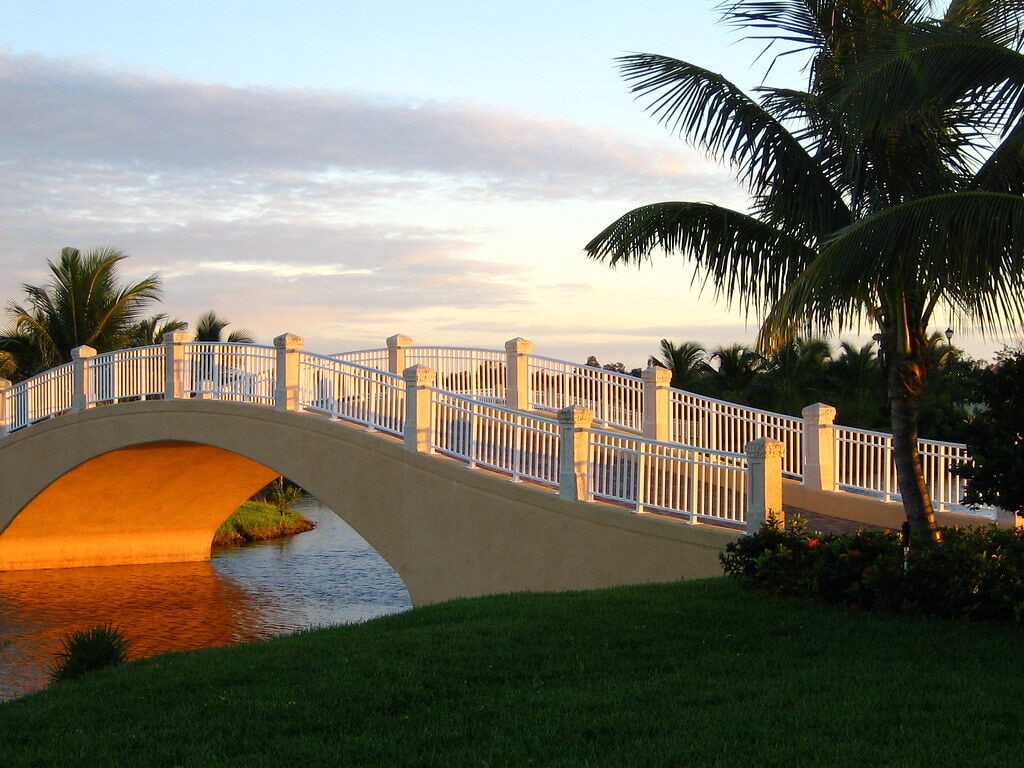
A newcomer may remember the historic bridge or the park first.
A resident learns which road saves an extra turn on a Tuesday afternoon.
Tuesday Starts In The Driver's Seat
Can you picture a normal weekday without imagining a beach?
A realistic morning begins with school drop-off, work, a medical appointment, or a grocery stop.
The Census Bureau reports a mean commute of 24.2 minutes for workers, but that citywide average cannot describe the wide range between a short local trip and a regional drive toward Fort Myers, Estero, Naples, or another employment center.
The practical challenge is not usually distance alone.
It is that different parts of the day pull in different directions.
A parent may need the school route first, U.S. 41 second, and Pine Avenue later for recreation or library programs.
An older resident may organize several appointments and errands into one trip rather than repeatedly leaving a residential community.
A remote worker may avoid the commuter problem but still need a vehicle for nearly everything outside the house.
LeeTran includes the city within its ULTRA on-demand service area, and Route 140 connects stops along the wider U.S. 41 corridor, including Coconut Point and destinations farther north.
Those services provide a genuine alternative for some trips.
They do not create a fully car-optional lifestyle.
After school, the geography changes again.
The community park and recreation facilities on Pine Avenue provide playgrounds, athletic fields, tennis, disc golf, and indoor recreation.
The public library runs programs for different age groups and stays open into the evening on selected days.
Evenings are quieter unless a scheduled event is underway downtown.
Riverside Park regularly hosts concerts and civic programs, but those dates appear on a calendar rather than forming a permanent entertainment district.
That difference is important. The city can produce a busy public evening.
It does not produce one automatically.
Public Places Do More Than Their Size Suggests
The population is unusually old.
About 44.2% of residents are 65 or older, while only 10.9% are under 18.
Owner-occupied housing accounts for 81.8% of occupied homes, and the average household contains just 2.20 people.
Those numbers could describe a place that withdraws almost entirely behind private doors.
The public institutions prevent that portrait from becoming complete.
The library was built near Riverside Park and Old 41 in 2019, placing it inside the emerging civic core rather than on an isolated suburban parcel.
Its calendar includes adult, family, and children's programming, while its location allows a library visit to be paired with the park or another downtown stop.
The parks system serves a similar role. The community park on Pine Avenue supports organized recreation.
Leitner Neighborhood Park provides a playground, basketball facilities, and a pavilion.
Smaller parks offer boardwalks, river access, picnic space, or neighborhood-scale recreation.
Then there are the scheduled rituals: Fourth of July activities along Old 41, winter concerts, holiday events, Memorial Day and Veterans Day ceremonies, downtown strolls, and volunteer cleanups.
These programs turn one small part of the city into common ground for residents who may otherwise spend most of the week inside separate residential communities.
The community is also less culturally uniform than its retirement image suggests.
Hispanic or Latino residents make up 19.1% of the population.
About 17.8% of residents are foreign-born, and 20.6% speak a language other than English at home.
That diversity is part of the working city as much as the social city.
The households staffing restaurants, construction crews, care services, schools, landscaping businesses, and retail counters do not necessarily experience the same version of the place as a homeowner arriving with retirement income.
They share the roads.
Saturday Requires A Choice
A normal weekend does not need to become an attractions checklist.
Some households use the community park, recreation center, library, or a neighborhood playground.
Others combine errands along U.S. 41 with lunch or a larger shopping trip.
Downtown may become the destination when the city has scheduled a concert, parade, holiday program, or nighttime stroll.
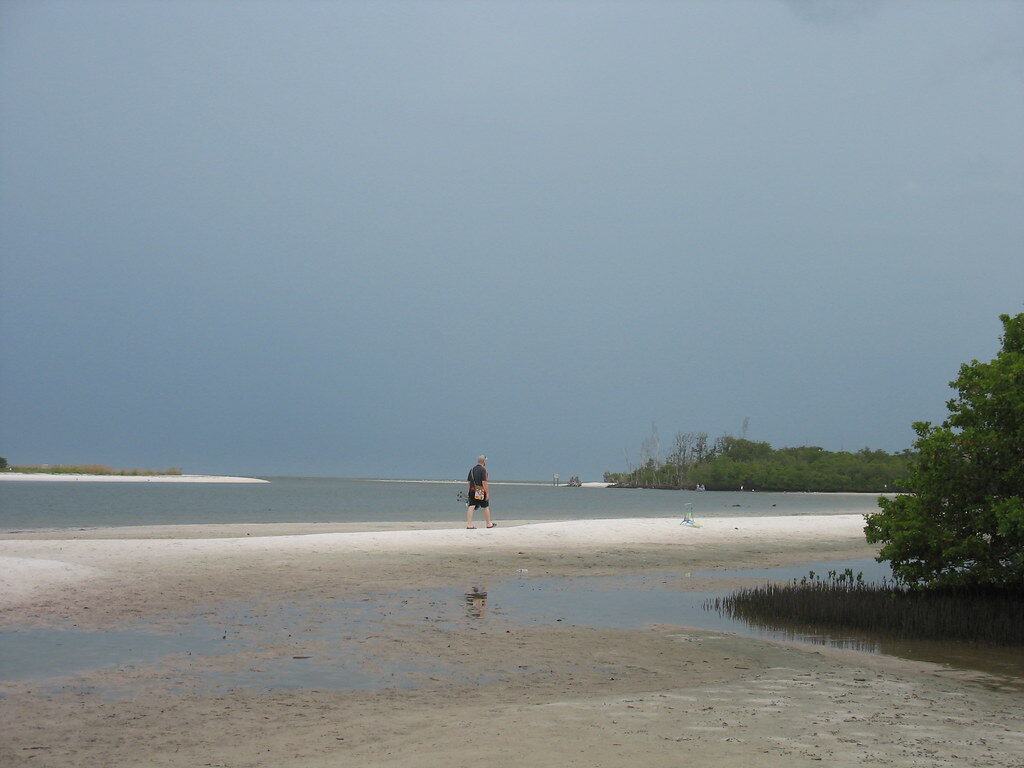
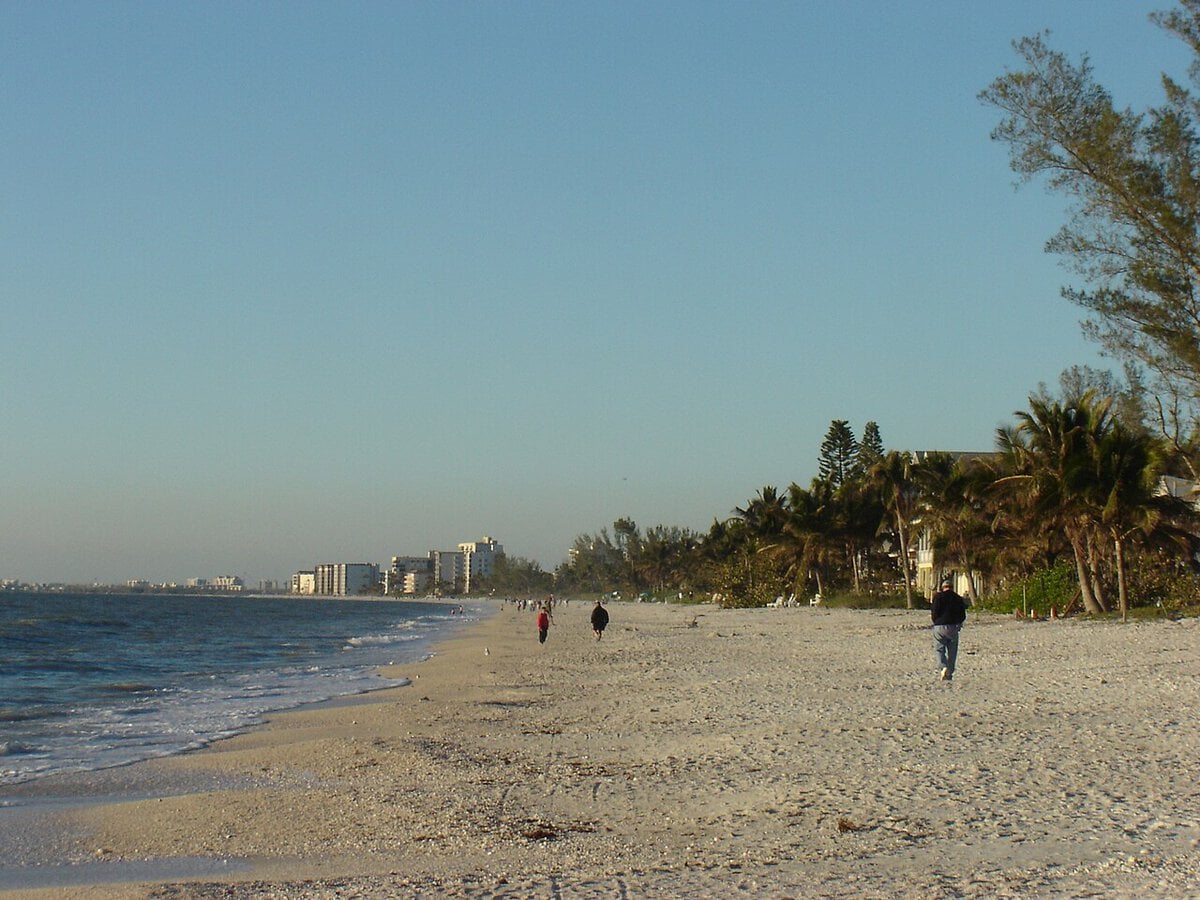
The beach is one option, but even that option has two different forms.
The county beach park at the southern end of the barrier island charges $2 per hour for parking.
Pets and grilling are prohibited, and the county's annual parking subscription is not accepted there.
A short beach visit therefore begins with the parking clock.
Lovers Key State Park is more spacious and asks for a different kind of commitment.
Admission is $8 for a vehicle carrying two to eight people, $4 for a single-occupant vehicle or motorcycle, and $2 for pedestrians and bicyclists.
Tram service has been discontinued.
Visitors now reach the beach by a 1,000-foot pedestrian route or a half-mile approach from the main parking area.
For residents, those details determine whether the beach fits an ordinary Saturday or becomes an occasional outing.
A household carrying chairs, coolers, children's equipment, or mobility aids experiences the same half-mile differently from a visitor carrying a towel.
The state park also includes a discovery center open Tuesday through Saturday from 10 a.m. to 2 p.m., giving families and older visitors an indoor component to pair with the coastal setting.
Plenty of weekends remain closer to home.
That may be the more accurate measure of a place to live.
The beach helps explain why people move here.
The park, library, grocery corridor, recreation schedule, and backyard explain what they do once the novelty has worn off.
Summer Moves The Clock
Winter lets residents use nearly the whole day.
Summer forces choices.
The nearest long-running climate station, Fort Myers Page Field, records a normal January high of 75.0 F and an August high of 91.7 F. Normal overnight temperatures rise from 54.3 F in January to the mid-70s in August.
Annual normal precipitation is 57.41 inches, with the heaviest concentration falling during the summer months.
The station is a regional climate proxy rather than a measurement for every street.
The practical consequence is a schedule that often moves earlier.
Outdoor exercise, dog walks, playground time, and yard work are easier before the day's heat builds.
Midday favors indoor errands, work, recreation facilities, or the library.
Afternoon plans need room for heavy rain, even when the storm itself is brief.
Air-conditioning is not a lifestyle upgrade.
It is part of the household's basic operating cost.
The climate also reduces spontaneity. A winter visitor can leave the house and decide what to do later.
A full-time resident learns to consider heat, lightning, rainfall, parking distance, and the amount of gear that must be carried between the car and the destination.
That does not make summer unlivable. It makes summer organized.
Someone who enjoys early mornings, indoor afternoons, pools, screened outdoor space, and a slower off-season may adapt quickly.
Someone expecting the winter version of coastal Florida to continue for twelve months will meet the real place around June.
Homes Create Stability And Separation
More than four out of five occupied homes are owner-occupied, and 86.3% of residents were living in the same house one year earlier.
That level of residential continuity gives the city stability.
It also means newcomers may arrive in neighborhoods where routines and social circles were established long before the moving truck appeared.
Much of social life therefore has to be entered deliberately.
A resident may meet people through a homeowners association, recreation program, library event, faith community, volunteer project, golf group, youth activity, or repeated visits to the same park.
Proximity alone does not guarantee sidewalk life in a city where residential areas and daily destinations are often separated by roads.
Housing is expensive enough to shape nearly every other decision.
The Zillow Home Value Index placed the typical home value at $507,317 on June 30, 2026, down 5.9% from a year earlier.
A slower market gives buyers more room to compare properties, but it has not turned the city into an inexpensive coastal alternative.
The recurring cost matters more than the headline price.
Insurance, association fees, maintenance, storm preparation, and flood exposure vary by property.
Those issues should not dominate a portrait of daily life, but they do affect it.
A household carrying a large monthly housing burden has less freedom to treat restaurants, golf, travel, and the beach as casual habits.
Living near water adds another recurring responsibility.
FEMA maps identify current mapped flood zones, but they are location-specific planning tools, not predictions for every property.
The useful human consequence is simple: storm season brings paperwork, preparation, and decisions about when to stay, when to secure the house, and when to leave.
The view may be coastal. The household administration certainly is.
The City Has Two Financial Realities
The median household income is $95,210, and per capita income is $66,345.
Those figures help explain the substantial housing values, high homeownership rate, and concentration of retirees or households arriving with assets accumulated elsewhere.
Local wages tell a different story.
Across the Cape Coral-Fort Myers metropolitan area, the average hourly wage was $28.87 in May 2025, compared with $33.54 nationally.
The regional figure covers a broad labor market rather than the city alone, but it captures an important tension: the people maintaining an expensive coastal economy do not all earn incomes calibrated to its housing prices.
The Census Bureau also reports that 18.7% of residents under 65 lack health insurance.
Affluence is visible here, but it is not evenly distributed.
A retiree with a paid-off home may experience the city as financially comfortable.
A remote professional bringing a salary from another market may find the housing expensive but manageable.
A local service worker may face a much narrower margin, especially when rent, transportation, childcare, and medical coverage are combined.
These groups use the same grocery aisles and roads.
They do not live inside the same budget.
That layered economy is one reason the city can appear both prosperous and strained without either impression being false.
Bonita Springs, Florida: Who This Life Fits
Bonita Springs works best for people who want coastal access without requiring the beach to organize every day.
It suits retirees who value warm winters, regional medical access, a high rate of homeownership, public parks, scheduled civic events, and an airport-connected part of southwest Florida.
It can also work for remote professionals and established households comfortable with driving and able to absorb housing costs that extend beyond the mortgage.
Families need a more address-specific decision.
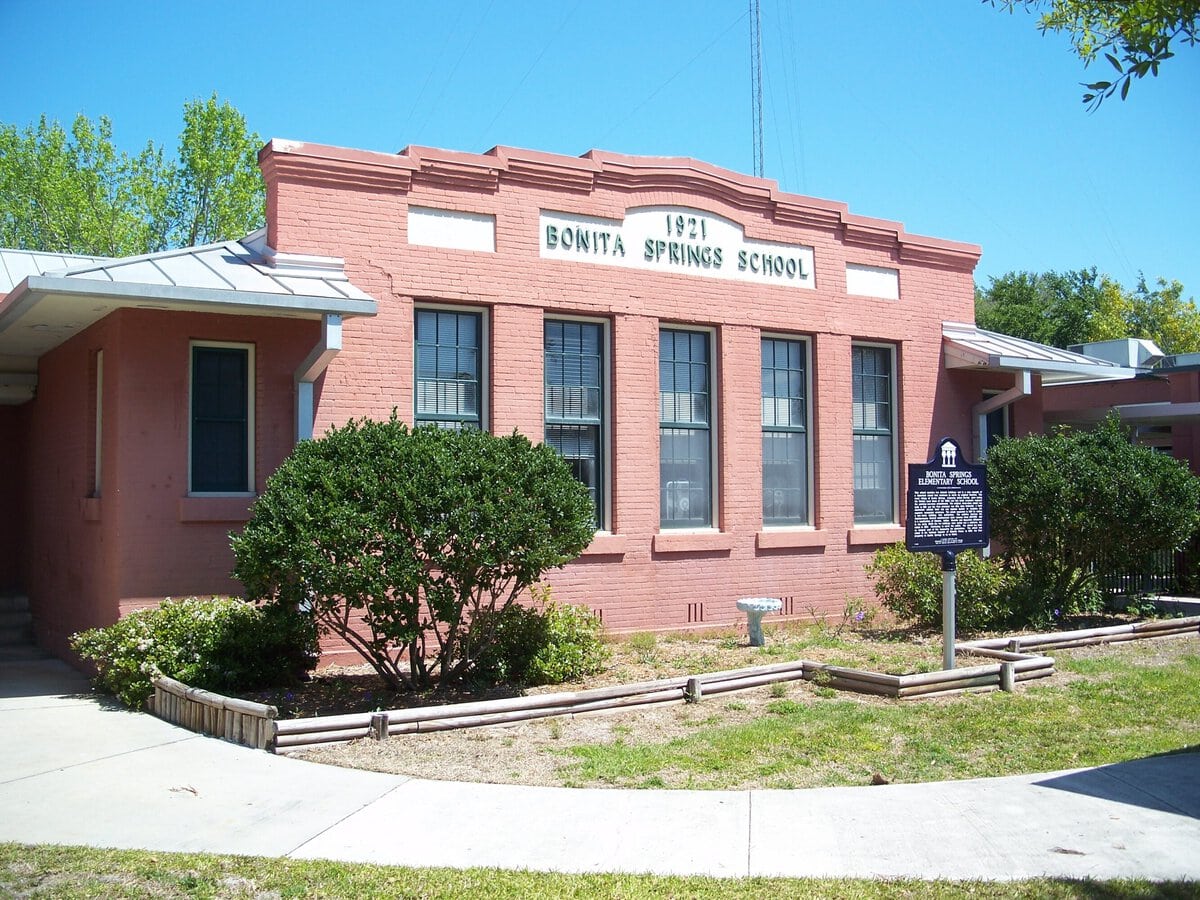
Florida's 2026 School Grades data gave Bonita Springs Elementary School a C with 51% of possible points and 100% tested.
Bonita Springs Middle Center for the Arts received a B with 57% and 100% tested.
Bonita Springs High School received a B with 62%, 99% tested, and a reported 2024-25 graduation rate of 93%.
The charter results were mixed rather than uniformly stronger.
Bonita Springs Charter School received an A with 69% of possible points and 100% tested.
Oak Creek Charter School of Bonita Springs received a C with 49% and 97% tested.
These are official school-grade measures, not complete judgments about teaching quality, student experience, admission availability, or the right match for an individual child.
The city is likely to frustrate people who expect a dense, walkable lifestyle, spontaneous nightlife, or local wages that easily support coastal housing.
Teenagers and adults who do not drive may have fewer independent choices than the map initially suggests.
Summer also asks for patience: outdoor time shifts, rain interrupts plans, and the air-conditioning rarely gets a sabbatical.
The people most likely to settle well are comfortable planning.
They plan errands around geography, outdoor time around weather, beach trips around access, and housing around long-term carrying cost.
In return, they get mild winters, strong residential continuity, a useful civic core along Old 41, regional shopping and healthcare, public recreation, and the Gulf close enough to remain part of ordinary life.
Not every day feels like a vacation. That is precisely why Bonita Springs can work as a home.
References
Zillow, Bonita Springs Housing Market. Housing data source: Zillow Home Value Index, June 2026. Data Provided by Zillow Group.
U.S. Census Bureau, QuickFacts: Bonita Springs City, Florida.
City of Bonita Springs, Downtown Projects Update.
City of Bonita Springs, Parks and Recreation.
City of Bonita Springs, Special Events.
City of Bonita Springs, City Council Approves Crosswalk Proposal on Old 41.
Lee County Library System, Bonita Springs Public Library.
Lee County Library System, Upcoming Library Events.
Lee County Transit, LeeTran System Map.
Lee County Transit, Route 140 Schedule.
Lee County Parks and Recreation, Bonita Beach Park.
Florida State Parks, Lovers Key State Park.
Florida State Parks, Lovers Key State Park Hours and Fees.
Florida State Parks, Discovery Center at Lovers Key State Park.
NOAA National Centers for Environmental Information, Fort Myers Page Field 1991-2020 Climate Normals.
Federal Emergency Management Agency, Flood Map Service Center.
U.S. Bureau of Labor Statistics, Occupational Employment and Wages in Cape Coral-Fort Myers.
Florida Department of Education, Florida School Accountability Reports.
Florida Department of Education, 2026 Florida School Grades Data.
Independent Publisher Notice
BestAttractions is an independent editorial publisher. We are not affiliated with, endorsed by, or acting on behalf of any location, business, property owner, manager, government agency, or organization described in this article. Comments posted on this page are not forwarded to, reviewed by, or acted upon by any entity mentioned in the article. For official inquiries, complaints, applications, bookings, or other requests, please contact the relevant entity directly through its official website or other verified channels.